Introduction: Why EMI Shielding Gaskets for Outdoor Telecom Cabinets Matter in 2026
Electromagnetic interference (EMI) has become a critical concern for outdoor telecom cabinets, especially as 5G networks and high-frequency electronics expand. Signals from power lines, wireless transmitters, or even other telecom devices can penetrate enclosures, causing data errors, downtime, or equipment failure. That’s why EMI shielding gaskets for outdoor telecom cabinets are not just optional—they are vital to ensure system reliability and lifespan.
Modern telecom cabinets often operate in environments crowded with electromagnetic energy. Small mistakes in shielding design or gasket selection can lead to big headaches—like customer service disruptions, increased maintenance costs, and even regulatory issues. This article will explore the function and types of EMI shielding gaskets, provide practical installation guidance, and share real-world impacts. If your business or infrastructure depends on telecom reliability, understanding EMI gasket technology is a must.
What Is Electromagnetic Interference (EMI) and Why Does It Affect Telecom Cabinets?
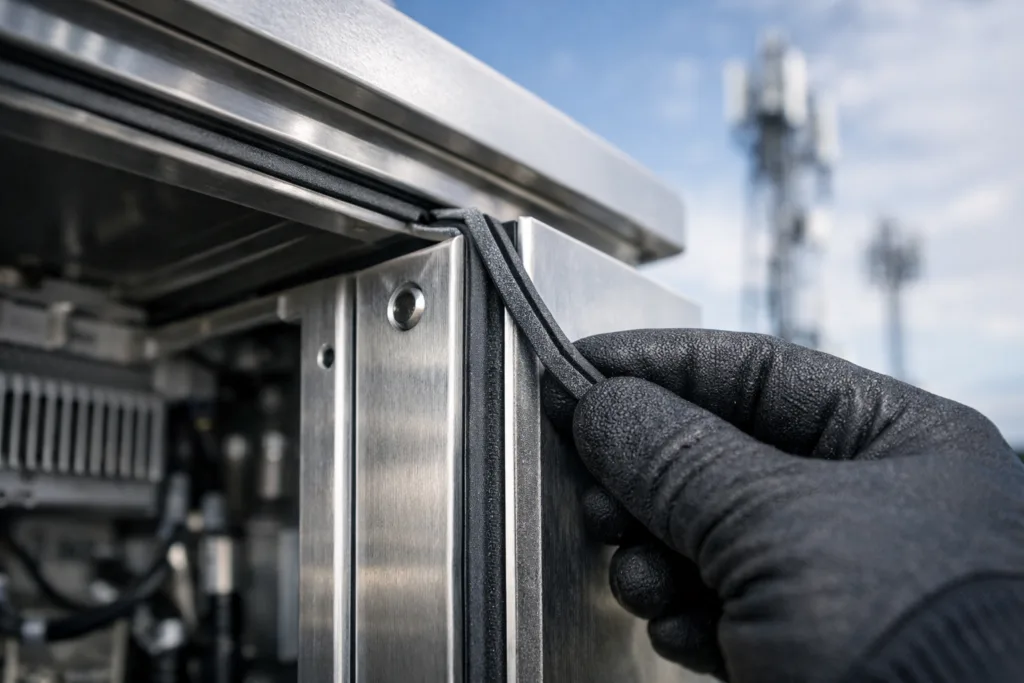
EMI is unwanted energy that disrupts or limits the performance of electronic equipment. Telecom cabinets, which act as nerve centers for network operations, are highly susceptible to these interferences. Outdoor cabinets are especially vulnerable because they are exposed not only to natural sources (like lightning) but also to man-made interference (like cell towers and power stations). Effective EMI shielding keeps data signals clean and cabinets functional even in tough environments.
The Role of Gaskets in EMI Shielding for Outdoor Telecom Cabinets
Gaskets are essential components that bridge the gaps between cabinet doors, panels, or seams. In EMI shielding, their main role is to maintain continuous electrical conductivity between mating surfaces, blocking electromagnetic leaks. Choosing the right gasket ensures your shield is not just theoretical but actually works in real-world conditions.
Main Types of EMI Shielding Gasket Materials
Depending on design priorities, gaskets can be made from several core categories of materials:
- Conductive Elastomers: Silicone or EPDM rubber filled with silver, nickel, copper, or graphite for conductivity
- Metal Mesh or Wire: Knitted or woven metal filaments, usually stainless steel or Monel
- Fabric-Over-Foam: A foam core wrapped with conductive fabric—popular for lightweight protection
- Fingerstock Gaskets: Springy metal fingers for high-repeat compression and minimal wear
Each material has trade-offs in conductivity, durability, and environmental resistance. For cabinets exposed to harsh conditions, conductive elastomers or corrosion-resistant alloys often deliver the best results.
Key Design Considerations for Effective EMI Shielding
To truly protect telecom cabinets, gasket selection and design must account for several critical factors:
- Contact Resistance: Low resistance ensures a solid conductive path.
- Compression Set: Gasket must maintain shape and contact over years of cycling.
- Environmental Sealing: Must also prevent dust, moisture, and corrosive agents from entering.
- Mounting Method: Adhesive-backed, clip-on, or mechanically fixed—each affects durability.
- Operating Temperature: Exposure to sun or freeze/thaw cycles demands thermal stability.
For instance, some advanced formulations use epoxy-based adhesives to bond gaskets, balancing mechanical grip and long-term seal integrity.
Understanding the Importance of Compression and Recovery
Compression is a defining parameter: an EMI gasket must compress enough to maintain a tight contact, but recover its original shape after cabinet servicing. Materials with poor compression set will lose effectiveness over time—threatening the shield and equipment safety.
Common Application Challenges in Outdoor Environments
Outdoor telecom cabinets face rain, UV light, temperature swings, and chemical exposure—all of which can degrade EMI shielding materials. Poorly chosen gaskets may shrink, harden, corrode, or lose conductivity. That’s why modern installation practices usually recommend industrial-grade adhesives with enhanced weather and UV resistance, ensuring the entire sealing system endures real climate stress.
Material Selection: Balancing Conductivity, Sealing, and Durability
Material selection requires a balancing act:
- High conductivity is essential for EMI suppression.
- Long-term resilience against weather and aging protects physical and electrical properties.
- Chemical resistance prevents degradation from pollution, salt spray, or cleaning agents.
Some engineers also specify polyurethane resins in their builds for added mechanical strength and flexible sealing—this ensures the gasket bond survives vibration and installation stresses common in outdoor telecom installations.
Popular Gasket Designs: From Standard to Custom Profiles
While standard D-strip and P-strip profiles cover most cabinet needs, custom-cut shapes or hybrid gasket designs are fast becoming the norm—especially for cabinets with irregular doors or cable entry points. Precision manufacturing, often using CNC or die-cutting, allows gaskets to match every unique cabinet geometry while still delivering reliable shielding performance.
Installation Best Practices for Maximum EMI Protection
- Surface Prep: Remove oils, dust, and corrosion before gasket installation.
- Compression Check: Ensure even compression along the full gasket length after cabinet door closure.
- Avoid Over-Compression: Excess pressure can deform or wear gaskets prematurely.
- Periodic Inspection: Regularly check gasket condition, especially at stress concentrators like hinges or locks.
When to Use Adhesive-Backed vs. Mechanically Fastened Gaskets
Adhesive-backed gaskets speed installation, but their environmental durability depends on the adhesive chemistry. Mechanically fastened (clipped or screwed) gaskets may last longer, especially in areas exposed to vibration or water ingress. Hybrid mounting solutions work best for ultra-demanding scenarios.
Testing and Verifying Shielding Effectiveness in Practice
Robust EMI control requires real-world verification, not just datasheet comparisons. Common tests include:

- Shielding effectiveness measurements (dB attenuation ratings)
- Continuity and resistance checks across the gasket path
- Environmental aging (humidity, salt, thermal cycles)
- Ingress protection (IP) certification
Case Study: Gasket Failure and Network Downtime
In one heavily trafficked urban cellular site, improper gasket installation led to elevated RMS noise and intermittent communication loss. Post-incident analysis revealed that the adhesive layer had decayed after repeated summer heatwaves, causing microgaps. A retrofit with higher-temperature-rated elastomer gaskets and improved lock design restored full signal purity—preventing regulatory fines and customer churn.
Case Study: Custom Gasket Design Saves a Wind Farm Network
An offshore wind farm’s telecom enclosures began failing within two years due to salt corrosion. Engineers switched to Monel fingerstock gaskets with a marine-grade polyurethane sealant. After the retrofit, there were no further EMI-related faults, even in high-salinity, high-wind exposure areas.
Cross-Industry Learnings: What Telecom Can Teach and Borrow
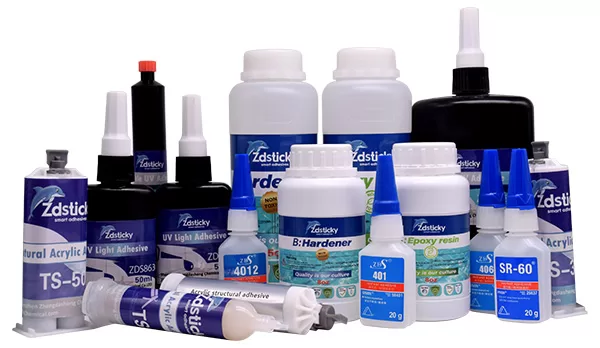
According to experts at ZDS Adhesive, an industrial adhesive manufacturer, field reliability in high-EMI risk environments improves when the gasket and adhesive system is selected for the worst-case conditions—not just ambient climate. For telecom, this means specifying materials that pass corrosion, vibration, thermal cycling, and moisture ingress tests in tandem, rather than in isolation. The same principle helps improve reliability in defense, rail, and medical electronics.
Latest Innovations: Smart Monitoring and Adaptive Sealing
Some next-generation gaskets include embedded RFID tags or sensors to monitor compression force or moisture ingress. These smart gaskets alert maintenance teams before failures occur, introducing predictive maintenance concepts to outdoor telecom shielding.
Frequently Overlooked Details in Field Installations
Some common mistakes—a misaligned cabinet latch, rushed surface cleaning, or substituting general-purpose seals—can render a high-performance gasket almost useless for EMI shielding. A detailed installation checklist, with photos or templates, helps ensure proper outcomes and reduces the need for costly rework down the line.
Environmental Compliance and Industry Standards
EMI gaskets in telecom must meet a variety of regional and international standards—like IEC 61000-5-7 or MIL-DTL-83528. Regulatory compliance isn’t just a paperwork exercise; it’s about real-world protection for essential public infrastructure.
Reject Rates and Lifetime Costs: A TCO Perspective
While premium EMI gaskets may carry a higher upfront cost, they almost always reduce downtime, truck rolls, and warranty claims over a cabinet’s 10+ year field life. In ZDS Adhesive’s application studies, investing in precision-cut gaskets and high-grade adhesives typically cut lifetime failure rates by over 80% versus commodity solutions.
Future Trends: 5G, 6G, and the Next Generation of Shielded Cabinets
Higher-frequency transmissions and smart edge devices are increasing sensitivity to EMI. Expect greater demand for hybrid gasket designs, advanced elastomers, and data-driven gasket management in the coming digital decade.
EMI Shielding Gaskets for Outdoor Telecom Cabinets

In summary, EMI shielding gaskets for outdoor telecom cabinets are non-negotiable in 2026. Effective gasket design isn’t just about closing a door—it’s about closing the loop on reliability, safety, and uptime. With careful material choice, installation discipline, and real-world validation, you secure the backbone of our digital world.
Frequently Asked Questions
What does EMI stand for and why is it a concern for outdoor telecom cabinets?
EMI stands for electromagnetic interference, and it disrupts the normal operation of telecom equipment, causing signal errors and network downtime. Outdoor cabinets are more exposed to EMI sources, making shielding essential.
What are the main materials used for EMI shielding gaskets in telecom enclosures?
The main materials are conductive elastomers (like silver- or nickel-filled silicone), metal meshes, fabric-over-foam architectures, and fingerstock gaskets. The choice depends on conductive, environmental, and mechanical needs.
How do I know if a gasket truly provides EMI protection?
Effective gaskets maintain low contact resistance, compress and recover repeatedly, and pass shielding effectiveness tests (usually measured in dB attenuation) in real cabinets, not just lab conditions.
Is adhesive-backing reliable for outdoor cabinet gaskets?
Adhesive backing is fast and reliable if the adhesive is chosen for the cabinet’s operating environment—exposure to heat, cold, or moisture may require advanced industrial adhesives for secure long-term bonds.
What are the signs that a gasket is failing?
Look for physical cracks, gaps when compressed, or visible corrosion. Electronic signs include increased noise, dropped signals, or failed shielding continuity tests.
Can a general-purpose weather seal double as an EMI gasket?
No. True EMI gaskets must have proven conductivity and consistent electrical path under compression. Weather seals alone do not offer effective EMI shielding.
Related Reading
- 7 Critical Potting Techniques For Inverter Modules: Boost Insulation & Reliability
- How To Speed Up Transceivers: Precision Optical Lens Bonding You Can Trust
- Epoxy Thermal Control Made Easy: 13 Ways To Beat The Heat In Castings
- Why Dust-Free Camera Lenses Depend On Precision Gasket Engineering
- Explore Advanced Adhesive Solutions For Demanding Industrial Applications