Introduction: The Role of Glass Transition Temperature (Tg) in Epoxy Performance
When considering industrial adhesives or consumer-grade epoxies, a single material property can mean the difference between flawless performance and unexpected failure: the Glass Transition Temperature (Tg). In this guide, we explore Understanding Glass Transition Temperature (Tg) in Epoxies—explaining what Tg is, how it’s measured, why it matters, and how manufacturers like ZDS Adhesive carefully design formulations to meet specific performance requirements.
Whether you’re specifying materials for automotive, electronics, or construction, appreciating how Tg influences epoxy performance is crucial for consistent durability, mechanical strength, and service life.
What is Glass Transition Temperature (Tg) in Epoxies?

The Glass Transition Temperature (Tg) is the temperature at which an epoxy transitions from a hard, glassy state to a softer, more rubber-like consistency. Below Tg, the polymer chains in the epoxy remain tightly packed, resulting in a rigid material. Above Tg, molecular mobility increases, leading to a decrease in stiffness and mechanical integrity.
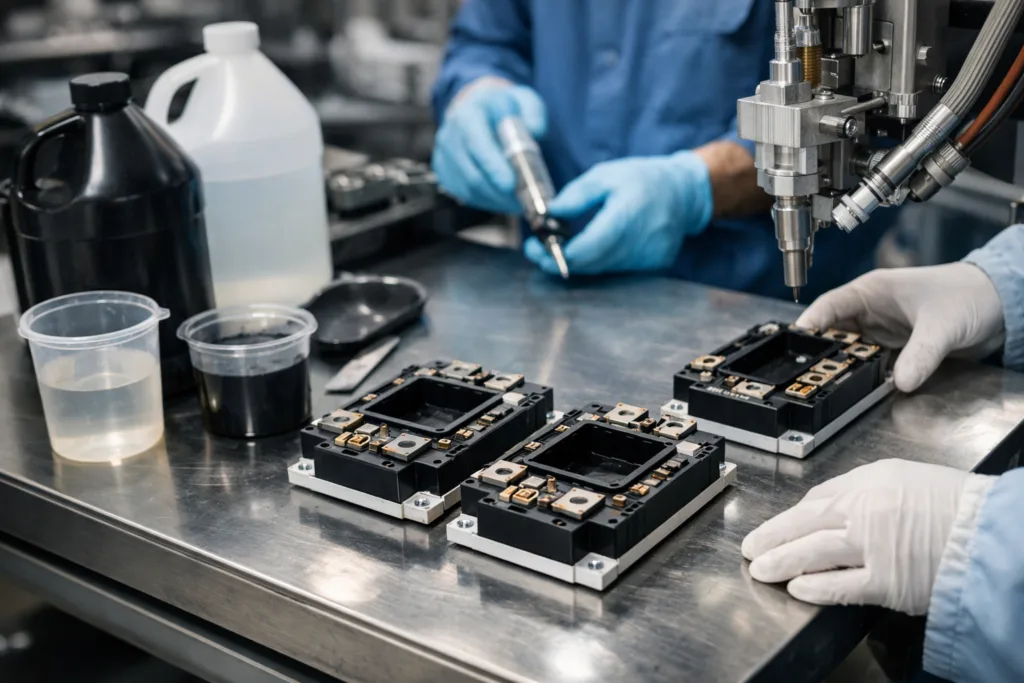
This property is especially important in industrial adhesives and coatings, since applications often subject materials to varying temperatures. For instance, electronic potting compounds may need a high Tg for reliability, while flexible adhesives benefit from lower Tg values.
Why Does Tg Matter for Epoxy Performance?
Tg is not just a number on a datasheet; it directly impacts an epoxy’s usable temperature range, mechanical properties, and thermal durability. For example:
- High Tg epoxies offer better dimensional stability under heat and are less likely to creep.
- Low Tg epoxies retain flexibility and are better for bonding dissimilar substrates that expand and contract at different rates.
Choosing an epoxy without considering Tg can lead to problems such as bond failure due to thermal cycling, loss of adhesion, or embrittlement under cold conditions. Epoxy adhesive products with well-defined Tg values can help mitigate such risks in demanding environments.
The Science Behind Glass Transition in Polymers
In polymers like epoxy resins, the glass transition is a reversible, second-order phase change—not melting, but a shift from rigidity to flexibility. This change is due to increased mobility of the epoxy’s molecular segments as temperature rises. Typically, Tg is measured in degrees Celsius, and values depend on factors such as the resin’s chemical structure, curing process, and cross-linking density.
Key Mechanical Properties Affected by Tg
- Hardness: Below Tg, epoxies are hard and glassy; above Tg, they become soft.
- Modulus of Elasticity: Stiffness drops sharply as the temperature exceeds Tg.
- Impact Resistance: Materials above Tg may dent or deform rather than crack.
- Adhesion: Bond strength often weakens when service temperature exceeds Tg.
How Tg Influences Thermal Stability
Tg defines the upper service temperature of an epoxy. Epoxies used in electronics, aerospace, and automotive must always have a Tg higher than the maximum expected operating temperature to avoid softening or failure. For thermal management, industrial adhesives are often selected based on a balance between heat resistance and process flexibility.
Common Methods to Measure Tg in Epoxies
- Differential Scanning Calorimetry (DSC): Most common, measures heat flow associated with Tg.
- Dynamic Mechanical Analysis (DMA): Measures stiffness (storage modulus) vs. temperature.
- Thermo-Mechanical Analysis (TMA): Detects changes in dimensional stability as temperature climbs.
- Dielectric Analysis (DEA): Tests molecular motion via changes in electrical properties.
Practical Implications of Tg in Real-World Applications
Tg isn’t just a laboratory curiosity. For example, in automotive electronics, exceeding the epoxy’s Tg during engine operation can cause unexpected circuit failures. For marine or outdoor equipment, repeated freeze–thaw cycles near the Tg can cause substrate debonding or cracking.
Tg and the Durability of Epoxy Bonds
The durability of an epoxy bond is closely tied to maintaining its use below the Tg threshold. When an epoxy is exposed to temperatures near or above Tg, creep, loss of strength, or even catastrophic adhesive failure can result. That’s why specifying automotive adhesives often starts with matching Tg to real service conditions.
Factors That Influence the Tg of Epoxy Resins
- Resin Chemistry: Aromatic vs. aliphatic backbones yield different Tg values.
- Curing Agent Type: Hardeners (amines, anhydrides, etc.) each raise or lower Tg based on crosslinking ability.
- Fillers and Additives: Diluting agents, plasticizers, or mineral fillers can decrease or raise Tg depending on their interaction with the matrix.
- Cure Schedule: High-temperature post-cures typically increase Tg by enhancing crosslink density.
Impact of Curing Agents on Tg
The selection of curing agents for epoxies (e.g., aliphatic amines, cycloaliphatic amines, anhydrides) dramatically affects the resulting Tg. Fast-cure agents often deliver lower Tg, while slow-reacting or heat-activated agents enable higher cross-link densities and thus, higher Tg values.
Formulation Strategies to Optimize Tg
Epoxy formulators can tailor Tg by adjusting resin–hardener ratios, introducing reactive diluents, or through step-wise curing. For demanding industries like aerospace, balancing mechanical toughness with high Tg is essential for both lightweight design and resistance to thermal deformation.
How Fillers and Modifiers Affect Tg
Materials like silica, alumina, or even flexible elastomers are routinely added to epoxy recipes. In general:

- Toughening elastomers may lower Tg but improve impact resistance.
- Rigid mineral fillers may have little effect on Tg but can boost modulus and thermal conductivity.
Testing and Quality Control for Tg in Production
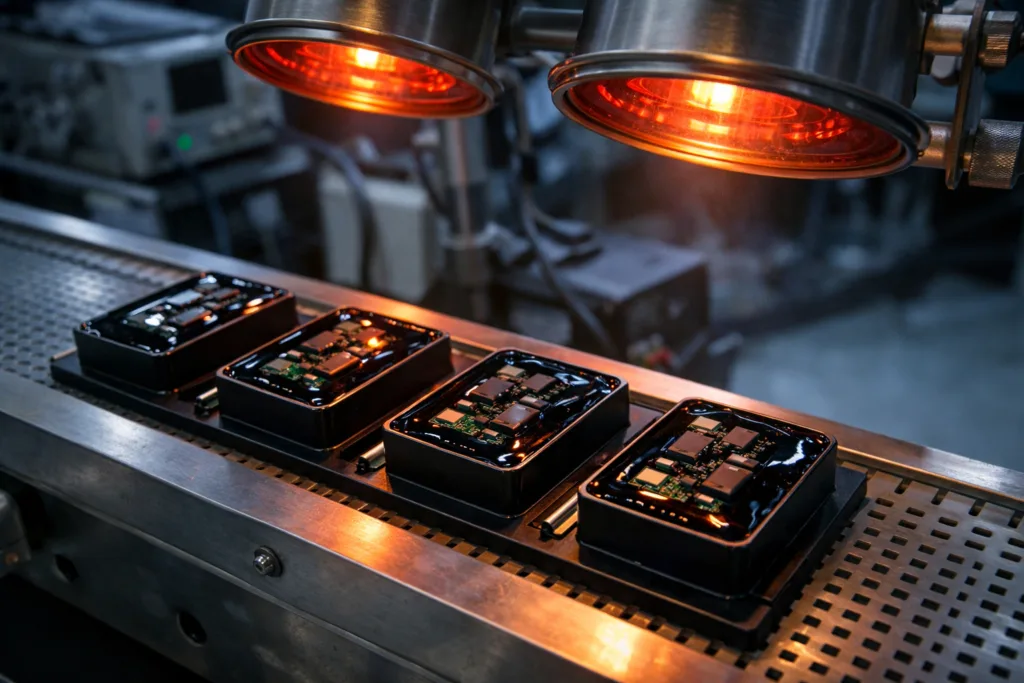
Production QC relies on precise Tg measurements, especially when customer specs dictate performance at temperature extremes. Reproducibility is critical—small variances in batch mixing or environmental controls can lead to drift in Tg and inconsistent performance. Many manufacturers automate DSC or DMA checks as a final step before product release.
Comparing Tg in Epoxies, Polyurethanes, and Silicones
| Property | Epoxy | Polyurethane | Silicone |
|---|---|---|---|
| Typical Tg (°C) | 50–180 | -50–60 | -120–-40 |
| Best Use | High-rigidity/Structural | Flexible/Elastic | Extreme flexibility/High temp |
| Common Failures | Brittle at cold | Soft above Tg | Low mechanical strength |
Glass Transition Temperature (Tg) and Service Temperature Window
Epoxies are best used at least 10–20°C below their Tg to ensure high load-bearing capacity. When service temperature approaches Tg, modulus, and bond strength can fall rapidly, increasing the chance of deformation or failure. For assemblies facing temperature swings, this margin becomes a vital design consideration.
How to Select the Right Epoxy Based on Tg
- Define Service Temperature Range: Maximum/environmental extremes are most important.
- Consider Mechanical Loads: Higher loads need epoxies with extra margin below Tg.
- Assess Longevity Expectations: Critical for industrial or automotive bonds subject to aging and cycling.
- Review Application Method: Some high-Tg epoxies require heat-curing, limiting field repairs.
Tg and Regulatory Testing: ISO and Industry Standards
Epoxy-based adhesives commonly undergo testing under international standards like ISO 11357 (DSC for polymers) and ISO 6721 (Dynamic Mechanical Analysis) to define Tg and ensure reliability in certified applications.
Case Study: How Tg Choices Impact Epoxy Bond Failures
An automotive electronics assembly experienced sporadic failures after outdoor exposure. Investigation revealed the selected epoxy’s Tg was only 10°C above local summer temperatures. Modification of the formulation for a higher Tg cured the issue permanently by restoring mechanical integrity at service temperature.
Application-Specific Tg Recommendations
| Application | Preferred Tg (°C) | Reasoning |
|---|---|---|
| Electronics Encapsulation | > 120 | Minimize deformation, resist soldering temps |
| Outdoor Construction | 70–110 | Withstand summer heat swings |
| Flexible Bonding | 30–50 | Retain low-temp flexibility |
First-Hand Tips for Preventing Tg-Related Epoxy Failures
- Always double-check data sheets for both initial and post-cure Tg.
- Specify a minimum 15°C difference between maximum expected temperature and Tg for structural joints.
- Consider environmental conditions — humidity, UV, and chemicals can lower Tg over time.
- Where possible, run quick DSC/DMA checks on cured samples, especially for mission-critical components.
How ZDS Adhesive Applies Tg Principles in Solution Engineering
From an assembly-line viewpoint, ZDS Adhesive, an industrial adhesive manufacturer, typically selects epoxies with a Tg that is at least 20°C higher than the peak service temperature for most automotive and electronics applications. This approach reliably prevents thermal creep, softening, and bond-line collapse during thermal cycling or high-demand events. Consistent quality is maintained through batch DSC checks and accelerated aging simulations to ensure no downward drift in Tg due to process variability.
Glass Transition Temperature (Tg) in Epoxies: Practical Examples
- A marine coating failure traced to low-Tg epoxy softened during deck operations in summer heat—solved with high-Tg resin switch.
- A wind turbine blade adhesive outlasted others due to a carefully engineered high Tg and filler combination, maintaining rigidity in both sun and snow.
Pros and Cons of High Tg vs. Low Tg Epoxies
| Feature | High Tg Epoxy | Low Tg Epoxy |
|---|---|---|
| Heat Resistance | Excellent | Poor to Moderate |
| Flexibility | Stiff/Brittle | Flexible |
| Aging Resistance | Strong | Fair |
| Application Scope | Electronics, Aero, Structure | Damping, Flexible bonding |
Latest Trends: Tg and Functional Additives in 2026
Recent advancements in 2026 show formulators introducing nano-fillers and hybrid co-polymers for fine-tuning Tg while maintaining toughness. These innovations allow designers to push the boundaries—combining excellent thermal stability with impact-resistant properties once thought incompatible.
Understanding Glass Transition Temperature (Tg) in Epoxies
Grasping Tg is essential for specifying the right epoxy for any application. It is the gatekeeper of heat resistance, mechanical performance, and longevity. Every manufacturer and engineer must learn to read, test, and respect this property for success in high-stakes assembly and product design.
Conclusion: Master Tg for Epoxy Success
Mastering glass transition temperature is essential for reliable, high-performance bonds and coatings. By understanding Tg—and how formulations, curing, and external conditions influence it—professionals can avert costly failures and extend the lifecycle of products. Whether you’re working in automotive, electronics, or heavy construction, treating Tg as a design cornerstone ensures your epoxy applications stay strong, secure, and stable for years to come.
Frequently Asked Questions
What is the typical Tg range for most epoxy resins?
Most epoxy resins have a glass transition temperature (Tg) between 50°C and 180°C, depending on formulation and curing conditions.
How can you increase the Tg of an epoxy system?
Increasing crosslink density through higher curing temperatures, using aromatic curing agents, or post-curing the material are effective ways to raise Tg.
What happens if an epoxy is used above its Tg?
Above Tg, the epoxy softens, loses mechanical strength, and may experience creep, deformation, or adhesive failure under load.
How is Tg different from melting point?
Tg marks a transition from rigid to soft, but not liquid, while melting point (Tm) is when the polymer becomes a true liquid.
Why does the choice of hardener affect Tg?
Different hardeners produce varying degrees of crosslinking, directly impacting the temperature at which the material transitions from glassy to rubbery.
Can environmental conditions alter Tg over time?
Prolonged exposure to humidity, chemicals, or UV radiation can reduce Tg through plasticization or chemical breakdown, lowering long-term performance.
Related Reading
- How Industrial Epoxy Adhesive Strength Changes with Temperature
- Epoxy vs Silicone vs Polyurethane: The Performance Trade-Offs
- Industrial Adhesives Selection Guide: Picking the Right Chemistry
- Pro’s Guide to 1-Part vs 2-Part Epoxy: Mixing, Curing, and Success Rates
- Surviving the Heat: High-Temperature Adhesives Explained