Why a Smart Industrial Adhesive Guide Matters
Every manufacturing or assembly project pushes its own limits. What bonds the parts together must do more than simply stick—it must last, endure, and protect. The right industrial adhesive becomes part of your quality assurance. But the wrong choice? It can cause failures, costly downtime, or even product recalls. This industrial adhesive guide will help you navigate options, so your choice supports both your process and product performance.
Understanding Adhesive Selection: The Fundamentals
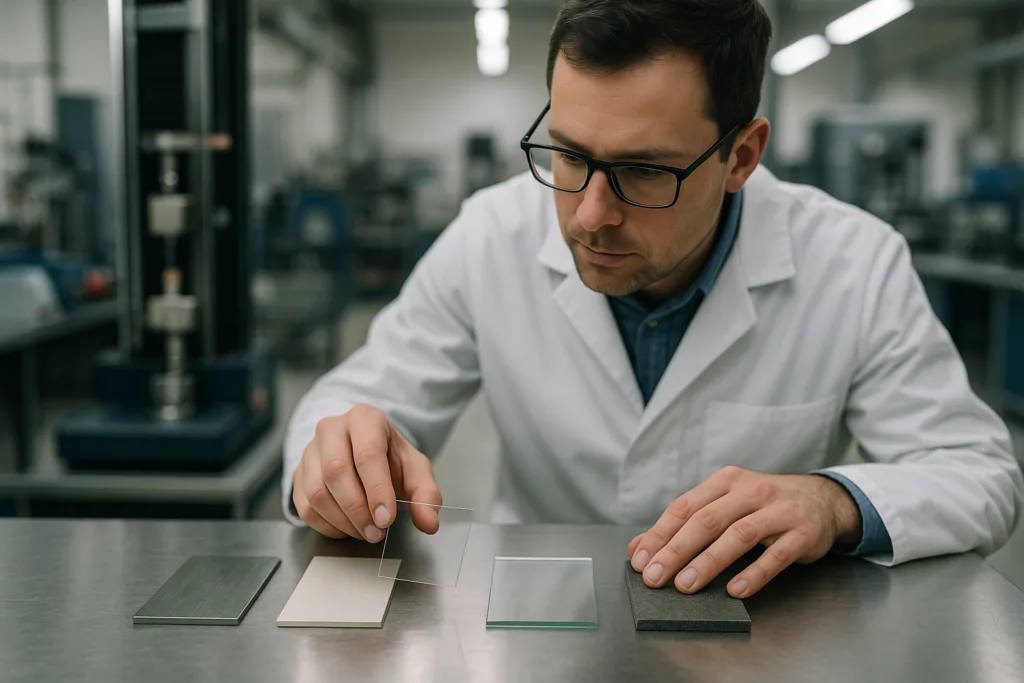
Adhesive selection is more than picking a type from a shelf. It begins with the basics—what is being bonded, what forces the bond must resist, and the operational environment. Key factors include:
- Materials to bond: Metal, plastic, glass, composites, stone, or specialty substrates
- Expected loads: Shear, peel, tensile, impact, vibration
- Service environment: Temperature, moisture, UV, chemicals, outdoor exposure
- Speed and method of production: Manual, automated, batch, or continuous lines
- Quality and compliance needs: Certifications, safety data, and regulatory documents
Each variable narrows the choice. For example, bonding aluminum to polypropylene for an automotive sensor calls for very different chemistry than joining granite slabs in a commercial kitchen. ZDS, a trusted manufacturer, often starts adhesive selection consultations by mapping out these needs step by step.
Materials Drive Chemistry
The nature of your substrates is often the first filter. Metals offer high strength and good surface energy for gripping. Plastics vary—ABS and PC are easily bonded, but PP or PE may need surface treatment like corona discharge. Composites, ceramics, and glass each have quirks: thermal expansion, brittleness, or porosity.
Surface Preparation Matters
No adhesive will perform to spec if the surface isn’t ready. Clean off oil and dust. Use grit-blasting or abrasion for metals. For plastics, consider primers or plasma treatments. Well-prepared surfaces improve adhesion and boost bond life.
Industrial Adhesive Guide: Major Chemistries Compared
Adhesives come in many forms, each with tradeoffs in strength, flexibility, speed, and resistance. The table below compares common options:
| Chemistry | Substrate Compatibility | Strength (MPa, Lap-Shear) | Open Time | Best Uses |
|---|---|---|---|---|
| Epoxy (1K/2K) | Metals, composites, stone, some plastics | 20–35 | 5–120 min | Structural, high-load, electrical potting |
| Polyurethane (PU) | Plastics, wood, metals | 10–25 | 10–60 min | Flex joints, composite panels |
| Acrylic | Metals, glass, plastics (ABS/PC) | 15–35 | 2–30 min | Fast assembly, automotive exteriors |
| Silicone | Glass, ceramics, metals | 2–5 | 10–30 min skin | Sealing, thermal cycling tolerance |
| Cyanoacrylate (CA) | Plastics, rubber, metals (small parts) | 10–20 | Seconds | Precision, electronics sub-assembly |
| Hybrid MS/SMX | Metals, plastics, stone | 7–15 | 5–15 min | Flexible, weatherproof assemblies |
| Tape/Film | All, with prep | Varies (up to 10) | Immediate | Surface bonding, lamination |
Strength: How Much Is Enough?
Structural adhesives like epoxies and acrylics deliver the highest lap-shear strength (over 30 MPa), standing up to heavy loads and long-term fatigue. For lighter assemblies or those needing movement (think vibration dampening), polyurethanes or hybrids may be preferable. Always consult lap-shear, peel, and tensile data from lab-tested sources such as ASTM D1002 or D1876.
Environment: Defining Your Bond’s Battlefield
Exposure to water, heat, UV, chemicals, or freeze-thaw cycles eats away at unfit adhesives. Silicones shrug off temperatures from -50°C to 200°C and offer top-notch flexibility after aging. Epoxies resist more chemicals but may become brittle at high temperatures. Polyurethanes excel outdoors and with vibration. Always match adhesive environment ratings to your worst-case scenario on the line or in-service.
Adhesive Selection: A Step-by-Step System
For process engineers and plant managers, selection needs to be systematic. Use this checklist to guide your next sourcing round:
- Define Materials: List all substrates and note any surface treatments or coatings.
- Specify Loads: Determine if the joint will see static, dynamic, peel, or shock forces.
- Evaluate Environment: Project exposure to heat, moisture, solvents, UV, salt, or abrasion.
- Set Processing Rules: Clarify open time, fixture/handling time, and cure schedule widths.
- Final Use Profile: Decide if the bond can bear load instantly, or needs curing under fixture pressure.
- Identify Compliance: Confirm regulatory, safety, VOC/REACH, or traceability needs.
This structured approach cuts guesswork and saves costly rework. ZDS technical specialists support these steps by offering lab adhesive screening tailored to your unique substrates and assembly flow.
Matching Cure Profile to Your Process
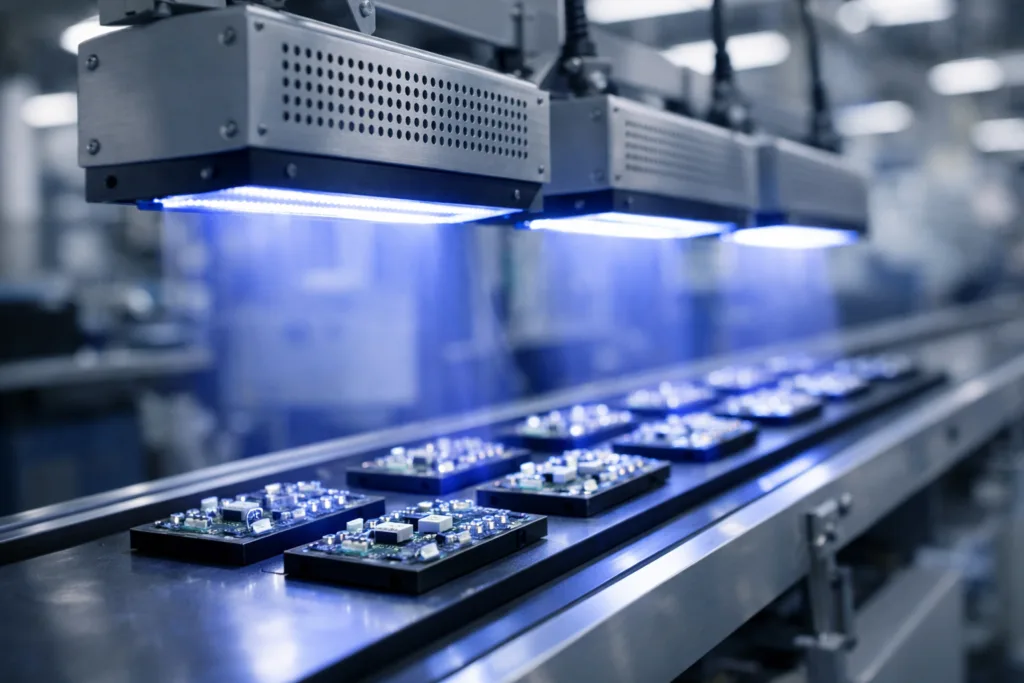
Consider your production setup. High-volume lines favor adhesives that set fast and cure at room temperature. UV-curing acrylics work for transparent plastics and glass. Two-component epoxies can be tuned for speed but may require heated curing or post-bake for maximum strength. Tapes provide instant green strength—handy for electronics or automotive trim work.
Pot Life, Viscosity, and Handling
Adhesive pot life—how long it remains workable after mixing—affects line speed and waste. Viscosity, measured in centipoise (cP), controls flow, bead shape, and gap filling. Thin adhesives suit fine lines or capillary action, while thixotropic (gel-like) adhesives resist sag on overhead parts.
Testing, Inspection, and Quality Control
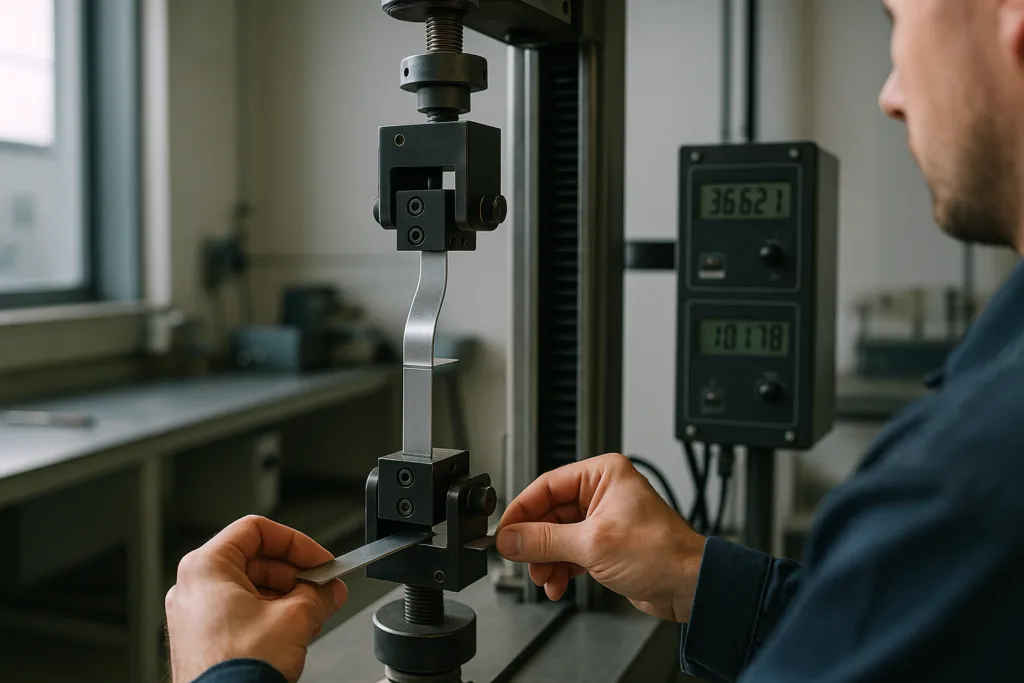
Lab testing cements your choice. Expose bonded samples to salt spray (ASTM B117), cycling heat/humidity, or tensile stress. Inspect joints using pull-off, shear, or peel methods. Retain batch data, certificates, and safety data sheets (SDS). Always store adhesives per the adhesive manufacturer’s guidelines for best shelf life—most epoxies and polyurethanes keep best at 15–25°C in sealed containers.
Performance in Demanding Conditions
Certain environments stress adhesives in unique ways. Industrial ovens, automotive under-hood spaces, or outdoor signage face harsh cycles of heat and cold. Epoxies rated at over 120°C glass transition temperature (Tg) might be required for bake-cured parts or electronics. For freeze-thaw or vibration, hybrids and high-elongation silicones protect against fracture. Always simulate your harshest conditions using test coupons before full rollout.
Resistance to Chemicals and Solvents
In chemical plants, food processing, or lab settings, adhesives must resist corrosion and breakdown. Consult chemical resistance charts, but always test in-house if possible with process fluids or expected contaminants. Adhesives that pass a 1,000-hour salt spray test or repeated solvent exposure are more likely to deliver in real-world use.
Managing Thermal Expansion
Dissimilar materials expand at different rates under heat. Metal bonded to glass or composite panels can experience joint stress. Select adhesives that combine strong adhesion with enough flexibility (elongation over 100%) to absorb expansion cycles without cracking or loss of strength.
Special Applications and Compliance
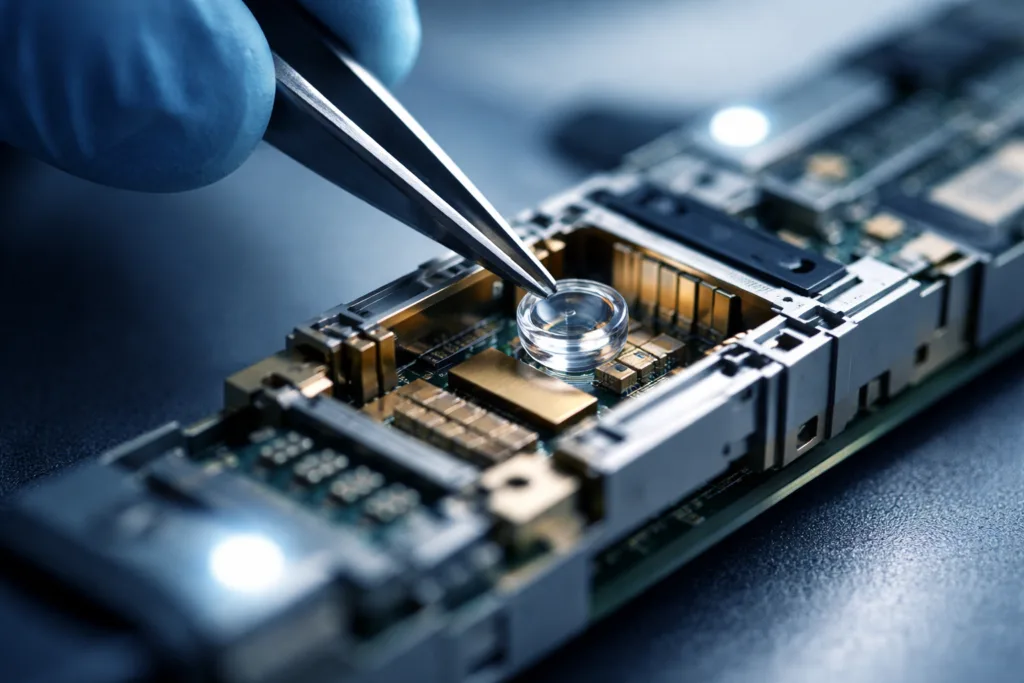
Certain industries demand more. Electronics require potting compounds with low outgassing and electrical insulation. Automotive uses often rely on tough acrylics or polyurethanes that pass crash and vibration tests. Construction adhesives for stone or flooring must resist water ingress and cycles of foot traffic. Always review compliance documents: VOC, REACH, RoHS, and ISO 9001 certificates signal responsible formulation and manufacturing.
Dispensing Methods: From Bead to Roller
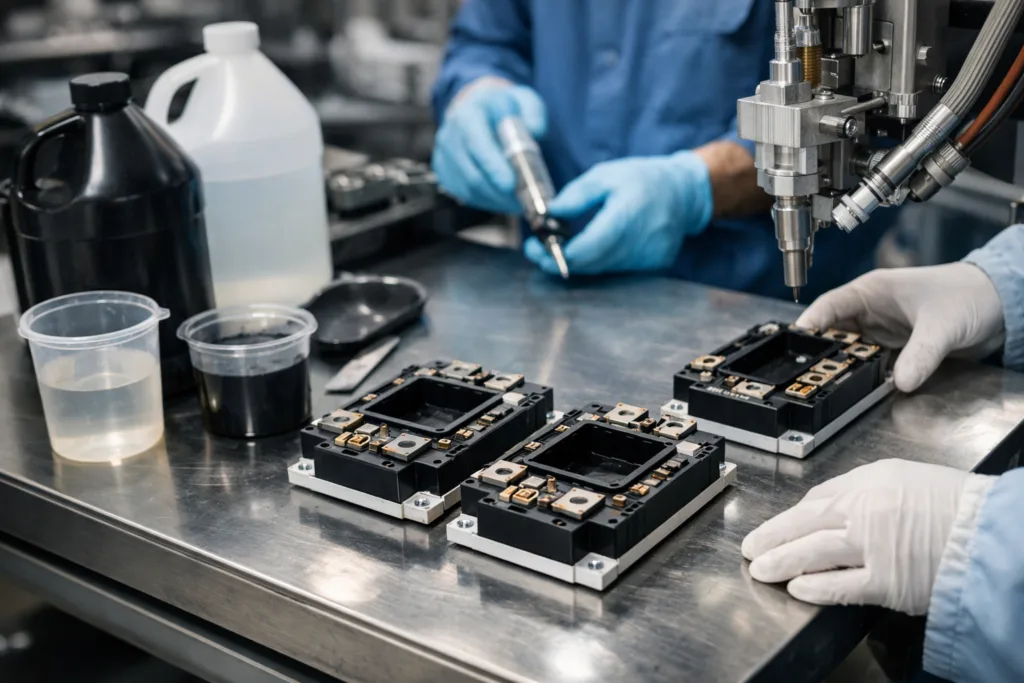
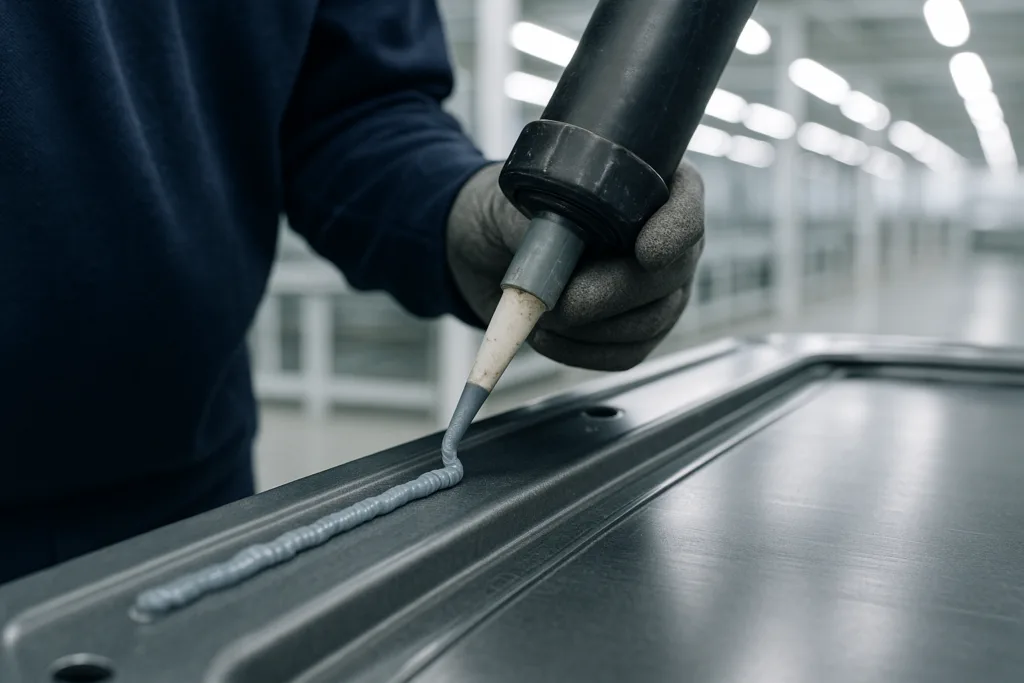
Choose an adhesive compatible with your application equipment. Cartridge bead, roll-coating, slot-die, or static mixing systems all influence fill, gap, and repeatability. For automation, control viscosity and cure speed—robotic arms require predictable flow and set times for programmed cycles.
Documentation and Traceability
Maintain proper lot traceability. Use batch numbers, certificates, and signed-off QC records—especially when exporting. This practice reduces risk, supports recalls, and demonstrates best practice to audit teams and customers alike.
How to Choose the Right Industrial Adhesive
Summing up all the above, here is a streamlined industrial adhesive guide for selecting the right adhesive every time:
- Know Your Materials: Record exact substrate types, finishes, and surface prep.
- Analyze Your Environment: Temperature, humidity, exposure chemicals, UV, weather.
- Define Bond Strength: Use application-specific tests (lap-shear, T-peel, tensile) to qualify needs.
- Choose the Right Cure: Decide between fast vs. slow, room temperature vs. heat, 1K vs. 2K systems.
- Check Regulatory Fit: VOC, REACH, RoHS, food-grade, or other certifications as required.
- Test, Approve, Document: Always verify on real joints before full production use.
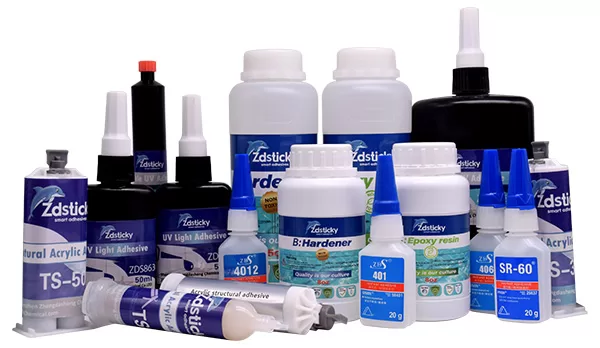
Expert Tip: Partner with a knowledgeable supplier. ZDS offers technical support, custom lab trials, and product samples so you can validate the fit and performance before mass adoption.
Sourcing Advice
Engage with suppliers early. Share your real-world requirements, test results, and pain points. Ask for technical data sheets, case studies, and recommendations tailored to your manufacturing process. Verify availability of multiple packaging options—bulk, cartridges, or pre-applied tapes. Insist on robust documentation and logistics support for large-scale projects.
The Future of Industrial Adhesives
As technology advances, so do adhesive capabilities. New generations target specific pain points—faster cure times, higher green strength, greater environmental protection, and easier recycling. Smart adhesives with built-in sensors or self-healing chemistries could soon play a big role in automotive, electronics, and green construction. Stay engaged with your suppliers and industry standards to capture emerging benefits.
Sustainability Trends
Choices now extend beyond performance—greener chemistries, lower VOC adhesives, and options designed for easy disassembly or recycling are emerging. ZDS is active in developing sustainable solutions, aiming to reduce environmental impact without sacrificing bond reliability.
Frequently Asked Questions
What is the best industrial adhesive for metal-to-plastic bonding?
Acrylics or surface-activated epoxies usually work best, especially when the plastic is treated with primer or plasma to boost surface energy. Always test the adhesive on the exact materials in your assembly line before committing to bulk use.
How do I prepare surfaces for optimal adhesive strength?
Clean surfaces thoroughly to remove oils, dust, or residues. Abrade or grit-blast metals for mechanical adhesion and use primers on plastics to increase wettability and bond strength.
How does curing temperature affect adhesive choice?
Cure temperature influences final bond strength and speed. Higher temperatures typically increase epoxy strength but may damage sensitive substrates. Choose room-temperature cures for heat-sensitive parts and heated cures for maximum structural strength.
What tests determine adhesive reliability?
Perform lap-shear (ASTM D1002), T-peel (ASTM D1876), and salt spray (ASTM B117) tests to evaluate mechanical and environmental performance. Simulate actual service conditions wherever possible.
Are low-VOC adhesives as strong as traditional ones?
Modern low-VOC adhesives can offer excellent strength and environmental resistance, matching or exceeding the performance of older formulations in many cases. Review certified test data to ensure they meet your requirements.
Can one adhesive work for all materials and environments?
No universal adhesive suits every situation. Each chemistry and formulation targets a specific set of substrates, environments, and load profiles. Always match the adhesive to your exact needs and validate through testing.