What Makes Industrial Sealants and Adhesives Different?
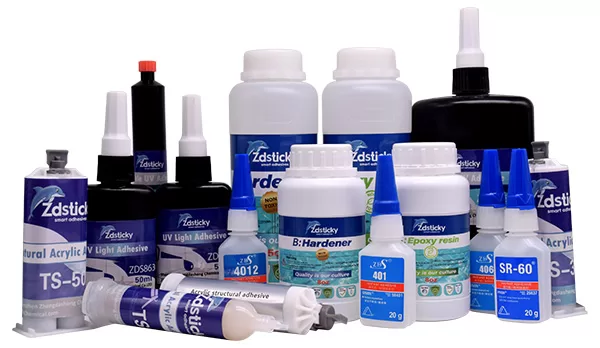
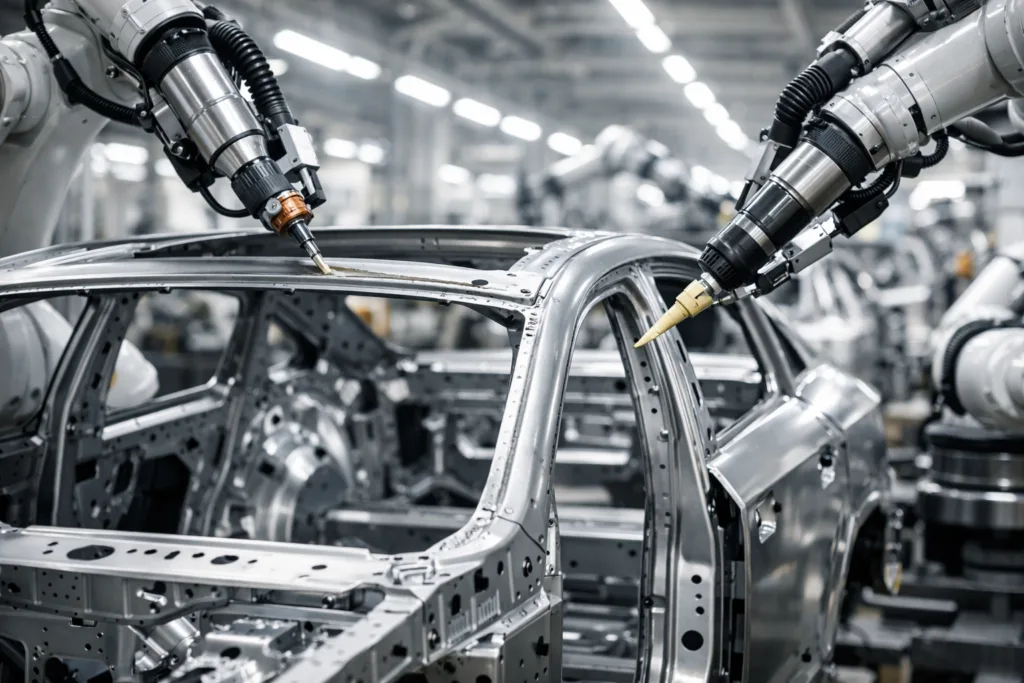
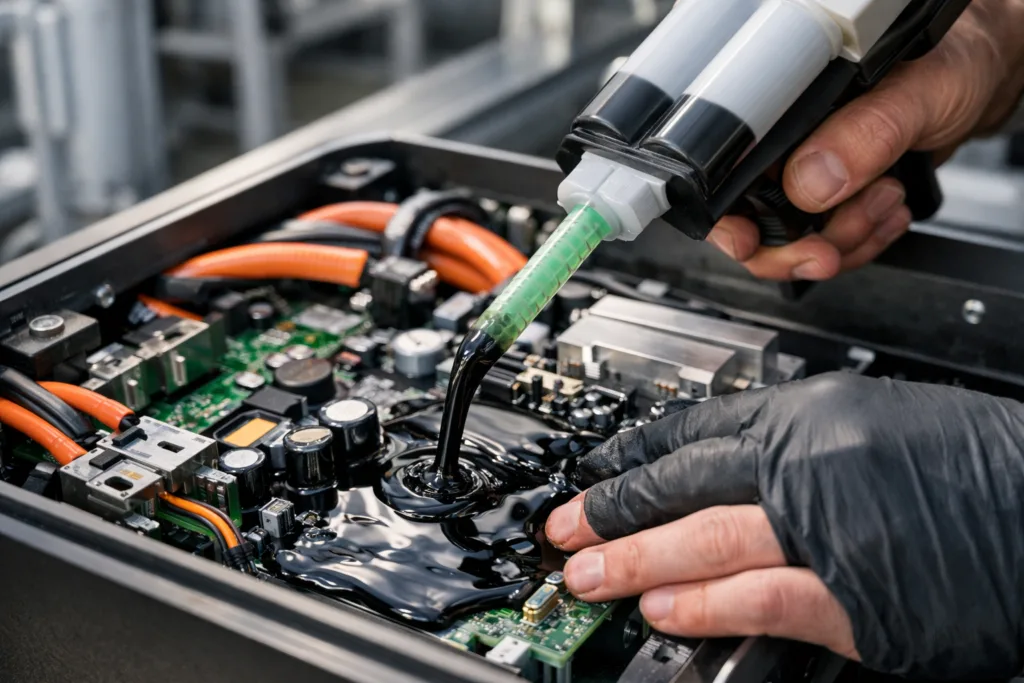
When precision and long-term durability count, understanding the difference between industrial sealants and adhesives is essential. While the terms are sometimes used interchangeably, adhesives are engineered for strong, load-bearing bonds, while sealants are formulated to fill gaps, accommodate movement, and stop the ingress of water, dust, or chemicals. The lines can blur, especially with modern hybrid chemistries and demanding engineering scenarios—often leading to hybrid products that offer both some bonding and sealing properties. This article unlocks the precise differences, selection criteria, and smart use cases for each, tailored for technical decision-makers, maintenance planners, and engineers facing harsh environmental and assembly realities.
Understanding the Core Functions: Sealing vs Bonding
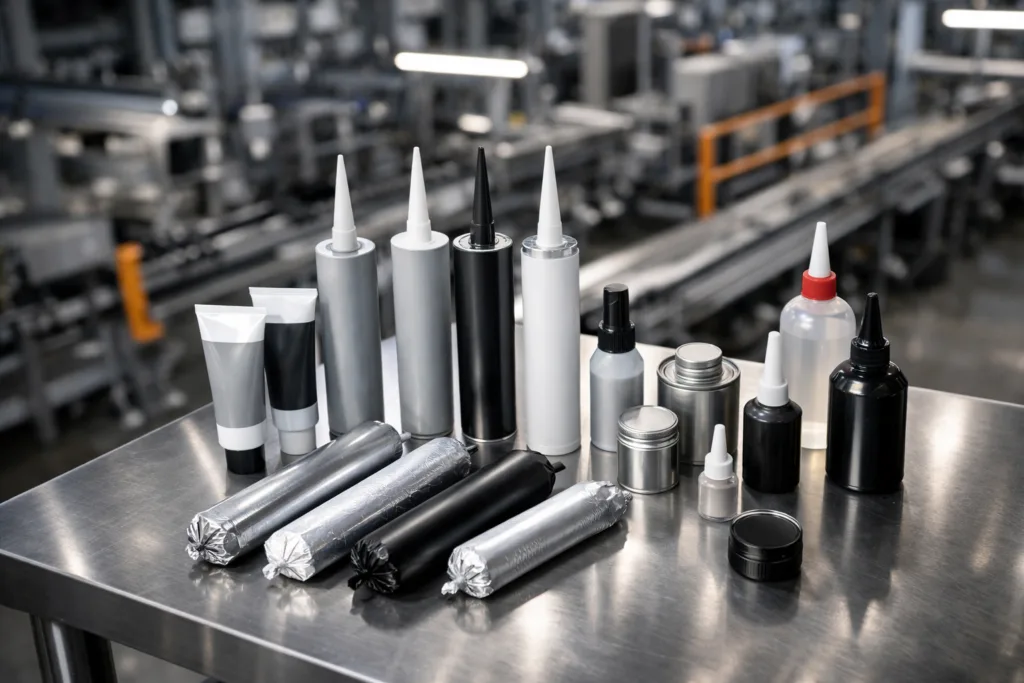
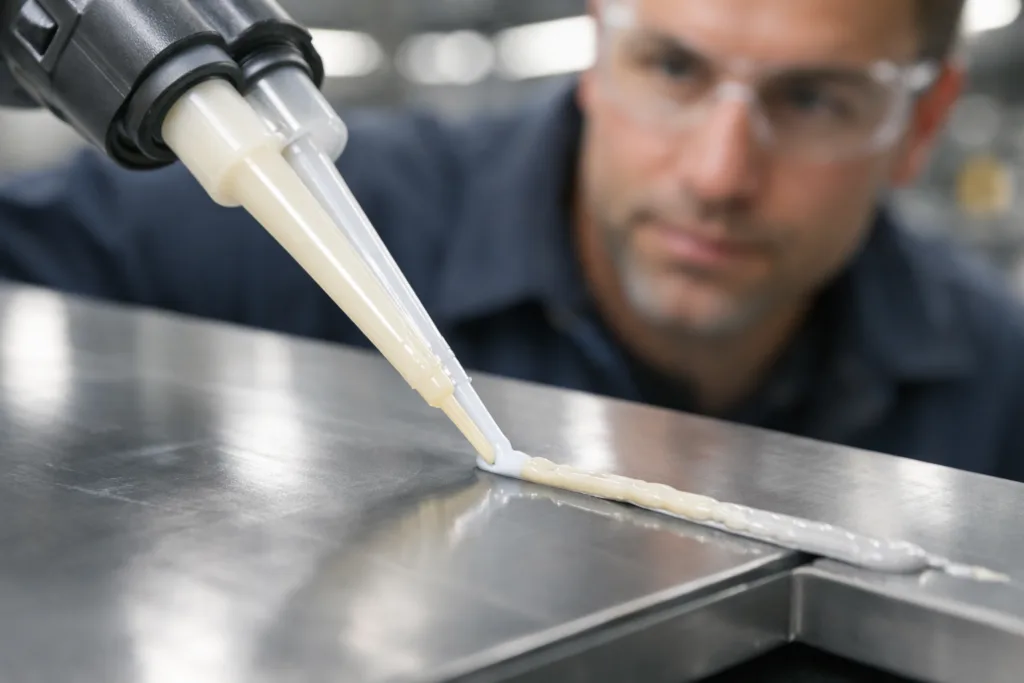
At the heart of every assembly is a performance requirement: will the joint be held together, protected from the outside world, or both? Industrial adhesives are designed primarily for structural integrity—joining parts so loads, stress, and vibration are transferred safely through the bond line. By contrast, industrial sealants focus on environmental barriers, keeping out water, dirt, air, and chemicals across complex joint geometries or between dissimilar materials.
Adhesive: The Invisible Fastener
- Forms strong, load-transmitting bonds
- Often replaces mechanical joining (rivets, welds, screws)
- Can distribute stress over wider areas, reducing peak loads
- Primary job: assembly strength and reliability
Sealant: The Environmental Shield
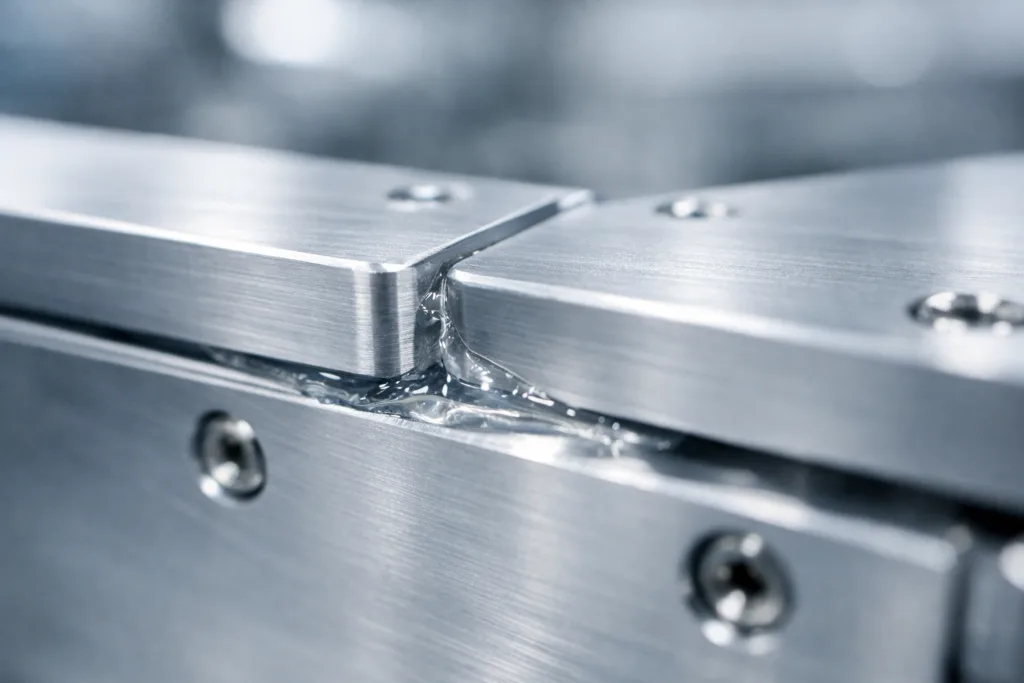
- Fills gaps, movement joints, and surface irregularities
- Prevents water, dust, gas, and chemical intrusion
- Accommodates expansion/contraction without losing function
- Primary job: environmental exclusion and flexibility
| Adhesive | Sealant | |
|---|---|---|
| Key Function | Bonding & strength | Sealing & flexibility |
| Primary Use | Loads, fixtures, joints | Gaps, interfaces, environmental |
| Typical Modulus | High (rigid/structural) | Low (elastic/flexible) |
| Gap Filling | Often limited | Excellent (large gaps, tolerances) |
| Movement | Minimal (<1%) | Substantial (10–50%+) |
Types of Industrial Sealants
Sealants span a range of chemistries—each suited for different applications. Key types include:
- Silicone Sealants – Outstanding flexibility, UV, and temperature resistance; ideal for exterior joints, electronics, or glazing.
- Polyurethane Sealants – High movement, robust adhesion, paintable, often used for construction, automotive, and panel joints.
- MS Polymer & Hybrid Sealants – Blend flexibility, adhesion, and weather resistance; excel in multipurpose and challenging environments.
- Polysulfide Sealants – Exceptional chemical resistance and flexibility, used in aerospace and chemical tank sealing.
- Acrylic Sealants – Fast cure and paintable; used for interior gaps, minor movements, or weatherproofing.
What Makes a High-Performing Industrial Sealant?
- Wide movement accommodation (± 25% or more)
- Excellent environmental resistance (UV, water, chemicals)
- Long-term adhesion to mixed substrates (glass, metal, plastics, masonry)
- Ease of application and tooling
Modern hybrid sealants, combining polyurethane and silicone technologies, are gaining traction for performance across a wide range of applications. These can be found in sectors requiring both robust sealing and a level of adhesion, such as façade systems and vehicle body closures.
Leading Industrial Adhesive Types and Where They Excel
Adhesives solve problems where high loads, durability, or dissimilar material joining is essential:
- Epoxy Adhesives – Exceptional strength, thermal and chemical resistance, often used for metal, composite, or high-precision assembly (see epoxy adhesives).
- Acrylic Structural Adhesives – Fast fixture, tough, can bond through oily surfaces, and highly resistant to impact (acrylic adhesives overview).
- Polyurethane Adhesives – Flexible, yet strong; good for mixed materials and impact resistance.
- Cyanoacrylate (Super Glue) – Rapid bonding, excellent for small parts, electronics, and incident repairs.
- UV-Curing Adhesives – Enable instant bonding for clear plastics, glass, and delicate assemblies.
- Anaerobic Adhesives/Threadlockers – Bond and seal metallic fasteners against vibration, loose parts, and leaks.
Applications Where Only a Sealant Makes Sense
Sealants are indispensable when joint movement, substrate expansion, or repeated environmental challenges are expected. Examples include:
- Weatherproofing building envelopes, curtain wall, and expansion joints
- Sealing cable entries, electrical enclosures, or LED driver boards
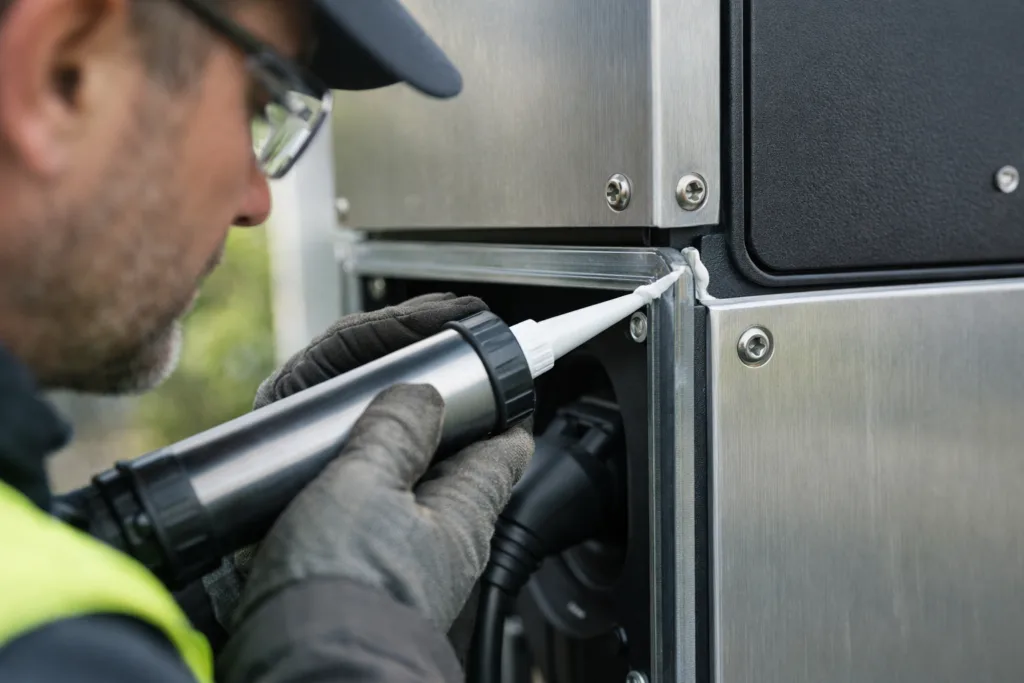
- Outdoor telecom or charging stations exposed to water or dust
- Vehicle glass and sunroof perimeter seals (see automotive glass adhesives & sealants)
In these scenarios, movement, temperature cycles, or permanent flexibility are more important than the ultimate tensile strength of the joint.
When Is a High-Strength Adhesive the Right Choice?
If the primary goal is replacing welds, rivets, or remaining fasteners, adhesives outshine sealants by creating joints that not only hold but distribute force. The following cases call for a technical adhesive approach:
- Structural assembly in automotive (body-in-white, hem flange, crash-resistant bonding)
- Composite panel and metal bonding in rail or marine applications (marine structural adhesives in use)
- Magnet, e-motor, or printed circuit bonding where vibration and shock must be solved
- Assembly of heat sinks, optics, or electronics for robust, low-viscosity flow
Here, movement is often low and rigid bonding maximizes strength, impact resistance, or load capacity over a durable lifecycle.
Hybrid Adhesive-Sealant Solutions: When You Need Both
Sometimes, applications require both strong bonds and flexible sealing. Hybrid systems (polyurethane-silicone, MS polymer-based, or modified acrylics) can offer a balance between assembly strength and ongoing flexibility—key for applications like bus body panels, HVAC enclosures, and high-movement facade elements. These hybrids are engineered for “bond & seal”, resisting both movement and mechanical loads to a defined degree. Proper technical assessment is required: never substitute a hybrid for pure adhesive or sealant unless test data and application realities agree.
Environmental Sealing Needs: Water, Dust, Chemical, and UV Barriers
In many industries, stopping ingress is as important as joining. This is especially true where electronics, electrical panels, or outdoor infrastructure must survive decades of exposure. The type of sealant or adhesive selected should provide:
- IP65–IP68 moisture resistance (see IP68 weatherproofing strategies)
- Salt spray/corrosion resistance for marine or industrial atmospheres
- Long-term UV and ozone stability for exterior joints
- Chemical and solvent resilience in aggressive factory or infrastructure settings
Movement Accommodation and Thermal Expansion
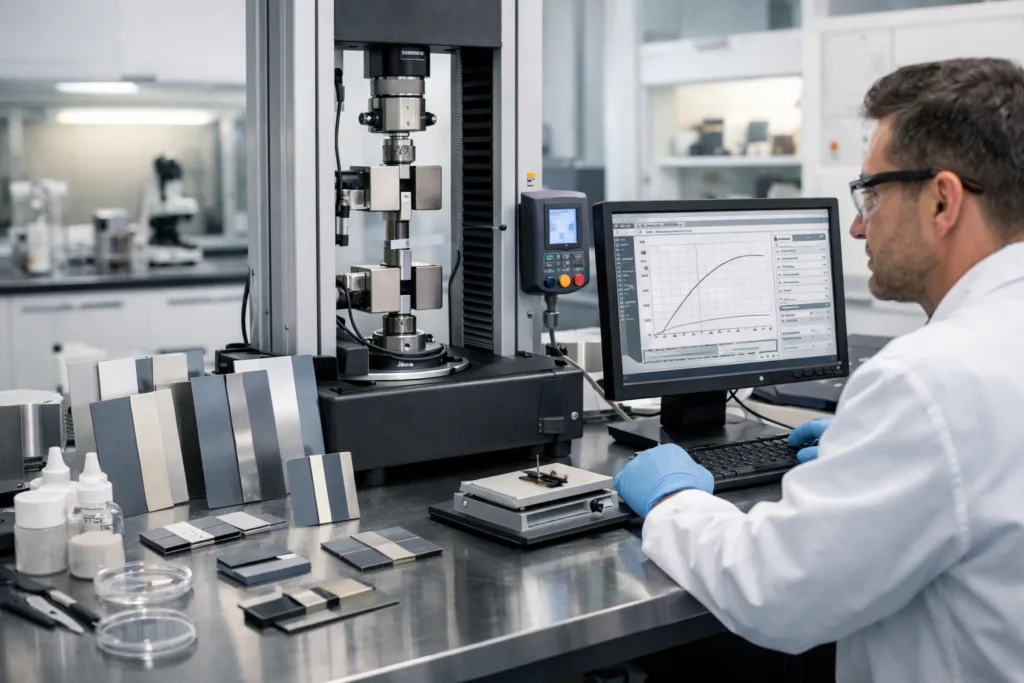
Movement occurs from thermal cycles, mechanical vibration, and expansion/contraction of substrates with different coefficients of thermal expansion (CTE). Sealants are engineered to flex, compress, and return to shape—usually up to 50% of the joint width, as per ASTM and ISO movement tests. Typical adhesives (such as epoxies or cyanoacrylates) will crack or lose adhesion under movement, but elastic adhesives and hybrids are designed specifically for these scenarios. At ZDS Adhesive, test methods such as cyclic thermal extension, lap-shear, and humidity aging are used to map performance to end-use conditions.
Long-Term Weatherability and Durability
Industrial assemblies are built for decades, and weatherability is non-negotiable. This is where specialty sealants (silicones, MS polymers, polyurethanes) show their value: retaining elasticity, adhesion, and appearance after thousands of hours of UV, freeze-thaw, and chemical cycling.
- Sealants must pass color change, elongation, and adhesion tests post-weathering
- Proper substrate cleaning or primer selection is critical for optimal results
Real-World Case Studies: Sealant, Adhesive, or Hybrid?
Case 1: EV Charging Pile (Outdoor) — Requires both robust sealing (IP68 waterproof) and strong adhesive for panel mounting. Recommended: Hybrid polyurethane/silicone system tested for outdoor durability.
Case 2: HVAC Duct Panel Joints — Faces movement, vibration, moisture ingress. Use a high-flexibility polyurethane sealant on all seams.
Case 3: Aluminum Facade Assembly — Structural bonding required with weather sealing. Combine a high-strength structural adhesive with an outer UV-stable silicone bead for durability.
Checklist: How to Choose Sealant vs Adhesive vs Hybrid
- Is the joint expected to move? — Choose a sealant or elastic adhesive for >5% movement
- Load-bearing or structural? — Choose a tested adhesive system
- Does the surface need to be weatherproof, chemical-resistant, or flexible? — Pick a sealant
- Hybrid approach required? — Select only products rated for bond & seal, and validate with real test data
Common Pitfalls and Smart Practices
- Do not substitute a sealant for a structural adhesive—or vice versa—unless you have data to verify performance for both roles
- Always check surface preparation and compatibility with actual substrates, especially plastics and composites
- Test for environmental resistance (water, UV, chemicals) under accelerated or real-world conditions
- Match cure profile (open time, fixture time, full cure) to actual assembly process needs
- Validate with lap shear, peel, or durability tests, not just datasheets
The ZDS Adhesive Experience: Application-Driven Insights
From an assembly-line viewpoint at ZDS Adhesive, an industrial adhesive manufacturer, reliable factory outcomes depend on matching product properties not just to specs, but to process realities—such as substrate cleanliness, operator work time, joint gaps, and in-service movement. When in doubt, our engineers run side-by-side tests simulating humidity, vibration, and rapid thermal cycles to select the right product. The rule is simple: choose the lowest modulus (flexibility) that meets your strength need and always challenge a product’s limits in real joint geometries before finalizing your selection.
The Future: Smarter Hybrid Solutions and Digital Testing
Advancements in formulation mean that the line between sealant and adhesive is gradually evolving. Expect to see more smart hybrids that dynamically adjust flexibility and adhesion, self-monitoring seals, and digital quality assurance processes that verify environmental performance in real time. In 2026, smart factories are already integrating material selection tools that score products for movement, strength, and barrier function simultaneously—eliminating old silos and preventing costly post-assembly failure.
Industrial Sealants vs Adhesives: Key Differences and When to Use Each

To sum up, sealants, adhesives, and hybrids each play unique roles in modern industrial assemblies. By analyzing tasks—load-bearing, environmental sealing, movement, or a combination—and matching products designed for those demands, engineers ensure production reliability and long-term asset performance.
Frequently Asked Questions
What’s the key difference between an industrial sealant and an adhesive?
Adhesives are designed to bond and hold parts together, transmitting load, while sealants fill gaps to block water, dust, air, or chemicals, accommodating movement and allowing for expansion or contraction.
Can a single product act as both adhesive and sealant?
Some hybrid products combine moderate bonding with flexible sealing, useful for applications needing both functions. However, pure structural strength or high movement usually requires a dedicated product.
When should I choose a high performing industrial sealant over an adhesive?
If the primary need is protection from water, dust, or chemicals and the assembly requires joint movement or thermal expansion, a sealant is the best choice. These products offer elasticity and are designed for environmental barriers.
What tests are used to qualify industrial sealants for harsh environments?
Common tests include accelerated weathering (UV, temperature cycling), chemical resistance, elongation after aging, and adhesion to various substrates under humidity or water immersion.
Can industrial adhesives replace mechanical fasteners?
Yes, in many scenarios (automotive, appliances, aerospace), structural adhesives replace welds or rivets, distributing stress, reducing weight, and enabling novel designs. Always verify with lap shear or peel tests.
Should I consult the manufacturer before using a hybrid adhesive-sealant product?
Absolutely. Only use hybrid systems when test data confirms support for both the assembly and sealing roles, and always check for compatibility with your exact substrates and conditions.
Related Reading
- The Ultimate Guide to Choosing Industrial Glue: What Actually Works in 2026
- Custom Manufacturing Adhesive Solutions: Step-by-Step Expert Insights
- 7 Advantages of Form-in-Place Gaskets for Gearbox Sealing
- Moisture Protection for Server Motherboards: 7 Ways That Work
- How Phase Change Materials Revolutionize Heat Sink Performance in 2026