Understanding Glass Bonding Challenges
Bonding glass can be tricky. Glass has a smooth, nonporous surface that resists most adhesives. Heat, stress, and chemicals can make joints fail over time. In display manufacturing, even tiny flaws show up under bright LED backlights. For optical uses, clarity and invisibility matter. Furniture makers need strong, lasting bonds that can handle vibration and force. Each situation asks for an adhesive that combines reliability, esthetics, and ease of use.
Why Traditional Adhesives Fall Short
Epoxies and polyurethanes offer good strength but can take hours to cure and may yellow or haze over time. Mechanical fasteners ruin the clean look of glass. Double-sided tapes give instant handling strength but sometimes lack long-term durability and transparency. That’s where UV adhesives come into play.
UV Adhesive for Glass
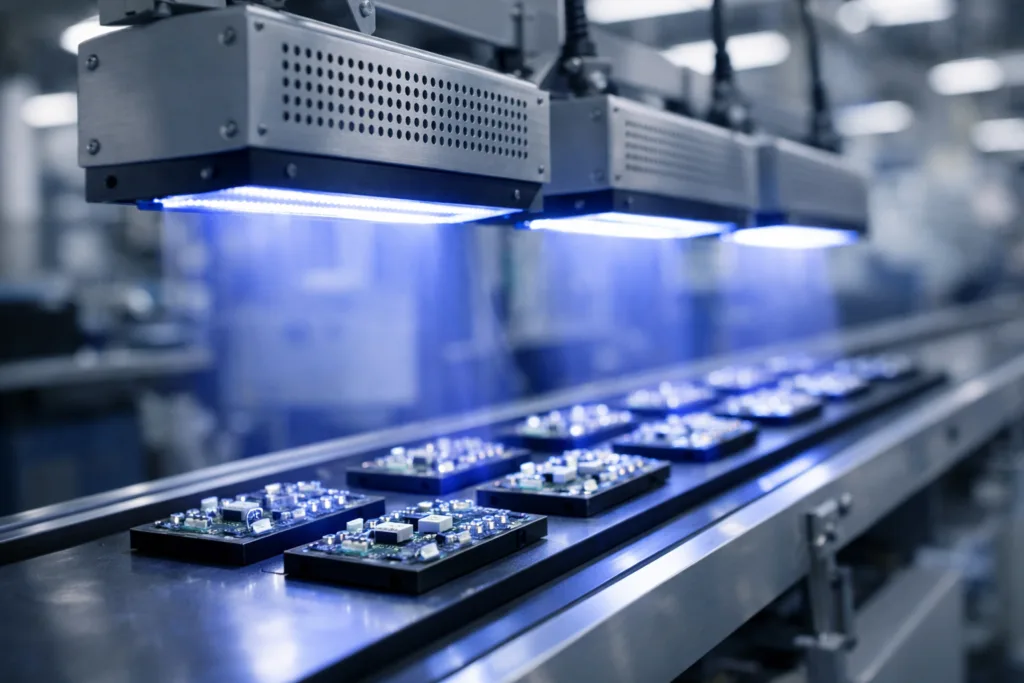
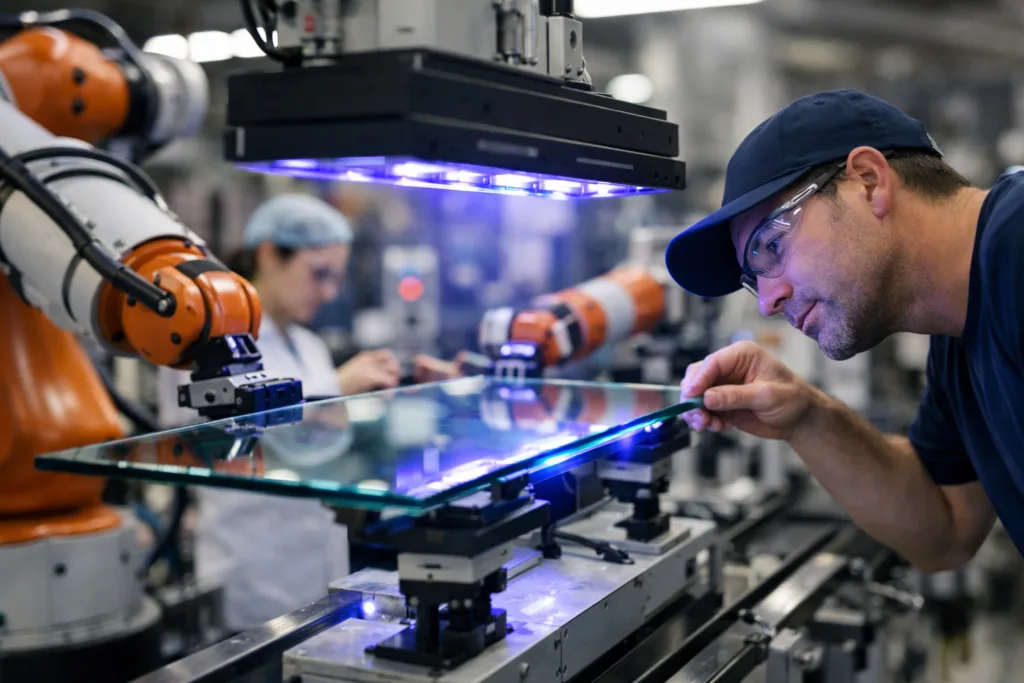
UV adhesive for glass is a specialized bonding solution that cures, or hardens, when exposed to ultraviolet light. It solves many of the headaches in glass joining. UV adhesives give a fast cure, high transparency, and strong bonds.
What Makes UV Adhesive Special?
- Instant Cure: Bonds set in seconds under UV light, saving time and boosting throughput.
- Crystal Clarity: The glue dries nearly invisible, ideal for optical or decorative needs.
- No Mixing Required: Most UV adhesives are single-component. Simply apply and cure.
- Strong Adhesion: Bonds withstand shock and vibration better than most transparent tapes.
- Versatile Application: Suitable for glass-glass, glass-metal, and glass-plastic combinations.
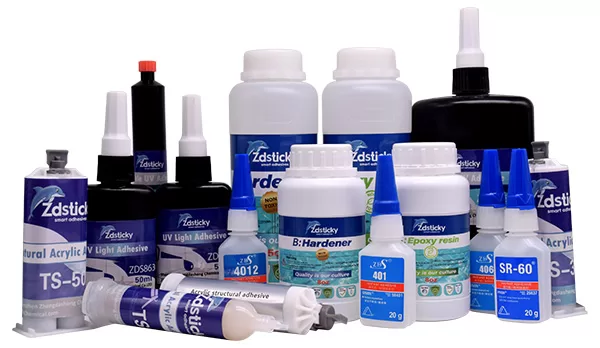
ZDS manufactures high-performance UV adhesives tailored for demanding glass applications, combining process simplicity with reliable durability.
Where UV Adhesive for Glass Shines
Let’s explore how UV adhesive for glass is transforming industries. Its advantages help tackle some of the toughest bonding needs in technology, optics, and design.
Display Assembly
Mobile screens and tablets rely on clean, robust glass-to-frame bonds. UV adhesives ensure rapid assembly, perfect edge clarity, and flexible handling. Large TV panels use UV glue for attaching bezels and sensor glass.
Benefits
- High optical transmission—no yellowing or blurring.
- Resists heat and humidity cycles (thermal cycling, see ASTM standards).
- Quick process for mass production lines.
Optical Bonding
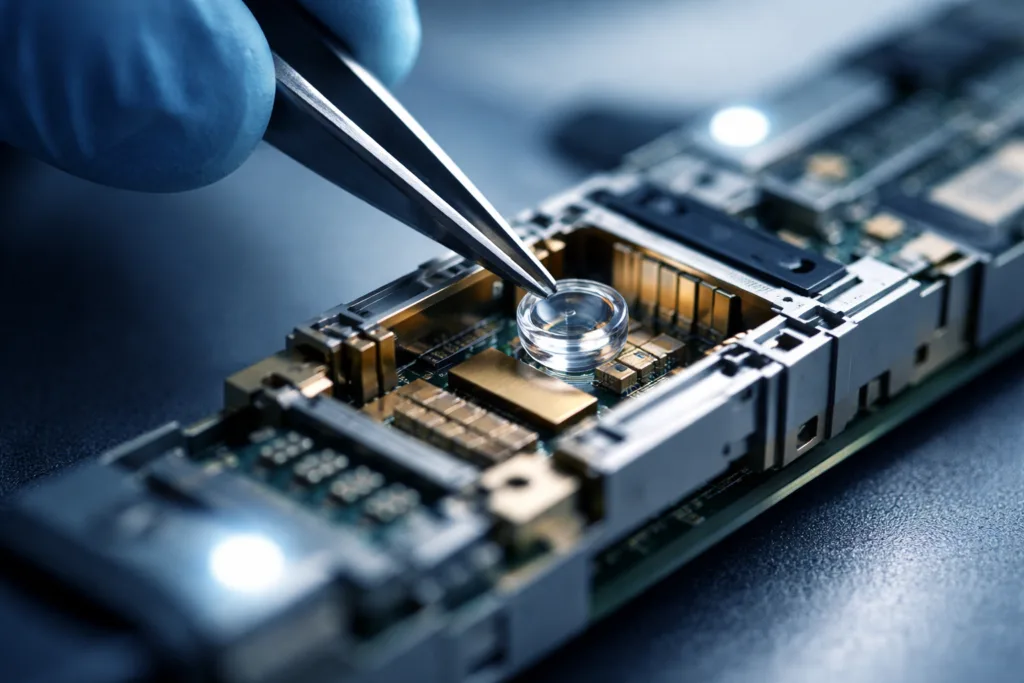
Precision lenses, solar panels, and smart glass demand invisible, bubble-free bonds. UV adhesives allow exact placement and smooth control over bead size. Their refractive index can be tuned for specific projects.
Benefits
- Nearly invisible joints for high-grade optics.
- Possibility to bond glass to metals (steel/aluminum) or engineered plastics (ABS, PC) for hybrid devices.
- Minimal shrinkage—critical for precision instruments.
Furniture & Architectural Glass
Modern furniture often combines glass panels with metal or wood frames. UV adhesive for glass achieves sturdy joints without drilling or screws. Designers love its clean look and speed.
Benefits
- Strong bonds that last years, even with repeated stress.
- Easy to use on vertical or horizontal surfaces—no runs or drips.
- Resistant to household cleaning chemicals and sunlight (meet REACH, RoHS).
Comparative Table: UV Adhesive vs. Others for Glass Bonding
| Adhesive Type | Cure Method | Transparency | Best Substrates | Strength (Lap Shear, MPa) | Main Uses |
|---|---|---|---|---|---|
| UV Acrylic | UV Light | Excellent | Glass, Metals, Plastics | 8–12 | Displays, Optics, Furniture |
| Epoxy | Room Temp/Heat | Good | Metals, Glass, Stone | 15–25 | Structural joins, electronics |
| Cyanoacrylate (CA) | RT (Moisture) | Very Good | Plastics, Rubber, Glass | 6–10 | Small repairs, instant fixes |
| Silicone | RT (Moisture) | Good | Glass, Metals, Ceramics | 3–7 | Sealing, flexible bonds |
| Double-sided Tape | None (Pressure) | Excellent | Glass, Plastics | 2–5 | Decorative, temporary bonds |
Key Parameters When Choosing UV Adhesive for Glass
Getting the right UV adhesive for glass depends on more than just clarity and cure speed. Here’s what to check before you buy or specify.
Viscosity (Flow)
Measured in centipoise (cP), viscosity affects how the adhesive spreads and whether it stays in place. Low viscosity (100–500 cP) works for tight fits; medium (1,000–3,000 cP) is best for gap-filling or vertical surfaces.
Cure Speed and Depth
Standard UV acrylics cure in under 20 seconds at 365–405 nm wavelengths. Deep or shaded areas may need longer exposure or dual-cure formulas (UV plus moisture).
Bond Strength and Flexibility
Lap shear values between 8–12 MPa suit most display and decorative glass. For load-bearing furniture, pick adhesives tested to ASTM D1002 specs. Flexibility guards against vibration or thermal expansion.
Refractive Index Matching
Optical uses need a refractive index close to glass itself (around 1.5). This keeps joints invisible and maintains true light transmission.
Adhesion to Complex Surfaces
For coated, frosted, or painted glass, use a primer. Plastics (like PMMA or PC) sometimes need plasma or corona treatment first.
Environmental Resistance
UV adhesives for glass should pass salt spray and humidity tests (ASTM B117), and meet ROHS or VOC regulations for safety.
Best Practices for Using UV Adhesive for Glass
Good preparation matters as much as the adhesive you choose. Proper technique avoids bubbles, haze, and bonding failures.
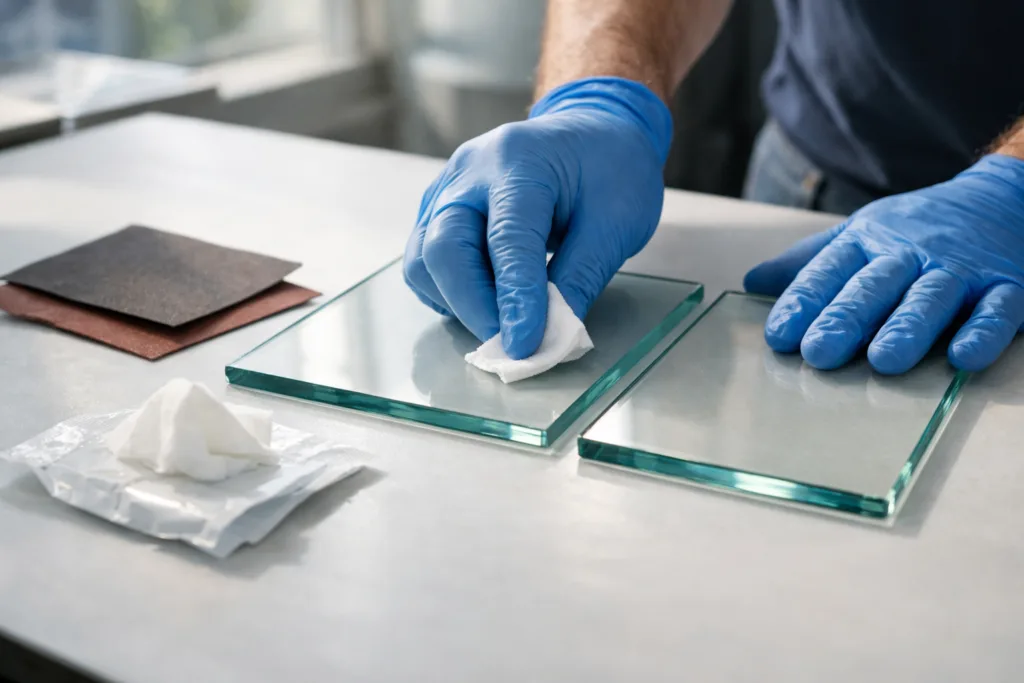
Surface Prep
- Degrease glass with isopropyl alcohol or MEK.
- For stubborn soils, abrasion with 400-grit paper or light sandblasting helps.
- Dry thoroughly before glue application.
Application and Curing
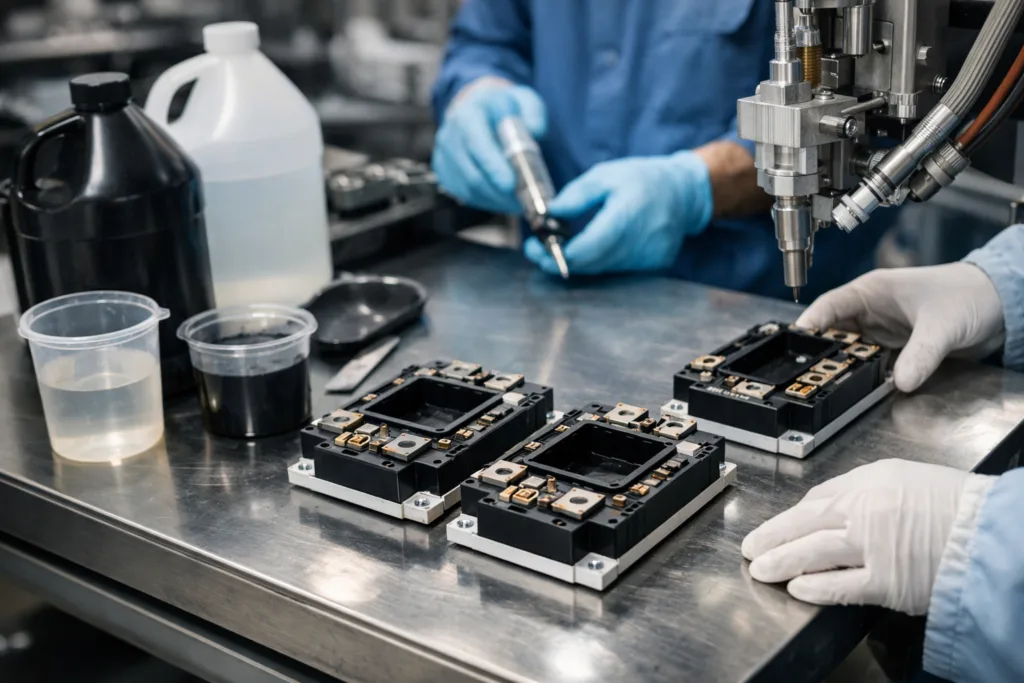
- Apply adhesive with a bead, slot-die, or static mixer for uniform coverage.
- Clamp or fixture parts if needed for alignment.
- Expose to UV lamp (365 nm) for the manufacturer’s recommended time.
Quality Control & Compliance
- Check bond line for uniformity and bubbles.
- Measure adhesion strength regularly using lap shear or T-peel tests (ASTM D1002).
- Store adhesives in cool, dark conditions to protect shelf life.
ZDS provides adhesives with full SDS and lot traceability to support advanced manufacturing audits and certifications.
Industries Using UV Adhesive for Glass
Electronics
UV adhesives bond glass displays, sensor covers, and light guides. Their ability to handle quick process cycles makes them vital to mass assembly.
Optical Equipment
Cameras, microscopes, and scientific tools use UV adhesives to attach lenses and prisms. Their non-shrinking and high-clarity features are key.
Building & Interior Design
Architects rely on UV adhesive for glass when joining decorative glass panels, shelving, or display cases. The clean joint and lasting transparency help create open, modern spaces.
What to Ask Before Selecting a UV Adhesive for Glass
Performance Needs
Do you need flexibility, extra hardness, or chemical resistance? Know your requirements before comparing brands.
Substrate Compatibility
Double-check the adhesive suits all materials in your bond—glass, metal, plastic, or composite. Some applications may require a hybrid adhesive or surface treatment.
Process Fit
Match cure speed and viscosity to your assembly line. Automated systems may need adhesives with longer open times to allow part placement.
Safety & Documentation
Request safety data sheets (SDS) and technical specs. Confirm compliance with international standards and import/export rules.
Buying Guide: Sourcing UV Adhesive for Glass

Trusted Suppliers
Work with manufacturers like ZDS that offer technical support and custom formulations. Ask for samples to check clarity, cure speed, and handling.
Testing and Scale-Up
Start with lab trials before moving to full production. Check for lot-to-lot consistency, shelf life, and shipping requirements—UV adhesives need light-proof packaging and cool storage.
Expert Takeaway: The right UV adhesive simplifies glass bonding, slashes assembly times, and delivers invisible, long-lasting joints—whether building cutting-edge electronics or elegant furniture.
Frequently Asked Questions
What makes UV adhesive ideal for glass applications?
UV adhesive cures quickly, provides invisible bonds, and offers high strength. It works well with glass due to its optical clarity and fast processing.
Can UV adhesive for glass handle outdoor use?
Quality UV adhesives resist sunlight and moisture. Choose products tested for UV and weather exposure for best outdoor performance.
Is surface preparation necessary before applying UV adhesive?
Yes, cleaning and sometimes abrasions are crucial. Proper prep prevents bonding failures and creates a clear joint without bubbles.
How is cure speed controlled with UV adhesive?
Cure speed depends on UV lamp intensity, wavelength, and adhesive type. Most glass adhesives cure in seconds under strong UV light.
Are UV adhesives safe for electronics?
Yes, as long as they meet ROHS and VOC standards. Many UV adhesives are designed for display screens and sensors, ensuring safe performance.
How does viscosity affect UV adhesive performance?
Low-viscosity adhesives flow easily for tight fits. Higher viscosity helps fill gaps and prevents run-off, especially on vertical glass surfaces.