E-mail

Sale01@epoxyresinfactory.com
sale04@epoxyresinfactory.com

Contact

Tel: 86-755-84875752
Fax: 86-755-84875750

Address

4F,Longyuntong Building, No. 164-5 Pengda Road, Longgang District, Shenzhen

PCB Protection

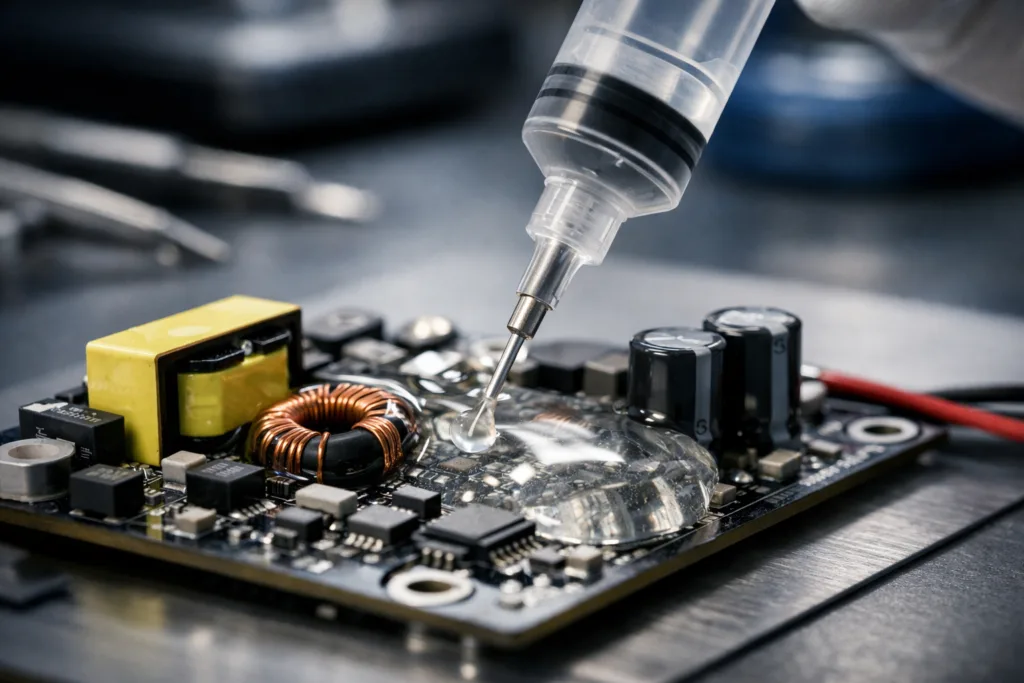
A close-up, professional image showing a clean lab workbench while thermal potting compound is dispensed onto an LED driver board for protection and thermal management.

9 Essential Insights: Why Thermal Potting Compounds for LED Driver Boards Matter for Reliability & Performance

Understanding Thermal Potting Compounds for LED Driver Boards LED driver boards operate at the heart of many lighting systems, controlling current and protecting LEDs against fluctuations. As technology advances toward higher efficiency and compactness, these boards increasingly face demanding thermal, moisture, and mechanical stresses. Thermal potting compounds for LED driver boards provide a practical solution […]
9 Essential Insights: Why Thermal Potting Compounds for LED Driver Boards Matter for Reliability & Performance Read More »

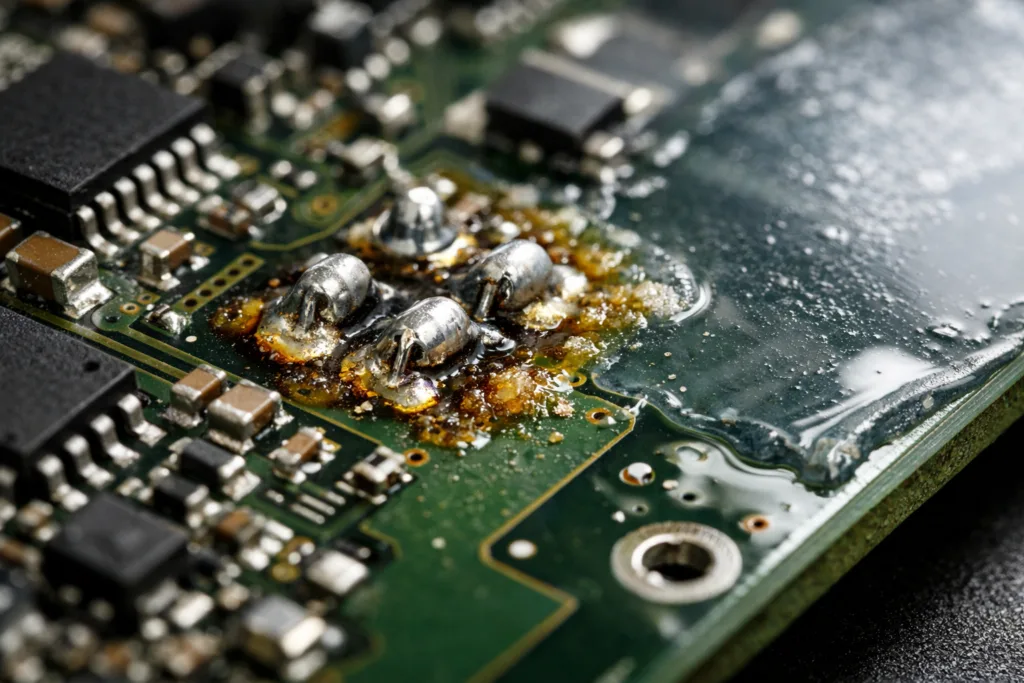
This image demonstrates the presence of flux residues on a printed circuit board before adequate cleaning, emphasizing their impact on subsequent coating adhesion.

7 Risks of Skipping PCB Cleaning: How Flux Residues Threaten Coating Adhesion

Understanding Flux, Coating Adhesion, and PCB Cleaning Chemistry and electronics go hand-in-hand when it comes to manufacturing reliable printed circuit boards (PCBs). Cleaning residues: how flux affects coating adhesion is a factor no engineer can ignore. Flux’s chemical residues, if improperly managed, can make or break the adhesion and long-term protection of surface coatings on

7 Risks of Skipping PCB Cleaning: How Flux Residues Threaten Coating Adhesion Read More »

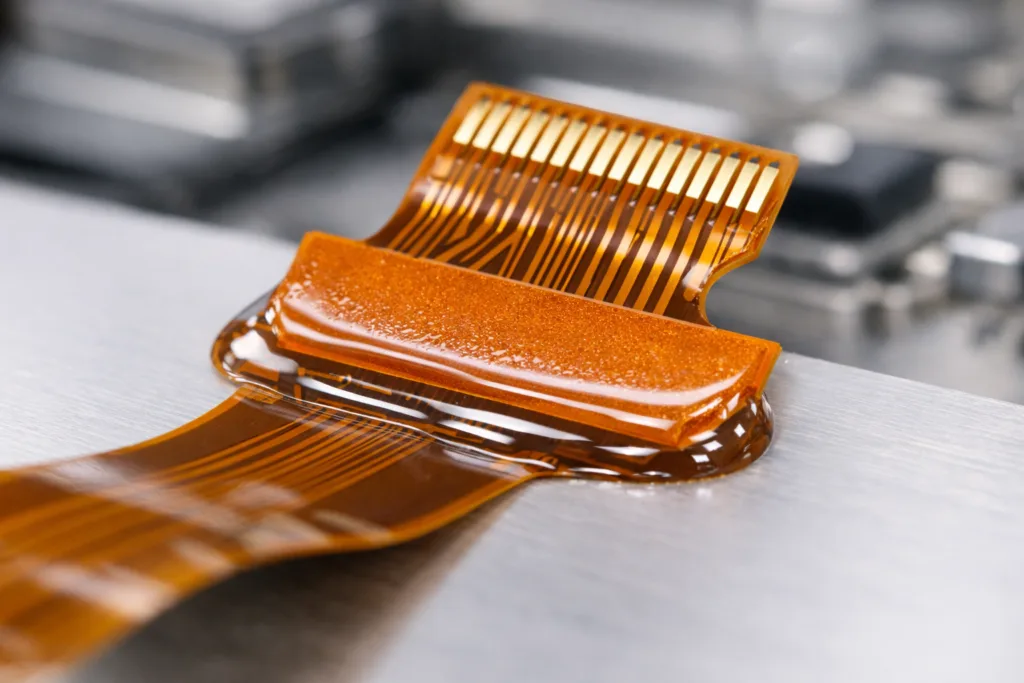
A close-up of a flexible printed circuit (FPC) as adhesive is applied to reinforce high-stress zones, emphasizing the role of adhesives for flexible printed circuits (FPC) reinforcement.

7 Reliable Adhesive Choices for Flexible Printed Circuits (FPC) Reinforcement in Demanding Electronics

Introduction to Adhesives for Flexible Printed Circuits (FPC) Reinforcement Flexible printed circuits (FPCs) are the backbone of today’s compact electronics, from smartphones to medical devices. Their ability to bend, twist, and adapt makes them ideal for applications with limited space and moving elements. But this very flexibility also presents a challenge: without proper reinforcement, FPCs

7 Reliable Adhesive Choices for Flexible Printed Circuits (FPC) Reinforcement in Demanding Electronics Read More »

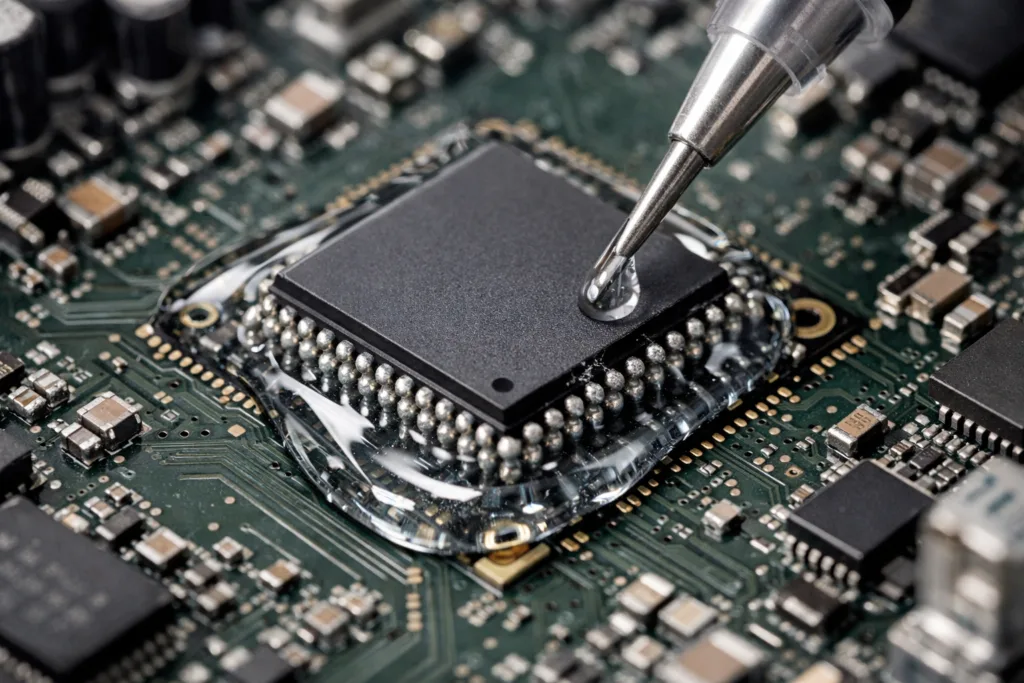
A skilled technician dispenses underfill epoxy beneath a BGA component on a PCB, illustrating the critical first stage of improving drop test reliability in modern electronics.

7 Ways Underfill Epoxy Raises BGA Reliability for Tough Drop Tests

Introduction: The Role of Underfill Epoxy in BGA Reliability Modern electronics demand that Ball Grid Array (BGA) components last through daily bumps, drops, and shocks. One of the essential ways manufacturers achieve this is by using underfill epoxy. In fact, “Underfill Epoxy for BGA: Improving Drop Test Reliability” isn’t just an industry buzzword—it’s a proven

7 Ways Underfill Epoxy Raises BGA Reliability for Tough Drop Tests Read More »

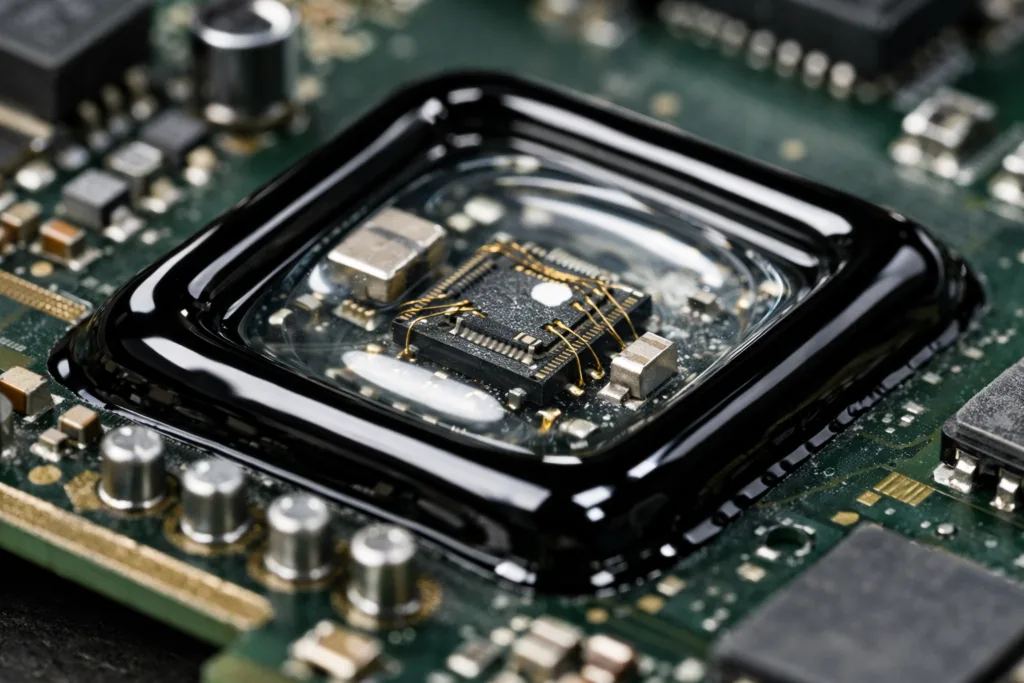
This photo shows a high-performance PCB with visible dam and fill encapsulation, demonstrating the precise protection of targeted components under professional factory lighting.

How Dam and Fill Encapsulation Protects Sensitive PCB Components in 2026

Introduction to Dam and Fill Encapsulation: Protecting Specific Components Dam and fill encapsulation is an advanced material technique used in PCB manufacturing to protect sensitive components from moisture, dust, vibration, and chemical exposure. As the electronics industry pushes for ever-smaller footprints and higher reliability, safeguarding chips, sensors, and connectors with targeted encapsulation techniques is crucial.

How Dam and Fill Encapsulation Protects Sensitive PCB Components in 2026 Read More »

Visual of a state-of-the-art electronics assembly line showing nano-coating application for waterproofing to IPX7 level.

How Nano-Coatings Are Revolutionizing IPX7 Waterproofing for Electronic Devices

Introduction: Demystifying Nano-Coatings for IPX7 Waterproofing of Electronics As electronics become ever more essential to our daily lives, the demand for durability and reliability is at an all-time high. One standout solution that’s reshaping device protection is nano-coating technology, especially in the context of achieving the rigorous IPX7 waterproofing standard. In this guide, we’ll break

How Nano-Coatings Are Revolutionizing IPX7 Waterproofing for Electronic Devices Read More »

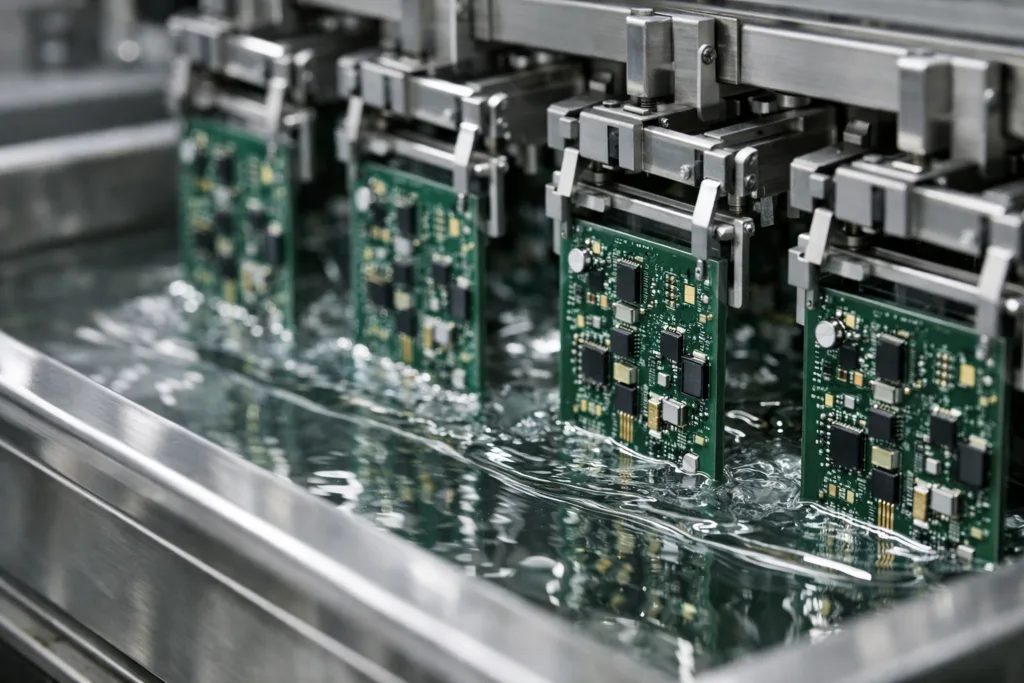
A factory scene showing PCBs being dip-coated, emphasizing batch uniformity and surface finishing in industrial electronics.

PCB Coating Showdown: Dip, Brush, or Spray for Reliable Surface Finishing in 2026

Introduction: Why Coating Methods Matter for PCB Surface Finishing Protecting printed circuit boards (PCBs) isn’t just about the quality of materials—it’s about matching the right coating method to your project needs. In 2026, engineers and manufacturers have three primary choices: dip, brush, or spray. Each approach offers unique benefits and drawbacks when it comes to

PCB Coating Showdown: Dip, Brush, or Spray for Reliable Surface Finishing in 2026 Read More »

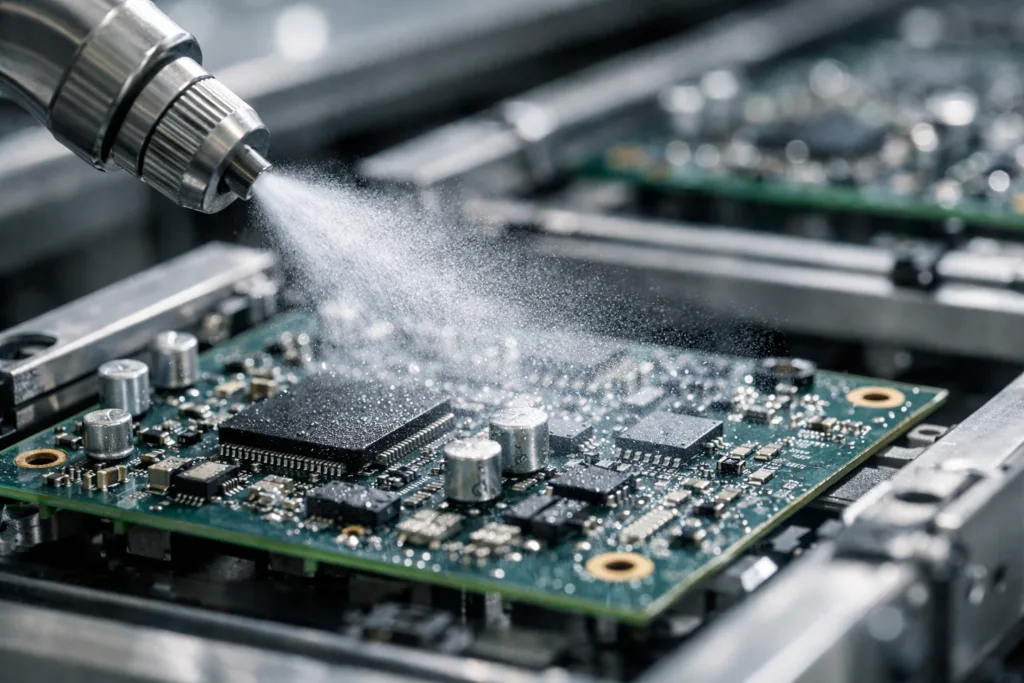
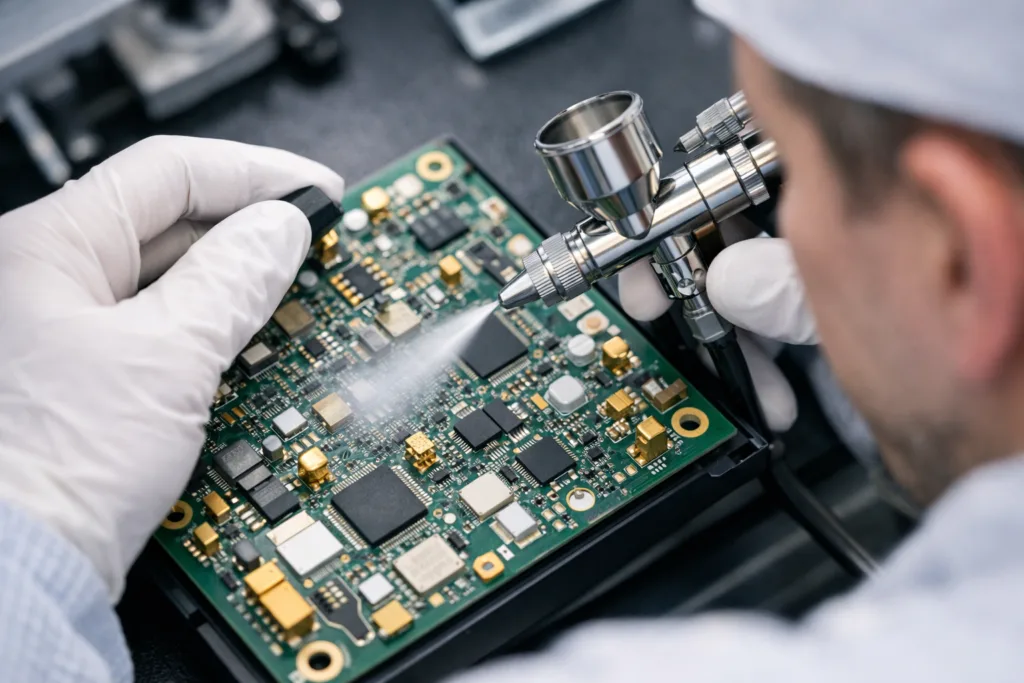
An engineer in a modern lab precisely sprays a low dielectric coating onto a 5G/RF PCB, highlighting the importance of cleanliness and process control.

Unlock Superior 5G/RF PCB Performance: 7 Essential Facts About Low Dielectric Constant Coatings

Introduction to Low Dielectric Constant Coatings for 5G/RF PCBs When it comes to high-frequency electronic design in 2026, Low Dielectric Constant Coatings for 5G/RF PCBs have become a linchpin for performance and reliability. These specialized coatings play a pivotal role in minimizing signal loss, bolstering signal integrity, and enabling robust connections required for the latest

Unlock Superior 5G/RF PCB Performance: 7 Essential Facts About Low Dielectric Constant Coatings Read More »

A technician applies conformal coating to a PCB, demonstrating smooth coverage and correct technique to prevent orange peel defects. The environment highlights cleanliness and process control.

7 Crucial Steps to Eliminate ‘Orange Peel’ Defects in Conformal Coating for 2026

Introduction: Tackling ‘Orange Peel’ Defects in Conformal Coating Getting a flawless finish on electronics and PCBs often hinges on the details. One nagging flaw many engineers dread is the ‘orange peel’ defect in conformal coating. Named for its bumpy, uneven texture that resembles an orange’s skin, orange peel defects can undermine both aesthetic and protective

7 Crucial Steps to Eliminate ‘Orange Peel’ Defects in Conformal Coating for 2026 Read More »

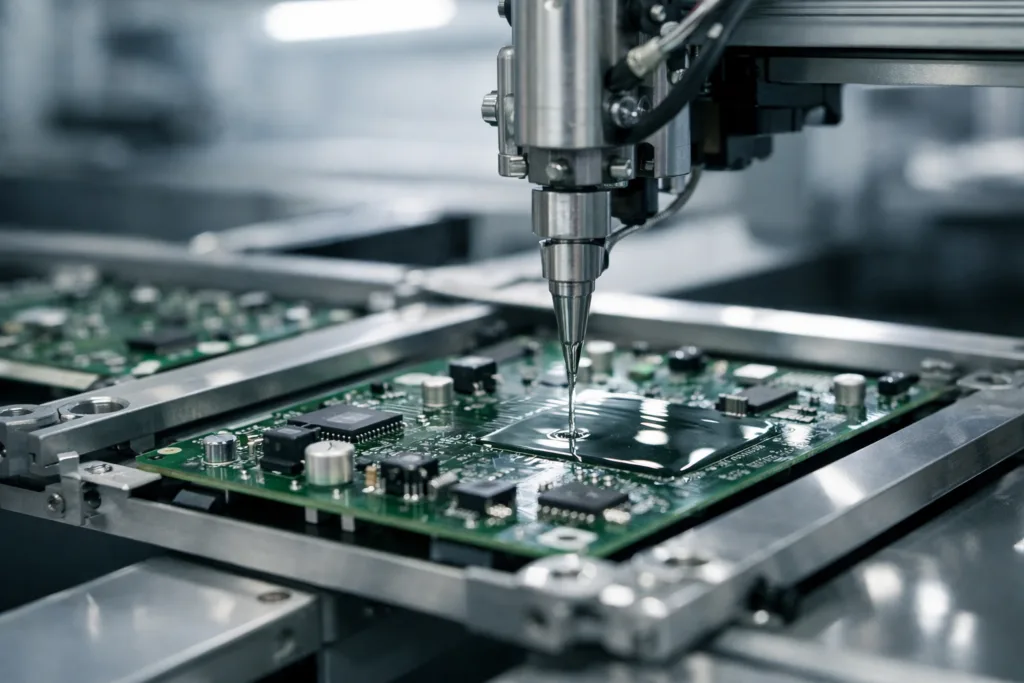
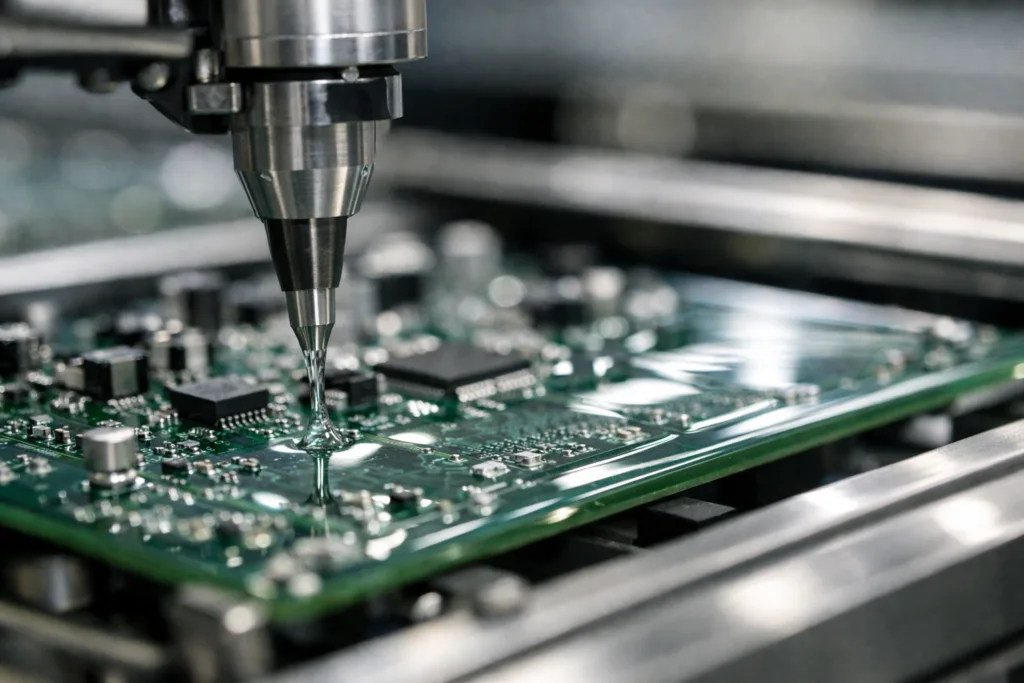
A precision machine methodically applies a thin conformal coating to a PCB, highlighting even coverage and advanced process control for electronics reliability.

Which PCB Protection Is Right for You? Conformal Coating vs. Potting Compound Explained

Introduction: Understanding PCB Protection — Conformal Coating vs. Potting Compound In electronics manufacturing, protecting printed circuit boards (PCBs) is essential for reliability—especially in harsh environments. Two leading methods stand out: conformal coating and potting compound. Both shield PCBs from moisture, dust, and chemicals, but their performance, process, and field suitability differ. This ultimate comparison dives

Which PCB Protection Is Right for You? Conformal Coating vs. Potting Compound Explained Read More »

Scroll to Top

💬 Let’s Build Something Strong Together

Have a project in mind or need a reliable adhesive solution?
Our experts are ready to help — just drop us a message!

✅ Tailor-made adhesive formulations
✅ Fast lead times & global shipping
✅ Trusted by manufacturers worldwide

📩 Leave your details and let’s make it happen.
We’ll get back to you within 24 hours.

Look out for emails from @zdschemical.com.

ZDSâ„¢ Adhesive manufacturer

Free access to test samples

We will contact you within 24 hours.

📧 Prefer a fast reply? Email us directly at: Sale01@epoxyresinfactory.com

ZDS Adhesive Manufacturer

Not Sure Which Adhesive Fits?

Our engineers are ready to help. Drop us a message.

📧 Prefer a fast reply? Email us directly at: Sale01@epoxyresinfactory.com