Contact

Tel: 86-755-84875752
Fax: 86-755-84875750

Address

4F,Longyuntong Building, No. 164-5 Pengda Road, Longgang District, Shenzhen

Battery Thermal Management

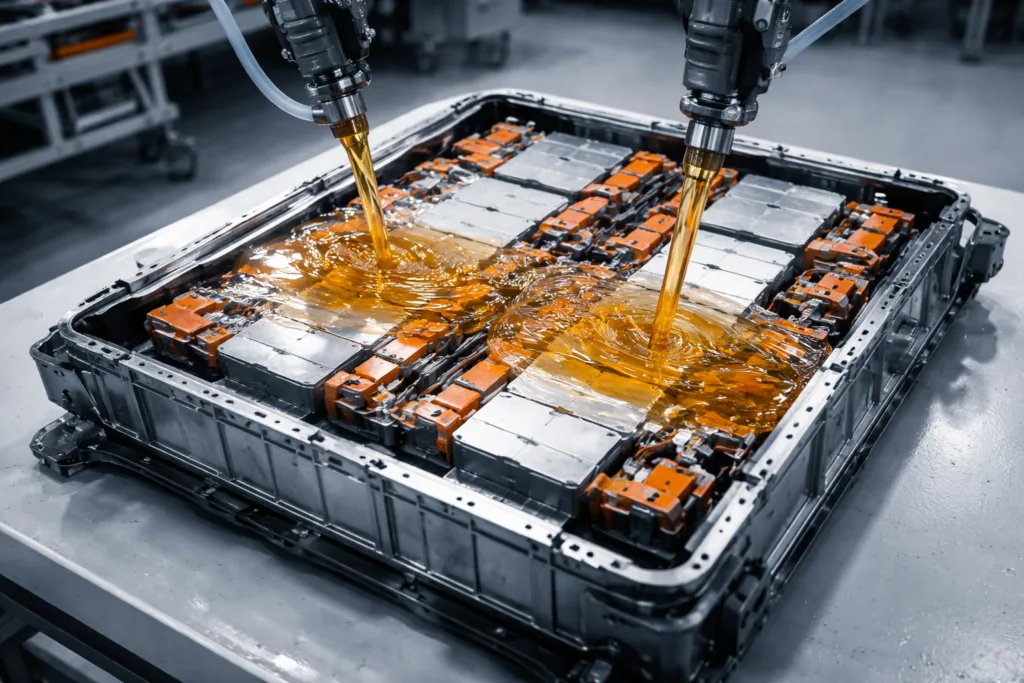
This image shows engineers applying adhesives to battery cells, preparing modules for thermal shock cycle testing under industrial conditions.

How Adhesives Handle Fast Charging: The Science Behind Thermal Shock Resistance

Introduction: Why Fast Charging Demands Superior Thermal Shock Resistance As fast charging cycles become the new normal for electric vehicles and battery-powered devices, the role of adhesives in thermal shock resistance has never been more critical. Thermal shock resistance: testing adhesives for fast charging cycles is at the forefront of designing batteries that last longer […]

How Adhesives Handle Fast Charging: The Science Behind Thermal Shock Resistance Read More »
An industrial scene depicting a battery module undergoing potting with epoxy resin, highlighting insulation procedures and electrical protection.

8 Crucial Ways Dielectric Strength Impacts High-Voltage Battery Potting Longevity

Understanding Dielectric Strength in High-Voltage Battery Potting Dielectric strength is a vital property for materials used in high-voltage battery potting. In electric vehicle (EV) and energy storage systems, battery modules operate at high voltages and must be protected from electrical failures. Dielectric strength requirements for high-voltage battery potting refer to the ability of a potting

8 Crucial Ways Dielectric Strength Impacts High-Voltage Battery Potting Longevity Read More »

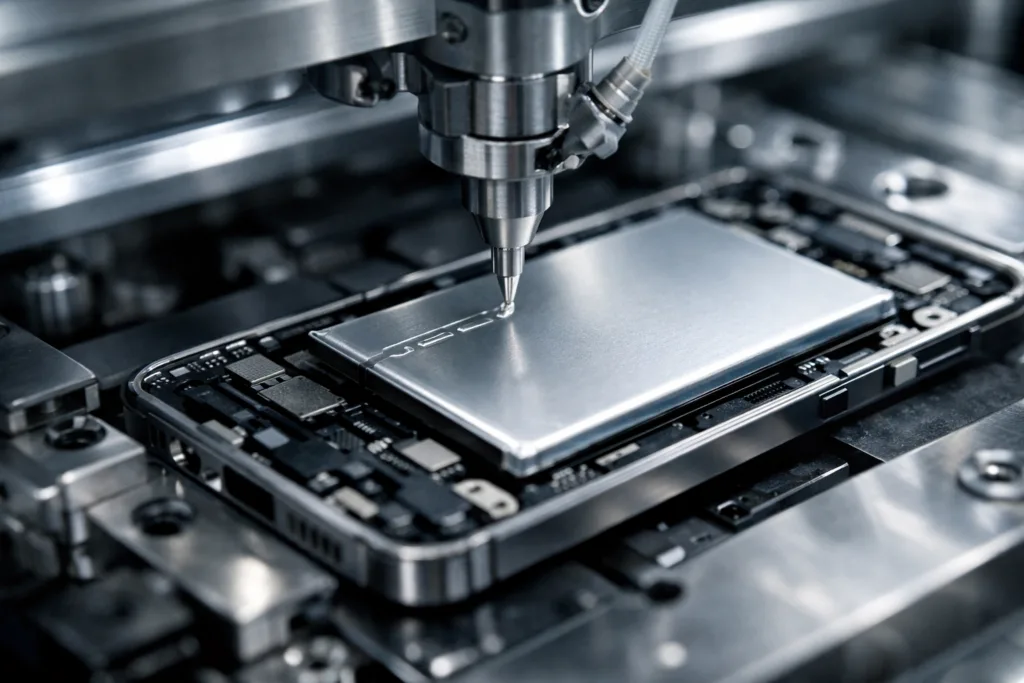
A robotic system applies industrial adhesive to secure a battery in place, highlighting battery bonding and its impact on device repairability.

How Next-Gen Battery Bonding Shapes Repairability, Sustainability, and Device Lifespan

Introduction: Why Battery Bonding and Repairability Matter in 2026 As electronic devices from smartphones to electric vehicles (EVs) become more powerful and complex, the debate around battery bonding and repairability has moved center stage. “Serviceable vs. Permanent Battery Bonding: Repairability Trends” holds powerful implications for how devices are used, maintained, and eventually recycled. For engineers,

How Next-Gen Battery Bonding Shapes Repairability, Sustainability, and Device Lifespan Read More »

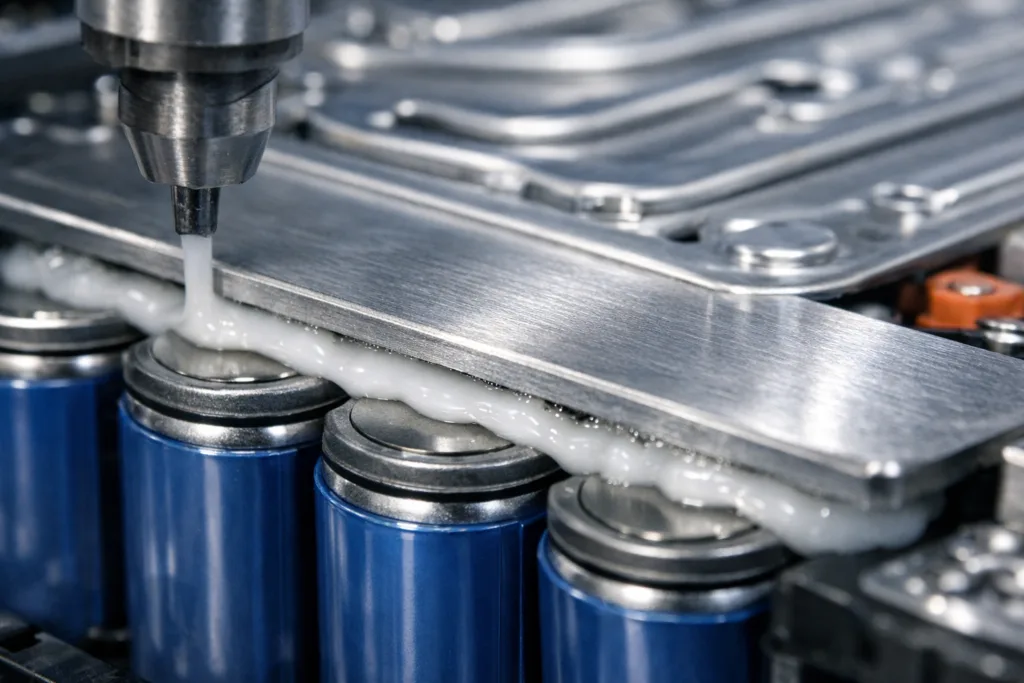
A close-up industrial assembly process showing adhesive bonding of liquid cooling plates to battery cells, emphasizing technical precision in an EV manufacturing line.

10 Essential Factors for Reliable Adhesives in EV Battery Liquid Cooling Plates

Introduction: Why Adhesives Matter for Liquid Cooling Plates Adhesives for liquid cooling plates in EV batteries play a silent yet crucial role in the performance, safety, and lifespan of electric vehicles in 2026. As battery packs grow denser and charging rates climb, transferring heat safely from battery cells is more challenging—and more critical—than ever. Liquid

10 Essential Factors for Reliable Adhesives in EV Battery Liquid Cooling Plates Read More »

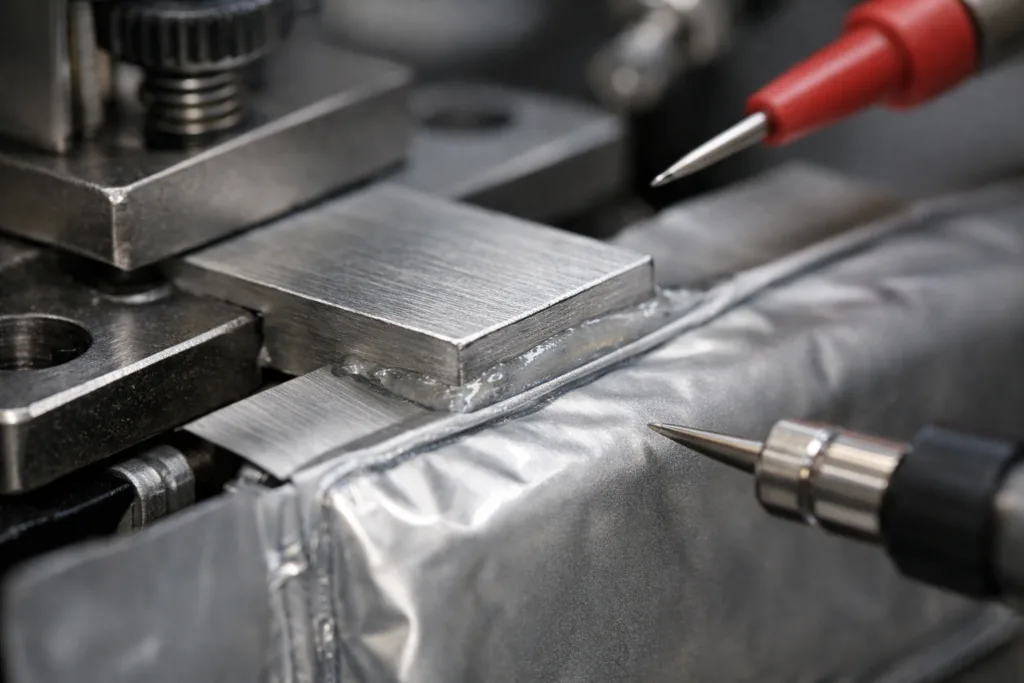
A technical image illustrating pouch cell side plates undergoing laboratory chemical resistance testing, emphasizing adhesive joints and materials used.

How Chemical Resistance Defines the Longevity of Bonded Pouch Cell Side Plates

Introduction: Why Chemical Resistance Matters for Pouch Cell Side Plate Bonding In battery manufacturing, ensuring the chemical resistance of bonded pouch cell side plates is vital for both safety and performance. These plates protect cell internals from chemical exposure, which can come from electrolytes, cleaning agents, or external contaminants. As electric vehicles and energy storage

How Chemical Resistance Defines the Longevity of Bonded Pouch Cell Side Plates Read More »

A photorealistic scene showing the application of a TIM gap filler pad between a PCB and a heat sink, illustrating the importance of thickness in electronics cooling.

How TIM Gap Filler Thickness Impacts Efficiency: An Engineer’s Guide

Introduction: Understanding TIM Gap Fillers—Why Thickness Matters When electronic devices heat up, their performance and lifetime are at stake. That’s why Thermal Interface Materials (TIMs)—including gap fillers—are so essential. But, in real-world assembly, one question arises: How does the thickness of a TIM gap filler impact efficiency? This article unlocks the relationship between TIM gap

How TIM Gap Filler Thickness Impacts Efficiency: An Engineer’s Guide Read More »

This scene shows an electric vehicle battery module shielded by a UL94 V-0 rated enclosure, highlighting preventive design for thermal runaway.

The Essential Guide to Preventing Thermal Runaway: How UL94 V-0 Solutions Keep Batteries Safe

Introduction to Thermal Runaway and Fire-Retardant (UL94 V-0) Solutions Thermal runaway is one of the most concerning risks in battery-powered devices and electronics today. When unchecked, it can lead to dangerous fires or explosions, making prevention vital for manufacturers and users alike. Fire-retardant materials certified as UL94 V-0 are now the gold standard for controlling

The Essential Guide to Preventing Thermal Runaway: How UL94 V-0 Solutions Keep Batteries Safe Read More »

A photo-realistic depiction of technicians applying silicone and polyurethane potting to battery modules inside a high-tech laboratory.

Which Potting Compound Is Best for Your Battery Module? Pros & Cons of Silicone vs. Polyurethane Explained

Introduction: Silicone vs. Polyurethane Potting for Battery Modules When it comes to protecting battery modules in electric vehicles, renewable storage, consumer electronics, and industrial power systems, the potting material choice is critical. Silicone potting and polyurethane potting are the two leading contenders, each bringing distinctive attributes to the table. Understanding their pros and cons—especially regarding

Which Potting Compound Is Best for Your Battery Module? Pros & Cons of Silicone vs. Polyurethane Explained Read More »

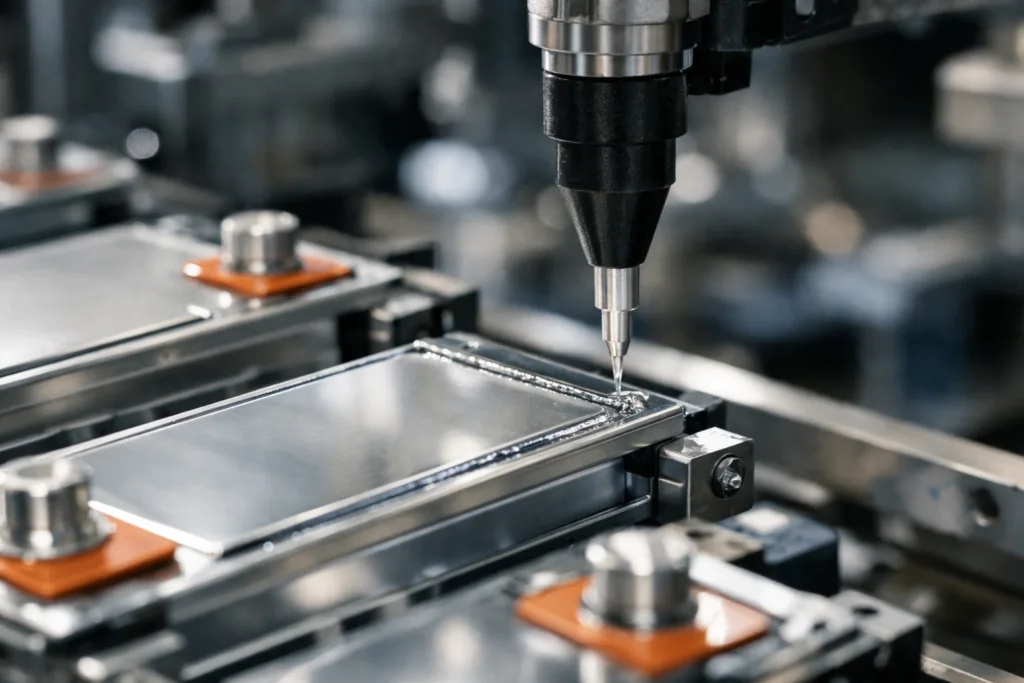
Showing robust automation as structural adhesives are precisely dispensed in smart battery pack construction, highlighting technical control.

7 Key Differences: Structural vs. Thermal Adhesives for CTP Battery Innovation

Understanding Structural vs. Thermal Adhesives in CTP Technology In battery assembly, especially within innovative cell-to-pack (CTP) designs, two adhesive types take center stage: structural adhesives and thermal adhesives. Both impact how battery modules are built, but their roles and performance traits differ sharply. As CTP technology redefines the future of electric vehicles and stationary energy

7 Key Differences: Structural vs. Thermal Adhesives for CTP Battery Innovation Read More »

A technician dispenses thermal adhesive between EV battery cells to improve heat management and cell stability in the manufacturing process.

Top Factors for Selecting Thermal Conductive Adhesives in EV Battery Packs

Understanding the Role of Thermal Management in EV Battery Packs Effective thermal management is the cornerstone of safe, long-lasting, and high-performing EV battery packs. With electric vehicles powering our roads in 2026, battery temperatures can reach critical levels during operation and charging. If not properly managed, overheating triggers performance drops and decreases battery lifetime, sometimes

Top Factors for Selecting Thermal Conductive Adhesives in EV Battery Packs Read More »

Scroll to Top

💬 Let’s Build Something Strong Together

Have a project in mind or need a reliable adhesive solution?
Our experts are ready to help — just drop us a message!

✅ Tailor-made adhesive formulations
✅ Fast lead times & global shipping
✅ Trusted by manufacturers worldwide

📩 Leave your details and let’s make it happen.
We’ll get back to you within 24 hours.

Look out for emails from @zdschemical.com.

ZDSâ„¢ Adhesive manufacturer

Free access to test samples

We will contact you within 24 hours.

📧 Prefer a fast reply? Email us directly at: [email protected]
ZDS Adhesive Manufacturer

Not Sure Which Adhesive Fits?

Our engineers are ready to help. Drop us a message.

📧 Prefer a fast reply? Email us directly at: [email protected]