Introduction: The Game-Changer for Motor Bearings and Shafts
Modern industry demands reliable, high-performance solutions for securing bearings and shafts. Anaerobic retaining compounds for motor bearings and shafts stand out, offering chemical retention that surpasses nuts, keys, and traditional mechanical fasteners. As engineering tolerances get tighter and machinery runs faster, the right adhesive technology—especially anaerobic compounds—has become essential. But how do these compounds actually work, and why do so many OEMs rely on them for critical assemblies?
Understanding Anaerobic Retaining Compounds: What Are They?
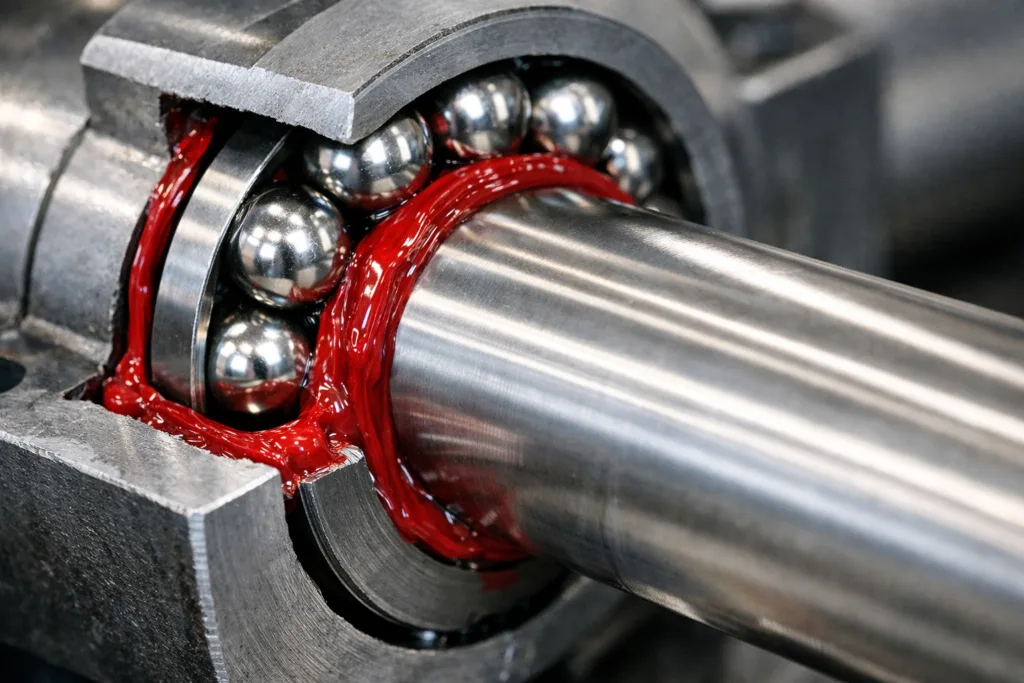
Anaerobic retaining compounds are single-component adhesives designed to cure in the absence of air (oxygen) and in the presence of metal ions. They are uniquely suited for fastening cylindrical components—like shafts to hubs or bearings to housings—by filling micro-gaps and converting to a solid thermoset plastic. This tough, high-strength bond dramatically boosts assembly reliability.
Chemical Composition and Curing Process
The secret behind their performance is their chemistry. Anaerobic adhesives are based on methacrylate esters, with an initiator system triggered by metal ions. When confined between metal surfaces and isolated from air, polymerization starts.
- Key Ingredients: Methacrylate esters, accelerators, stabilizers, fillers
- Single-Part, No Mixing: Supplied ready to use—simplifies handling
- Room Temperature Cure: Most cure at 22–25°C in 15–60 minutes (fixture time), reaching full strength in 24 hours
Applications benefit from specialty epoxy adhesives in combination or for non-metal substrates.
How Anaerobic Compounds Work: The Physics of Retaining Power
Once applied, anaerobic adhesive fills the micro-irregularities between bearing and housing or shaft and hub. The absence of oxygen and presence of active metals (like iron or copper) triggers curing. As it hardens, it locks components in place by:
- Eliminating micro-movements that trigger wear
- Resisting vibration-induced loosening
- Distributing loads evenly across the joint area
This physical lock reduces fretting corrosion and greatly enhances fatigue resistance over the machine’s lifetime.
Mechanical Properties: Strengths That Matter
Why do so many engineers choose anaerobic compounds for motor bearings and shafts? Because their mechanical properties are hard to beat:
- High Shear Strength: 18–35 MPa (2600–5100 psi), suitable for both light and heavy-duty assemblies
- Gap Filling: Typically 0.05–0.25 mm; some grades up to 0.50 mm
- Temperature Resistance: –55°C to +180°C, ideal for electric motors and pumps
- Vibration Dampening: Eliminates need for split pins, lock washers
For assemblies exposed to harsh chemicals or solvents, industrial adhesives can be specified for added protection.
Applications in Motor Bearings: Electric Motors and Beyond
Electric motors, fans, pumps, compressors, and gearboxes are classic use cases. Anaerobic retaining compounds are especially valued in motor bearing and shaft assemblies for:
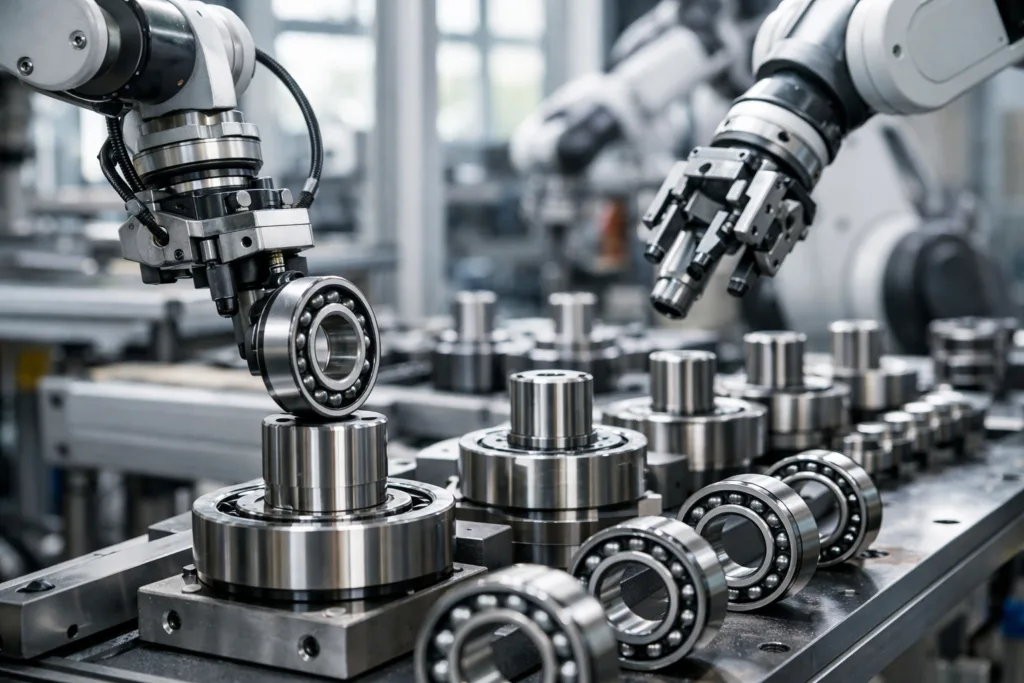
- Securing rolling element bearings in housings
- Retaining cylindrical bushings on shafts
- Preventing movement under radial and axial loads
Specialty electric drive unit assemblies often require solutions that handle ATF oil exposure and dynamic loads; see this guide on ATF-oil-resistant adhesives for more on that topic.
Advantages Over Traditional Fastening Methods
Compared to keys, splines, set screws, and shrink fits, anaerobic adhesives deliver:
- Uniform stress distribution: Minimizes stress risers and fatigue points
- Corrosion protection: Seals out moisture, prevents long-term wear
- Leak prevention: Forms a durable seal around bearings and shafts
- Weight and cost reduction: Fewer parts, simpler machining
- Process flexibility: Ideal for automated and manual assembly lines
Adhesive Selection: Matching Compound to Application
Choosing the right product requires considering several factors:
- Material compatibility (steel, aluminum, copper alloys)
- Surface condition (oil residue, machining marks, tolerances)
- Service temperature, chemical exposure
- Required disassembly or permanency
Some applications, such as aluminum housings, may benefit from specialty metal adhesives or pre-applied activators to ensure full cure.
Case Study: Upgrading Motor Assembly for Longer Service Life
Consider upgrading a standard induction motor’s bearing seat from a press-fit to an adhesive-retained joint:
- Original Problem: Bearing fretting, early loosening after 1000 hours
- Intervention: Surface cleaned and degreased, medium viscosity anaerobic applied, assembly left for 24h room-temp cure
- Results: Zero movement after 3000 hours, elimination of wear particles, extended service intervals
Installation & Best Practices: Ensuring a Reliable Bond
Reliability starts with proper surface preparation and application:
- Clean mating parts using an approved degreaser
- Check the surface roughness: Ra 0.8–1.6 µm recommended
- Apply adhesive evenly around the shaft or inside the housing bore
- Assemble promptly—avoid delays past open time
- Allow full cure before loading
Anaerobic Retaining Compounds for Motor Bearings and Shafts
This section dives deep into why anaerobic retaining compounds for motor bearings and shafts have become the industry’s go-to choice for critical assembly points. By forming a strong, gap-filling bond only where oxygen is absent, these compounds ensure both holding power and environmental protection—no loose particles, no wicking fluids, no vibration-related failures down the line.
Recent advances in adhesive technology have led to products capable of withstanding not just higher operational speeds, but also rapid assembly cycles common in modern manufacturing. Many industrial manufacturers now specify these products across their global production lines to ensure a consistent standard of quality and reliability.
Technical Specification Table: Common Grades & Properties
| Property | Low Strength | Medium Strength | High Strength |
|---|---|---|---|
| Shear Strength (MPa) | 8–15 | 18–25 | 28–35 |
| Fixture Time (min) | 20–60 | 10–30 | 5–15 |
| Max Gap Fill (mm) | 0.10 | 0.25 | 0.50 |
| Temperature Range (°C) | -55 to +150 | -55 to +175 | -55 to +180 |
| Removability | Easy | Standard tools | Difficult/Requires heat |
Troubleshooting & Failure Modes: What Can Go Wrong?
- Poor surface prep: Oil and dirt block curing
- Oversized gaps: Adhesive cannot fill or cure through air pockets
- Wrong product grade: Insufficient strength or lack of removability
- Insufficient cure time before loading
Testing (like lap shear and thermal cycling) validates whether real-world performance meets design intent.
Disassembly & Maintenance: When Service Is Required
Need to disassemble? Some grades are designed for future service—use heat (150–250°C) or solvents to aid breakdown. Still, always check OEM recommendations for disassembly without damage.
Sustainability and Environmental Impact
Anaerobic adhesives reduce waste by eliminating extra fasteners and simplifying assemblies. Their shelf life is typically 12–18 months, with safe, non-volatile formulations. Most are RoHS and REACH compliant—important for automotive, electronics, and export markets.
Recent Innovations: The Latest in Adhesive Technology
Recent innovations deliver faster fixture time, increased oil tolerance, and performance on passive metals (chrome, stainless). These improvements open doors for designers to specify lighter components without sacrificing reliability.
Industry Experience: Insights from ZDS Adhesive
From an assembly-line viewpoint at ZDS Adhesive, an industrial adhesive manufacturer, success with anaerobic retaining compounds comes down to three rules:
- Always match surface preparation to your material and environment
- Validate bond strength with real mechanical testing, not just calculations
- Document cure times and application coverage for repeatable results
In high-speed automated lines or demanding automotive jobs, these details prevent costly teardown and rework.
Future Outlook: Where Is Retaining Technology Heading?
As e-mobility and lightweight designs reshape the manufacturing landscape, robust, quick-curing retaining adhesives will only become more vital. Whether for tiny micromotors or massive industrial pumps, the future is chemical—it’s about engineered retention every time you need a reliable hold.
Conclusion: The Smart Choice for High-Performance Assemblies
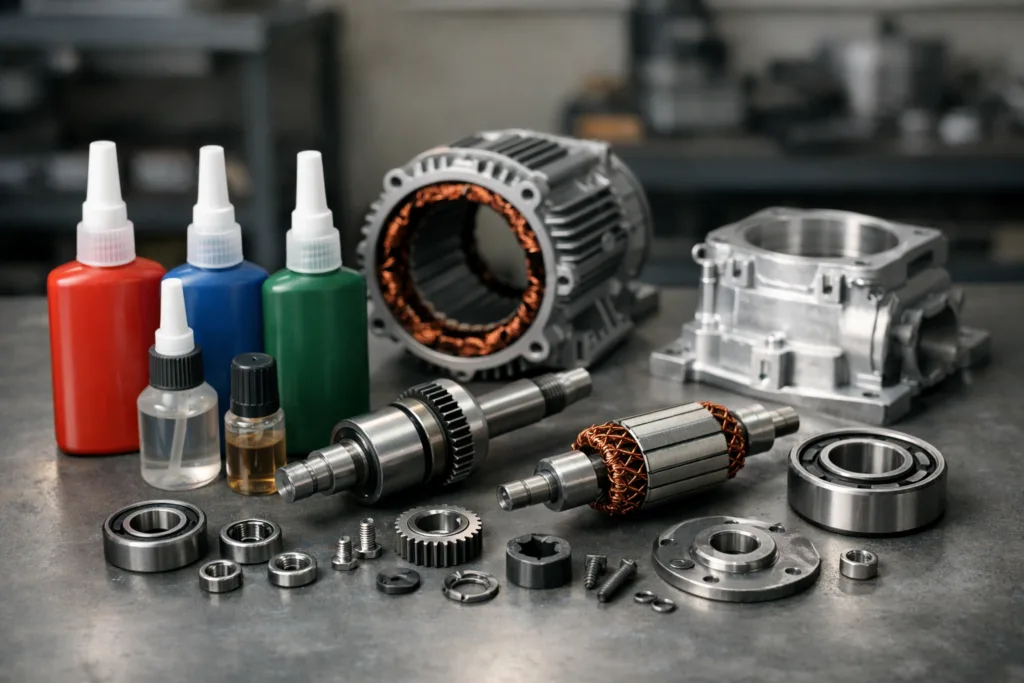
Anaerobic retaining compounds for motor bearings and shafts have revolutionized industrial assembly, combining chemical ingenuity with real-world practicality. By replacing traditional fasteners and fits with engineered adhesives, manufacturers boost performance, cut weight, and improve both durability and ease of assembly. With advances in adhesive technology, expect smarter, faster, and more reliable solutions for everything from electric motors to aerospace bearings—proving that sometimes, what you can’t see is what keeps everything running.
Frequently Asked Questions
How do anaerobic retaining compounds cure?
They solidify in the absence of air and only when in contact with metal surfaces, creating a tough, gap-filling bond ideal for retaining cylindrical parts.
Can anaerobic adhesives be used with all metals?
They work best with active metals (steel, iron, brass); for passive metals like aluminum or stainless steel, activators or specialty grades may be required.
What are the main benefits over mechanical fasteners?
Uniform stress distribution, vibration resistance, leak prevention, corrosion protection, and reduction in parts and assembly steps.
How are these compounds applied in electric motor assembly?
Applied to bearing seats or shaft/hub interfaces, they prevent movement, fretting, and wear, especially in high-speed or high-load electric motors.
How do you disassemble joints using anaerobic adhesives?
Some joints can be disassembled using standard tools; high-strength grades may need heat, and always consult the product data sheet for guidance.
Are anaerobic adhesives environmentally safe?
Most commercial grades are non-volatile, have long shelf lives, are RoHS/REACH compliant, and minimize material waste.
Related Reading
- The Secret to ATF-Resistant Adhesives that Boost Electric Drive Unit Reliability
- How MMA Adhesives Outperform Rivets for Impact Strength
- Unlock 9 Advantages of Latent Cure Agents in Epoxy Adhesives
- 2nd Generation Acrylics: The Modern Rivet Replacement You Need
- 8 Powerful Benefits of Structural Acrylics for Automotive BIW