Introduction: Why Ceramic Shaft Bonding Matters for High-Efficiency Motors
As energy demands surge and industries drive for greater reliability, the focus on ceramic shaft bonding in high-efficiency motors has never been sharper. This vital process enhances motor performance by delivering unmatched shaft adhesion, vibration resistance, and thermal stability. In an era where minimal downtime and maximum performance are non-negotiable, the influence of advanced ceramic bonding techniques merits close attention from engineers and operations leaders alike.
What Is Ceramic Shaft Bonding in High-Efficiency Motors?
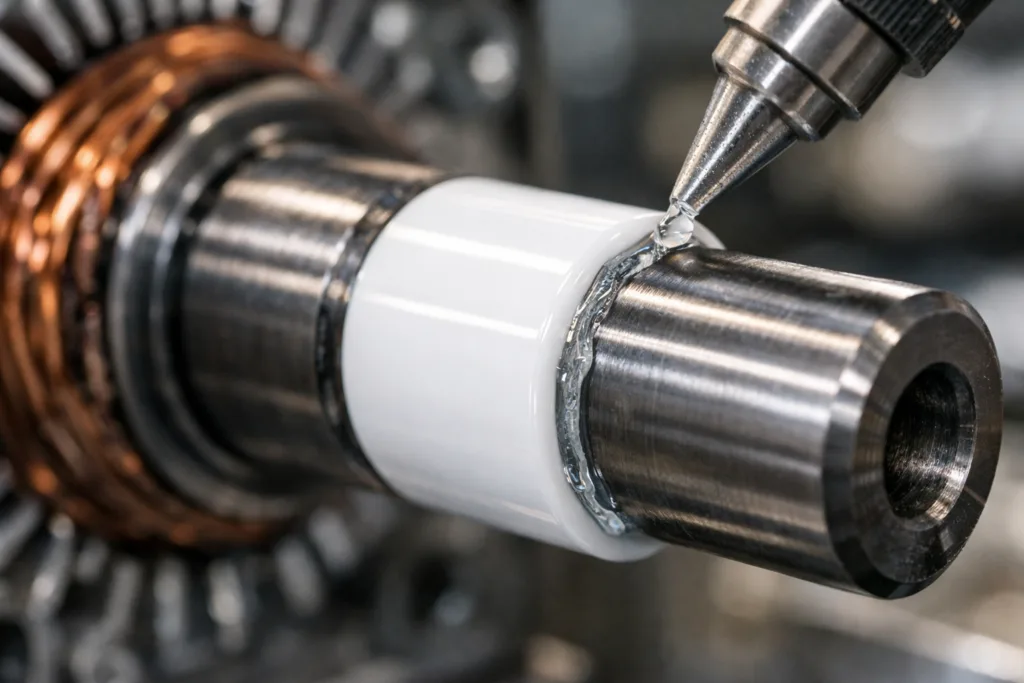
Ceramic shaft bonding is the process of joining ceramic-based components—such as rotors or sleeves—to motor shafts using specialized adhesives or bonding agents. High-efficiency motors, especially those for EVs and industrial machinery, benefit immensely from this approach due to ceramics’ superior mechanical and thermal properties.
Anatomy of a High-Efficiency Motor Shaft
Motor shafts are subject to high rotational speeds, fluctuating loads, and varied temperature cycles. A typical high-efficiency motor shaft comprises a metallic core (often stainless steel or high-grade alloy) with a ceramic component (like an insulating sleeve or magnet carrier) bonded directly onto the shaft’s exterior.
Advanced Ceramic Materials: Performance Under Pressure
Ceramics offer unique attributes—high hardness, low density, and chemical inertness—that traditional metals or polymers cannot match. For motor shafts, common ceramics include alumina (Al2O3), zirconia, and silicon nitride. These materials withstand intense friction, electrical insulation demands, and aggressive thermal cycles, making them ideal for next-generation motor platforms.
Key Benefits of Ceramic Shaft Bonding in High-Efficiency Motors
- Vibration Resistance: Ceramic bonds dampen high-frequency vibrations better than metal-to-metal fits, reducing the risk of fatigue failures.
- Thermal Stability: Ceramics maintain dimensional stability and adhesion strength even at 200–400°C, crucial for continuous-duty motors.
- Electrical Insulation: Prevents arcing and reduces eddy current losses for motors in sensitive or high-voltage applications.
- Chemical Resistance: Resistant to lubricants, coolants, and aggressive process fluids.
- Weight Reduction: Less mass compared to equivalent metal assemblies, enabling higher rotational speeds and accelerated response.
Challenges in Achieving Strong Shaft Adhesion
Bonding ceramics to metal shafts is not plug-and-play. Key challenges include:
- Low Surface Energy: Ceramics are inherently difficult to wet and bond, necessitating aggressive surface preparation.
- Differential Expansion: Metal and ceramic expand differently under heat; poor adhesive selection causes delamination or cracking.
- Possible Curing Issues: Some adhesives require tailored cure profiles to avoid thermal stress build-up.
Surface Preparation: Foundation of Reliable Ceramic Bonding
Effective bonding starts before any glue is applied. Surface prep often involves:
- Grit blasting or plasma cleaning for ceramics
- Degreasing and mechanical roughening on metal shafts
- Applying specialized primers or coupling agents
As outlined in how acrylics cut surface prep time, using the right adhesive system can sometimes reduce preparation steps and improve process efficiency.
Adhesive Selection: Matching Chemistry with Operating Demands
Choosing the correct bonding agent means balancing multiple performance traits:
- Epoxy adhesives for high shear and peel strength
- Acrylics with fast fixture times for high-throughput lines
- Polyurethanes when some flexibility or damping is needed
- Anaerobic adhesives where minimal oxygen is present
For instance, some high-temperature motors benefit from epoxy adhesive due to its superior heat resistance and load-bearing capability.
Bonding Process Workflow in Real Assembly Lines
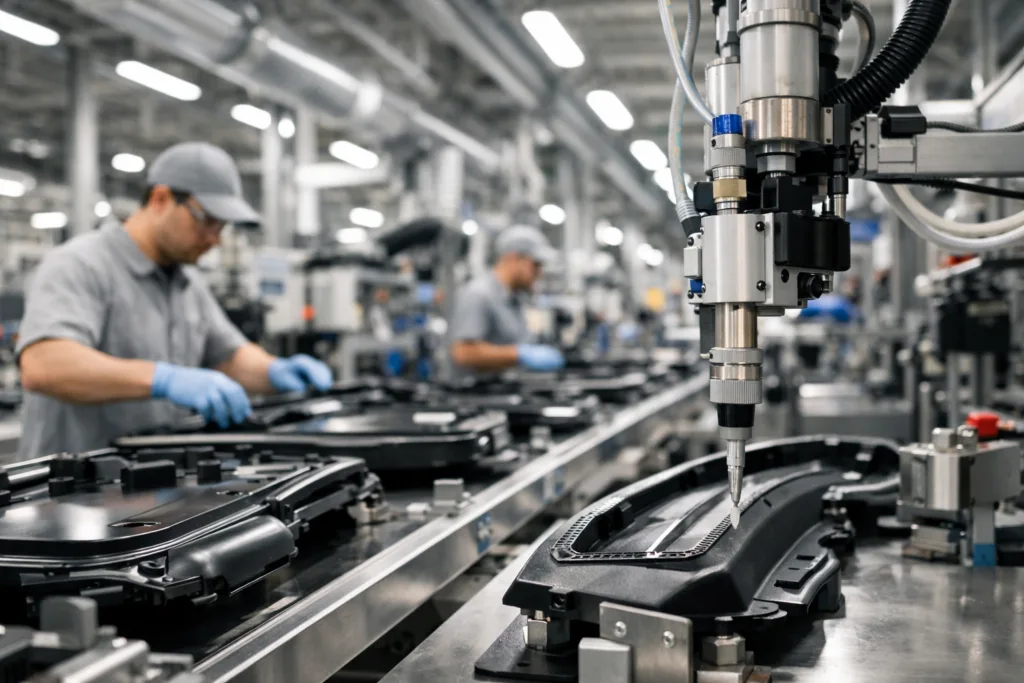
From an assembly-line viewpoint at ZDS Adhesive, an industrial adhesive manufacturer, reliable ceramic shaft bonding is the result of rigorous process control:
- Measure and clean parts to defined Ra roughness (often 0.8–1.6 μm)
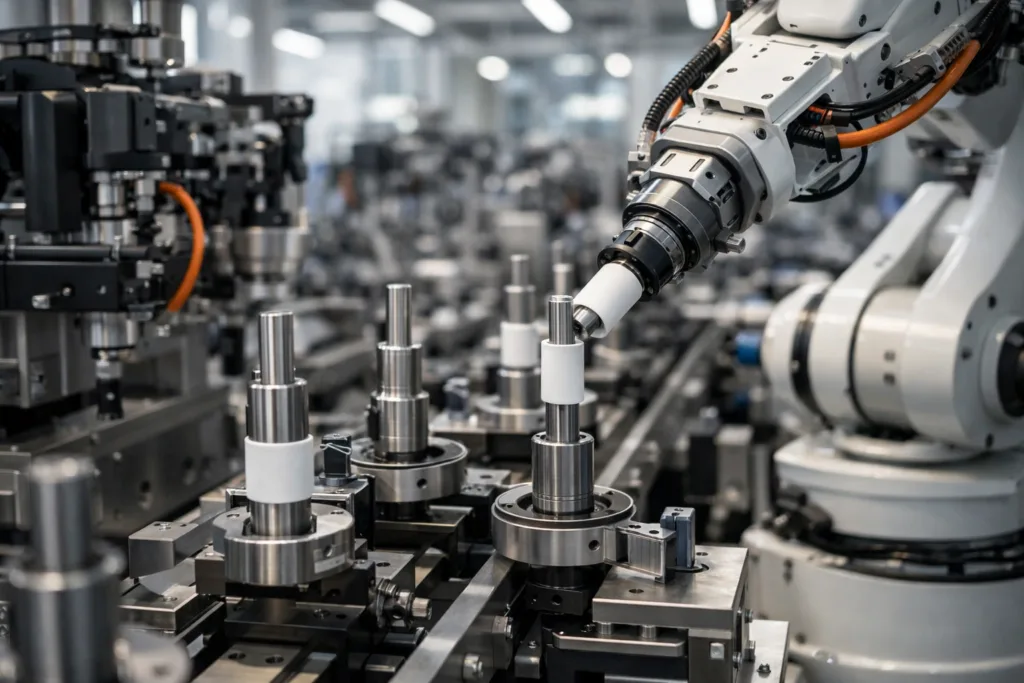
- Apply adhesive with automated dispensing for repeatability
- Join under controlled pressure, holding concentricity ±10 microns
- Cure under specified UV, thermal, or room-temperature cycles
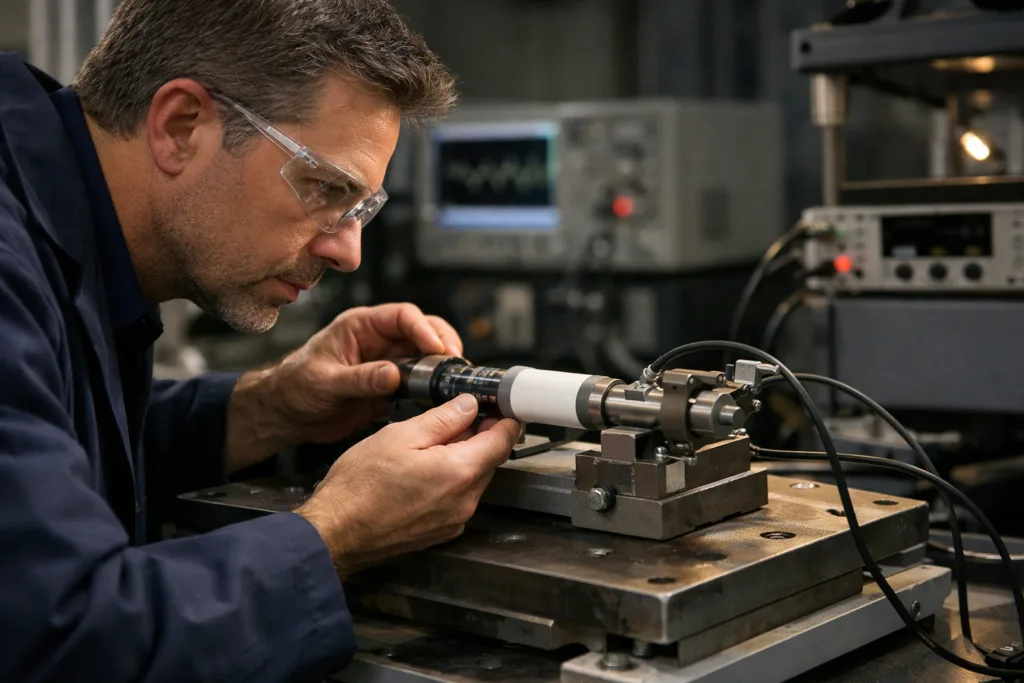
- Verify bond integrity using shear and peel testing protocols
Curing Methods for Ceramic Shaft Bonding
Curing—the process which hardens the adhesive—is mission-critical. Common curing approaches include:
- Thermal curing (hot air or oven, 100–180°C): Delivers maximum adhesive strength.
- UV curing: Rapid fixture for clear or semi-translucent ceramic parts.
- Dual-cure blends: Combine UV with thermal back-up for shadowed areas.
Vibration Resistance: Data-Driven Insights
Recent studies show that ceramic-bonded shafts reduce vibration amplitude by up to 40% compared to press-fit assemblies. Bonded joints absorb and dissipate vibrational energy, increasing motor longevity—even under stop/start or variable load cycles. Specialized adhesives with high damping coefficients, such as those featured in noise reduction e-motors damping adhesives, further enhance this effect.
Thermal Stability: Outperforming Traditional Bonding
Whereas legacy press fitting or mechanical anchoring struggles at high temperatures, ceramic bonding retains both mechanical integrity and alignment. Case studies on industrial motors show ceramic bonds withstanding 250°C continuous operation without creep or softening.
Bonding Ceramics to Metal: In-Depth Process Details
Substrate Compatibility
Not all ceramics or metals bond equally well. It’s standard to match expansion coefficients or use compliant adhesives that buffer thermal movement.
Recommended Bond-Line Thickness
A typical bond-line is 0.10 – 0.25 mm thick—thin enough for strength, thick enough to absorb micro-distortion. Excessive thickness can lower strength; too little creates brittle joints.
Testing Methods: Proving Bond Strength & Performance
- Lap shear and tensile tests at room and elevated temperatures
- Vibration fatigue testing under cyclic loading
- Thermal cycling for expansion–contraction durability
- Long-term chemical immersion for resistance analysis
Common Pitfalls and How to Avoid Them
- Skipping surface preparation—leading to weak early failures
- Incorrect adhesive or cure—resulting in bond cracking
- Over-tightening or using unaligned fixtures during cure—causing misalignment or shear weakness
Ceramic Shaft Bonding in High-Efficiency Motors
As electric motors evolve, so do bonding technologies. High-efficiency motors demand bonds that deliver consistent power and reliability over decades. Ceramic bonding, with its amalgam of vibration resistance and thermal stability, addresses these twin imperatives. The right process, from preparation through curing, yields virtually zero field failures and sets a new baseline in operational uptime.
Case Study: Ceramic Bonded Shafts in Industrial E-Motors
One leading appliance manufacturer replaced interference-fit shafts with bonded ceramics. Over 25,000 operating hours, they recorded a 92% reduction in bearing failures attributed to reduced vibration and improved shaft alignment—translating to longer service intervals and significant cost savings.
Case Study: Next-Gen EV Motors and Fast-Bonded Ceramics
In premium electric vehicles, rapid cycling and load changes expose shafts to extreme stress. Fast-setting acrylics allowed for in-line bonding of ceramic sleeves, improving throughput by 45% and virtually eliminating early-life failures. This is a prime example showing how targeted adhesive technology, combined with robust process control, sharpens the competitive edge in a highly dynamic market.
Emerging Trends: Sustainability and Smart Manufacturing
The era of sustainable manufacturing calls for adhesives that are low in VOCs, deliver minimal waste, and are easy to automate. Smart, sensor-enabled dispensing and real-time cure monitoring now allow for tighter control over bond quality and traceability—hallmarks of modern motor production standards.
Comparing Ceramic Shaft Bonding to Traditional Methods
| Parameter | Ceramic Bonding | Press Fit/Mechanical |
|---|---|---|
| Vibration Resistance | Excellent | Moderate |
| Thermal Stability | Outstanding (up to 400°C) | Limited (150–200°C) |
| Alignment Accuracy | High (±10 μm) | Variable |
| Chemical Resistance | Superior | Average |
| Assembly Speed | Fast (if adhesive is optimized) | Fast |
Cost Considerations: Balancing Investment and ROI
While the upfront cost per bonded shaft may be higher than with standard mechanical assemblies, the lifetime cost per operating hour is often significantly lower. Reduced downtime, less rework, and improved performance rapidly recoup the investment.
Material Safety and Handling Best Practices
It’s essential to observe safety protocols when working with industrial adhesives and ceramic particulates. Use appropriate PPE, work in ventilated environments, and follow all material safety data sheet (MSDS) recommendations.
Industry Outlook: The Future of Ceramic Bonding in Motors
With rising demands for efficiency, quiet operation, and lightweight construction, ceramic bonding will only become more integral to motor manufacturing. Ongoing advances in adhesive chemistry and automation are poised to further improve reliability and scalability across sectors—from EVs to industrial automation.
Conclusion: Ceramic Bonding as the Backbone of Next-Gen Motor Efficiency
To meet 2026’s reliability and efficiency targets, high-efficiency motors increasingly rely on advanced ceramic shaft bonding. The fusion of preparation, material science, and process control unlocks game-changing results—delivering quieter, cooler, and longer-running machines both on the factory floor and in the field. Whether tackling vibration, thermal cycles, or cost-of-ownership, ceramic bonding has emerged as the unsung hero of motor evolution.
Frequently Asked Questions
What makes ceramic shaft bonding ideal for high-efficiency motors?
Ceramic bonding offers superior vibration resistance, thermal stability, and electrical insulation, all vital for reliable high-speed motor performance.
How is surface preparation performed for ceramic to metal shaft bonding?
Typically, the ceramic is grit-blasted or plasma cleaned, while the metal is degreased and abraded. Sometimes primers or coupling agents are applied for stronger adhesion.
Can epoxy adhesives handle the thermal demands in motor assemblies?
Yes, industrial-grade epoxy adhesives routinely handle temperatures above 200°C, making them suitable for continuous-duty high-efficiency motors.
How does ceramic shaft bonding improve vibration resistance?
The adhesive layer and ceramic both absorb and dampen vibration, reducing overall amplitude and extending component life compared to metal-only assemblies.
What are common failure modes when bonding ceramics to shafts?
Failures usually result from insufficient surface prep, incorrect adhesive choice, or improper cure profile—each causing early bond cracks or delamination.
Are ceramic-bonded shafts cost-effective for mass production?
Although initially more expensive, their longer lifespan and reduced maintenance often yield superior ROI, especially in mission-critical or high-performance applications.
Related Reading
- How Modern Damping Adhesives Lead to Quiet, Reliable E-Motors
- Why High-Modulus Adhesives Are Changing Chassis Design for Safety
- Acrylics vs. Rivets: Which Assembles Faster and Stronger?
- Form-in-Place Gaskets: The 2026 Solution for Leak-Free Gearboxes
- Boost Reliability: Polyurethane Potting Glue for Demanding Electronics