Understanding UV Adhesive Manufacturers vs. Traders
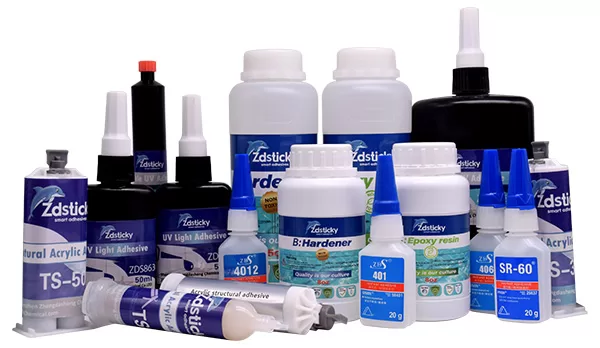
When searching for a UV adhesive manufacturer, it’s vital to understand the difference between a true manufacturer and a trading company. Manufacturers produce adhesives in their own facilities, giving them direct control over formulation, quality, and supply chain. Traders often act as middlemen, sourcing products from multiple vendors but lacking technical depth. This distinction shapes what you can expect in terms of product customization, technical support, and long-term reliability.
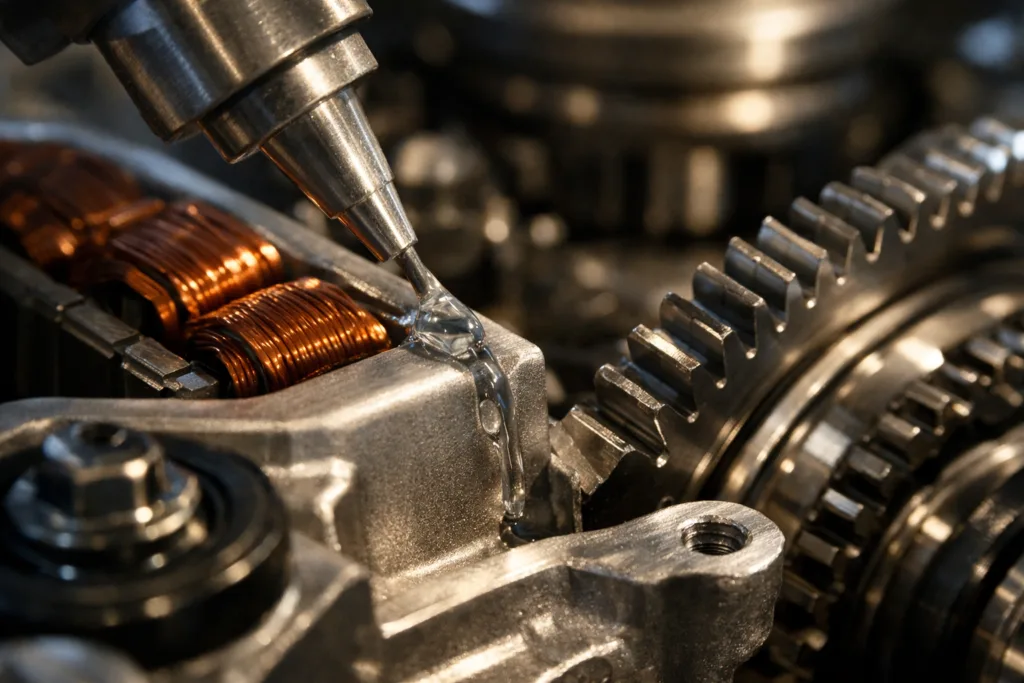
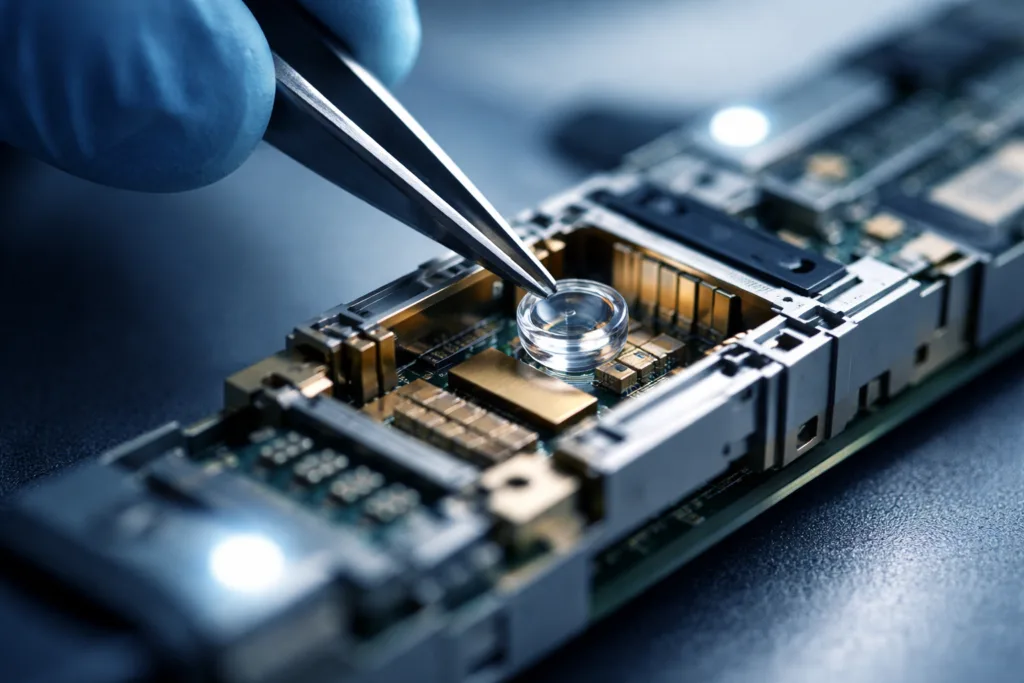
Partnering with a genuine UV adhesive manufacturer, like ZDS, ensures you tap into expert materials science and hands-on production insight. They can tailor UV-cure adhesives across chemistries—such as acrylic, epoxy, or hybrid formulas—while traders usually offer only off-the-shelf options. This difference matters most for demanding projects in electronics, automotive, or medical devices where precise bonding, cure speed, and regulatory compliance are critical.
Key Differences
- Manufacturer: Direct formulation and production, reliable QC, custom solutions.
- Trader: Limited technical input, variable product consistency, generic catalogs.
Technical Expertise of UV Adhesive Manufacturers

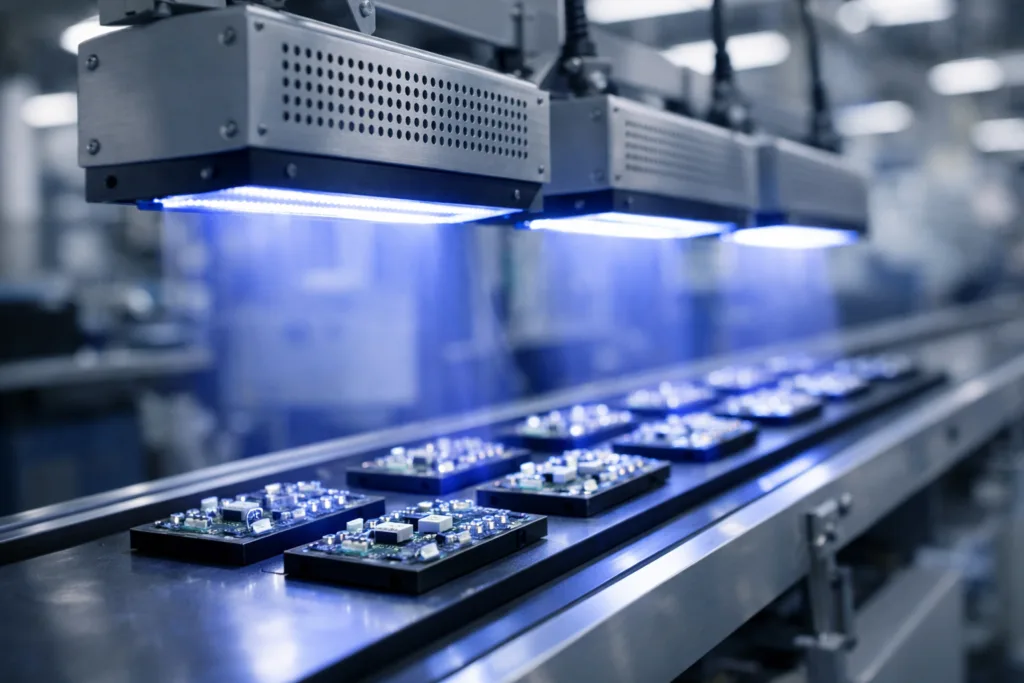
Technical capability sets the best UV adhesive manufacturers apart. UV adhesives cure when exposed to ultraviolet light, forming strong, durable bonds quickly. But every application—whether bonding glass, plastics, metals, or electronics—demands unique properties. Manufacturers with deep expertise understand cure kinetics, open time, viscosity, and mechanical performance parameters like lap shear strength (ASTM D1002) and tensile strength.
Look for manufacturers with a track record in developing and testing UV-curable epoxies, acrylics, and hybrid MS polymers. ZDS, for example, provides UV adhesives with variable Shore D hardness (40–80), tailored viscosities (from 200 to 10,000 cP), and custom cure profiles for high-speed industrial assembly. Skilled chemists can adjust formulations to optimize flow, adhesion, and flexibility, matching specific substrate needs and curing process requirements.
Examples of Technical Expertise
- Custom UV cure profiles for automotive glass assembly.
- Low-yellowing adhesives for high-transparency electronics.
- High-temperature formulations for LED packaging.
Process Insight
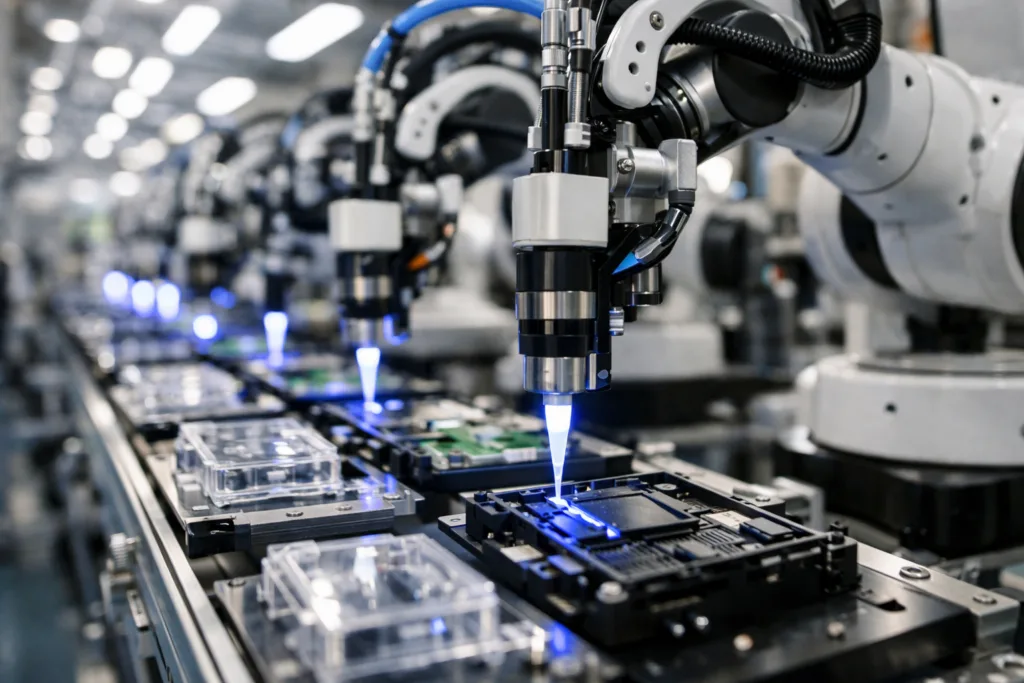
Advanced manufacturers invest in automation: bead, slot-die, and spray dispensing lines, with static mixers for two-part systems. This ensures consistent mix ratios and eliminates process errors during assembly. Expert teams advise clients on surface preparation—such as degreasing, plasma treatment for engineered plastics (ABS, PC, PA), or grit-blasting for metals. They also provide data on open time (window between application and cure), pot life, and optimal clamp force for fixturing.
| Chemistry | Best Substrates | Properties | Top Application |
|---|---|---|---|
| Epoxy (UV Cure) | Glass, metal, ceramics | High strength, moderate flexibility, temp resistant | Optical bonding |
| Acrylic (UV Cure) | Plastic, composites | Fast cure, flexible, good transparency | Display assembly |
| Hybrid MS Polymer | Mixed, stone | Gap filling, high elongation | Large panel installation |
Quality Control Systems in UV Adhesive Manufacturing
Quality control (QC) is the backbone of reliable UV adhesive manufacturing. Unlike traders, manufacturers implement stringent QC checks at every step—from raw material sourcing to final packaging. They conduct in-house tests for lap-shear, T-peel (ASTM D1876), and aging under thermal cycling. Materials are challenged with salt spray (ASTM B117), UV exposure, and chemical resistance routines to ensure long-term stability.
Leading manufacturers maintain REACH and RoHS compliance, and provide comprehensive Safety Data Sheets (SDS) with every lot. They use automated dispensing accuracy checks and batch traceability to prevent defects. ZDS, for instance, stores adhesive batches under controlled humidity and temperature to preserve curing performance, and conducts lot-to-lot verification to guarantee consistency.
Indicators of Strong QC
- ISO 9001 certification and regular audits
- Automated viscosity and hardness measurements per batch
- Documented storage and transport procedures
Transparency and Traceability
Reputable manufacturers provide QC reports and traceability for every adhesive shipment. This ensures you receive documented performance metrics tied to the exact production run. Ask for certificates of analysis and lot numbers to crosscheck consistency and compliance, especially for regulated industries like medical electronics and automotive OEMs.
Customization Capabilities of UV Adhesive Manufacturers
Customization sets manufacturers apart from generic suppliers. When off-the-shelf adhesives do not meet your application, a technical partner can tailor formulation, viscosity, cure profile, and packaging. ZDS routinely works with customers to develop UV adhesives with unique tensile strength, elongation, cure speed, and thixotropy (resistance to flow under pressure).
For example, a manufacturer can formulate low-odor adhesives for consumer electronics, high-thermal-conductivity variants for battery pack assembly, or moisture-resistant UV-cure epoxies for stone cladding. They support custom colors, reactivity, and even packaging (syringe, cartridge, die-cut tape) for automated lines.
Custom Formulation Process
- Requirements gathering: substrate, process, compliance needs
- Lab-scale prototyping and rapid testing
- Scale-up to pilot batch and real-world sample validation
- Production, QC, and delivery with full documentation
Why Customization Matters
Custom adhesives solve problems not addressed by standard formulas. They boost yield, reduce assembly time, and ensure fail-safe performance in harsh environments. Manufacturers like ZDS make customization hassle-free with technical support, trial phase feedback, and rapid iteration.
UV Adhesive Manufacturer: Key Features
When choosing a UV adhesive manufacturer, focus on these critical features:
- In-house R&D: Ability to innovate and iterate for challenging applications.
- Process engineering: Support for automated dispensing or special packaging.
- Compliance management: Up-to-date documentation for environmental and safety regulations.
- After-sales support: Technical troubleshooting and ongoing optimization.
Reliable manufacturers operate with a partnership mindset, aiming for long-term collaboration. They invest in client training, joint problem-solving, and field validation to ensure adhesives work flawlessly on the line and in the field.
Comparing Leading UV Adhesive Manufacturers
The market features many UV adhesive manufacturers. However, not all providers deliver the same technical depth or reliability. Some specialize in niche segments, such as high-end electronics or automotive glass. Others focus on volume solutions for consumer packaging or industrial assembly. ZDS, for example, offers a broad portfolio covering structural and non-structural UV adhesives, supporting applications from wearable electronics to stone flooring installations.
What to Evaluate
- Portfolio breadth (epoxy, acrylic, hybrid, tape/film)
- Industry experience (years in business, customer testimonials)
- Technical support channels
- Scalability (capacity to fulfill large orders quickly)
Making the Right Choice
Request samples from top candidates and conduct side-by-side performance trials. Review their certifications, QC documentation, and case studies. The right UV adhesive manufacturer will offer transparency, deep know-how, and practical problem-solving to speed your project to market.
Assessing Substrate Compatibility
UV adhesives must reliably bond the target substrate—whether glass, metal, engineered plastic, stone, or composite. Top manufacturers guide you in selecting the right chemistry, surface prep, and cure process for optimal adhesion.
For challenging plastics like ABS, PC, PA, or PP, surface pre-treatment (corona, plasma, primer) often boosts bond strength. Metals may require abrasion and cleaning to ensure robust curing. ZDS provides technical guidance on substrate testing, application method (bead, slot-die, spray), and fixture design to streamline assembly.
Best Practices for Surface Prep
- Degrease with proper solvents
- Abrade or grit-blast metal and stone
- Apply approved adhesion promoters where needed
Data Sharing
Request performance data for each substrate—lap-shear, T-peel, tensile, and elongation metrics. Compare across suppliers to find adhesives proven in your application.
Compliance, Documentation, and Support
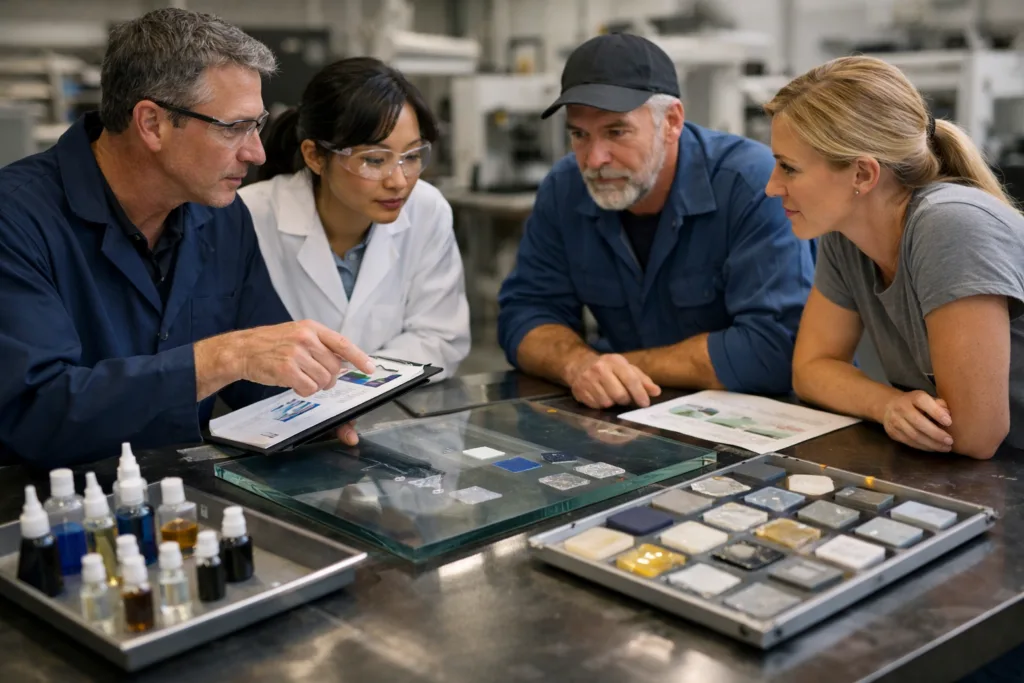
Global industries demand adhesives that meet rigorous compliance standards. Seek manufacturers that provide REACH, RoHS, and VOC certificates on request. Full Safety Data Sheets (SDS), lot traceability records, and storage guidelines show commitment to safety and transparency.
Reliable support channels matter during both prototyping and production ramp-up. ZDS offers pre-sales consultation, on-line troubleshooting, and on-site technical visits for critical applications. Fast, clear answers build confidence that your adhesive partner will deliver through every stage of your project.
Checklist for Compliance
- Up-to-date documentation (REACH, RoHS, VOC)
- Clear handling and storage instructions
- Rapid technical support response
Frequently Asked Questions
What is the difference between a UV adhesive manufacturer and a trader?
A manufacturer produces UV adhesives with direct control over formulation and quality, while a trader resells products sourced from different suppliers with limited technical control.
How do I verify the technical capabilities of a UV adhesive manufacturer?
Check for in-house R&D, detailed product specifications, sample support, and certifications for performance across relevant industries and substrates.
What quality control measures should I expect from a leading manufacturer?
Expect consistent batch testing, full documentation, traceability, compliance with international standards, and automated production monitoring for every shipment.
How important is customization in UV adhesive selection?
Customization allows adhesives to match unique process needs, boosting performance and reliability in demanding or novel applications where standard products may fail.
Can a UV adhesive manufacturer help with substrate compatibility?
Yes, top manufacturers provide technical guidance for surface prep, substrate choice, and process adjustments to ensure strong, reliable adhesion.
What documents should a UV adhesive manufacturer supply?
Leading providers supply Safety Data Sheets, compliance certificates (REACH, RoHS), lot traceability information, and clear application guidelines for safe, effective use.