Understanding Flux, Coating Adhesion, and PCB Cleaning
Chemistry and electronics go hand-in-hand when it comes to manufacturing reliable printed circuit boards (PCBs). Cleaning residues: how flux affects coating adhesion is a factor no engineer can ignore. Flux’s chemical residues, if improperly managed, can make or break the adhesion and long-term protection of surface coatings on circuit boards. Each step, from soldering to final inspection, plays a role in determining whether coatings will truly safeguard the PCB or hide lurking defects.
What Is Flux and Why Is It Used on PCBs?
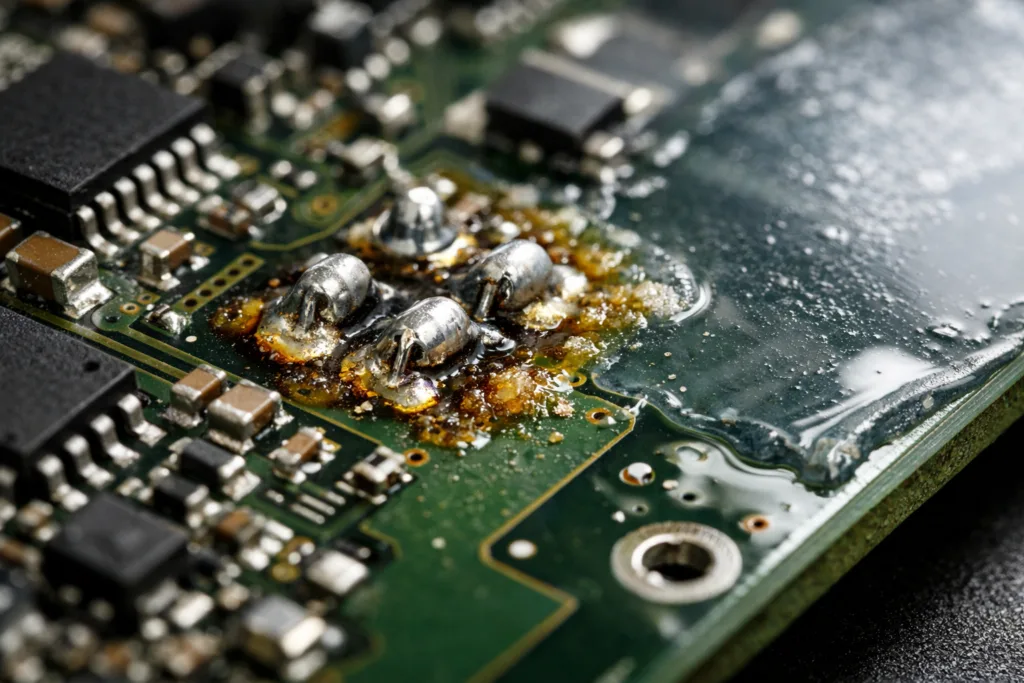
Flux is a blend of chemicals applied during the soldering process on PCBs to remove oxides and contaminants. It promotes wetting, prevents further oxidation, and helps solder form strong joints. Flux types include rosin-based, water-soluble, and no-clean, each leaving differing residue characteristics once heated and cooled.
The Crucial Role of Coating Adhesion
Coating adhesion is how well a protective film—such as conformal coating, encapsulant, or potting compound—sticks to the PCB surface. Reliable adhesion ensures electrical insulation, moisture resistance, and environmental durability. Poor adhesion often traces back to surface contamination, especially flux residues.
Types of Fluxes and Their Residue Properties
Not all fluxes are created equal. Here’s a quick comparison:
| Flux Type | Main Components | Residue Characteristics |
|---|---|---|
| Rosin-Based | Natural resin, activators | Tacky, acidic or mildly acidic, may attract moisture |
| Water-Soluble | Organic acids (carboxylic), glycol, water | Ionic, easily attracts water, corrosive if not removed thoroughly |
| No-Clean | Low-solids rosin or synthetic blends | Thin, less corrosive films, but may impede adhesion |
How Flux Residues Impede Coating Adhesion
Residues left behind after soldering can disrupt the bonding process between the coating and the PCB surface. Key problems include:
- Surface Energy Mismatch: Certain residues repel coating chemistries, inducing gaps or voids.
- Barrier to Chemical Bonding: Residual films block the interaction needed for durable adhesion.
- Chemical Reactivity: Some residues may react with components of the coating, causing defects like dewetting or fish eyes.
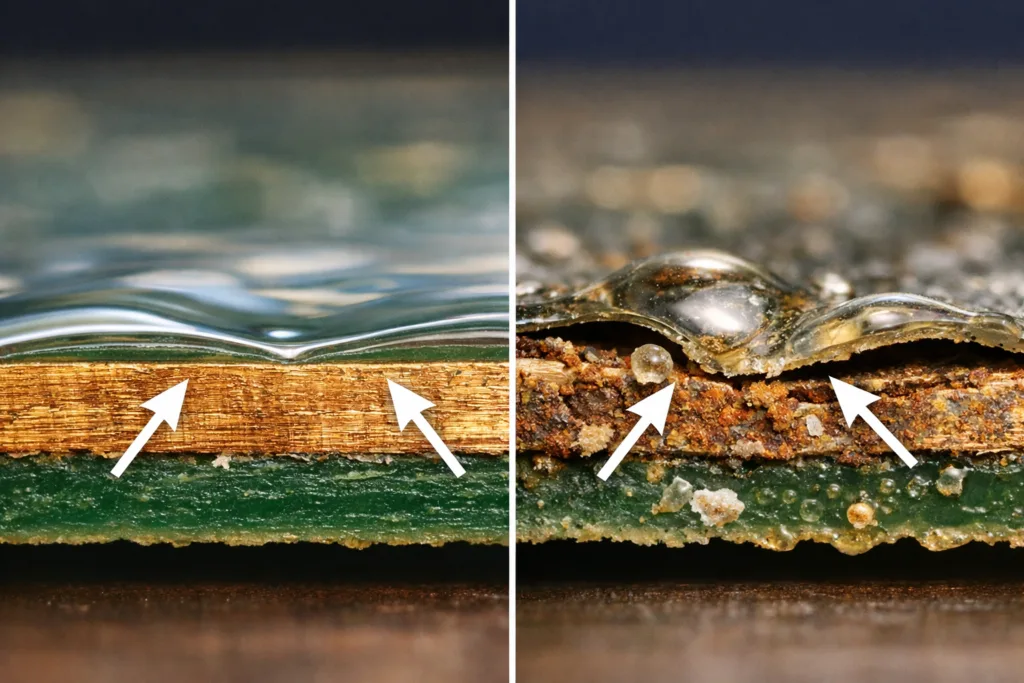
- Corrosion Risk: Ionic or acidic residues attract moisture, promoting under-coating corrosion.
Common PCB Cleaning Methods
Choosing the right cleaning technique depends on the flux type, coating chemistry, and assembly constraints. Common methods include:
- Manual brushing with solvents (spot cleaning)
- Ultrasonic cleaning with deionized water and detergents
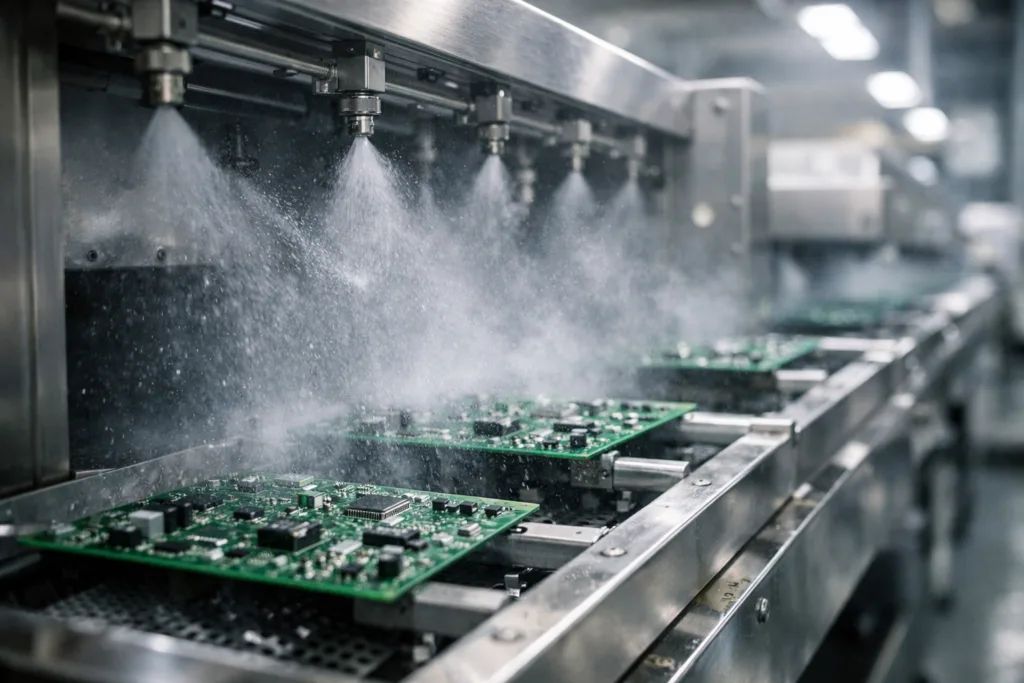
- Spray-in-air (defluxing machines)
- Vapor degreasing with engineered solvents
For challenging geometries or high-reliability assemblies, specialized cleaning agents tailored for flux removal become essential. See solutions on epoxy adhesive formulations that tolerate various surface preparations.
Factors Influencing Cleaning Effectiveness
Success hinges on matching cleaning methods with flux chemistry. Key factors include:
- Solvent compatibility—can the cleaner dissolve and remove the residue?
- Component density and shadowed areas—are all residues accessible?
- Rinse quality and water purity—critical to avoid lingering ions.
- Drying process—leftover moisture may undermine both adhesion and reliability.
For a full overview, explore the PCB Coating Showdown: Dip, Brush, or Spray guide.
Solvent Compatibility and Its Impact
Not all solvents clean equally. Some may degrade board laminates, swell component encapsulants, or leave their own residues. Always verify that the cleaning chemistry aligns with both the flux used and the coating to be applied. Process testing, including tape-pull and cross-hatch adhesion tests, are good habits before scaling production.
The Dangers of Poor Cleaning: Defects and Failures
When flux residues remain, coatings can fail in service through:
- Delamination: Coating peels away, exposing the circuit beneath.
- Fish Eyes and Dewetting: Small craters or beaded coating surfaces.
- Pinholes: Tiny, hard-to-see gaps inviting moisture ingress.
- Corrosive Outgassing: Trapped chemicals corrode copper traces over time.
Case Study: Adhesion Failure from Residues
In a 2024 telecommunications project, boards assembled with water-soluble flux and inadequate rinsing began failing after environmental cycling. Cross-sectioning revealed blistered coating and localized corrosion—root-caused by ionic residue driving moisture under the coating. A process revision to double the rinsing cycle and include ion chromatography screening reduced adhesion failures to <0.5% per lot in subsequent batches.
Best Practices for Reliable PCB Adhesion
- Clean boards immediately after soldering, before residues harden
- Verify residue removal with ionic contamination testing (e.g., Resistivity of Solvent Extract – ROSE)
- Choose solvent and cleaning process based on flux chemistry and PCB tolerance
- Test adhesion on cleaned sample batches (tape test, scribe and peel)
- Select a coating compatible with both the substrate and pre-cleaned surface
- Document process controls; small cleaning changes can lead to big adhesion risks
Industry Perspectives: ZDS Adhesive Experience
From an assembly-line viewpoint at ZDS Adhesive, an industrial adhesive manufacturer, we’ve observed coating adhesion issues that correlate directly with inconsistencies in cleaning routines before coating application. Even with advanced low-energy surface coatings, adequate residue removal remains a non-negotiable starting point for any high-reliability assembly. Specifying both the right adhesive and cleaning protocol is key to minimizing performance drift during humidity and thermal aging tests.
Recent Innovations in Adhesion Testing and Inspection
Modern electronics manufacturing leverages tools like Fourier transform infrared (FTIR) surface analysis, ion chromatography, and in-line vision inspection to check PCB cleanliness before coating. Automated tape-pull rigs, cross-hatch adhesion grids, and humidity aging chambers provide real-world evidence of process stability.
Challenges with Complex Board Designs
Modern multi-layer PCBs or densely packed assemblies often suffer hidden residue problems. Cleaning solutions must reach under components, in via holes, and around masked areas. Ultrasonic cleaning helps, but can sometimes drive water into delicate components if misapplied. Each design iteration should trigger a fresh review of the cleaning and coating protocols.
Learn more about how encapsulation can protect hard-to-reach circuit features in: How Dam and Fill Encapsulation Protects Sensitive PCB Components in 2026.
Process Controls and Standardization
Documented cleaning and coating processes, periodic verification, and ongoing optimization close the gap between prototype and volume production. Standards like IPC-610 (for PCB assembly) and IPC-CC-830 (for conformal coatings) guide acceptable cleanliness and adhesion practices.
Tips for New Product Introduction (NPI)
At NPI or pilot stages, run parallel tests between different fluxes and cleaning regimes. Capture long-term aging data under relevant thermal, humidity, and voltage-cycling profiles. Build feedback loops so cleaning, flux selection, and coating application drive towards reliable, scalable outcomes.
Cleaning Residues: How Flux Affects Coating Adhesion
Summing up, cleaning residues—especially flux—have a direct, measurable impact on coating adhesion atop PCBs. The nature of flux chemistry dictates cleaning requirements, but the golden rule is always: test, verify, control. Compromise at this step jeopardizes not just coating performance, but the entire device’s service life.
Conclusion
Flux residue removal is not just a process checkbox; it’s a vital practice ensuring that protective coatings last and electronics perform reliably. Matching cleaning methods to flux chemistry, verifying results, and maintaining process discipline separate high-reliability assemblies from costly field returns and failures. As PCBs and coatings evolve, so too must our cleaning and qualification strategies—to stay one step ahead of residue risks.
Frequently Asked Questions
What problems do flux residues cause in PCB coating?
Flux residues can lead to poor coating adhesion, moisture ingress, corrosion, delamination, and even hidden electrical failures. Cleaning is essential prior to coating.
How can I tell if my PCB is clean enough for coating?
Use ionic contamination tests, visual inspection (especially under UV light for some residues), and adhesion tape tests to ensure thorough cleaning has been achieved.
Are “no-clean” fluxes safe to leave uncleaned before coating?
No-clean fluxes leave minimal, less corrosive residue, but these thin films can still disrupt adhesion, especially with urethane or silicone coatings. Always validate with practical tests.
Does the coating type affect how critical flux cleaning is?
Yes. Some coatings (e.g., acrylics or silicones) are more sensitive to surface energy and residue presence than others. Consult with your coating and adhesive supplier for detailed recommendations.
What happens if I use the wrong cleaning solvent?
The wrong solvent can fail to remove flux, leave its own contaminants, or attack PCB materials. Always match your cleaning chemicals to the specific flux and assembly materials used.
Are there industry standards for PCB cleanliness before coating?
Yes—IPC-610 covers general PCB assembly cleanliness, while IPC-CC-830 covers coating adhesion and cleanliness readiness for conformal coating applications.