Understanding Delay Cure UV Adhesives: The Flexible Future of Metal Bonding
Delay cure UV adhesives, especially in the context of metal bonding, have ushered in a new wave of possibilities for industrial assembly and precise manufacturing. These unique adhesives combine the speed and cleanliness of traditional UV-cure systems with a controlled, delayed curing process. This article explores the underlying principles of delay cure UV adhesives, focusing on their chemistry, flexibility in operational workflows, and the exceptional reliability they provide for bonding metals in real-world settings.
The Science Behind Delay Cure UV Adhesives
How Delay Cure Works
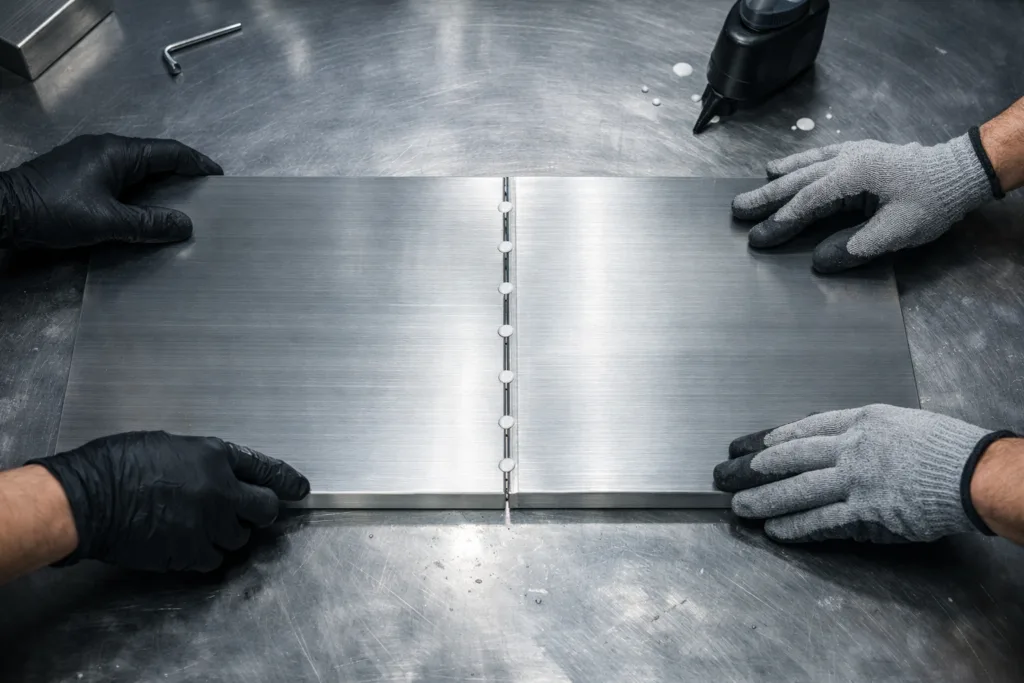
Unlike conventional UV adhesives that harden instantly under ultraviolet light, delay cure UV adhesives leverage specialized photoinitiators and latent crosslinking agents. This allows for a controlled “open time” where parts can be repositioned, assembled, or even transported before final curing is initiated by UV exposure (industrial adhesives reference). The delayed reaction is often managed by modifying the molecular structure: photo-latent catalyst systems, or dual-cure mechanisms combining UV with thermal or moisture triggers.
Chemical Principles of the Delayed Cure Mechanism
The delayed cure is possible thanks to the interplay of photoinitiator stability, radical scavengers, and the polymer backbone chemistry. In free-radical systems, inhibitors such as hindered amines or hydroquinone derivatives impede immediate crosslinking. In cationic UV adhesives (common for metal bonding), certain onium salts are designed to remain dormant until sufficient UV is applied. This balance protects the adhesive from accidental curing during dispensing or preliminary assembly stages.
Formulation Components
- Polymer matrix: Often acrylic or epoxy
- Photoinitiator: Tailored to delay reactivity until target UV exposure
- Latent catalysts: Enable dual-cure or secondary cure options
- Additives: Enhance metal adhesion, toughness, and environmental resistance
Why Delay Cure UV Adhesives Are Transforming Metal Bonding
Flexibility in Modern Assembly Lines
Manufacturing processes have become increasingly complex and require adhesives with greater handling windows. Delay cure UV systems provide production engineers with adaptability—parts can be pre-assembled, aligned for accuracy, and only cured at the optimal moment. From an assembly-line viewpoint at ZDS Adhesive, an industrial adhesive manufacturer, this means: reduced fixturing, minimized rework, and higher throughput. Delay cure UV adhesives give teams the time to ensure everything is perfect before commitment.
Key Advantages for Metal Bonding
- Extended positional adjustment time
- Reduced setup waste due to misalignment
- Cleaner processing compared to solvent-based adhesives
- High green strength after UV exposure
Unique Properties of Delay Cure UV Adhesives
Excellent Solvent and Chemical Resistance
These adhesives are often formulated to offer high solvent resistance, making them suitable for harsh industrial environments, including factories exposed to oils, coolants, and cleaning agents (epoxy adhesive link). This stability comes from robust curing networks, especially where cationic or epoxy-urethane systems are involved.
Strong Bonds for Metal Substrates
Delay cure UV adhesives can reach lap shear strengths that rival, and often exceed, traditional two-part epoxy or thermal adhesives (metal glue manufacturers reference). Their enhanced wetting characteristics and inclusion of metal adhesion promoters (such as organophosphorus agents) ensure reliable bonds even on challenging surfaces like stainless steel, aluminum, and zinc alloys.
Versatility Across Industry Requirements
- Available in one- or two-component formulations
- Adjustable cure speeds (UV/thermal or UV/moisture activation)
- Tailored viscosity for bead, spray, or dot dispensing
Applications Across Industries
Automotive: Seamless Integration of Lightweight Metals
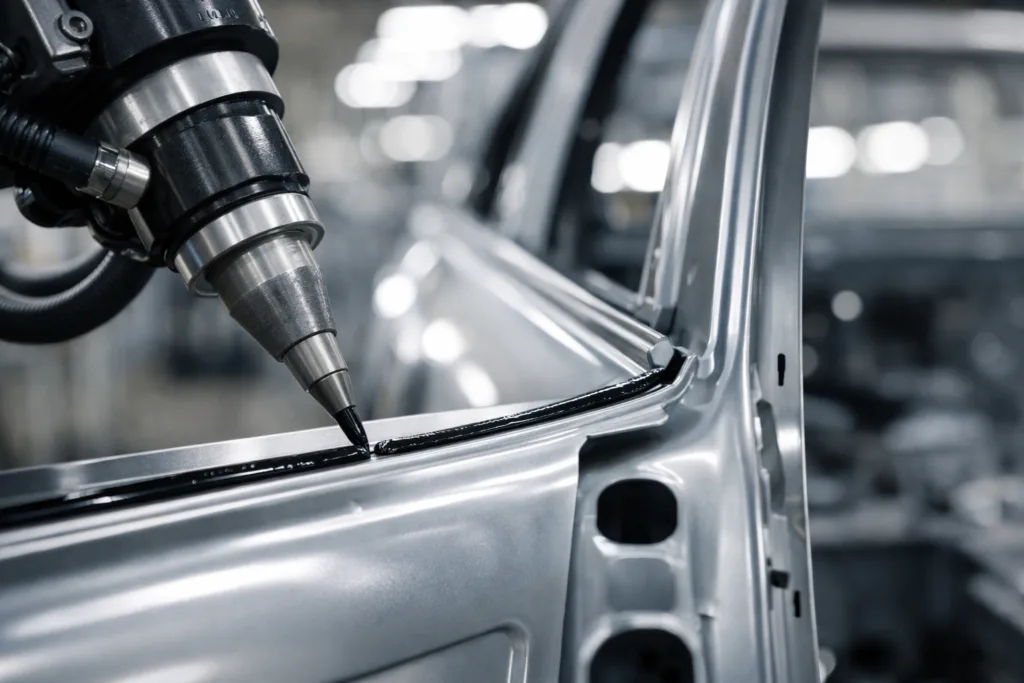
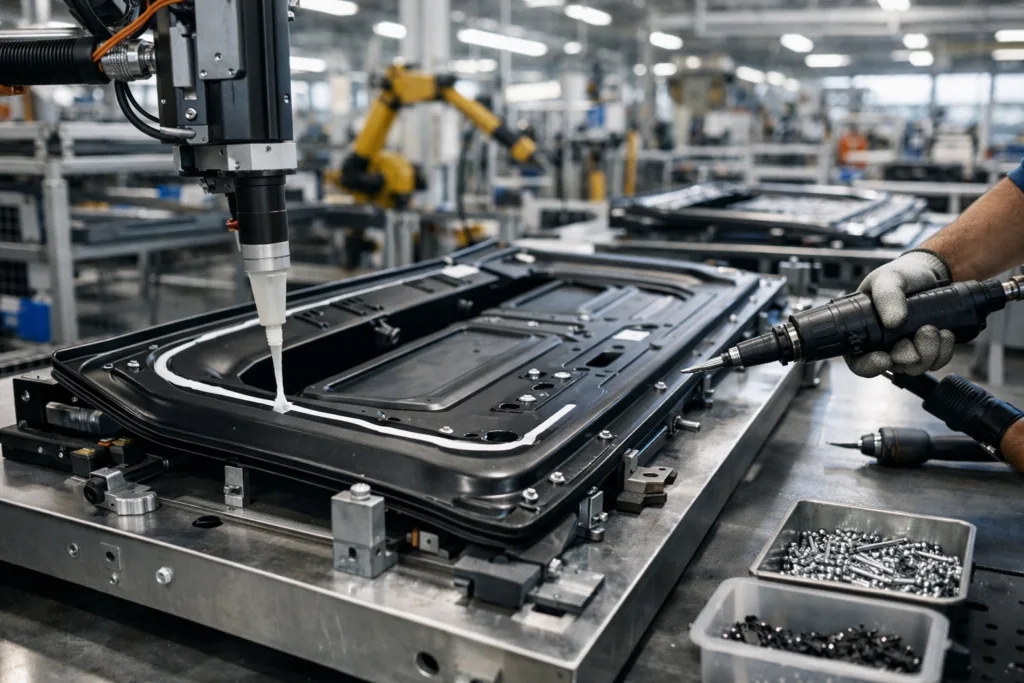
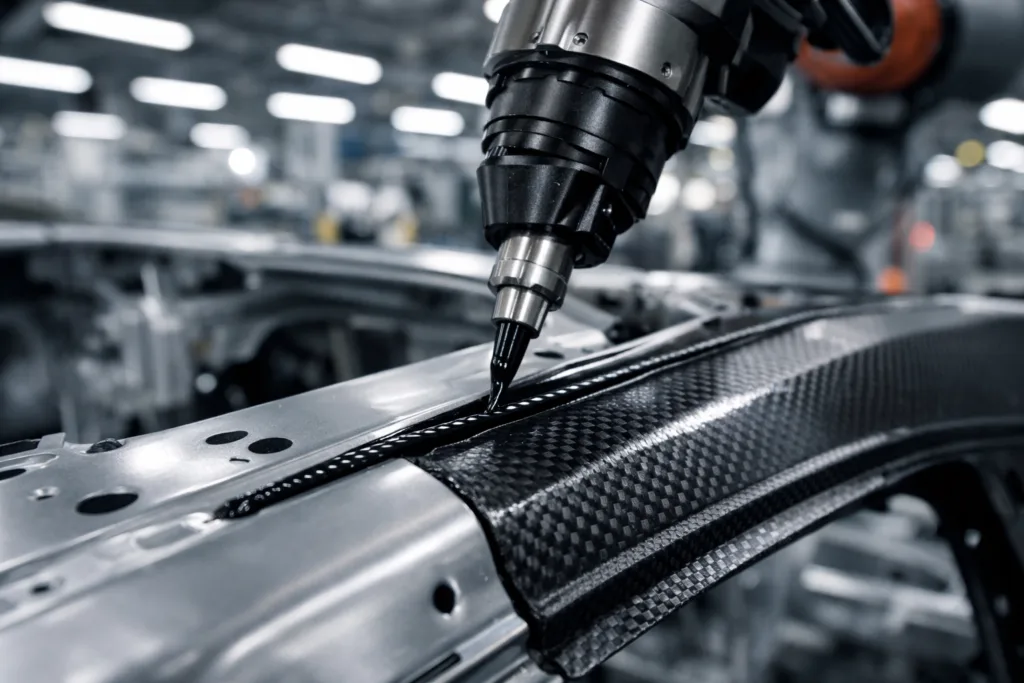
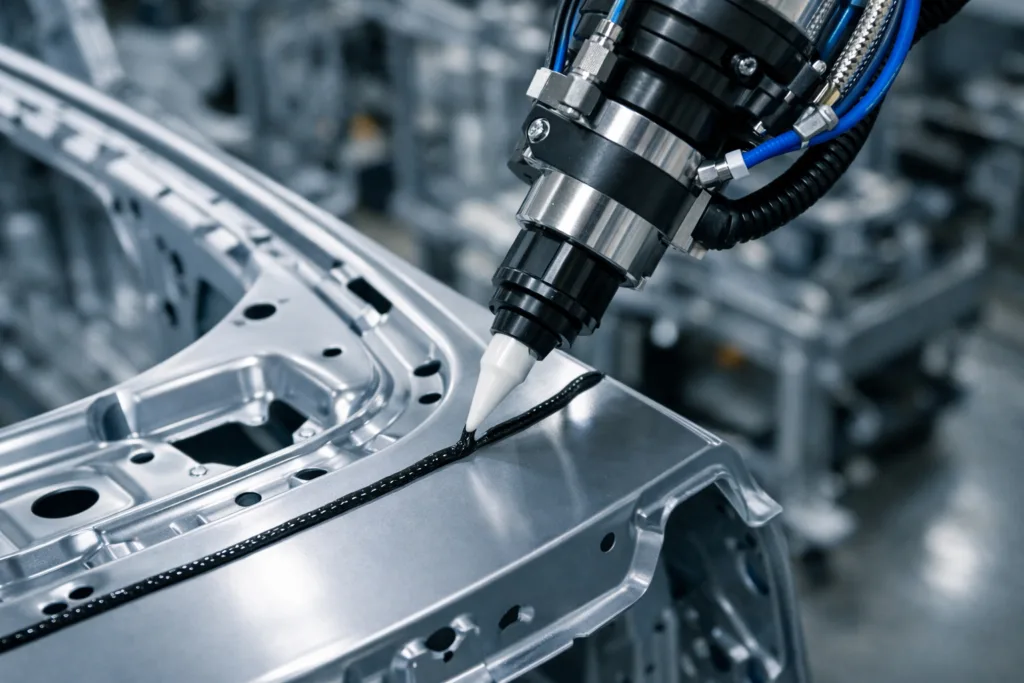
Automakers increasingly rely on mixed-material assemblies. Delay cure UV adhesives are used to bond components such as aluminum brackets, exterior trim, and high-strength steel reinforcements. Their use minimizes distortion and does not require heat—ideal for bonding temperature-sensitive materials or pre-painted parts.
Electronics: Precision and Process Control
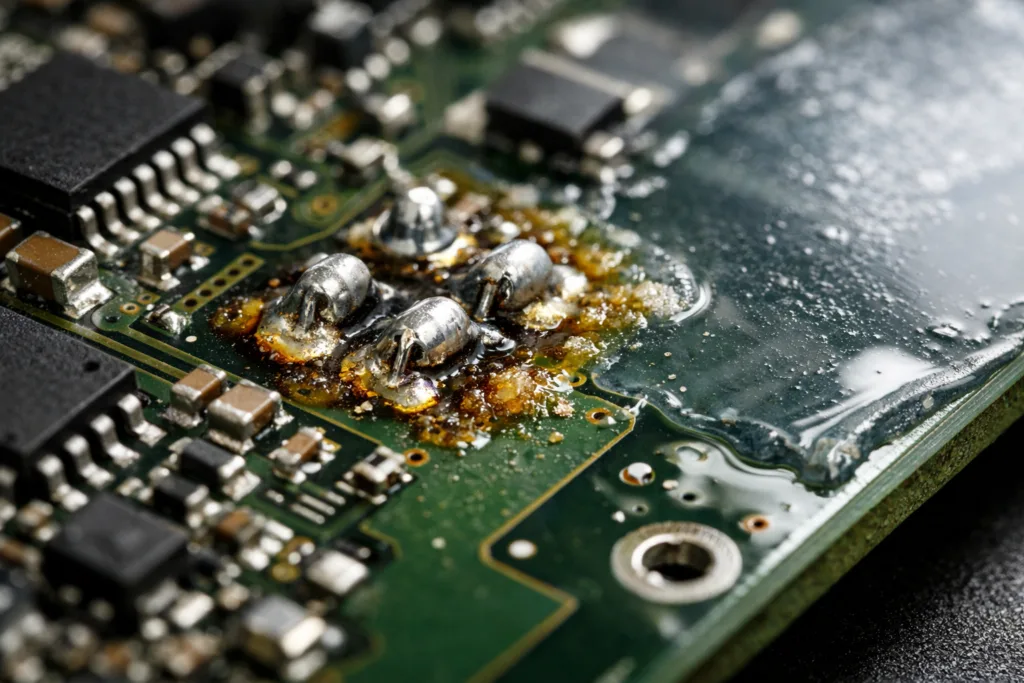
In printed circuit boards (PCBs) and microelectronics, these adhesives offer controlled alignment time, making them preferred for applications that need accuracy—such as attaching heat sinks or metal shields to tiny chip components. Their low outgassing also preserves sensitive circuits.
General Manufacturing: Assembly Line Efficiencies
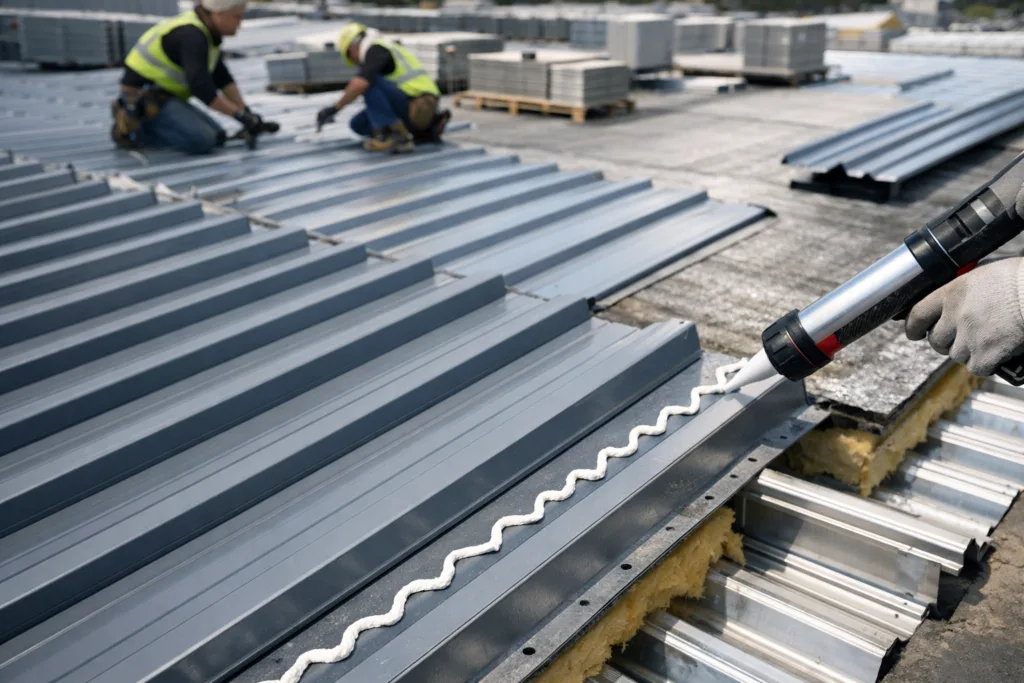
Delay cure UV adhesives have found use in diverse manufacturing, from appliances to industrial sensors. Their ability to bond stainless steel plates, galvanized housings, or mixed-metal assemblies without secondary mechanical fasteners speeds up production and eliminates drilling operations.
Examples of Real-World Successes
- Automotive sunroof rails bonded to steel reinforcements
- Smartphone chassis: aluminum midframe to stainless cover components
- Medical device housings with dissimilar metal alloys
Comparing Delay Cure UV Adhesives to Traditional Adhesives
| Feature | Delay Cure UV | 2-Part Epoxy | Instant UV |
|---|---|---|---|
| Open Time | 5–120 minutes | 5–60 minutes | Seconds |
| Cure-on-demand | Yes (UV, dual-cure) | No | Yes (UV only) |
| Strength on Metal | Very high | High | Moderate |
| Process Waste | Low | Moderate | Low |
| Solvent Resistance | Excellent | Excellent | Poor–Moderate |
Best Practices for Applying Delay Cure UV Adhesives on Metal
Preparation of Surfaces
Metals should be clean, free of oil/grease, and ideally have mechanically abraded or plasma-treated surfaces. Contaminants like flux residues can severely impact bond strength—see the insights in how flux affects coating adhesion.
Dispensing and Fixturing
- Apply adhesive in a thin, even film (bond line of 0.02–0.1 mm)
- Assemble parts and align during open time
- Fixture as needed, but avoid over-compressing the adhesive
Choosing the Right Cure Profile
- Ensure correct UV wavelength and intensity (typically 365–405 nm)
- For shadow areas, consider dual-cure (UV + heat or moisture)
- Validate process with test coupons (lap shear/peel strength)
Quality Testing
- Laminates: Lap shear, impact resistance
- Aging: Humidity, chemical soak, temperature cycling
- Inspection: Visual clarity, no bubbles or voids
Potential Challenges of Delay Cure UV on Metals
Delay cure UV adhesives are not a universal fix and have their own process constraints:
- Metals with very low surface energy (like untreated zinc or certain alloys) may require primer or plasma pre-treatment
- Thick, opaque, or highly reflective metals limit UV penetration. In these cases, dual-cure approaches or special photoinitiators are necessary (UV maskants can help with selective curing)
- Excess adhesive squeeze-out can block proper UV access, requiring precise application and masking strategies
- Environmental factors (e.g., high humidity) may affect cationic cure systems—process validation is essential
Delay Cure UV Adhesives: Principles and Applications
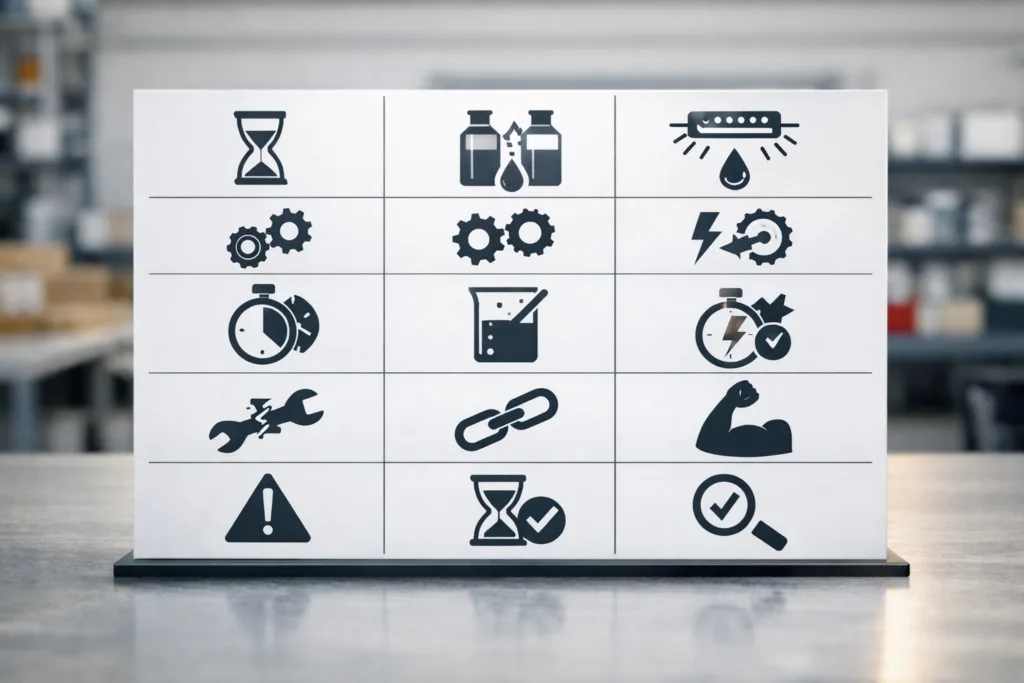
Delay cure UV adhesives with delayed polymerization offer a rare balance: extended workability with the instant strength of UV systems. They simplify complex metal assemblies, reduce production waste, and open up applications previously off-limits due to process speed or alignment challenges. Industries embracing smart manufacturing will continue to push the boundaries of what delay cure UV adhesive systems enable.
Frequently Asked Questions
How do delay cure UV adhesives differ from regular UV adhesives?
Delay cure UV adhesives offer users a longer open time before curing is triggered, allowing for more accurate assembly and reducing the risk of misaligned parts. Regular UV adhesives typically cure almost immediately after UV exposure.
Can delay cure UV adhesives achieve strong bonds on metals?
Yes, these adhesives are engineered for high lap shear strength on various metals, often matching or surpassing traditional epoxies, especially when surfaces are properly prepared.
Are special lamps needed for curing these adhesives?
Most delay cure UV adhesives use standard UV-emitting lamps (365–405 nm). For shadowed or metallic surfaces, dual-cure systems that supplement UV with heat or moisture are often recommended.
What makes them solvent resistant?
The robust crosslinked polymer network formed during the delayed cure gives these adhesives exceptional resistance to industrial solvents, oils, and cleaning chemicals.
What industries benefit the most from delay cure UV adhesives?
Automotive, electronics, medical device manufacturers, and general industrial assembly benefit due to their need for flexible, strong, and fast-curing adhesives in complex assemblies.
What must be done before bonding metals with delay cure UV adhesives?
Always ensure the metal substrate is clean, grease-free, and, if possible, pre-treated or roughened to maximize adhesive wetting and long-term durability of the bond.
Related Reading
- Eliminate Shadow Curing Issues: How Dual-Cure Systems Boost Metal Bonding Reliability
- New Standards for Precision Bonding: Crystal Clear UV Glues in AR/VR Devices
- Free Radical vs. Cationic: Choosing the Right UV Cure Mechanism for Industrial Metals
- Stop Sticky UV Glue: Pro Tips for Overcoming Oxygen Inhibition
- Unlocking the Power of Structural Acrylics for Automotive Bodies in 2026