Introduction: Hem Flange Bonding, Automotive Adhesives in Modern Auto Design
Automotive manufacturing in 2026 is driven by a need for stronger, lighter, and smarter materials. Nowhere is this push more visible than in the use of hem flange bonding adhesives for door and hood panels. By using advanced adhesive technologies in these areas, automakers radically enhance durability, reduce weight, improve corrosion resistance, and streamline manufacturing. This article explores the latest adhesive options, their real-world impact, and what tomorrow’s automakers can expect from this essential bonding method.
Understanding Hem Flange Bonding Adhesives for Door and Hood Panels
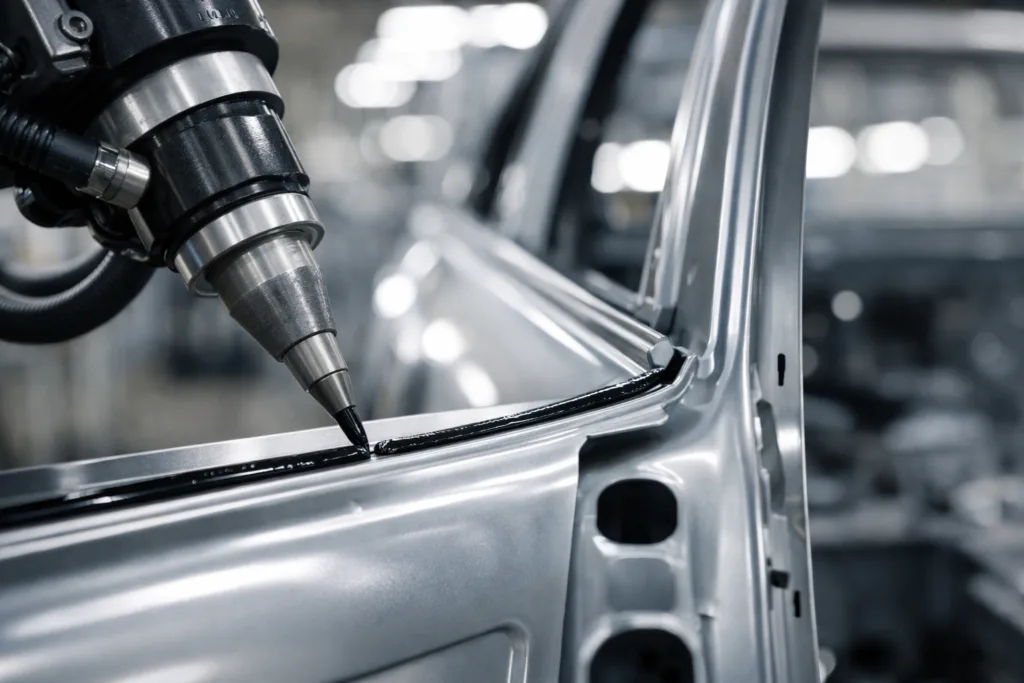
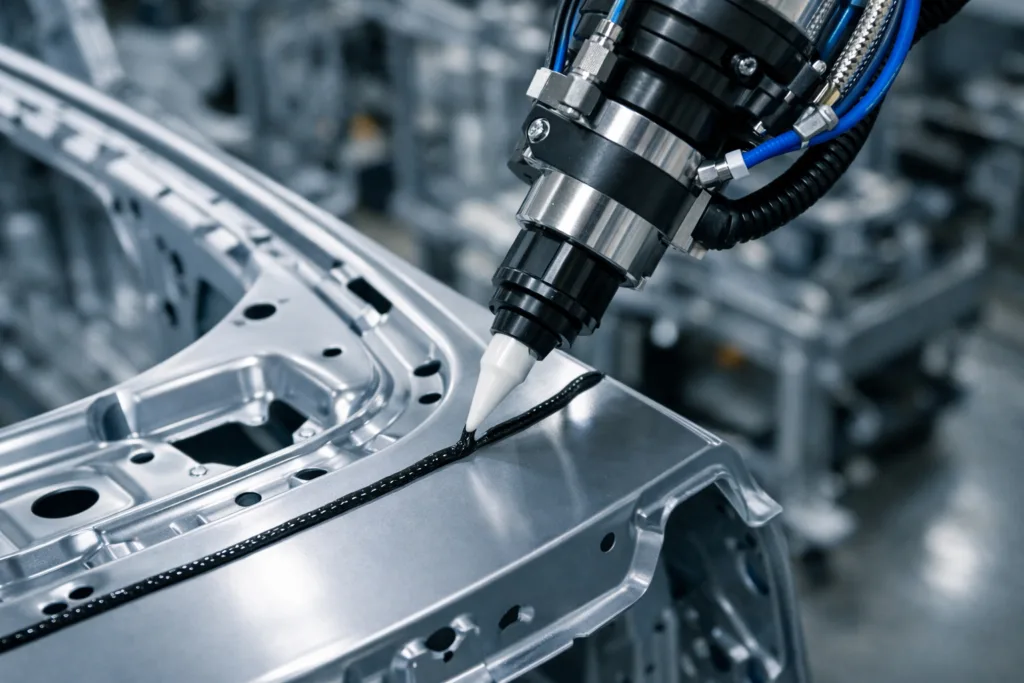
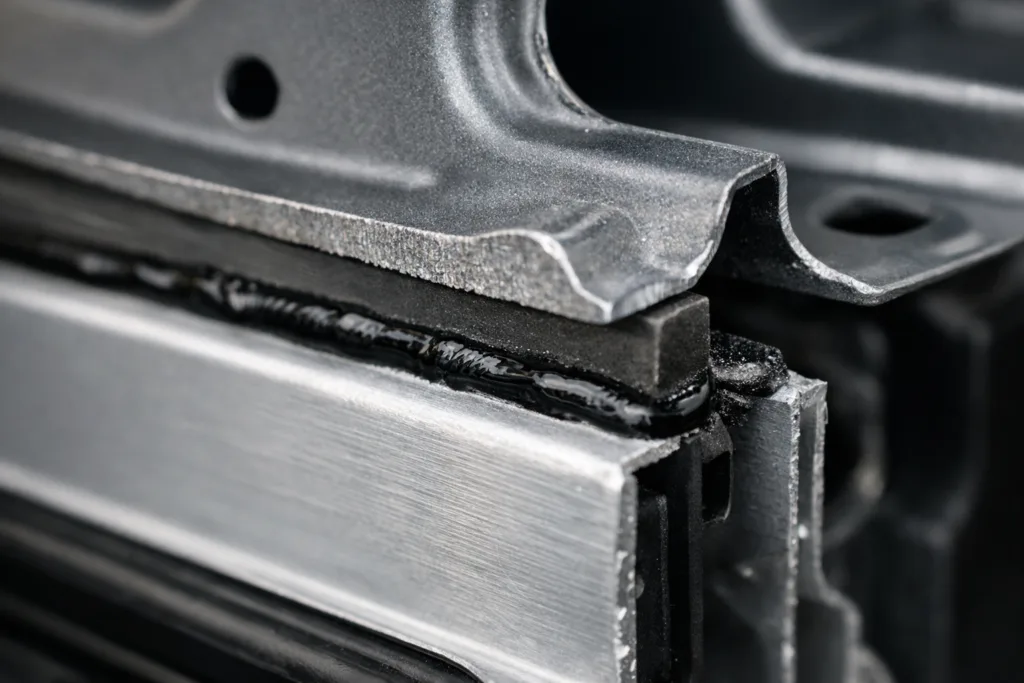
Hem flange bonding involves joining the outer and inner panels of car doors and hoods by folding a thin strip (the hem) of the outer panel over the inner panel’s edge. The result? A crisp edge and secure joint that’s invisible on the finished vehicle—a hallmark of quality and safety. The shift from traditional welding to structural adhesives has transformed hem flange practices, making it a go-to solution for modern body shops and OEMs alike.
Major Types of Adhesives Used for Hem Flange Applications
The choice of adhesive depends on substrates, cycle time, corrosion risk, and body design. The main adhesive families include:
- Epoxy-based adhesives: Known for high strength and excellent corrosion resistance. Widely used in steel and aluminum body-in-white assemblies.
- Polyurethane adhesives: Flexible and durable, ideal when vibration and thermal expansion matter.
- Acrylic structural adhesives: Provide fast cure and robust mechanical properties, often used for mixed-material bonding.
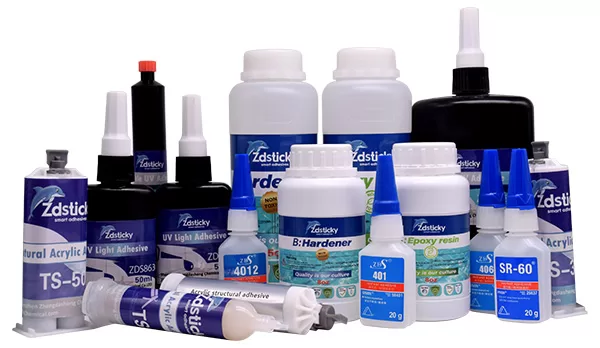
For manufacturers seeking optimized solutions, specialist automotive adhesive manufacturers deliver tailored formulation support and testing services.
Key Performance Benefits: Why Hem Flange Bonding Outperforms Traditional Joints
Switching from spot welding to hem flange adhesives yields measurable advantages:
- Weight Reduction: Elimination of overlapping metal and fewer welds enable lighter designs.
- Enhanced Durability: Bonded joints distribute loads evenly, resisting fatigue cracks and road flexing.
- Superior Corrosion Resistance: Adhesives seal out moisture, preventing crevice rust along flanges.
- Styling Flexibility: Allows for sharper edges, tighter tolerances, and innovative body styling.
Adhesive Application Process for Hem Flange Bonding
There’s more to hem flange bonding than just placing glue. Critical process steps include:
- Surface cleaning and pre-treatment, sometimes using plasma or corona discharge, to boost adhesion especially on aluminum, steel, or coated panels.
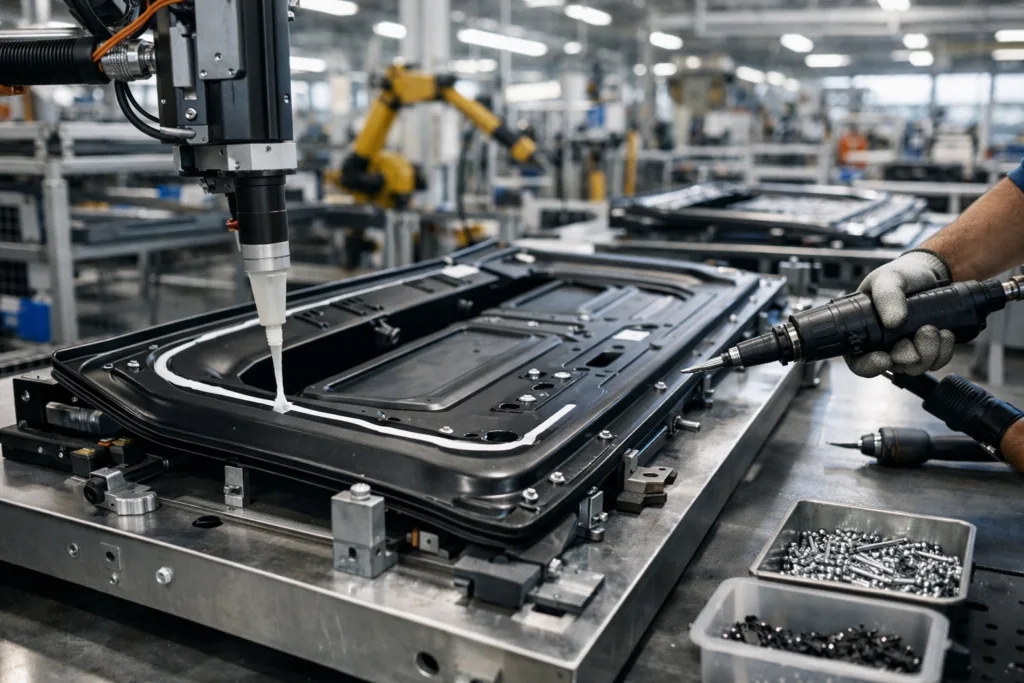
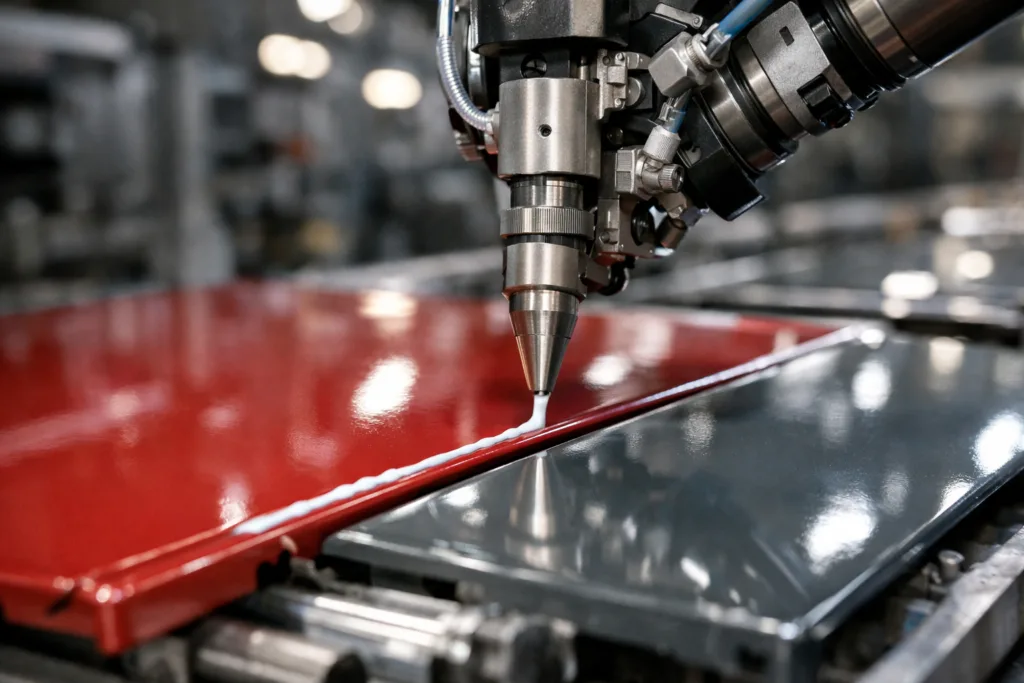
- Precise dispensing, usually automated, to control bead width and placement.
- Panel assembly & hemming, often in robotic lines for speed and consistency.
- Curing: Epoxies typically require heat-curing, while some polyurethane options can moisture-cure at room temperature, adaptable to production needs.
From an application engineering perspective at ZDS Adhesive, an industrial adhesive manufacturer, care must be taken to ensure adhesive flow-out during hemming is minimized to prevent cosmetic blemishes or rivulet failures.
How Hem Flange Adhesives Reduce Vehicle Weight for Sustainability
By allowing thinner gauge metals and eliminating heavy mechanical fasteners, hem flange adhesives enable auto engineers to shave crucial weight. Lighter doors and hoods mean better fuel efficiency or longer EV range, aligning with global sustainability goals. When combined with high-strength steels or aluminum, adhesives promote material efficiency without losing rigidity.
Durability Testing: Real-World Simulations for Bonded Joints
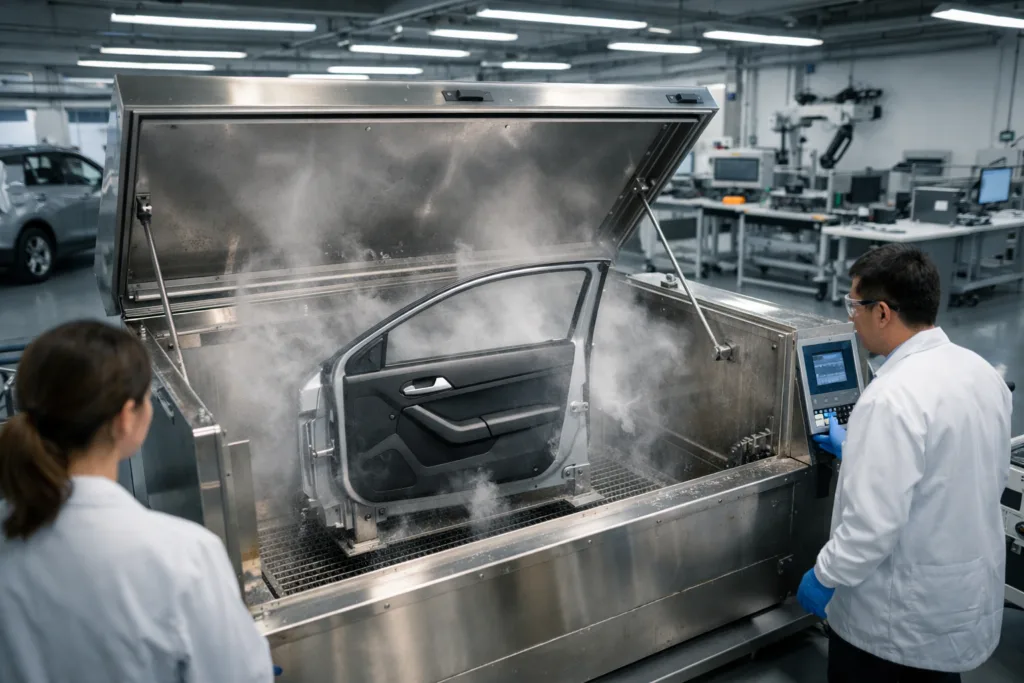
Manufacturers subject bonded flange assemblies to punishing trials: lap shear, peel, salt spray, and humidity age testing. Data from these protocols ensure adhesives withstand the high-stress environments seen in open and closing doors or hoods, thermal cycling from seasonal changes, and road salts. Only adhesives that meet or exceed these metrics gain approval for mass production.
Corrosion Resistance: A Shield Against Underside and Seam Attack
Flanges are vulnerable to rust, especially as hoods and doors are subject to temperature swings and trapped water. Adhesives form a continuous barrier, sealing out moisture even where seam sealers or paints might fail. As a result, warranty claims linked to corrosion drop, and finished vehicles stay attractive longer—a win for both OEMs and drivers.
Innovative Case Studies: Pioneering Adhesive Techniques in Modern Automotives
Major automakers routinely publish case studies showing the measurable improvements after transitioning to structural adhesives. For example, a leading electric vehicle platform reported 18% lower door mass and 50% better corrosion resistance after switching from spot welds to epoxy-based hem flange adhesives. These successes inspire wider industry adoption, especially in lightweight body structures.
Eco-Friendly Adhesive Technologies: Lower Emissions & Next-Gen Formulations
As global regulations on VOCs tighten, manufacturers invest in eco-friendly adhesives. Waterborne and low-emission systems, as well as bio-based chemistries, are now making waves. Some advanced epoxies cut out harmful solvents altogether, while next-generation polyurethanes offer non-isocyanate chemistry for safer workplace air.
To further reduce impact, solutions like bespoke adhesive formulations focus on energy-efficient cure cycles and materials sourced responsibly.
Comparing Epoxy, Polyurethane, and Acrylic Hem Flange Adhesives
| Feature | Epoxy | Polyurethane | Acrylic |
|---|---|---|---|
| Strength | Excellent | Good | High |
| Cure Time | Medium-Fast (requires heat) | Fast/Room Temp. | Very Fast |
| Flexibility | Medium | High | Medium |
| Corrosion Resistance | Superb | Good | Good |
| VOC Content | Low/None | Varies | Varies |
The above table can guide OEMs, tier suppliers, and even custom car builders toward the best adhesive for their process and design goals.
Bonding Lightweight Materials: Aluminum, Steel, and Composites
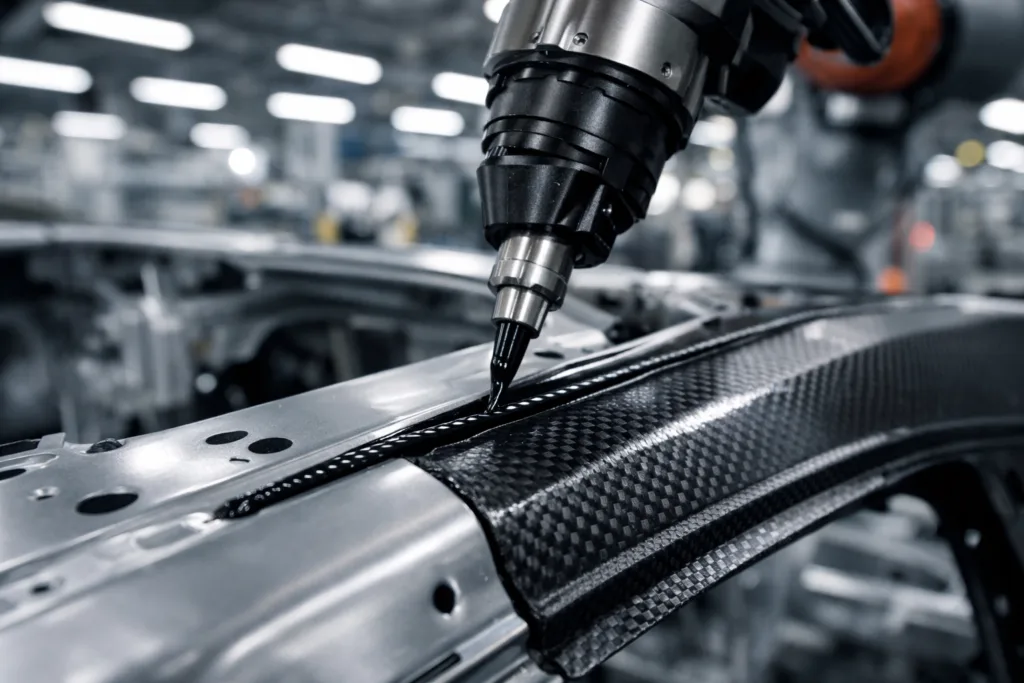
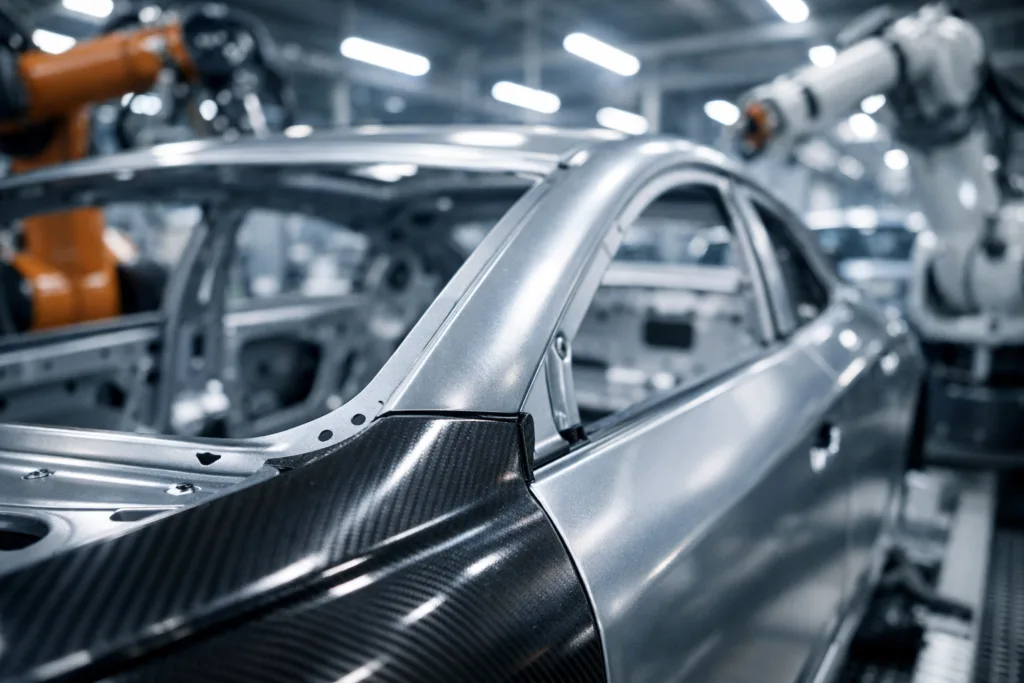
Automakers are mixing materials like never before—aluminum skins, advanced high-strength steel inners, and even fiber-reinforced plastics. Structural adhesives bridge these dissimilar materials, enabling reliable hem flange joints, even when thermal expansion rates differ. Surface preparation is especially important for low-energy materials like aluminum, where primer or plasma treatment often boosts reliability.
Real-World Problem Solving: Adhesive Failures and Their Prevention
Common failure modes in hem flange bonding include adhesive starvation, weak cohesive bonds, or cosmetic defects like read-through. Prevention relies on close control of adhesive bead geometry, open time before pressing, and surface cleanliness. When troubleshooting, engineers may perform failure mode analysis—such as cross-section SEM or peel testing—to pinpoint root causes and refine the process.
Application Equipment: Dispensing, Hemming, and Curing Systems
Robotic applicators, precision dispensers, and tailored curing ovens are cornerstones of efficient hem flange assembly lines. Proper setup ensures consistent bead placement, minimal waste, and precise control of working time. For smaller runs or repair shops, manual guns and spot-heaters are common, but process parameters must be monitored closely to avoid costly rework. For those interested, the latest automotive body adhesives offer solutions tuned to both robotics and manual workflows.
Latest Industry Advancements: Smart Adhesives and Quality Monitoring
Recent years have introduced smart adhesives with built-in tracers, allowing real-time quality checks during assembly. Some chemistries change color or conductivity when fully cured, providing visual cues. This technological leap reduces assembly errors, slashes rework, and supports data-driven quality audits—making defect-free hem flange bonding more achievable than ever.
Environmental and Regulatory Considerations in Adhesive Selection
OEMs must balance performance with regulatory compliance, especially around VOCs and chemical safety. Updated REACH, RoHS, and local emissions rules mean adhesive selection isn’t only about how well it bonds, but what’s in its formula. Suppliers are quick to offer compliance data and suggest alternative chemistries as standards evolve across key markets.
Processing Variables: Cure Cycles, Fixture Time, and Bond-Line Thickness
Production speed depends on adhesive cure profiles—some offer snap-cure at 140°C in under 15 minutes, while others cure slowly at room temperature. Fixture time, or the interval needed before removing clamps, is a major bottleneck in fast-moving lines. Bond-line thickness (often <0.5mm) is also tightly controlled to achieve the right balance of flexibility and rigidity along the flange joint.
Cost Comparison and Lifecycle Value Assessment
Some see adhesives as incremental cost, but whole-vehicle lifecycle studies reveal savings through lighter-gauge materials, less finishing, and reduced warranty claims. For mass producers, the total value delivered by hem flange adhesives almost always outweighs the up-front investment.
Common Pitfalls During Installation and Curing
Top installation pitfalls include:
- Wrong adhesive selection (wrong substrate compatibility)
- Application in dirty or oily environments
- Poor adhesive mixing (for two-part systems)
- Incorrect hem speed, causing squeeze-out or gaps
Sticking to manufacturer-recommended protocols and real-world process validation is essential for robust results.
Best Practices: Step-by-Step Hem Flange Bonding for Consistent Success
- Inspect and clean surfaces
- Apply primer if needed
- Dispense adhesive precisely
- Hem panel at the recommended speed and pressure
- Cure under controlled temperature and humidity
- Inspect bond-line for uniformity, adhesion, and cosmetic finish
Role of Adhesives in Future Vehicle Design
Hem flange adhesives are essential in enabling new design freedom—thinner body panels, sharper styling, and lightweight architectures. As the industry pivots to electrification and autonomy, the demand for more seamless joints and corrosion resistance will only grow, making adhesive technology central to the next generation of vehicles.
Hem Flange Bonding, Automotive Adhesives: Future Trends and Opportunities
The future of hem flange bonding in automotive hinges on even smarter chemistries: self-healing bonds, sensor-enabled joints, room temperature fast-cures, and further reductions in VOCs or hazardous content. As environmental pressures and material innovations accelerate, structural adhesives in this area will continue to shape the cars we drive (and ride in autonomous fleets) for years to come.
Frequently Asked Questions
What is hem flange bonding in automotive manufacturing?
Hem flange bonding involves using adhesives to join the folded edge (hem) of an exterior panel to the inner frame, replacing or supplementing spot welds for better strength and corrosion resistance in doors and hoods.
Which adhesive type is best for door and hood hem flanges?
Epoxy adhesives are favored for their high strength and corrosion resistance, while polyurethanes and acrylics offer flexibility and fast curing for certain mixed-material or fast-cycle lines.
How do hem flange adhesives help reduce vehicle weight?
By eliminating the need for thick overlapping steel and mechanical fasteners, adhesives enable lighter panel designs without compromising structural integrity or rigidity.
How is corrosion resistance improved with bonding adhesives?
Adhesives form a continuous moisture barrier at joints, effectively sealing out road salt and water that can lead to corrosion—especially important for doors and hoods exposed to harsh environments.
What role do eco-friendly adhesives play in modern car assembly?
Eco-friendly adhesives use waterborne or low-VOC chemistries, reducing workplace exposure and meeting strict global emissions regulations while maintaining strong and reliable bonds.
What precautions should be taken when applying hem flange adhesives?
Ensure surfaces are clean, adhesives are properly dispensed and mixed (for two-part systems), and the correct curing cycle is followed to avoid joint failures or cosmetic problems.
Related Reading
- How Structural Adhesives Are Outperforming Welding in Aluminum Car Bodies
- The Science Behind Toughened Epoxies for Enhanced Metal Adhesion
- Smart Choices: Picking the Right Adhesive for Metal-to-Metal Automotive Bonds
- Structural vs. Thermal Adhesives for Next-Gen Battery Integration
- Expert Criteria for Selecting a Reliable UV Adhesive Partner