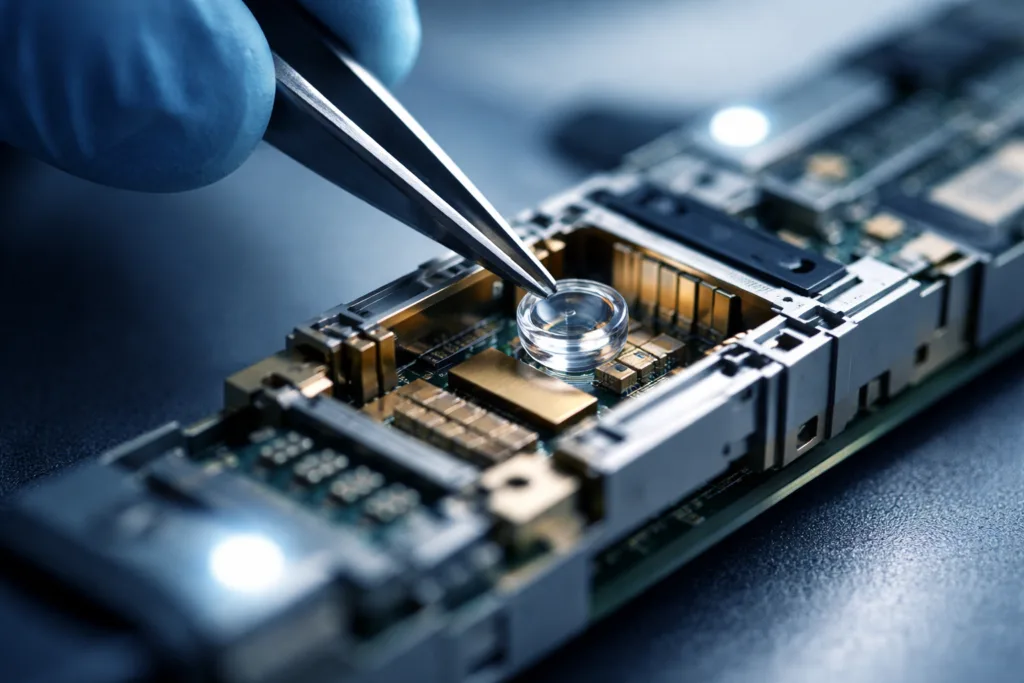
Why Adhesive Selection Matters in Appliances and HVAC
Industrial adhesives play a major role in assembling, sealing, and repairing today’s home appliances and HVAC (heating, ventilation, and air conditioning) systems. They must withstand high temperatures, moisture, vibration, and chemical exposure while bonding a range of materials—from metals to plastics and glass. A mismatch can lead to system failures, shorter lifespans, or even safety issues.
What Makes the Right Adhesive for Appliances and HVAC?
Not all adhesives are created equal. Some home appliances need bonds that tolerate rapid heating and cooling. Air conditioners need sealing against moisture, chemicals, and constant vibration. Both industries require reliable, tested adhesive solutions to pass tough quality and safety checks.
Current Market Trends
The push for efficient, lightweight, and durable appliances is accelerating the shift to advanced adhesive chemistries. More manufacturers want low-VOC (volatile organic compound) products compliant with REACH and RoHS standards. Ease of automation, lower assembly costs, and fast cure speeds are driving choices on the line.
Adhesive for Appliances, HVAC Adhesive: Requirements and Challenges

Adhesives in appliances and HVAC units must hold strong under real-world punishment. That includes:
- High Heat Resistance: Ovens, dryers, and compressors reach over 100°C (212°F) or more. The bond should not degrade, lose strength, or allow parts to shift.
- Moisture Sealing: Refrigerators, washing machines, and AC systems face regular condensation. Seals must block water and prevent corrosion.
- Vibration & Impact: Motor-driven appliances, fans, and compressors run for years. The adhesive must flex, absorb energy, and deter cracks.
- Chemical & UV Resistance: Cleaning fluids, oils, and sunlight exposure can attack bonds. Quality adhesives resist these threats.
- Multi-Substrate Bonding: Modern designs combine steel, aluminum, ABS plastic, polycarbonate, glass, and composite. Adhesives should bond these reliably, sometimes with primers or plasma treatment.
Common Appliance and HVAC Adhesive Failures
Poor adhesive selection or process control leads to delamination (layers separating), brittle bonds, leaks, and noisy operation. Silent failures—like creeping gaps or slow moisture absorption—can pass unnoticed until costly breakdowns or warranty events occur.
Main Adhesive Chemistries for Home Appliances and HVAC
Different applications require specialized adhesives. Choosing the right chemistry means understanding working needs and production realities:
| Chemistry | Key Substrates | Top Properties | Best Uses |
|---|---|---|---|
| Epoxy (1K/2K) | Metals, ceramics, composites, modified plastics | High strength, temperature resistance up to 180°C, chemical resistance, cures via heat or RT | Motor bonding, coil potting, panel assembly, bracket reinforcement |
| Polyurethane (PU) | Metals, glass, plastics (with priming) | Good flexibility, impact/vibration resistance, moisture resistance, fast RT/moisture cure | Glass doors, gasket bonding, vibration-isolating joints |
| Acrylic | Metals, plastics, composites (including low energy plastics with treatment) | Rapid cure, high lap shear, good chemical & heat resistance, often no primer | Metal-plastic assemblies, trim, sensor mounts |
| Silicone (RTV, HTV) | Metals, glass, ceramics, plastics | Excellent temperature range -60°C to 250°C, flexibility, electrical insulation, water/UV resistance | Oven gaskets, electronics pottings, enclosure sealing |
| Cyanoacrylate (CA) | Metals, plastics, rubber (small joints) | Very fast fixture (<10 sec), high initial strength, lower heat resistance (max ~80°C) | Quick repairs, factory assembly aids, control panel buttons |
| Pressure Sensitive Adhesives (Tape/Film/Pad) | Metals, plastics, glass, finished parts | Clean, fast, ready for automation, no cure; holding power varies by formulation | Nameplate attachment, insulation, foam gaskets, decorative trims |
Emerging Solutions: Hybrid and MS Polymer Adhesives
Hybrid MS (modified silane) polymer systems offer fast skin times and balanced vibration and temperature resistance. ZDS, for example, supports appliance makers with custom hybrid formulations to suit difficult bonding or sealing needs—where neither silicone nor PU alone performs all functions well.
Industrial Adhesives for HVAC & Home Appliances
HVAC and white goods (refrigerators, washers, ovens) demand adhesives that meet strict technical benchmarks. Bead, slot-die, or spray application may be used on modern lines. Proper substrate prep—like degreasing, abrasion, or plasma treatment—often makes or breaks bond performance.
Areas in Appliances Where Adhesives Excel
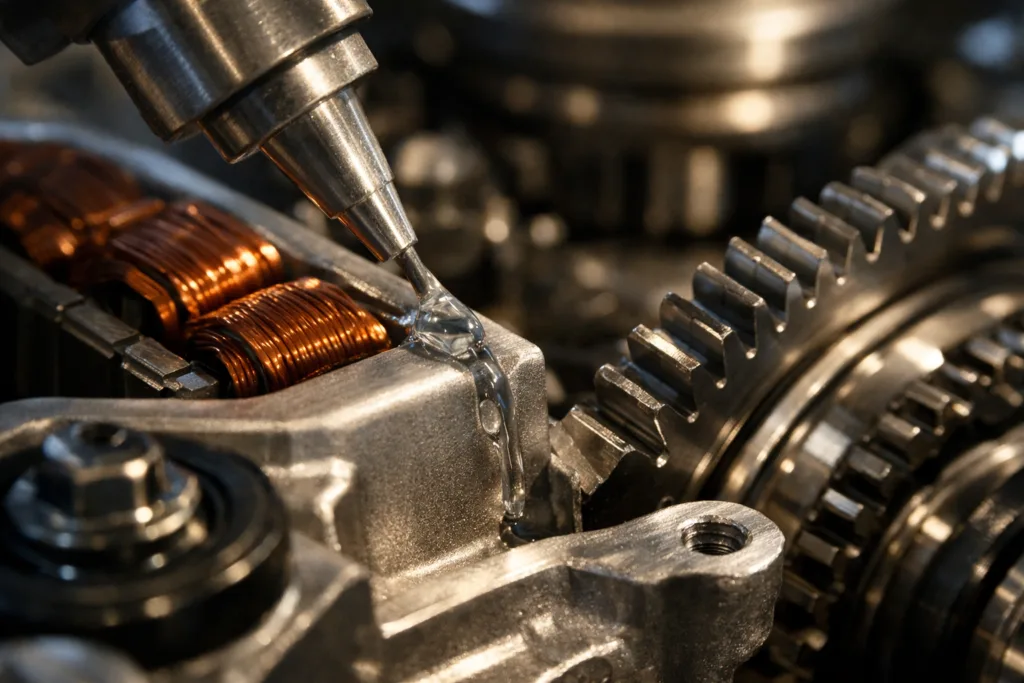
- Compressor, fan, and motor assembly: Epoxies and acrylics provide strong, vibration-resistant bonds.
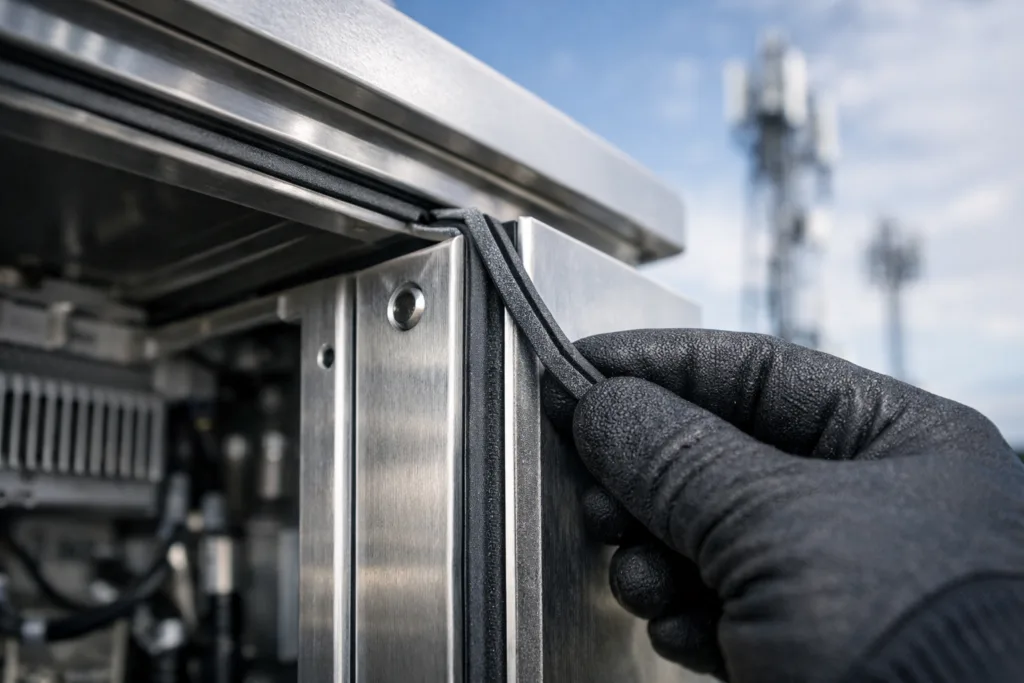
- Enclosure sealing: Silicones and PUs keep out water, dust, and oil, supporting long system lifespans.
- Heat shields: High-temperature epoxies or HTV (high-temp vulcanizing) silicones attach foil or fiber insulation to ovens, dryers, and stoves.
- Mount brackets and trim: Acrylic and tape systems prevent rattles and make lightweight structures practical.
- Glass assemblies: PUs and modified silicones safely join glass panels to frames, including fridge doors.
Process Details: Mixing, Dispensing, and Curing
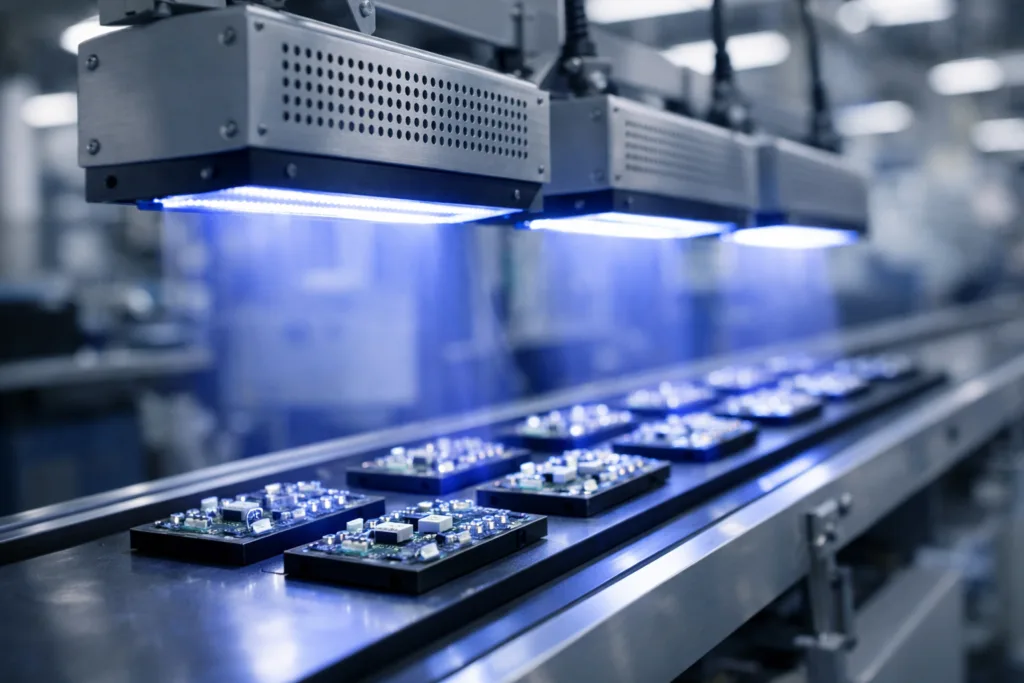
Some adhesives are one-component (1K) and cure with heat, moisture, or UV. Two-component (2K) systems require mixing—often by static mixer attached to a robot dispenser. Cure speed (pot life, open time) and exotherm (heat generated during cure) affect line design, clamping, and downstream processes.
Testing and Quality Control
To ensure durable bonds, leading manufacturers follow test standards like:
- Lap-shear: ASTM D1002 for metallics, or equivalent for plastics
- T-peel: ASTM D1876 for flexibles
- Salt spray: ASTM B117 for corrosion resistance
- Thermal cycling and humidity aging (e.g., 85°C/85% RH)
- Dielectric breakdown, elongation, and hardness (Shore A/D per ASTM D2240)
Quality data is tracked by batch for compliance (such as REACH/RoHS) and troubleshooting. ZDS supports this with full traceability and ISO 9001 documentation.
Best Practices for Preparing and Applying HVAC Adhesives
Adhesion is only as good as the preparation:
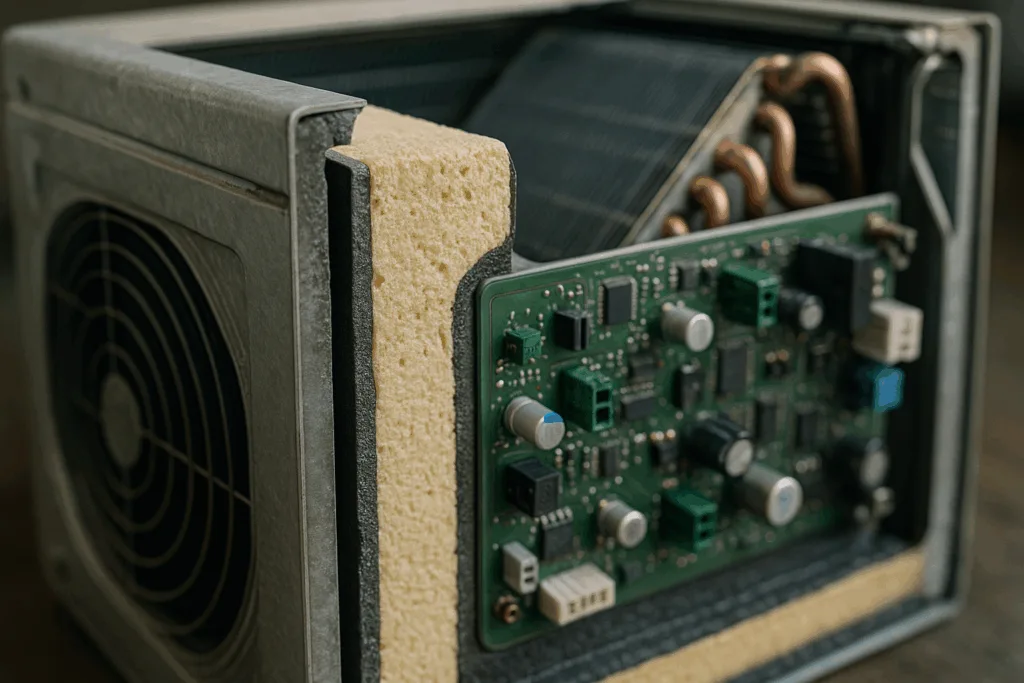
- Clean parts to remove grease, oil, or mold release. Use solvents, then wipe dry with lint-free cloths.
- Roughen (abrade or grit-blast) metals and hard plastics to increase surface area.
- Test for cleanliness: Water break-free surface means good prep.
- Apply primers or corona/plasma treatment to low energy plastics (like PP or PE), if specified.
- Control bead shape and thickness during dispensing for even stress distribution.
Typical Application Issues and Solutions
- Trapped air in bondlines: Use slow, steady application and fixture parts under pressure to avoid air pockets.
- Sag or run-off in vertical joints: Use thixotropic (non-sag) grades or apply in multiple passes.
- Uncured adhesive: Keep temperature and humidity within recommended ranges and observe cure time before testing or shipping.
Comparing Industrial Adhesives for HVAC & Home Appliances
No one adhesive fits every role in appliances or HVAC units. Requirements change based on working temperature, stress, vibration, and substrates. Consider all these factors when specifying products for:
- Assembly (panels, brackets, sensors)
- Sealing (gasket, enclosure, glass mounts)
- Insulation attachment (fiberglass, ceramic pads)
- Noise/vibration reduction (motor, fan, dampers)
Manufacturers should test and qualify candidates using real production equipment and actual finished materials—not just lab samples. ZDS works alongside appliance and HVAC firms to tailor properties to each process and end-use condition.
Industrial Adhesives for HVAC & Home Appliances: Safety and Compliance
Choosing the right adhesive isn’t just about performance. Producers must meet global safety standards and document every lot for audits. Key points include:
- REACH & RoHS: Compliance with EU rules on hazardous substances
- VOC content: Limiting emissions for worker and end-user safety
- SDS/ISO 9001: Standardized safety documentation and traceability
- Transport & storage: Many adhesives need cool, dry storage and have shelf life limits. Handle cyanoacrylates away from heat sources; store 2K systems in separate, marked packs.
Always follow local regulations for use, storage, and disposal. ZDS provides technical data and guidance to help customers meet both legal and performance demands.
Future Trends for Adhesive for Appliances and HVAC Adhesive

As energy-saving, quiet, and smart appliances spread, adhesives are evolving too. Future solutions will center on:
- Even faster-curing and automation-friendly grades
- More bio-based and sustainable chemistries
- Adhesives with built-in vibration and thermal sensors
- Higher temperature and humidity endurance
Partners like ZDS invest in research to enable smarter and safer appliances. They deliver adhesives that push the limits of long-term reliability—even as new challenges arise in every product generation.
Frequently Asked Questions
What is the best adhesive for high-temperature appliance parts?
Epoxy and silicone adhesives work best for high temperatures. Choose grades rated for use above 120°C for lasting bonds.
How do I bond plastics in home appliances?
Use specially formulated acrylics or polyurethane adhesives for plastics. Surface prep with plasma or primers is often required for reliable bonding.
Do I need special adhesive for vibration in HVAC systems?
Yes, flexible polyurethane or silicone adhesives absorb shock and vibration, preventing cracks in motors and fan assemblies.
What tests confirm adhesive performance in appliances?
Lap-shear, T-peel, salt spray, thermal cycling, and hardness tests confirm bond strength, flexibility, corrosion, and aging resistance in appliance adhesives.
Are all appliance adhesives safe for food contact?
No, only adhesives with food-safe certifications are approved for direct food contact. Always check documentation before use in food appliances.
How does ZDS support appliance and HVAC makers?
ZDS provides customized adhesives, technical support, compliance documents, and onsite evaluation to optimize appliance and HVAC manufacturing processes.