Introduction: Why Polishing Adhesives for Fiber Optic Ceramic Ferrules Matter
In high-speed fiber optic networks, ceramic ferrules play a pivotal role in aligning and protecting optical fibers. The adhesives used to polish these ferrules aren’t just a side note—they’re a fundamental element for ensuring smooth surfaces, minimal signal loss, and robust physical bonds. Proper polishing adhesives for fiber optic ceramic ferrules mean the difference between seamless data transmission and costly maintenance cycles. In this in-depth guide, we’ll unravel the science, streamline the choices, and lay out the direct impact of adhesive chemistry on optical performance and reliability.
What Are Fiber Optic Ceramic Ferrules?
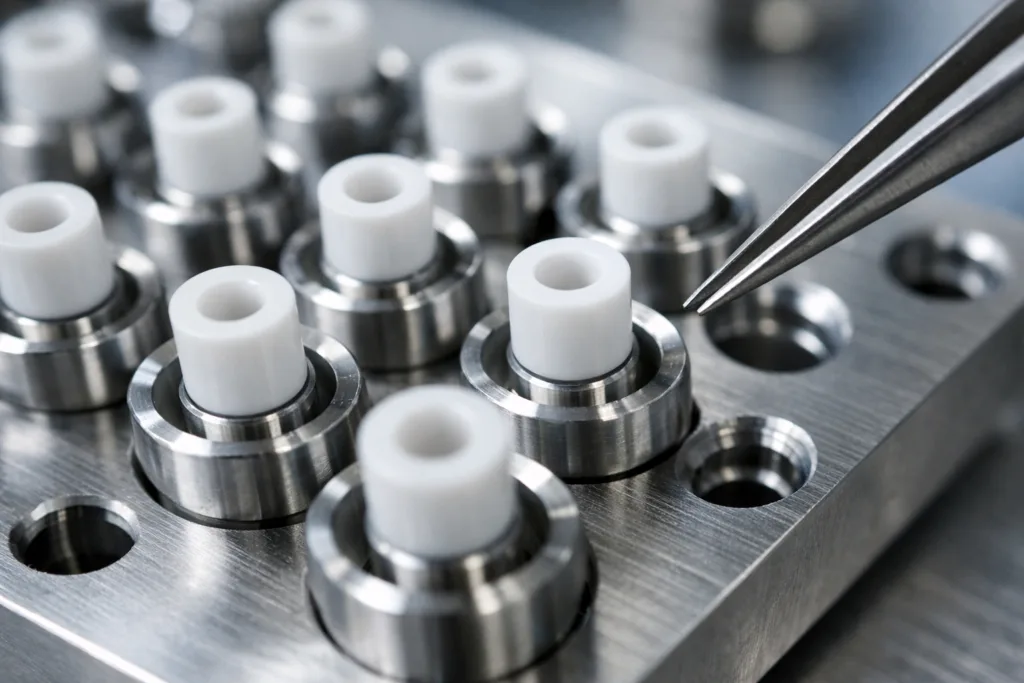
Ceramic ferrules are precision-engineered sleeves made typically from zirconia, designed to hold and align optical fibers within connectors like SC and LC types. Their tight tolerances and robust structures ensure minimal signal loss at connection points—a critical factor as bandwidth and data demands surge globally.
How Polishing Adhesives Interact with Ceramic Ferrules
Polishing adhesives are applied to fiber optic ceramic ferrules prior to the polishing process, ensuring fibers remain properly fixed while the end-faces are ground, lapped, and finished. The adhesive’s glass transition temperature, mechanical properties, and chemical compatibility with zirconia ceramics all influence how cleanly the final surface finishes out—and, ultimately, the performance of the optical connection.
Why Adhesive Choice Directly Affects Optical Performance
The adhesive that secures the fiber inside the ceramic ferrule does far more than just “hold it in place.” It affects:
- End-face geometry during polishing
- Stress transfer (thermal and mechanical) between the ferrule and fiber
- Long-term durability through cycles of heat and moisture
- Surface roughness and scratch/dig resistance
Every variable matters because even the slightest surface imperfection leads to increased insertion loss, back reflection, or connection instability—all headaches that can be traced to sub-par polishing adhesives.
Key Adhesion Properties for Fiber Optic Ferrules
Industrial adhesives used in this context must demonstrate:
- Excellent adhesion to both ceramic (often zirconia) and glass fiber cores
- Thermal stability across -40°C to +85°C
- Minimal shrinkage during cure (to avoid stress-induced deformation)
- Low outgassing and minimal residue post-polishing
Adhesives lacking these properties can introduce microgaps, cause fiber movement, or release debris—all of which degrade optical performance.
Types of Polishing Adhesives for Ceramic Ferrules
The most widely used adhesive categories for this application are:
- Epoxy Adhesives: Known for high mechanical strength, chemical resistance, and customizable cure profiles. Their two-part nature allows precise mixing but requires controlled environment for optimal performance. For more insights into the versatile world of epoxies, see epoxy adhesive solutions.
- UV-Curing Adhesives: Offer fast fixture times, ideal for high-throughput production lines. Their controlled curing prevents fiber-shift and lowers cycle times. However, shadowed areas may need dual-cure (UV + heat/moisture) chemistries.
- Acrylic/Hybrid Adhesives: Provide a balance of rapid cure and strong bond, suitable for automated processes with moderate performance requirements.
Each adhesive type influences polishability, bond-line thickness, and long-term reliability.
Epoxy Adhesives: The Backbone of High-Performance Fiber Optics
Among all adhesive types, epoxies dominate in fiber optic applications due to their predictable cure, minimal shrinkage, and excellent adhesion to both ceramic and glass. Most fiber optic ferrules use low-viscosity, two-component epoxies for capillary action inside the ferrule. After insertion and curing, the excess epoxy is polished off, enabling mirror-like end faces.
Key Curing Mechanisms: Controlling the Process
The three major curing processes found in fiber optic ferrule adhesives include:
- Room Temperature Cure: Suitable for small volumes, where time is less critical (up to 24 hours).
- Heat Acceleration: Reduces cure time to minutes at 70°C–120°C, improving throughput. Care is needed to avoid thermal stress.
- UV/Photoinitiated Cure: Provides near-instant bond development; however, shadowed areas may remain uncured unless hybridized with heat or moisture cure chemistry.
Ultimately, cure strategy depends on line speed, part geometry, and component design. For more on dual-cure strategies, check the related reading section below.
The Influence of Adhesives on the Polishing Process
Polishing ceramic ferrules is a multi-step operation involving graded abrasives, lapping films, and precise pressure cycles. The choice of adhesive will impact:
- End-face flatness: Shrinkage and exotherm during cure can cause slight protrusion or recess in fiber, affecting polish profile.
- Surface quality: Debris from poorly crosslinked adhesive can smear or pit the end face.
- Bond-line residue: Certain adhesives leave films that are hard to remove, requiring extra cleaning steps.
- Fixture strength during polishing: Insufficiently cured or brittle adhesives risk fiber movement or chipping under mechanical polishing forces.
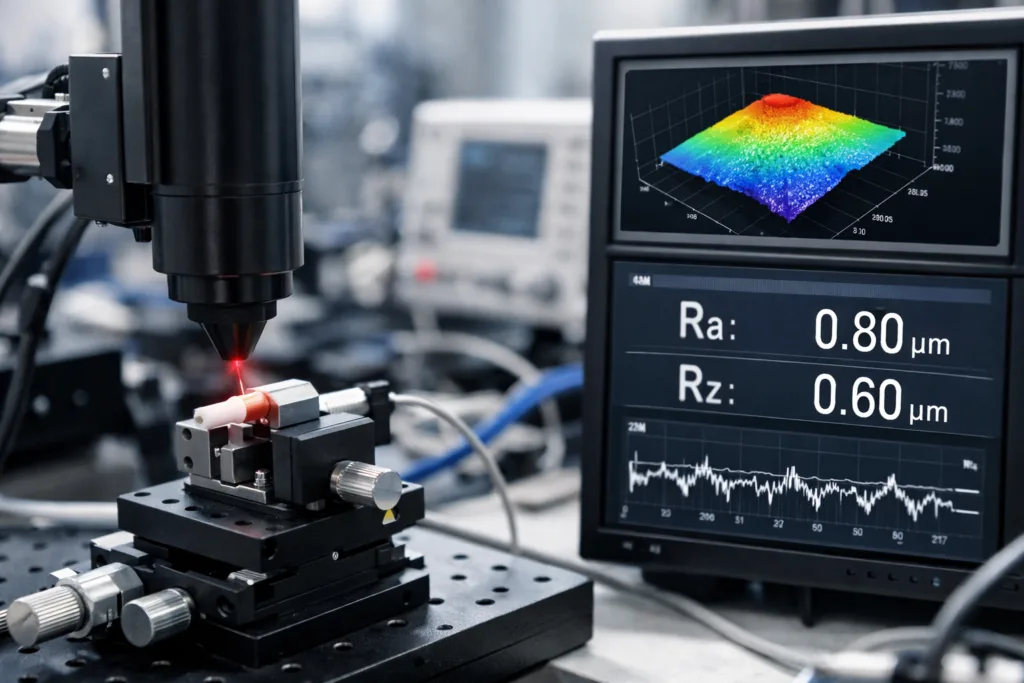
Practical tip: A polished surface with roughness (Ra) below 50 nm is the benchmark for telecom-grade ferrule-polishing, achievable only with the right adhesive and process controls.
Industry Standards: What Defines “Good Enough”?
The performance bar for fiber optic connectors is defined by several international standards:
- IEC 61755: Focuses on connector end-face geometry
- GR-326 (Telcordia): Covers insertion and return loss, mechanical reliability, and environmental performance
- IEC 61300: General test methods for connectors
Compliant adhesives must pass rigorous aging, humidity, and vibration tests. Adhesive selection must be validated under “worst-case” environmental cycles to prevent premature failure.
Comparative Table: Adhesive Types for Fiber Optic Ferrules
| Adhesive Type | Typical Cure | Key Properties | Drawbacks |
|---|---|---|---|
| Epoxy | Room Temp / Heat | High strength, low shrink, chemical resistance | Slow cure (RT), mix precision needed |
| UV-Curing | UV (seconds) | Fast fixture, good optical clarity | Shadow cure issues, limited depth |
| Acrylic/Hybrid | UV or Heat | Fast cure, moderate strength | Lower overall performance, some surface tack |
Assessing Adhesion: Testing Methods
Reliable adhesion is confirmed through standardized tests:
- Lap shear and peel strength: To simulate forces during use and polishing
- Microscopic inspection: To detect voids, bubbles, or incomplete wetting
- Thermal cycling: To ensure bond survival across operating temperature swings
- Outgassing/contamination check: To minimize optical path interference
These checks ensure only adhesives with consistent, real-world performance make the grade. For manufacturers like ZDS Adhesive’s industrial adhesive range, robust internal validation processes back every product.
Surface Preparation: Maximizing Bond Strength
Consistent results require pristine surfaces:
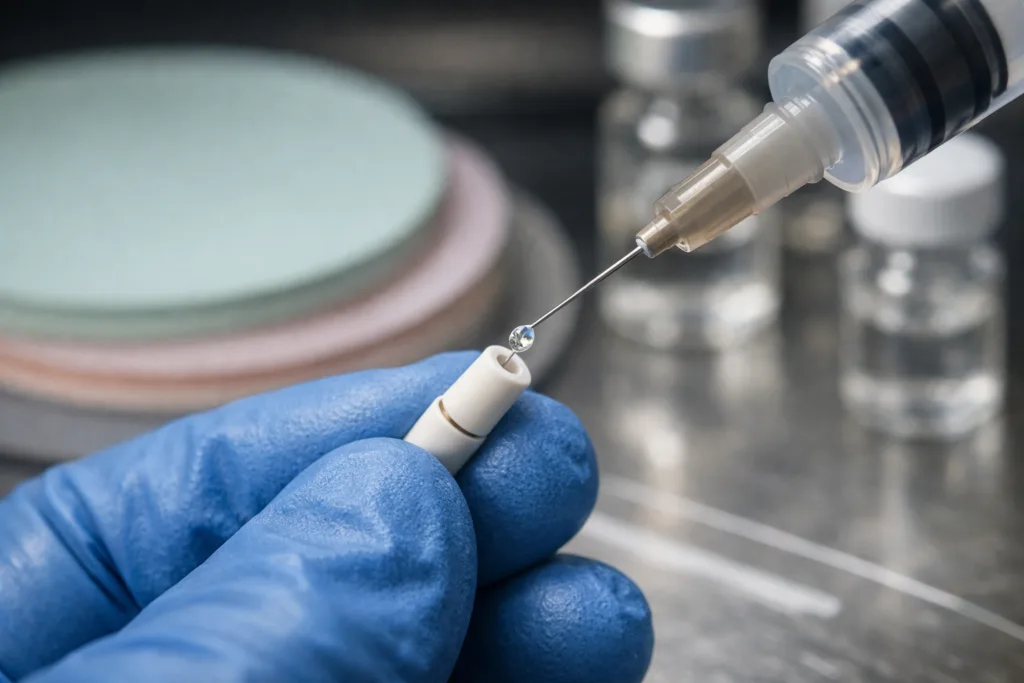
- Clean ferrules of oils, dust, and particulates (usually ultrasonic cleaning + plasma treatment).
- Maintain a controlled environment to prevent post-cleaning contamination.
Poor prep is a root cause of adhesive failure—no chemistry can substitute for sound process hygiene.
Polishing Workflows: Where Adhesive Matters Most
The steps typically include:
- Fiber insertion and adhesive application
- Controlled cure (per adhesive instructions)
- Pre-polish inspection
- Lapping with progressively finer films
- End-face evaluation (microscope + interferometry)
Any mismatch in the mechanical properties of the adhesive and the ceramic may manifest as doming, undercut, or surface chipping after polishing.
Process Control and Failure Modes
Common polishing failures linked to adhesives:
- Undercut fibers: Caused by excessive adhesive shrinkage
- Surface pitting/voids: Due to poor wetting or bubble entrapment
- Fiber breakage: From thermal stress or overly rigid adhesive
- Residual contamination: From incomplete curing or improper cleanup
Process monitoring (automated vision systems, in-line interferometry) helps spot these early.
Adhesive Impact on Fiber Optic Connectivity and Network Reliability
The final performance of a fiber optic connection—its insertion loss, return loss, and mechanical robustness—hinges on the interaction between fiber, adhesive, and ceramic ferrule. An optimal adhesive mitigates thermal stress, minimizes micro-movement, and stands up to humidity and vibration for decades. For more detailed performance data, see ZDS’s adhesive solutions catalog.
Environmental and Aging Considerations
Physical and optical performance must be preserved under real-world conditions:
- Repeated thermal cycling (server racks, outdoor deployments)
- Humidity and chemical exposure (field conditions)
- Long-term UV exposure (for some outdoor links)
Only adhesives validated against such stress tests should be considered for critical networks.
Case Study: Success Factors in Ferrule Production at Scale
Manufacturers facing high-volume ferrule production have found that the combination of low-viscosity, thermally accelerated epoxies and tightly controlled cure times produces the lowest yield loss and most consistent polish quality. Data from ZDS Adhesive, an industrial adhesive manufacturer, shows that process stability hinges on:
- Uniform adhesive dispense amount
- Repeatable thermal profile on every batch
- End-of-line inspection for debris and geometry
These practices eliminate most sources of loss in ferrule manufacturing lines.
Checklist: Choosing a Polishing Adhesive for Ceramic Ferrules
- Does it bond to both glass and zirconia ceramic?
- What is the shrinkage on cure?
- Is the open time compatible with process speed?
- How does it affect final surface roughness after polishing?
- Has it been tested to applicable IEC/GR standards?
- How is debris/removal managed post-polish?
Future Trends: Smart Adhesives and Process Automation
The next generation of adhesives is focused on visible-cure chemistries (e.g., color-changing for full cure detection), ultra-low shrinkage formulas, and specialty hybrids optimized for rapid, automated lines. Automated quality assurance methods—such as vision-guided dispense verification and closed-loop temperature control—are becoming standard for 2026 competitive production. For advanced process topics, visit the related readings section for insights into UV-cure, dual-cure, and low-shrink adhesive technologies.
Polishing Adhesives for Fiber Optic Ceramic Ferrules
Understanding the nuanced relationship between adhesive formulation, ceramic ferrule compatibility, and polishing protocols is essential for anyone involved in fiber optic connector manufacturing. Even small improvements in adhesive selection and process control can yield measurable gains in network performance and long-term reliability, especially as data infrastructure scales to higher speeds and volumes.
Conclusion: Achieving Optical Excellence through Adhesive Know-How
The adhesive chosen for polishing fiber optic ceramic ferrules is much more than a functional detail—it’s a keystone for high-performance optical connectivity. Proper selection and validated process control cut down on rework, reduce network downtime, and yield connections ready for the demands of 2026’s digital future. Embracing a science-driven, test-validated approach ensures ferrule assemblies stay at the forefront of global communication networks.
Frequently Asked Questions
What is the main purpose of polishing adhesives in fiber optic ferrules?
Polishing adhesives secure the fiber in the ceramic ferrule during polishing, ensuring the fiber remains stationary for a flat, debris-free end face. This results in low insertion loss and high reliability for fiber optic connections.
Which adhesive types are most commonly used for fiber optic ceramic ferrules?
Epoxy adhesives are the most common, due to their high bond strength and minimal shrinkage. UV-curing and hybrid acrylic adhesives are also used for faster production environments.
How do polishing adhesives impact optical performance?
The adhesive affects the end-face geometry, surface quality, and fiber alignment. Poor adhesives can introduce micro-defects, increasing signal loss or causing instability in the connection.
What are key properties when selecting an adhesive for ceramic ferrules?
Choose adhesives with strong adhesion to both ceramic and glass, low shrinkage, suitable open time, thermal stability, and minimal residue after polishing.
Why is surface preparation critical for adhesive bonding?
Proper cleaning and preparation remove contaminants that could compromise adhesion. Even the best adhesive will fail on a dirty or oily surface, leading to weak bonds or excess debris.
What industry standards apply to fiber optic ferrule polishing adhesives?
Key standards include IEC 61755 for end-face geometry, GR-326 Telcordia for optical and mechanical reliability, and IEC 61300 for test methods, all specifying performance and durability requirements.
Related Reading
- Delay Cure UV Adhesives: Reducing Shadow Area Failures in Assembly
- Low Shrinkage UV Glues for Precision Fiber and Optics Work
- Optical Lens Bonding Techniques for Faster Telecom Transceivers
- Solving Oxygen Inhibition Issues in UV Glue Curing
- Calculating the Right UV Dosage for Reliable Adhesive Curing