Introduction to Reworkable Underfill for Smartphone Mainboard Repair
With smartphone circuit complexity soaring in 2026, the demand for reliable, service-friendly assembly processes has never been greater. Enter reworkable underfill materials—a new generation of structural adhesives specifically engineered for smartphone mainboard repairs. These advanced underfills address the pressing need for both secure adhesion and easy repairability, paving the way for sustainable device maintenance. In this article, we’ll unpack everything you need to know about reworkable underfill technology, from material selection to industry best practices for mainboard repair, all through the lens of modern manufacturing requirements.
What is Reworkable Underfill For Smartphone Repair?
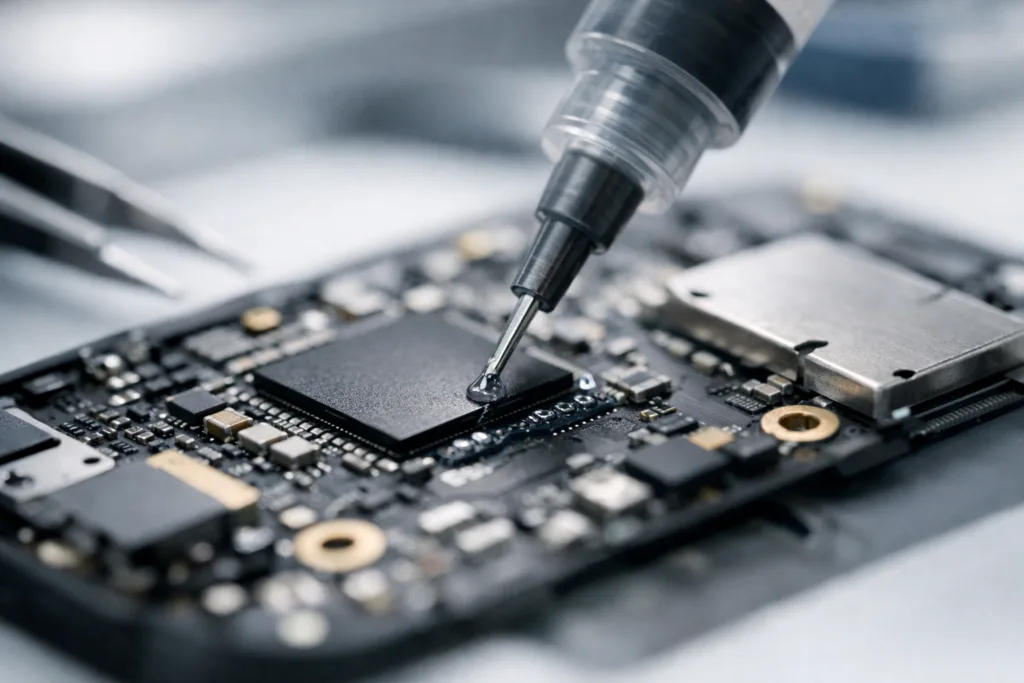
Reworkable underfill is a class of specially formulated adhesives used beneath surface-mounted components on a smartphone mainboard. Unlike traditional permanent underfills, they allow safe removal or replacement of chips without damaging the PCB or other nearby components. This property is essential for technicians troubleshooting defective modules or executing upgrades. Modern reworkable underfills provide a delicate balance: strong support during operation, yet serviceability when future repairs or modifications are required.
Why Use Reworkable Underfill in Smartphone Mainboard Repair?
There are several compelling reasons for manufacturers and service centers to choose reworkable underfills in smartphone mainboard repair:
- Damage Prevention: They safeguard adjacent circuits during chip removal or replacement, reducing costly collateral damage.
- Efficiency: Rework-friendly underfills support rapid, reliable repairs—vital for today’s fast-paced aftermarket service cycle.
- Sustainability: They aid in refurbishing and extending device lifespans, lowering e-waste and supporting circular economy targets.
How Reworkable Underfills Compare to Traditional Underfills
| Feature | Reworkable Underfill | Traditional Underfill |
|---|---|---|
| Adhesion Strength | High, but designed for controlled removal | Very high, bonded for life |
| Repairability | Component removal possible | Component removal damages PCB |
| Thermal Cycling | Formulated for repeated cycles | Excellent, limited by removal challenge |
| Circuit Modifications | Easy to modify/replace chips | Very difficult; risk of tearing traces |
Main Types of Reworkable Underfill Chemistries
Modern reworkable underfills are most commonly formulated from epoxy or hybrid chemistries, often with a proprietary balance of additives to achieve needed viscosity, cure speed, and rework temperature. Key types include:
- Epoxy-based Reworkable Underfills: Widely adopted due to reliable mechanical performance and adjustable glass transition temperature (Tg). These are engineered for precise mainboard applications where flow containment and easy removability is required.
- Acrylate/Epoxy Blends: These hybrid chemistries boost flexibility while providing dissipation of stress, reducing the risk of solder joint fracture during mechanical or thermal cycling.
- Low-Temperature Removable Formulas: Developed for heat-sensitive smartphone boards, these can be removed at lower temperatures, minimizing risk of substrate damage or warping.
Application Methods for Reworkable Underfill
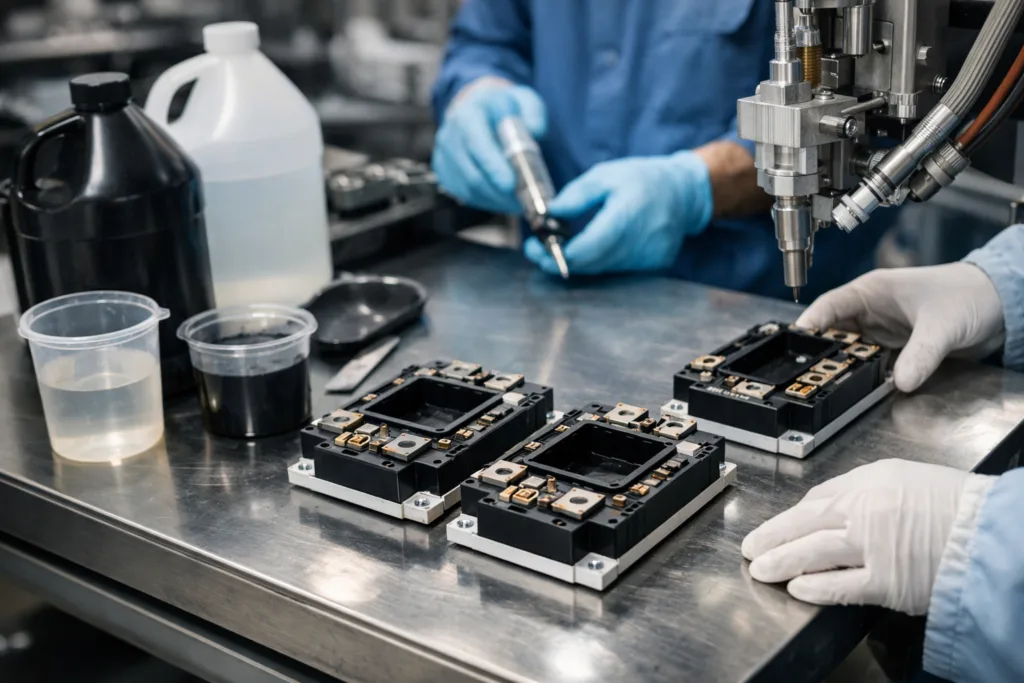
Accurate dispensing and proper cure are essential for optimal underfill performance. Typical methods used in smartphone mainboard repair:
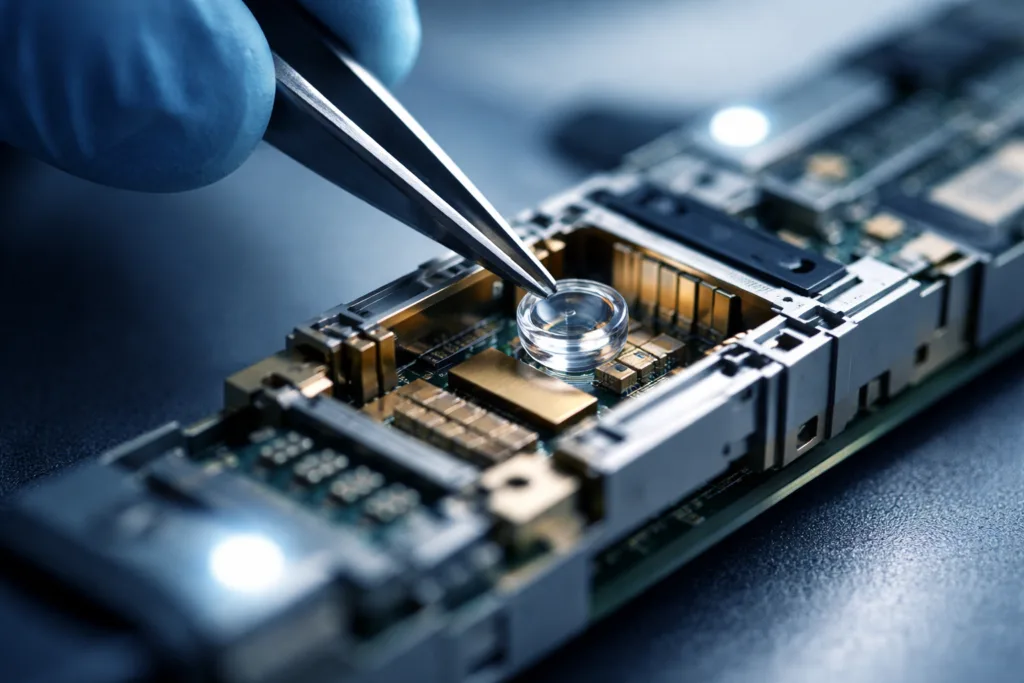
- Needle Dispensing: Precision-controlled dispensing using fine-gauge needles, suitable for small bond lines under micro BGAs and chip-scale packages.
- Jetting Technology: Enables fast, contactless application—ideal for mass production or tightly packed, narrow PCB traces. See more about dispensing technologies in the article Jetting vs. Needle Dispensing for Narrow Bezel Phones.
- Selective Area Underfill: Applied only under high-stress or large components to balance reworkability and board rigidity.
Critical Properties of Modern Reworkable Underfills
Industrial-grade reworkable underfills are tailored for the complex needs of modern electronics. The following properties are crucial for performance and serviceability:
- Controlled Adhesion (doesn’t harm substrates during rework)
- Appropriate Viscoelasticity (absorbs thermal/mechanical stress but allows chip removal)
- Adjustable Cure Profiles (including low-temperature or snap cure options)
- Optimized Flow (prevents overflow onto pad arrays)
How Do You Rework a Mainboard With Underfill?
Successfully reworking a smartphone mainboard involves careful heating of the underfilled area, often with a controlled reflow or hot-air tool, until the underfill softens. The component can then be lifted off the PCB, with minimal force needed. Afterwards, any residual underfill is gently scraped or washed away using proper solvents. Some technicians recommend using epoxy adhesive removers or engineered cleaning solutions for best results, ensuring the site is clean for replacement or inspection.
Common Challenges Repair Technicians Face With Reworkable Underfills
- Incomplete Curing: Fails to achieve full bond strength, risking in-use failure. Ensure proper heat or UV exposure if required.
- Residue Removal: Leftover material can contaminate new joints. Use recommended solvents and controlled force.
- Local Delamination: Overheating one area can peel adjacent pads/traces. Controlled rework temperature and heating ramp-up are essential.
Best Practices for Reworkable Underfill Application in Smartphone Repair
- Preheat the Board: Enables even cure and easy underfill flow, reducing internal strain.
- Monitor Ambient Humidity: Some underfills, especially moisture curable, have strict storage requirements.
- Use Controlled Dispensing Equipment: Ensures accurate placement and proper volume control, achieving the ideal 100–200 μm bond line.
- Follow Manufacturer’s Rework Instructions: ZDS Adhesive, an industrial adhesive manufacturer, notes that reworkable underfills often have defined rework time/temperature windows. Exceeding these can risk substrate damage.
Optimizing Board Reliability With Reworkable Underfill
Board reliability isn’t determined only by underfill; other factors like solder joint quality, board cleanliness, and appropriate circuit design also contribute. However, choosing the right reworkable underfill can significantly extend repair cycles by allowing safe part replacement, reducing micro-crack propagation, and maintaining electrical connectivity through the life of the device.
Key Parameters to Evaluate When Choosing an Underfill
| Parameter | Importance in Smartphone Mainboard Repair |
|---|---|
| Rework Temperature | Must be below the glass transition temp of PCB and sensitive components |
| Cure Speed/Mechanism | Should fit into repair window (thermal or UV) |
| Flow Control | Minimizes overflow & shorts; must stop before component escape |
| Ion Levels | Low to prevent dendrite-induced shorts after rework |
| Adhesion Strength | Sufficient for drop resistance but not to tear pads |
Environmental & Safety Considerations
Today’s repair operations must consider not only technical performance, but also worker safety and environmental impact. Many reworkable underfills are designed with halogen-free, low-VOC formulations, and must be disposed of according to electronic waste rules. Use appropriate ventilation and personal protective gear when heating or removing underfill from high-density mainboards.
Case Example: High-Density Mainboard Repair with Reworkable Underfill
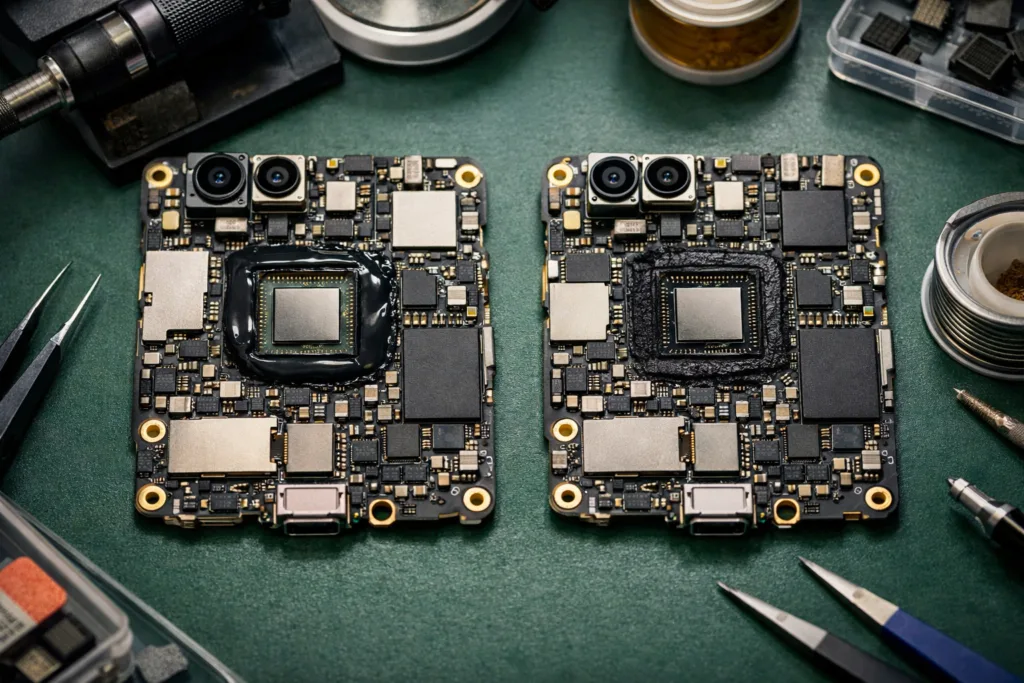
A repair shop receives a 5G smartphone with repeated power failures. Diagnosis reveals a faulty PMIC (power management IC), underfilled using a modern reworkable formula. Following recommended rework protocol, the technician heats the local area precisely, lifts the PMIC, removes residue, and repositions a new chip. Post-repair testing confirms restored function and no collateral PCB damage, saving both time and device value.
Industry Insights: Evolving Material Needs in Mobile Device Repair
As device designs become thinner and mainboards more crowded, the material properties of reworkable underfills must evolve. Formulations now emphasize lower viscosity (for micro-dispensing), minimal ionic content, and improved peel resistance for repair cycles. Ongoing research aims to optimize these adhesives for increasingly fine-pitch solder joints and smaller thermal budgets.
Emerging Trends in Smartphone Mainboard Rework in 2026
- Hybrid Cure Systems: Combining thermal and UV for rapid processing and localized rework.
- AI-Powered Quality Control: Automated vision systems track underfill volume, coverage, and post-rework cleanliness.
- Higher Reliability Standards: OEMs are setting new drop-test and reliability benchmarks, driving the evolution of robust but serviceable adhesives.
Integrating Reworkable Underfill With Other Adhesive Solutions
In smartphone manufacturing, reworkable underfills are often used alongside industrial adhesives for casing, display, or antenna assembly. Understanding how these materials interact in a comprehensive repair or refurbishment workflow is crucial to prevent cross-contamination or incompatible cure profiles. Always refer to application-specific guides or consult technical datasheets.
Common Failure Modes and How to Avoid Them
- Popcorning: Moisture in underfill rapidly expands during rework, damaging components. Proper pre-bake and controlled ramp-up temperature prevents this fault.
- Bond Line Voids: Trapped air leads to electrical stress points. Use slow, controlled dispensing and gentle heat to allow full flow under components.
- Flux Residue Entrapment: Flux residue not cleaned before underfill is applied can cause corrosion. Adopt best-in-class cleaning protocols prior to dispensing underfill.
Summary Table: Key Steps for Achieving Reliable Repairs
| Step | Impact |
|---|---|
| Pre-bake board | Prevents moisture-related failure |
| Use controlled dispensing | Ensures even bond line, no spillover |
| Monitor temperature/humidity | Safeguards underfill cure quality |
| Thorough cleaning after chip removal | Eliminates residue, enables good re-bonding |
How to Choose the Best Reworkable Underfill for Your Application
Selecting an ideal underfill isn’t a one-size-fits-all decision. Consider your mainboard’s substrate, operating demands, and service/repair frequency. Benchmark with industry testing (e.g., peel, lap shear, thermal cycling), and check compatibility with adjacent adhesives used on the board. Consulting with major chemistry suppliers often provides data-driven selection support.
Reworkable Underfill for Smartphone Mainboard Repair
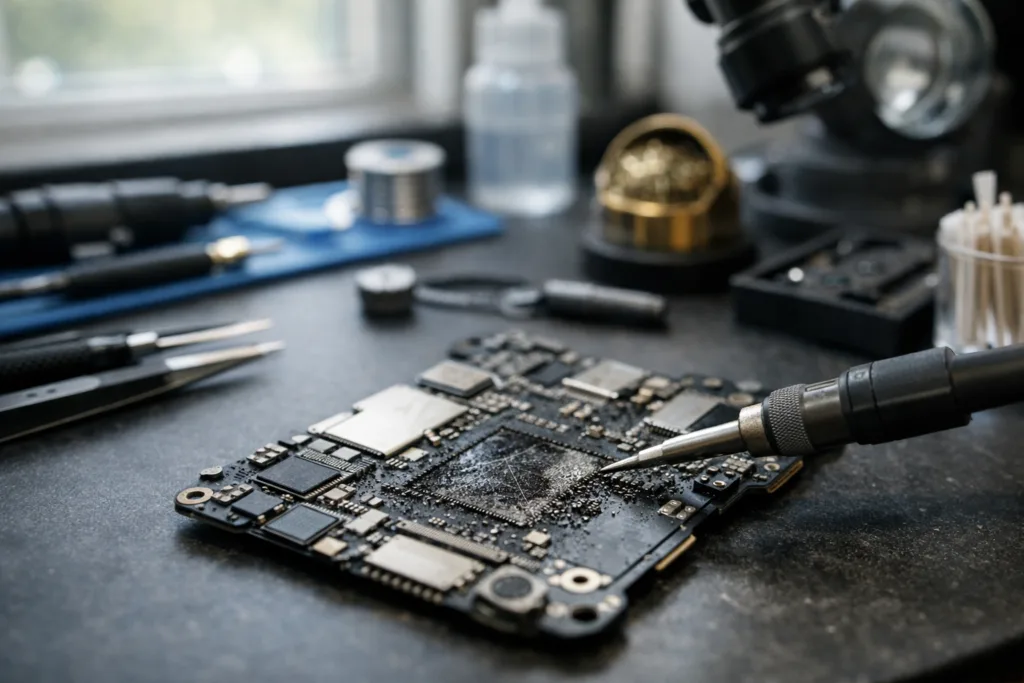
To sum up: Reworkable underfill materials maximize both device reliability and repairability—a dual requirement in today’s mobile device sector. Modern chemistries enable secure adhesion while facilitating chip replacement without substrate damage, making them indispensable for OEM production and aftermarket repair. As mainboard densities rise and consumer sustainability expectations grow, mastering these materials is a must for technicians, designers, and manufacturing engineers alike.
Frequently Asked Questions
What is the difference between reworkable and non-reworkable underfill?
Reworkable underfill can be removed with controlled heat to allow component replacement, while non-reworkable underfill forms a permanent bond that’s not serviceable without PCB damage.
How do I safely remove reworkable underfill from a smartphone mainboard?
Use a precise hot-air tool to heat the area, gently lift the component, and clean the site with a solvent designed for the specific underfill material.
Will using reworkable underfill affect device performance?
When applied and cured properly, reworkable underfills match the mechanical and electrical performance of permanent underfills, preserving device reliability while allowing repairs.
What are the main challenges of reworking underfilled mainboards?
Typical issues include incomplete underfill removal, possible board overheating, and risk of trace or pad delamination if not carefully controlled.
Can reworkable underfill be used with all chip sizes on a smartphone mainboard?
They are best suited for BGA and CSP package types. For ultra-fine-pitch or micro components, select a low-viscosity, precision-dispensed formula compatible with your assembly process.
Does reworkable underfill have environmental advantages?
Many are formulated to be halogen-free and low-VOC, supporting sustainable repair practices and reduced electronic waste when compared to permanent, board-damaging underfills.
Related Reading
- Beyond Welding: How Structural Adhesives Redefine Aluminum Car Bodies
- How Adhesives Tackle Fast Charging Thermal Shocks in Modern Devices
- Optimize B-Stage Epoxy: Storage, Processing, and Application Benefits
- Unlocking Superior Thermal Conductivity with Nano-Fillers in Epoxies
- PUR Hot Melt vs. Epoxy: Which is Best for Phone Back Covers?