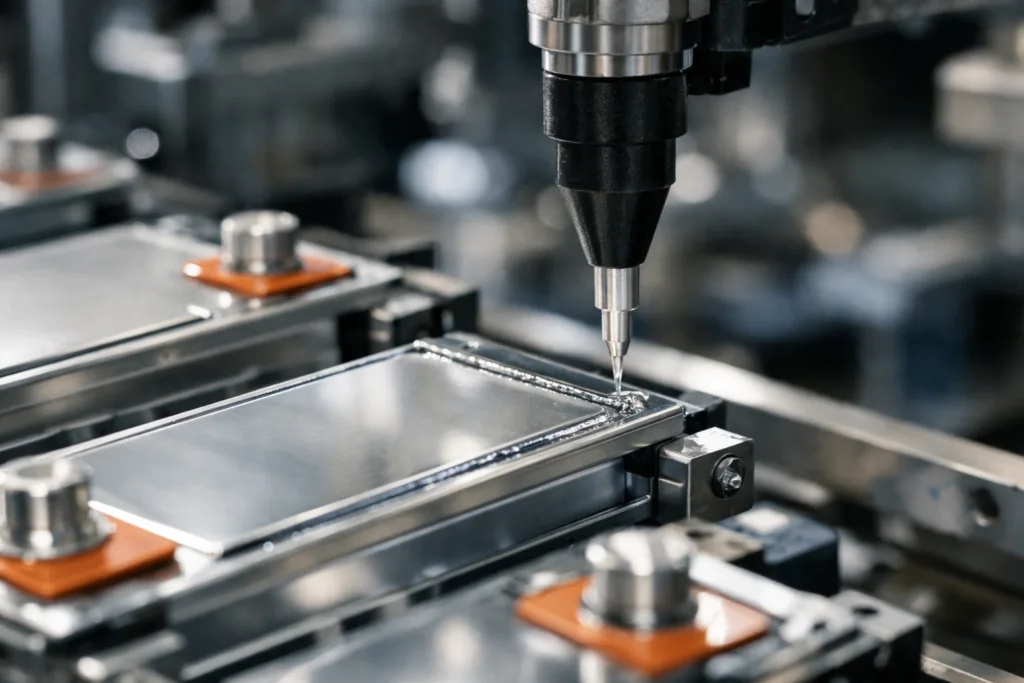
Introduction: Silicone vs. Polyurethane Potting for Battery Modules
When it comes to protecting battery modules in electric vehicles, renewable storage, consumer electronics, and industrial power systems, the potting material choice is critical. Silicone potting and polyurethane potting are the two leading contenders, each bringing distinctive attributes to the table. Understanding their pros and cons—especially regarding thermal management, moisture resistance, chemical durability, and real-world reliability—is essential for engineers, designers, and OEMs making battery module decisions in 2026.
This guide explores the key differences between silicone and polyurethane potting compounds for battery modules. We’ll discuss practical observations, material data, and assembly-line insights, giving you actionable knowledge for choosing the right solution. And, for technical readers seeking specifics, you’ll find direct links to advanced polyurethane potting glue products as well as foundational perspectives from the adhesive industry.
Core Functions of Potting in Battery Modules

Potting compounds serve several crucial functions in battery module design:
- Protection from water, dust, and chemicals
- Electrical insulation
- Mechanical support and shock absorption
- Thermal management
- Fire retardancy
Chemical Structure: Silicone vs. Polyurethane
Silicone potting uses polydimethylsiloxane polymers, known for their flexible Si-O backbone and inert characteristics. Polyurethane potting is based on urethane linkages—a product of diisocyanates and polyols—providing tunable hardness and chemical compatibility.
Thermal Conductivity Comparison for Battery Modules
Thermal management is a top priority in battery design. Silicone potting generally offers superior heat resistance and stability at elevated temperatures (up to 200°C), while specialized grades of polyurethane can reach thermal conductivities in the 0.5–1.5 W/m·K range, depending on filler selection.
| Property | Silicone Potting | Polyurethane Potting |
|---|---|---|
| Max Continuous Temp | 200°C+ | ~120–150°C |
| Typical Thermal Conductivity | 0.7–2.0 W/m·K (with fillers) | 0.5–1.5 W/m·K (with fillers) |
| Curing Shrinkage | Very low | Low–moderate |
| Elastic Recovery | High | Moderate |
Moisture Resistance and Chemical Protection
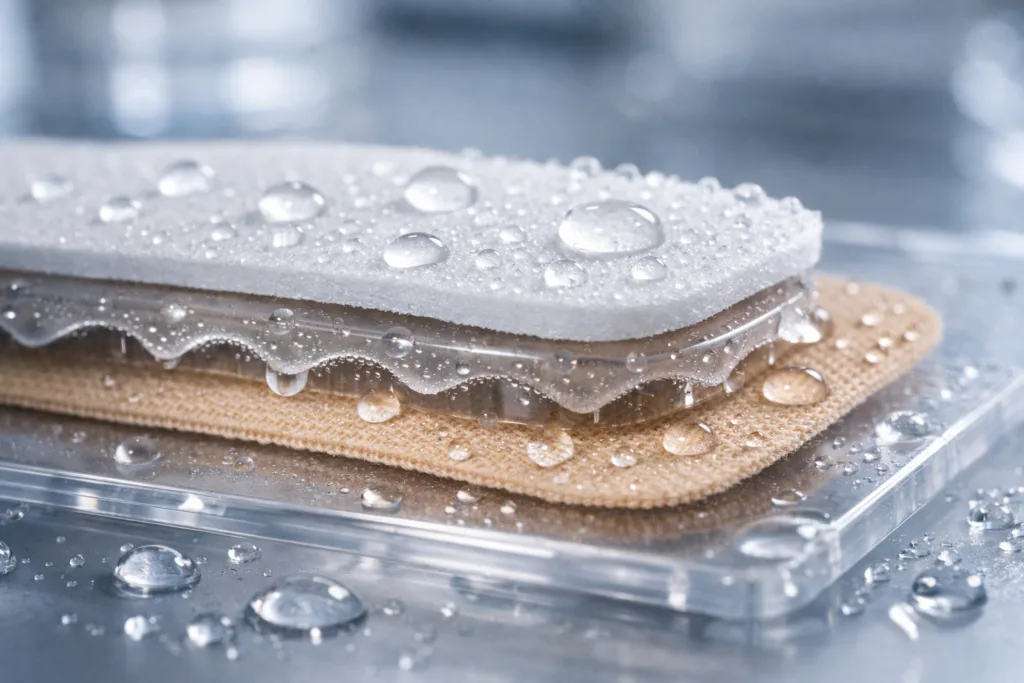
Both silicone and polyurethane potting compounds offer robust moisture and environmental resistance, yet their performance diverges under harsh conditions:
- Silicone: Unmatched hydrophobicity, stable in salt mist, humidity cycling, and chemical splashes.
- Polyurethane: Excellent water resistance, but long-term immersion or high-alkaline environments may degrade certain grades without further modification.
For battery modules operating in marine, automotive, or outdoor environments, this factor may tip the scale. Review the specifics on PU resin manufacturer options for tailored moisture resistance performance.
Mechanical Properties: Flexibility, Hardness, and Vibration Damping
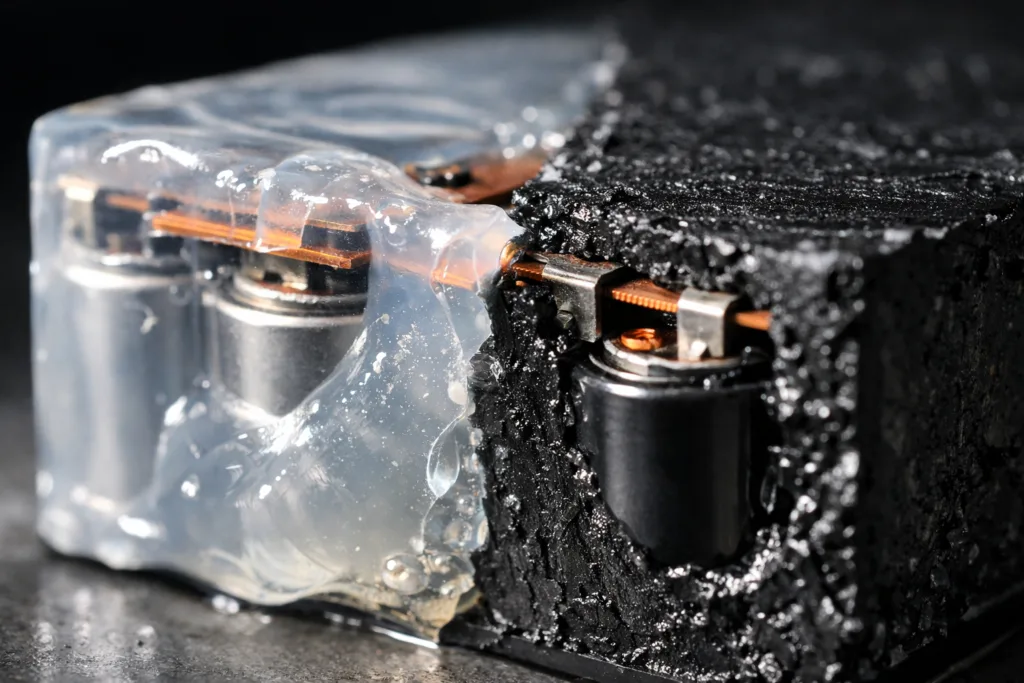
Silicone potting is renowned for its flexibility and long-term elasticity, which helps preserve delicate wiring and solder joints during thermal cycling and physical impact. Polyurethane potting is more tunable; soft, gel-like grades offer shock absorption, while rigid grades provide robust encapsulation.
- Silicone: High flexibility, moderate hardness, excellent fatigue resistance
- Polyurethane: Broad spectrum from soft to hard, customizable for vibration/practical loads
Durability and Aging: Long-Term Stability
In real-world battery deployments—EV, grid, industrial—aging matters. Silicone potting typically resists UV light, ozone, and weathering far longer than polyurethane. It remains stable for over a decade, while some polyurethane grades may yellow, crack, or lose elasticity after extended exposure to heat or sunlight.
Curing Speed and Processability
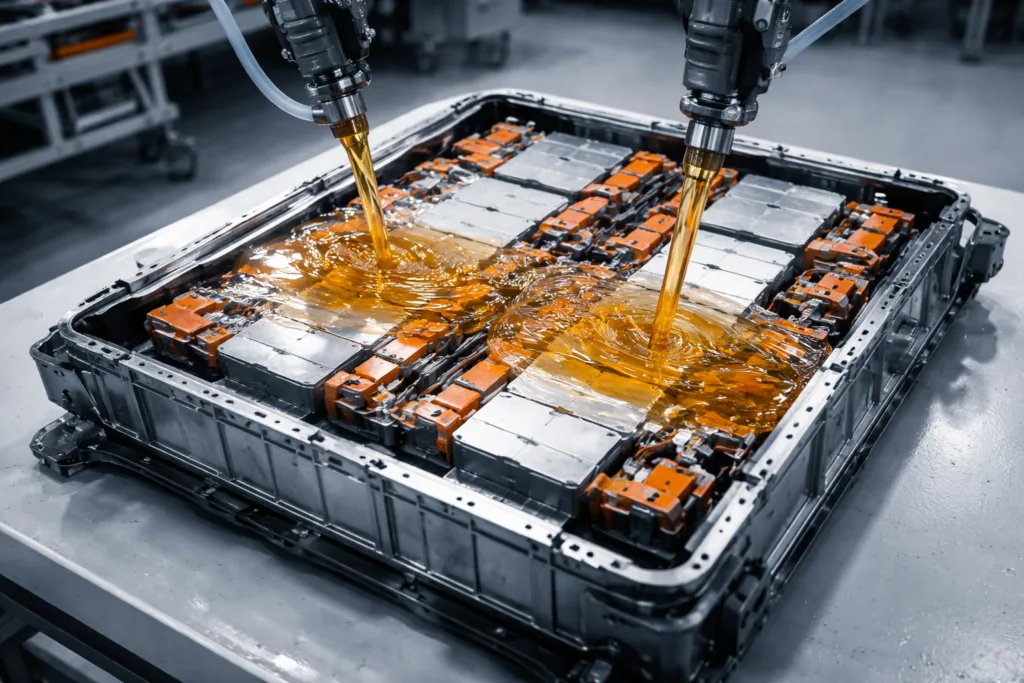
Production lines demand predictable cure cycles. Silicone potting often provides rapid, room-temperature or low-temperature cures, with versions suitable for one-part or two-part automated dispensing. Polyurethane potting usually cures rapidly (5–40 minutes), but temperature sensitivity can affect pot life and fixture speed.
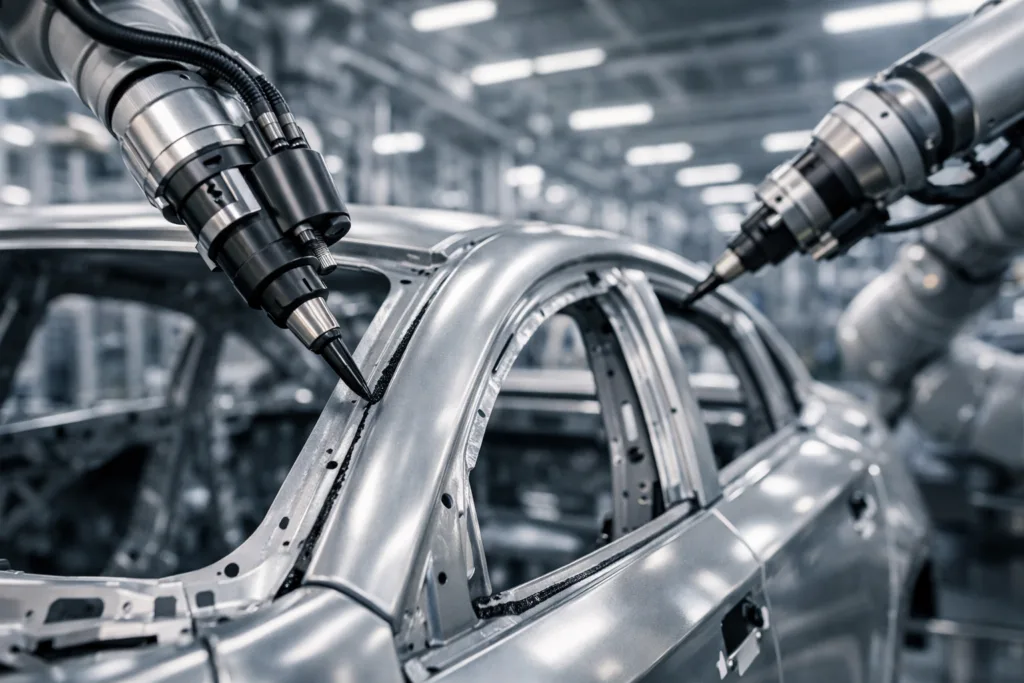
For automated mixing and dispensing, both materials support robotic application; however, mixing ratios and room humidity play a greater role for polyurethane systems.
For industrial users, the polyurethane structural adhesive line presents choices optimized for speed, workability, and process reliability.
Cost Factors: Material, Production, and Lifecycle
Polyurethane potting is typically more economical upfront—lower cost-per-liter and broader global availability. Silicone potting comes at a premium due to specialty fillers and complex manufacturing, but may offer greater value over time in demanding applications (think EV battery packs, outdoor modules, or aerospace).
- Initial costs: Polyurethane lower; Silicone higher
- Lifecycle costs: Silicone potentially lower in rugged, long-life use
Environmental and Safety Considerations
Both materials meet RoHS, REACH, and regulated emissions standards in reputable manufacturing (2026). Polyurethane’s isocyanate component requires careful handling until cured. Silicone releases virtually no VOCs. Recyclability and environmental persistence remain ongoing research topics.
Application-Specific Insights: EV, Industrial, Consumer, Marine
EV Battery Packs: High ambient temperatures and cycles favor silicone for longevity.
Consumer Electronics: Small devices benefit from polyurethane’s fast cure and economical protection.
Industrial Power: Harsh temperature swings and vibration may justify premium silicone potting.
Marine: Stable, salt-resistant silicone is preferred for underwater or exposed modules.
Case Study: User Experience in Assembly
Assembly engineers often report that silicone potting allows for easier rework and module repair, since it’s non-rigid and peels off with simple tools. Polyurethane adheres more aggressively and removal can damage components during disassembly. This trade-off affects repair protocols and lifecycle decisions.
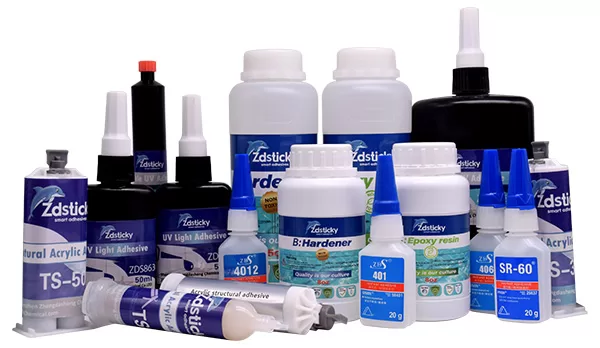
Brand Perspective: Insights From ZDS Adhesive
ZDS Adhesive, an industrial adhesive manufacturer, recommends initial thermal cycling tests (up to 500 cycles, -40°C to 85°C) with both silicone and polyurethane grades. Practical experience shows that silicone maintains bond-line thickness better in multi-layer battery modules, reducing risk of wire stress and microcracking. For modules exposed to water or solvents, select polyurethane blends with tested chemical resistance and fixture time profiles matching your assembly line.
Pros and Cons Table: Silicone Potting vs. Polyurethane Potting
| Feature | Silicone Potting | Polyurethane Potting |
|---|---|---|
| Thermal Stability | Very high | Moderate–high |
| Moisture Resistance | Excellent | Excellent/good, grade-dependent |
| Mechanical Flexibility | High | Tunable |
| Curing Speed | Fast/controlled | Fast/flexible |
| Cost | Higher | Lower |
| Repairability | Easy | Difficult |
| UV & Aging Resistance | Outstanding | Good/moderate |
Choosing Potting Compounds for Today’s Battery Module Designs
- Silicone potting: Top choice for high-heat, outdoor, or mission-critical modules
- Polyurethane potting: Ideal for economical production, short-life or repair-tolerant modules
- Review supplier data sheets for feature trade-offs relevant to your assembly & environmental needs
For deep dives into adhesive performance, explore resources such as Top Factors for Selecting Thermal Conductive Adhesives in EV Battery Packs for more technical details.
Future Trends in Potting Materials for Battery Modules
With battery technology evolving—solid-state, fast-charging, flexible packs—potting compounds must adapt. Hybrid chemistries, advanced fillers, and eco-certified formulas are emerging. Expect more data-driven decision-making, with reliability, warranty, and sustainability all shaping material selection in coming years.
Pitfalls in Potting Selection: Common Failures and How to Avoid Them
- Ignoring thermal or chemical cycling can lead to early bond-line degradation.
- Overusing rigid polyurethane may crack solder joints in large modules.
- Inadequate surface preparation reduces adhesion for both materials. See surface preparation techniques to maximize performance.
- Failure to match potting thickness to application can cause overheating or mechanical stress.
Silicone vs. Polyurethane Potting for Battery Modules: Pros & Cons
To recap: Silicone and polyurethane potting both provide valuable protection and performance, but differ in cost, durability, repairability, and process requirements. The right choice depends on thermal demands, moisture exposure, vibration/shock loads, lifecycle expectations, and manufacturing constraints.
Conclusion: Making an Informed Decision for Your Modules
Picking between silicone and polyurethane potting materials isn’t a one-size-fits-all decision. Engineers and designers must balance performance, cost, reliability, and ease of assembly. Real-world testing and supplier data sheets remain critical in 2026—alongside practical experience from application experts and assembly teams. High-demand modules justify the investment in silicone potting, while serviceable or cost-sensitive modules can thrive with advanced polyurethane blends. Future innovations may blur these lines, but thoughtful evaluation is always the winning approach.
Frequently Asked Questions
Which potting material is better for EV battery modules?
Silicone potting is generally better for EV battery modules due to its high thermal stability, long-term durability, and superior resistance to aging and cycling. Polyurethane can be suitable for less demanding scenarios.
Does polyurethane potting handle outdoor conditions well?
Polyurethane potting can handle outdoor conditions for moderate timeframes, but extended UV or moisture exposure can degrade certain grades. Silicone offers higher durability for outdoor use.
Is silicone potting more expensive than polyurethane?
Yes, silicone potting is typically more expensive per unit than polyurethane. However, it may offer cost savings over the lifecycle by reducing failures in tough operating environments.
Can I repair battery modules after potting?
Modules potted with silicone are easier to open and repair with minimal component damage. Polyurethane creates a tougher, more permanent seal that complicates rework.
How do I choose the right potting compound?
Consider your module’s temperature needs, expected vibration, exposure to moisture/chemicals, and repair requirements. Always review technical data sheets for cure profiles and performance attributes.
Are these potting materials environmentally safe?
Both materials are safe when properly formulated and cured. Silicone emits low VOCs; polyurethane requires care during handling. Regulatory compliance is standard in industrial-grade products.
Related Reading
- Comparing Epoxy, Silicone, and Polyurethane: Decision Guide for Industrial Adhesives
- How Silicone Adhesives Deliver Flexibility & Temperature Resistance in Industry
- Unlocking the Best Use Cases for Polyurethane Industrial Adhesives
- Avoiding Common Adhesive Failures: Lessons from Industrial Practice
- Critical Tips for Selecting Thermal Conductive Adhesives in EV Battery Packs