Introduction: Why Vacuum-Resistant Adhesives Matter in Satellite Terminals
Satellite terminals push the boundaries of engineering every day. Each component, down to the adhesives holding metallic parts together, is subject to punishing extremes—temperature swings, radiation, and hard vacuum. Vacuum-resistant adhesives for satellite terminals are not just a convenience—they are mission critical. The wrong adhesive risks premature failure, communication blackouts, or catastrophic satellite loss. Understanding the science behind these specialty adhesives can mean the difference between multi-year reliability and unexpected breakdowns.
What Are Vacuum-Resistant Adhesives?
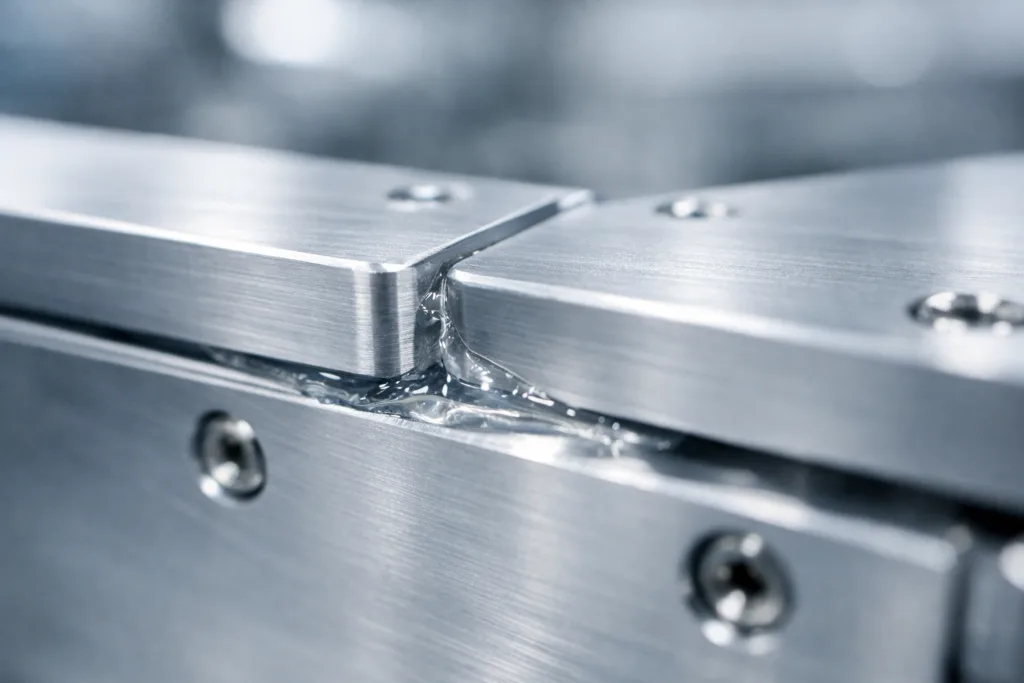
Vacuum-resistant adhesives are engineering-grade bonding materials formulated to maintain their strength and minimize outgassing when exposed to vacuum environments. Outgassing—a process where volatile compounds evaporate from adhesives—can contaminate sensitive optical, thermal, and electronic surfaces. These adhesives are specially designed to bond metal components in satellites, meeting strict aerospace requirements for cleanliness, mechanical reliability, and long service life.
The Importance of Bond Integrity in Space
Satellite metal components—housing, brackets, heat sinks, fasteners—must remain firmly attached throughout launching, orbital maneuvers, and years in orbit. Traditional adhesives can crack, shrink, or weaken due to the temperature extremes and zero-pressure of space. Industrial adhesives formulated for vacuum service solve this by maintaining a stable bond line across the satellite’s lifetime. This ensures signal integrity and continuous alignment, directly supporting satellite functionality.
Material Science: What Makes an Adhesive Vacuum-Resistant?
This next generation of adhesives leverages robust chemistry and material selection:
- Low Outgassing: Only precursors and polymers with proven low volatility under vacuum are used (NASA ASTM E595 tested).
- Thermal and Mechanical Stability: Formulations retain bond strength across -180°C to +150°C or higher.
- Corrosion Resistance: No corrosive byproducts when exposed to moisture pockets, fuel residue, or conductive metals.
- Flexible Cure Methods: Includes heat-cured epoxies, two-part structural acrylics, and specialized polyurethanes.
Key Performance Metrics: How Adhesives Are Evaluated for Satellites
Decision-makers rely on controlled lab data to compare candidates. Typical adhesive properties measured include:
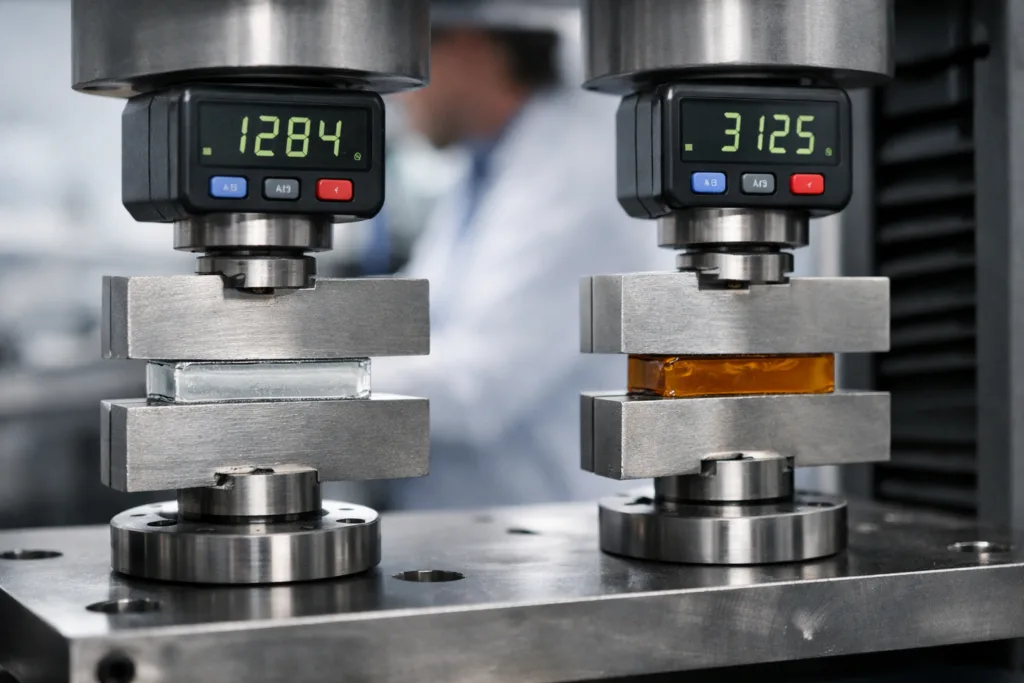
- LAP SHEAR STRENGTH: How much force the adhesive joint can withstand in tension, generally required to be >15 MPa for structural bonding.
- PEEL/STRESS DURABILITY: Repeated pull cycles to gauge fatigue resistance.
- OUTGASSING (TML & CVCM): Total mass loss and collected volatile condensable materials per NASA/ESA test protocols.
- THERMAL CYCLING/STABILITY: Simulated exposure to the contraction and expansion experienced in orbit.
Adhesive Composition: Matching Properties to Metal Substrates
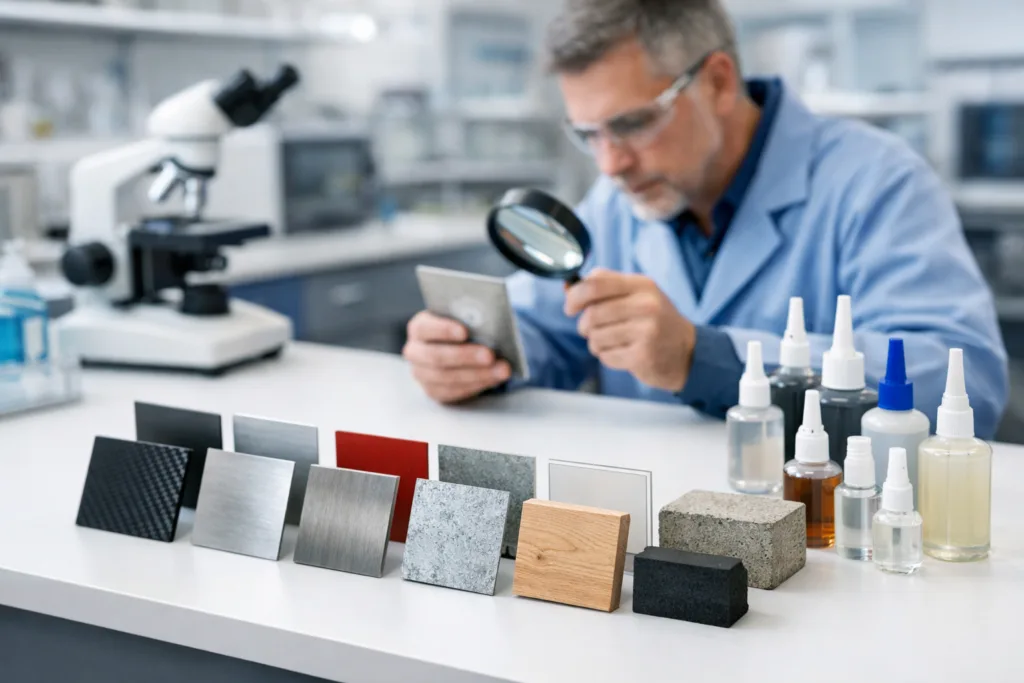
The metals in satellite terminals are chosen for their unique benefits: aluminum (lightweight and thermally conductive), titanium (corrosion resistant), stainless steel (strength). Adhesives must match or exceed these properties to create a reliable bond. Choosing the correct metal glue ensures compatibility without galvanic reactions, brittle interfaces, or adhesive creep over time.
Typical Adhesive Chemistries for Satellite Applications
Most aerospace-grade vacuum-resistant adhesives fall into a few high-performance chemistries:
- Epoxy-Based Adhesives: Excellent for thin bond lines, heat-resistance, and fine gap-filling.
- Polyurethane Adhesives: Slightly more flexible, good for bonding parts with different expansion rates (CTE mismatch).
- Acrylic Structural Adhesives: Known for fast fixture time and superior peel strength, even on oily or prep-challenged surfaces.
- UV/Light-Curing Adhesives: For rapid assembly or transparent substrates, providing instant bonding with precision.
Common Failure Modes and How to Avoid Them
Even minor adhesive selection mistakes can cause big failures in orbit:
- Outgassing Contamination: Leads to fogging or film formation on delicate optics, electronics, or solar panels.
- Cracking Due to Thermal Cycling: Adhesives too brittle for rapid thermal transitions may crack or delaminate.
- Galvanic Corrosion: Poorly matched adhesives can create unintended electrical pathways, corroding assemblies.
- Premature Softening or Aging: Inadequate UV or chemical stability results in loss of strength over time.
Careful selection and qualification solve most of these issues. Key steps include outgassing screening, real-metal coupon testing, and thermal cycling trials, all recommended by ZDS Adhesive’s application engineering practice.
The Role of Surface Preparation in Metal Bonding
There’s a strong temptation to rely on “super-strong” formulas and skip surface cleaning. This is a major risk. Adhesives—even those formulated for vacuum-resistant performance—reach their full potential when applied to clean, oxide-free, and contaminant-free metal surfaces. Pre-treatment can include plasma cleaning, solvent degreasing, or even abrasion for optimal mechanical lock. For time-critical satellite assembly lines, advanced acrylic adhesives that bond oily metals with minimal prep (see how acrylics cut prep time) can offer a process advantage.
Process Stability: Pot Life, Cure, and In-Process Testing
Vacuum-resistant adhesives are often two-component systems. These feature:
- Controlled Pot Life: Ensures consistent mixing and application in precision assembly processes.
- Fast Fixture Time: Reduces handling delays, allowing for staged satellite module integration.
- Repeatable Curing: Designed for both room-temperature and low-temperature oven cure to accommodate different satellite assembly steps.
Routine in-process testing (e.g., visual cure check, lap shear coupons) confirms bond quality before critical module sealing or final testing.
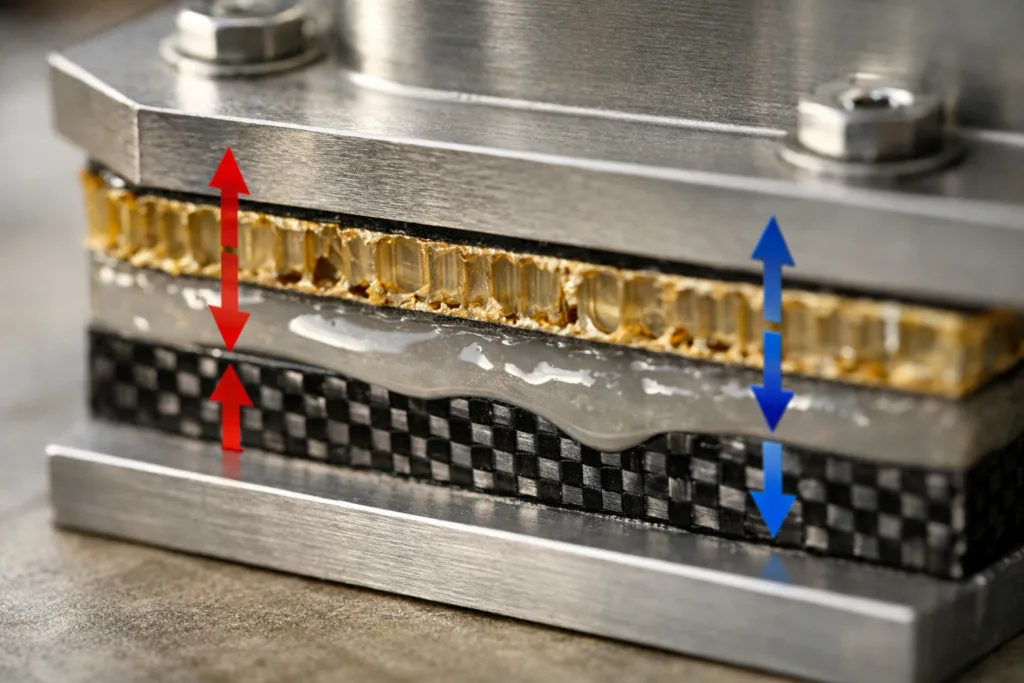
Real-World Example: Bonding Aluminum Heat Sinks in Ka-Band Terminals
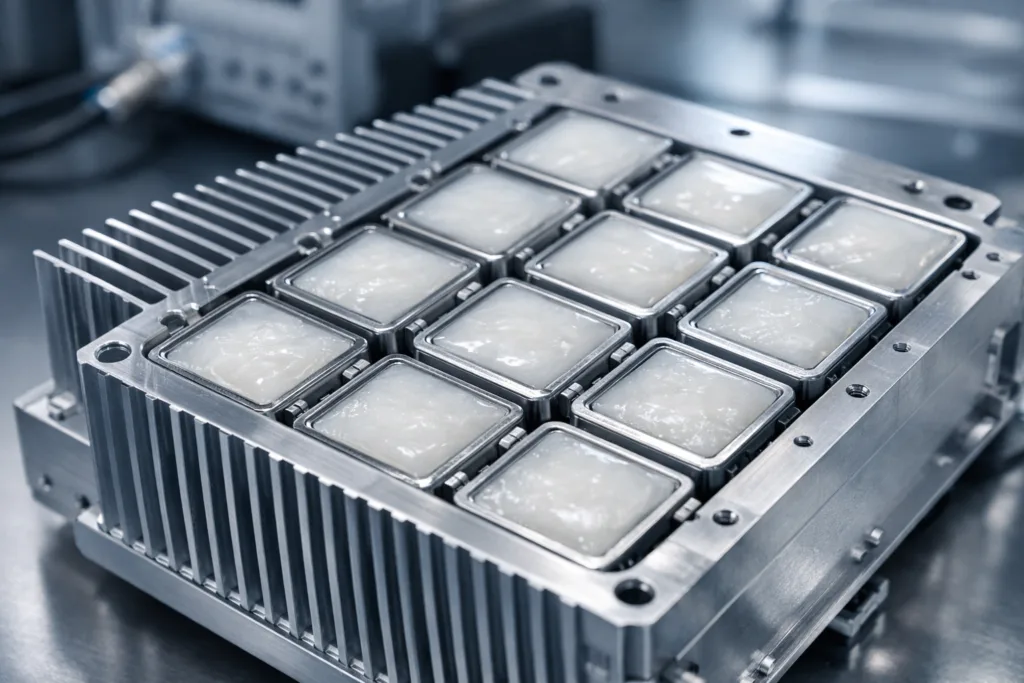
Modern Ka-band ground terminals employ lightweight aluminum alloy heat sinks to manage advanced RF electronics. Engineers require vacuum-stable adhesives with high thermal conductivity, low permeability, and outgassing performance better than 1.0% TML/0.1% CVCM. Epoxy formulations with micro-fillers allow for direct heat transfer and reliable bonding without risk of condensable contamination—a key lesson learned from hundreds of launches since 2020.
Adhesive Selection Guide: Matching Satellite Component Needs
| Component | Adhesive Type | Key Requirements | Notes |
|---|---|---|---|
| Aluminum Structure | Low Outgassing Epoxy | Thermal Stability, Electrical Isolation | Thin Bondline (0.1-0.2mm) |
| Titanium Fasteners | Acrylic Structural Adhesive | Peel Strength, Fast Fixture | Surface Prep Critical |
| Stainless Brackets | Polyurethane Adhesive | Toughness, Flexible Bond | Gap-Filling up to 2mm |
| Optical Modules | UV-Cure Adhesive | Precision Alignment | Low Shrinkage |
International Standards and Testing Protocols
All adhesives for space and satellite use must meet standards such as NASA ASTM E595, ESA ECSS-Q-ST-70-02, and often MIL-STD-883 for outgassing, environmental exposure, and mechanical performance. Consistency across production lots is mandatory for traceability and risk management.
Future Trends: Custom-Built Adhesives for Next-Gen Terminals
With the rise of low-earth orbit (LEO) satellites, modular assembly, and new composite metals, vacuum-resistant adhesive technology continues to evolve. The latest materials feature nano-filled epoxies, toughened acrylics, and even hybrid chemistries that maximize toughness and reduce cure time. Customization is increasingly critical—see the practical roadmap to custom adhesive solutions for more on the innovation pipeline.
Practical Application Checklist for Engineers
- List all metal substrates and their surface conditions
- Establish required thermal and mechanical load parameters
- Specify allowable outgassing levels by component function
- Select adhesive chemistry for process compatibility (mix ratio, pot life, cure method)
- Run metallic coupon and outgassing tests before first launch qualification
When to Consult Experts—and What to Ask
Complex satellite projects benefit from early involvement of vacuum-adhesive specialists. From an application engineer’s viewpoint at ZDS Adhesive, the right questions are:
- How will the adhesive be dispensed and cured in your line—robotically, manually, or hybrid?
- What contaminants or hazards are likely pre- or post-bonding (flux, lubricants, moisture)?
- Are there dual-use or military restrictions on adhesive technology imports or compositions?
Precision in questioning leads to robust solutions and fewer late-stage surprises.
Vacuum-Resistant Adhesives for Satellite Terminals
To summarize, vacuum-resistant adhesives enable the reliable, long-term operation of satellite terminals by providing bonds that withstand harsh vacuum, temperature, and radiation challenges. Their properties—low outgassing, thermal cycle resilience, mechanical toughness—are tailored for use with advanced metal components. From material science to hands-on engineering, these adhesives, like those developed by ZDS Adhesive, remain a backbone of modern aerospace assembly.
Conclusion: Building Reliability from the Molecular Level Up
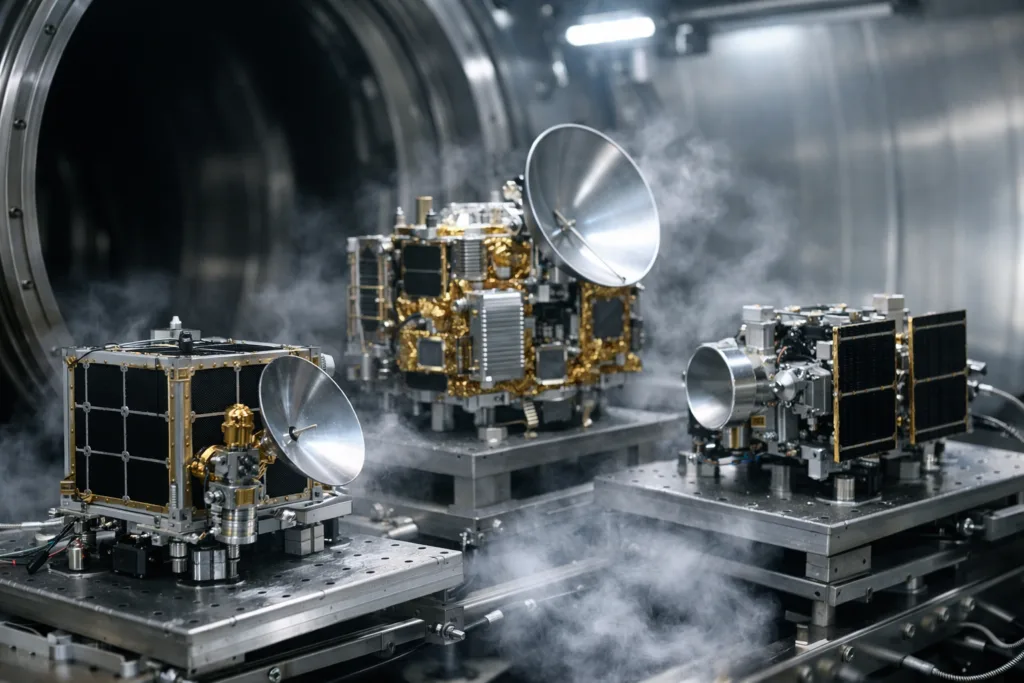
Success in satellite terminals often comes down to the invisible details. Each vacuum-resistant adhesive joint represents science in action—supporting antennas, shielding electronics, dissipating heat, and preserving signal clarity for years. By matching proven chemistries to application requirements, and verifying with real-world tests, engineers today can confidently assemble satellite systems that thrive in orbit. Satellite technology’s progress will continue to push adhesive innovation—and rigorous selection ensures reliability will always orbit right alongside.
Frequently Asked Questions
What is outgassing and why is it critical in satellite adhesives?
Outgassing is the release of volatile chemicals from adhesives under vacuum. This can contaminate sensitive surfaces and optics, making low outgassing a necessary property for adhesives in satellite terminals.
How are adhesives tested for vacuum resistance?
They undergo standardized tests for outgassing, like NASA’s ASTM E595, and are subjected to thermal cycling, humidity aging, and mechanical shear testing to simulate orbital conditions.
Why are different adhesives used for different metal components?
Various metals have unique properties, such as thermal expansion rates and reactivity. The right adhesive ensures a stable bond without failures like cracking or corrosion.
Are special surface treatments always needed before adhesive bonding?
Surface treatments like degreasing or plasma cleaning improve bond quality. Certain advanced formulas can tolerate minor oils, but best results come from proper prep.
What typical temperature extremes must satellite adhesives survive?
Adhesives often need to perform from around -180°C (deep cold during eclipse) to +150°C (direct sun), while maintaining bond strength and integrity.
When should I consult an adhesive specialist for a satellite project?
It’s ideal to consult early in the design or testing phase. Specialists help match adhesives to materials, assembly processes, and mission-specific requirements for reliability.