Define the Prismatic Battery Bonding Task
The right prismatic battery cell adhesive depends on the exact bond location, substrate pair, surface condition, bond-line gap, working time, cure mechanism, mechanical and thermal loads, dispensing method, and validation plan. Treat any ZDS product as a candidate only after reviewing its current technical data sheet (TDS), safety data sheet (SDS), packaging details, process data, and application-specific evidence for the intended assembly. General new energy adhesive solutions information can provide context, but it does not replace qualification for a particular cell or pack design.
First define what the joint must do. A battery cell bonding adhesive may join adjacent prismatic cells, a cell to a carrier, a module to a housing, or a cover, insulator, busbar support, or other pack component. These are different engineering decisions. Cell-to-carrier bonding may require controlled positioning and tolerance compensation; module-to-housing bonding may transfer higher structural loads; an insulation-related joint may require verified electrical properties; and a thermal interface may require measured thermal performance at the specified bond-line.
Record the joint in an application drawing or controlled description before comparing products. Include the substrate pair, coatings or films, accessible bond area, joint geometry, expected gap, bead path, assembly sequence, fixture method, and whether the adhesive is exposed to the cell casing or only to a secondary component. State whether the joint is intended to be permanent, replaceable, or compatible with a defined rework method. Do not assume that a candidate described as a battery adhesive is suitable for every prismatic cell, pack architecture, or production process.
Separate structural, thermal, and insulation functions
One adhesive should not be selected for several functions merely because its product description mentions them. Structural load transfer, thermal conduction, electrical insulation, sealing, gap filling, vibration compliance, and dimensional retention each require separate acceptance criteria. A battery pack structural adhesive must be assessed against the actual loads and joint design. A candidate considered as a thermal conductive battery adhesive also requires evidence for thermal performance in the cured joint, including the relevant specimen, bond-line, test method, and environment. Thermal conductivity alone does not demonstrate pack-level cooling.
Use the following screening framework before requesting samples or beginning production trials.
| Decision criterion | Requirement to define | Evidence to request | Approval question |
|---|---|---|---|
| Bond location | Cell-to-cell, cell-to-carrier, module-to-housing, or another joint | Drawing or controlled joint description | Is the candidate intended for this exact load path? |
| Substrate condition | Metal, coating, plastic, composite, insulation film, or mixed pair | Material identification, cleaning method, and representative coupon results | Does the adhesive wet and bond the production surface? |
| Bond-line | Required gap, bead geometry, access, and tolerance | Application drawing and trial bead inspection | Can the process control the cured joint dimensions? |
| Process window | Working time, fixture time, cure conditions, and temperature limits | Current TDS and representative line-trial data | Can the assembly reach handling strength without incomplete cure or movement? |
| Performance function | Mechanical, thermal, electrical, sealing, or compliance requirement | Defined test method and application-specific results | Does the evidence cover the required function and environment? |
| Supply readiness | Packaging, storage, dispensing format, and availability | Current ZDS documentation and procurement confirmation | Can engineering and procurement support production consistently? |
Match the Adhesive to Substrates and Surface Condition

Substrate compatibility is a joint-level question, not a label-level assumption. Prismatic cell casings may present a metal surface, coating, treatment, residue, or protective film. Housings may use different metals, plastics, composites, or painted surfaces. Insulation films can change wetting and adhesion behaviour, while production handling can add oils, dust, release agents, or other contamination. Identify the actual surface contacted by the adhesive after the planned cleaning and handling steps.
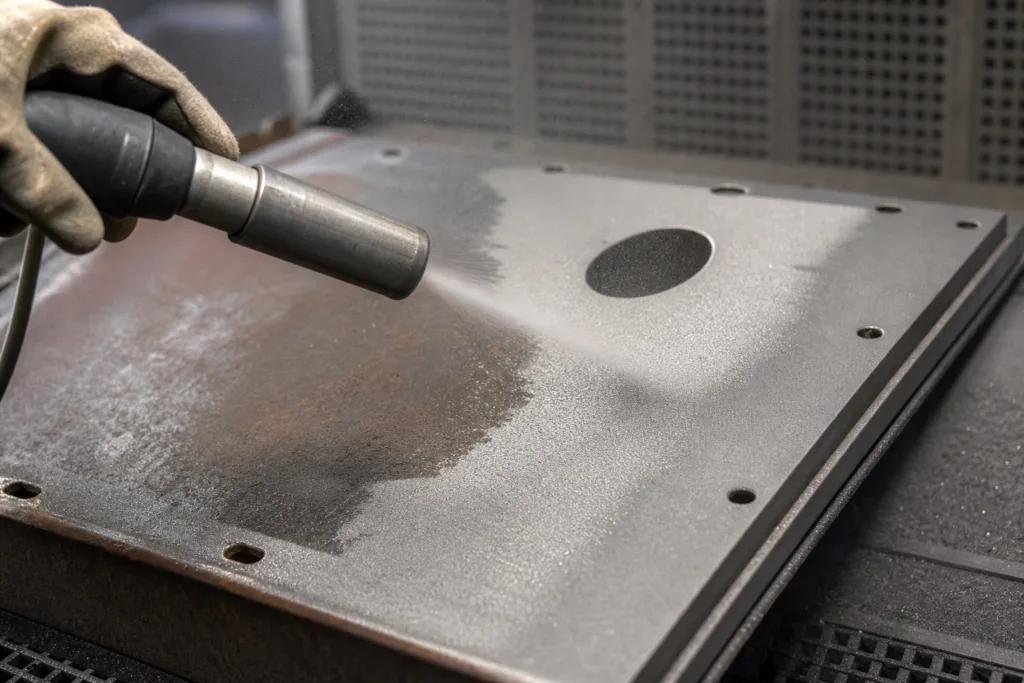
Surface preparation is part of the adhesive specification. Document the cleaning chemistry, abrasion or treatment, drying method, time between preparation and bonding, and any primer requirement. A process that works on a laboratory coupon may not represent the production surface if the coating, forming lubricant, storage condition, or operator handling differs. Qualification should therefore use representative cell casing, housing, coating, and insulation materials rather than relying only on generic metal or plastic coupons.
Compare a candidate such as a polyurethane structural adhesive only against its current product-specific documentation and the intended joint. The relevant questions are whether the TDS identifies the required substrates, whether preparation or primer is specified, how the material responds to the designed gap, and whether the cured joint provides the required balance of strength, compliance, and dimensional stability. Do not infer suitability from the adhesive family alone.
Surface condition also affects validation. Test prepared substrates at the lower and upper limits of the controlled process, and include any coating or film variation that production has accepted. Record failure mode, not only peak load: adhesive failure, substrate failure, cohesive failure, delamination, voiding, and interface contamination point to different corrective actions. If surface identity or preparation cannot be controlled, the candidate should remain conditional until the risk is resolved.
Compare Cure Mechanism, Working Time, and Process Window
Choose the cure mechanism around the assembly sequence. The process must allow dispensing, positioning, fixturing, and any required release or inspection without unwanted movement or incomplete cure. Confirm how the supplier defines working time, fixture or handling time, full cure, cure temperature, humidity or other environmental dependencies, and any restrictions on bond-line thickness. These terms are not interchangeable and should not be replaced with an unsupported production-rate claim.
For each candidate, map the process window to actual equipment and parts. Consider bead length, dispense interruption, mixing or metering, component temperature, fixture pressure, access for inspection, and the consequence of a blocked nozzle or delayed placement. A faster cure may reduce fixture demand but can narrow placement tolerance. A longer working time may support complex assemblies but can increase movement, work-in-process, or fixture occupancy. The correct choice is the one demonstrated to meet the controlled process limits.
Before approval, combine document review, representative coupons, assembled-joint trials, and production-line validation. Use current TDS and SDS instructions for handling and safety, and request missing cure or process data from ZDS technical support. Candidate status should remain open until the actual substrates, gap, cure conditions, environmental exposure, and inspection method have been tested.
Thermal and electrical requirements should then be assessed against the same joint. General guidance on thermally conductive adhesive selection may help frame the trade-off, but product approval still requires current, application-specific evidence.
Evaluate Mechanical, Thermal, and Electrical Requirements
After the joint and cure process are defined, set acceptance criteria for the loads and functions that matter in service. A cell-to-carrier joint may need to accommodate dimensional variation and vibration, while a module-to-housing joint may contribute to structural retention. Define the required shear, peel, tensile, compression, vibration, shock, thermal-expansion, temperature, humidity, and chemical-exposure conditions before requesting performance data. Do not substitute a generic strength value for evidence from the intended joint geometry and environment.
Thermal and electrical requirements need the same discipline. If the adhesive is part of a thermal path, specify the heat-flow direction, target bond-line, adjacent materials, contact area, and test method. Review high-strength epoxy adhesive information as general background only; an adhesive family or marketing description does not establish suitability for a prismatic cell assembly. If electrical insulation is mandatory, define the voltage, clearance, insulation location, exposure conditions, and acceptance method with the responsible engineering team. Thermal conductivity does not by itself prove cooling performance, and electrical insulation should not be assumed without product-specific evidence.

Where several functions are required, document the trade-off instead of treating them as one specification. A compliant adhesive layer may help manage movement but may not provide the required structural retention. A rigid structural joint may limit tolerance compensation. A thermally conductive material may require different dispensing, mixing, curing, or inspection controls. Candidate approval should therefore identify which requirements are demonstrated, which remain conditional, and which require a separate component or interface.
Plan Dispensing and Assembly Integration
Packaging and equipment are part of material selection. Confirm whether the candidate is supplied in a format compatible with the planned metering system, whether components require controlled mixing, and how the process will manage purge, nozzle changes, waste, and interruptions. Verify storage and handling instructions from the current TDS and SDS before line trials. Do not publish or assume a mix ratio, cartridge volume, viscosity, shelf life, or storage limit unless ZDS confirms it in current product documentation.
Define the bead path, target volume, access angle, start-and-stop locations, and acceptable void or discontinuity limits. The dispensing method must produce a repeatable bead across the actual cell, carrier, housing, or insulation surface. Evaluate whether the operator or equipment can maintain placement accuracy, component alignment, fixture pressure, and the required bond-line during cure. automated adhesive dispensing systems may be relevant to repeatability, but equipment compatibility must be demonstrated with the selected adhesive and package.
Line integration should include controls for material identification, lot traceability, component temperature, nozzle condition, dispense interruption, and curing status. Establish an inspection method that can detect missing beads, excessive squeeze-out, trapped voids, misalignment, or incomplete coverage where those defects affect the joint. A production trial should record cycle impact, material waste, fixture occupancy, rework route, and operator instructions rather than evaluating only whether a bead can be dispensed.
Build a Validation and Approval Plan
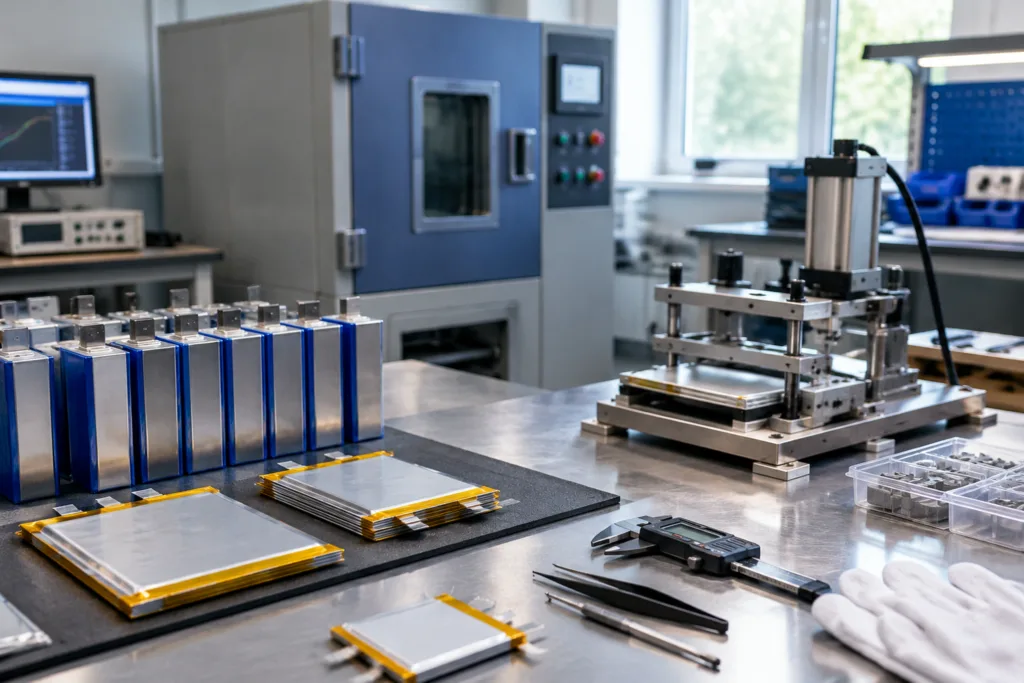
Use gated qualification. Begin with current product documentation and a written review of unresolved requirements. Then test representative substrates, coatings, films, gaps, and surface-preparation limits. Progress to representative assemblies with the planned bead geometry, fixture method, cure conditions, and inspection controls. Environmental and mechanical testing should use agreed acceptance criteria, defined exposure conditions, documented test methods, and a failure-analysis approach. Generic coupon data can support screening, but it should not be presented as application approval.
Record cohesive or interfacial failure, substrate damage, delamination, voiding, dimensional movement, and any change after exposure. Include electrical or thermal checks only when those functions are required and the test setup represents the intended assembly. Define sample-size rationale, repeatability expectations, change-control requirements, and the conditions that trigger requalification. Engineering should approve the technical evidence; procurement should separately confirm documentation, supply, packaging, and commercial requirements.
Review ZDS Product and Procurement Documentation
For each candidate, request the current product-specific TDS and SDS, revision dates, intended application information, substrate guidance, cure mechanism, working-time definition, cure conditions, handling instructions, packaging details, storage requirements, and sample availability. Ask ZDS to identify which values are measured on cured adhesive, which use a defined specimen or bond-line, and which depend on a stated environment. Request test-method details for any mechanical, thermal, electrical, humidity, vibration, shock, or temperature data used in the decision.
Procurement should also confirm production availability, quality documentation, change notification, packaging continuity, and commercial terms directly with ZDS. Keep unsupported values out of the comparison record. A missing specification is a qualification action, not evidence that the candidate meets the requirement.
Make the Selection Decision
Select the candidate only when the defined bond location, substrate condition, bond-line, cure window, mechanical and environmental loads, electrical or thermal functions, dispensing process, validation evidence, and supply documentation have been reviewed. Reject it when a mandatory requirement fails. Keep it conditional when evidence is incomplete, and record the exact document, test, or production trial needed to close the gap. This decision rule keeps a battery cell bonding adhesive evaluation tied to the actual assembly rather than to a broad product claim.
How do I choose an adhesive for prismatic battery cells?
Define the bond location, substrate pair, surface preparation, bond-line, cure process, loads, required electrical or thermal functions, dispensing method, and validation criteria, then compare candidates using current ZDS TDS and SDS documents and representative tests.
Should a prismatic battery adhesive be thermally conductive or electrically insulating?
Choose the function required by the joint. Thermal conductivity and electrical insulation are separate requirements, and each needs product-specific evidence using the intended substrates, bond-line, test method, and service conditions.
What cure and dispensing information should be confirmed before production approval?
Confirm the cure mechanism, working-time definition, fixture or handling conditions, cure profile, environmental dependencies, packaging, mixing or metering requirements, bead control, storage, and line-trial results.
Can one adhesive be used for both cell bonding and battery-pack structural bonding?
It may be possible only when the same candidate is qualified for both defined joints, substrates, loads, cure process, environmental conditions, inspection method, and supply requirements. Do not assume suitability from product-family information.
What tests should qualify an adhesive for a prismatic battery assembly?
Use representative substrate and gap trials followed by defined mechanical, environmental, dimensional, thermal, or electrical tests required by the design, with documented methods, acceptance criteria, failure analysis, and production validation.
To review a candidate, contact the ZDS technical team with the substrate pair, process, operating environment, validation needs, quantity, and packaging requirements.