Introduction: The Essential Role of Optical Lens Bonding in High-Speed Transceivers
Optical lens bonding forms the backbone of communication inside high-speed transceivers, enabling reliable connections vital for modern data networks. As transmission speeds reach multi-gigabit and even terabit levels by 2026, every step from lens assembly to signal path control must be engineered with care. This article explores the intricacies of optical lens bonding for high-speed transceivers, detailing how the right bonding techniques and adhesive materials determine signal integrity, speed, and device reliability.
Advances in photonic integration and fiber-optic module design have highlighted the need for precision bonding solutions. When an optical lens is joined to its housing or coupler, small defects or misalignments can impact fiber coupling efficiency, increase insertion loss, and ultimately undermine overall device bandwidth. Selecting epoxy adhesive for optical bonding, for example, requires careful consideration of cure time, optical clarity, and alignment tolerances.
Understanding Optical Lens Bonding for High-Speed Transceivers
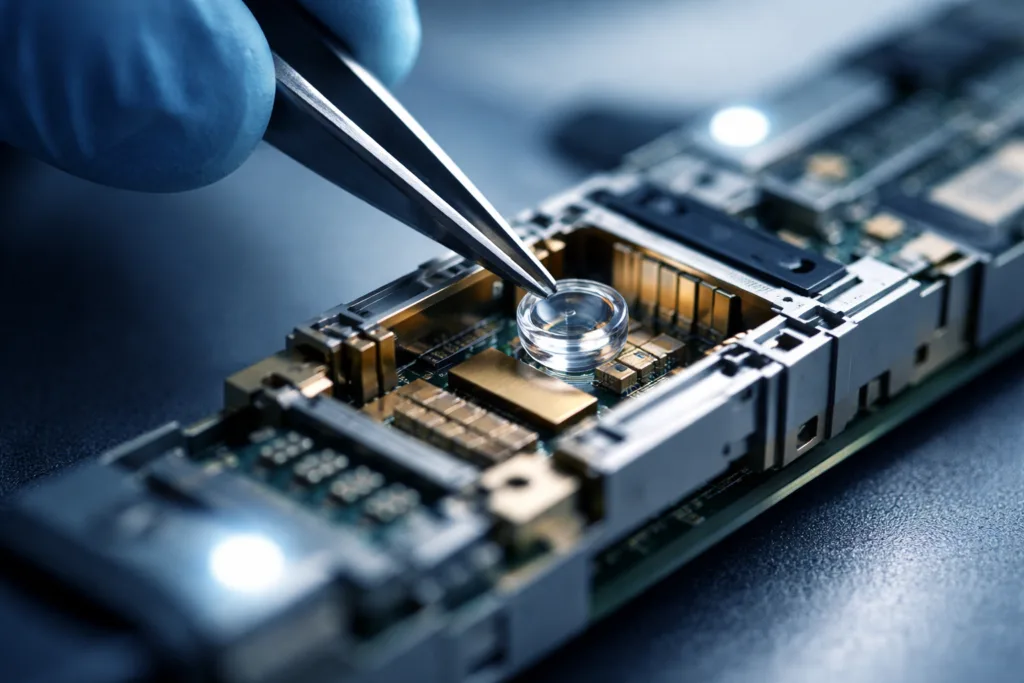
Optical lens bonding describes the process of attaching optical elements—such as glass or polymer lenses—within a high-speed optical transceiver. These bonds must maintain sub-micron alignment, resist yellowing, and protect against environmental and mechanical stress. In high-speed settings, each element influences channel loss, dispersion, and error rates.
Bonding Techniques: Comparing Methods for Precision and Stability
Multiple bonding techniques cater to high-speed transceiver needs:
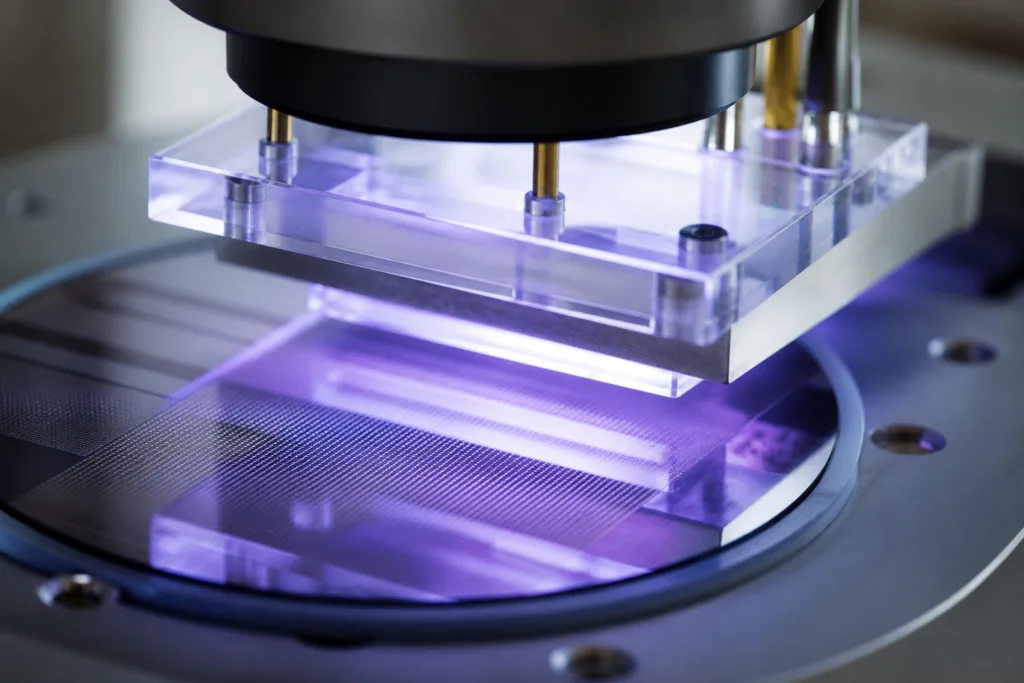
- UV-Curing Adhesives: Fast fixture, minimal shrinkage, high clarity.
- Epoxy-Based Bonds: Superior mechanical strength, heat resistance.
- Silicone Lens Bonding: Flexibility for thermal expansion.
- Anhydrous or Hot-Melt Methods: Used for temporary or field-repairable modules.
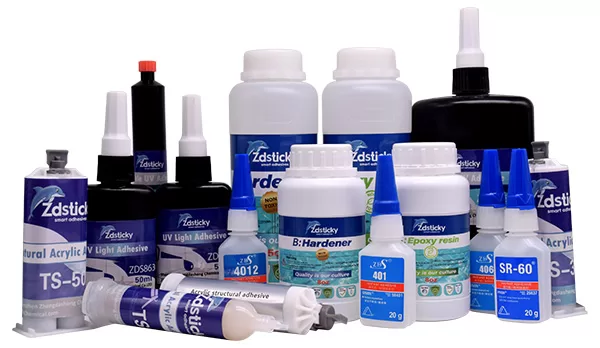
Each method has target specifications—open time, cure profile, bond-line thickness—and risks such as underfill voids or optical haze. For assembly engineers, the goal is to select a technique balancing throughput with performance stability. For example, industrial adhesive solutions offer custom cure speeds and viscosities for precise dot dispensing on miniature optical surfaces.
Materials Used in Optical Bonding: Key Properties and Performance Factors
The right adhesive material must meet optical, mechanical, and environmental criteria:
- High optical transmission (typically >98% at relevant wavelengths)
- Minimal refractive index mismatch for optimal coupling
- Low shrinkage and stress post-cure
- High resistance to yellowing and UV exposure
- Thermal cycling and humidity stability
UV-curable glues, two-part epoxies, and custom acrylics often dominate bond-line formation. Epoxy selection is influenced by cure profile and optical clarity, while certain acrylics enable rapid mass production lines when paired with LED UV lamps. For example, using cyanoacrylate in lens bonding can trade speed for flexibility, but it’s less common in optical applications due to yellowing risk.
Critical Parameters Affecting Signal Integrity in High-Speed Transceivers
Signal integrity—a top priority for high-speed optical modules—is shaped by how the lens, adhesive, and coupler interface. Even minor misalignments or optical aberrations can increase insertion loss and return loss, reducing link budget and degrading transmission rates. Ideal bond-line thickness, refractive index homogeneity, and minimal internal stress are foundational in preventing signal distortions.
Advancements in Optical Bonding Technology: Case Studies and Best Practices (2026)
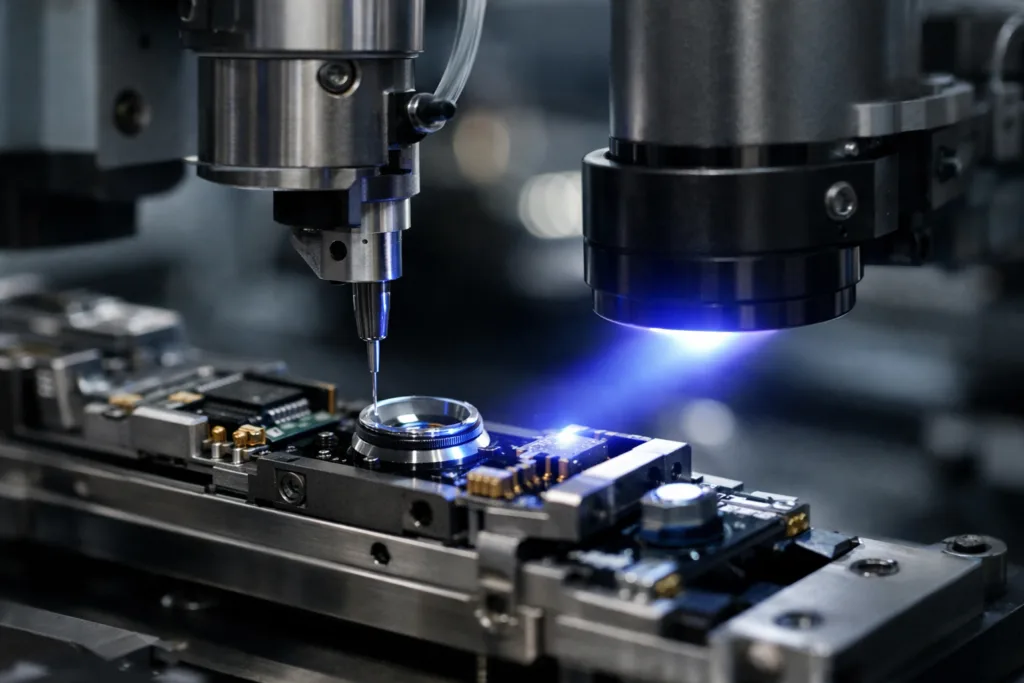
Recent years have seen the rise of advanced UV adhesives, nanocomposite formulations, and automated dispensation systems. One practical case study is the adoption of high-transparency UV glues for AR/VR lens modules, illustrating the same strategies used in high-speed transceiver bonding. Automated robotic assembly allows for consistent micro-dot application, monitored by live vision feedback to prevent overfill, underfill, or air inclusion.
In high-volume production lines, dual-cure systems (UV + thermal) can eliminate shadow area failures, as proven by manufacturers who upgraded curing after signal dropout issues cropped up during thermal cycling tests. These improvements reduce costly rework and maintain performance across temperature extremes.
Design Considerations: Ensuring Long-Term Reliability and Performance
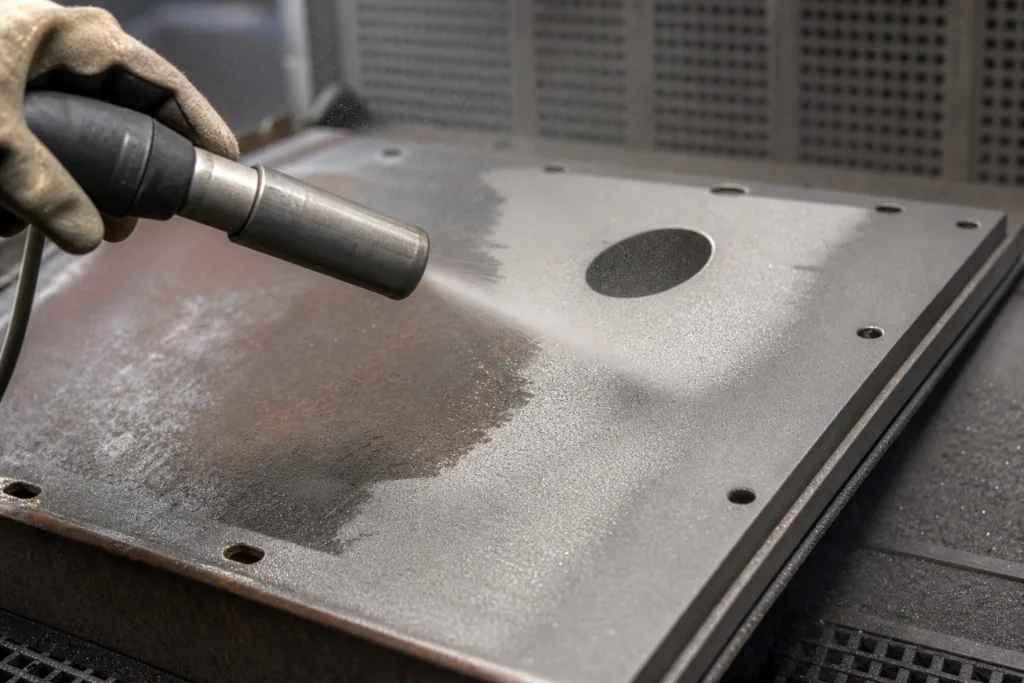
Designing for durability means considering factors such as surface energy preparation, lens geometry, fixture time, and humidity exposure. High-speed transceivers often operate in racks with fluctuating temperatures and moisture levels. Proper pre-treatment—such as plasma or corona—ensures optimal adhesion, while specific adhesives resist micro-cracking and delamination.
ZDS Adhesive, an industrial adhesive manufacturer, recommends test-driven selection: lap shear, peel, thermal cycling, and humidity aging. A bond that performs well on glass-polymer interfaces at room temperature may fail under humidity or shock; thus, the correct adhesive must balance open time, fixture time, and environmental resilience.
Assembly Process: Step-by-Step Lens Bonding in Practice
The lens bonding process flows as follows:
- Surface cleaning and activation using plasma or solvent
- Controlled adhesive dispensing (dot or stripe)
- Precision lens alignment (robotic or manual)
- Fixture and curing (UV, thermal, or dual-cure)
- Post-cure inspection (optical clarity, bond-line uniformity)
Live feedback systems are now common in high-speed lines, providing real-time cure validation and reject handling. Selecting a structural acrylic adhesive can expedite curing in automated environments, ensuring process repeatability.
Quality Control and Inspection: Preventing Bonding Failures
Defect-free optical bonding is crucial for consistent signal performance. Quality checks include visual inspection for air bubbles, haze, or delamination; laser transmission tests for optical clarity; and mechanical pull tests for bond strength. Precise tolerance management prevents alignment drift. Best practice calls for periodic reliability audits, including humidity and thermal cycling to preempt field failures.
Common Challenges in Optical Lens Bonding and How to Solve Them
Some frequent issues encountered are:
- Adhesive shrinkage causing optical distortion
- Misalignment leading to signal loss
- Yellowing after UV exposure
- Delamination under humidity
- Curing inhibition in shaded areas
Solutions involve careful adhesive selection, robust fixture methods, environmental pre-conditioning, and dual-cure systems. Engineering teams must also maintain strict control over pot life and open time to preserve assembly integrity.
Impact of Bonding on Transmission Speeds and Signal Quality
At speeds above 25 Gbps, the consequences of poor bonding multiply. Diminished optical path clarity increases bit error rates, while physical instability can lead to random disconnects, prompting avoidable service interruptions. Well-bonded modules exhibit consistent attenuation, minimal chromatic dispersion, and reliable channel isolation, supporting the demands of hyperscale environments.
Environmental, Mechanical, and Aging Effects on Bonded Lenses
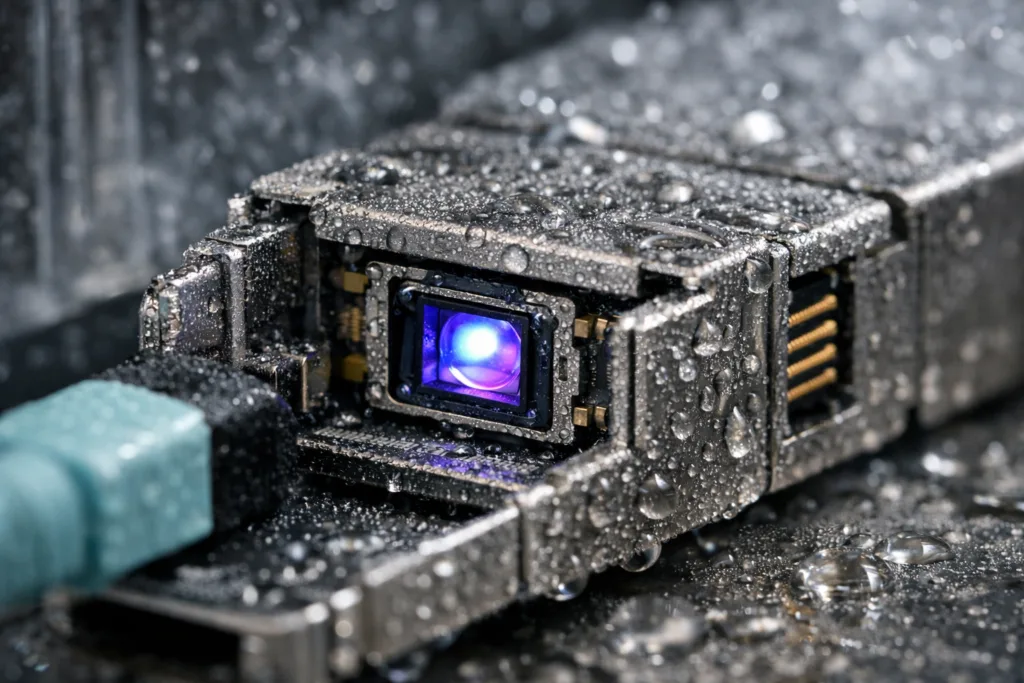
Environmental pressures—moisture ingress, temperature swings, and chemical exposure—challenge bond durability. Mechanical vibration, frequent in rack-mounted equipment, adds fatigue to every connection. Selecting adhesives with proven humidity and vibration resistance mitigates these risks. Scheduled aging tests (thermal cycling, humidity soak, vibration) predict module longevity and flag potential bond failures before deployment.
Industry Standards and Certification in Optical Lens Bonding
Compliance frameworks including Telcordia, IEC, and JEDEC influence material choice and process validation. Official certifications require adhesive performance at specified transmission wavelengths, mechanical loads, and environmental ranges. Factory audits verify process repeatability and traceability, supporting customer confidence and regulatory approval.
Future Trends: Optical Bonding in Photonic Integrated Circuits
Photonic integrated circuits (PICs) represent the frontier of optical signal management, integrating lenses and couplers into single substrates. Bonding techniques are evolving to match these new substrates—silicon, indium phosphide—with specialized adhesives supporting miniaturization and multi-layer stacking. Automation and real-time monitoring are increasing, promising higher yields and tighter process control in next-gen transceiver fabrication.
Conclusion: Practical Takeaways for Optical Lens Bonding in High-Speed Transceivers
Optical lens bonding is no longer a simple assembly step—it’s a controlled process shaping the future of high-speed communications. Choosing the right bonding method and material is about balancing signal clarity, mechanical stability, and long-term reliability. Keep real-world production limitations in mind, prioritize robust testing, and stay alert to emerging adhesive technologies. With the landscape rapidly shifting toward ultra-low-loss, integrated solutions, attention to detail makes all the difference in transceiver performance.
Frequently Asked Questions
What adhesive types are best for optical lens bonding in high-speed transceivers?
UV-curable adhesives and high-transparency epoxies are generally preferred due to their low shrinkage, fast fixture time, and optical clarity. These ensure stable bonds and maintain signal performance even under high-speed operation.
How does improper lens bonding affect signal quality?
Misalignment, bubbles, or haze within the bonded area can increase insertion loss and cause optical aberrations, directly reducing transmission speed and reliability in high-speed transceivers.
What tests ensure reliable optical lens bonds?
Lapshear, peel, and thermal cycling tests assess mechanical strength, while optical transmission and clarity checks verify low-loss coupling. Periodic humidity and vibration aging help predict long-term durability.
Are dual-cure adhesives necessary for lens bonding?
Dual-cure adhesives (UV and thermal) can solve shadow area curing issues, ensuring complete bond formation in complex lens assemblies. They are especially useful in automated, high-volume production lines.
How can environmental exposure impact bonded optical lenses?
Temperature shifts, humidity, and vibration can cause bond degradation, delamination, or yellowing—threatening transceiver function and increasing risk of signal loss. Selecting resilient adhesives and rigorous pre-conditioning safeguards performance.
What are the future trends in optical lens bonding for high-speed transceivers?
Integrated photonics and advanced nanocomposite adhesives are shaping miniaturized assemblies with higher reliability. Real-time process monitoring and automation are becoming mainstream, improving consistency and yield in next-gen optical modules.
Related Reading
- How High-Transparency UV Glues Transform AR/VR and Optical Lens Assembly
- Fast, Durable UV Bonding for Optical Plastics (PC/PMMA Solutions)
- Precision Alignment with Low Shrinkage UV Glues: Expert Methods
- Streamlining Optical Module Production with Latent Curing Agents
- Delay Cure UV Adhesives for Metal Bonding: Unmatched Performance