Introduction to Addition Cure Silicones for Deep Section Potting
Addition cure silicones have revolutionized how engineers implement deep section potting in metal products, especially in 2026’s demanding industrial environment. These silicone materials offer outstanding properties—high thermal conductivity, minimal shrinkage, and remarkable environmental resistance—making them a top choice for encapsulation applications. Potting processes increasingly require not just reliable protection, but also efficient heat management and durable performance under stress. By understanding the unique advantages of addition cure silicones, engineers can maximize device reliability while simplifying process requirements.
Why Deep Section Potting Matters for Metal Products
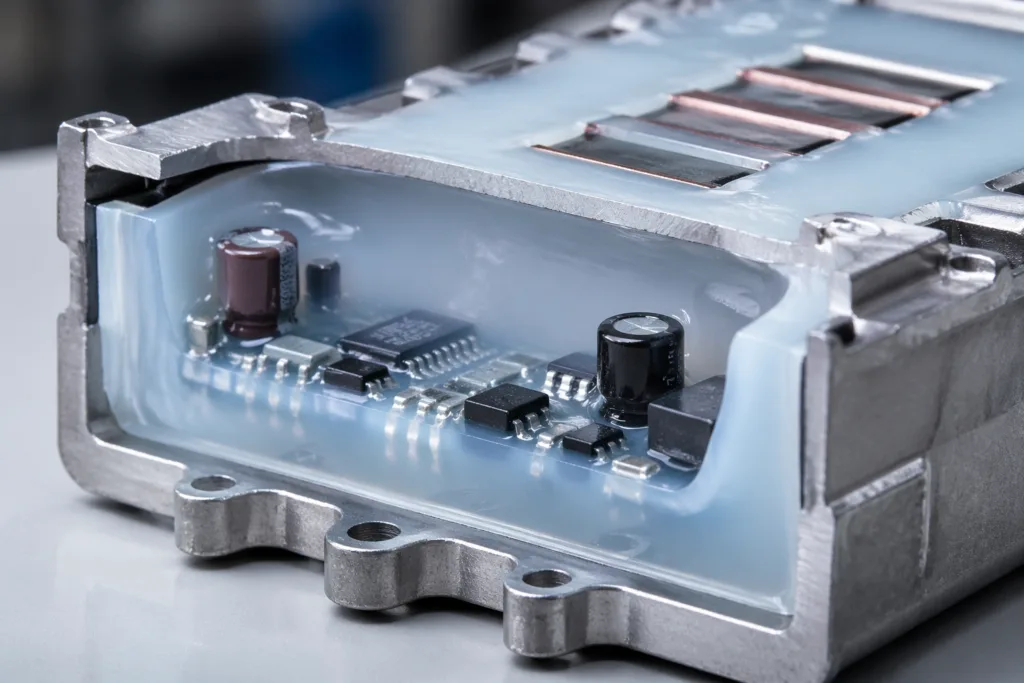
Deep section potting is essential for protecting sensitive electronics within metal housings from moisture, vibration, and thermal cycling. In these cases, potting materials must flow into intricate gaps, cure without voids, and interface cleanly with metallic substrates. Metal casings can amplify thermal stress; only the right encapsulant formula achieves optimal protection plus heat dissipation. Moisture protection methods are crucial in this context.
Understanding Addition Cure Silicones
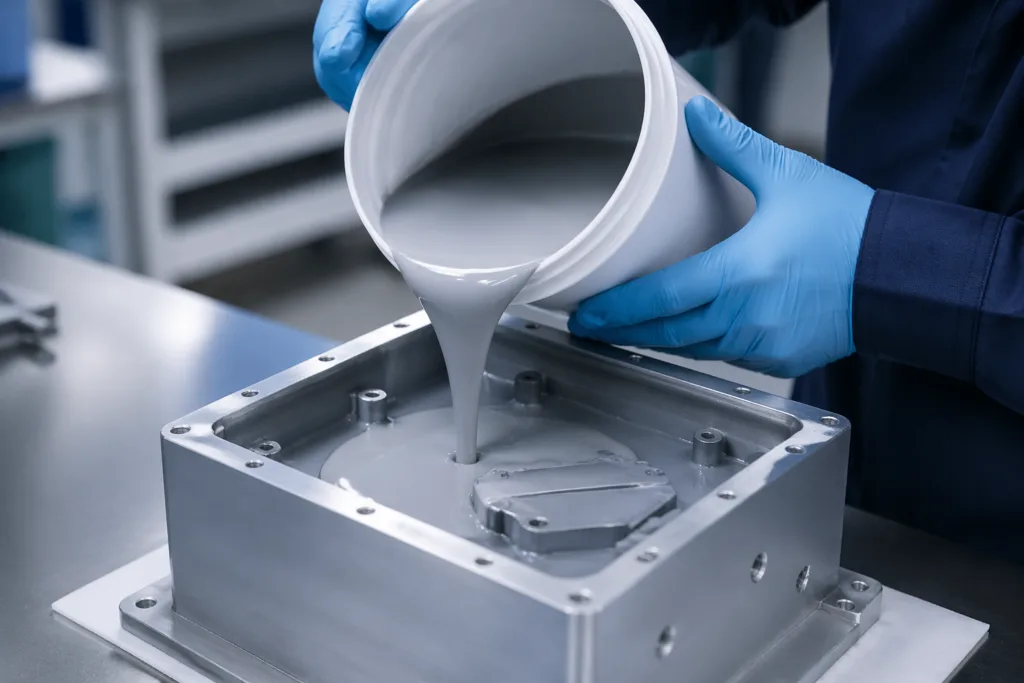
Addition cure (platinum-catalyzed) silicones are two-part systems cured via a hydrosilylation reaction. Unlike condensation-cure types, they avoid corrosive by-products and deliver predictable, uniform properties. Typical advantages include:
- Excellent deep section curing even in thick layers
- Low shrinkage (often <1%) minimizes mechanical stress
- Consistent elasticity for shock/vibration absorption
- Strong adhesion to metal, often without primers
- Processable at room temperature or accelerated under heat
Key Performance Metrics for Deep Potting Applications
When selecting a silicone for deep section potting, prioritize these metrics:
- Pot life/open time: Sufficient for full cavity fill before curing starts
- Cure depth: Ability to cure in sections over 40mm thick, avoiding air pockets
- Thermal conductivity: Efficient heat transfer away from encapsulated components
- Mechanical resilience: Maintenance of pliability and toughness post-cure
Thermal Conductivity: A Decisive Factor in Metal Product Encapsulation
Thermal conductivity is critical for devices mounted inside metal enclosures. High-performance addition cure silicones can be engineered with special fillers (alumina, boron nitride, etc.) to achieve thermal conductivities up to 2.0 W/m·K or higher. This promotes stable operating temperatures for embedded electronics, reducing overheating and enhancing operational longevity.
Comparison Table: Addition Cure Silicones vs. Epoxy and Polyurethane
| Property | Addition Cure Silicone | Epoxy | Polyurethane |
|---|---|---|---|
| Deep Cure Capability | Excellent | Poor | Fair |
| Thermal Conductivity | High | Medium | Medium |
| Shrinkage | Very Low | High | Medium |
| Environmental Resistance | Superior | Moderate | Moderate |
| Cure Byproducts | None | Yes | Yes |
| Typical Applications | Metal, electronics | Circuit, rigid potting | Flexible, soft encapsulation |
Low Shrinkage: Protecting Sensitive Electronics
Shrinkage during cure can damage solder joints or stress-fracture delicate microchips. Addition cure silicones exhibit shrinkage lower than 1% even for deep section pours, preserving the structural integrity of the device. This advantage becomes pronounced when comparing with epoxies, which often introduce stress in thick-section potting and can lead to cracked housings or ruined boards.
Environmental Resistance: Ensuring Long-Life Reliability
Industrial potting must withstand repeated temperature cycles, humidity, and corrosive atmospheres. Addition cure silicones retain flexibility from -60°C to +250°C, resist yellowing under UV, and keep moisture absorption to a minimum. Their inert nature means metal surfaces don’t corrode or degrade over time. For advanced designs, refer to UV stability strategies in outdoor panels as a benchmark.
Case Study: Deep Section Potting in High-Power Industrial Connectors
In one common example, heavy-duty battery swap station connectors require potting up to 40 mm deep for shock, oil, and moisture protection. Structural bonding insights for battery swaps demonstrate why addition cure silicones outperform epoxies here: they cure uniformly, dissipate heat, flex with vibration, and protect the conductors from environmental stress without imposing mechanical strain.
Optimal Process Tips for Deep Section Potting
Potting thick sections with addition cure silicones requires attention to process details:
- Mix thoroughly (minimize air entrapment)
- Degas or vacuum pot for air removal if possible
- Pour slowly and allow material to penetrate all recesses
- Choose the right catalyst ratio for target cure speed
- Apply even heat for faster, more reliable full-depth cure
Solving Common Potting Failures
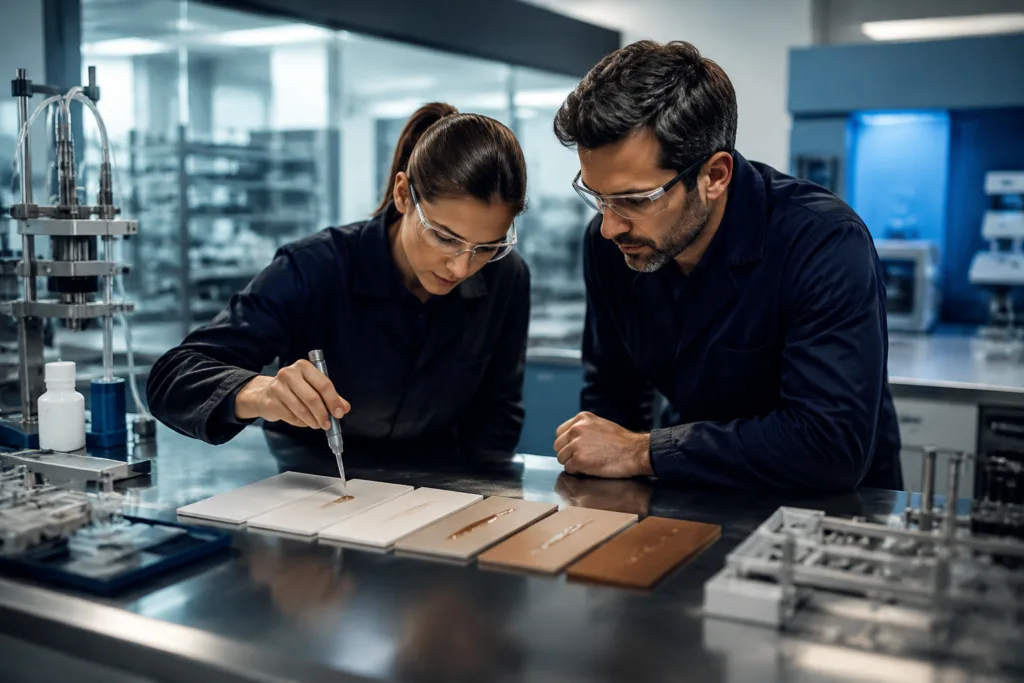
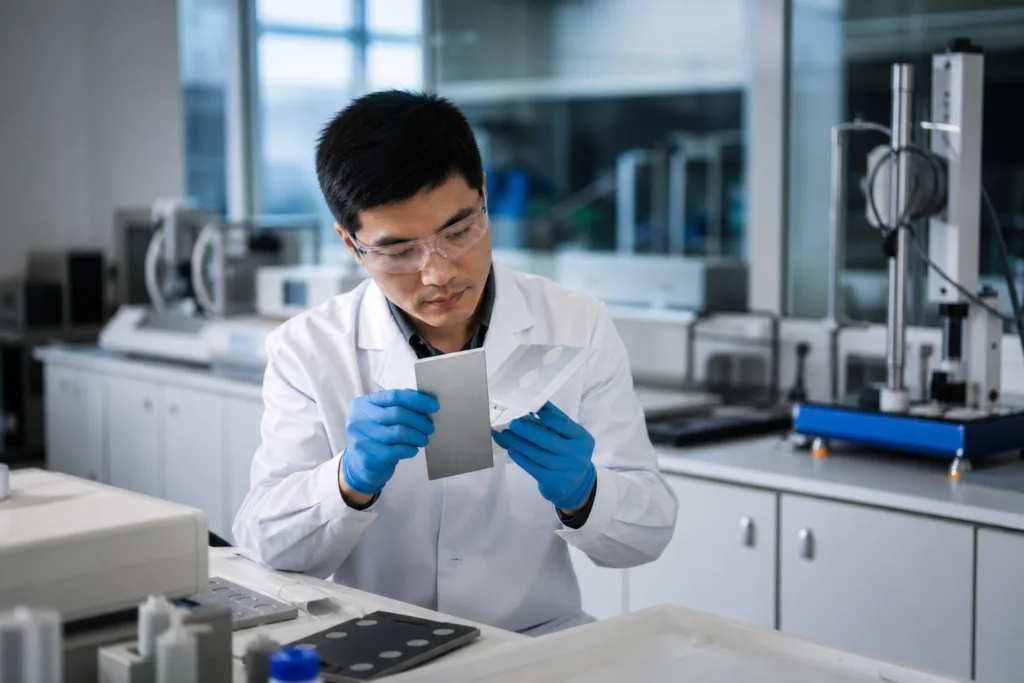
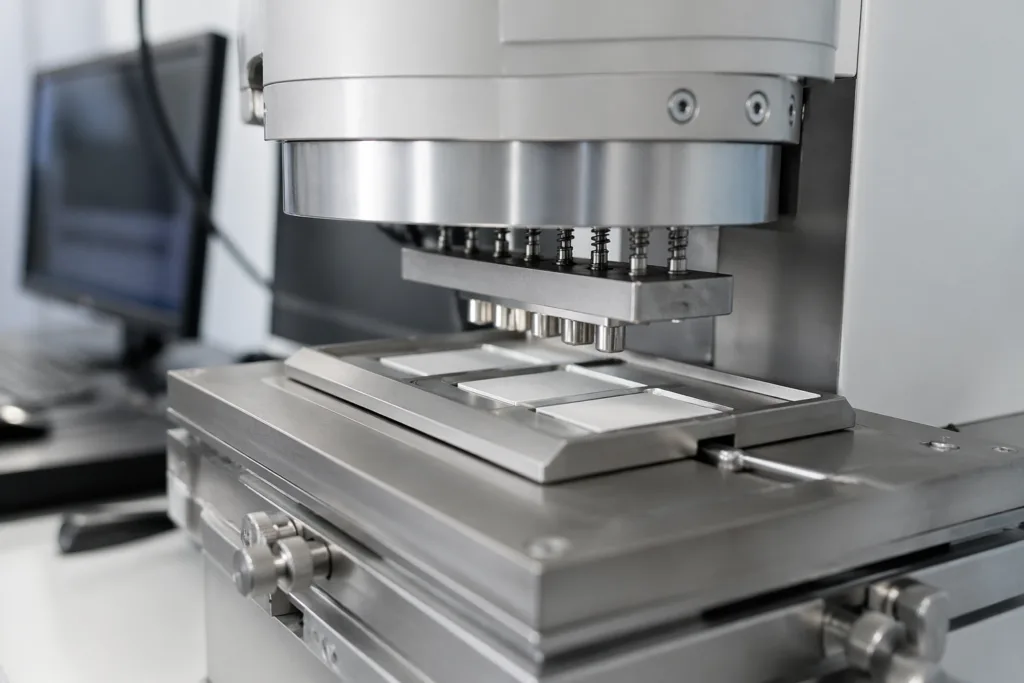
Failures usually stem from inadequate mixing, poor air removal, or incorrect catalyst ratio. From an application engineer’s view at ZDS Adhesive, an industrial adhesive manufacturer, strict lap shear and peel tests demonstrate that consistent mixing and vacuum degassing dramatically reduce post-cure voids and microcracks in metal encapsulated assemblies.
Encapsulation Best Practices for Industrial Metal Products
To achieve the best results, favor addition cure silicones for:
- Power modules with deep cavity housings
- Connector blocks exposed to oil and vibration
- Sensor modules requiring flexible, thermally conductive protection
- IGBT inverter units needing heat dissipation and insulation (potting solutions for IGBT modules)
Proper selection of silicone grade—tailored viscosity, cure speed, and filler—ensures optimal flow and cure even in challenging geometries common to metal products.
Why Addition Cure Silicones Outperform Alternatives in Encapsulation
The combination of low shrinkage, high thermal conduction, no cure byproducts, and process flexibility positions addition cure silicones as superior encapsulants. They meet demanding specifications for heat management and environmental resilience without risking electrical shorts or adhesive failure that plague other resins.
Addition Cure Silicones for Deep Section Potting
For encapsulating deep and complex cavities in metal housings, addition cure silicones deliver stable, powerful performance. With advances in silicone technology, newer formulations now cure even thicker sections rapidly, bringing manufacturing efficiency and broad compatibility with automated assembly. Their inherently low shrinkage restores dimensional stability, thermal conductivity ensures device reliability, and environmental durability extends operational lifetime far beyond epoxy or polyurethane alternatives.
Practical Checklist for Engineers
- Choose addition cure silicones for deep metal potting
- Confirm thermal conductivity for heat-prone modules
- Test for lap shear and peel strength to validate robust encapsulation
- Implement degassing steps for void-free deep section fills
- Utilize heat curing to speed up production lines
Conclusion: Maximizing Reliability with Addition Cure Silicones
Addition cure silicones represent 2026’s gold standard for deep section potting and encapsulation in metal products. Their unmatched combination of deep cure capability, thermal conductivity, low shrinkage, and broad environmental resistance make them ideal for demanding industrial applications. Practical experience shows engineers who optimize the potting process with these materials achieve longer equipment lifespans, fewer failures, and greater manufacturing predictability.
Frequently Asked Questions
What makes addition cure silicones ideal for deep section potting?
They cure uniformly in thick layers, offer low shrinkage, and provide excellent thermal conductivity—crucial for protecting sensitive electronics within metal housings.
How do addition cure silicones differ from epoxies in encapsulation?
Addition cure silicones produce no byproducts, shrink far less, and flexibly accommodate thermal cycling; epoxies may crack or stress parts during cure.
Can addition cure silicones resist harsh environments?
Yes. These materials maintain flexibility, withstand temperature extremes, and resist moisture and UV degradation, ensuring reliable long-term protection.
What’s the best process for deep section potting with silicones?
Mix thoroughly, degas if possible, pour slowly, select correct catalyst ratio, and heat cure for optimal void-free and rapid deep section results.
Are addition cure silicones thermally conductive enough for power electronics?
Specialized grades provide thermal conductivity up to 2.0 W/m·K, efficiently dispersing heat and keeping embedded components cool and safe.
Why do engineers favor addition cure silicones for metal product encapsulation?
Their unique properties—deep cure, low mechanical stress, thermal management, and environmental durability—greatly minimize risk and extend device life.
Related Reading
- Unlock the Secret Differences in 1-Part Silicone Cures for Metal Bonding
- 2026 Guide: Silicone Adhesive Types & Industrial Advantages
- Expert Strategies That Transform Metal-to-Metal Bonding
- Prevent Critical Failures in Subsea Cable Repeaters with High-Pressure Sealing
- Maximize Server Motherboard Reliability with Moisture Protection