Understanding Shear Strength and Peel Strength in Adhesive Selection
When comparing adhesives for metal applications, “Acrylic vs. Epoxy: Shear Strength vs. Peel Strength” stands out as a crucial topic. These two properties—shear strength and peel strength—directly impact structural integrity, bond reliability, and the overall performance of manufacturing and repair processes. Whether you’re assembling automotive parts or repairing industrial components, knowing how acrylic and epoxy adhesives behave under different forces can help you avoid costly failures.
Shear strength describes an adhesive’s resistance to sliding forces, while peel strength indicates its ability to withstand forces pulling the bond apart. The distinction is vital—and often misunderstood—when it comes to selecting adhesives for materials like metals, composites, and plastics. Let’s dive deeper into these differences and how they drive adhesive choices in industrial and everyday applications.
Defining Shear Strength and Peel Strength
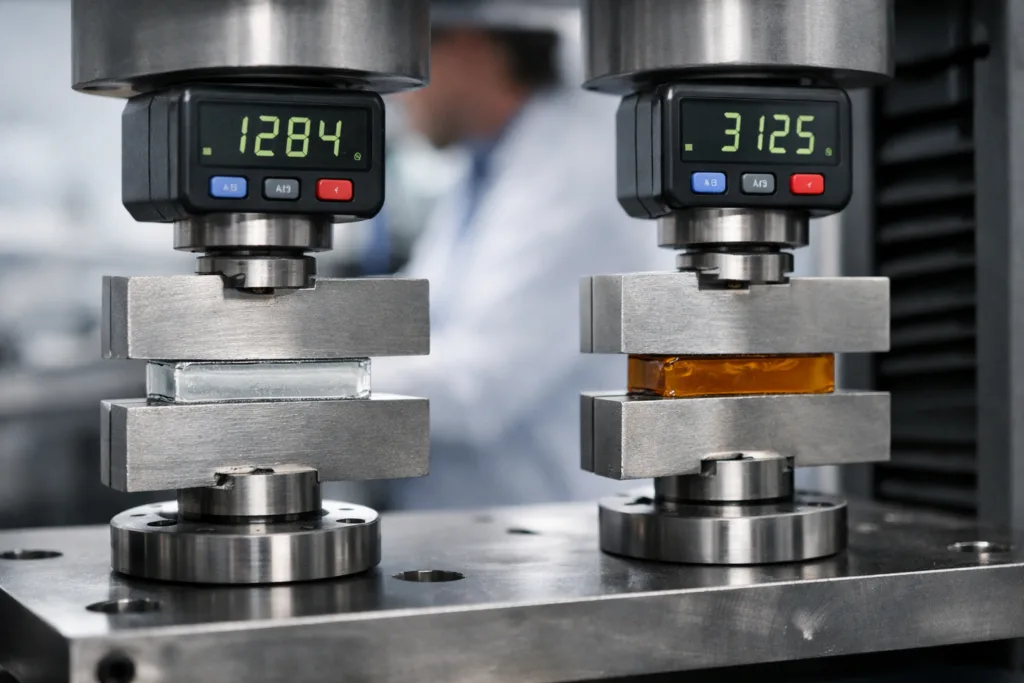
Shear strength is measured by applying force parallel to the bonded surface, simulating loads like weight, vibration, or shifting parts. Peel strength, on the other hand, involves forces pulling the adhesive apart at an angle—think of peeling a sticker or separating two bound surfaces. Understanding these dimensions is the foundation for comparing acrylic and epoxy adhesives.
| Property | Shear Strength | Peel Strength |
|---|---|---|
| Force Direction | Parallel to bond | Perpendicular/angled to bond |
| Application Example | Load-bearing joints | Flexible seals, tapes |
| Critical Environment | High stress, vibration | Shock, flex |
Acrylic Adhesives: Strengths and Limitations
Acrylic adhesives are known for quick curing times, high impact resistance, and superior bonding to metals—even those with oily surfaces. In recent years, innovative low-odor acrylics have improved factory safety and reduced preparation time. Acrylics usually deliver decent shear strength and exhibit excellent peel strength, making them ideal for applications demanding some flexibility, dynamic movement, or resistance to environmental changes.
If you’re dealing with painted, oily, or untreated metals, acrylics—such as those from acrylic structural adhesive manufacturer—shine. With minimal surface prep, these adhesives bond reliably without relying on mechanical fasteners.
Epoxy Adhesives: Characteristic Performance
Epoxy adhesives are celebrated for their high shear strength, chemical resistance, and ability to form rigid bonds in demanding environments. Epoxies excel when maximum load-bearing capability is needed, such as in automotive body joints, electronic components, and structural assemblies exposed to sustained stress.
From ZDS Adhesive’s engineering perspective, epoxies require controlled surface preparation for optimal bonding, especially with metals. While their peel strength is generally moderate, their shear strength enables connections that withstand repeated mechanical stress and temperature fluctuations. For more detailed specifications, visit the epoxy adhesive product page.
Shear Strength: Acrylic vs. Epoxy Adhesives
Acrylic adhesives typically deliver shear strength values appropriate for medium-duty structural bonds, but may be outperformed by epoxies in ultra-high load scenarios. Epoxy adhesives—well-formulated—often achieve lap shear strengths exceeding 20 MPa, making them preferred for critical joints. However, acrylics’ tolerance for substrate variability, such as oily or painted metals, lends them an edge in flexible assembly settings.
- Acrylics: Shear strength 10–18 MPa (varies by formulation/substrate)
- Epoxies: Shear strength 15–35 MPa (rigid, high modulus variants)
Peel Strength: Comparing Acrylic and Epoxy Adhesives
Peel strength is often overlooked—until cyclical movement, vibration, or peel-prone loads cause bonds to fail. Acrylic adhesives tend to outperform epoxies in peel strength, especially when bonding metals subject to movement or flexing. This makes acrylics more reliable in applications where impact, shock, or peeling forces are a concern.
- Acrylics: Peel strength up to 4–8 N/mm
- Epoxies: Peel strength typically 1–3 N/mm
Typical Metal Bonding Applications: Which Strength Matters Most?
In metal assembly, the choice between acrylic and epoxy depends on the dominant load type:
- High-shear, low-peel: Epoxy adhesives suit rigid joints, structural brackets, and automotive body-in-white connections.
- High-peel, impact-prone: Acrylic adhesives excel in flexible trim, weatherstripping, and areas exposed to vibration or flex.
For applications requiring all-around versatility, acrylics offer quick fixture times and reliable bonding—especially on contaminated or painted surfaces.
Case Study: Shear and Peel Strength in Automotive Panels
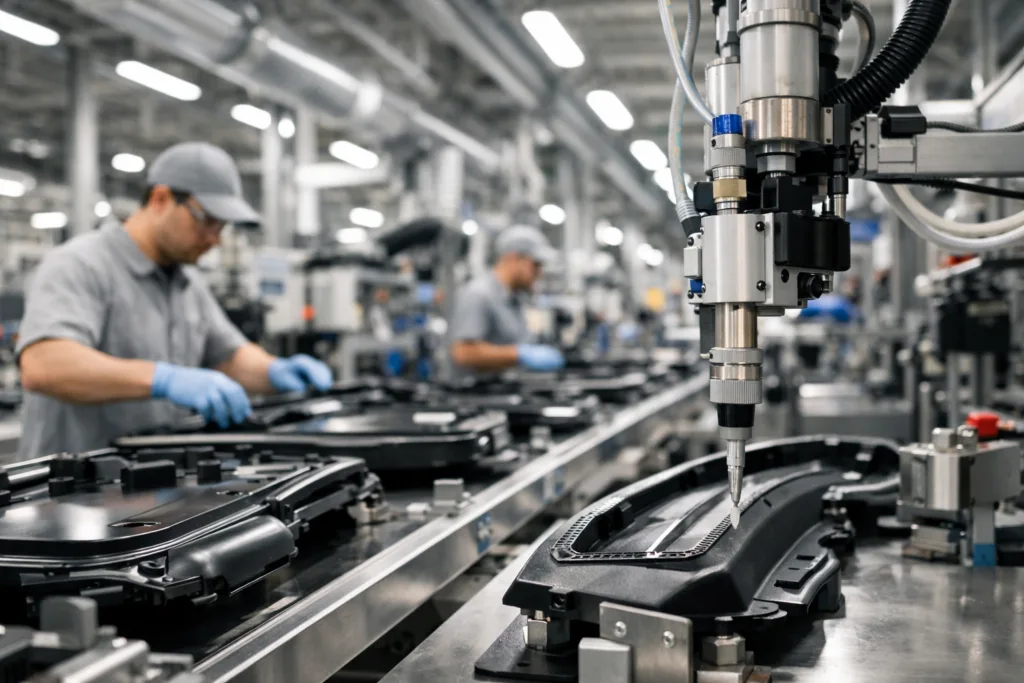
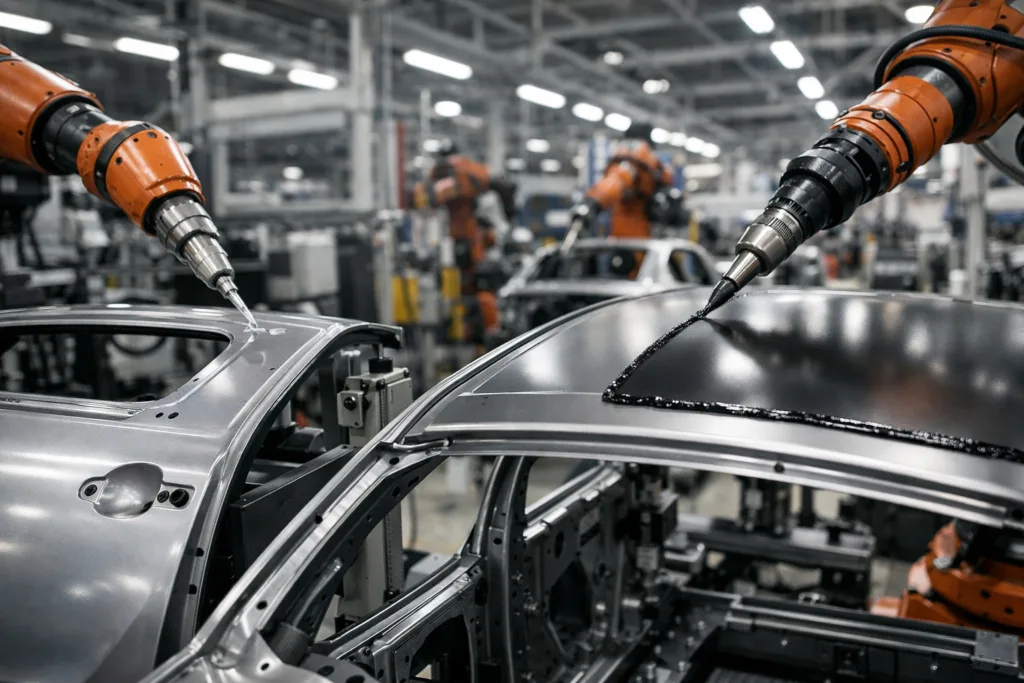
An automotive assembly line selected epoxy for frame joints but switched to acrylic for hem flange bonding on door panels. Peel and impact resistance was crucial—acrylic outperformed epoxy and reduced rejects caused by panel flex during transport. See how structural acrylics are transforming body-in-white assembly in this industry guide.
Environmental Stability and Durability Considerations
Epoxies outperform acrylics in chemical and heat resistance. However, acrylic adhesives maintain peel strength and impact resistance under humidity, freeze/thaw cycles, and UV exposure. Consider the end-use environment: extreme heat, solvents, or chemical exposure might tip the balance towards epoxies; areas with vibration, moisture, or movement favor acrylics.
Surface Preparation and Substrate Compatibility
Acrylic adhesives bond well to oily metals or painted substrates, requiring less surface prep. Epoxies benefit from abrasion, cleaning, and even primer use to maximize strength. Choosing the right adhesive and surface treatment prevents premature bond failure and ensures performance longevity.
Bonding Properties: Data-Driven Comparison Table
| Adhesive | Shear Strength | Peel Strength | Environmental Resistance | Surface Prep |
|---|---|---|---|---|
| Acrylic | 10–18 MPa | 4–8 N/mm | Good humidity/flex | Minimal |
| Epoxy | 15–35 MPa | 1–3 N/mm | Excellent chemical/heat | Strict |
Real-World Examples: When to Choose Acrylic or Epoxy
For rapid assembly of HVAC panels exposed to vibration, acrylic adhesives provide the best combination of peel and impact strength. Rigid load-bearing joints in heavy equipment favor epoxies. Repairs involving oily or minimally-prepped metal benefit from acrylic adhesives, while structural repairs needing maximum shear capacity go epoxy.
Long-Term Structural Integrity: Shear and Peel Strength in Practice
Balanced adhesive selection means factoring both shear and peel strength—not just one. Failures often result from overlooking peel-prone loads. From an application engineer’s viewpoint, always test joints under expected real-world loads, not just lab conditions.
Expert Insights from ZDS Adhesive
ZDS Adhesive, an industrial adhesive manufacturer, advocates matching adhesive chemistry to actual assembly conditions. In metal bonding jobs, test both lap shear and peel under temperature cycling, humidity, and dynamic impact. Use the specific thickness, cure method, and open time data when making choices for production.
- Lap shear tests reveal capacity for parallel loads
- Peel tests pinpoint bond failure in flexible assemblies
- Thermal cycling/aging exposes adhesive weaknesses
Common Mistakes in Adhesive Selection: Shear vs. Peel Strength
A classic pitfall is selecting epoxies for joints exposed to peel, impact, or vibration—where acrylics are superior. Conversely, choosing acrylics solely for rigid load-bearing structures may lead to insufficient performance. Always use the right test for your application and consult industrial adhesives resources when in doubt.
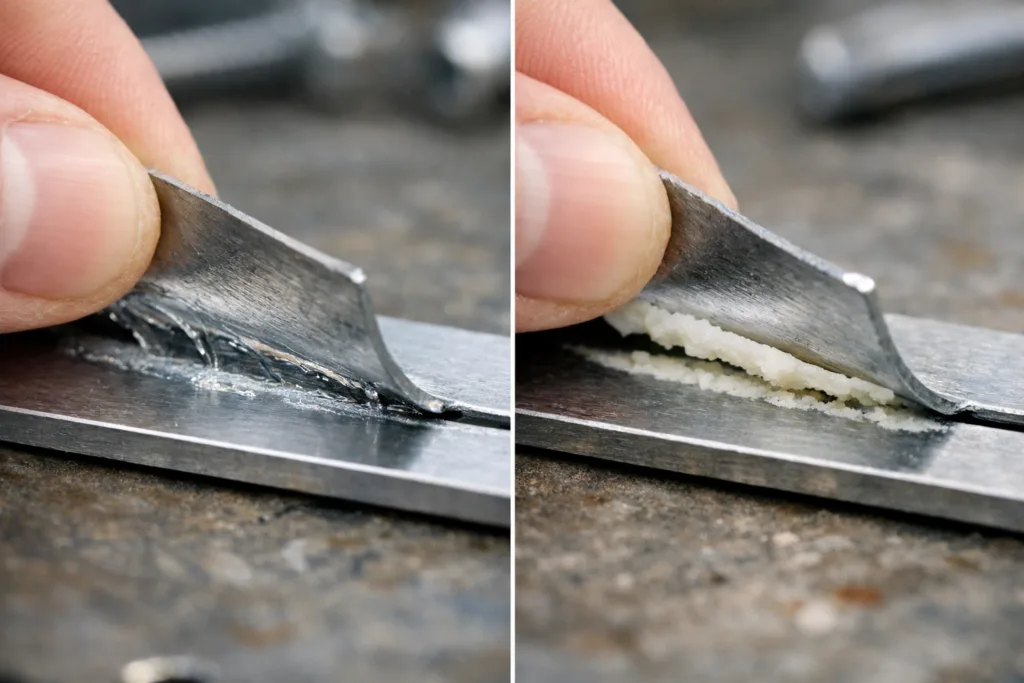
Visual Comparisons: Shear and Peel Failure Modes
Inspection of failed joints shows distinct patterns: shear failures look like sliding breaks, while peel failures show lifting, tearing, or gradual delamination. Training your team to recognize these signs helps prevent rework and ensures reliable product performance.
Acrylic vs. Epoxy: Shear Strength vs. Peel Strength
The headline difference between acrylic and epoxy adhesives lies in their performance under different stresses. Epoxies conquer shear-heavy joints, while acrylics thrive where peel, flex, or impact dominate. Both play essential roles in modern manufacturing—selecting the right adhesive is not just about chemistry, but understanding real-world loads.
Testing and Quality Control for Structural Bonds
Quality assurance involves lap shear and peel testing for each adhesive/substrate combo. Document bond-line thickness, cure time, environmental exposure, and inspect for failure modes. Maintain traceable records for each production batch to ensure consistent results.
Future Trends in Adhesive Technology
Acrylics are evolving towards faster cure, higher peel, and improved environmental stability. Epoxies are gaining flexibility and impact resistance via hybrid formulations. Automated testing and digital quality control will drive even greater reliability in adhesive selection.
Summary of Key Takeaways in Metal Bonding
- Epoxy adhesive excels at rigid, high-shear bonds but may fail under high peel/load cycling
- Acrylic adhesive offers superior peel and impact performance, especially for painted/oily substrates
- Surface prep, bond-line thickness, and environmental conditions are decisive factors
- Always match the adhesive to the dominant load—not just the material
Conclusion
Selecting between acrylic and epoxy adhesives is more than a material choice; it’s a matter of anticipating how your parts will be stressed and making decisions based on tested properties. Shear and peel strength offer insights into real-world reliability—understanding them ensures production success, durability, and fewer surprises down the road.
Frequently Asked Questions
What is the main difference between shear strength and peel strength?
Shear strength measures how much force an adhesive resists when sliding parallel to the bond; peel strength is about how well the bond withstands forces pulling it apart at an angle.
When should I choose acrylic adhesive over epoxy?
Acrylic adhesives are best for bonds exposed to flexing, vibration, and peel forces, especially on oily or painted metal surfaces requiring minimal surface prep.
Which adhesive provides better performance in high temperature environments?
Epoxy adhesives generally outperform acrylics in high temperature and chemically aggressive conditions thanks to their rigid, cross-linked structure.
Can acrylic adhesives be used for load-bearing joints?
Yes, but within their shear strength range. For ultra-high load joints, epoxy adhesives are preferred, while acrylics excel in areas requiring peel or impact resistance.
How can improper adhesive selection affect metal assemblies?
Using adhesives with low peel strength in peel-prone settings can lead to premature bond failure, while choosing low shear strength adhesives for load-bearing joints risks structural collapse.
What role does surface preparation play in adhesive performance?
Surface preparation is essential for maximizing adhesive strength and longevity. Acrylics tolerate less prep, but epoxies demand cleaned and treated surfaces for consistent results.