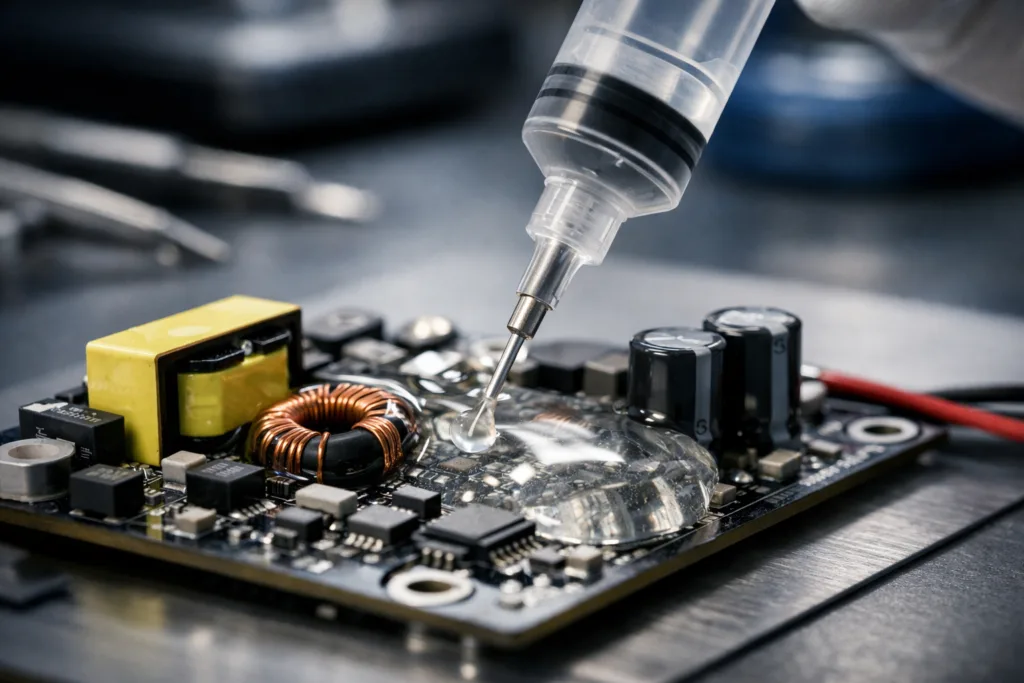
Introduction: The Crucial Intersection of Stator Encapsulation, Heat Dissipation, and E-Motor Reliability
With the drive toward electrification in vehicles and modern industry, electric motors (e-motors) are expected to operate faster, longer, and under higher loads than ever. One key to their reliability and efficiency is stator encapsulation. In the context of e-motors, stator encapsulation refers to the process of covering or surrounding the stator windings with special materials, such as epoxy resins or silicone compounds. This not only provides electrical insulation but also plays a pivotal role in thermal management—improving heat dissipation and ultimately the motor’s operational lifetime. Let’s explore how advances in encapsulation are shaping the future landscape of e-motors.
Why is Heat Dissipation Critical in E-Motors?

During operation, the stator windings of an electric motor generate significant heat. If this heat isn’t effectively removed, temperatures can spike, leading to insulation breakdown, coil damage, reduced efficiency, and premature failure. Effective stator encapsulation with advanced epoxy adhesives literally pulls excess heat away from vulnerable copper windings into the casing or designated thermal paths. Managing this heat is vital for performance and durability, especially in compact, high-power e-motor designs found in electric vehicles, robotics, and renewable energy systems.
What is Stator Encapsulation?
Stator encapsulation involves applying a liquid or semi-liquid compound to the stator assembly, which is then cured (hardened). The encapsulation resin surrounds the windings, forming a protective barrier and creating intimate thermal contact between the copper wires and the motor’s heat-sinking structures. This step is implemented to improve electrical insulation, moisture resistance, shock and vibration tolerance, and—most importantly for our discussion—thermal conductivity.
Common Materials Used in Stator Encapsulation
Epoxy Resins
Epoxy-based encapsulants are the industry’s gold standard. Their advantages include robust mechanical adhesion, high dielectric strength, chemical resistance, and tunable thermal properties. Some modern epoxies can achieve thermal conductivities well above 1 W/m·K by adding special fillers like boron nitride or alumina.
Silicone Compounds
Silicone-based encapsulants are known for their flexibility and excellent thermal stability across wide temperature ranges (from -50°C to 200°C or higher). They’re preferred in applications where vibration, movement, or thermal expansion are concerns. Their lower modulus value allows the stator assembly to better absorb stress without cracking, which is crucial for high-cycle operations.
Polyurethanes and Hybrid Formulations
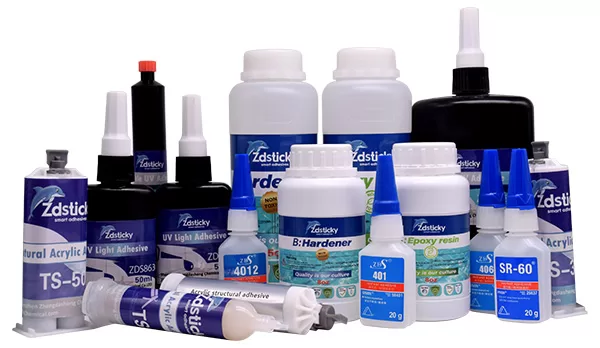
Polyurethane encapsulants tend to be softer and more flexible than epoxies but offer moderate thermal conductivity. Recent advances blend various chemistries to combine flexibility with enhanced heat transfer. If you want to explore a range of encapsulation options, the industrial adhesives families from ZDS Adhesive cover these needs.
Thermal Management and Its Role in Efficiency
Effective thermal management enables e-motors to handle higher energy densities and operate at greater speeds without overheating. When heat is dissipated efficiently, motors can use thinner insulation layers, allowing more conductive copper or aluminum to be packed into the windings. This improves electrical efficiency and power output—delivering more torque and less wasted energy. Inadequate heat management, on the other hand, leads to thermal runaway, untimely coil degradation, and even sudden shutdowns under high load.
The Direct Link: Stator Encapsulation and Heat Dissipation
Stator encapsulation is more than insulation—it’s a critical link in the thermal pathway from the hot copper windings to the cooler metal casing. By increasing contact area and reducing air pockets (which are poor thermal conductors), encapsulation resins streamline the movement of heat. This is why specially formulated thermal potting compounds now command attention for the most demanding e-motor applications. Our research aligns with the findings in thermal potting for LED driver boards, which similarly require robust and reliable thermal solutions for delicate electronics.
Encapsulation Process Overview: Steps to Success
Preparation of Stator Assembly
Before encapsulation, the stator must be free of contaminants—oil, grease, and moisture are the enemies of adhesion and insulation. Cleanliness can be achieved through specialized washing or plasma treatment for high-volume production lines.
Mixing and Dispensing the Encapsulant
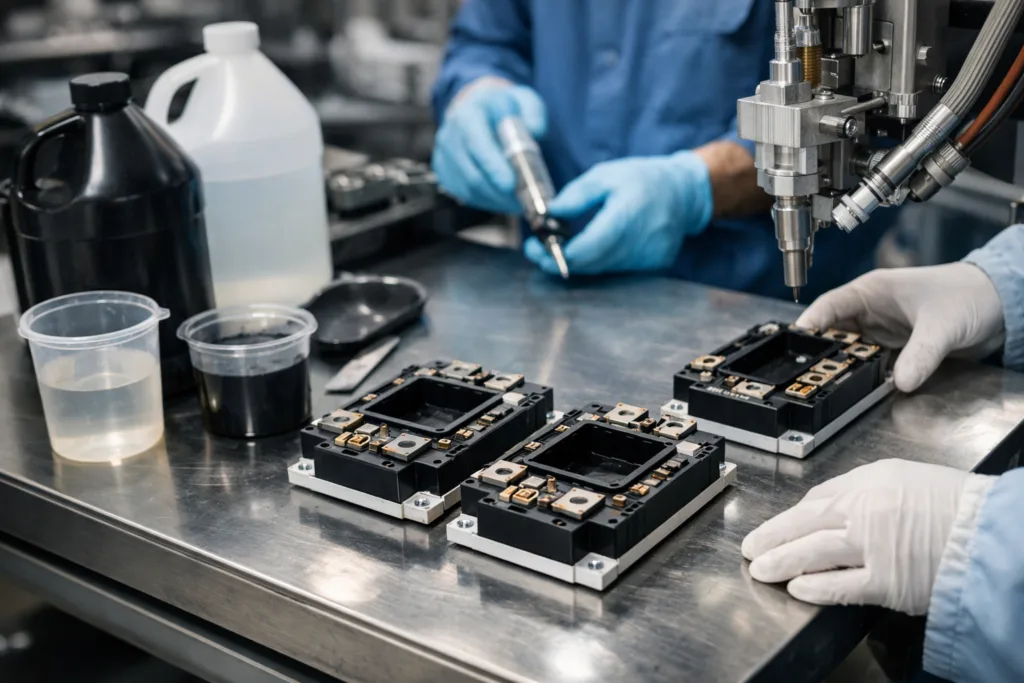
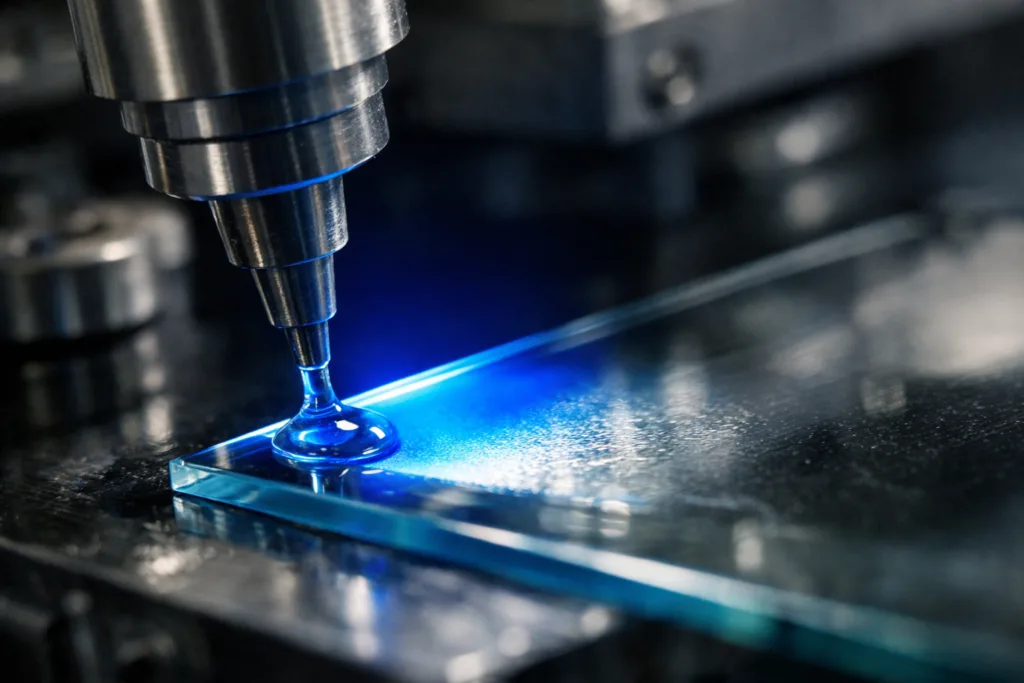
Epoxies and silicones often come in two parts. They must be mixed thoroughly to activate curing chemistry, then degassed to remove trapped air. Automated dispensers ensure accurate mixing ratios and repeatability; manual mixing is used for prototyping or repairs.
Filling and Potting the Stator
The resin is poured or injected into the motor housing, carefully wetting all windings. The goal is full coverage and the elimination of thermal barriers. For tight clearances, vacuum potting pulls the compound deep into small gaps.
Curing and Inspection
Depending on the chemistry, cure can happen at room temperature or be accelerated by heat. Final inspection checks for full coverage, no voids, and stable dimensions—ensuring quality before the next assembly step.

Measuring Thermal Performance: Key Metrics and Methods
To validate encapsulation effectiveness, engineers measure several parameters:
- Thermal Conductivity (W/m·K): How efficiently the encapsulant transfers heat
- Thermal Resistance (°C/W): The temperature difference for each watt of heat flow
- Hot Spot Temperature: Maximum temperature at the center of winding during load
- Temperature Cycling Tolerance: Resistance to cracking or delamination from repeated thermal expansion/contraction
Encapsulation Materials: Comparative Table
| Encapsulant Type | Thermal Conductivity (W/m·K) | Max Service Temp (°C) | Flexibility | Special Feature |
|---|---|---|---|---|
| Epoxy Resin | 0.7 – 2.0 (w/ fillers) | 130 – 180 | Low to Moderate | High electrical resistance |
| Silicone Compound | 0.3 – 1.2 | 200 – 250 | High | Thermal and vibration resilience |
| Polyurethane | 0.4 – 1.0 | 120 – 140 | Very High | Low stress, forgiving cure |
Latest Advances in Stator Encapsulation Technology
Nano-Filled Epoxy Systems
Adding nano-scale fillers like boron nitride or alumina significantly boosts thermal transfer without losing electrical insulation. These materials enable thinner encapsulation layers, saving weight and space in compact motors. As referenced in our discussion of nano-fillers and epoxy performance, small changes in filler content can result in measurable leaps in motor longevity under thermal cycling tests.
Dual-Cure and Fast-Cure Chemistries
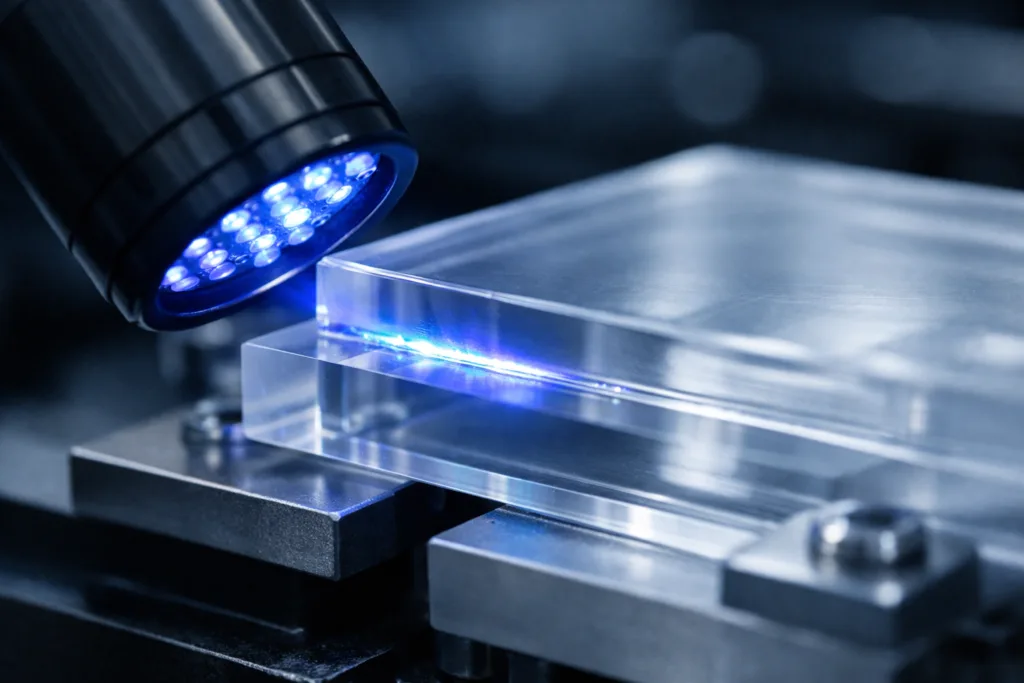
Dual-cure systems (combining UV and thermal activation) cure rapidly—even deep in complex windings. This speeds up production and reduces storage times, while also ensuring shadowed areas are fully encapsulated.
Thermal Interface Layering
Engineers now layer multiple encapsulation compounds—starting with a flexible silicone interface, followed by a high-conductivity epoxy top layer. This hybrid approach balances thermal stress management and optimal heat conduction.
Common Failure Modes and How Encapsulation Prevents Them
- Insulation Breakdown: Good encapsulants form gap-free barriers, blocking moisture or contaminants that cause short circuits.
- Thermal Degradation: High thermal conductivity resins move heat away before it can cause wire or bond failure.
- Vibration Damage: Silicones and flexible resins cushion windings, reducing fatigue and wire breakage in high-shock settings.
How to Select the Right Encapsulation System
- Operational Temperature Range: Choose materials whose limits exceed expected operating and emergency temperatures.
- Required Thermal Conductivity: Match to the heat generated by your motor and application-specific cooling strategy.
- Environmental Resistance: Consider humidity, chemical splash, salt spray, and dust—select appropriate chemical resistance.
- Mechanical Requirements: High-vibration or impact-prone systems need tough or flexible encapsulants.
- Processing Needs: Mass production favors dual-cure, fast-cure options; repair/field settings may require longer open time.
The Role of ZDS Adhesive in Advancing Stator Encapsulation
ZDS Adhesive, an industrial adhesive manufacturer, emphasizes evidence-based selection in encapsulant design: “We always test for lap shear, peel strength, and thermal conductivity—not just insulation resistance. The ideal stator encapsulant for a compact e-motor should combine above-average thermal conductivity (≥1.0 W/m·K), rapid fixture time for fast assembly, and zero-crack tolerance under -40°C to 130°C cycling.” By benchmarking adhesives with real-world assembly trials, ZDS Adhesive and its partners ensure materials survive both daily stress and worst-case scenarios, all while maximizing heat transfer and reliability.
Stator Encapsulation: Improving Heat Dissipation in E-Motors
The main theme: stator encapsulation isn’t “just” an electrical solution. It’s a cornerstone of modern motor design, enabling safer, longer-lasting, and more powerful e-motors. Whether using high-conductivity epoxies, ultra-flexible silicones, or innovative hybrids, manufacturers are moving toward targeted formulations—each fine-tuned for unique environments and applications. As heat loads rise and packaging shrinks, mastering thermal management through advanced encapsulation is shaping the future of electrification.
Conclusion

Stator encapsulation has evolved into a discipline at the convergence of materials science and engineering excellence. With a clear understanding of encapsulant types, application techniques, and performance measurement, e-motor designers can optimize efficiency, reliability, and lifespan. Advanced resins—particularly those combining high thermal conductivity with flexibility and rapid curing—are making thermal management challenges not just manageable, but an area for genuine innovation. In 2026 and beyond, encapsulation isn’t an afterthought; it’s a design enabler for every future-ready e-motor platform seeking lasting performance.
Frequently Asked Questions
What’s the most common material for stator encapsulation in e-motors?
Epoxy resins are widely used due to their strong dielectric properties, mechanical strength, and compatibility with thermal fillers for heat dissipation. Silicones and polyurethanes are also used for flexibility and tough environments.
How does encapsulation help with heat dissipation?
Encapsulation resins with high thermal conductivity draw heat away from copper windings and transfer it efficiently to the motor casing or cooling system, which helps prevent hotspot formation and thermal degradation.
Does encapsulation improve e-motor lifespan?
Yes, effective encapsulation protects windings from moisture, dust, vibration, and thermal stress—significantly extending service life and reducing maintenance costs over time.
Are there differences in process for EV drive motors vs. industrial e-motors?
Yes. EV motors often require higher thermal conductivity materials, more stringent temperature cycling resistance, and automated or vacuum potting processes for tighter packaging and reliability demands.
Can voids or bubbles in encapsulation cause problems?
Absolutely. Air voids are poor thermal conductors and can lead to local overheating, insulation breakdown, or even catastrophic failure under cycling. Degassing and proper dispensing help avoid these risks.
Can the encapsulant be removed for repair?
Removing fully cured encapsulants is difficult and sometimes impractical. Specialized reworkable systems exist for certain applications, but most encapsulation is considered semi-permanent.
Related Reading
- Discover Why Thermal Potting Is Game-Changer for Power Electronics Reliability
- How Nanotechnology Is Boosting Epoxy Thermal Conductivity for Modern Encapsulation
- Protecting Your Electronics: The Power of Dam and Fill Encapsulation in 2026
- Mastering Exotherm Control in Large Epoxy Castings — 13 Proven Methods
- Download the Ultimate Guide to Industrial Adhesive Materials and Applications