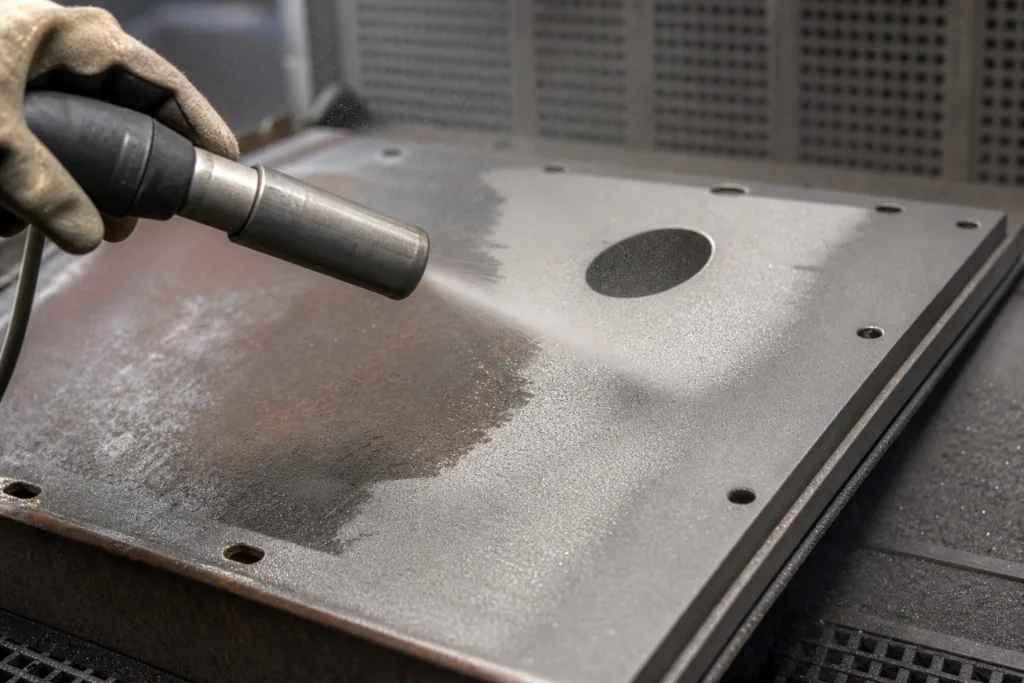
Introduction: Understanding Impregnating Resins for Copper Windings: Vacuum Pressure (VPI)
Impregnating resins play a pivotal role in safeguarding copper windings by enhancing electrical insulation, especially when advanced vacuum pressure impregnation (VPI) techniques are employed. In today’s demanding environments, where reliability and performance are non-negotiable, choosing the right VPI system is fundamental for electrical components like transformers, motors, and coils. This article unpacks the science, solution strategies, and best practices surrounding impregnating resins for copper windings: vacuum pressure (VPI), ensuring your assemblies meet industry expectations for quality and durability.
The Essentials: What Are Impregnating Resins?
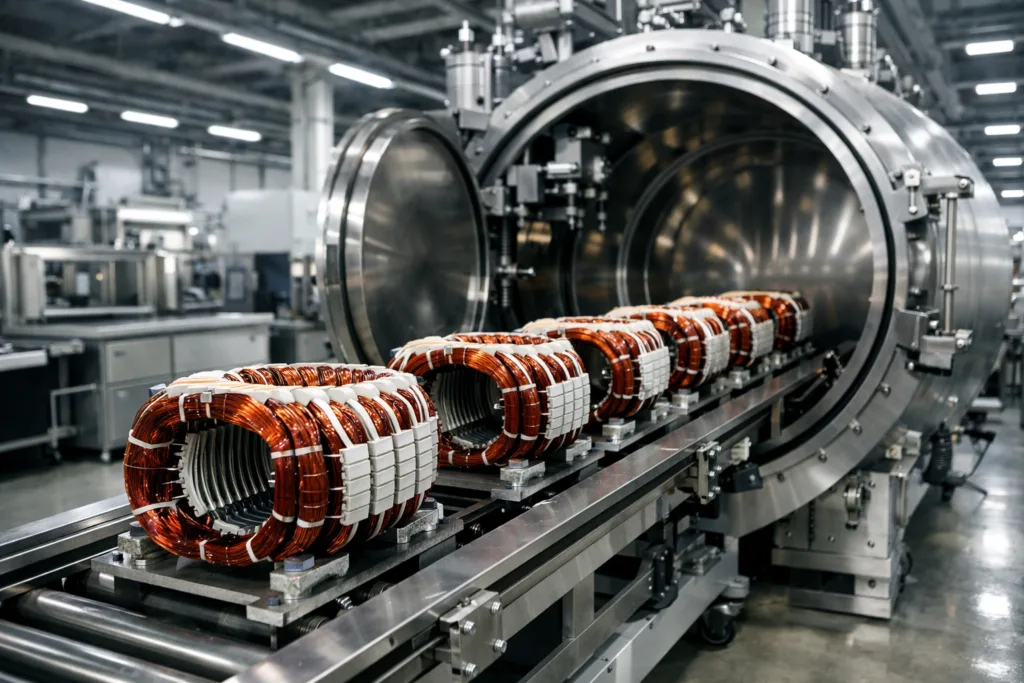
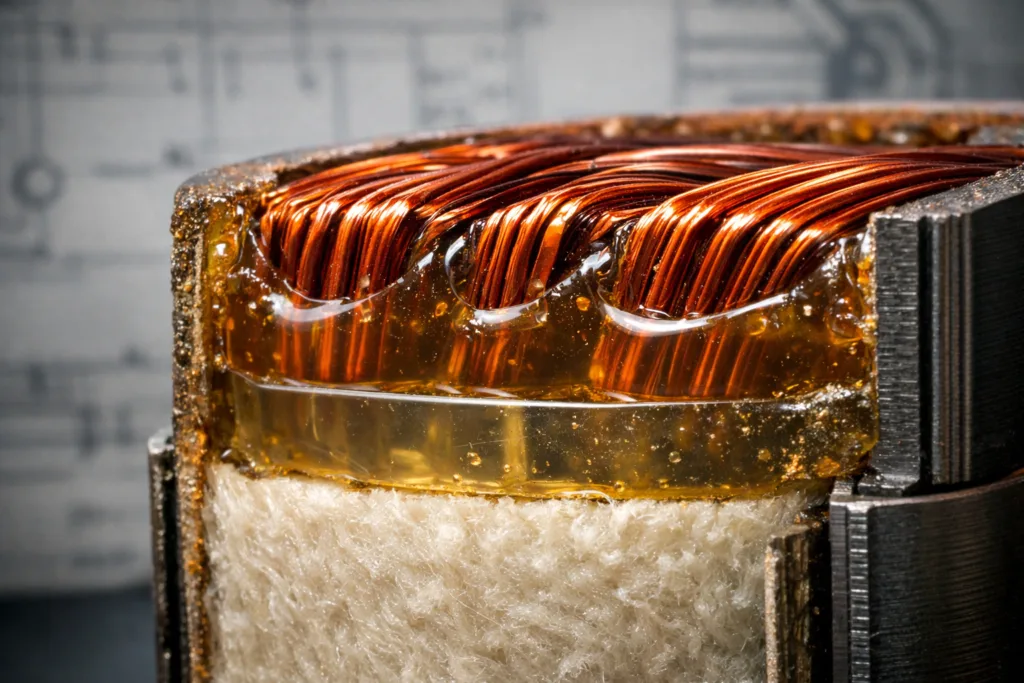
Impregnating resins are specialized liquid polymers applied to coil windings to create a continuous insulating barrier. Their main job is to fill gaps between copper wires, locking out moisture and contaminants while improving dielectric properties and mechanical strength. Without an effective resin system, copper windings are vulnerable to short circuits, vibration damage, and environmental ingress.
Why Copper Windings?
Copper remains the industry standard for windings due to its excellent conductivity, ductility, and resistance to fatigue. However, copper’s performance hinges not only on its base properties but also the quality of its surrounding insulation. Impregnating resins ensure copper windings operate reliably under variable loads and harsh conditions.
The Science Behind Vacuum Pressure Impregnation (VPI)
The VPI process is a multistep approach that uses controlled vacuum and pressure cycles to drive resin deep into coil assemblies. It solves the most common failures associated with air bubbles and incomplete impregnation. A typical cycle includes:
- Initial vacuum: Removes air from the winding’s voids
- Resin introduction: Liquid resin is drawn in under vacuum
- Pressure phase: Compressed air or inert gas forces resin into remaining microvoids
- Curing: Heat or chemical activation transforms resin into a solid, protective matrix
Types of Impregnating Resins in VPI
Several resin chemistries are commonly used in VPI, each with unique performance trade-offs:
- Epoxy resins: Renowned for high mechanical strength, chemical resistance, and thermal stability.
- Polyester resins: Offer cost-effectiveness and rapid curing, but may be less robust in high-temperature applications.
- Polyurethane resins: Balance flexibility with insulation, ideal for shock-prone environments.
| Resin Type | Key Benefit | Best Use Case |
|---|---|---|
| Epoxy | Outstanding chemical and heat resistance | Motors, generators |
| Polyester | Fast curing, economical | Low–moderate duty coils |
| Polyurethane | Good flexibility, shock absorption | High-vibration settings |
For further detail on industrial adhesive selection, see industrial adhesives for application-specific advice.
Advantages of VPI in Electrical Insulation
Vacuum pressure impregnation confers clear advantages over traditional dip-and-bake or trickle methods:
- Superior insulation: Near total void elimination prevents partial discharges and electrical breakdown.
- Thermal management: Uniform resin filling optimizes heat flow, reducing hot spots.
- Vibration resistance: Enhanced mechanical bonding protects windings from loosening or shifting during operation.
- Environmental durability: Excellent moisture, dust, and chemical resistance extend component life.
How VPI Works: Process Overview
The VPI cycle is a tightly controlled sequence:
- Component prep (cleaning, pre-drying)
- Placement in vacuum chamber
- Vacuum drawdown (removing air)
- Resin introduction (under vacuum)
- Pressure ramp (drives resin into microvoids)
- Excess resin removal
- Curing (heat or catalyst-based)
This process guarantees deep, even penetration—essential for mission-critical equipment reliability.
Impact of Vacuum Technology on Impregnation Quality
Vacuum technology’s role cannot be overstated. Achieving a sufficiently low vacuum is vital to expel trapped air, which, if left behind, causes partial discharges, corona, and insulation breakdown.
From an assembly-line viewpoint at ZDS Adhesive, an industrial adhesive manufacturer, the most common root cause of VPI failure is insufficient vacuum draw before resin fill, emphasizing the importance of process monitoring and leak prevention.
Critical Material Properties for VPI Resins
Optimal VPI resin performance relies on several properties:
- Low initial viscosity (for flow)
- Controlled reaction speed (pot life/open time)
- High electrical resistivity and dielectric strength
- Thermal expansion compatibility with copper
- Chemical resistance (for environmental exposure)
Application Best Practices for VPI
For reliable results, practitioners should:
- Ensure complete degassing of assemblies
- Use precise resin metering to minimize waste
- Monitor temperature and humidity
- Employ test coupons for process validation
See our epoxy adhesive solutions for application compatibility and process optimization tips.
Common Challenges in VPI Processes
Despite its advantages, VPI is not immune to challenges:
- Air entrapment due to rapid pressure increase
- Improper resin cure, leading to tacky surfaces
- Thermal expansion mismatch causing cracks
- Resin outgassing contaminating the chamber
How to Mitigate VPI Process Risks
Reducing these risks involves:
- Slower pressure ramp rates
- Extended degassing cycles
- Continuous monitoring for leaks
- Periodic review of resin shelf life and storage conditions
For advanced troubleshooting methods, modern stator encapsulation strategies offer insights on real-world defect reduction.
Testing and Inspection After VPI
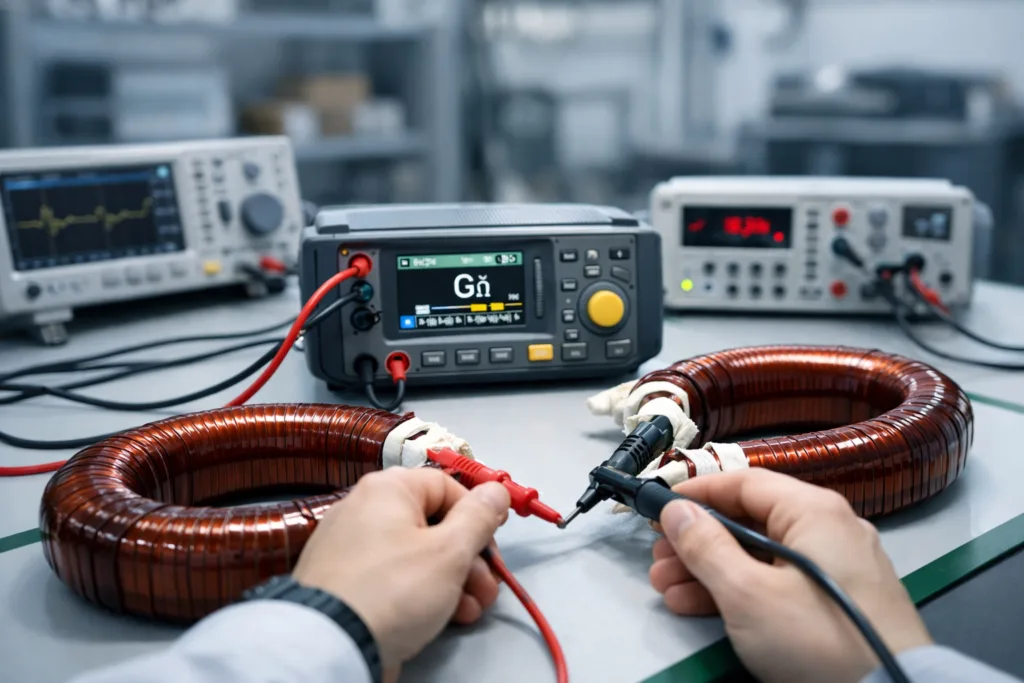
Quality assurance steps after VPI include:
- Visual inspection for complete resin coverage
- Electrical testing (insulation resistance, partial discharge analysis, dielectric breakdown voltage)
- Destructive sample tests (if warranted)
Long-Term Reliability: Environmental and Load Considerations
Over time, windings are exposed to thermal cycling, chemicals, humidity, and cyclic electrical loads. A well-impregnated winding retains its dielectric and mechanical integrity far longer, reducing costly repairs and unplanned outages.
Environmental Benefits of Modern VPI Resins
Today’s resin formulations increasingly emphasize lower VOC content, reworkability, and recyclability. This not only meets regulatory demands but reduces workplace hazards and waste disposal costs.
Industry Trends: Digital Process Control in VPI
Advanced automation and digital controls now enable real-time process adjustments for vacuum, pressure, and temperature. Data logging helps ensure consistent impregnation quality and supports traceability—a must for electric mobility, renewable grid, and aerospace sectors in 2026.
Optimizing VPI for Special Windings and Exotic Coppers
Some advanced windings, such as those for high-frequency transformers or traction drives, may require custom resin blends for rapid heat dissipation or low dielectric loss. Always test compatibility when using alloys or coated wires.
Regulatory and Safety Considerations
Choosing and applying impregnating resins must comply with local environmental, safety, and fire standards. Ensure compliance with ROHS, REACH, and IEC insulation classes as needed.
Maintenance and Repair for VPI-Treated Windings
Routine inspection and maintenance ensure insulation longevity. Minor repairs may involve localized re-impregnation, but major resin failures often necessitate rewind or replacement.
Cost Factors and Return on Investment
Though VPI appears costlier upfront than simple dipping, its long-term cost savings—due to reduced failures, maintenance, and downtime—mean a superior return on investment for mission-critical electrical machinery.
Case Example: Large Motor Rewinds Using VPI
A power utility reports that motors treated with epoxy VPI resins lasted on average 40% longer between major servicings compared to non-VPI or polyester-only systems, primarily due to enhanced mechanical strength and moisture resistance.
Global Standards for VPI in Copper Windings
Following established standards such as IEC 60034 or NEMA MG-1 helps ensure process repeatability, quality, and acceptance in global supply chains.
Future Trends: Sustainable and High-Performance VPI Resins
By 2026, the industry is trending toward bio-based, recyclable, and ultra-low emission resin systems compatible with demanding VPI processes—delivering robust insulation with minimal environmental footprint.
PROMPT: Impregnating Resins for Copper Windings: Vacuum Pressure (VPI)
To summarize, impregnating resins for copper windings: vacuum pressure (VPI) embody the gold standard for insulation in electrical machinery. By using carefully selected resin chemistries, optimized vacuum pressure cycles, and vigilant process controls, manufacturers secure the longevity and reliability of copper-wound components—even in the most challenging service conditions. For every winding design and operating environment, thoughtful selection and application of VPI resins are keys to durable, defect-free assemblies.
Frequently Asked Questions
What is the primary function of impregnating resins in VPI-treated windings?
The main function is to provide electrical insulation, block moisture and contaminants, and reinforce mechanical stability inside copper windings.
How does vacuum pressure impregnation differ from conventional resin application?
VPI uses controlled vacuum and pressure cycles to ensure the resin deeply penetrates all winding voids, resulting in superior insulation and durability compared to surface-only techniques.
Which resin types are commonly used for VPI and why?
Epoxy, polyester, and polyurethane resins are most common. Each offers unique balance between thermal stability, mechanical strength, and cost, making them suitable for different winding types and applications.
How can air bubbles in copper windings be prevented during VPI?
Thorough degassing, slow pressure ramp rates, and controlled resin flow during VPI all help eliminate trapped air, ensuring complete impregnation.
What are the long-term benefits of using VPI for copper windings?
VPI dramatically improves insulation reliability, vibration resistance, and environmental durability—reducing premature failures and maintenance costs.
How often should VPI-treated windings be inspected?
Inspection intervals depend on application severity, but annual visual and electrical checks are recommended to catch early insulation degradation.
Related Reading
- 7 Game-Changing Solutions for 800V Insulation in EVs
- Boosting Motor Bearings Reliability with Anaerobic Retaining Compounds
- How Delay Cure UV Adhesives Make Metal Bonding Stronger
- Top Potting Solutions for Reliable IGBT Module Insulation
- Why Low Halogen Epoxies Drive Greener Electronic Manufacturing