Introduction: Unlocking Performance with Thermal Epoxy Adhesive Guide: Pros, Cons, and Where It Works Best
Thermal epoxy adhesives are vital in modern electronics, lighting, and industrial equipment. But how do you know if thermal epoxy is the right choice versus softer thermal materials or mechanical fasteners? In this comprehensive Thermal Epoxy Adhesive Guide: Pros, Cons, and Where It Works Best, we’ll break down what makes these adhesives unique, their strengths and weaknesses, and the situations where they outperform—and where they fall short.
Understanding Thermally Conductive Epoxy: The Basics
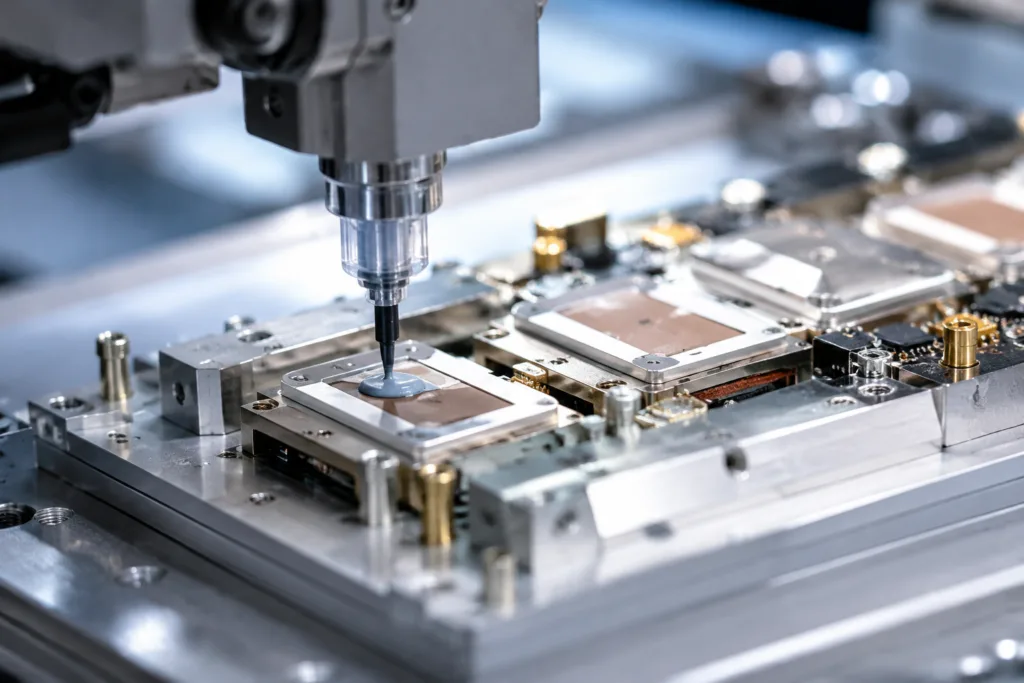
Thermally conductive epoxy is a two-part adhesive engineered for both bonding and efficient heat transfer. Unlike generic adhesives, these are loaded with fillers (like alumina, boron nitride, or silver) to allow heat to move through the bond line. This is critical for cooling electronics, lighting modules, and power assemblies. If you’re new to heat management, see Thermal Conductive Adhesives: 7 Essential Rules for Heat Management in Electronic Assemblies for an in-depth look at how adhesives fit in thermal design.
What Makes Thermal Epoxy Different from Other Thermal Adhesives?
Let’s compare thermal epoxies to other adhesive options such as silicone, acrylics, and thermal pads. Epoxy systems stand out for their strong bonding, structural rigidity, and lasting durability. However, their rigid nature can be a drawback when devices experience vibration, thermal cycling, or require periodic service. Soft thermal materials (like silicone gels or thermal tapes) are often preferred for delicate parts, high-frequency vibration, or when easy rework is important.
| Property | Thermal Epoxy | Silicone Adhesive | Thermal Pads |
|---|---|---|---|
| Thermal Conductivity | 1–4 W/mK (higher with fillers) | 0.8–2 W/mK | 0.5–5 W/mK |
| Bond Strength | High – structural | Medium – flexible | None (just tackiness) |
| Reworkability | Difficult | Easy | Very Easy |
| Rigidity | Hard | Flexible | Soft |
Key Benefits of Thermally Conductive Epoxy Adhesives
Thermal epoxies offer a unique blend of mechanical and thermal properties. Their core benefits include:
- High Bond Strength – Suits metal, ceramics, glass, and most plastics.
- Thermal Conductivity – Rapid heat transfer away from sensitive components.
- Chemical & Moisture Resistance – Reliable in tough environments.
- Electrical Insulation (when formulated for non-conductivity).
- Process Stability – Predictable cure and performance in controlled production.
Application industries benefit from these properties, especially in high-power LEDs, motor controllers, and sealed electronics modules.
Where Thermal Epoxy Adhesives Perform Best
Thermal epoxies excel where a firm, permanent bond is required alongside efficient heat dissipation. Common applications include:
- Attaching heat sinks to power semiconductors (IGBT, MOSFETs)
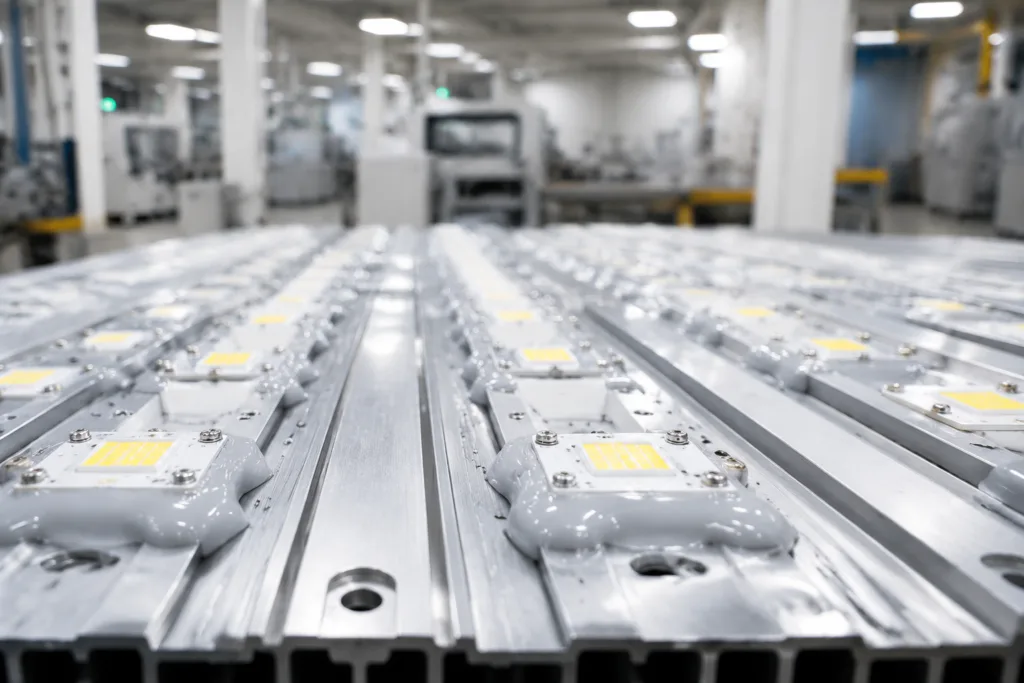
- Bonding LED modules to metal core PCBs
- Securing thermal interface materials in battery packs
- Assembly of industrial controllers and inverters
- Electronic enclosures needing robust, waterproof thermal bonding
If you work with rugged equipment or worry about bond longevity, epoxies minimize maintenance and maximize stability. For more on protecting assemblies, check out The Complete 2026 Guide: How High-Temp Encapsulants Protect Power Module Reliability for IGBT/MOSFET.
Design and Process Constraints: When Thermal Epoxy Isn’t Ideal
Despite their strengths, thermal epoxies bring certain challenges:
- Hard-to-Rework – Once cured, removal is tough and may damage parts.
- Limited Flexibility – Rigid bonds can crack under vibration or expansion.
- Fixture & Cure Time – Long pot life and cure can slow assembly lines.
- Surface Sensitivity – Poor adhesion to low-energy plastics like PP/PE without surface treatment.
- Thickness Matters – Too thick a bond line reduces heat transfer efficiency.
For assemblies with continual thermal cycling or where repair is frequent, softer thermally conductive materials might be safer.
Evaluating Bond Strength vs. Thermal Conductivity: Striking the Right Balance
Choosing thermal epoxy is a trade-off: strong bonding often means slightly lower thermal conductivity compared to the softest, pure interface materials. Always check product datasheets for lap shear, peel, and thermal conductivity values. ZDS Adhesive, an industrial adhesive manufacturer, recommends matching the bond line thickness (typically 0.1–0.5 mm) to the component’s flatness and anticipated shear forces for optimal assembly performance.
Thermal Epoxy Adhesive Guide: Pros, Cons, and Where It Works Best
This guide tips the scales for readers who need real-world clarity, not just technical jargon. Here’s where thermal epoxies shine:
- Permanent, solid bonding of heat-sensitive power electronics
- Applications exposed to high humidity or chemical splash
- Where vibration or repeated flexing is minimal
- Environments requiring electrical insulation alongside heat transfer
If your project involves frequent device teardown or high movement, consider soft thermal pads or gels for safer, reworkable solutions.
Process Parameters: What to Watch for in Production
The stability of thermal epoxy adhesives in production is key to long-term success. Critical parameters include:
- Pot Life – The workable period after mixing.
- Cure Mechanism – Some cure at room temperature, others require heat.
- Bond-Line Thickness – Thin lines transfer heat better but require precise application.
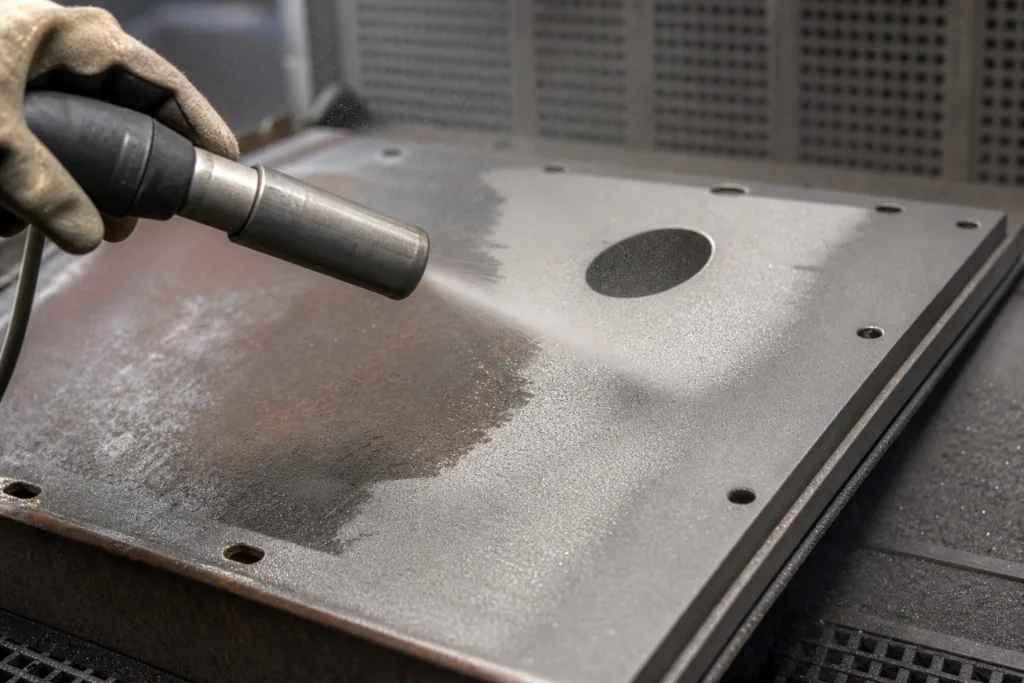
- Surface Energy & Treatment – Ensure substrates are clean; plasma or corona treatment helps with difficult plastics.
- Fixture Time – Time before the assembly can be handled/moved.
- Testing – Thermal cycling, lap shear, humidity aging for validation.
Reworkability: Solutions When Things Change
Compared to softer adhesives, cured thermal epoxies are difficult to remove. If changes, repairs, or upgrades are frequent, opt for materials that allow nondestructive removal, like silicones or phase change pads. For detailed comparisons of soft vs. hard thermal materials, see Breakthrough Insights: Thermal Grease vs. Thermal Pads—2026 Performance Comparison for Heat Dissipation.
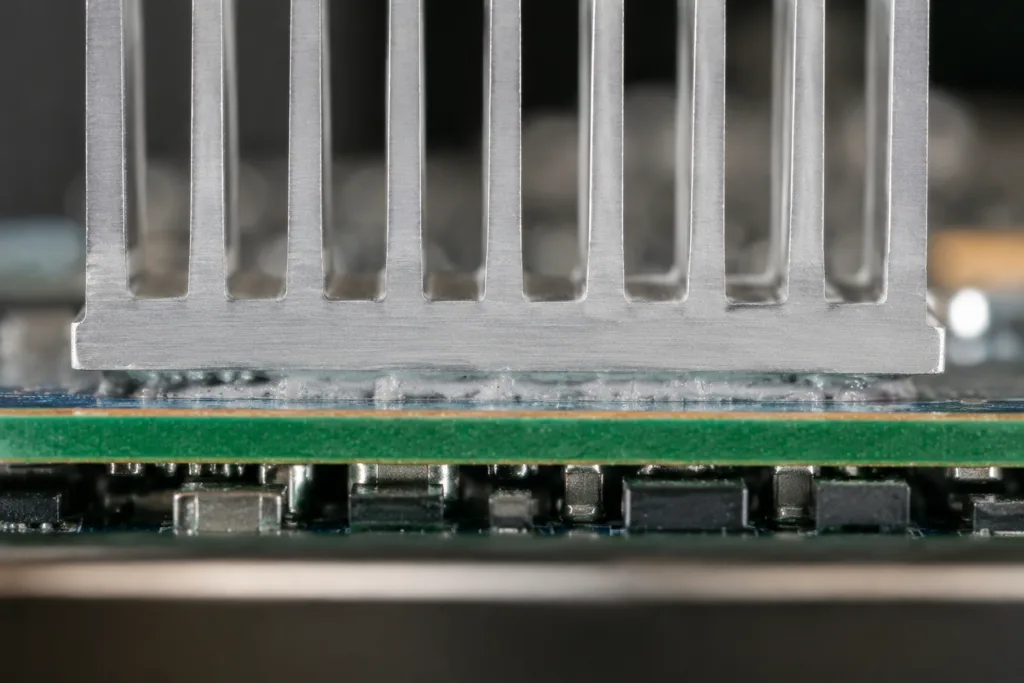
Common Pitfalls in Thermal Epoxy Application
- Improper mixing ratio—leads to incomplete curing
- Excessively thick bond line—reduces thermal conductivity
- Poor surface preparation—weakens bond strength
- Failure to match mechanical properties to substrates—cracking or delamination
Using reliable process controls and testing (lap shear, peel, heat aging) helps sidestep most failures.
Thermal Epoxy in Electronics: Beyond Heat Sink Bonding
While bonding heat sinks is the classic use case, thermal epoxies are increasingly used for potting and encapsulation, EMI shielding, and die attach in high-density circuit assemblies. Their mechanical resilience and controlled cure process make them suited for desktop devices, outdoor sensors, power modules, and more. Explore deeper industry roles at Mastering Die Attach Adhesives: 9 Ways Conductivity & Heat Management Transform Electronics in 2026.
Lighting Applications: LED Performance and Longevity
LED modules run hotter and brighter than ever, making thermal management crucial. Epoxy adhesive not only ensures strong attachment but helps dissipate heat, improving LED lifespans. Proper selection avoids hot spots, color shifts, or premature failure. For robust setups, engineers balance bond strength with thermal flow and substrate compatibility.
Industrial and Automotive Equipment: Enhancing Reliability
Thermal epoxies in industrial controls or automotive electronics offer excellent vibration resistance, waterproofing, and durability. However, they should not be used where parts require frequent replacement. Assemblies exposed to harsh chemicals, outdoor weather, or mechanical loads benefit from epoxy, provided thermal cycling is within design limits.
ZDS Adhesive Perspective: Application Stability in Real Production
From an assembly-line viewpoint at ZDS Adhesive, an industrial adhesive manufacturer, process control is essential. Factors like open time, fixture time, and post-cure stress make or break production runs. Lap shear and peel testing confirm strength, but thermal profiling guarantees efficient cooling throughout device life. Durable performance relies on matching adhesive to substrate, joint geometry, and anticipated operating cycles.
Making the Decision: When Is Thermal Epoxy the Best Fit?
Thermal epoxy adhesives are optimal when your design calls for permanent structural bonding with enhanced heat transfer. If your primary concern is reworkability or shock/vibration, softer materials are safer. Always review datasheets, test bonds under realistic conditions, and verify both thermal and mechanical requirements before committing.
Best Practices Checklist for Thermal Epoxy Use
- Ensure correct mix ratio for complete cure
- Apply thin, uniform bond lines for best thermal transfer
- Prepare surfaces—clean, dry, or treat with primer/plasma as needed
- Test for lap shear, peel strength, and thermal cycling
- Consider thermal expansion match between adhesive and substrate
Alternatives to Thermal Epoxy Adhesives
Silicone adhesives, acrylics, phase change materials, and thermal greases offer varying performance. Your choice should reflect demands for bond strength, flexibility, rework, and thermal efficiency. Hybrid materials (epoxy-silicone blends) may offer middle-ground solutions for specialized assemblies.
Conclusion: The Future of Thermal Epoxy in Heat Management
Thermal epoxy adhesives remain a cornerstone for demanding applications in electronics, lighting, and industry. Their pros—high bond strength, chemical stability, and heat transfer—make them top picks for assemblies that don’t need frequent servicing. However, their rigidity and rework difficulty limit their use where flexibility or modular upgrades are needed. As devices evolve, engineers gain more hybrid material choices, but thermal epoxy’s blend of mechanical and thermal properties ensures its ongoing relevance for the toughest jobs.
Frequently Asked Questions
How does thermal epoxy adhesive compare to thermal pads?
Thermal epoxy offers a permanent, high-strength bond with good thermal conductivity, while pads are softer, easier to rework but offer less structural integrity.
Can thermal epoxy be removed or repaired?
Once cured, thermal epoxy is very difficult to remove and may damage components. For frequent repairs, choose softer, reworkable materials like silicone or thermal pads.
What substrates does thermal epoxy bond best to?
Thermal epoxy bonds strongly to metals, ceramics, glass, and most plastics; for low-energy surfaces like PP or PE, use surface treatment or primer.
Is thermal epoxy electrically conductive?
Most are electrically insulating unless formulated with conductive fillers (such as silver). Always check your epoxy formulation before use.
How thick should the bond line be?
Bond lines should be as thin and uniform as possible (typically 0.1–0.5 mm) for optimal heat transfer and mechanical strength.
Are thermal epoxies suitable for vibration-prone assemblies?
Thermal epoxies are rigid, so in assemblies with high vibration or flexing, flexible adhesives or pads may be safer to prevent cracking or delamination.
Related Reading
- Expert Advice on Selecting Waterproof Sealing Systems for Complex Joints
- 9 Key Reasons Structural PU Adhesives Are Game-Changers for Carbon Fiber Bonding
- Practical Steps for Foundation Installation with Anchoring Adhesives in Charging Stations
- How Phase Change Materials Upgrade Your Heat Sink Performance
- 7 Real-World Methods to Achieve Moisture Protection for Data Center Server Motherboards