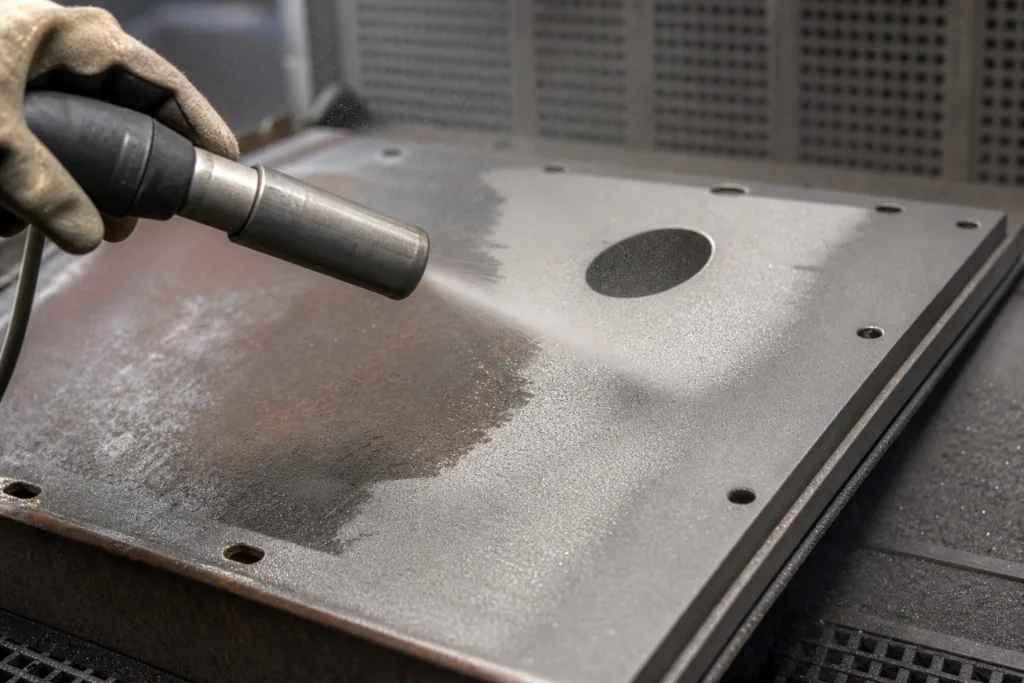
Introduction: Why Anti-Vandalism Matters for Public Chargers
Public charging stations—critical for today’s EVs and smart devices—face a harsh reality: vandalism. Broken faceplates, pried-open panels, and tampered with wiring cost cities thousands and frustrate users. That’s why Anti-Vandalism: High Impact Adhesives for Public Chargers isn’t simply about glue; it’s an engineering solution making or breaking public trust in shared technology. This article delves deep into how powerful adhesives help prevent attacks, comparing chemistries, installation tips, and real-world outcomes for lasting, reliable charging infrastructure.
Vandalism Threats: Common Attack Points on Public Chargers
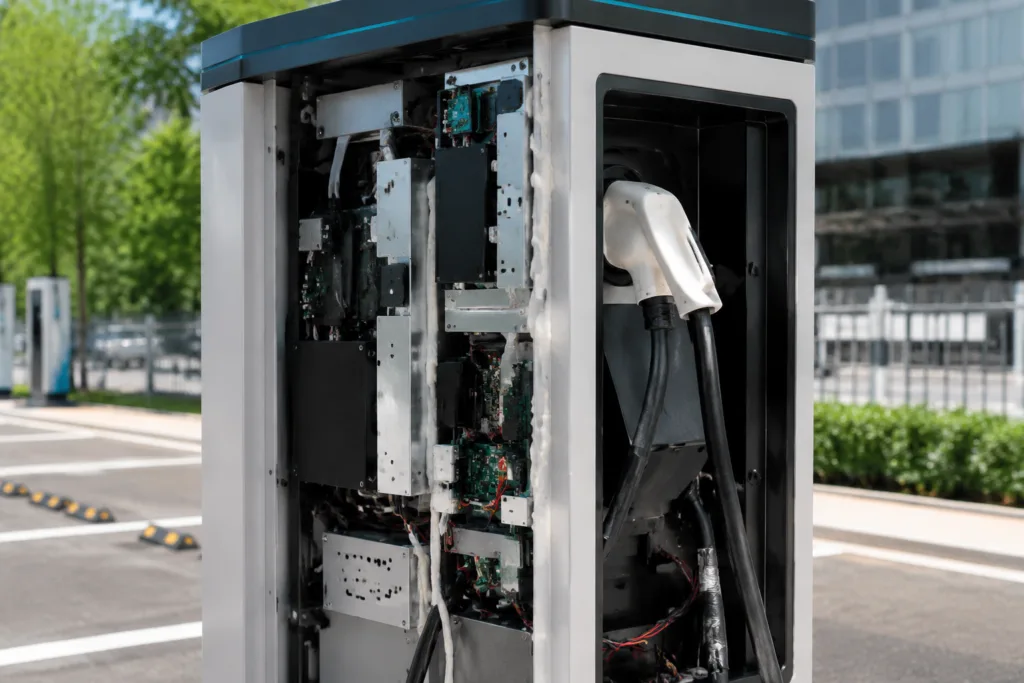
Attackers target public chargers in several repeatable ways—ripping off access doors, prying control boxes, smashing display panels, or removing protective covers. Vulnerable seams and bolts are prime suspects. The challenge? Conventional fasteners alone often can’t prevent opportunistic vandals with basic hand tools or brute force.
The Core Solution: What Are High Impact Adhesives?
High impact adhesives are specialized bonding agents formulated to withstand mechanical shock, repeated stress, and harsh environments. When applied to public chargers, these materials offer resistance to prying, knocks, or leveraging—far superior to screws alone. Chemistries include toughened epoxies, advanced polyurethanes, high-strength acrylics, and silicone-based hybrids.
Key Performance Factors for Anti-Vandal Adhesives
Not all adhesives are created equal. Success hinges on:
- Bond Strength: High lap shear and peel strengths stop panels from being pulled apart.
- Impact Resistance: Absorbs and spreads sudden blows or vibrations.
- Environmental Durability: Resists freezing, UV, and repeated wet/dry cycles.
- Substrate Compatibility: Must bond metals, plastics, glass, and powder-coated surfaces.
For a complete guide to substrate matching and achieving waterproof seals, see The No-Mistake System Guide for Waterproof Seals.
Real-World Applications: Where Are They Used?
You’ll find these adhesives securing:
- Access doors and rear hoods (to make forced entry nearly impossible)
- Display windows and user interface panels (to absorb impact shock)
- Fixture points and mounting brackets (to replace or reinforce rivets/screws)
- Interior waterproof seals (to prevent tampering and water ingress simultaneously)
Popular Anti-Vandalism Adhesive Chemistries
Here’s a quick comparison of the most common high impact adhesives for anti-vandal use:
| Type | Key Features | Best For |
|---|---|---|
| Epoxy (Toughened) | Extreme impact & chemical resistance, high strength | Metal-to-metal, mixed material panels |
| Structural Acrylic | Fast fixture, strong on plastics, some flexibility | Display panels, plastics, powder coating |
| Polyurethane (PU) | Flexible, UV/weather-resistant, high lap shear | Outdoor seals, large surface bonds |
| Hybrid Silicone | Long-term waterproofing, survives freeze/thaw | Sealant + adhesive for outdoor components |
Case Study: Fixing Charger Panel Failures with High Impact Adhesives
An urban transit authority faced monthly repair calls for pried-open charger panels. Switching to a toughened epoxy adhesive increased opening force requirements from under 200N to beyond 1200N, effectively ending opportunistic attacks. Installation time remained under 10 minutes per unit, showing adhesives can solve security without slowing deployment.
Comparing Adhesive Solutions for Charger Assembly
Let’s stack key choices side by side:
| Property | Epoxy | Acrylic | Polyurethane |
|---|---|---|---|
| Ultimate Strength | High | Medium-High | Medium |
| Flexibility | Low-Medium | Medium | High |
| Weatherproofing | Good | Fair | Excellent |
| Fixture Time | 30–60 min | 10–20 min | 30–45 min |
| Environmental Tolerance | Excellent | Good | Excellent |
Why Mechanical Fasteners Alone Aren’t Enough
Bolts and screws, though useful, create stress concentrations that can be exploited. Vandals often target these points first. High impact adhesives spread loads across a broad area, making brute force or tool-based removal much harder.
Installation Tips for Vandal-Proof Adhesive Bonding
- Clean surfaces thoroughly—any dirt or oil weakens the bond
- Use recommended clamping pressure or jigs until full cure
- Ensure correct temperature range for curing
- Control bond-line thickness for peak strength (usually 0.2–0.5 mm)
Some adhesives include visual indicators for mixing or curing, further reducing installation errors.
Adhesive Resistance: Environmental, Chemical, & Mechanical
For public chargers exposed year-round, adhesives must handle:
- UV rays and sun exposure
- Rain, frost, snow, extreme temperature swings
- Cleaning chemicals, salt spray, and airborne pollutants
- Repeated physical impact (kicks, bat strikes, or thrown objects)
For more on heavy-duty, weather-resistant formulations and outdoor reliability, see Why Engineers Trust Weather-Resistant Adhesives for Charging Gun/Plug Assembly.
Technical Validation: Testing for Anti-Vandal Adhesive Applications
Many municipalities now require lap shear, peel, and impact tests for charger assemblies. Typical requirements include:
- Lap shear over 10 MPa
- Peel strength above 2.0 N/mm
- UV/thermal cycling and humidity aging
Adhesives passing these benchmarks can be specified for critical exterior bonds.
How ZDS Adhesive Engineers Approaching Public Charger Bonds
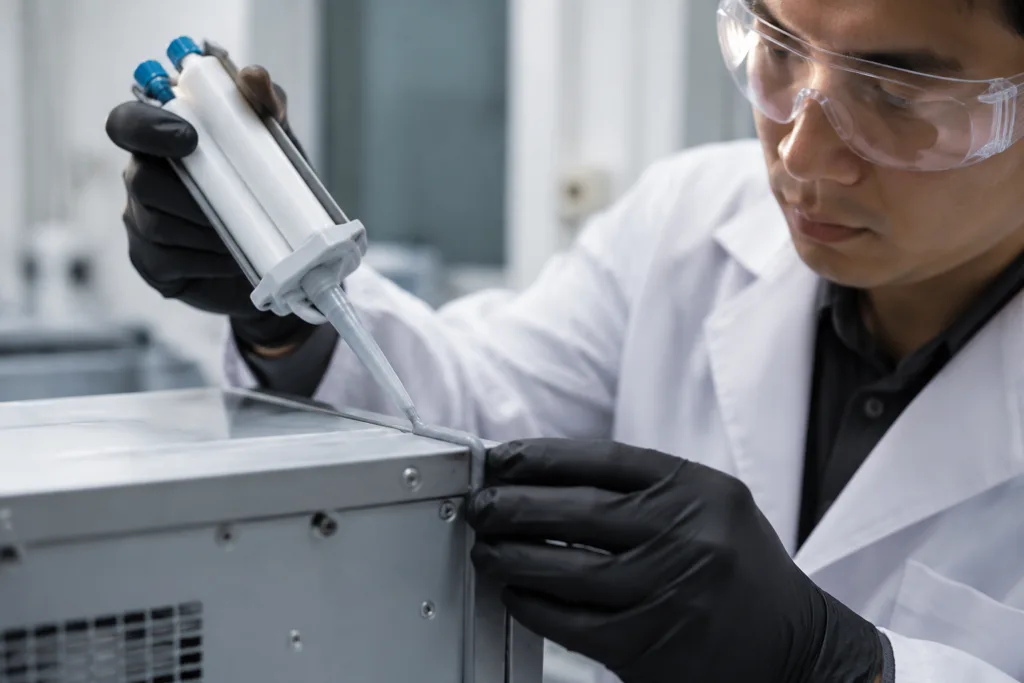
From an application engineering perspective at ZDS Adhesive, an industrial adhesive manufacturer, success in charger anti-vandal design depends on four key steps:
- Substrate prep using cleaning and, where appropriate, light abrasion or surface treatment
- Applying controlled bead or film for even stress distribution
- Verifying fixture time matches production speed—avoiding bottlenecks
- Validating on customer samples using standard test panels (lap shear, peel strength, salt fog)
Engineers must select chemistries that account for thermal expansion differences between metals and plastics—preventing stress cracks or bond failures after temperature cycles.
Cost-Benefit Analysis: Are High Impact Adhesives Worth It?
Switching from screws to high impact adhesives costs pennies extra per charger, but can save hundreds on repairs. Reduced downtime, higher public trust, and fewer service calls quickly offset initial investment. For city planners and fleet managers, data from real deployments shows a 60–90% reduction in vandalism-related repairs.
Common Challenges: Installation and Field Mistakes
Typical mistakes include under-surface prep, improper mixing (for 2-part adhesives), and early stress on joints. Training and clear work instructions, including choosing proper open time and bond-line thickness, are crucial for reliability.
Case Example: Modular Charging Units in Urban Parks
One case from Shanghai: Parks with high vandal rates saw lasting results after all plastic covers and doors were dual-bonded with structural acrylic and polyurethane bead. Even after attempted attacks, panels held—service teams only replaced a few minor external plastic covers. Full system testing showed no water ingress, a secondary benefit. Explore more about outdoor adhesive strategies in 5G Smart Pole Integration: 7 Ways Adhesives Make Modular Charging Units Durable Outdoors.
Eco-Considerations: Are These Adhesives Safe for Urban Use?
Many advanced toughened adhesives are now formulated with low or no VOCs, and major manufacturers offer full safety data for public infrastructure projects. Always check for RoHS and REACH compliance when sourcing materials.
Cleaning and Maintenance: What to Expect with Adhesively Secured Chargers
Proper bonding means fewer entry points for dirt and water—simplifying routine cleaning. If removal is needed for major repairs, specialized de-bonders or mechanical cutting may be required, but scheduled maintenance drops thanks to fewer failures.
Engineer’s Checklist: Selecting the Best Anti-Vandalism Adhesive
- Is substrate compatibility proven—metal, plastic, or glass?
- Does it meet lap shear/peel/impact/UV test benchmarks?
- Does fixture time fit assembly line needs?
- Is it RoHS/VOC safe for public infrastructure?
Future Trends: Smarter, Harder-to-Circumvent Adhesive Innovations
By 2026, new adhesives include built-in RFID tracers for asset tracking and tamper detection, further raising the bar for vandal prevention. Some chemistries enable reversible bonds—locked under field use, but releasable by professionals using specialized heat tools.
Conclusion: Designing for a Vandal-Resistant Future
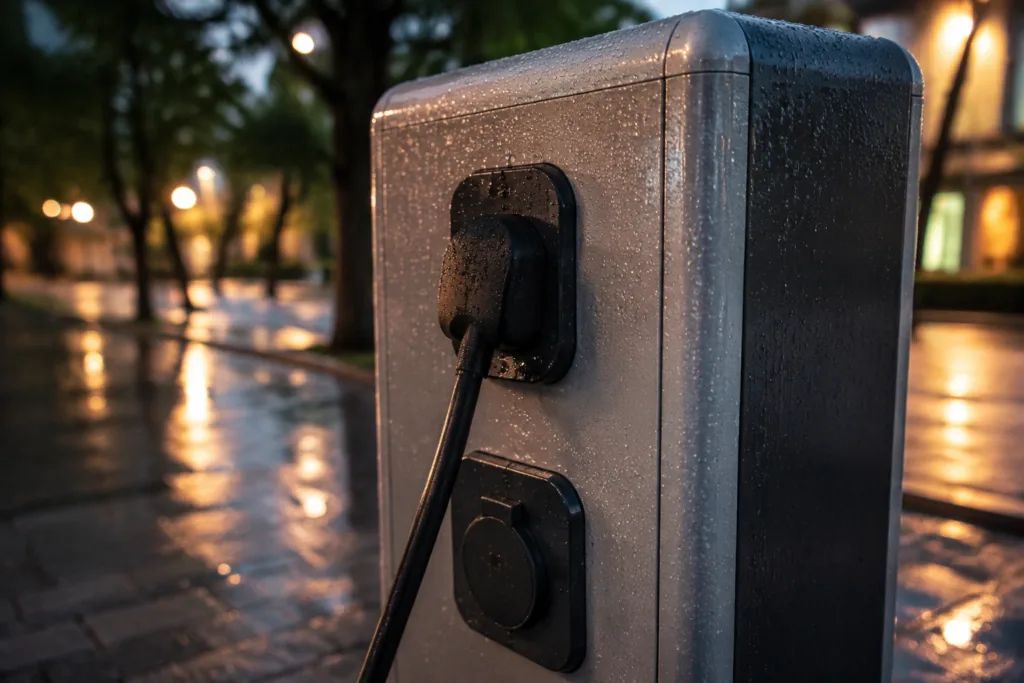
High impact adhesives are proving essential for public charger durability. With the right chemistry, application method, and field validation, cities and manufacturers can greatly cut vandalism risks, boost public confidence, and reduce maintenance demands. The combination of material science and smart engineering gives EV network builders a stronger shield against both accidents and intentional damage.
Frequently Asked Questions
What makes high impact adhesives suitable for anti-vandalism in public chargers?
They offer superior shear, peel, and impact resistance, preventing forced removal or damage to panels, doors, and display covers even under harsh environmental and mechanical stress.
Can adhesives really outperform bolts and screws for security?
Yes. High impact adhesives distribute load over a wide area, making prying or battering far less effective than with point-load fasteners alone. For best results, they should be used together.
Are these adhesives weatherproof enough for outdoor use?
Most quality formulations are tested to withstand UV, rain, snow, temperature swings, and aggressive cleaning agents, ensuring year-round durability outdoors.
Is it possible to remove bonded panels later for repairs?
Removal is possible with proper tools or de-bonders, though it requires effort, which is intentional for anti-vandal security. Scheduled maintenance is easier when access panels are designed to unbolt but stay glued for security.
Do high impact adhesives add much cost to charger build?
The incremental material cost is minor compared to repair savings and downtime reduction. In most field cases, the ROI shows lower total cost of ownership.
How are the adhesives applied during charger assembly?
Most are dispensed as beads or applied as films after cleaning the surfaces, then clamped until cured. Some use indicators that change color to confirm completed curing or proper mixing.
Related Reading
- Practical Steps to Anchoring Charging Stations for Maximum Security
- Expert Tips: Achieving Waterproof Rubber Bonds in Harsh Urban Settings
- Silicone Adhesive Types Explained: Advantages for Extreme Durability
- Thermal Grease vs. Pads: Surprising Heat Dissipation Facts for Public Charger Design
- Addition Cure Silicones: Unlocking Deep-Section Potting for Charger Reliability