Understanding the Importance of Weather-Resistant Adhesives for Charging Gun/Plug Assembly
As electric vehicles (EVs) become mainstream in 2026, the reliability of charging infrastructure depends heavily on the components we rarely see—like the adhesives holding charging guns and plugs together. Using weather-resistant adhesives for charging gun/plug assembly is critical because these connections routinely face moisture, UV light, temperature extremes, and pollutants. If an assembly adhesive fails, you risk malfunctions, safety hazards, or costly downtime. That’s why application engineers shortlist only adhesives that deliver robust bonds despite real-world outdoor stressors.
Core Requirements for Charging Gun and Plug Assembly
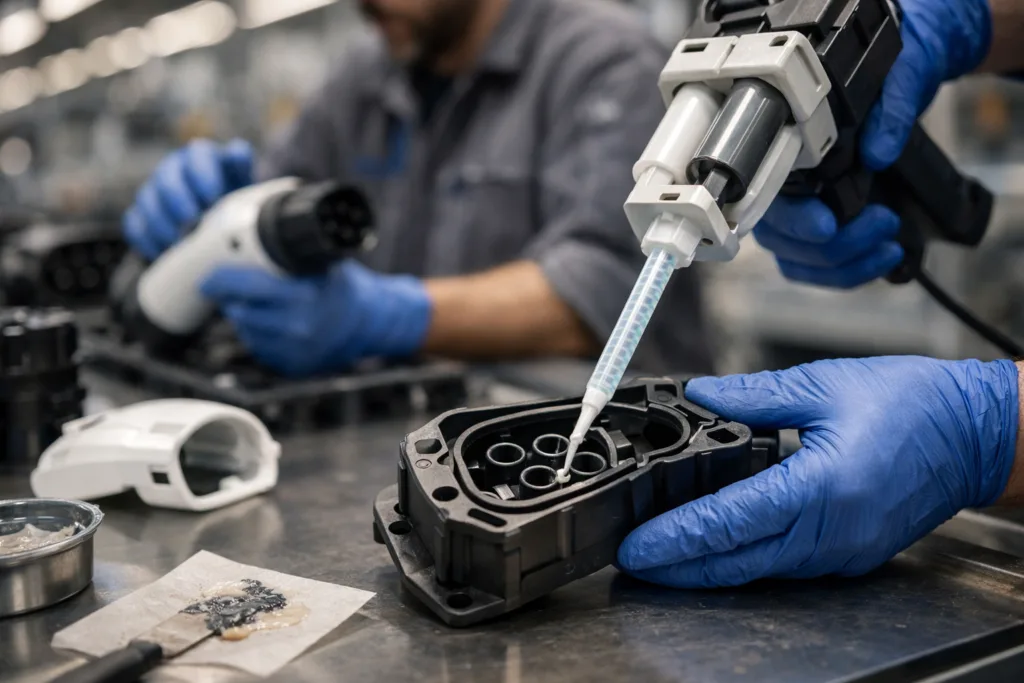
Charging guns and plugs require precise engineering. Adhesive selection affects assembly throughput, service life, and user safety. Key requirements include:
- Mechanical Strength: Handles repetitive mating, pulling, and bending.
- Moisture & Chemical Resistance: Resists rain, snow, humidity, acidic rain, salt spray, diesel, and cleaning fluids.
- Thermal Cycling Endurance: Bonds remain stable from -40°C up to 120°C or higher—the real conditions on street curbs and garages.
- Electrical Insulation: Prevents current leakage from high-power connections.
For more technical selection myths and rules, see The Ultimate Guide to Industrial Glue: Types, Uses & Selection for Manufacturers (2026).
Types of Weather-Resistant Adhesives for Charging Assemblies
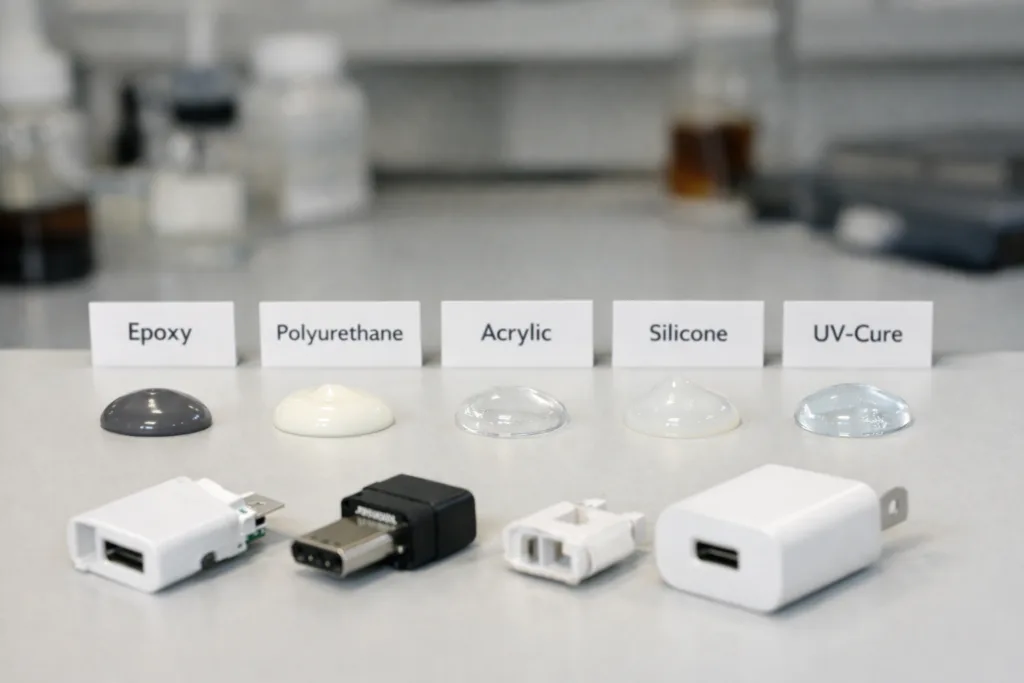
You will find several common chemistries used in charging connector assembly, each with unique advantages:
- Epoxies: Offer exceptional environmental resistance and strength but may have longer cure times.
- Polyurethanes (PU): Provide flexible, shock-resistant bonds suitable for vibration-prone outdoor hardware.
- Acrylics: Rapid fixture and high shear strength—even on low-surface energy plastics, making them popular for modular components.
- Silicone Adhesives: Withstand thermal shocks and maintain elasticity across temperature extremes.
- UV-Curing Adhesives: Accelerate assembly speed with on-demand curing (ideal for line production and clear plastics).
Chemical Compositions and Their Impact
Understanding the chemistry helps you match your process needs. For example, a two-part epoxy adhesive offers outstanding temperature and water resistance, suitable for exposed charging stations at seaports or humid climates. Silicone might be better where continual flexibility is needed, such as in plug boots or overmolded cable junctions. In contrast, innovative acrylics with built-in initiators minimize surface prep and fixture in minutes—a great fit for large-batch assembly lines.
Performance in Real Environmental Conditions
Reliable charging assemblies are tested in harsh simulated environments. Key performance parameters include:
- Water/Humidity Resistance: High IP ratings (like IP67 or IP68) demand adhesives that repel water ingress and do not swell or crack over time. See IP68 Waterproof Potting for Outdoor DC Charging Piles: 7 Essential Strategies for Unbeatable Outdoor Reliability.
- UV Stability: Adhesives containing aromatic backbones may yellow or degrade in sunlight, so formulations with UV stabilizers or aliphatic chemistry are preferable for exposed equipment.
- Thermal Endurance: Outdoor connectors get hot in summer sun and cold in winter, and the adhesive must stay tough, not brittle.
- Chemical Exposure: Urban and roadside charging faces oils, cleaning agents, and air pollution—all can attack unprotected bonds.
Test Methods That Matter
Industry-standard lab tests confirm suitability: lap shear strength after humidity aging, peel strength after thermal cycles, and insulation resistance under voltage. These tests mimic years of outdoor exposure in months.
Selection Criteria: What Makes an Adhesive Truly Weather-Resistant?
Application engineers and buyers look beyond datasheets. Critical selection factors include:
- Substrate Compatibility: Can the adhesive bond both metals and engineering plastics (like PC, PBT, PA, or glass-fiber composites)? Surface energy impacts primer needs.
- Fixture and Cure Times: Fast-curing adhesives (UV, acrylics) boost productivity but require line-of-sight access (for UV) and careful temperature control.
- Gap-Filling & Flow: Some joints are tight; others have uneven gaps. Thixotropic or non-sag adhesives hold in place vertically.
- Pot Life & Shelf Life: For high-volume production, predictable usability is key.
- Certification Readiness: Product certification (UL, IEC, RoHS, etc.) may depend on adhesive test reports.
For a step-by-step substrate assessment, check out Plastic Bonding Mastery: 7 Steps to Picking the Right Adhesive for Every Plastic Type.
Common Failure Modes and How to Prevent Them
Poor weather resistance is not always obvious—failures may take months or years to appear. Watch for:
- Cohesive Failure: The adhesive itself cracks due to moisture ingress or freezing temperature cycles.
- Adhesive Failure: The bond line separates cleanly from one or both substrates, often due to surface contamination or poor wetting.
- Substrate Failure: Rare but possible if adhesive is much stronger than the plastic itself.
- Loss of Insulation: With certain chemistries, water wicking can reduce dielectric strength.
Routine incoming material testing and production audits, such as lap shear and peel testing after exposure, can help prevent latent defects. For more on testing strategies, refer to 7 Essential Insights: Fatigue Resistance Testing of Acrylic Structural Bonds for Lasting Industrial Performance.
Case Studies: Weather-Resistant Adhesive Success Stories
Coastal Fast-Charging Station
A utility operator in Southeast Asia struggled with early corrosion and plug failures due to salt fog exposure. After switching to a two-part epoxy, offering high wet heat resistance and corrosion inhibition, the team recorded zero failures across 7,000 charging events and lowered maintenance costs by 50% in a single wet season.
Public Transit Bus Depots
In North America, plug fatigue and cracking led to frequent downtime. Adoption of a hybrid polyurethane/acrylic system eliminated bond-line fatigue, even after being subjected to constant plug insertions and high-temperature washdowns. These assemblies also passed UL94 V-0 flammability standards.
The OEM Assembly Line Viewpoint
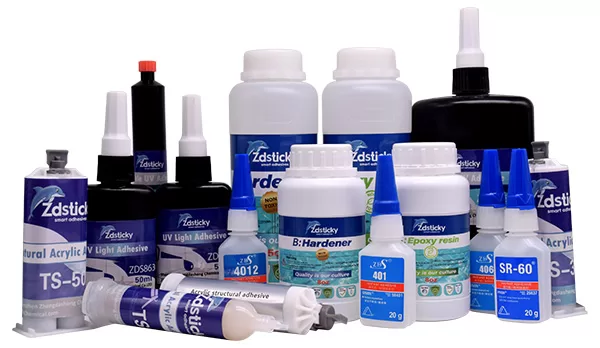
From an assembly-line viewpoint at ZDS Adhesive, an industrial adhesive manufacturer, high product quality does not just depend on the adhesive’s brand name—it follows from standardized pre-treatment, bead dispensing consistency, and batch traceability. Typical steps include:
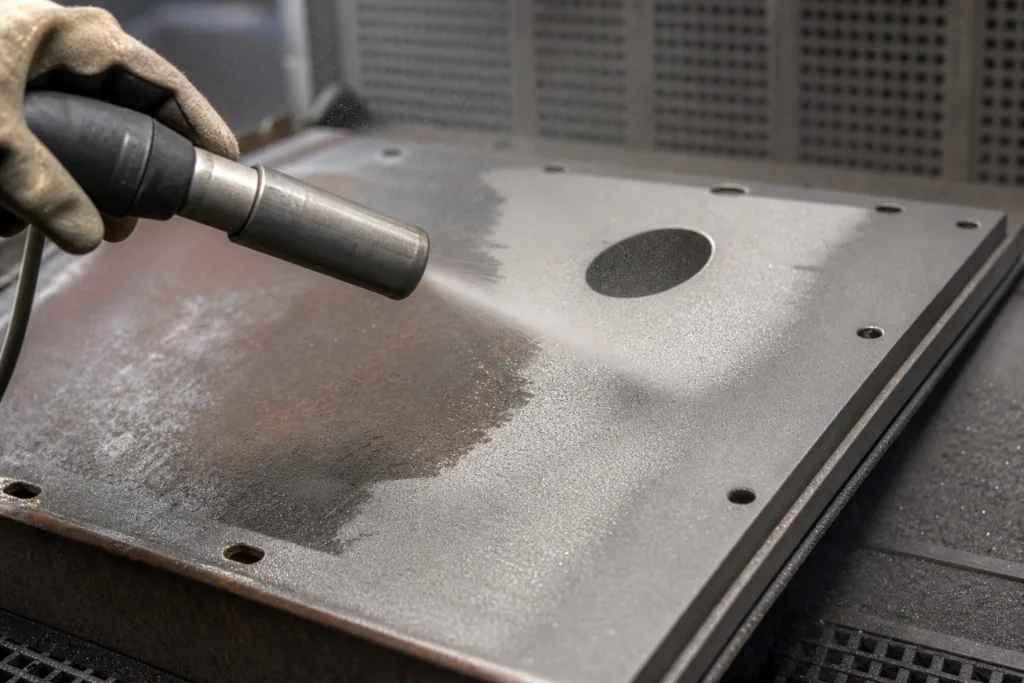
- Clean both surfaces, often with isopropyl alcohol or plasma/corona treatment for low-energy plastics.
- Apply adhesive in controlled humidity and temperature.
- Monitor dispensing bead width and bond-line thickness for process stability.
- Verify fixture and cure with quick shear or peel tests before final assembly.
Adhesive selection is a partnership between engineering, purchasing, QC, and the adhesive supplier—especially when certifications and field testing are required.
Visual Table: Adhesive Types vs. Environmental Performance
| Adhesive Type | Water Resistance | UV Stability | Thermal Range (°C) | Cure Speed |
|---|---|---|---|---|
| Epoxy (2-part) | Excellent | Good | -50 / +140 | Moderate (30min–2h) |
| Polyurethane | Very Good | Moderate | -45 / +90 | Slow–Medium |
| Acrylic (MMA) | Very Good | Good | -40 / +120 | Fast (≤10min) |
| Silicone | Excellent | Excellent | -60 / +200 | Slow |
| UV-Cure | Good | Good | -40 / +100 | Fast (<30sec illumination) |
Best Practices for Assembly with Weather-Resistant Adhesives
- Choose the adhesive chemistry based on substrate, outdoor rating, expected mechanical loads, and workplace conditions.
- Ensure proper surface preparation; residues and oils drastically reduce bond reliability.
- Control bead application for uniform bond line—thinner does not always mean weaker.
- Follow manufacturer’s cure schedule, including post-curing if required.
- Regularly train operators in process checks and common failure detection.
Future Directions: Advancements in Charging Infrastructure Adhesives
Innovations are ongoing. In 2026, smart adhesives with integrated moisture indicators or color-change to signal full cure are becoming common. Environmentally friendly, low-VOC adhesives improve workplace safety and ease eco-compliance.
Shifts toward modular, repairable plug designs mean removable adhesives and hybrid tapes may play a rising role. Expect continued evolution driven by EV fleet expansion and tougher outdoor reliability standards worldwide.
Weather-Resistant Adhesives for Charging Gun/Plug Assembly
Ultimately, using weather-resistant adhesives for charging gun/plug assembly is no longer optional—it is the backbone of maintenance-free, ultra-reliable charging for both public and private EV stations. Miss this step, and you risk field failures undermining the promise of e-mobility. Applied systematically—with proper chemistry, process, and regular testing—these adhesives future-proof your infrastructure for years of safe, high-performance charging, no matter what the weather throws at it.
Conclusion
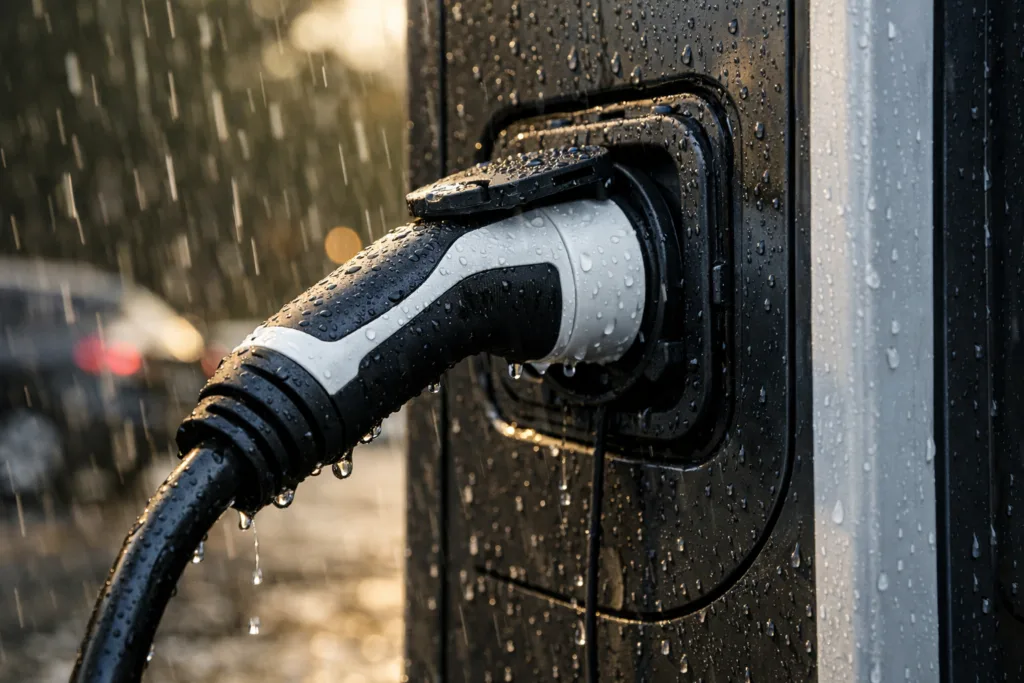
Selecting the right adhesive for charging gun and plug assembly is a blend of careful substrate analysis, environmental foresight, and quality control best practices. Epoxies, acrylics, polyurethanes, silicones, and UV-curing formulas all have their strengths—your final choice depends on balancing speed, cost, certification, and field-proven reliability. With properly weather-resistant adhesives and procedural rigor, assemblies become as robust as the EV revolution demands. Engineers and project managers who stay updated with new formulations and failure modes will ensure their charging infrastructure stands the test of time and weather.
Frequently Asked Questions
What are the key benefits of weather-resistant adhesives in charging plug assembly?
They offer strong bonds that withstand moisture, UV, temperature swings, and chemicals, ensuring long-term plug safety and reliability in harsh outdoor conditions.
How do you select the best adhesive for different charging gun materials?
Match chemical compatibility and cure requirements to plastics or metals used; test on representative samples and consult up-to-date adhesive guides specialized for each substrate.
Are there industry certifications for adhesives used in charging assemblies?
Yes, look for adhesives compliant with UL, IEC, and ROHS, and always verify certification scope covers your intended application environment and materials.
What is the difference between epoxy and polyurethane adhesives in these assemblies?
Epoxies offer high strength and chemical resistance, while polyurethanes provide better flexibility and impact resistance—choose based on the specific stressors present in your use case.
Can UV-curing adhesives be used for all charging plugs?
Only if the substrates and design allow sufficient UV light penetration; they are best for transparent or translucent plastics and applications needing fast fixturing.
How can weather-resistant adhesives reduce maintenance costs?
By preventing water ingress, corrosion, and early bond failures, these adhesives extend component life and reduce field servicing and costly replacements.
Related Reading
- Sealant or Adhesive? The Expert’s 2026 Guide for Industrial Assembly Choices
- How to Guarantee Moisture Protection for Electronics: 7 Real-World Strategies
- Stop Oil: Adhesive Innovations for Long-Life Electric Drive Units
- No-Primer Bonding Breakthroughs: 2026’s Innovative Solutions for Painted Metals
- Thermal Stress? How Elastic Adhesives Prevent Costly Expansion Failures