Introduction: Why Low Dielectric Loss Materials Matter for Millimeter-Wave Radomes
Millimeter-wave radomes are now at the heart of next-generation radar, communication, and automotive safety systems. But not every material can handle these ultra-fast frequencies without degrading signal quality. Low dielectric loss materials for millimeter-wave radomes offer a decisive edge: they enable clearer, stronger, and safer transmissions by minimizing energy loss during signal passage.
In real assembly and field use, these materials go far beyond just numbers—they determine the signal reliability, weight, and ruggedness of the final application. Let’s dig into why dielectric loss is critical, which material choices matter most, and how you can make informed choices for your projects.
Understanding Dielectric Loss in Radome Design
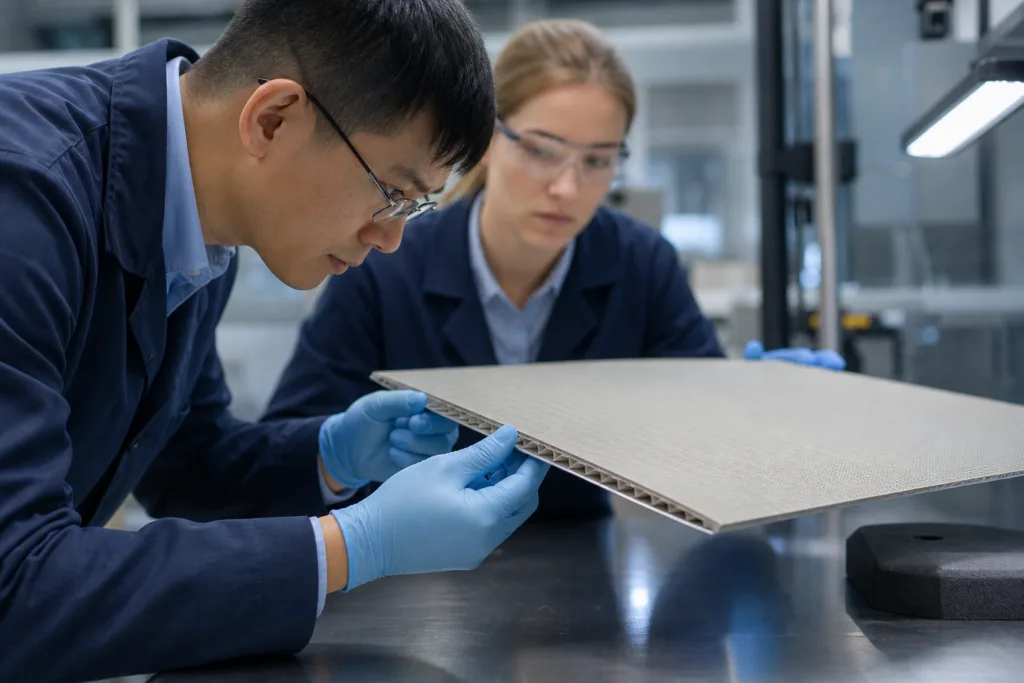
Dielectric loss refers to how much electromagnetic energy is absorbed and lost as heat when a wave passes through a material, rather than being transmitted clearly. In the context of radomes—protective shells surrounding antennas—this matters immensely. The higher the dielectric loss, the more the signal gets weakened, distorted, or even blocked.
What Are Millimeter-Wave Radomes?
Millimeter-wave (mmWave) radomes are specialized enclosures made to protect sensitive antennas that operate in the 30–300 GHz spectrum. These radomes must permit high-frequency signals to pass with minimal obstruction, meaning materials must be carefully evaluated not only for strength and weather resistance but, above all, for their ability to maintain low signal attenuation.
The Physics: Dielectric Loss, Attenuation, and Signal Transmission
Signal attenuation is a major concern at mmWave frequencies. Even a small amount of dielectric loss in a radome material can cause a noticeable drop in system range and accuracy. Materials with low dielectric loss tangent (typically below 0.005 at 77 GHz) allow more energy to pass, preserving signal strength and phase integrity for advanced radar and communication systems.
Key Material Properties for Millimeter-Wave Radomes
For engineers and designers, ideal radome materials combine several essential properties:
- Very low dielectric loss tangent at operational frequency
- Stable dielectric constant across temperature and humidity ranges
- High mechanical strength for wind, hail, and impact resistance
- Dimensional stability during environmental cycling
- Lightweight to minimize structure weight and maintain mobility
How Dielectric Loss Affects Real-World Radome Performance
In practical deployments—whether on fast-moving vehicles, radar stations, or communication towers—radomes made from low-loss materials enable longer detection ranges, lower error rates, and more reliable data links, especially under demanding weather conditions. Minimizing dielectric loss translates directly into improved system safety and effectiveness.
Comparing Low Dielectric Loss Materials: Composites vs. Ceramics
Material selection for mmWave radomes generally falls into two approaches: advanced composites and engineered ceramics. See the comparative table below for a quick rundown.
| Property | Advanced Composites | Ceramics |
|---|---|---|
| Dielectric Loss Tangent | ~0.001–0.005 at 77GHz | ~0.0003–0.003 at 77GHz |
| Mechanical Strength | High, good impact tolerance | High, but brittle |
| Weight | Light to moderate | Heavier, depends on composition |
| Thermal Stability | Good – can handle temp swings | Excellent |
| Processability | Complex shaping possible | Machining required, more rigid |
Best-in-Class Low Dielectric Loss Materials: Examples and Innovations
Some materials stand out for mmWave radome applications:
- PTFE-based composites (with or without glass microballoons)
- Cyanate ester resins
- Quartz or fused silica ceramics
- Next-gen, nano-filled epoxy matrices
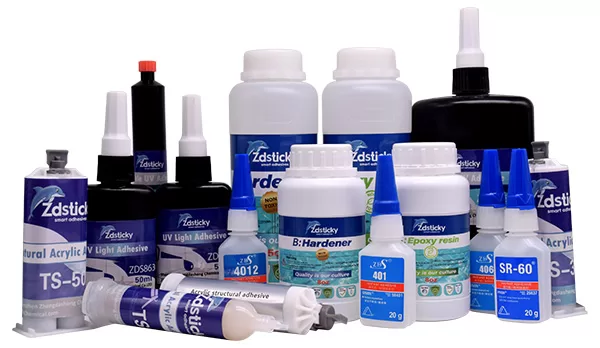
Recent advancements in engineered resin systems have further reduced dielectric loss while maintaining toughness—see our insights on epoxy resin adhesives for reliable, stable bonding in electronic-grade assemblies.
Applications: Where Low Loss Radome Materials Shine
- Automotive ADAS radar and autonomous navigation sensors
- 5G and upcoming 6G millimeter-wave base stations
- Aerospace phased-array radar domes
- Weather and air traffic radar
Dielectric Loss: Testing, Standards, and Quality Control
Material validation for radomes isn’t just about datasheets. Often, test labs use split-post dielectric resonance, free-space, or transmission-line methods to confirm low-loss performance at target frequencies. Rigorous thermal cycling, salt-fog, and impact tests are equally critical—especially for field-deployed units.
Case Study: Automotive Millimeter-Wave Radar Radome Selection
In 2026, a leading EV brand needed an ultrathin, lightweight radome for a 77 GHz collision-avoidance radar. Engineers trialed polycarbonate, PMMA, and a custom glass-fiber/epoxy composite. The composite outperformed, showing only 0.18 dB insertion loss—meeting range and durability targets, and withstanding -40°C to 85°C cycles.
This mirrors industry-wide experience: high-strength epoxy adhesives and resin materials are crucial not just for bonding but for their dielectric and thermal attributes.
Spotlight on Thermal & Mechanical Performance
Millimeter-wave radomes are constantly exposed to environmental extremes. Low dielectric loss must be balanced with temperature resistance, water uptake (to prevent condensation/fogging), and retention of mechanical strength over thermal and humidity cycles. For assemblies prone to vibration or impact, composites with fiber reinforcement or impact-toughened matrices are often preferred. You can find more about durability in our high-temp encapsulants guide.
Reducing Radome Weight Without Sacrificing Signal Integrity
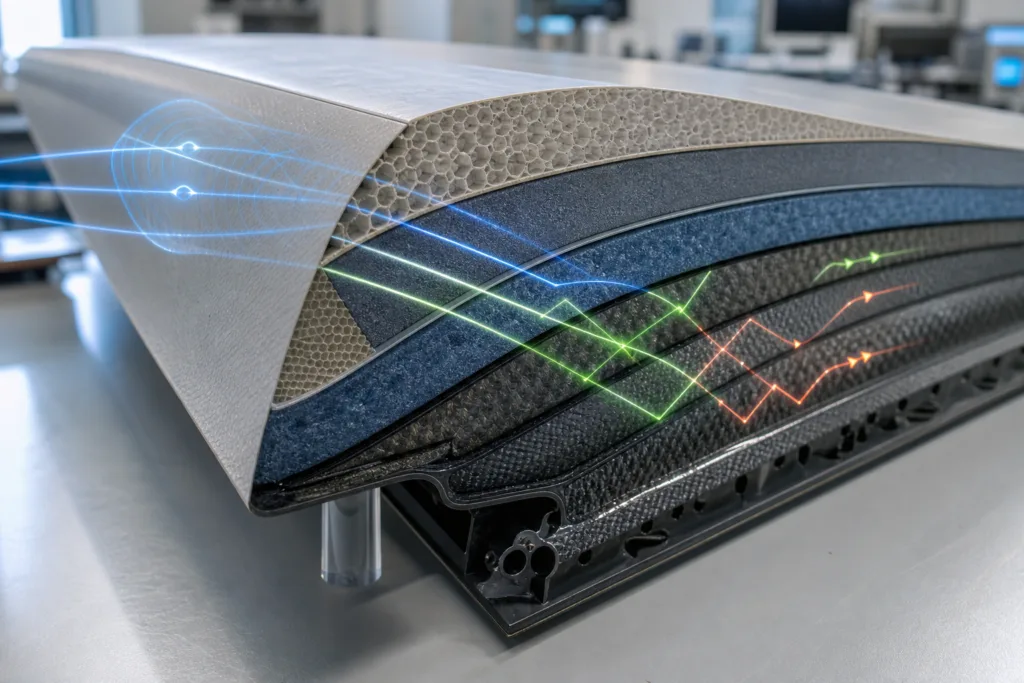
For automotive and drone applications, weight matters as much as signal clarity. Techniques like incorporating hollow glass spheres into resin matrices, or using microcell foams, bring down weight without appreciable increases in dielectric loss—critical for maximizing performance and fuel efficiency.
Environmental Stability: Moisture, UV, and Chemical Exposure
Radomes often face rain, UV rays, salt spray, and sudden temperature drops. Advanced surface coatings and matrix chemistries can mitigate water or chemical uptake, ensuring dielectric properties stay within spec even in challenging environments.
Low Dielectric Loss Materials for Millimeter-Wave Radomes
Low dielectric loss materials for millimeter-wave radomes are specially engineered to combine excellent signal transmission, strength, and durability for high-frequency applications. They resist environmental aging, enable devices to function over wider temperature extremes, and unlock safer automotive and aerospace radar—often using adhesives and encapsulants with matched dielectric characteristics to prevent localized loss. When selecting, always assess both the bulk material and any bonding or sealing adhesives for total signal path clarity.
Recent Advances: Nano-Engineered Polymers & Smart Composites
Researchers are pushing the frontier with silica-nanoparticle loaded fluoropolymers, carbon-fiber mini-laminate structures, and even smart radome surfaces that adapt dielectric characteristics dynamically. These advances promise even greater bandwidth retention and signal clarity at mmWave and terahertz frequencies.
Material Selection Checklist: What Really Matters?
- Does the material’s loss tangent meet your operating frequency’s requirements?
- How stable are dielectric properties under moisture and temperature cycling?
- Is mechanical and impact strength up to the task for your environment?
- Can the material be formed into complex radome shapes or is machining required?
First-Hand Engineer Insights from ZDS Adhesive
From an assembly-line viewpoint at ZDS Adhesive, an industrial adhesive manufacturer, selection can hinge on the interplay between material, adhesive, and process environment. “We’ve seen cases where adhesive selection alone shifted insertion loss by 0.1 dB—enough to fail final range validation in some ADAS modules,” notes a senior process engineer. It’s crucial to specify both adhesives and radome substrates with matched dielectric and thermal expansion characteristics, conduct peel and lap shear testing under realistic condition sets, and always evaluate aging under both accelerated heat/cold cycles and humidity aging protocols.
Common Assembly & Integration Mistakes
- Using adhesives or sealants with a higher loss tangent than the bulk radome material
- Overdesigning thickness: thicker isn’t always better—can actually worsen attenuation
- Ignoring environmental conditioning (moisture absorption, freeze-thaw, sun exposure) during validation
Improving Longevity: Maintenance, Inspection, and Field Repairs
Even the best materials can degrade under tough use. Plan for regular inspection of mounting integrity, check for surface clouding (a sign of weathering or moisture ingress), and, when required, use compatible, low-loss adhesives and repair resins for patching or re-bonding. For practical advice, see our article on choosing the right plastic sealants for weather-exposed assemblies.
Future Trends: Adaptive and Self-Healing Radome Materials
By 2026, new adaptive and self-healing polymer composites could enable radomes that self-optimize dielectric properties or repair micro-cracks on the fly. Expect advances in flexible, low-loss, and sustainability-focused materials to unlock smaller, lighter, and more durable designs in defense, automotive, and satellite communication.
Conclusion: Designing with Confidence for the Next-Gen Millimeter-Wave Era

Choosing low dielectric loss materials for millimeter-wave radomes transforms radar, communications, and automotive safety. Focus on comprehensive validation: not just the primary material’s losses, but also the adhesive, sealant, and durability under your application’s strain. As material science advances, newer composites and adaptive polymers—coupled with sound assembly engineering—are letting designs push further in bandwidth, reliability, and efficiency.
Frequently Asked Questions
What is dielectric loss and why does it matter in radomes?
Dielectric loss is the energy a material absorbs and dissipates as heat when electromagnetic waves pass through it. In radomes, high dielectric loss weakens signal strength and range. Low-loss materials preserve signal clarity for high-frequency applications.
Which materials have the lowest dielectric loss at millimeter-wave frequencies?
Materials such as PTFE-based composites, fused silica ceramics, and some advanced epoxy or cyanate ester systems exhibit especially low dielectric loss, making them ideal for mmWave radomes.
Can regular adhesives or sealants be used in mmWave radome assembly?
Not always. Adhesives must have low dielectric loss and similar thermal expansion properties as the radome material to avoid signal loss and mechanical stresses at high frequencies.
How does moisture affect dielectric loss in radome materials?
Moisture increases the dielectric loss of materials, reducing signal clarity and causing potential signal fading. Selecting low-absorption materials and appropriate sealants is essential for reliability.
Are lightweight materials always better for radome performance?
Lightweight materials are important, especially for automotive and drones, but must still meet strength and low-loss criteria. Some foams or composites achieve both, yet choices should be validated for the real use case.
What testing is necessary to qualify a low dielectric loss radome material?
Typical tests include dielectric loss tangent measurement at the target frequency, mechanical and thermal cycling, impact resistance, and moisture uptake tests to ensure stability over the radome’s service life.
Related Reading
- Thermal Epoxy vs Softer Materials: Which Handles Heat Best?
- Ultimate Guide: Thermal Grease vs Pads for Electronics Cooling
- Why Structural PU Adhesives Dominate Carbon Fiber Bonds
- Maximize EMC: How EMI Shielding Pastes Protect SiP Electronics
- Silicone Adhesives in Industry: Benefits and Limits Unveiled