Introduction: Why NVH Matters for Electric Vehicles
Modern electric vehicles (EVs) are changing the way we drive, promising a cleaner and quieter ride. Yet, as engine noise fades into silence, other sources of sound—like road, wind, and component vibrations—take center stage. That’s why NVH reduction (Noise, Vibration, and Harshness) is more important than ever. In this article, we’ll explore how automotive adhesives play a pivotal role in minimizing NVH in EVs and shaping the future of ride comfort.
Understanding NVH in Electric Vehicles
NVH in electric vehicles is a collection of unwanted sounds and vibrations that can stem from tires, suspension, electric motors, and even cabin components. Unlike traditional gas vehicles, where engine noise often masks other sounds, EVs make even tiny vibrations more noticeable inside the cabin.
The Science of Adhesives in NVH Reduction
Adhesives are more than just glues in automotive assembly—they are engineered materials that bond surfaces, distribute stresses, and dampen vibrations. When selected and applied correctly, adhesives can act as a buffer between materials, absorb kinetic energy, and prevent rattling or buzzing. Automotive adhesive manufacturers now develop specialized products tailored for NVH management.
Types of Adhesives Used for NVH Control
- Structural Adhesives: These offer high strength and are used in body-in-white (BIW) assemblies, helping distribute stresses and dampen panel vibrations.
- Elastomeric (Rubber-Based) Adhesives: Their flexibility allows them to absorb shocks and block sound transmission through joints and seams.
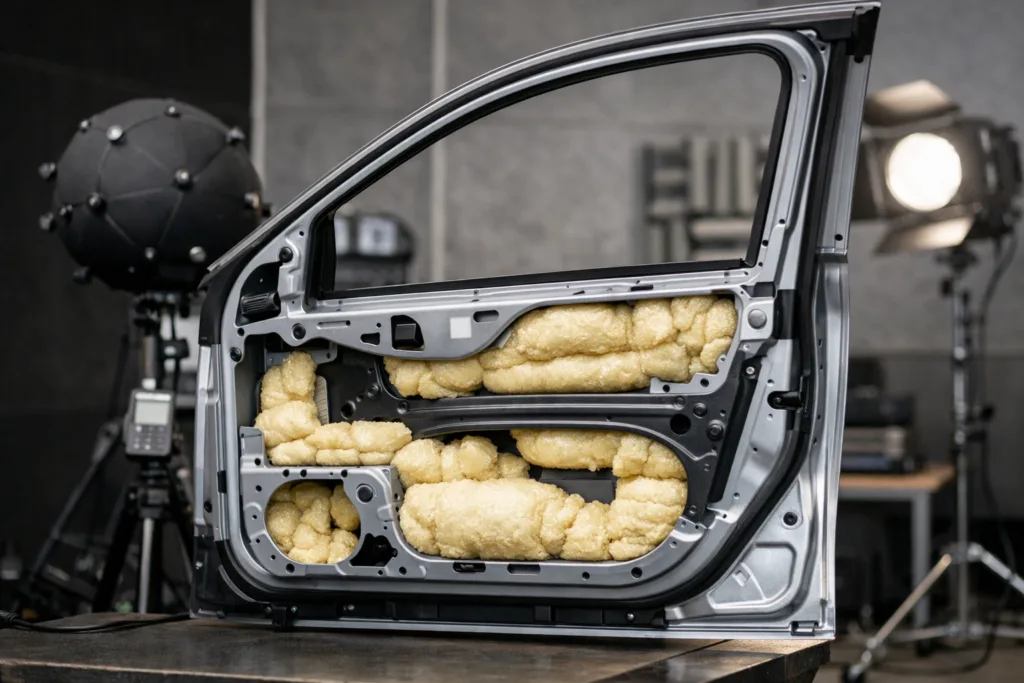
- Foamed Adhesives: Used for cavity filling, they expand and conform to gaps, creating a sound barrier while reinforcing vehicle panels.
- Hot Melt Adhesives: Provide quick bonding for trim and weatherstripping, reducing buzz, squeak, and rattle noises.
Properties of Adhesives Critical for NVH Reduction
Choosing the right adhesive requires careful evaluation of properties like:
- Viscoelasticity: Determines energy absorption and dissipation capacity.
- Shear and Peel Strength: Affects durability under dynamic loads.
- Acoustic Damping: The ability to reduce noise transmission through bonded materials.
- Environmental Stability: Adhesives must retain performance amid temperature swings, humidity, and vibrations typical in automotive service life.
Where NVH-Controlling Adhesives Are Used in EVs
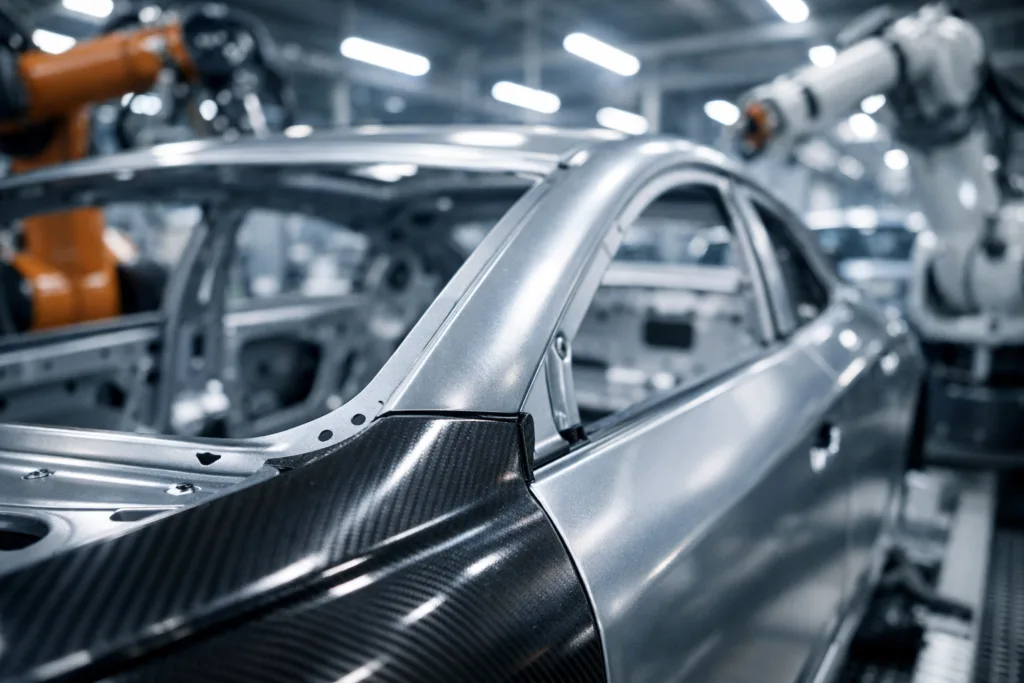
- Body Panels: Structural and acoustic adhesives bind outer panels to internal frame members, minimizing resonance.
- Battery Packs: Specialized adhesives bond cells, enclosures, and cooling plates, reducing vibrational noise during operation. Learn more about adhesives for liquid cooling plates.
- Interior Trim and Headliners: Low-odor, flexible adhesives ensure a rattle-free, soft-touch cabin environment.
- Glazing and Windows: Adhesives with good acoustic insulation properties help cut wind noise.
Benefits of NVH-Focused Adhesive Solutions
- Improved cabin comfort and perceived vehicle quality
- Weight reduction compared to mechanical fasteners
- Long-term reliability and resistance to fatigue
- Support for innovative lightweight designs and materials
Case Study: Structural Adhesives in Body Shop
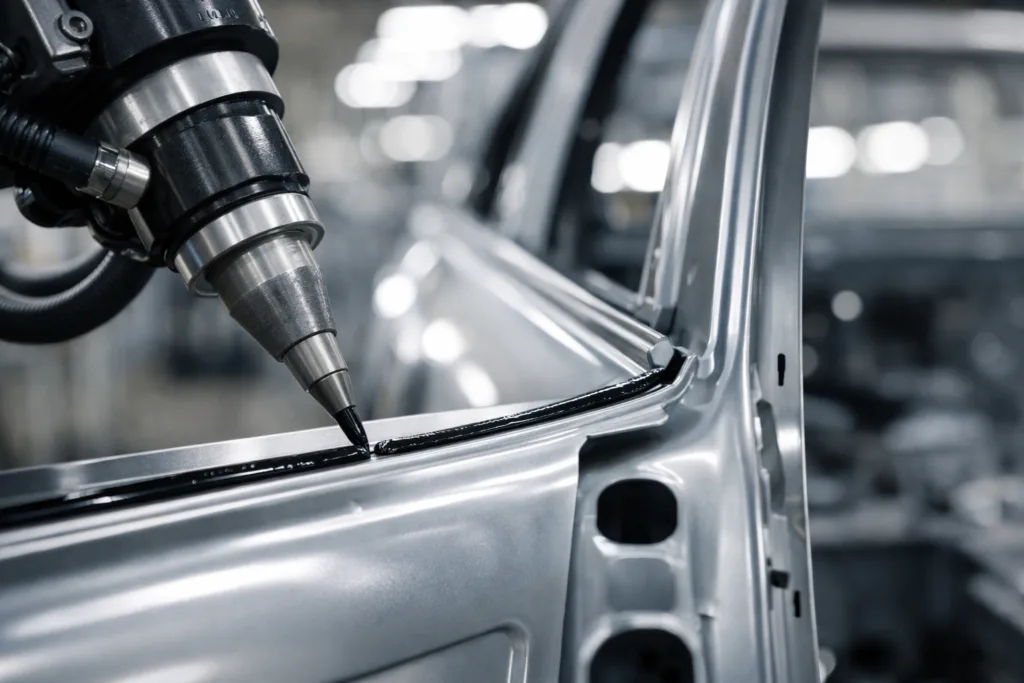
In a 2025 EV model from a leading automaker, engineers replaced several spot welds with advanced structural adhesives in critical joints. Laboratory testing revealed a 30% reduction in localized panel vibration, boosting acoustic comfort. The adhesive also enabled the use of thinner sheet metal, trimming vehicle weight for improved efficiency.
Case Study: Foamable Adhesives in Door Structures
Several manufacturers now inject foamable adhesives inside EV door frames. These expand during the paint oven bake process, filling cavities and solidifying to reinforce structure. The result? A meaningful drop in door panel resonance and a more premium “thunk” sound when closing.
Acoustic Glazing: Cutting Wind and Road Noise
Acoustic glazing adhesives play a vital part in mounting multi-layer glass or laminated panels, which dramatically reduce whoosh and rattle at high speeds. Advanced automotive glass adhesives not only bond securely but also dampen noise that would otherwise seep into the cabin.
Battery Mounting Adhesives: Quieting the Power Source
With battery modules as major sources of vibration, the adhesives used for mounting packs and cooling plates have to balance strong bonding with flexibility. According to recent guides on selecting thermal conductive adhesives for EV batteries, critical factors include shear modulus and the ability to dampen operational noise.
Testing and Validating NVH Adhesive Performance
Effective NVH reduction isn’t guesswork. It involves:
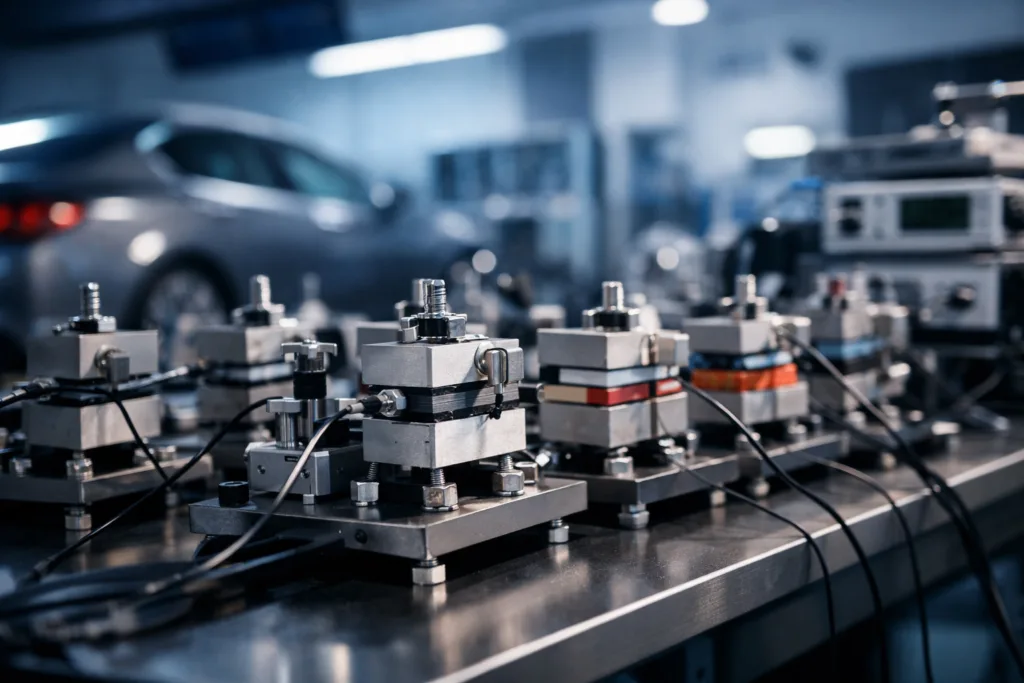
- Lap shear and peel testing under cyclic and high-frequency loading
- Thermal aging tests to simulate years of use
- Acoustic transmission loss measurements
- Rigorous humidity and chemical exposure cycles
Material Compatibility and Preparation
For adhesives to deliver maximum NVH damping, correct surface preparation is a must. Techniques such as plasma treatment, abrasion, and the use of chemical primers ensure strong bonding on metals, plastics, and composites.
Process Integration: Adhesives in Modern Manufacturing
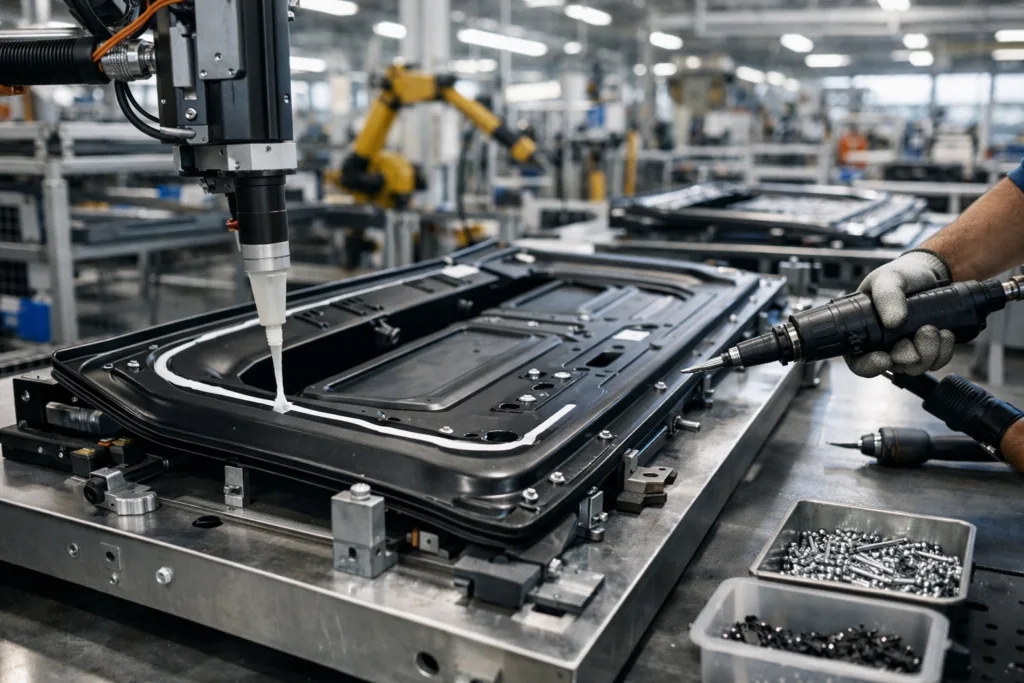
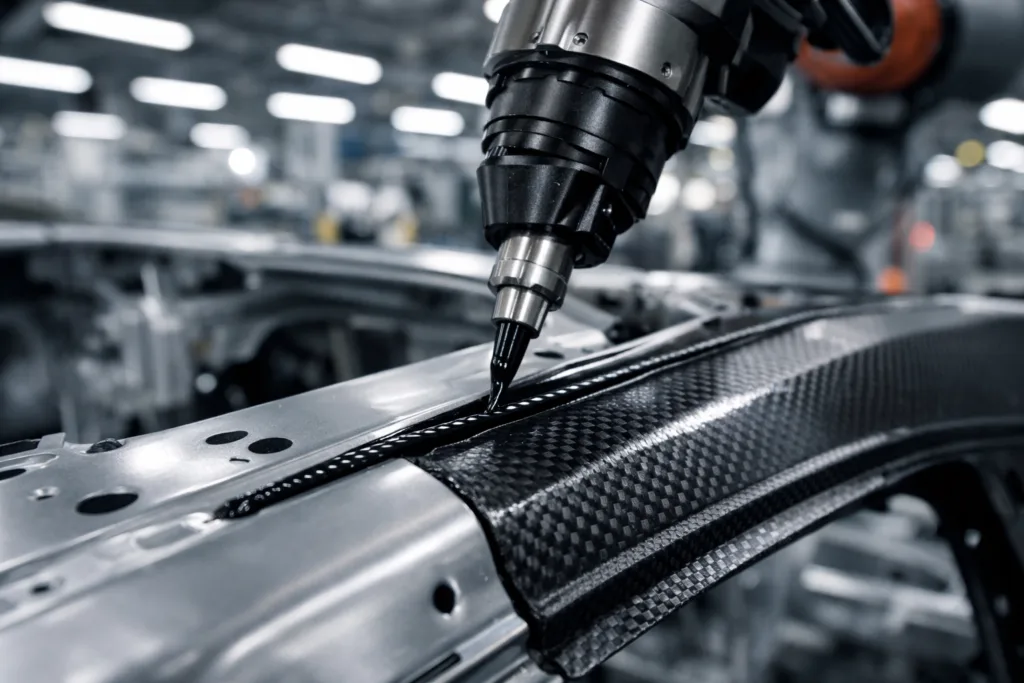
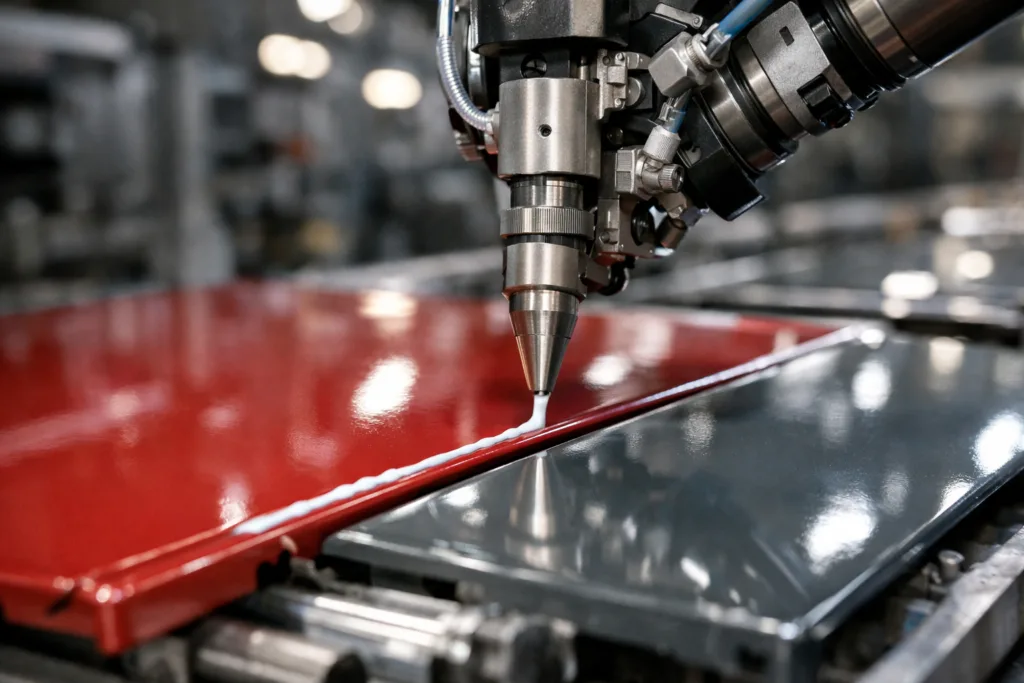
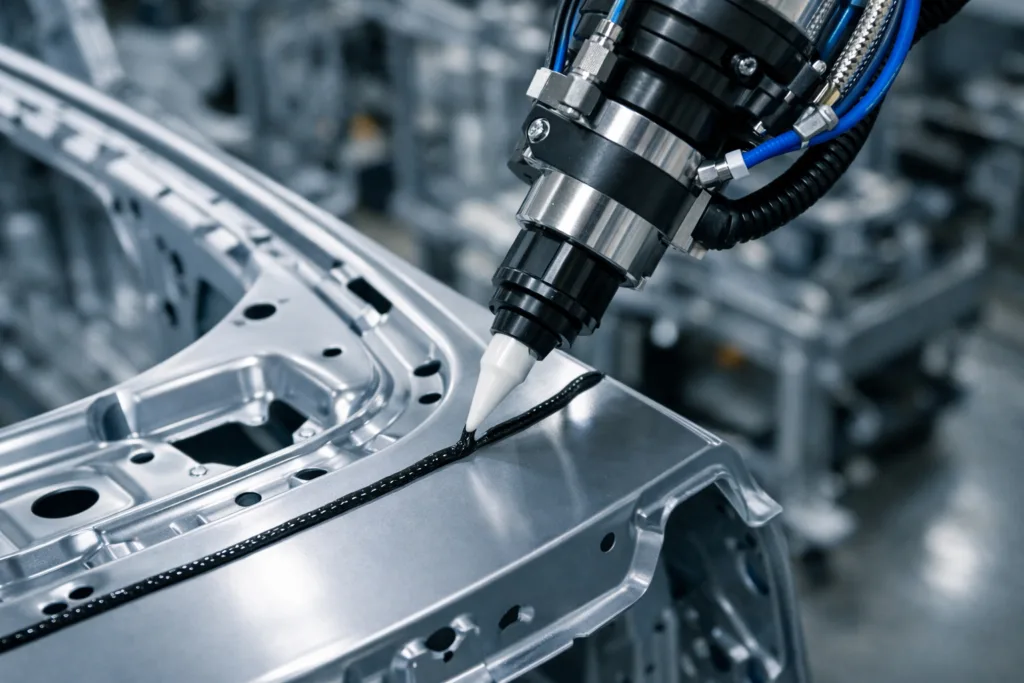
Integrating NVH-reducing adhesives into EV production calls for automated dispensing, precise curing (sometimes using heat or UV), and accurate quality checks. These practices ensure both performance and production efficiency for high-volume assembly lines.
Adhesives vs. Traditional Fasteners for NVH
| Aspect | Adhesives | Spot Welding/Fasteners |
|---|---|---|
| Acoustic Damping | Excellent | Poor |
| Weight | Lightweight | Heavy |
| Corrosion Risk | Reduced | Possible at joints |
| Design Flexibility | High | Low |
| Assembly Speed | High with automation | Moderate |
The ZDS Adhesive Perspective: Engineering for NVH Success
From an assembly-line viewpoint at ZDS Adhesive, an industrial adhesive manufacturer, the most reliable NVH results come from matching adhesive type to application area. For example, use high-lap shear, low-modulus adhesives for mounting panels that need both strength and vibration control. Always perform full joint stack-up testing and environmental cycling, as even minor assembly changes can impact acoustic performance over a vehicle’s service life.
Recent Innovations: Next-Gen Adhesive Technology
The past two years have seen a leap in NVH-specific adhesive technology for EVs. Examples include:
- Self-expanding acoustic gap-fillers that conform to complex shapes
- UV-curing adhesives that allow fast fix and minimal VOC emissions
- Smart adhesives that track curing progress and optimize plant throughput
Challenges in NVH Adhesive Engineering
Despite major progress, engineers still face hurdles in achieving perfect NVH reduction, such as: balancing adhesive cure speed with long assembly windows, ensuring adhesion to mixed materials (aluminum, composites, steel), and controlling cost across growing volumes in EV programs.
Future Trends: Toward Quieter, Lighter EVs
Looking ahead, three trends stand out:
- Development of bio-based and recyclable adhesives for greener manufacturing
- Increased simulation and AI-assisted adhesive selection for optimal NVH
- Stringent in-use durability standards for adhesives in critical safety zones
Conclusion: The Quiet Road Ahead
The road to silence in electric vehicles is paved with innovation—and today, adhesives are at the heart of NVH reduction. By choosing the right products and techniques, automakers can deliver not just efficiency, but also the sense of sanctuary modern drivers demand. As materials, designs, and regulations evolve, adhesive technology will only become more central to every EV’s comfort and performance story.
Frequently Asked Questions
What is NVH in electric vehicles?
NVH stands for Noise, Vibration, and Harshness—the collection of undesirable sounds and sensations inside a vehicle. It becomes more noticeable in EVs due to the absence of engine noise.
How do adhesives help reduce NVH?
Adhesives dampen vibrations, block sound transmission, and eliminate rattling or buzzing by bonding vehicle components tightly and absorbing energy.
Which types of adhesives are best for NVH?
Structural, elastomeric, foamable, and acoustic glazing adhesives are all utilized, depending on location and performance requirements in the vehicle.
Are adhesives lighter than traditional fasteners?
Yes, adhesives allow for the replacement of mechanical fasteners, often leading to significant weight reduction alongside NVH improvements.
What testing is done on NVH-focused adhesives?
Key tests include lap shear, peel, acoustic transmission loss, thermal cycling, and humidity aging to verify long-term performance and noise reduction.
What is the future of NVH adhesives in EVs?
Future developments include bio-based materials, greater use of smart adhesives, and tighter durability requirements for safer, quieter, and greener vehicles.
Related Reading
- Why Switching to Structural Adhesives Is Revolutionizing Aluminum Car Bodies
- 13 Industry-Proven Tips for Managing Exothermic Reaction in Epoxy Castings
- Discover How Toughened Epoxies Maximize Metal Bond Strength and Shock Resistance
- Eliminate ‘Orange Peel’ Defects in Conformal Coats: The 2026 Step-by-Step Solution
- Industrial Epoxy Adhesive Solutions to Enhance Structural Performance