Understanding Potting Solutions for Inverter IGBT Modules: Heat & Insulation
High-power inverters depend on IGBT (Insulated Gate Bipolar Transistor) modules, and their reliability begins with effective potting solutions. Whether it’s keeping components electrically safe, dissipating heat, or protecting against environmental threats, potting plays an essential role for engineers and OEMs. This article explores the critical aspects of potting for inverter IGBT modules, covering material choices, heat management, insulation needs, and practical application experience in industrial contexts.
What Are Inverter IGBT Modules and Why Potting Matters
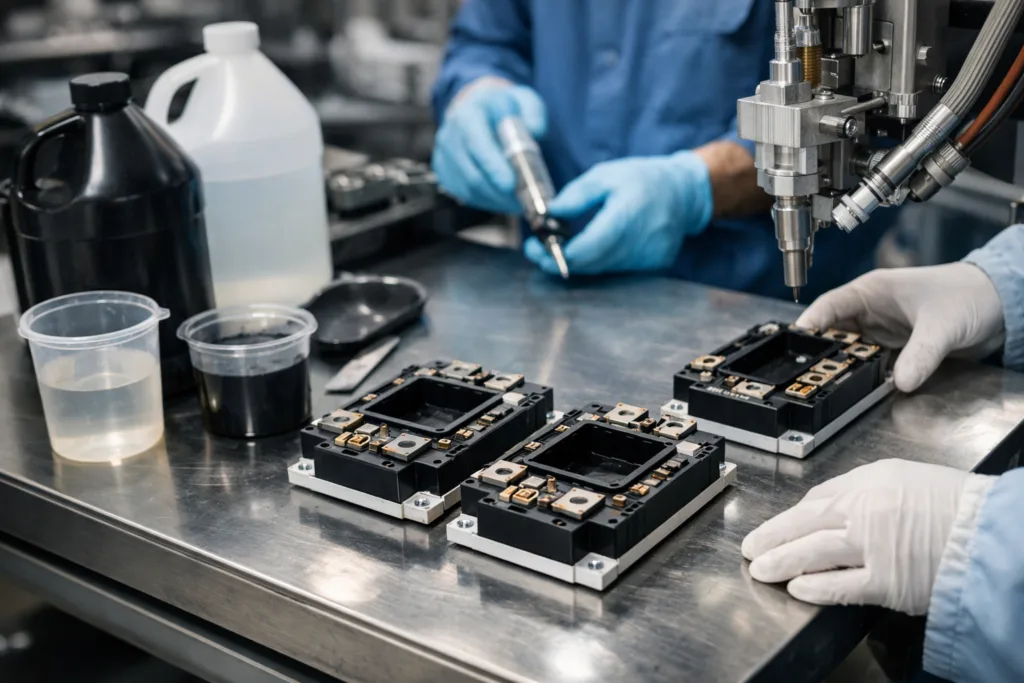
Inverter IGBT modules are vital for controlling large currents in electric vehicles, wind turbines, and industrial drives. These modules face high voltages and rapid switching that generate significant heat. Potting involves encasing the module in an insulating material, which provides both electrical isolation and environmental protection. Effective potting solutions mitigate risks such as short circuits, voltage breakdown, and overheating.
Key Functions of Potting: Beyond Simple Encapsulation
Potting serves multiple functions in inverter IGBT modules, including:
- Electrical insulation
- Moisture barrier
- Mechanical protection against shock and vibration
- Thermal management for heat dissipation
Heat Management in IGBT Modules: The Crucial Role of Potting
Heat is the enemy of IGBT performance and lifespan. Without proper management, thermal buildup causes module failure through thermal runaway, bond wire lift-off, or solder joint fatigue. Potting compounds with high thermal conductivity channel heat away from hotspots toward heat sinks, maintaining safe junction temperatures.
Common Insulation Materials for Potting IGBT Modules
Choosing the right potting compound is foundational for both insulation and heat management. The most common materials are:
- Epoxy resins
- Silicone compounds
- Polyurethane systems
Each material brings unique trade-offs in thermal performance, flexibility, and chemical stability. For challenging high-voltage or high-humidity contexts, even subtle formulation differences make a big impact.
Epoxy Potting Compounds: Strength and Thermal Performance
Epoxies provide strong, durable encapsulation with high dielectric strength. When loaded with thermally conductive fillers, their thermal conductivity can reach 1.0–2.5 W/mK. This makes them effective at transferring heat from IGBT junctions to the device housing.
However, the rigid nature of cured epoxy compounds may lead to stress cracks during extreme temperature cycling. For robust mechanical and thermal performance, formulations must be carefully selected for the use case. For more technical detail on epoxy systems and their conductive fillers, see How Nano-Fillers Revolutionize Epoxy Thermal Conductivity for Metal Products.
Silicone Potting Compounds: Flexibility and Wide Service Range
Silicone-based potting compounds are flexible, with excellent thermal shock resistance and service temperatures from -50°C up to 200°C or higher. Their thermal conductivity typically ranges 0.6–2.0 W/mK. Because of their softness, they reduce stress on delicate components and survive harsh vibration.
Polyurethane Potting for Balanced Insulation and Impact Resistance
Polyurethane systems offer a middle ground, blending moderate thermal conductivity with superior toughness and chemical resistance. They are often chosen for commercial inverter designs that require cost-effective, flexible protection in moderate thermal environments. Learn more about polyurethane-based solutions at polyurethane potting glue.
How Thermal Conductivity Influences IGBT Module Reliability
Thermal conductivity, measured in watts per meter-kelvin (W/mK), directly impacts how quickly and efficiently heat moves away from sensitive IGBT chips. Compounds with high thermal conductivity ensure lower operating temperatures, reducing thermal cycling stresses and accidental failures. For applications with sustained high current or tight enclosure designs, selecting the right thermal-conductive potting is mission critical.
Comparing Potting Materials: Epoxy vs. Silicone vs. Polyurethane
| Property | Epoxy | Silicone | Polyurethane |
|---|---|---|---|
| Thermal Conductivity (W/mK) | 1.0–2.5 | 0.6–2.0 | 0.4–1.5 |
| Dielectric Strength | High | Medium–High | Medium |
| Flexibility | Low | High | Moderate–High |
| Operating Temp. Range (°C) | -40 to 150 | -50 to 200+ | -40 to 130 |
| Moisture Resistance | Excellent | Excellent | Very Good |
ZDS Adhesive Experience: Matching Potting to Real Inverter Challenges
From an assembly-line standpoint at ZDS Adhesive, an industrial adhesive manufacturer, material selection for IGBT module potting balances rapid thermal cycling, exposure to condensing moisture, and automated dispensing. When prototyping for automotive converters, for example:
- Epoxy systems maximize modulus and surface insulation for compact, high-power modules (pass 150°C thermal cycling, 1.8 W/mK, 20 mm bond-line)
- Silicone potting is used where reliability under vibration, freeze/thaw, or enclosure mismatch dominates (service from -50°C to 180°C)
- Polyurethane variants excel when flexible, shock-resistant encapsulation is needed—such as in traction inverters
Innovative Potting Techniques Improving Module Performance
Modern production lines now explore advanced methods for potting IGBT modules, including:
- Vacuum potting techniques to avoid air pockets and weak insulation zones
- Thermal interface fillers—combining high-conductivity ceramics for targeted heat paths
- Dam and fill approaches for hybrid encapsulation of sensitive and high-thermal regions (see How Dam and Fill Encapsulation Protects Sensitive PCB Components in 2026)
Thermal Runaway Risks: Preventive Potting Approaches
Poorly chosen or improperly processed potting can trap air, leading to local overheating and cascading module failure. Flame retardant, UL94 V-0 certified materials are now recommended to help prevent dangerous thermal runaway events—especially in e-mobility or grid applications where module safety is paramount. For a deeper look at fire safety engineering, read The Essential Guide to Preventing Thermal Runaway: How UL94 V-0 Solutions Keep Batteries Safe.
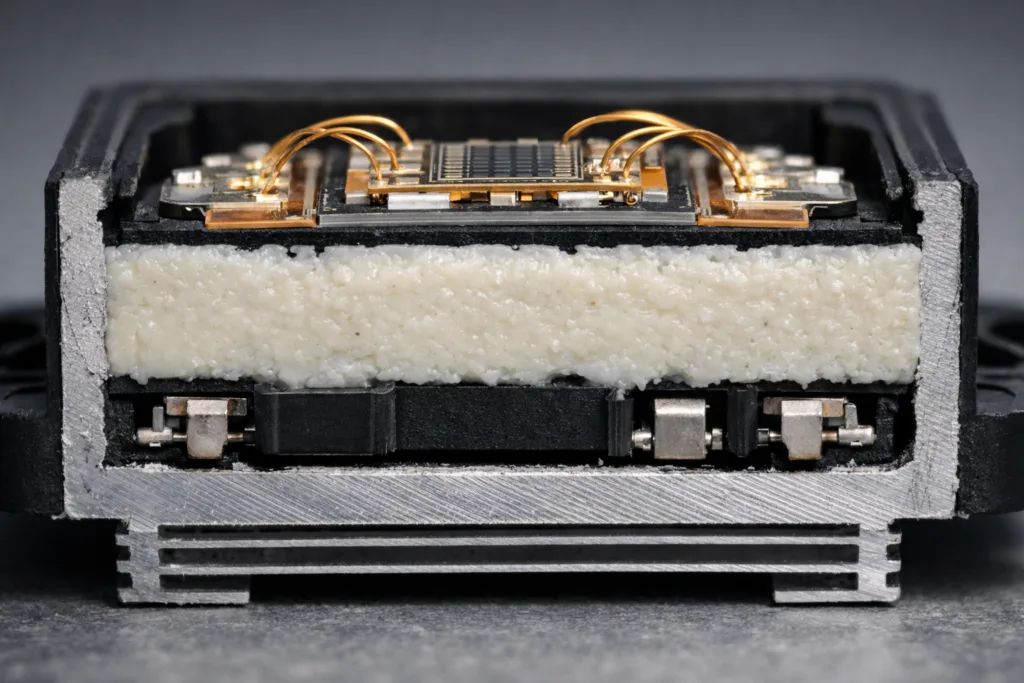
Pitfalls with Potting: Common Failures and Field Case Studies
Field failures in IGBT modules often trace back to incompatible materials or poor process control. Common problems include:
- Cracking or delamination from thermal expansion mismatches
- Micro-voids that undermine voltage withstand
- Insufficient thermal path, trapping heat near the die
Case studies on wind inverter repairs reveal that modules potted with overly rigid epoxies failed first, while those with correctly tuned hybrid or silicone potting persisted through hundreds of thermal cycles.
Key Potting Selection Criteria for IGBT Module Designers
When approaching a new inverter design, engineers should systematically evaluate potting choices using criteria such as:
- Target dielectric strength (kV/mm)
- Thermal conductivity (W/mK)
- Operating temperature range
- Cycle and humidity resistance
- Pot life/work time for assembly processes
Testing and Verification: Lab Practices for Long-Term Reliability
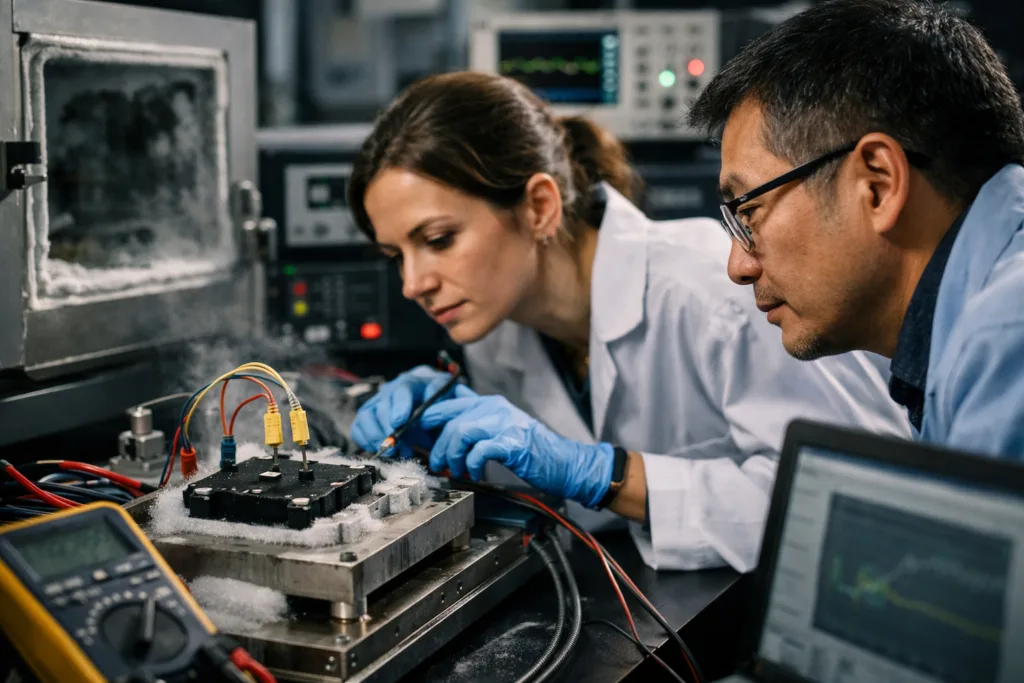
Modules are routinely tested for performance by subjecting them to thermal cycling, humidity aging, insulation breakdown voltage, and mechanical vibration. These tests catch premature failures before mass production and are standard across the power electronics industry. Advanced potting solutions also undergo chemical exposure testing for solvents, coolants, and cleaning agents seen in real use.
Potting Application Process Steps: Best Practices
A typical inverter IGBT module potting process includes:
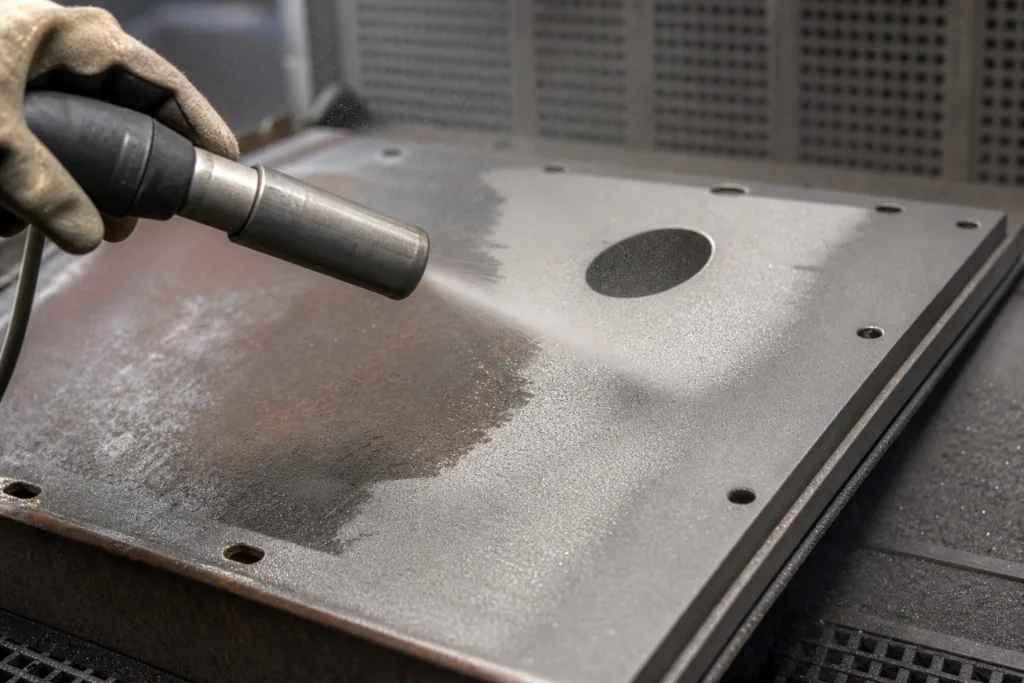
- Cleaning and drying module surfaces (removing all flux and contaminants)
- Masking critical contact areas
- Automated or manual metering and mixing of the potting compound
- Controlled dispensing to eliminate voids
- Curing at appropriate temperature and humidity for the resin type
- Final inspection for insulation, coverage, and bond-line thickness
Emerging Trends: High-Performance Potting for Future Inverters
Looking ahead, environmental mandates and electrification trends are pushing the adoption of low-halogen, halogen-free, and recyclable potting solutions. At the same time, nanomaterial enhancements, self-healing gels, and smart thermal fillers are reshaping what’s possible for compact, high-power inverter modules in 2026 and beyond.
The Cost/Performance Equation in Potting Material Selection
While technical performance is the focus, cost control and manufacturing scalability can’t be ignored. Polyurethane and modified epoxy systems are commonly selected when designers need to balance cost, process speed, and environmental safety.
Potting Solutions for Inverter IGBT Modules: Heat & Insulation
In summary, the right potting solution delivers robust insulation, outstanding thermal management, and long-term reliability for IGBT inverter modules deployed in demanding environments. Matching specific application requirements to material characteristics—thermal conductivity, dielectric strength, processability—ensures modules stand the test of time. Now, let’s address common questions about potting selection and best practices.
Frequently Asked Questions
What is the main purpose of potting in inverter IGBT modules?
Potting provides electrical insulation, manages heat dissipation, and protects the IGBT module from moisture, dust, and vibration, significantly improving reliability and service life.
Which potting material is best for high-temperature inverter applications?
Silicone-based potting compounds are best suited for high-temperature applications due to their flexible nature and ability to withstand extreme thermal cycling without cracking.
How does thermal conductivity affect IGBT module performance?
High thermal conductivity allows heat to move away from the module’s internal components quickly, minimizing hot spots and reducing the risk of failure due to overheating.
What are the main risks if potting is not done correctly?
Poor potting can trap air, cause electrical shorts, allow moisture ingress, or create thermal bottlenecks, all leading to early module failure or even safety hazards.
Can I use the same potting material for all inverter designs?
No, selecting the right potting material depends on operating temperature, required flexibility, dielectric strength, and exposure conditions unique to each design.
How can manufacturers verify potting effectiveness in production?
Manufacturers should test for insulation resistance, thermal performance, and mechanical integrity using accelerated aging, thermal cycling, and high-potential voltage tests.