Introduction: Understanding What Is Industrial Glue? Types, Uses, and How to Choose the Right One
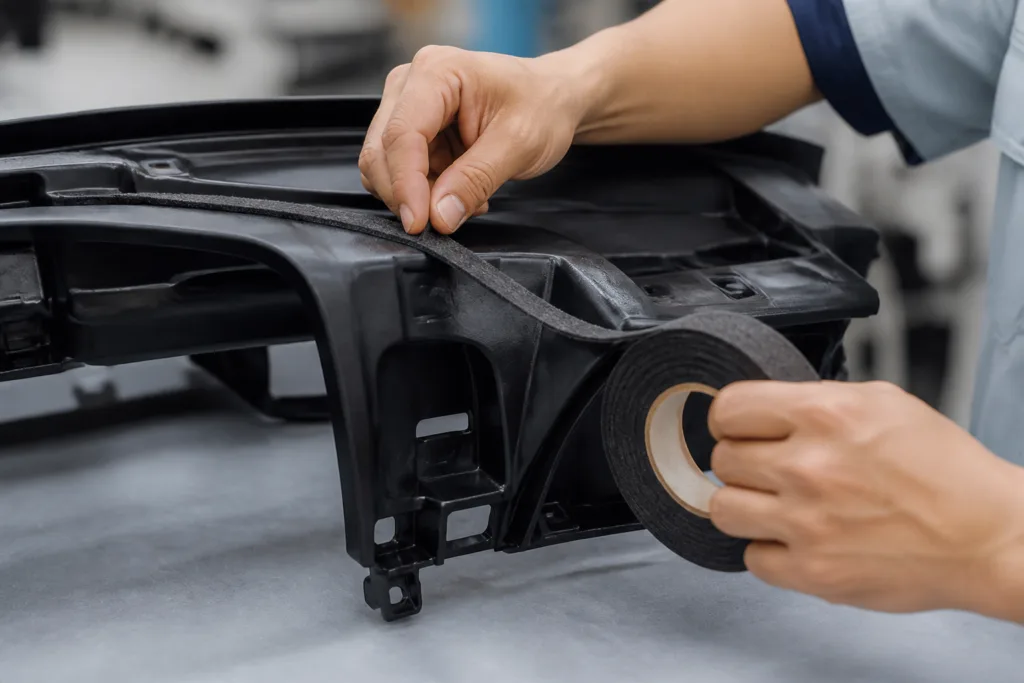
Industrial glues – often called industrial adhesives or industrial strength glue – are the backbone of modern manufacturing, construction, and assembly. Unlike household glues, these specialized bonding solutions are engineered for high-performance, durability, safety, and precise application. This guide isolates industrial glue from consumer glue, explaining the chemistry, curing mechanisms, application methods, strength profiles, and environmental demands of industrial adhesives. By the end, you’ll know how to choose, use, and evaluate industrial adhesive glue with confidence, whether you’re working with metal, plastic, automotive parts, or electronics.
How Industrial Glue Differs from Consumer Glue
Industrial glues are formulated for specific material bonding, chemical resistance, and mechanical strength. Consumer glues are mostly general-purpose; industrial adhesives are precision-engineered for reliability under stress, exposure, and production constraints. For example, industrial adhesives feature custom formulations for metals, plastics, composites, and glass – a specificity that sets them apart.
The Chemistry Behind Industrial Glue
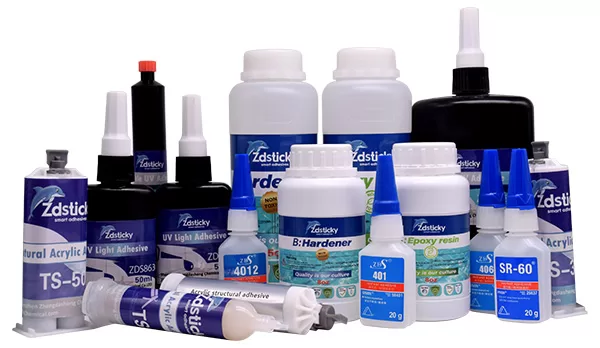
Industrial glue chemistry spans epoxy resins, polyurethane adhesives, acrylics, silicones, cyanoacrylates, anaerobic adhesives, and hot melt glues. Each category is tailored for different substrates, thermal changes, and bond line thicknesses. The choice of chemistry influences cure speed, strength, flexibility, and resistance to chemicals, moisture, and temperature extremes.
Curing Mechanisms: How Industrial Glue Sets and Hardens
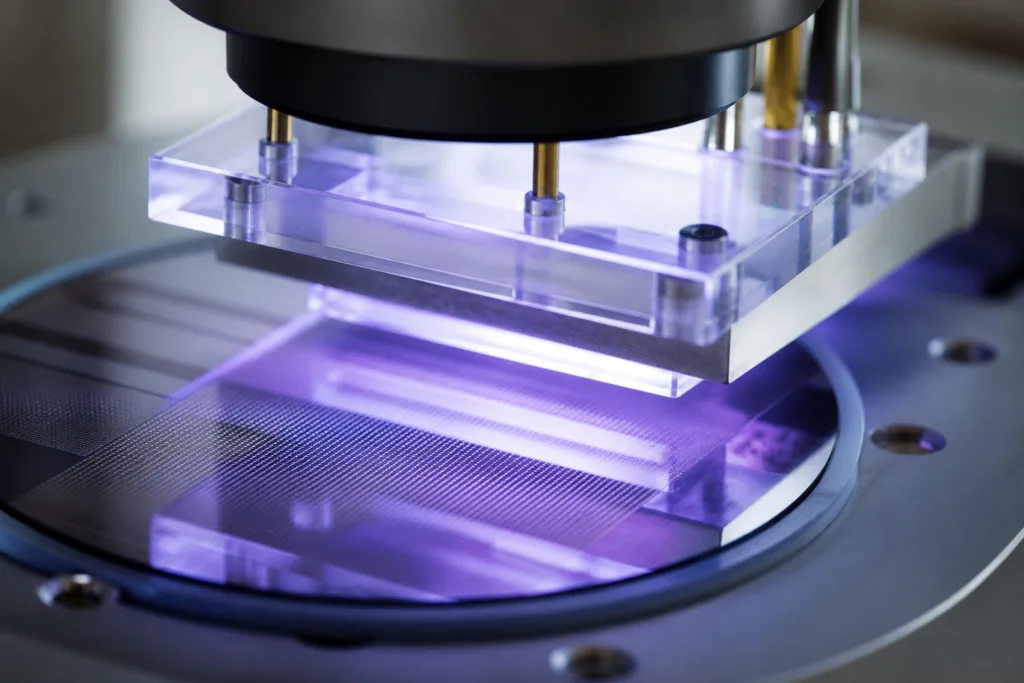
Industrial adhesives use several curing mechanisms: heat-cure, UV-cure, moisture-cure, two-part epoxies, and pressure-sensitive adhesives. For instance, epoxy adhesive cures via chemical reaction between resin and hardener, achieving high strength and thermal stability. UV-cure adhesives harden quickly when exposed to ultraviolet light, ideal for electronics and medical device assembly.
Application Methods for Industrial Glue
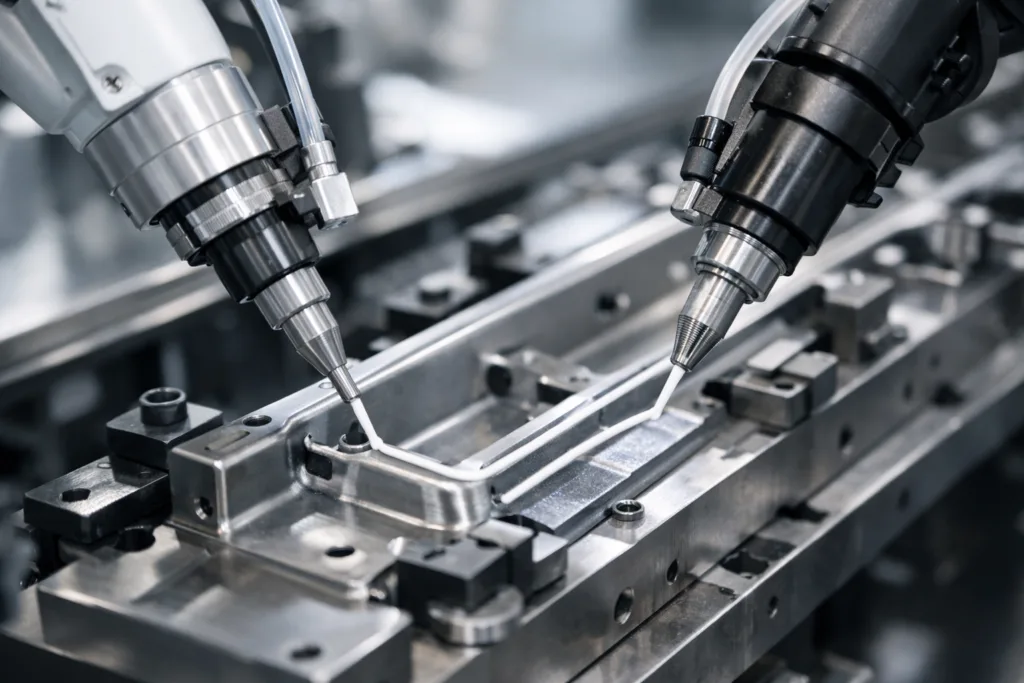
Methods range from manual bead dispensing to robotic applications. Spray, brush, bead, dot, and automated dispensing all reduce waste and improve repeatability. Application technique must match viscosity, open time, and production speed requirements. For complex assemblies, potting, encapsulation, and seamless bonding are common procedures.
Strength Requirements: Selecting Industrial Strength Glue
Industrial glue is measured by lap shear, peel strength, impact resistance, and fatigue tolerance. For structural connections, adhesives must withstand mechanical loads and environmental stress over years. Selecting the right strength means knowing your substrate, load type (static vs. dynamic), and exposure conditions. If you need inspiration on high-performance adhesives for automotive, see automotive adhesive manufacturer.
Bonding Environment: Temperature, Moisture, and Chemicals
Environment plays a critical role. Will your bond face outdoor weather? Oil and solvents? High heat or freezing cold? Industrial adhesives offer formulations resistant to UV, humidity, corrosion, vibration, and extreme temperature swings. Always check the technical datasheet for recommended operating ranges and compatibility.
Classification of Industrial Adhesive Glue
Epoxy Adhesives
Epoxy adhesives provide high mechanical strength and chemical resistance. Ideal for metal, glass, ceramics, and some plastics. They cure via mixing resin and hardener, offering long open time and predictable performance. Commonly used in aerospace, automotive, and electronics.
Polyurethane Adhesives
Polyurethane adhesives deliver strong, flexible bonds. They’re chosen for situations where expansion, vibration, or movement is expected. Used in construction, wood, and glass, with good resistance against water and chemicals.
Acrylic Structural Adhesives
Acrylics excel in fast cure, high impact resistance, and bonding challenging substrates such as oily metals. For more on their advantages, visit acrylic structural adhesive manufacturer.
Silicone Adhesives
Silicones are crucial for sealing, flexibility, and temperature stability up to 200°C. Used in electronics, automotive, and industrial gasketing applications.
Cyanoacrylate (Instant) Adhesives
Also known as superglues; cyanoacrylates provide extremely fast bonding for small parts, plastics, rubber, and metals. Less ideal for structural loads or humid environments.
Anaerobic Adhesives
Anaerobics cure without oxygen, locking threads and retaining shaft and bearing assemblies. Useful in mechanical locking and sealing.
Hot Melt Adhesives
These adhesives are applied in molten state and solidify as they cool. Used for packaging, assembly, and some electronics applications.
Industrial Glue by Application: Key Sectors
Metal Bonding
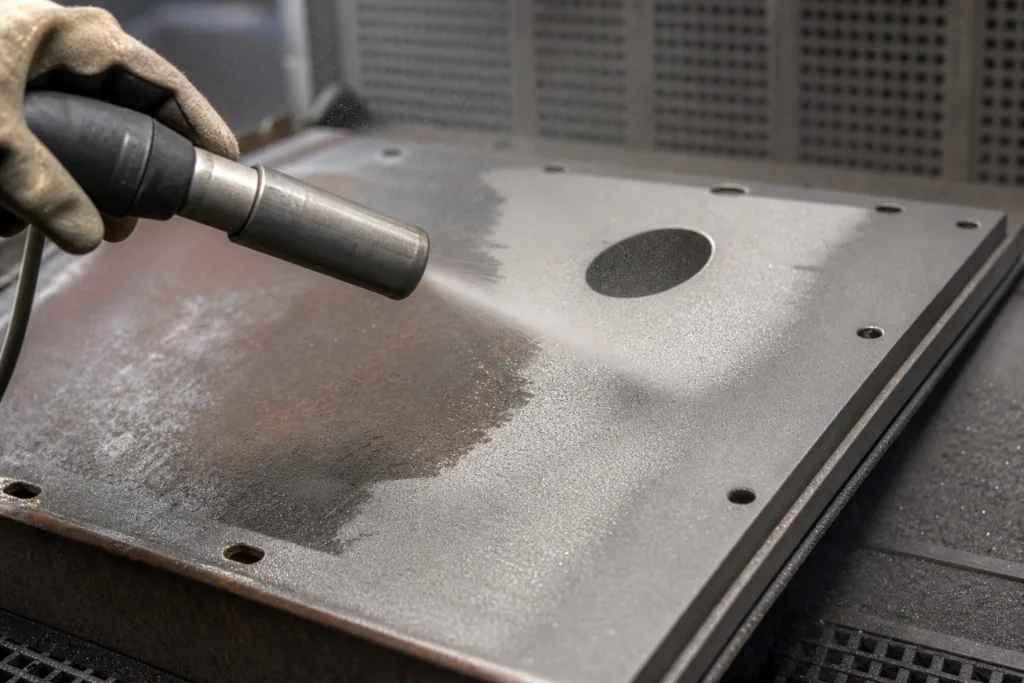
Epoxy, acrylic, and polyurethane adhesives are common for metal-to-metal bonding. Surface preparation, primer, and proper cure are essential for long-term durability.
Plastic Bonding
Bonding plastics requires adhesives designed for low surface energy substrates like polypropylene and polyethylene. Primer or surface treatment improves adhesion.
Automotive Assembly
Automotive adhesives handle vibration, heat, and chemical exposure. Common types include structural epoxies, polyurethane for windshields, and acrylics for trim and weatherstrips.
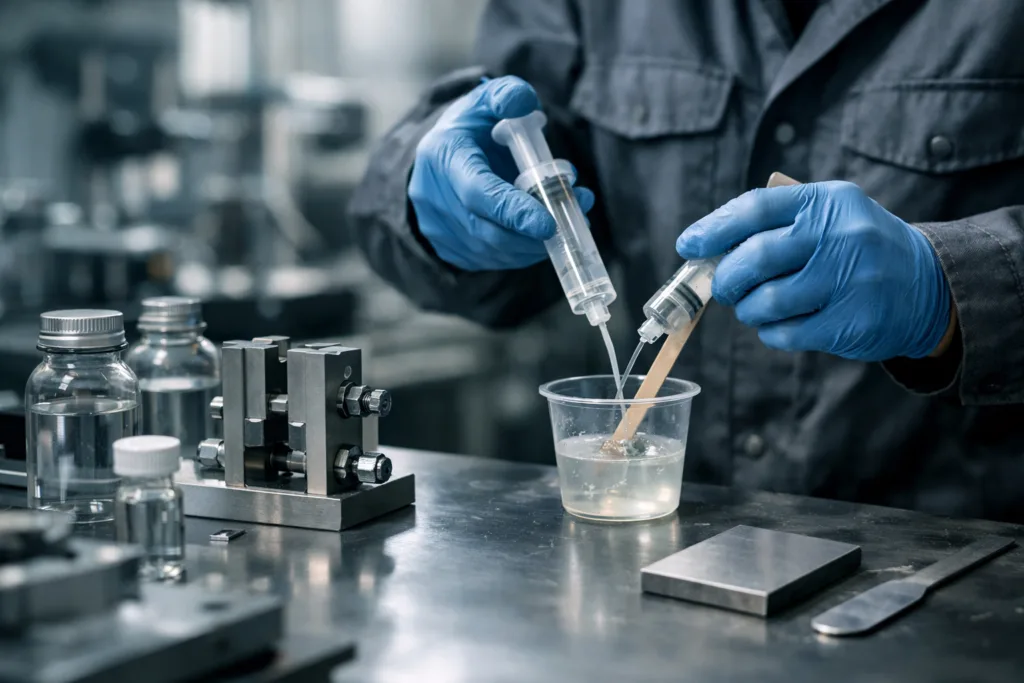
Electronics Manufacturing
Electronics rely on adhesives for PCB mounting, chip bonding, encapsulation, and heat management. UV-cure and modified epoxies are common.
Construction and Building
Structural adhesives are used in curtain walls, flooring, facade panels, and weatherproofing. Durability and compliance with standards are important.
How to Choose the Right Industrial Glue
Choosing the right industrial adhesive glue hinges on five factors:
- Substrate type: metal, plastic, glass, rubber, composite
- Strength requirement: lap shear, peel, impact
- Bond environment: heat, cold, humidity, chemicals
- Application method: manual, automated, potting, sealing
- Process constraints: open time, fixture time, cure mechanism
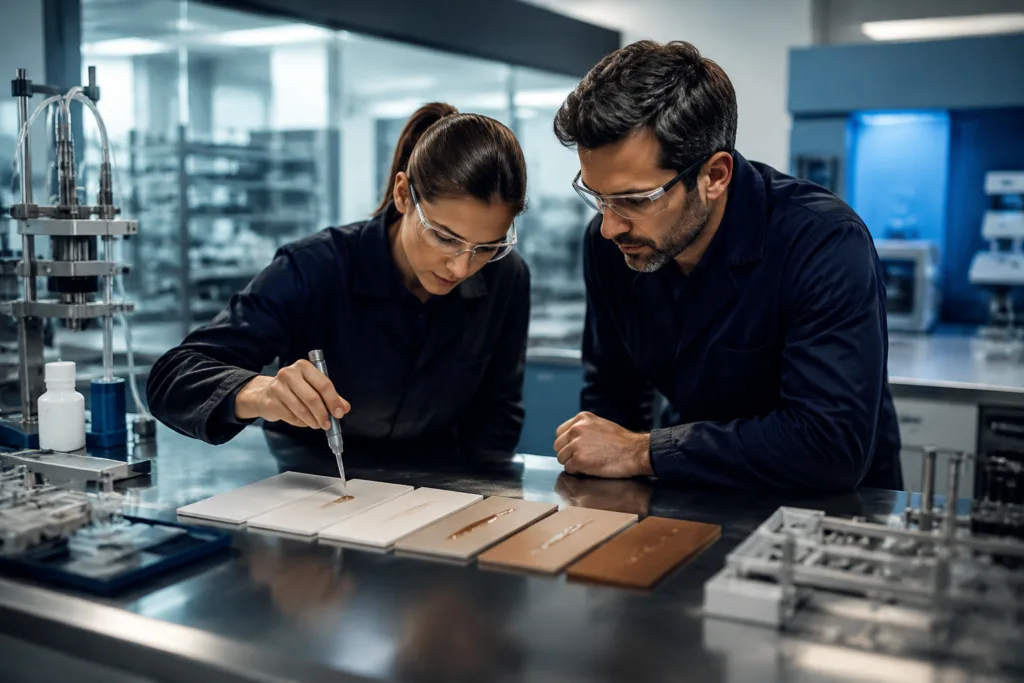
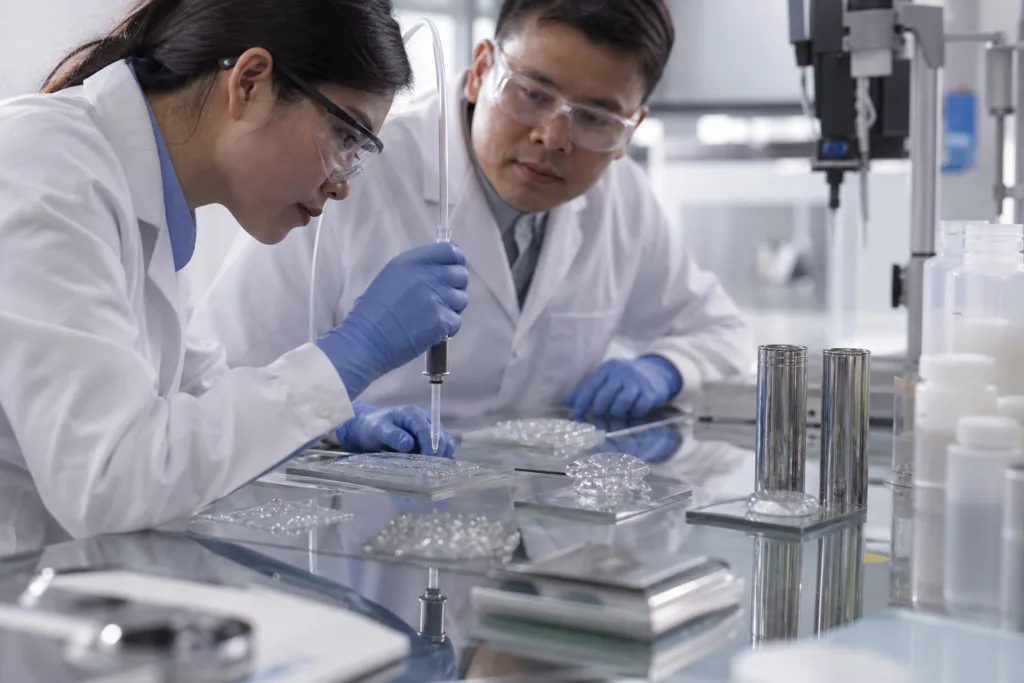
For reliable assembly, test with real parts, simulate operating conditions, and review datasheets. From an assembly-line viewpoint at ZDS Adhesive, an industrial adhesive manufacturer, we routinely perform lap shear, peel, and thermal cycling tests to avoid unpredictable failures. Bonding oily metals? Acrylics can often eliminate the need for extensive surface prep, speeding production and improving reliability.
Comparison Table: Industrial Glue Types and Their Key Properties
| Type | Cure Mechanism | Main Applications | Strength | Flexibility | Resistance |
|---|---|---|---|---|---|
| Epoxy | 2-part, heat | Metal, electronics | High | Low–Medium | Chemical, heat |
| Polyurethane | Moisture, 2-part | Glass, wood, construction | Medium–High | High | Moisture, chemicals |
| Acrylic | 2-part, UV | Metal, composites | High | Medium | Impact, oil |
| Silicone | Moisture | Electronics, gaskets | Medium | High | Heat |
| Cyanoacrylate | Instant | Small parts, rubber | Medium | Low | None |
| Anaerobic | No oxygen | Thread, shaft locking | Medium | Low | Corrosion |
| Hot Melt | Cooling | Packaging | Medium | Medium | Moisture |
Safety, Handling, and Storage Tips
Always follow manufacturer instructions for mixing, dispensing, and curing adhesives. Use PPE (gloves, goggles) when handling chemicals, especially epoxies and cyanoacrylates. Store adhesives in cool, dry places, away from direct sunlight or sources of ignition. Label containers, track shelf life, and dispose of expired material according to local regulations.
Testing, Quality Control, and Assembly Validation
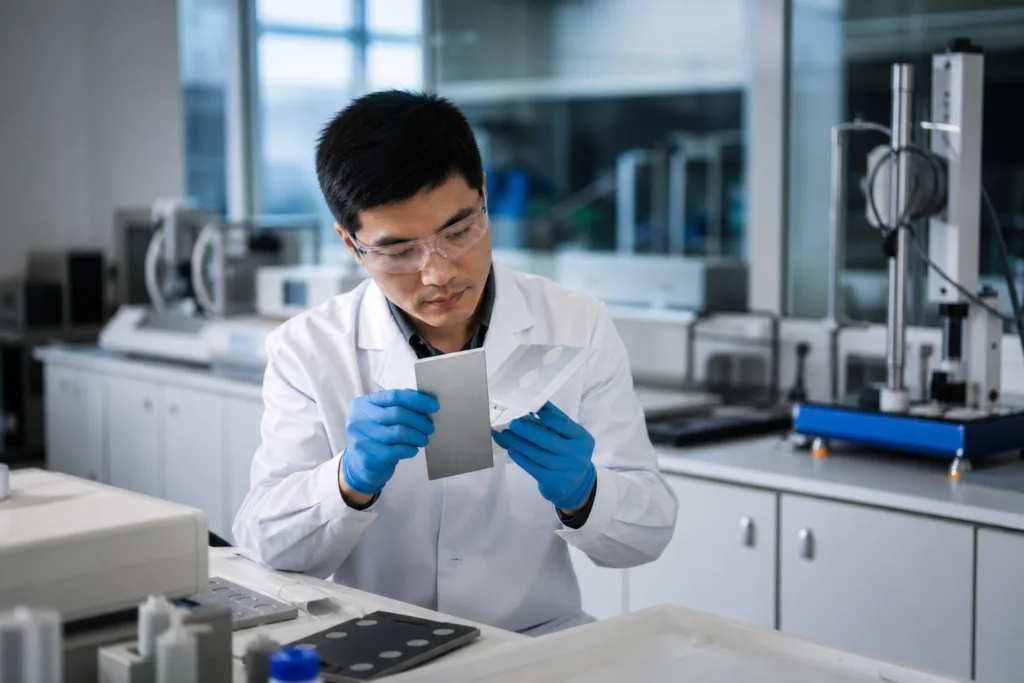
Industrial gluing requires quality checks such as lap shear tests, peel tests, environmental cycling, and aging analysis. Sampling from production batches and reviewing test data gives early warnings of potential failures. Engineering teams must document process parameters, bond line thickness, cure times, and surface treatment protocols.
When Should You Use Industrial Glue?
Industrial glue is best when mechanical fasteners are impractical, when sealing or vibration-damping is needed, or when aesthetics matter. Structural adhesives replace welding, riveting, or bolting in situations where weight savings, corrosion resistance, or invisible joints are critical.
Common Mistakes and How to Avoid Them
Failing to match adhesive chemistry with substrates, skipping surface prep, disregarding cure time, and ignoring environmental compatibility are frequent causes of failure. Always read technical datasheets and consult application engineers before scaling up production.
Key Properties and Performance Metrics
- Lap shear strength – bonding strength under shear
- Peel strength – resistance to peeling forces
- Thermal cycling – stability under temperature changes
- Chemical resistance – survival in chemicals, oils, solvents
- Open time – workable period before bonding
- Fixture time – time to reach handling strength
Tips for Transitioning from Consumer Glue to Industrial Adhesive Glue
If you’re moving from household glue to industrial adhesives, start by identifying your material pair, performance needs, and production volume. Industrial glues require more precise mixing, application, and curing – but offer far greater reliability and versatility. Consult experts and review application case studies for similar assemblies.
Expanding Industrial Glue Technology: Trends in 2026
In 2026, industrial adhesives are evolving with smarter curing systems, faster line speeds, and greener chemistries. UV-cure, low-odor acrylics, and new polyurethane technologies are improving performance and safety. Data-driven quality control and predictive maintenance further reduce failures.
What Is Industrial Glue? Types, Uses, and How to Choose the Right One
Industrial glues are engineered for structural, durable, and process-stable bonding. Types like epoxy, polyurethane, acrylic, and silicone each have unique chemistry, cure mechanisms, application methods, and strength profiles. By considering substrate, environment, and assembly demands, manufacturers can select adhesives that deliver on both performance and reliability. Testing and quality control are essential to achieve predictable, long-lasting results.
Conclusion: Practical Insights and Takeaways
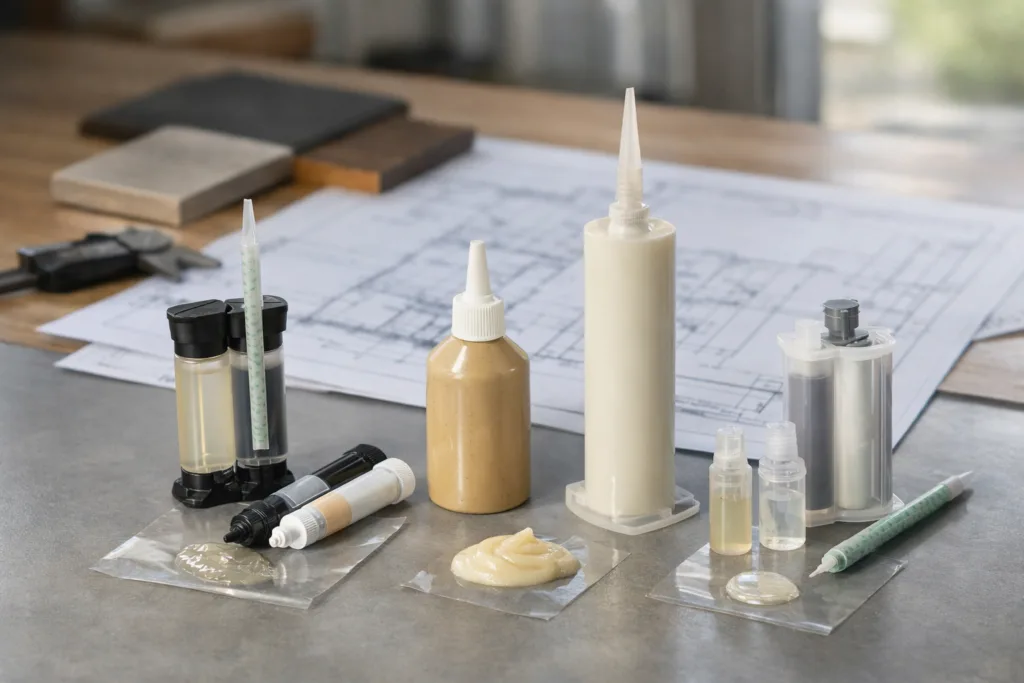
Industrial adhesives redefine what’s possible in manufacturing and assembly. Knowing the type, chemistry, cure mechanism, and environmental constraints is crucial. Transitioning from consumer glue to industrial glue unlocks greater strength, durability, and versatility – but demands attention to process validation, datasheet review, and real-world testing. As technology evolves in 2026, smart curing and quality monitoring ensure safer, faster, and more reliable bonds. Choose wisely, validate carefully, and let performance guide your adhesive choices for the future.
Frequently Asked Questions
How is industrial glue different from consumer glue?
Industrial glue is engineered for higher strength, durability, and resistance, while consumer glue is formulated for general, simple applications.
What are the main types of industrial adhesives?
The main types include epoxy, polyurethane, acrylic, silicone, cyanoacrylate, anaerobic, and hot melt adhesives, each with specific bonding properties.
How do I choose the right industrial adhesive glue?
Select based on substrate type, bond strength required, curing mechanism, environment, and application method. Datasheet review and testing are vital.
Can industrial glue be used for metal bonding?
Yes, with options such as epoxy and acrylic structural adhesives. Surface preparation and proper cure are important for reliable metal bonding.
What environmental factors should I consider?
Assess temperature extremes, moisture, chemical exposure, and UV resistance to ensure adhesive compatibility with your application.
What is the safest way to handle and store industrial adhesives?
Always follow manufacturer instructions, use PPE, store in cool, dry areas, and label containers. Monitor shelf life and dispose of expired adhesive responsibly.
Related Reading
- Metal Bonding Showdown: Acrylic vs. Epoxy Strength Explained
- Achieve Assembly Success with Custom Adhesive Solutions
- How Low-Odor Acrylics Improve Factory Safety and Comfort
- Procurement Guide: Choosing a Reliable Adhesive Manufacturer
- Faster Production: Cut Surface Prep for Oily Metals with Acrylics