Introduction to Aerospace Adhesives Guide: Performance Standards, Testing, and Certification Basics
The aerospace industry sets the highest bar for adhesives—the material choices, manufacturing demands, and validation criteria are so strict that only a select few products consistently deliver reliability. Exploring adhesives in aerospace industry means considering a web of performance standards, from structural strength to outgassing limits, as well as certification basics. The entry barrier is high, and this guide breaks down what makes aerospace adhesives unique, why validation systems matter, and how rigorous testing ensures every bond can withstand extremes. If you ever wondered why aerospace structural bonding is so unforgiving, read on—you’ll see why consistency is valued even more than ultimate strength.
Understanding the Entry Barriers for Aerospace Adhesives
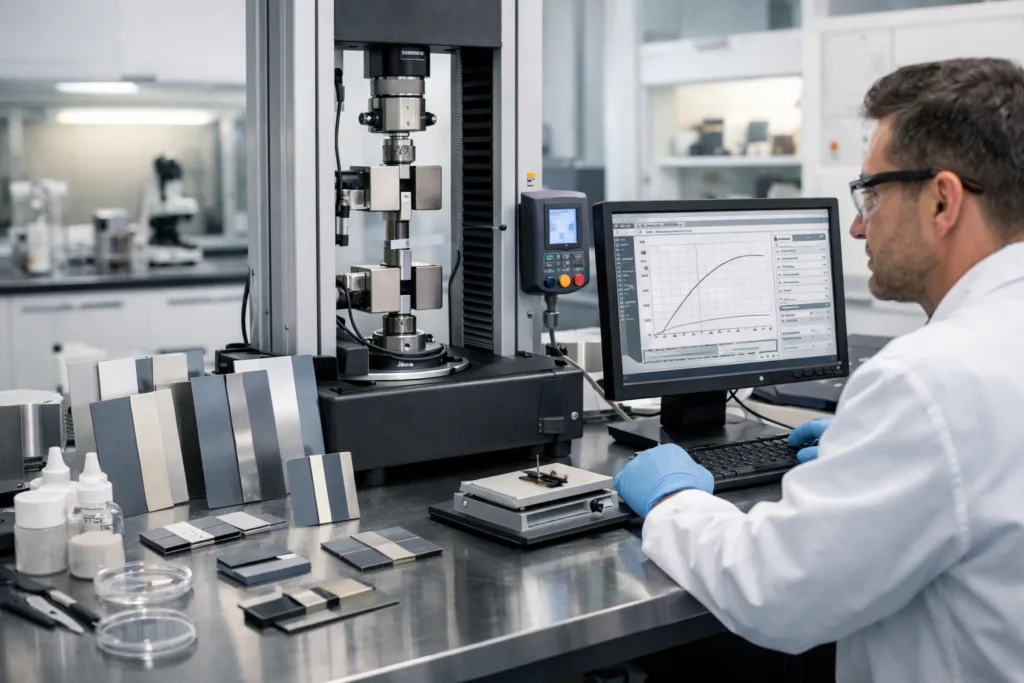
Adhesive selection for aerospace is not just about technical specs; it’s about surviving persistent audits and proving traceability throughout production. Regulatory requirements, such as those from the FAA and EASA, set a strict baseline. With epoxy adhesives often preferred for aircraft structural applications, the first hurdle is passing a barrage of tests: lap shear, peel, fatigue, thermal cycling, and flammability. Each batch must meet specifications and come with full traceability so failed bonds never compromise safety. This is why manufacturers need robust qualification systems before even entering aerospace supply chains.
What Makes Aerospace Adhesives Different?
Unlike automotive or general industrial adhesives, aerospace-grade bonding agents must balance structural strength with low outgassing, fire resistance, and temperature resilience. Some typical features include:
- Exceptional resistance to fatigue and vibration.
- Stable mechanical properties from -55°C to +200°C (or higher).
- Low flame spread and minimal smoke generation.
- Traceable production batches for quality audits.
The Role of Structural Strength and Fatigue Resistance
Aircraft structural adhesive applications demand consistent load transfer and resistance to cyclic stresses. Bond lines must endure decades of service, absorbing fatigue and vibration without losing strength. This is why engineers prioritize adhesives with high lap shear and peel strength, but also study their crack propagation and failure modes. Choosing an adhesive is rarely about maximum strength—it’s about predictable behavior under repeated stress.
Fatigue Testing for Aerospace Epoxy and Acrylic Adhesives
Fatigue resistance is tested under simulated flight conditions, including temperature fluctuations and mechanical cycling. High-performance epoxies and acrylics offer strong, stable bonds across aluminum, titanium, and composite panels. Fatigue failures often reveal weaknesses in manufacturing or inconsistent curing, which is why batch validation and process controls are mandatory.
Temperature Resistance: Highs, Lows, and Thermal Cycling
Aerospace adhesives routinely face both subzero and scorching temperatures. Testing includes:
- Static high-temperature strength (often up to 200°C or more).
- Low-temperature flexibility and toughness, crucial for cold-soaked aircraft sections.
- Thermal cycling endurance—ensuring the bond does not degrade with repeated heating and cooling.
Choosing aerospace grade epoxy or polyurethane means checking its mechanical performance curve across full operational temperature ranges, not just room temperature. These adhesives typically outperform their industrial cousins when subjected to thermal cycling protocols.
Flame Behavior, Smoke, and Toxicity Standards
Fire safety in aerospace is non-negotiable. Adhesives must:
- Resist ignition (low flammability).
- Generate minimal smoke and toxic fumes during any fire event.
- Pass tests like FAR 25.853 and UL 94 for flame spread and smoke density.
Flame-retardant additives are common in aerospace formulations, but every ingredient must be validated for chemical compatibility and aging stability.
Low Outgassing Requirements in Aerospace Applications
Outgassing—the release of volatile compounds—can cloud optical systems, interfere with sensors, or compromise avionics. Adhesives for aerospace must meet strict NASA outgassing protocols (GC-MS analysis for total and condensable volatile emissions), especially for satellite and cabin interior parts. Only adhesives proven to emit low levels under vacuum and heat make the grade.
Traceability and Batch Validation in Aerospace Adhesive Manufacturing
Every batch of aerospace adhesive is tracked with unique identifiers, supported by detailed certificates of analysis (COA) and material safety data sheets (MSDS). Traceability ensures quick identification in the rare event of performance anomalies. Production records include mixing ratios, cure times, storage conditions, and QC tests—creating an auditable trail from factory floor to aircraft assembly.
Documentation Essentials for Aerospace Adhesives
Traceable documentation typically includes:
- Lot number and batch code
- Certificate of conformity
- Test results for each production batch
- Storage and handling records
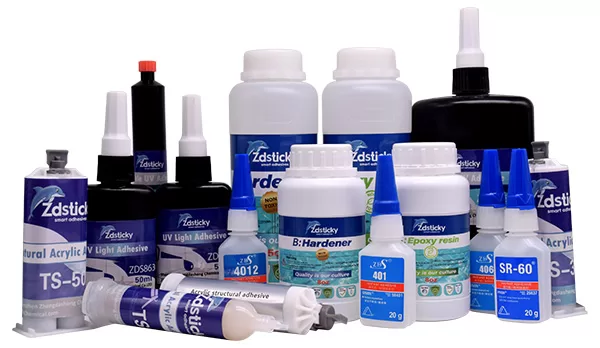
This forms the backbone of aerospace validation systems, ensuring manufacturers—like ZDS Adhesive, an industrial adhesive manufacturer—can guarantee spec compliance and respond swiftly to any audit or traceability request.
Certification Systems: Testing and Compliance for Aircraft Structural Adhesive
Aerospace adhesives are subject to multi-step testing and certification processes:
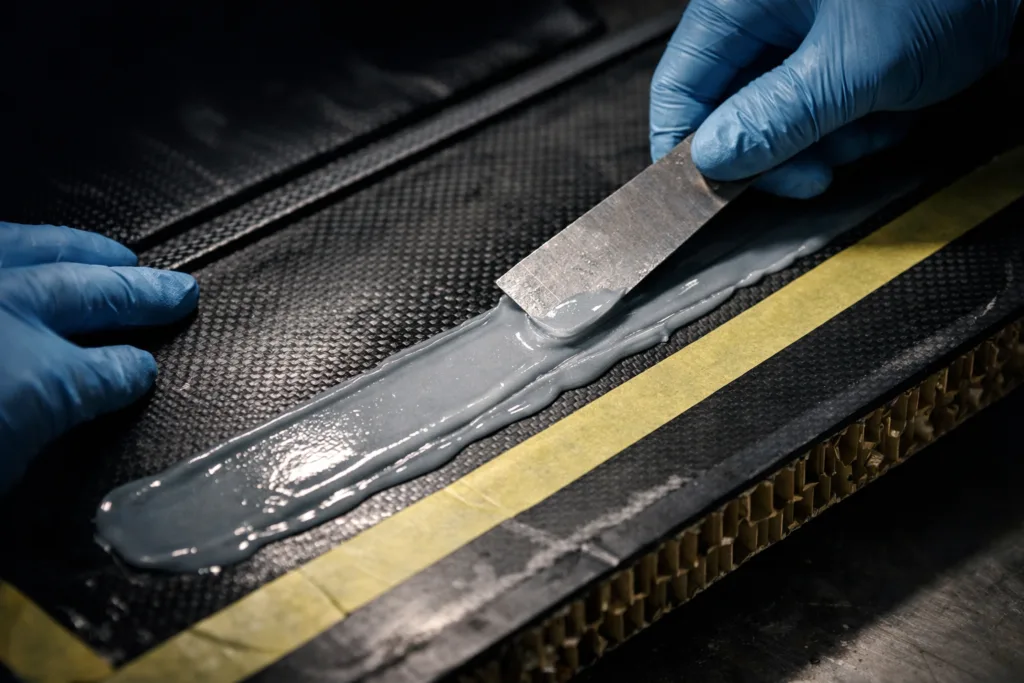
- Physical testing (lap shear, peel, fatigue, tensile and compressive strength).
- Chemical testing (outgassing, resistance to hydraulic fluids, aviation-grade fuels).
- Environmental testing (UV exposure, humidity aging, salt spray—especially important for exposed aircraft components).
- Fire and smoke testing: Confirming low flammability and minimal toxicity.
- Certification audits against standards—such as SAE AMS, MIL specifications, and customer-specific protocols.
The validation and testing process is never static; new standards and regulations continuously raise the bar. This keeps manufacturers on their toes, evolving their formulations and testing workflows to stay ahead of the curve.
Key Performance Metrics for Adhesives in Aerospace Industry
Some essential metrics measured during qualification include:
- Lap shear strength (N/mm²)
- Peel resistance (N/cm)
- Thermal cycling durability
- Fail-safe behavior (whether the bond or substrate fails first)
- Service temperature range
High-performing structural adhesives are designed with these metrics in mind to ensure consistent behavior in both assembly and flight environments. Learn more about industrial adhesives that meet rigorous standards for traceability and performance.
How Consistency and Validation Systems Protect Aircraft Reliability
Aircraft bonding depends on consistency—every batch must behave identically, every cure cycle must produce a verified bond. Validation systems combine documentation, in-process testing, and auditing to catch deviations early. This process is fundamental to the industry’s trust in structural bonds for wings, fuselage panels, and control surfaces.
Practical Checklist for Aerospace Bonding Validation
- Use materials with full documentation and batch traceability.
- Verify mixing, application, and curing parameters for every batch.
- Cross-check with standardized test results (lap shear, fatigue).
- Audit performance regularly and log all deviations.
- Respond to failures with root-cause analysis, not finger-pointing.
Comparing Aerospace Epoxy to Industrial Alternatives
| Property | Aerospace Epoxy | Industrial Epoxy |
|---|---|---|
| Structural Strength | High (validated & consistent) | Varies (may be high, less controlled) |
| Temperature Range | -55°C to 200°C | -20°C to 120°C typical |
| Outgassing | Low, certified | Uncontrolled |
| Traceability | Full batch records | Often limited |
| Certification Testing | Mandatory | Optional |
| Fire Resistance | Tested to aviation standards | May be absent |
Need expertise for custom aerospace bonding? The adhesive solutions from ZDS Adhesive cover a range of chemistries and traceability options for regulated manufacturing.
Brand Voice: Practical Guidance from ZDS Adhesive, an Industrial Adhesive Manufacturer
From an assembly-line viewpoint at ZDS Adhesive, choosing aerospace adhesives is about measurable risk reduction. For example, when bonding carbon fiber composite panels, the engineer reviews substrate surface energy, open time, pot life, humidity limits, and fixture conditions. Critical process steps include verifying lap shear and peel values after thermal cycling, logging each batch’s results. If one batch’s peel strength drops below spec, immediate re-audit and corrective action are triggered. This approach keeps failure rates low while ensuring traceable reliability in every aircraft build.
Emerging Trends in Aerospace Bonding: What to Expect in 2026
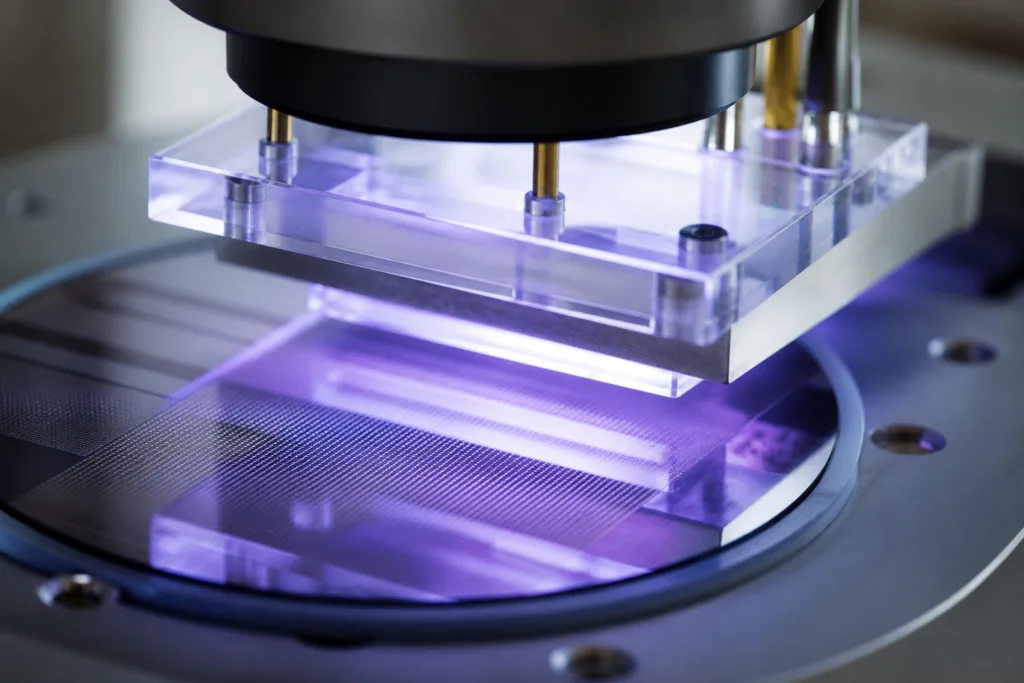
The aerospace sector is adopting new adhesives with nanomaterial reinforcements, expanding cure-on-demand chemistries like UV and dual-cure, and automating traceability using digital batch tracking. These innovations offer even higher fatigue resistance, improved flame retardancy, and simplified process validation. As standards toughen, expect more frequent material audits and tighter data requirements throughout the supply chain.
Aerospace Adhesives Guide: Performance Standards, Testing, and Certification Basics
Aerospace adhesives guide every step, from design through manufacturing and beyond. Performance standards set requirements for mechanical, thermal, chemical, and environmental durability. Testing covers strength, fatigue, temperature exposure, and traceability, while certification audits ensure compliance. Only by following these systematic steps can manufacturers build lasting bonds trusted in every aircraft section.
Conclusion: Key Takeaways for Aerospace Adhesives Success

Aerospace adhesive applications challenge engineers with high entry barriers, demanding more than just technical performance—they require full traceability, proven consistency, and robust validation. Structural strength, fatigue resistance, temperature endurance, fire safety, and low outgassing define the minimum standards. Certification testing and documentation create reliable pathways from manufacturing to in-flight service. As regulatory toughness grows, manufacturers must stay sharp, using data-driven processes to prevent failures and support continuous improvement. Mastering these details means building safer, more resilient aircraft for the skies ahead.
Frequently Asked Questions
What tests must aerospace adhesives pass?
Aerospace adhesives must pass mechanical, chemical, environmental, and fire safety tests—such as lap shear, peel, fatigue, outgassing, and flame/smoke standards—to ensure safe, reliable bonding.
Why is traceability important in aerospace adhesives?
Traceability ensures quality and accountability for every batch, allowing quick investigation and isolation of issues, thereby preventing failures from impacting multiple aircraft components.
What are the temperature ranges for aerospace adhesives?
Aerospace adhesives typically perform reliably from -55°C to over 200°C, maintaining their strength through both cold and hot operational cycles, including repeated thermal cycling.
How is fatigue resistance measured for aircraft structural adhesive?
Fatigue resistance is measured by subjecting adhesive bonds to mechanical cycling under controlled temperature and humidity, then assessing bond integrity and failure modes over thousands of repetitions.
What is outgassing and why does it matter?
Outgassing is the release of volatile chemicals from adhesives, which can damage sensitive optical or electronic aircraft components; thus, low outgassing is essential for aerospace use.
How do aerospace adhesives achieve fire safety?
Aerospace adhesives include flame-retardant additives and must pass strict flammability and smoke testing, ensuring minimal ignition risk and low toxicity if exposed to fire.
Related Reading
- Secrets of Adhesive Material Testing for Reliable Results
- Metal Bonding Showdown: Acrylic vs Epoxy for Shear & Peel Strength
- Satellite Terminals: How Vacuum-Resistant Adhesives Transform Performance
- How Custom Adhesive Manufacturing Solves Specialized Challenges Fast
- Overcoming 800V High-Voltage Insulation Challenges in Modern EV Powertrains