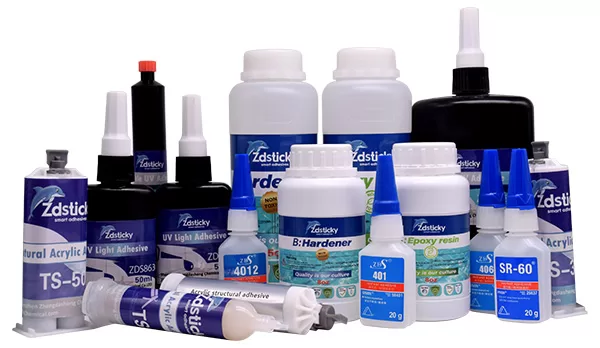
Introduction: Why Choosing the Right Plastic Adhesive Matters
When it comes to plastic bonding, “one size fits all” rarely applies. Searching for the strongest glue for plastic or the best adhesive for plastic often leads to conflicting advice. That’s because plastics vary widely in chemical structure, surface energy, and intended use. Working backward—from identifying your plastic type and anticipated service demands—gives you a far more reliable path than chasing a single “universal” adhesive.
In this guide, we’ll break down exactly what is the best adhesive for plastic by plastic type and use. We’ll compare adhesives for hard-to-bond and easy-to-bond plastics, layer in key factors like temperature, moisture, and speed, and provide you with real decision rules so you can choose with confidence for your project.
Understanding Plastic Types: The Cornerstone for Adhesive Selection
Before picking any adhesive, you need to know what plastic you’re working with. Plastics are usually categorized into two main groups: easy-to-bond and hard-to-bond. This basic distinction shapes every bonding decision that follows. For instance, plastic bonding projects in consumer gadgets versus heavy-duty automotive parts require different solutions even when materials look alike.
For detailed guidance on challenging bonds, see our Plastic Bonding Mastery Guide.
Easy-to-Bond Plastics
- ABS (Acrylonitrile butadiene styrene)
- Polycarbonate (PC)
- Acrylic (PMMA)
- Polystyrene (PS)
- PVC (Polyvinyl chloride)
Hard-to-Bond Plastics
- Polyethylene (PE and UHMWPE)
- Polypropylene (PP)
- PTFE (Teflon)
- Some fluoropolymers (FEP, PVDF)
Key Factors for Selecting the Best Adhesive for Plastic
Choosing the best glue for gluing plastic depends on several critical factors, not just holding power:
- Chemical compatibility: Will the adhesive actually wet and bond the specific plastic?
- Mechanical loads: Does the bond face vibrational impact, shear, or peel forces?
- Temperature range: Will it withstand heat or cold cycling?
- Moisture/chemical exposure: Is the bond exposed to water, solvents, or UV?
- Process speed: Does your application require rapid assembly and fixture?
- Transparency/clarity: Is a clear, invisible bond important?
Knowing your priorities helps quickly eliminate unsuitable categories and focus on true contenders.
Adhesive Chemistries: Core Options for Plastic Bonding
Most plastic adhesives fall into five main families. Each brings unique strengths and weaknesses, so understanding their basic properties is crucial for matching to your use case.
| Chemistry | Bond Strength | Speed | Water/Heat Resistance | Easy vs Hard Plastics |
|---|---|---|---|---|
| Cyanoacrylate (Super Glue) | Moderate-High | Very Fast | Fair to Moderate | Easy only |
| Epoxy (2-Part) | High | Slow-Medium | Very Good | Works with both, prep needed |
| Acrylic (Structural/2-Part) | Very High | Fast-Medium | Excellent | Both (esp. hard plastics) |
| Polyurethane | Moderate | Medium | Good | Easy only |
| Silicone | Moderate | Slow-Medium | Excellent at extremes | Limited (special grades) |
Adhesives for Easy-to-Bond Plastics: Simple Choices, Reliable Results
ABS, PC, PMMA, and PVC require less specialized chemistry. Household “Super Glue” (cyanoacrylate), 2-part epoxy, and solvent cements all work—each with tradeoffs around speed, clarity, and flexibility.
Cyanoacrylates (“CA” or Super Glue)
- Best for: Fast fixture, small parts, low–medium loads
- Weaknesses: Brittle bonds, poor gap filling, weak on some plastics after moisture exposure
Epoxy Resins (2-Part)
- Best for: High-strength bonds, filling gaps, tough environmental exposure
- Weaknesses: Requires mixing, cure times from 5 min to 24 hours, usually not crystal-clear
Acrylic Structural Adhesives
- Best for: Strong, durable bonds; structural applications; mixing not always required
- Weaknesses: Some odor; costlier than basic glues; rapid handling but full strength after several hours
For applications requiring clarity—like displays or glass-look furniture—specialized structural acrylics are preferred. See our post Creative Glass Furniture and Displays: Clear Structural Acrylics.
Adhesives for Hard-to-Bond Plastics: What Actually Works?
Polyethylene (PE), polypropylene (PP), and fluoropolymers resist almost every standard adhesive due to “low surface energy.” Traditional household glues rarely work—engineered solutions are a must.
2-Part Structural Acrylics (MMA—Methyl Methacrylate)
- Best for: PE, PP, difficult plastics—even with minimal prep
- Process: Uses activator and resin or surface primers; can bond without expensive surface treatment
- Performance: Survives impact, flex, outdoor exposure
Epoxy with Surface Primers or Plasma Treatment
- Best for: When mechanical strength and chemical resistance are both key
- Prep: Primers or flame/plasma treatment may be mandatory for strong bonds
Hot Melt Glues (Special Grades for PP/PE)
- Best for: Fast, semi-permanent joins on consumer products
- Weaknesses: Non-structural, limited heat stability
Side-by-Side Comparison Table: Which Plastic, Which Glue?
| Plastic | Best Adhesive Types | Process Consideration |
|---|---|---|
| ABS, PC, PMMA, PS | CA, epoxy, acrylic | Little surface prep, clarity possible |
| PVC | Solvent cement, CA, epoxy | Choose low-VOC for safety |
| PE, PP | MMA acrylics, specialty hot melt | Primer/surface treatment aids bond |
| PTFE, fluoroplastics | Specialty systems | Consult manufacturer, may need plasma |
Design Constraints and Service Conditions: How They Shape Your Choice
The “best glue for gluing plastic” can easily become the “worst choice” in the wrong environment. Always factor in actual service conditions:
- High heat or cold: Use epoxy or advanced acrylics—super glue softens above 80°C.
- Moisture or submersion: Epoxies excel; standard CA adhesives lose strength.
- Impact loading: MMA (structural acrylics) or modified epoxies resist cracking.
- Speed: Hot melt and quick-set CA are fastest; structural adhesives need more time.
- Transparency: Not all strong adhesives are optically clear—check product specs or see our article on Acrylics for Glass Furniture.
Testing Bond Strength: Avoiding Failures Before They Start
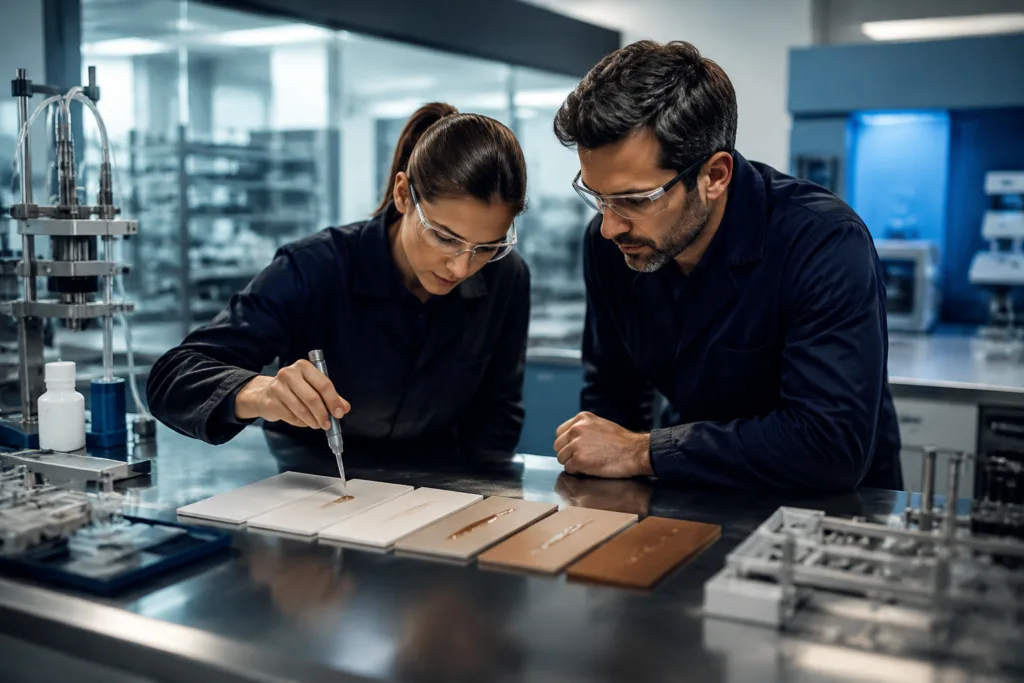
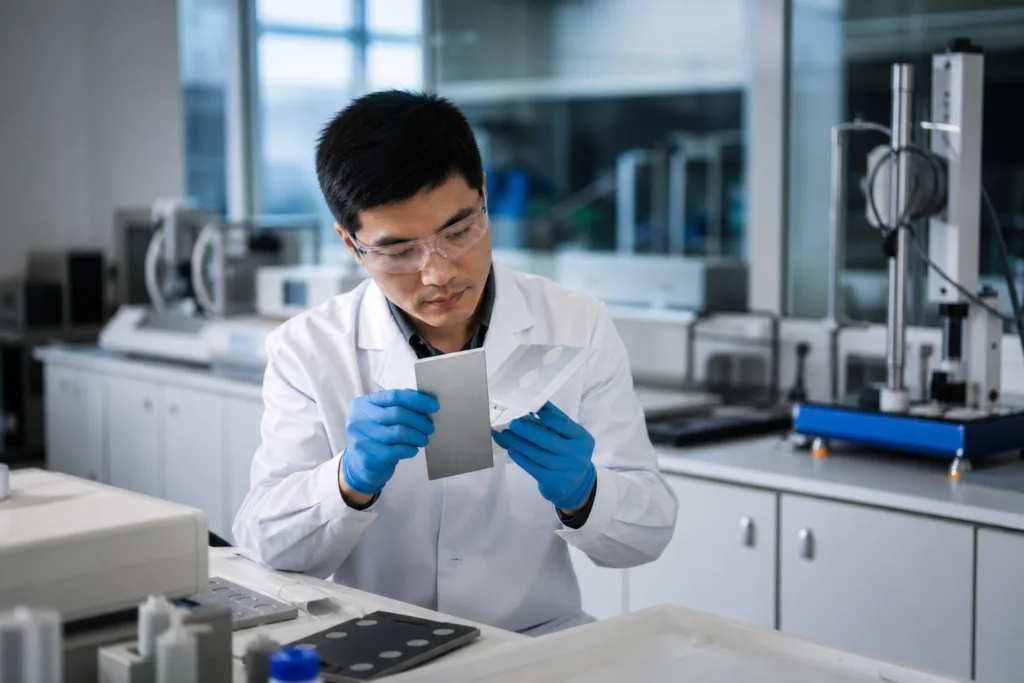
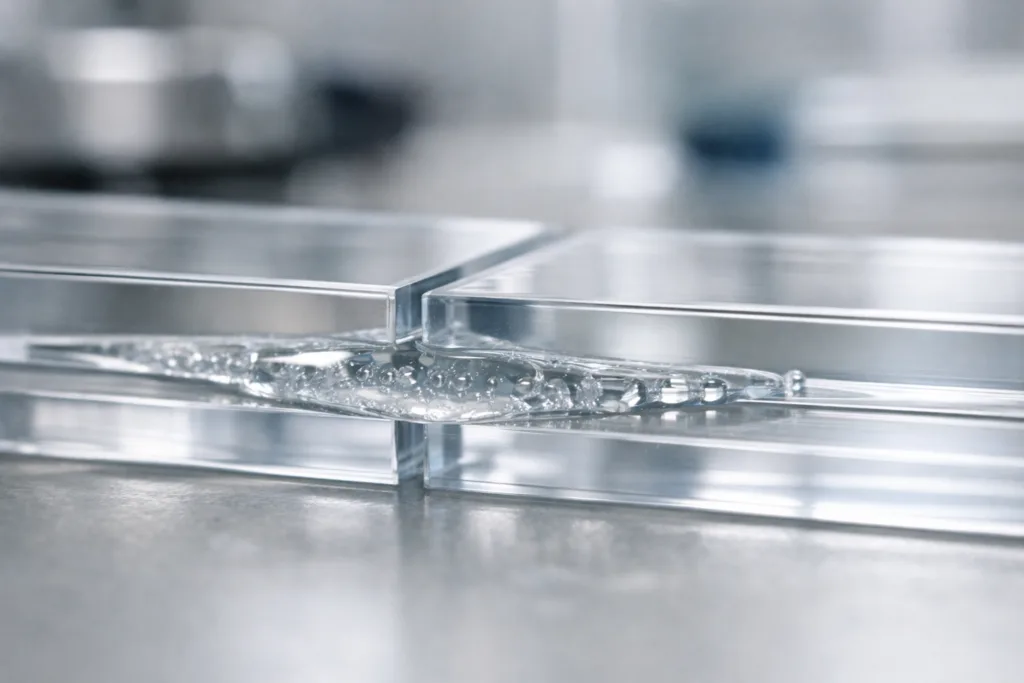
Even with the correct chemistry, poor surface preparation is a leading cause of adhesive failures. Laboratory lap shear and peel tests reveal the real capabilities of a chosen adhesive-plastic pair. ZDS Adhesive, an industrial manufacturer, typically advises testing mechanical shear strength for anticipated load direction and environmental aging (humidity, UV, chemical splash) for mission-critical assemblies.
For standards and methods, see Fatigue Testing of Acrylic Structural Bonds.
How to Identify Your Plastic
Plastic ID shortcuts include:
- Recycling codes (1–7, stamped on the part)
- Flame tests (professional setting only!)
- Texture, flexibility, and color clues
- Consulting technical datasheets or the original OEM for critical parts
Step-by-Step Process: Practical Bonding for Plastics
1. Identify Plastic Type
Use recycling code, datasheet, or expert help.
2. Choose Adhesive Family
Easy: CA, epoxy, acrylic. Hard: MMA acrylics, specialty systems.
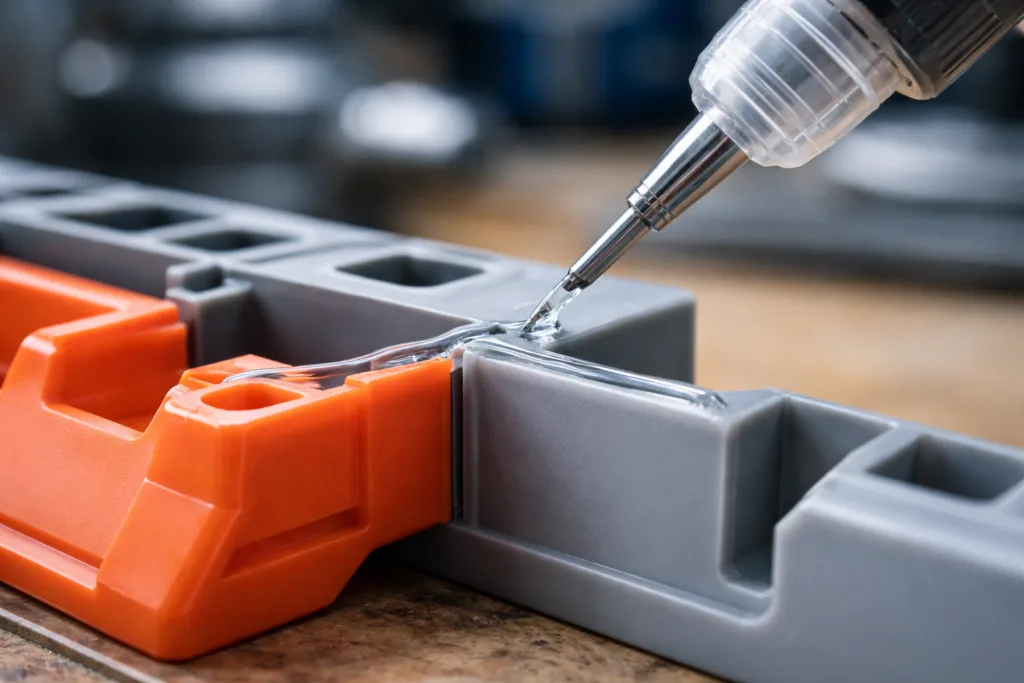
3. Surface Preparation
- Clean: Remove oil, dust, and mold release.
- Abrade (if allowed): Light sanding improves adhesion—skip on soft, shiny parts.
- Treat (if needed): For PE/PP/PTFE, consider surface priming or plasma treatment.
4. Apply Adhesive
Follow manufacturer’s instructions—don’t over-apply or under-mix. Watch for pot life and open time warnings.
5. Clamp and Fixture
Hold parts in position for adhesive’s fixture time—even fast glues need some pressure to maximize contact area.
6. Cure and Test
Allow full cure (often 24 hours) before full loading. Test sample joints if the assembly is critical.
Common Pitfalls (and Solutions)
- Bond Fails on PE or PP: Try a primer, switch to MMA acrylics, or use plasma treatment.
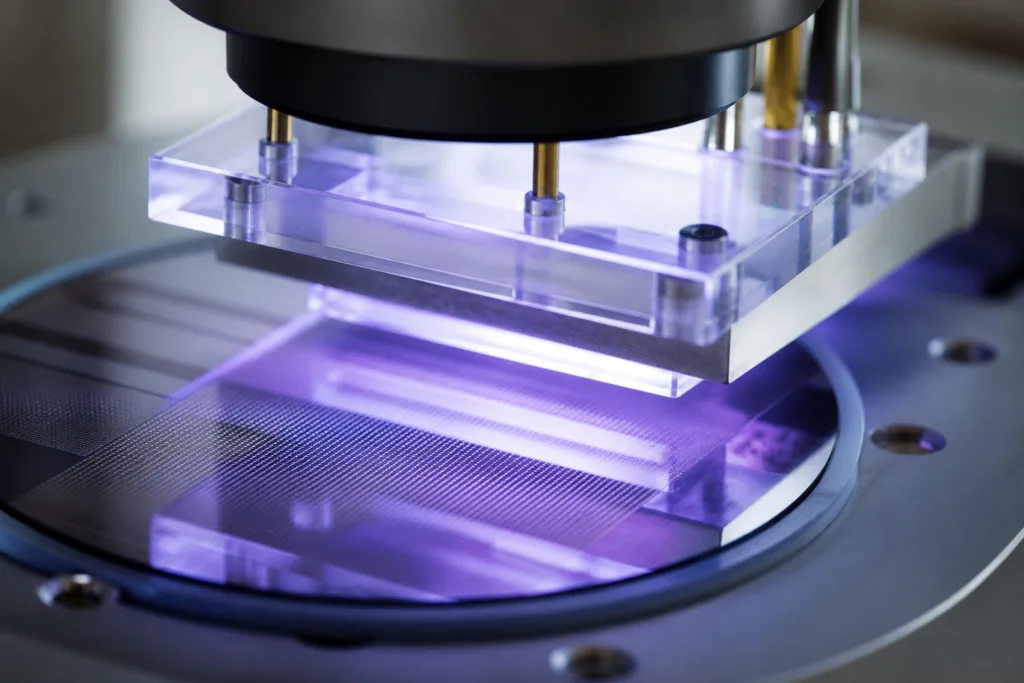
- Cloudy Bond Line in Clear Plastics: Use a UV-curing or optically clear acrylic adhesive—verify specs before buying.
- Rapid Failure After Water Exposure: Verify adhesive type; standard CA is not suitable for wet environments.
- Joint Weakness Due to Surface Contaminants: Always clean and prepare surfaces thoroughly—even new parts can have release agents or silicone residue.
What Is the Best Adhesive for Plastic? A Buyer’s Guide by Plastic Type and Use Case
The truly “best” adhesive is always about fit, not brute strength. Start by matching the chemistry to your plastic type:
- For ABS, PC, PMMA, and PVC: cyanoacrylate or epoxy works well—acrylics (especially structural) offer maximum performance, especially for demanding loads.
- For polypropylene, polyethylene, and Teflon: modern MMA structural acrylics, surface-activated two-component systems, and plasma/primer treatments beat conventional glues every time.
Once the family is set, adjust for factors like temperature, speed, impact, and clarity. Testing on a small sample is always wise before committing to high-stakes assembly.
Additional Resources: Sharpen Your Bonding Knowledge
Looking to deep-dive on related topics? See these helpful guides:
- Industrial Sealants vs. Adhesives: Differences & Use Cases
- The Ultimate Guide to Industrial Glue Types and Selection
- Unlocking Car Performance with Advanced Adhesives
Conclusion
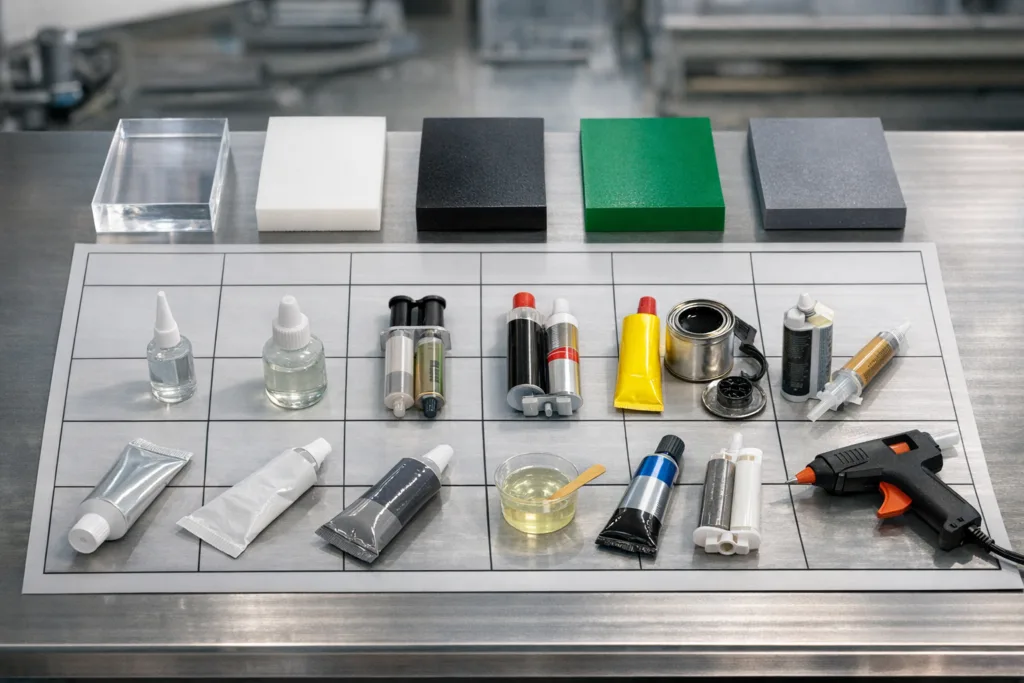
Selecting the best adhesive for plastic comes down to understanding your material, your demands, and the strengths and limitations of each adhesive family. There’s no perfect “one glue fits all” answer—use the tables, decision logic, and hands-on insights here to narrow your shortlist. Thoughtful surface prep and controlled testing complete the path to lasting, reliable plastic bonds. For especially tough plastics and environments, seek manufacturer data or independent testing labs. Stay curious and systematic—your bonds will be stronger and last longer because of it.
Frequently Asked Questions
Can I use super glue on all plastics?
No, standard super glue works well on easy plastics like ABS or PVC but usually fails on polyethylene, polypropylene, and PTFE. Use specialty acrylics or primers instead.
What is the strongest adhesive for polyethylene?
Two-part structural acrylics (MMA) with a primer or surface activator deliver the highest strength on polyethylene. Sometimes, plasma treatment may be necessary for maximum hold.
How can I tell what type of plastic I have?
Look for recycling codes, check the manufacturer’s datasheet, or consult a plastics professional. Sometimes feel and flexibility give clues but are less reliable for critical projects.
Why do my glued plastics keep breaking?
Common causes include choosing the wrong adhesive for your plastic, poor surface cleaning, or loading the joint before full cure. Upgrading to a chemistry matched to your load or surface often fixes this.
Are clear adhesives as strong as opaque ones?
Some optically clear adhesives, like engineered acrylics, can be just as strong as their opaque counterparts. But standard “clear” household glues often sacrifice strength for appearance. Always check technical data sheets.
Do I need to abrade or sand the surface before gluing?
Light abrasion (sanding) usually increases bond strength on most plastics but may not be suitable for very soft or glossy parts. Always clean surfaces and test first.
Related Reading
- How to Nail Plastic-to-Metal Bonding in 2026: Expert Strategies
- The Secret to Crystal-Clear Glass Furniture: Structural Acrylics Explained
- 7 Ways to Maximize Durability of Acrylic Bonded Joints
- Sealant vs Adhesive: Which Delivers Best Value in Industry?
- Industrial Glue 101: Types, Uses, and Smart Selection