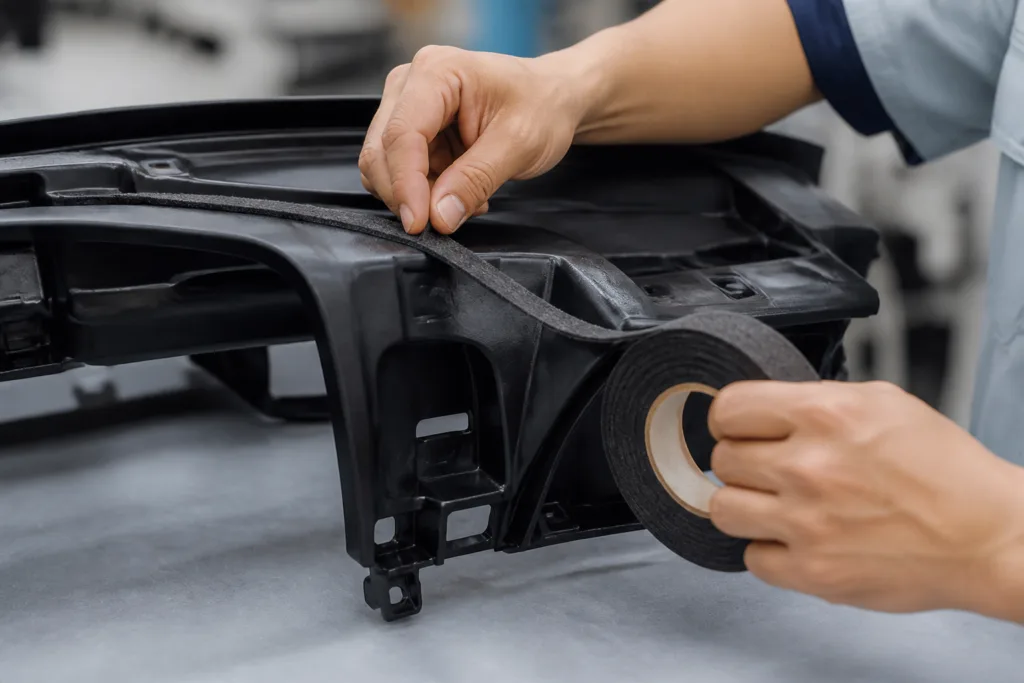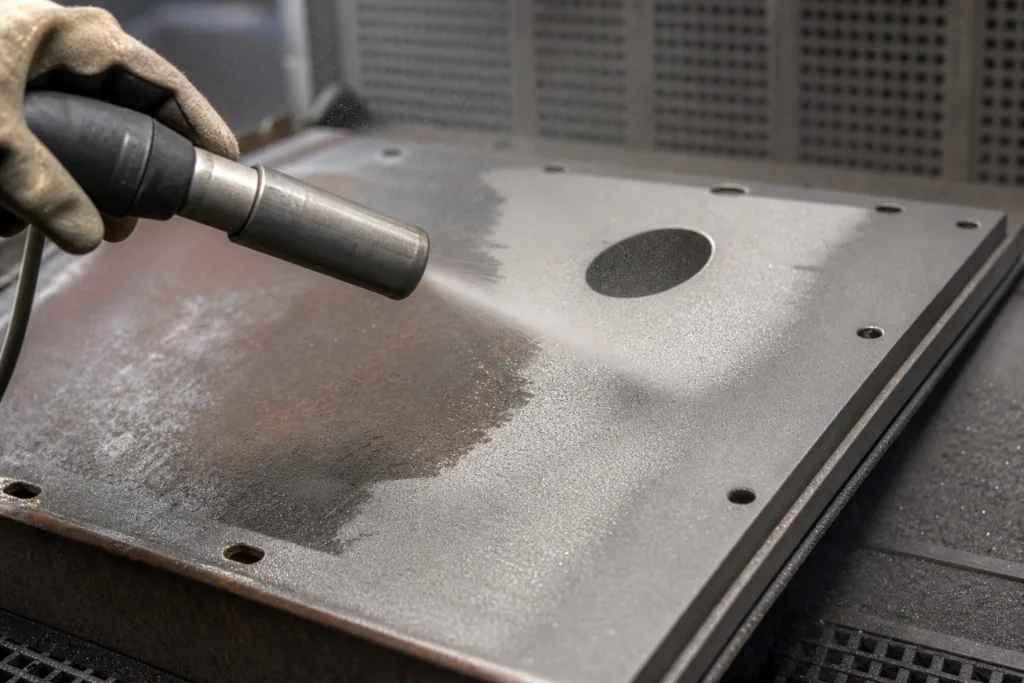
Polypropylene, polyethylene, and other low surface energy plastics are popular because they are light, tough, and cost-effective, but those same traits make them hard to bond reliably. In production, the challenge is rarely just “will it stick today?” Engineers and buyers also need to know whether the bond will survive heat, vibration, moisture, contamination, and repeated handling. That is where an adhesion promoter for plastic becomes valuable: it helps bridge the gap between a difficult substrate and an adhesive or coating system that needs better wetting, anchoring, and process consistency.
For teams comparing substrate prep and bonding options, our plastic adhesive selection guide is a practical starting point because it shows how adhesive chemistry, cure method, and process constraints interact on real parts. At ZDS Adhesive, we support projects that need more than a generic product recommendation: we help evaluate surface condition, match primer or promoter chemistry to the adhesive system, and plan sample testing so the line process is realistic before bulk production begins.
Why PP, PE, and Other Low Surface Energy Plastics Resist Bonding
PP and PE are widely used in automotive trim, housings, caps, crates, appliances, and consumer products because they are durable and economical. Their surface chemistry, however, is not naturally friendly to adhesives. The key issue is low surface energy. If the liquid adhesive cannot spread and wet the surface properly, it will bead, shrink back, or form a weak interface. Even when a bond initially looks acceptable, it can fail under peel, impact, or thermal cycling because the adhesive never truly anchored to the plastic.
In practical terms, this means surface condition matters as much as adhesive selection. Mold-release agents, processing oils, dust, fingerprints, and oxidation all change the bond outcome. A well-formulated adhesive can still underperform on a contaminated PP or PE part. That is why a process-oriented approach usually works better than treating bonding as a single-material decision.
What Low Surface Energy Means in Production
Low surface energy plastics do not readily accept liquid spread, so the adhesive has less contact area to build strength. This affects:
- initial wetting and coverage
- anchoring during cure
- peel resistance at the bond edge
- long-term durability under heat and moisture
For industrial users, the implication is simple: if the adhesive cannot wet the substrate, the bond line is already compromised before cure is complete.
What an Adhesion Promoter Does
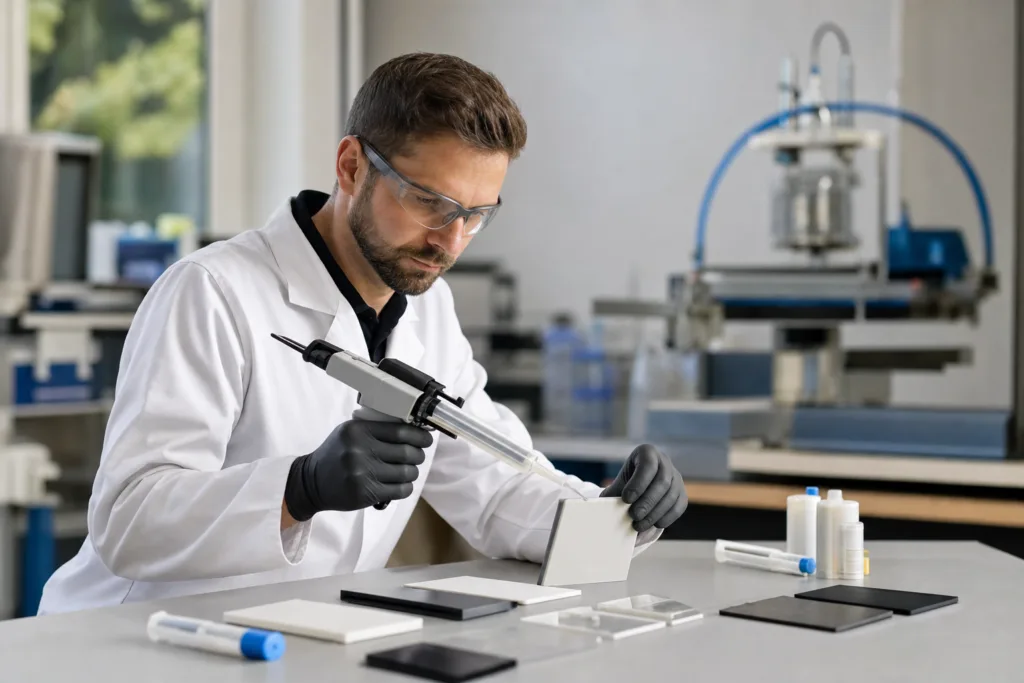
An adhesion promoter for plastic is not a substitute for a properly chosen adhesive, and it is not the same as a simple cleaner. Its role is to improve the interface so the adhesive system can bond more effectively. Depending on the chemistry, it may increase wetting, improve molecular interaction at the surface, or create a more receptive layer for the adhesive, primer, paint, or sealant that follows.
In process terms, a promoter can help when the base plastic is inherently difficult to bond, when production needs a wider assembly window, or when field durability matters more than initial tack alone. It is especially relevant when a part must hold up in service rather than pass a short bench test.
Adhesion Promoter vs Glue, Primer, and Cleaner
These terms are often used loosely, but they do different jobs:
- Cleaner removes dirt, grease, and some residues.
- Primer prepares the surface for the adhesive or coating system and may add chemical compatibility.
- Adhesion promoter is typically focused on strengthening the interface between a difficult substrate and the material applied on top.
- Glue or adhesive is the main bonding material that carries load.
When a process fails, the issue is often not the adhesive alone. It may be inadequate cleaning, the wrong promoter, or an incompatible stack-up between primer, adhesive, and topcoat.
How Surface Energy Controls Wetting and Long-Term Adhesion
Bonding starts with wetting. If the adhesive spreads across the plastic surface, the interface area increases and the bond can develop more reliable strength. If it beads up, the bond relies on a small, unstable contact area. That is why surface energy is so important on PP, PE, TPO, and related substrates.
In manufacturing, we often think about three stages: initial wetting, cure development, and service durability. An adhesion promoter can improve the first stage, but the final result still depends on cure chemistry, film thickness, environmental exposure, and part design. A weak joint may still fail if the load is concentrated at a sharp edge or if the joint is exposed to continuous movement.
One useful way to assess readiness is through contact angle or wettability evaluation. Standards such as the ASTM wettability standard are helpful because they provide a structured way to verify whether a treated surface is actually more receptive, rather than assuming that a cleaned surface is ready for bonding. In practice, that kind of measurement supports better process control on PP and PE parts where visual inspection alone is not enough.
Common Low Surface Energy Plastics in Industry
Low surface energy is not limited to PP and PE. Several other substrates create similar bonding challenges, though the exact process response may vary.
| Substrate | Typical Challenge | Promoter Use Consideration |
|---|---|---|
| PP | Very low surface energy, mold-release sensitivity | Often needs both cleaning and pretreatment before promoter use |
| PE | Excellent chemical resistance, poor wetting | Surface activation often improves results more than cleaner alone |
| TPO | Variable formulation and filler content | May need testing on the exact grade, not just the resin family |
| EPDM | Flexible, weather-resistant, and hard to bond consistently | Promoter selection should account for movement and environmental aging |
| Other polyolefins | Similar low-energy behavior with differences in additives | Process validation should match the real production surface |
For buyers, the main lesson is that substrate family alone is not enough. Grade, filler, surface additives, and molding history can all affect bond response.
Surface Activation Before Using an Adhesion Promoter
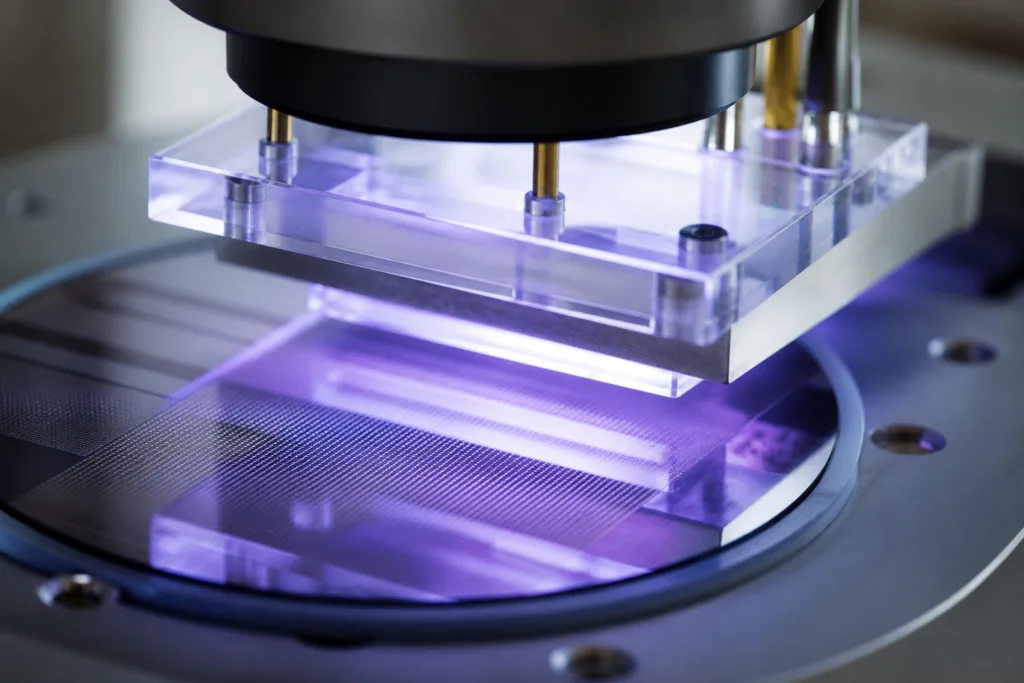
Before a promoter is applied, many processes benefit from some form of surface activation or preparation. Cleaning alone removes contamination, but it does not always raise surface energy enough to support robust bonding. Depending on the part and the line, flame, plasma, corona, or chemical treatment may be used before the promoter or primer step.
These methods are not interchangeable. Flame treatment can be useful for certain molded parts, while plasma and corona are often selected where controlled activation is needed. Chemical treatment may be more suitable for specific repair or retrofit workflows. The point is not to use the most aggressive method, but the one that matches part geometry, throughput, and safety requirements.
For field repair and assembly workflows, a practical guide on silicone adhesive system options can also help teams think through substrate compatibility and cure behavior when flexibility and environmental resistance matter. Even when silicone is not the final adhesive, the selection logic is similar: process compatibility matters as much as chemistry.
Cleaning Is Necessary, but Not Always Sufficient
One of the most common mistakes is assuming that a solvent wipe is enough. Cleaning removes surface contamination, but PP and PE can still have inherently poor wetting behavior after cleaning. If the part carries mold release, oxidized residue, or processing additives, the promoter may be less effective unless the surface is properly prepared first. In our experience, the best results usually come from a defined sequence: clean, activate if needed, apply promoter, respect the flash time, then assemble within the approved window.
When a Plastic Bumper Adhesion Promoter Makes Sense
Automotive bumper covers and trim parts are a good example of why these products exist. Many are made from TPO, PP blends, or related materials that can flex, move, and see wide temperature changes. Repair and assembly teams often need a bond that survives vibration, impact, and weather exposure without becoming brittle.
In this setting, a plastic bumper adhesion promoter is not only about initial grip. It also helps reduce the chance that a repair patch, coating, or trim element will peel at the edges during service. That said, bumper work is especially sensitive to process discipline. Poor cleaning, rushed flash time, or incompatible coating layers can still lead to early failure.
For projects where edge sealing or joint movement is part of the design, it can be useful to compare the role of a promoter with adhesive versus sealant selection. A promoter can improve bonding, but if the joint also needs movement accommodation, water resistance, or gap tolerance, the base chemistry must still be chosen correctly.
Primer Selection Strategy for Low Surface Energy Plastics
Not every system needs a separate primer, but many high-reliability applications do. The right primer or adhesion promoter depends on the substrate, the adhesive chemistry, and the final service environment. A system that works on PP may not transfer directly to PE, TPO, or a filler-loaded grade with different additives.
From a manufacturing perspective, the right strategy is to treat the promoter as part of a system, not a universal patch. That means checking compatibility with the topcoat, adhesive, or sealant, and confirming whether the line can support the required application method and cure window. At ZDS Adhesive, we often advise teams to define the substrate, process, and performance target together before selecting chemistry. This reduces the risk of forcing a product into a role it was not built for.
Matching the Promoter to the Final Bonding System
Useful selection questions include:
- Is the part being bonded, coated, sealed, or repaired?
- Will the bond experience peel, shear, vibration, or impact?
- Does the assembly need room-temperature curing, heat curing, or moisture curing?
- Is the surface likely to carry release agent, dust, or post-molding oxidation?
- Will the promoter be used with epoxy, polyurethane, acrylic, silicone, or another chemistry?
If the answer to these questions is unclear, the formulation choice is usually premature.
Process Integration: How to Build the Right Sequence
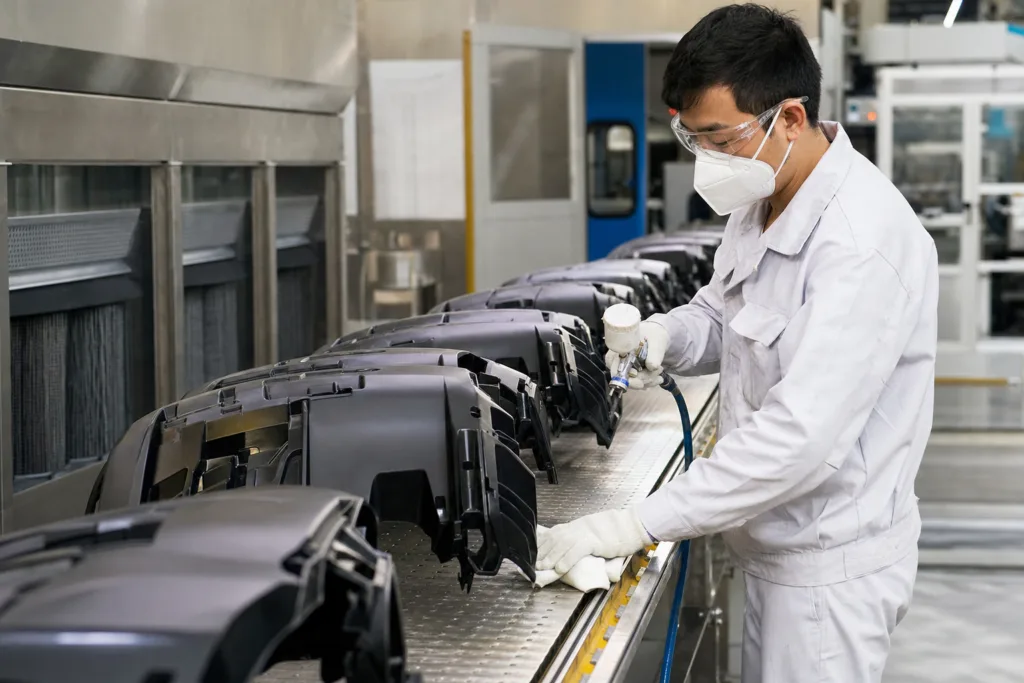
Even a strong promoter can underperform if the process is inconsistent. In production, the biggest threats are usually timing, contamination, and over-application. Operators may apply too much material, skip the flash time, or let the treated part sit too long before assembly. Any of those can weaken the result.
A practical sequence usually looks like this:
- Inspect the molded part for visible contamination or process residue.
- Clean using an approved method for the substrate and line conditions.
- Apply any activation step required by the process.
- Apply the adhesion promoter in a controlled, even film.
- Allow the specified flash time or dry time.
- Apply the adhesive, sealant, or coating within the acceptable window.
- Assemble and cure under controlled conditions.
For teams deciding whether the bonding material itself should be water-based, solvent-based, or another chemistry, the article on water-based adhesive selection limits is useful because it highlights where water-based systems may struggle in demanding industrial settings. On low-energy plastics, process tolerance can be just as important as environmental preference.
Flash Time and Cure Window Matter More Than Buyers Expect
Promoters and primers often need a defined flash period so carriers evaporate and the treated surface reaches the intended state. If assembly happens too soon, trapped solvent or incomplete film formation can reduce bond quality. If assembly waits too long, the treated layer may lose effectiveness or collect contamination. In a production environment, this creates a simple but important rule: treat the promoter as a timed process step, not a casual prep spray.
What Performance Improvements to Expect
A correctly selected adhesion promoter can improve practical outcomes in several ways:
- better initial wetting on PP, PE, TPO, and similar plastics
- higher peel resistance at the bond edge
- more consistent bond strength across production lots
- improved resistance to moisture and thermal cycling
- better retention of performance after handling and vibration
However, the promoter does not create unlimited strength. It usually improves the margin of safety by making the interface more stable and more repeatable. The final result still depends on joint design, adhesive selection, cure control, and the surface condition of the actual part.
When Solvent-Based Systems Still Have a Role
Some low-energy plastic processes use solvent-based components because they dry quickly, support specific surface interactions, or fit existing production habits. When teams evaluate them, the article on solvent-based adhesive performance factors is relevant because it helps buyers weigh speed, compatibility, and process risk. The important point is not to favor one chemistry by default, but to decide based on the substrate and the line.
Limitations and Failure Risks
An adhesion promoter can solve many low-energy plastic problems, but it is not a magic fix. Common failure risks include contamination, wrong surface chemistry, over-application, incomplete drying, and aging of the treated surface before assembly. Some failures also come from poor compatibility between the promoter and the downstream adhesive.
Another often overlooked risk is aging. A treated part may bond well immediately after preparation but lose effectiveness if it sits too long before the next step. That is why control of storage, staging, and part flow matters. Inconsistent operator technique can be just as damaging as the wrong product choice.
For flexible or sealing applications, buyers should also remember that some joints need more than bonding alone. The chemistry may need to absorb movement or provide moisture resistance. In those cases, comparing the adhesive to a sealant solution is useful rather than assuming a single promoter step will solve every requirement.
How to Build a Systems Approach Instead of a Quick Fix
The best results come when promoter selection is part of a full system design. That means looking at the substrate, pretreatment, promoter chemistry, adhesive, joint design, cure method, and end-use environment together. This systems approach is especially important for programs with high volume, low tolerance for field failure, or multiple manufacturing sites.
From a production standpoint, the question is not just whether the bond works in a sample test. The real question is whether it stays reliable when operators change shifts, materials come from different lots, or ambient conditions vary. That is why we encourage customers to treat the promoter as one element in the total process, not the final answer by itself.
When you need to expand the decision from bonding alone into sealing, vibration resistance, or environmental protection, the article on adhesive versus sealant selection can help align the chemistry with the job. That kind of thinking often prevents over-specification and helps control cost.
Testing and Validation Before Production Release
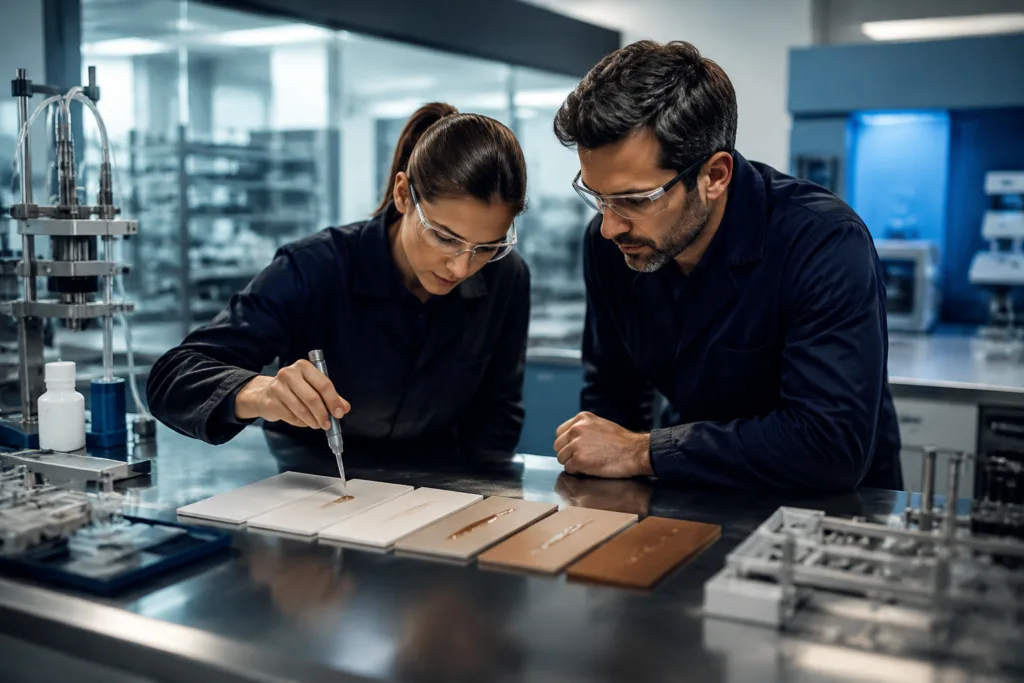
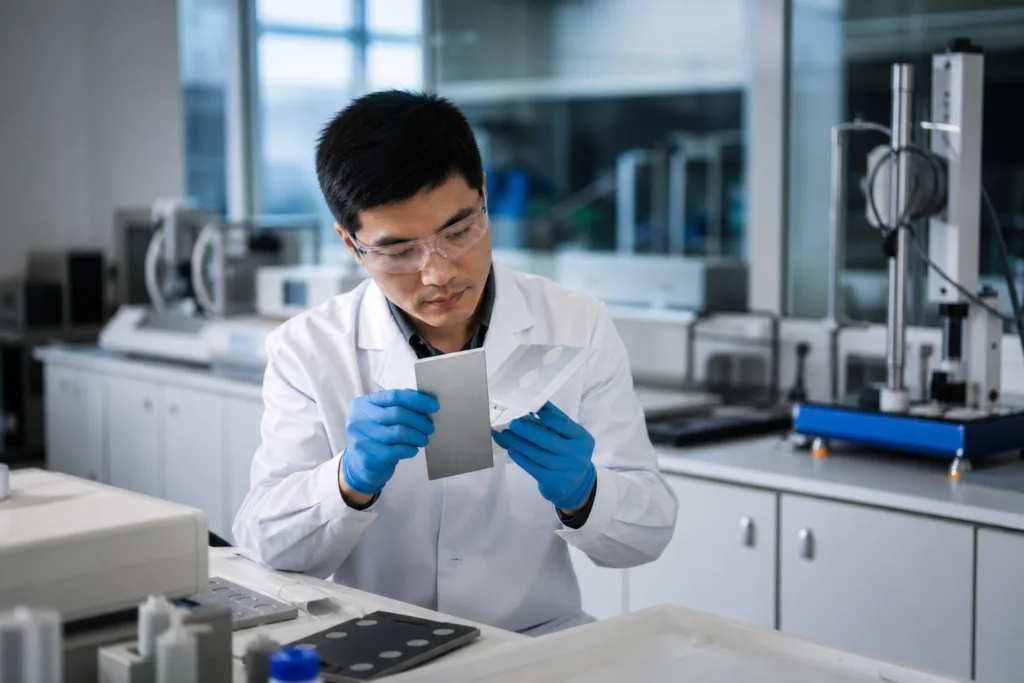
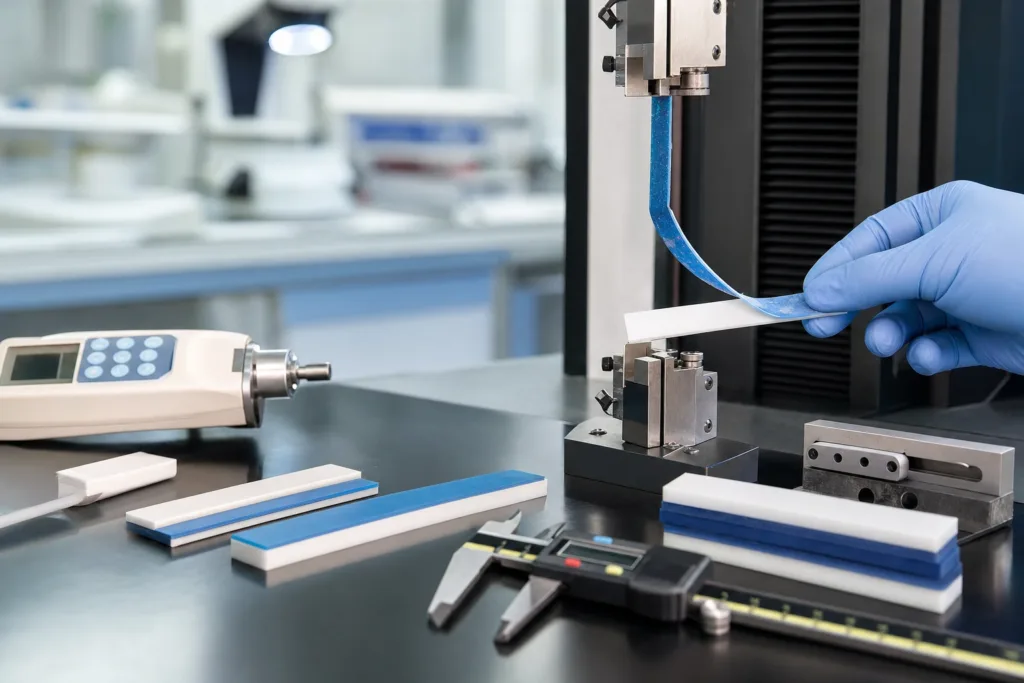
Validation is where the process becomes real. For low surface energy plastics, lab results should be checked against part geometry, line speed, cure conditions, and actual contamination risk. A good trial plan usually includes bond strength checks, peel testing, environmental exposure, and visual inspection of the interface.
Useful test methods may include crosshatch-style evaluation where relevant, lap shear, peel, heat aging, moisture exposure, and thermal cycling. If the part is structural or safety-relevant, the pass criteria should be defined before the trial starts. The aim is not only to confirm whether the bond is strong, but also to understand how sensitive it is to process variation.
When a team wants a more measurable read on surface readiness, contact angle-based evaluation can support the decision. That is especially useful when comparing untreated parts with cleaned, flame-treated, or plasma-treated surfaces before and after promoter application.
| Validation Area | What It Tells You | Why It Matters |
|---|---|---|
| Peel test | Edge durability and interface quality | Useful for flexible or prying loads |
| Shear test | Load-bearing strength | Important for structural and semi-structural joints |
| Heat aging | Bond retention at elevated temperature | Relevant for automotive, appliances, and electronics |
| Moisture exposure | Resistance to humidity and water ingress | Important for outdoor and sealed assemblies |
| Surface wettability check | Whether pretreatment actually improved readiness | Helps verify process consistency before production |
Application Examples Across Industries
In automotive manufacturing, promoters are often used on TPO and PP trim, bumper-related parts, and interior components where coating, bonding, or repair requires better surface receptivity. In electronics, they may help with housings, enclosures, and accessory parts where the substrate is light but difficult to bond. In consumer products, they support assembly of handles, covers, clips, and decorative parts where appearance and durability both matter.
For polyurethane-rich workflows, the article on polyurethane adhesive applications is helpful because PU systems are often selected when flexibility, impact resistance, or mixed-material bonding is required. That makes them a useful comparison point for PP and PE programs where movement and environmental durability matter.
At the product level, the right choice often depends on whether the assembly needs a tough, flexible joint, a high-strength structural bond, or a water-resistant seal. In our manufacturing and application support work, we see the best outcomes when the promoter, adhesive, and process sequence are selected together rather than separately.
Specification Checklist for Choosing an Adhesion Promoter for Plastic
Before approving a product, buyers and engineers should confirm the following:
- substrate family and exact grade
- surface preparation method and contamination risk
- compatibility with adhesive, sealant, primer, or coating
- required flash time and assembly window
- expected service temperature and moisture exposure
- need for flexibility, peel resistance, or structural strength
- storage conditions, shelf life, and packaging format
- production volume, MOQ, and repeatability expectations
Some projects benefit from a broader formulation discussion, especially when standard products do not fit line speed or environmental limits. In those cases, we may recommend a custom adhesive or process-support package instead of forcing a standard material into a demanding application.
Common Buyer Questions on Storage, Compliance, and Consistency
Storage and shelf life are practical issues, not afterthoughts. A promoter that is sensitive to air, moisture, or temperature can lose effectiveness if it is not stored correctly. Buyers should also ask whether the product is packaged in a format suited to their line: small trial units, mid-volume containers, or bulk packaging for automated dispensing.
Regulatory and VOC concerns also matter. Some operations need tighter control over emissions, odor, or solvent handling. That does not automatically rule out a chemistry, but it should influence the choice of application method and workplace controls. Process consistency is equally important: if one shift applies the promoter differently from another, the final bond data will be difficult to trust.
For teams that want to compare an alternative approach, our bonding across difficult substrates resource is helpful because it reinforces the same lesson seen on PP and PE: difficult substrates need a system, not a shortcut.
When to Work with an Adhesive Manufacturer
There is a point where off-the-shelf selection stops being enough. If the substrate is a low surface energy plastic with variable surface condition, if the part sees demanding environmental exposure, or if production needs exact consistency across high volume, working directly with an adhesive manufacturer can save time and reduce risk. That is especially true when the process requires a custom viscosity, a different flash profile, or a promoter that must integrate with an existing adhesive line.
From a manufacturing perspective, we often help customers review sample results, compare surface activation options, and choose a pathway that balances performance with cost and throughput. At ZDS Adhesive, that usually means evaluating the whole bonding system: substrate, pretreatment, promoter, adhesive, cure window, and quality checks. The result is not just a stronger bond on paper, but a process that can be repeated on the shop floor.
Conclusion
PP, PE, TPO, EPDM, and other low surface energy plastics are difficult to bond because their surfaces do not naturally promote wetting or strong adhesion. An adhesion promoter for plastic helps close that gap, but its value depends on how it is integrated into the full process. Cleaning, activation, application control, flash time, adhesive compatibility, and validation all determine whether the bond succeeds in production.
For engineers and buyers, the smartest approach is to treat promoter selection as a systems decision. If you define the substrate, environment, load type, and process window early, you can choose a promoter and adhesive combination that performs consistently instead of relying on trial and error. That is the difference between a bond that looks good in a sample and one that survives real use.
FAQs
Do I always need an adhesion promoter for PP and PE?
No. Some PP and PE parts can be bonded without one if the adhesive system, surface condition, and pretreatment are favorable. However, for repeatable industrial results, especially on molded parts with low surface energy or contamination risk, a promoter often improves wetting and process robustness.
Is cleaning alone enough before using an adhesion promoter?
Cleaning is necessary, but it is not always sufficient. It removes dirt and residue, yet it may not raise surface energy enough for strong bonding. On difficult plastics, cleaning is often paired with flame, plasma, corona, or a compatible promoter step.
How do I know whether the promoter is compatible with my adhesive?
The safest approach is to test the exact substrate, promoter, and adhesive stack together. Compatibility depends on chemistry, flash time, cure method, and final service conditions. A sample trial is more reliable than assuming that a promoter will work with every adhesive type.
Can adhesion promoters improve peel resistance as well as strength?
Yes, they can improve both, but the effect depends on the joint design and the adhesive used. Promoters often help the bond edge resist lifting and peeling because they improve the interface. Still, peel performance also depends on flexibility, cure quality, and substrate movement.
What should I check before approving a promoter for production?
Check the exact substrate grade, cleaning method, application window, cure or flash time, storage requirements, shelf life, and compatibility with your adhesive or coating. It is also important to confirm that the same result can be repeated under your real production conditions, not just in the lab.
Can ZDS Adhesive help with custom bonding support for low surface energy plastics?
Yes. We can evaluate your substrate, advise on process integration, and support sample testing for custom or standard adhesive systems. For projects on PP, PE, and similar plastics, we also help review whether pretreatment, primer use, or formulation adjustment is the most practical route for stable production.