In industrial spray painting, surface appearance is only one part of the job. The more important question is whether the coating will anchor reliably after curing, handling, vibration, and service exposure. A spray paint adhesion promoter helps bridge that gap by improving wetting and bonding on substrates that are otherwise difficult to coat, especially low-surface-energy plastics, molded parts with release residue, and surfaces with inconsistent pretreatment. In production, that often means fewer peel failures, less rework, and more stable batch-to-batch results.
For teams working on plastic housings, trim, covers, and other hard-to-bond parts, our adhesion promoter solutions for difficult plastics page is a useful starting point for matching pretreatment chemistry to the substrate. From our formulation and manufacturing perspective, the right promoter can improve coating grip without forcing a complete process redesign, which is why we support sample evaluation, application testing, and bulk supply planning when customers need a more stable spray-paint workflow.
What a Spray Paint Adhesion Promoter Actually Does
In simple terms, an adhesion promoter changes the interface between the substrate and the coating. Instead of relying on paint alone to wet a challenging surface, the promoter creates a more receptive layer that helps the coating spread, anchor, and cure with better contact. That matters because spray-painted systems fail most often at the interface, not in the middle of the paint film.
We usually think about the function in three stages. First, the promoter improves wetting so the liquid coating can lay down more uniformly. Second, it increases interfacial interaction so the coating has more to hold onto after flash-off and cure. Third, it helps reduce early-stage defects such as beading, crawling, edge lift, and localized peeling. In production terms, this makes the process less sensitive to small variations in part handling and environmental conditions.
Where It Fits in the Workflow
An adhesion promoter is not a replacement for cleaning, sanding, or primer in every system. It belongs in the pretreatment sequence, before the topcoat or before a primer-topcoat stack when the substrate demands extra surface conditioning. The key is to place it at the point where the surface is clean, dry, and ready to receive it, but before the coating window closes.
In many industrial lines, the order is: clean, dry, apply promoter, allow flash time, then spray the coating within the recommended window. If the process skips cleaning or allows contamination to return before coating, the promoter cannot fully compensate. That is why we always treat the promoter as part of a system, not a miracle fix.
| Workflow Step | Why It Matters | Common Risk if Skipped |
|---|---|---|
| Cleaning | Removes oils, dust, mold release, and handling contamination | Poor wetting, fish eyes, peel failure |
| Drying | Eliminates moisture that blocks interface contact | Blushing, weak anchoring, blistering |
| Adhesion promoter application | Creates a more receptive bonding layer | Inconsistent coverage and local delamination |
| Flash time | Allows carrier evaporation and surface conditioning | Solvent entrapment, soft film, finish defects |
| Topcoat or primer | Locks in the final appearance and performance | Reduced durability and appearance stability |
Why Paint Adhesion Fails on Difficult Plastics
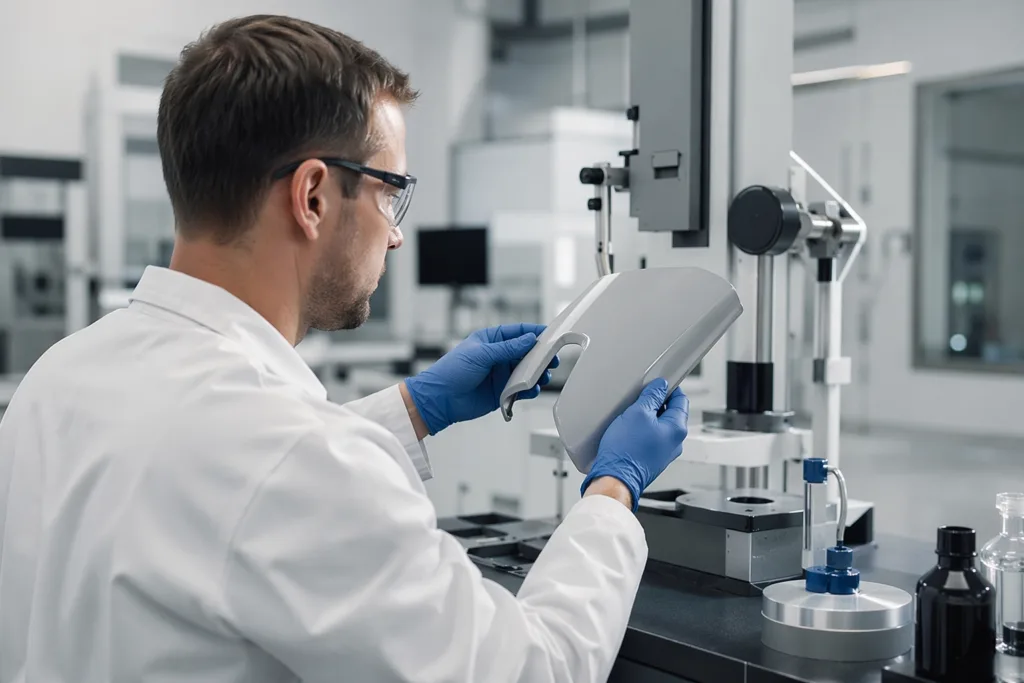
Many coating failures trace back to substrate chemistry. Polypropylene, polyethylene, TPO, and similar low-surface-energy plastics resist wetting because their surfaces are not naturally receptive to many coatings. Even when the part looks clean, the molecular surface characteristics can still limit bond formation. That is why a spray paint adhesion promoter is so often used in plastic-part coating operations.
Another common issue is process contamination. Mold release agents, fingerprints, storage dust, and machining residues all interfere with surface contact. In a factory setting, the part may look visually acceptable while still carrying enough contamination to weaken adhesion. When failure does occur, it often appears as edge lifting, tape pull, poor scratch resistance, or localized flaking around corners and recessed features.
For teams deciding whether a coating system needs a promoter, choosing the right adhesive for plastic substrates is a helpful way to think about surface energy, polarity, and compatibility. The same logic applies in coating systems: if the substrate is hard to bond, the process needs a better interface strategy, not just a different color or gloss level.
Adhesion Promoter vs. Primer in Industrial Coating Workflows
These two products are related, but they do not do exactly the same job. A primer is usually designed to create a fuller intermediate layer that can improve build, corrosion resistance, barrier performance, or topcoat anchoring. An adhesion promoter is typically thinner and more interface-focused. It is meant to improve bonding at the surface rather than create a thicker protective film.
In practice, some systems use only a promoter, some use only a primer, and some use both. The right answer depends on substrate type, end-use environment, and process tolerance. If you are coating a molded plastic part that only needs better topcoat holdout, a promoter may be enough. If the part also needs long-term barrier protection, UV resistance, or chemical resistance, a primer system may be more appropriate.
Our experience is that many teams over-specify primer when the real issue is poor surface preparation. Other teams under-specify and expect a promoter to solve every problem. The most stable result usually comes from matching the product to the failure mode instead of following a generic paint sequence.
When a Promoter Is Usually Enough
- When the substrate is plastic and the main issue is poor wetting or low surface energy
- When the coating is decorative or functional but not heavily barrier-dependent
- When production needs a thinner pretreatment layer with minimal added build
- When the goal is to reduce peel or edge lift without changing the full coating stack
When a Primer System Is the Better Choice
- When the part needs extra corrosion, chemical, or moisture protection
- When the coating must bridge small surface defects or provide more film build
- When multiple layers must work together for durability and appearance
- When specification, warranty, or environmental exposure calls for a more robust stack
Common Substrates That Benefit Most from a Spray Paint Adhesion Promoter
The strongest use case is low-surface-energy plastic, but promoter demand is broader than that. Coating teams also use these products on difficult composites, treated metals, glass-like surfaces, and parts with mixed-material construction. The main question is not just what the part is made of, but how it was made, stored, handled, and prepared.
Examples often include automotive trim, appliance bezels, electronic housings, tool parts, nameplates, and molded components with fine detail. In each case, the promoter helps reduce the chance that the paint film lifts at edges, thin sections, or high-stress areas. If the part is exposed to vibration, humidity, or repeated handling, the interface becomes even more important.
| Substrate / Part Type | Why It Can Be Difficult | Promoter Benefit |
|---|---|---|
| PP, PE, TPO | Low surface energy and weak natural wetting | Better anchoring and more uniform coverage |
| Molded consumer housings | Release residue and handling contamination | Reduced peeling and edge lift |
| Composites | Variable surface texture and resin content | More consistent interface behavior |
| Mixed-material assemblies | Different expansion and surface characteristics | Improved coating stability across interfaces |
| Previously coated parts | Unknown surface energy and aging effects | Better holdout before refinishing |
For projects that involve chemistry selection by substrate and process, solvent-based coating and primer systems can help buyers compare how carrier type affects film formation, flash behavior, and surface conditioning. That kind of decision-making is important because the wrong carrier or application window can reduce the promoter’s effectiveness even when the chemistry itself is suitable.
How Surface Preparation Affects Coating Grip and Finish Quality
Surface preparation is the difference between theoretical compatibility and real production performance. A clean, dry, correctly prepared surface gives the promoter a chance to work. A contaminated or wet surface turns the promoter into a temporary cover for a deeper process problem.
From a manufacturing standpoint, the most common preparation issues are not dramatic. They are small, repeated misses: parts touched with bare hands, dust settled during staging, insufficient drying after washing, inconsistent spray distance, or coating applied after the flash window has expired. Those small misses create the quality variation that production managers dislike most because it is hard to predict and expensive to chase.
Surface roughness can also matter, but not always in the way people expect. A rough surface may look ready, yet still carry contamination in its valleys. A smooth surface may look clean, yet still be chemically inactive. The promoter helps in both cases, but it does not remove the need to inspect and control the substrate.
In our formulation work, we see better outcomes when customers build a simple but disciplined pretreatment routine: verify cleaning chemistry, define drying time, standardize spray distance, and record recoat timing. These controls usually improve results more than trying random coating adjustments after failures appear.
How to Choose the Right Promoter for the Coating System
Selection should start with the coating type, the substrate, and the end-use environment. A promoter that works well on one plastic and one topcoat may not behave the same way under a different curing schedule or humidity level. That is why we recommend evaluating the promoter as part of the complete system, not as a standalone product.
One practical way to think about selection is to ask four questions. What is the substrate surface energy? What coating chemistry is being applied? What is the curing method? What performance problem is being solved? Once those are clear, the decision becomes much easier.
If the process uses waterborne coatings, solvent sensitivity and evaporation timing matter. If the line uses solvent systems, flash-off and carrier compatibility become more important. If the part must meet a certain appearance standard, flow, leveling, and gloss stability may matter as much as bond strength. For teams comparing formulation approaches, water-based coating selection criteria is useful for understanding how drying behavior and film formation affect the final interface.
We also encourage buyers to think like application engineers. That means not just asking whether the promoter “works,” but asking what kind of process window it needs, how thick it should be applied, whether it affects final appearance, and whether it can be repeated across shifts and sites. That is the level of detail that separates a workable plant solution from a one-time lab success. At ZDS Adhesive, we usually support that evaluation with sample trials, product matching, and production-oriented QC feedback rather than treating the choice as a simple catalog selection.
Application Basics That Protect Performance
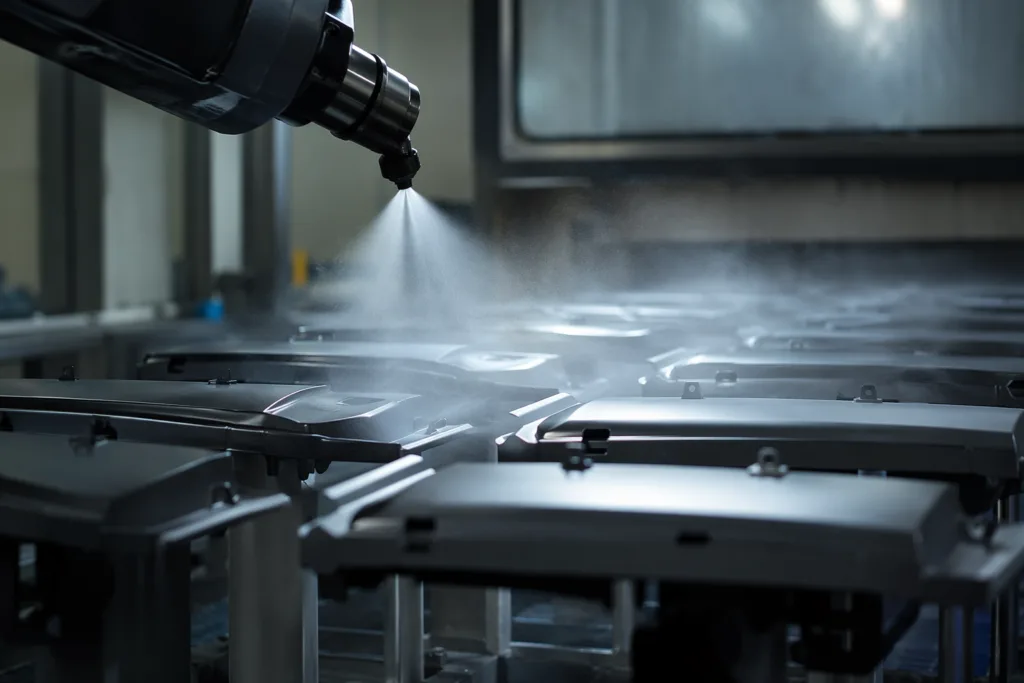
Good chemistry can still fail if the application method is sloppy. The promoter should be applied in a controlled, repeatable way, usually by spray, unless the part geometry or line design requires another method. The goal is a thin, even film that conditions the surface without creating visible defects or soft buildup.
A practical workflow looks like this: confirm the part is clean and fully dry, agitate or mix the promoter if required, apply a uniform coat, allow the correct flash time, then apply the paint within the intended window. If the promoter is left too long before coating, the treated surface may lose effectiveness or collect dust. If the topcoat is applied too soon, carrier entrapment or surface disturbance can occur.
Temperature and humidity also matter. A cold part may condense moisture. A very humid room may slow flash-off. A hot part may flash too quickly and create uneven coverage. These are not minor details in production; they are often the reason a process looks fine on paper but varies on the line.
Common Mistakes That Reduce Performance
- Applying the promoter over oil, dust, mold release, or fingerprints
- Skipping the drying step after wash or pretreatment
- Using too much material and creating an uneven interface layer
- Missing the recommended flash time or coating window
- Changing spray pressure or distance without revalidation
- Assuming one promoter fits every plastic and every topcoat
How to Test Adhesion Before Full-Scale Production
Before locking a promoter into production, we recommend a controlled trial on actual parts or representative panels. Testing should reflect the real process as closely as possible: same substrate, same cleaning step, same spray method, same flash time, same topcoat, and same cure cycle. If any of those change later, the result may not translate.
Useful checks often include visual inspection for crawling or cratering, tape pull after cure, cross-hatch style evaluation where appropriate, and edge or stress-area observation after thermal cycling or handling. The point is not just to see whether paint sticks immediately, but whether the interface remains stable after the part experiences real production and service stresses.
We also recommend recording failure location. If the coating peels from the promoter layer, the issue may be interface chemistry. If the whole film separates from a contaminated substrate, cleaning is the real problem. If the finish is unstable only in humid or hot conditions, flash time or carrier selection may need adjustment. That failure mapping saves time and prevents teams from changing the wrong variable.
For buyers who need to compare pretreatment choices against product selection rules, surface treatment and product selection rules offers a useful framework for distinguishing interface-conditioning needs from structural or sealing requirements. The same discipline applies in coating lines: choose the product for the real job, not for the most familiar label.
How Better Pretreatment Reduces Rework and Production Variation
Quality variation is expensive because it affects labor, material use, delivery timing, and customer confidence. A reliable spray paint adhesion promoter can reduce that variation by making the surface more predictable before the topcoat goes on. In a stable process, operators spend less time correcting defects, and quality teams spend less time sorting parts or investigating isolated failures.
This is especially valuable in multi-shift production or outsourced coating work, where small process differences can accumulate quickly. If one shift sprays heavier, another waits longer before coating, and a third handles parts differently, a weak interface will expose those inconsistencies. A better pretreatment step can narrow that gap, but only if the line itself is disciplined.
From a manufacturing planning perspective, the economic value is often found in avoided scrap and rework rather than in the raw material cost of the promoter. When a thin pretreatment layer prevents peeling or a full repaint cycle, the process savings can be far larger than the product spend. That is why procurement teams should evaluate total process cost, not just unit price.
Selection Checklist for Production Teams and Coating Buyers
Before approving a promoter for industrial use, we suggest a short checklist that combines technical and operational questions.
- What substrate or substrate mix is being coated?
- Is the surface low-energy, contaminated, smooth, rough, or aged?
- What coating chemistry will follow the promoter?
- Is the line using air dry, heat cure, UV cure, or another cure path?
- What flash time and coating window can the line realistically control?
- Does the part need only adhesion support, or also barrier, corrosion, or chemical resistance?
- Can the supplier support sample testing, documentation, and production consistency?
When teams ask these questions early, the coating process usually becomes easier to validate. If a supplier cannot explain how the product should be used, what substrate limitations exist, or what process window matters, that is a warning sign. Good pretreatment chemistry should be supported by clear application guidance and repeatable manufacturing control.
When a Custom Formulation or OEM Support Makes Sense
Not every line can use a standard off-the-shelf pretreatment. Some customers need a narrower flash window, a different carrier, a specific spray behavior, packaging that fits existing equipment, or a formula tuned for a unique plastic blend. In those cases, custom development can be a practical path.
At ZDS Adhesive, we approach those projects by aligning the promoter with the part, the coating system, and the plant’s actual workflow. That may include viscosity matching, substrate screening, adjusted drying behavior, or packaging and supply planning for pilot and bulk production. The goal is not to make the product more complicated; it is to make the line more stable.
For many industrial teams, the best outcome is a pretreatment system that is simple enough for operators to repeat and robust enough for QA to trust. That is the real value of a spray paint adhesion promoter: it makes the coating interface more dependable, which in turn makes the whole process easier to control.
Conclusion
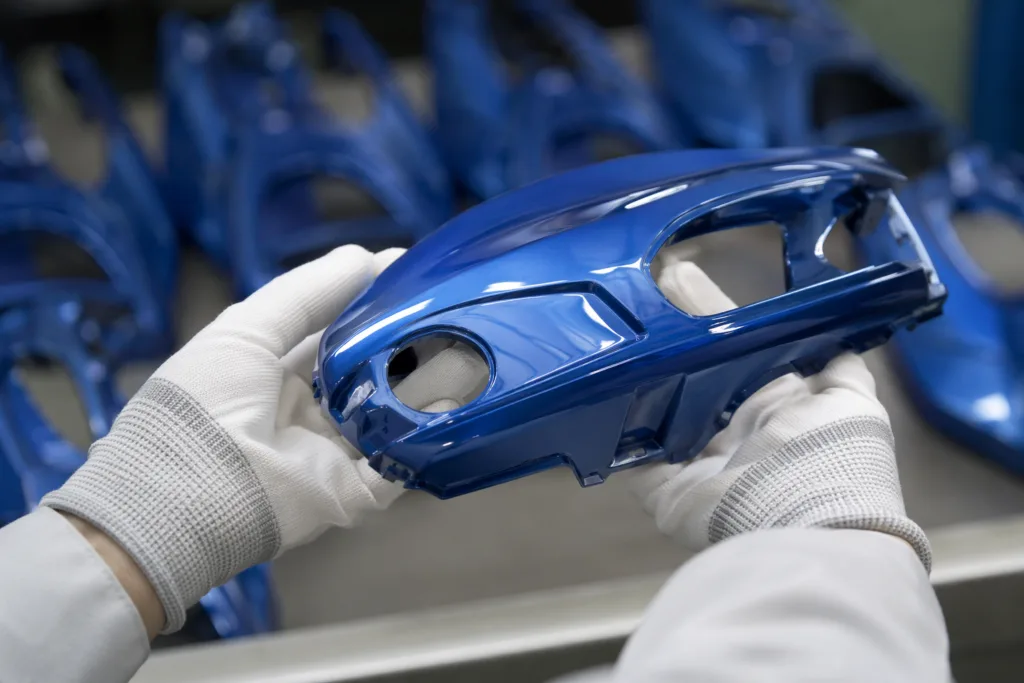
A spray paint adhesion promoter is essential whenever the substrate, process, or environment makes coating adhesion uncertain. It is most valuable on difficult plastics and other challenging surfaces where wetting, anchoring, and film stability are prone to variation. Used correctly, it improves finish quality, lowers the risk of peeling, and reduces rework across production runs.
The key is to treat it as part of a controlled workflow: clean the part, dry it, apply the promoter evenly, respect the flash time, and validate performance before full-scale release. When the substrate or coating system changes, the pretreatment should be rechecked as well. That is the most reliable path to stable industrial coating performance.
FAQs
When should a spray paint adhesion promoter be used?
Use a spray paint adhesion promoter when the substrate is difficult to wet or when you have seen poor coating grip, edge lift, or peeling during testing or production. It is especially useful on low-surface-energy plastics and on parts with contamination risk or inconsistent surface condition.
Is an adhesion promoter the same as a primer?
No. A promoter is usually a thinner interface treatment that improves wetting and bonding, while a primer often adds more build and can contribute barrier or protection properties. Some projects need only a promoter, while others need a primer system or both.
Do all plastics need an adhesion promoter before painting?
No. Some plastics coat more easily than others, and some surface preparations are enough on their own. Promoters are most important on difficult plastics such as PP, PE, and TPO, or on parts where surface energy and contamination create adhesion risk.
What is the most common reason promoter performance drops in production?
The most common reasons are poor cleaning, moisture on the part, incorrect flash time, and coating outside the intended window. Application inconsistency can also reduce performance even when the chemistry is suitable.
How should a promoter be tested before full production?
Test it on real parts or representative panels using the same cleaning method, spray settings, flash time, and coating system planned for production. Then check appearance, adhesion, and durability after cure and after any relevant handling or environmental exposure.
Can ZDS Adhesive support custom pretreatment requirements?
Yes. We can support sample evaluation, process matching, and custom formulation discussions when a standard product does not fit the substrate or line conditions. That is often useful when teams need tighter repeatability, specific packaging, or production-scale consistency.