Introduction to Smart Surface Technology: Bonding Touch Sensors to Leather/Wood
Smart surface technology is revolutionizing how everyday materials interact with users. By seamlessly bonding touch sensors to natural substrates like leather and wood, designers are creating interfaces that deliver both functionality and tactile appeal. This innovation is particularly relevant in industries such as automotive interiors, smart furniture, and wearable technology, where user experience and aesthetics must coexist. As we enter 2026, advances in adhesive bonding allow touch sensors to be integrated not just onto, but within these materials, unlocking new possibilities for design and function.
Understanding Smart Surface Technology
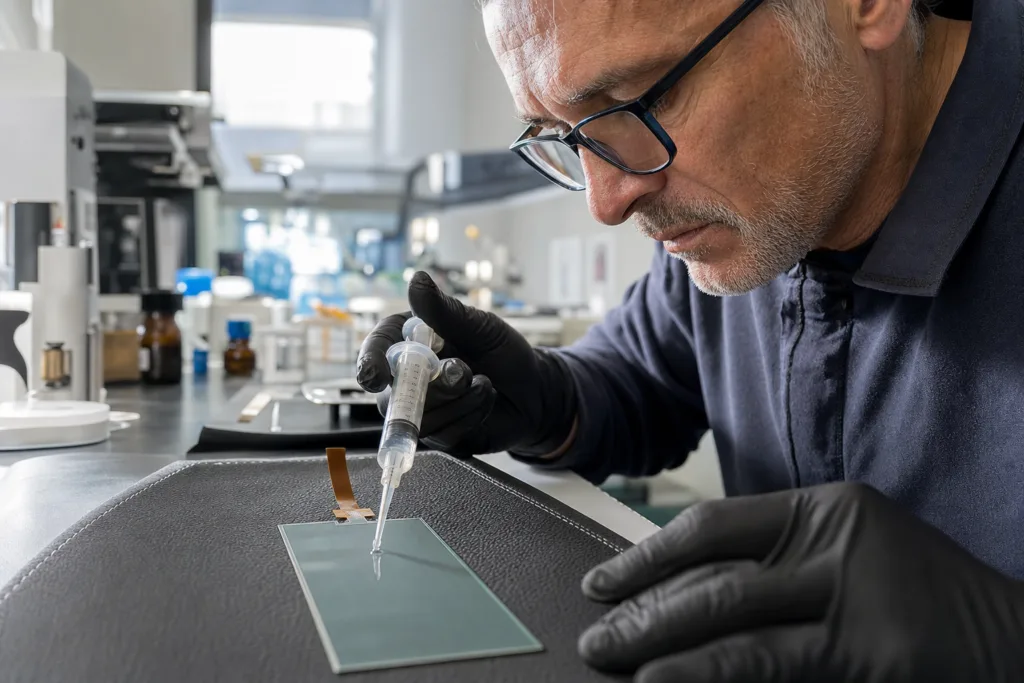
Smart surface technology refers to the integration of sensors and digital components directly into material surfaces. Unlike traditional separate controls, these sensors respond to touch, gesture, or proximity, merging digital responsiveness with material authenticity. This fusion is seen across automotive panels, luxury wearables, and home devices.
Why Bond Touch Sensors to Leather and Wood?
Leather and wood are valued for their warmth, flexibility, and comfort. Incorporating touch sensors into these substrates enhances usability while preserving their desirable characteristics. Smart surface technology: bonding touch sensors to leather/wood transforms static panels into interactive, responsive surfaces without compromising aesthetics.
Main Applications: Automotive Interiors, Smart Furniture, and Wearable Tech
Automotive designers use smart surfaces for instrument panels, steering wheels, and seat controls. In smart furniture, integrated touch sensors help users adjust settings, control lighting, or interact with connected devices intuitively. Wearable tech benefits from flexible, comfortable touch-sensitive materials that respond to gestures.
Materials for Substrates: Leather and Wood
Leather is prized for its softness and flexibility, while wood offers solid, tactile feedback. Each substrate presents its own bonding challenges and opportunities. Methods differ based on grain, porosity, thickness, and the end-use environment.
Types of Touch Sensors Used
Touch sensors vary in complexity, from simple capacitive pads to multi-touch and force-sensitive arrays. Most modern integrations rely on capacitive sensors, which detect the change in electrical charge when a user touches the surface.
Adhesive Bonding Methods for Smart Surfaces
Adhesive bonding is essential for marrying touch sensors with leather and wood substrates. Epoxy, polyurethane, silicone, acrylic, and pressure-sensitive adhesives each bring unique properties. For example, polyurethane adhesives offer flexibility, while epoxies provide strong structural bonds.
Critical Factors: Surface Energy and Bondline Thickness
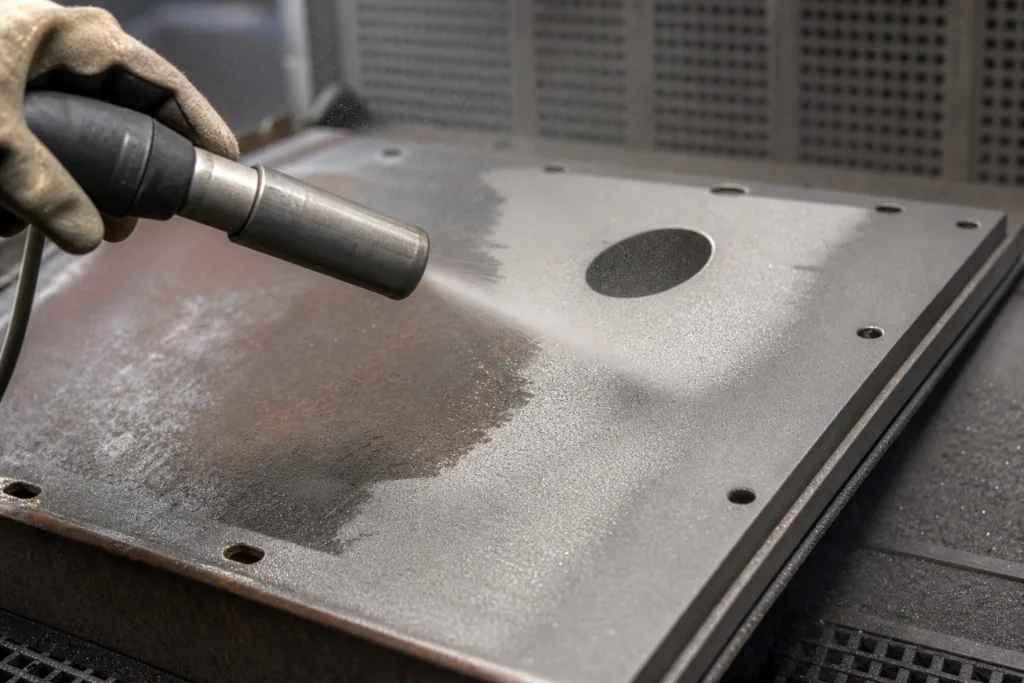
Achieving reliable adhesion requires careful surface preparation. Wood and leather have variable surface energies, so primers or plasma treatments may be applied before bonding. Maintaining optimal bondline thickness preserves sensor function and durability.
Fixture Time, Cure Mechanism, and Environmental Resistance
The right adhesive must match fixture time, cure mechanism, and environmental resistance. For touch sensors in cars, adhesives must stand up to heat, humidity, and repeated use.
Industrial Adhesive Selection for Sensor Integration
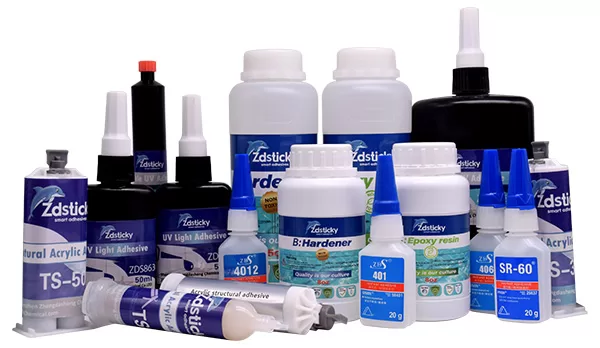
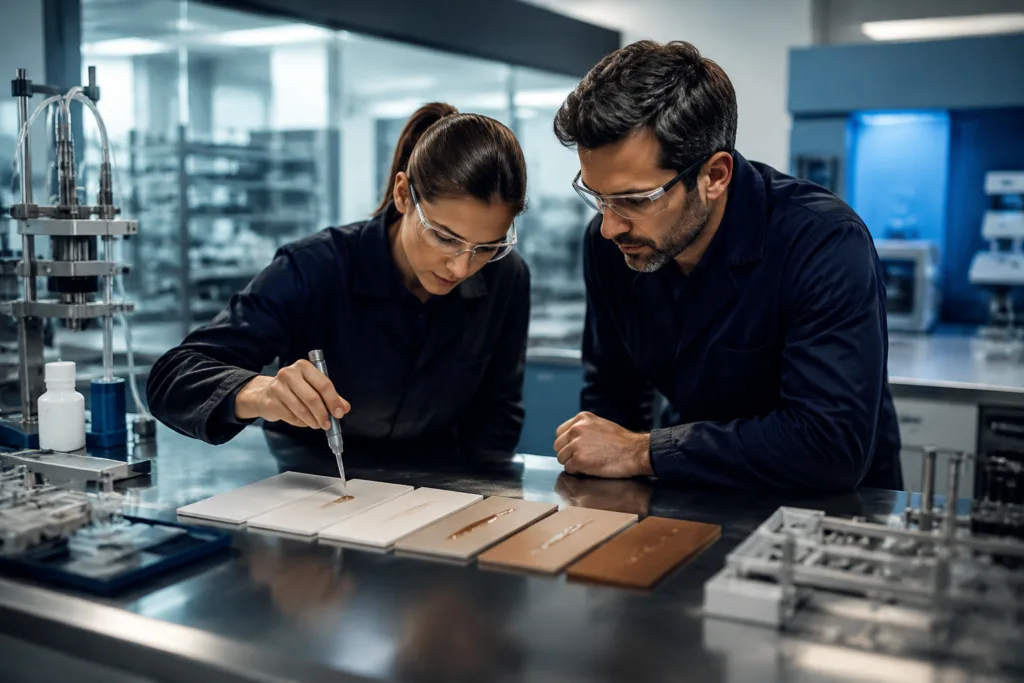
From a manufacturing perspective, ZDS Adhesive, an industrial adhesive manufacturer, insists on lap shear and peel testing to ensure sensors remain functional after thermal cycling and humidity aging. Flexible instant adhesives are often favored for soft materials, as discussed in Why Flexible Instant Adhesives for Soft Materials Are Transforming Lightweight Assembly (2026 Review), which underscores the importance of flexibility and rapid curing in production scenarios.
Bonding Challenges: Leather and Wood
Leather is porous and elastic, requiring adhesives that accommodate movement. Wood is fibrous and may absorb moisture, potentially affecting adhesive performance. Both materials can suffer from discoloration or stiffening if the wrong adhesive is selected. Mitigation strategies include precise adhesive selection, surface treatment, and matched cure schedules.
Impact on User Experience
When executed properly, smart surface technology: bonding touch sensors to leather/wood improves user experience by delivering intuitive, invisible controls. Touch points blend seamlessly with the material, providing a natural, responsive feel.
Benefits of Smart Surface Integration
- Enhanced aesthetics — clean, minimalist designs
- Reduction in moving mechanical parts
- Improved durability against wear and tear
- Greater design flexibility and personalization
- Easy cleaning and maintenance
Emerging Trends: Thin, Flexible Sensors
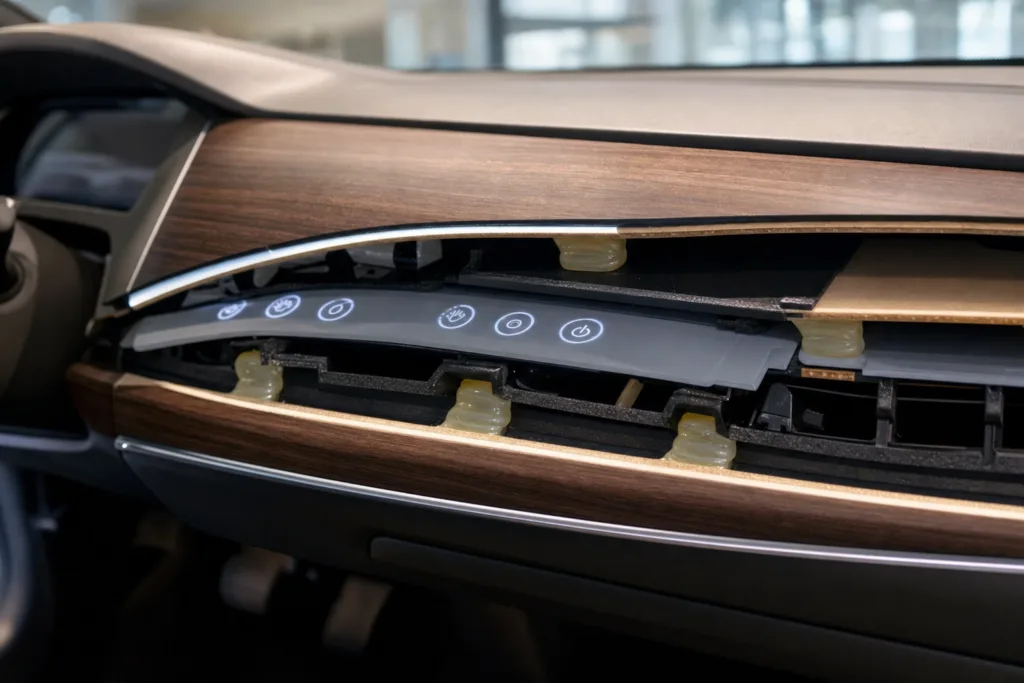
Thin, flexible touch sensors are making it possible to create truly conformal smart surfaces. These sensors are lighter, less invasive, and can be bonded to curved or irregular substrates, as seen in modern automotive dashboards (Future-Proofing Car Cockpits: How Flexible OLED Screens and Advanced Bonding Techniques Revolutionize Digital Dashboards).
Industrial Process Insights: Assembly-Line Strategies
On the assembly line, adhesives are chosen based on pot life, open time, and repeatable results. Automated adhesive dispensing systems (Automated Adhesive Dispensing Systems: How They Improve Consistency, Throughput, and ROI in Production) reduce human error and ensure consistency across high-volume applications.
Testing and Quality Assurance Practices
After bonding, assemblies undergo lap shear and peel strength testing, followed by thermal cycling and humidity exposure. These tests simulate real-world conditions and verify sensor reliability and longevity.
Comparing Adhesive Types: Which Is Best for Leather/Wood?
| Adhesive Type | Flexibility | Bond Strength | Cure Time | Comments |
|---|---|---|---|---|
| Epoxy | Moderate | High | Moderate | Best for structural bonds, may be rigid |
| Polyurethane | High | Moderate | Fast | Good for flexible substrates |
| Silicone | High | Moderate | Slow/Medium | Excellent moisture resistance |
| Pressure-sensitive | High | Low/Moderate | Instant | Easy processing, lower strengths |
Design Considerations for Sensor Placement
Proper sensor placement optimizes ergonomics. Designers must balance sensor sensitivity with area coverage, avoiding dead spots while preventing accidental activations. Leather and wood surfaces call for customization to maintain the natural look and feel.
How Adhesive Selection Affects Lifetime Performance
The right adhesive prevents delamination, ensures sensor performance, and prolongs product life. For instance, adhesives with low-VOC and low-odor chemistry (Top 7 Transformative Benefits of Low-VOC & Low-Odor Adhesives for Vehicle Interiors) are increasingly preferred in automotive interiors for improved safety and comfort.
Environmental and Safety Implications
Sustainable adhesives and sensor designs reduce environmental impact. Advances in chemical formulation also limit hazards, such as blooming and outgassing, found in traditional cyanoacrylate glues. Regulatory compliance is critical for automotive and wearable applications.
Smart Surface Technology: Bonding Touch Sensors to Leather/Wood
Smart surface technology: bonding touch sensors to leather/wood defines the next generation of interactive interfaces. The process transforms traditional substrates into intuitive controls in luxury cars, connected homes, and dynamic wearables. As adhesives and sensor designs evolve, these strides make everyday materials smarter, safer, and more responsive.
Future Directions: AI Integration and Sensing Capabilities
AI-driven algorithms are now being embedded into smart surfaces, enabling advanced gesture recognition and predictive capabilities. Material science advances allow more extensive sensor layouts without loss of tactile quality.
Case Study: Smart Automotive Dashboard Panels
In 2026, automotive manufacturers have integrated touch-sensitive leather dashboard panels using flexible adhesives and thin sensor arrays. Rigorous testing shows high reliability after repeated thermal cycles and humidity aging, setting new standards for interactive vehicle interiors.
Expert Tips for Reliable Sensor Bonding
- Use adhesives with matched flexibility to substrate
- Apply primers for low-energy surfaces
- Test lap shear and peel strength regularly
- Control bondline thickness for optimal sensor performance
- Use automated dispensing for production consistency
Conclusion: Smart Surface Technology in 2026
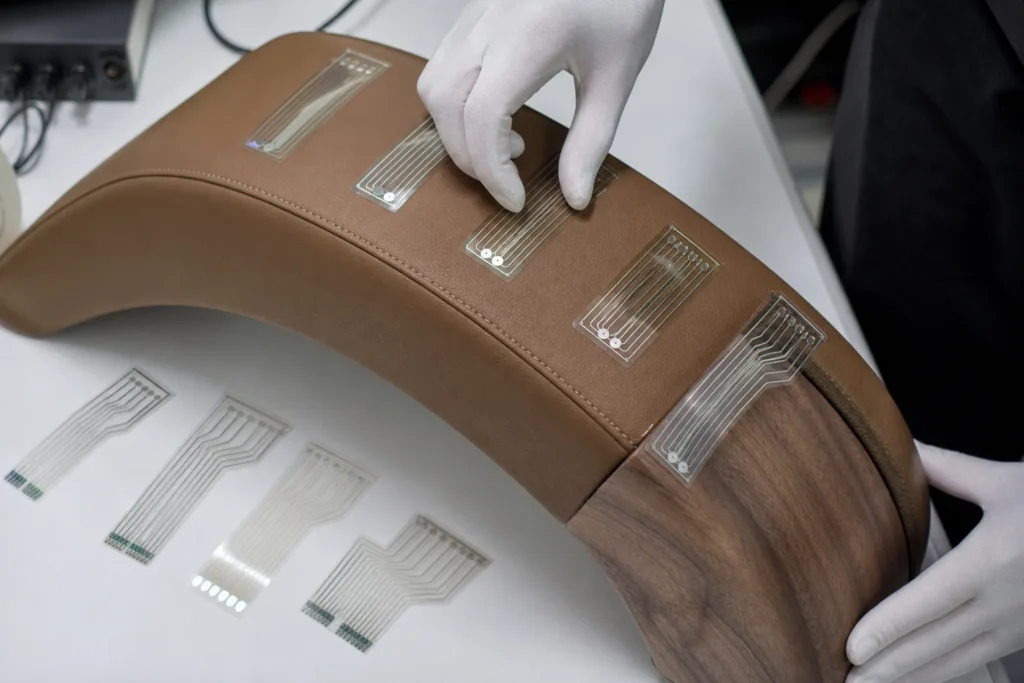
Smart surface technology: bonding touch sensors to leather/wood is a transformative trend. It enables natural-feeling, interactive experiences in cars, homes, and wearable products. By selecting the right adhesives and process techniques, manufacturers enhance both longevity and functionality. Looking forward, as sensor sophistication and adhesive chemistries improve, surfaces will only become smarter and more responsive to our touch.
Frequently Asked Questions
How are touch sensors integrated into leather or wood?
Touch sensors are typically placed on or beneath the substrate, then bonded using flexible adhesives that accommodate movement and environmental stress. Surface preparation is essential for reliable adhesion.
Which adhesive is most suitable for bonding sensors to leather?
Flexible instant adhesives or polyurethane systems are preferred for leather due to their elasticity and rapid curing. They resist peel, allow movement, and maintain sensor function.
What are the main challenges in bonding sensors to wood?
Wood is porous and can absorb moisture, requiring adhesives with good moisture resistance and surface treatments to prevent degradation and ensure lasting performance.
How does bonding technology impact user experience?
By embedding sensors invisibly, the interface remains tactile and intuitive. Users benefit from cleaner designs, enhanced durability, and responsive touch feedback.
Can touch sensors handle repeated cleaning and usage?
Yes, by using durable adhesives and moisture-resistant coatings, bonded sensors maintain performance through cleaning cycles and everyday use.
What industries benefit most from smart surface technology?
Automotive, smart home, and wearable technology industries are leading adopters; they rely on robust touch sensors for improved interface, safety, and lifestyle functionality.