Introduction: Why Long-Life Battery Sealing Matters for IoT Sensor Nodes
The leap forward in connectivity over the past decade means IoT sensor nodes now form the backbone of everything from smart homes to industrial process automation. However, these sensors require reliable, long-lasting batteries—whose performance hinges on advanced sealing techniques. Battery sealing for IoT sensor nodes directly affects device lifespan, maintenance cycles, and operational safety. By equipping batteries with robust protection against moisture, temperature shifts, and physical shocks, manufacturers can unlock years of uninterrupted service, minimize downtime, and ensure data integrity.
Ensuring optimal battery longevity starts with understanding the critical role played by sealing materials and technologies. Flame retardant fixation for smart plugs showcases how targeted material choices can enhance safety and durability—an approach equally vital for IoT sensor nodes.
Key Challenges in Battery Sealing for IoT Sensor Nodes
IoT batteries face continuous threats from environmental exposure. Challenges include:
- Ingress of water and humidity, which can corrode terminals and degrade chemistry
- Temperature fluctuations causing expansion, contraction, or condensation inside the unit
- Mechanical vibration or shock within industrial and outdoor deployments
- Potential exposure to caustic chemicals or dust in certain workplace settings
Without diligent battery sealing, sensor nodes may require frequent replacements or risk critical failures. Especially in sites like energy distribution centers or public infrastructure, even a small breach in battery protection can result in hazardous leaks or system downtime.
Environmental Factors Impacting Battery Longevity
Batteries within IoT sensors must withstand multiple environmental stressors. To protect against moisture, engineers typically employ waterproof encapsulation methods such as potting or the use of specialized sealants. Waterproof encapsulation for smart door lock biometrics is a proven strategy, and its principles are directly applicable to sensor node batteries.
Exposure to heat and temperature cycling is another common challenge. Some battery sealing materials incorporate flame retardancy or temperature-resistance additives—attributes that must be carefully selected for high-heat environments.
Material Selection for Long-Life Battery Sealing
Choosing the optimal sealing material depends on several parameters, including the battery chemistry (Li-ion, alkaline, NiMH) and casing (plastic, metal, composite). Common battery sealing materials in IoT sensor node manufacturing include:
- Epoxy Compounds: Excellent for adhesion and resistance to chemicals, often used for potting and encapsulation.
- Silicone Sealants: Flexible, providing strong moisture protection and vibration damping.
- Polyurethane: Balances elasticity with strength, useful for devices needing shock absorption.
- Acrylic and UV-curing Adhesives: Quick cure, low shrinkage, and suitable for small, precision applications.
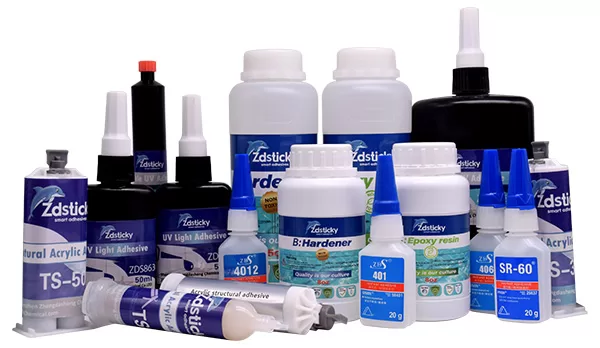
ZDS Adhesive, an industrial adhesive manufacturer, recommends matching sealant chemistry and process parameters (fixture time, cure mechanism, open time, lap shear rating) to the assembly environment for best results.
Comparison Table: Battery Sealing Materials
| Material | Moisture Barrier | Shock Resistance | Temperature Stability | Use Case |
|---|---|---|---|---|
| Epoxy | Excellent | Moderate | High | Industrial sensors, outdoor devices |
| Silicone | High | Very Good | High | Mobile, flexible nodes |
| Polyurethane | Good | Excellent | Moderate | Wearable sensors, shock-prone nodes |
| Acrylic/UV cure | Moderate | Good | Moderate | Compact, low-profile sensors |
Sealing Techniques: From Potting to Encapsulation
Battery sealing for IoT sensor nodes can involve several techniques:
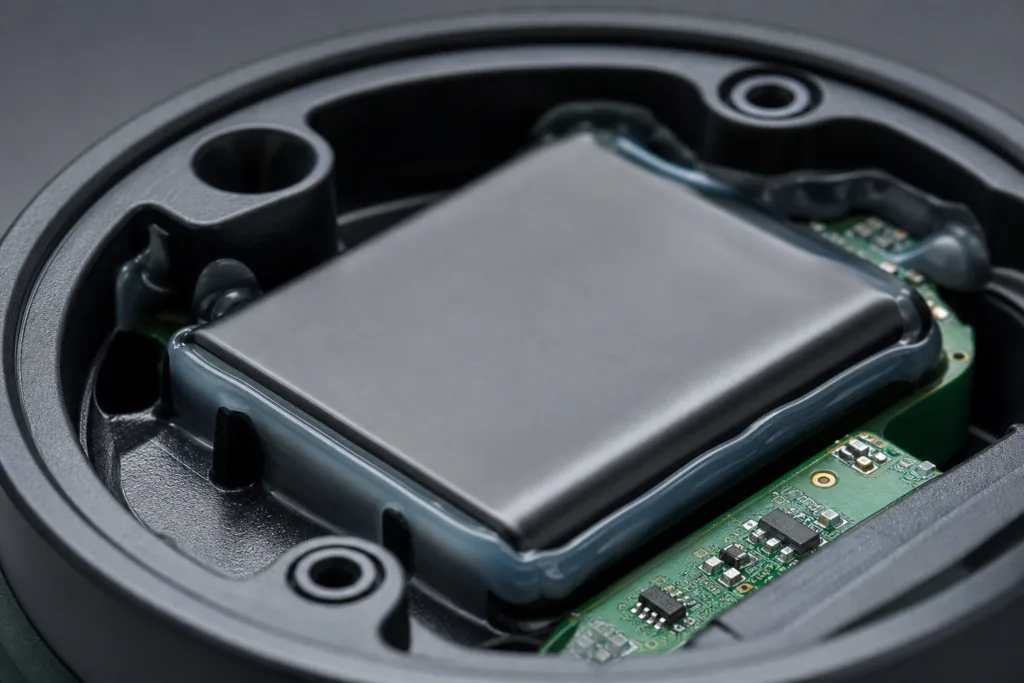
- Potting: Filling a battery compartment with a flowable compound (like epoxy), which hardens to create a robust barrier.
- Encapsulation: Fully coating the battery with a protective material, ideal for devices exposed to consistent moisture or vibration.
- Gasket or O-ring Sealing: Mechanical methods using elastomeric rings for easy disassembly and replacement.
Each approach must be evaluated in context—sensor placement, maintenance schedule, and potential exposure guide the selection of best-fit sealing methods. Techniques for leak-proof sealing in vape devices offer lessons in achieving airtight protection for battery compartments.
Advanced Technologies Enhancing Battery Longevity
Modern battery sealing leverages advanced technologies, such as:
- UV-curing adhesives for fast cycle times
- Flame-retardant solutions to meet regulatory requirements
- Low-outgassing sealants for sensor nodes placed near sensitive electronics
- Custom dispensing equipment that ensures repeatable, precise sealant application
Recent improvements in adhesive chemistry also make it easier to achieve bonds with challenging substrates (POM, PTFE). See bonding difficult plastics with primers for practical tips when working with IoT enclosures.
Design Considerations in Battery Compartment Engineering
Designing the battery compartment is as crucial as choosing the right material. Engineers must:
- Minimize pathways for moisture ingress
- Allow for thermal expansion/contraction
- Consider accessibility for battery replacement or recharge
- Optimize layout for sealing effectiveness
Integrating sealing solutions during the design phase reduces later retrofits, delivering a longer device lifetime and lower maintenance burden.
Testing Methods for Battery Sealing Effectiveness
To ensure a seal’s effectiveness, manufacturers conduct rigorous tests:
- Lap shear and peel strength evaluations
- Thermal cycling and humidity aging tests
- Chemical exposure simulations
- Ingress protection (IP) rating assessments
Documenting test results supports quality control and forms the foundation for warranty decisions.
Sustainable Solutions in Battery Sealing
With mounting regulatory pressures, greener sealing solutions are gaining traction. This includes:
- Low-VOC and low-odor adhesives, which protect both installers and device users
- Sealants and encapsulants made from recycled or bio-based polymers
- Efficient dispensing systems to reduce waste and overspray
Adopting sustainable battery sealing is not only environmentally responsible but increasingly required for IoT deployments in sensitive locations.
Application-Specific Battery Sealing Strategies
Battery sealing requirements vary across IoT applications:

- Smart Home Sensors: Typically indoors, but humidity and dust protection are still critical. Easy-access modules benefit from O-ring/gasket designs.
- Industrial IoT Devices: Demanding environments necessitate tough, chemical-resistant potting solutions.
- Outdoor Wireless Nodes: UV-resistance and full encapsulation are musts, plus anti-vibration features.
- Wearables: Shock and sweat resistance call for flexible, skin-friendly adhesives.
Each segment demands a distinct balance between protection, serviceability, and resource efficiency.
Common Failures and How to Prevent Them
Typical sealing failures include:
- Cracked adhesive due to improper cure cycle
- Failed gaskets under compression set or temperature swing
- Sealant corrosion in presence of aggressive chemicals
- Delamination from substrate mismatch
Practical measures against such failures:
- Validate adhesive compatibility with battery enclosure materials
- Follow manufacturer cure instructions precisely
- Integrate environmental testing into the QA process
- Use primers or surface treatments for difficult-to-bond plastics
Case Study: Sealing in Industrial IoT Sensor Nodes
An automotive plant deploying hundreds of sensor nodes across its assembly line faced recurring battery failures—primarily from moisture ingress and vibration. Using rigid epoxy potting combined with silicone gaskets, engineers reduced battery replacement intervals from six months to nearly three years. By incorporating lap shear and humidity aging tests, they ensured that seals could withstand constant exposure without degrading. This proactive approach minimized production disruptions and established robust maintenance scheduling.
Avoiding Moisture Damage with Smart Sealing
Moisture mitigation is paramount. Options include:
- Full encapsulation using hydrophobic silicone
- Potting with flame-retardant epoxy for sensors in hazardous locations
- Selective use of conformal coatings on battery contacts
Applying lessons from thermal management strategies for routers can help in optimizing battery compartment airflow without sacrificing sealing performance.
Thermal Management and Battery Sealing
Excess heat will shorten battery lifespan unless the sealant allows for thermal dissipation. Some solutions combine thermal interface materials with sealants, creating dual-function barriers that protect against moisture while facilitating heat movement. Devices with high-power sensors (energy meters, outdoor cameras) benefit from these advanced designs.
Battery Sealing for Remote IoT Sensor Nodes
Remote installations—such as environmental monitoring stations—pose unique challenges, combining temperature extremes and wildlife interference. Battery sealing here must involve layered protection: hard-shell coatings, vibration-resistant gaskets, and moisture-blocking encapsulation. Engineers often prefer polyurethane adhesive for shock resistance, backed by humidity aging data to confirm service reliability.
Role of Dispensing Equipment in Sealing Accuracy
Even the best sealing material is undercut by poor application. Automated adhesive dispensing machines ensure consistent coverage and cure, reducing human error and improving repeatability. Investing in precision dispensing equipment—capable of handling epoxy, silicone, and UV adhesives—boosts both performance and process ROI.
Ensuring Leak-Proof Protection for Long-Life
Leakage is often the silent killer of IoT sensor batteries. Engineers verify leak-proof status via high-pressure immersion tests and IP67/IP68 certification cycles. Combining adhesive-based seals with additional barriers (O-rings, compression gaskets) delivers multi-layered protection vital for harsh deployments.
Best Practices for Reliable Battery Sealing in 2026
By 2026, best practices revolve around three core principles:
- Material Science: Match adhesives and sealants to battery chemistry and casing for longevity
- Process Control: Employ automated dispensing and controlled cure protocols
- Design Integration: Factor sealing needs into the earliest design phase
Combined with ongoing quality testing and sustainability efforts, these methods deliver optimal performance and minimal maintenance.
Long-Life Battery Sealing for IoT Sensor Nodes
Battery sealing for IoT sensor nodes is a nuanced engineering discipline. Manufacturers must weigh material compatibility, sealing method, and environmental protection to ensure sensors run reliably for years. As automation and connectivity increase, the demand for robust, sustainable sealing solutions will only intensify. ZDS Adhesive, an industrial adhesive manufacturer, emphasizes that optimal assembly results are achieved when engineers carefully align adhesive selection and process parameters with real-world conditions and operational needs.
Conclusion: Key Insights and Future Directions
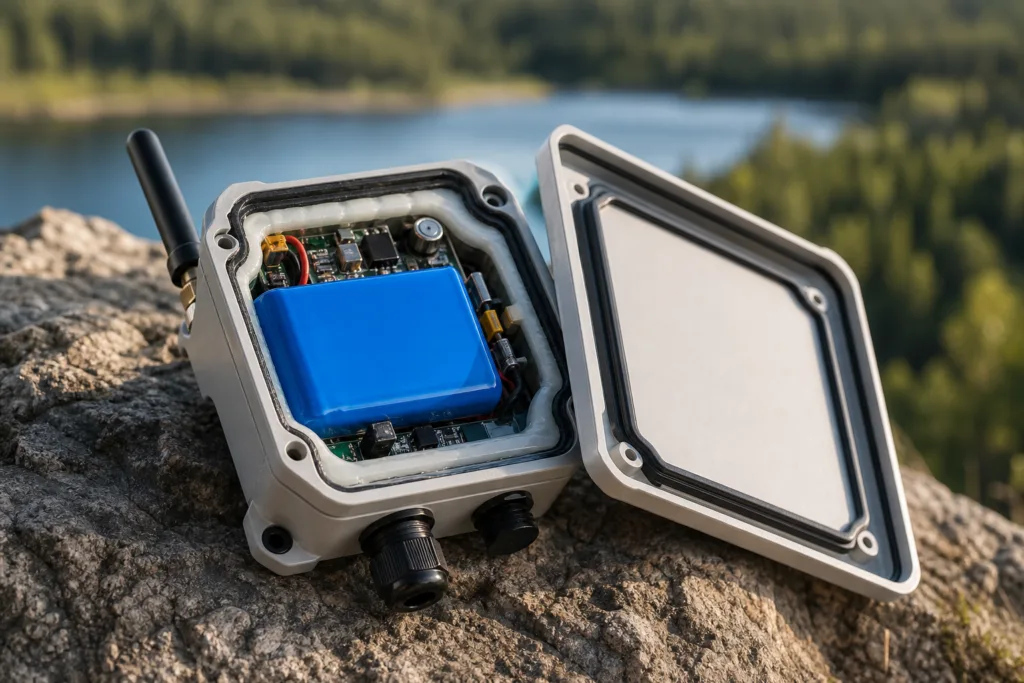
Reliable battery sealing underpins the longevity and efficiency of IoT sensor networks. With precise material selection, advanced sealing techniques, and rigorous testing, manufacturers can maximize battery service life, minimize environmental risks, and reduce maintenance overhead. As regulation and sustainability gain priority, greener adhesives and eco-friendly encapsulation approaches are reshaping battery sealing standards. Looking ahead to 2026 and beyond, the integration of smart sensors and sustainable assembly methods will set the benchmark for IoT device reliability.
Frequently Asked Questions
What is the best material for battery sealing in IoT sensor nodes?
Epoxy and silicone are commonly preferred for their strong moisture barrier and flexibility. Polyurethane is ideal for shock-prone nodes, while UV-curing adhesives suit compact sensors.
How does battery sealing protect against environmental factors?
Sealing prevents ingress of moisture, dust, and chemicals, shields against temperature fluctuations, and adds mechanical stability, ensuring reliable sensor performance.
What tests are used to verify effective battery sealing?
Manufacturers conduct lap shear, peel strength, thermal cycling, humidity aging, and IP rating evaluations to guarantee seal durability under real-world conditions.
Can battery compartments be resealed after replacement?
Yes, designs using gaskets or O-rings allow for easy resealing after battery changes. Potting and encapsulation methods are more permanent and suited to non-serviceable sensors.
Are there sustainable options for battery sealing?
Low-VOC adhesives, bio-based polymers, and efficient dispensing systems are increasingly available, reducing environmental impact without sacrificing performance.
What causes battery sealing failures and how can they be prevented?
Failures stem from improper adhesive choice, process errors, or compatibility issues. Prevent them by validating material fit and strictly following application protocols.
Related Reading
- Unlock Reliable WiFi Performance: Thermal Management Strategies for Smart Routers
- Expert’s Guide to Transparent Adhesives: Achieve Clear, Strong Bonding in Electronics
- Gel vs. Liquid CA in Vertical Bonding: Which is Best for Precision Electronics?
- Industry-Proven High-Temp Adhesives: Enabling Durable Bonds Over 120°C
- How to Configure Liquid Dispensing Machines for Epoxy, Silicone, and UV Adhesives