Introduction: Why Low-VOC and Low-Odor Adhesives Matter for Vehicle Interiors
Automotive design has evolved to prioritize sustainability and passenger health, making low-VOC and low-odor adhesives essential for vehicle interiors by 2026. As people spend more time inside their vehicles—whether commuting or enjoying road trips—indoor air quality and comfort have become critical differentiators for manufacturers and consumers alike. These innovative adhesives minimize unwanted chemical emissions, limit indoor air pollution, and offer a more pleasant experience, all while meeting tough environmental regulations and rising consumer expectations.
The Rise of Sustainable, Health-Conscious Automotive Manufacturing
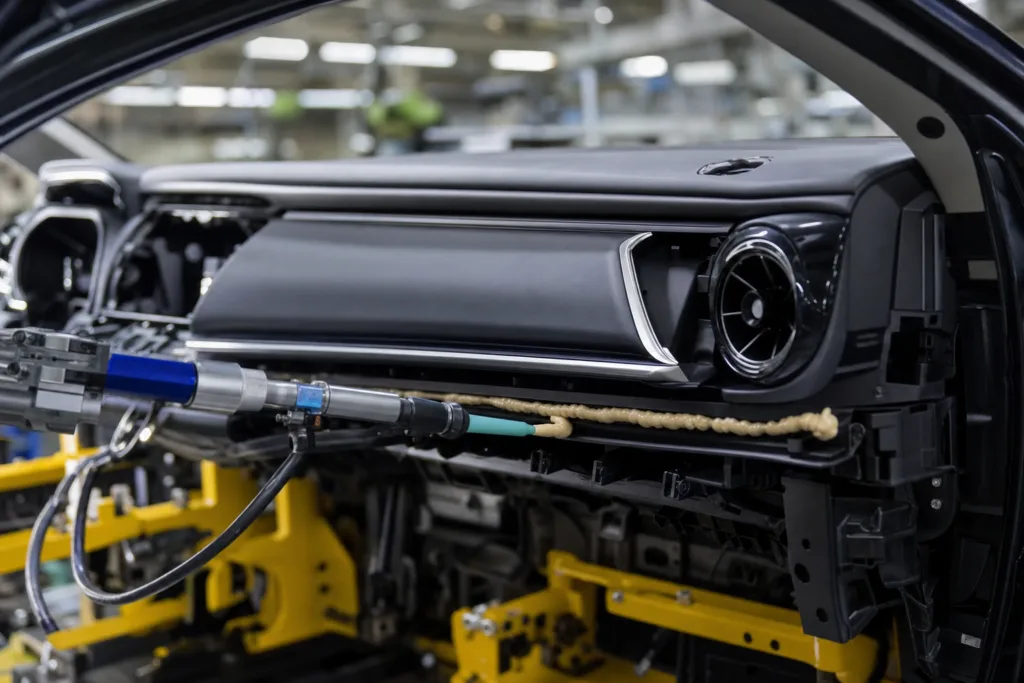
Sustainable design is now central to automotive manufacturing. Regulations worldwide have pushed carmakers and their supply partners to limit volatile organic compound (VOC) emissions. Low-odor adhesives directly improve passenger comfort and long-term health, reducing complaints like headaches, allergies, and chemical sensitivities. Brands increasingly seek adhesives that not only perform but also enhance their eco-friendly reputation.
Understanding Low-VOC and Low-Odor Adhesives for Vehicle Interiors
Low-VOC adhesives release fewer harmful gases compared to standard formulations, often remaining well below regulatory thresholds. Low-odor adhesives, meanwhile, target both the immediate smell and lingering emissions that could impact users. A well-chosen adhesive can help automakers address volatile organic compound exposure, protect sensitive populations, and comply with certifications like LEED, GREENGUARD, and German Automobilverband standards.
Benefits of Low-VOC and Low-Odor Adhesives in Automotive Applications
- Reduction in indoor air pollution
- Improved passenger comfort and health
- Compliance with global environmental regulations
- Lower risk of brand-damaging odor complaints
- Positive impact on sustainability ratings
By switching to low-VOC adhesives, automakers address health risks while lowering their carbon footprint. Interior designers gain more options for premium comfort without sacrificing performance.
Key Regulations Shaping Adhesive Selection in 2026
Vehicle interior adhesives must now comply with both regional and global standards. European Union directives, California’s Air Resources Board (CARB), China’s GB standards, and broader ISO requirements all set upper VOC limits for materials used inside cars. Manufacturers also need to test for fogging, odor, and emission levels, making accurate selection crucial.
Main Types of Low-VOC and Low-Odor Adhesives Used in Vehicle Interiors
From instrument panels to seat assembly, multiple adhesive chemistries provide low-VOC, low-odor solutions tailored to automotive needs:
- Water-based adhesives: Ideal for fabrics, foams, and dashboard trim—minimizes VOCs via aqueous carriers.
- Hot melt adhesives: Fast curing and clean bonding for carpets and headliners; usually contain very little solvent.
- PUR (polyurethane) adhesives: Flexible, durable, suitable for leather, vinyl, and mixed substrates.
- Silicone and modified acrylic adhesives: Used where temperature resistance and flexibility are needed.
- Laminating adhesives: Specialized for multilayer trim, often formulated for minimal emissions.
Comparison Table: Low-VOC Adhesive Types for Vehicle Interiors
| Adhesive Type | Main Applications | VOC Level | Odor Profile | Performance |
|---|---|---|---|---|
| Water-Based | Foams, Fabrics, Trim | Very Low | Minimal | Good |
| Hot Melt | Carpets, Headliners | Low | Minimal | High |
| PUR | Seats, Vinyl, Leather | Low | Moderate | Excellent |
| Silicone/Acrylic | Sensor Mounts, Flexible Bonds | Low | Low | High Temp Resistance |
Applications of Low-VOC and Low-Odor Adhesives in Vehicle Interior Assembly
Adhesives play diverse roles in interior assembly:
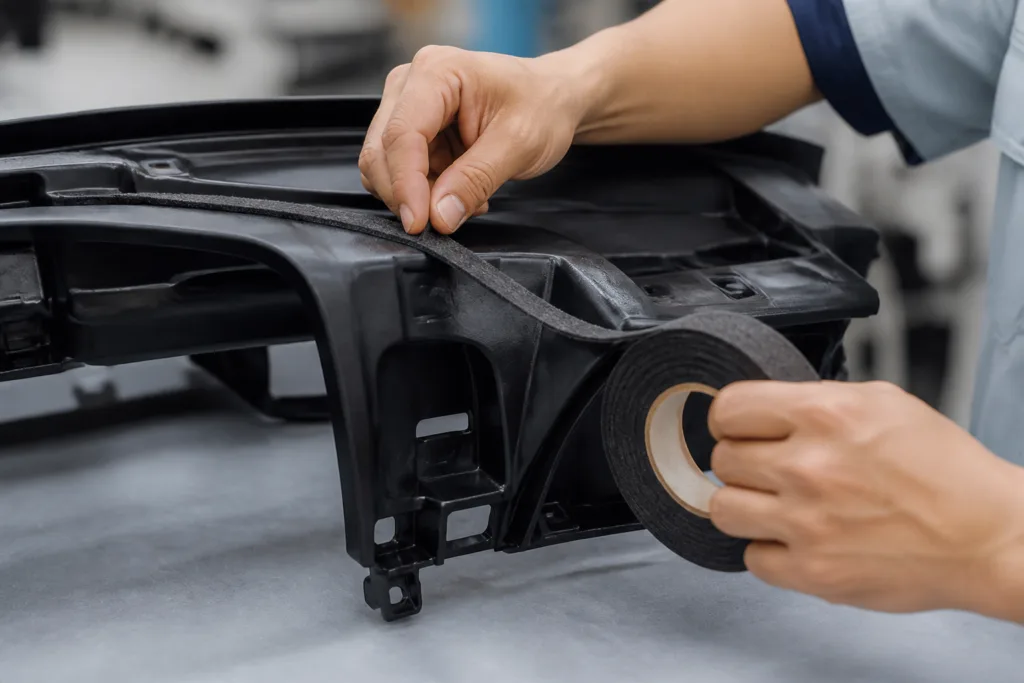
- Bonding dashboards, instrument panels, and glove compartments
- Securing foam and fabric to seat frames
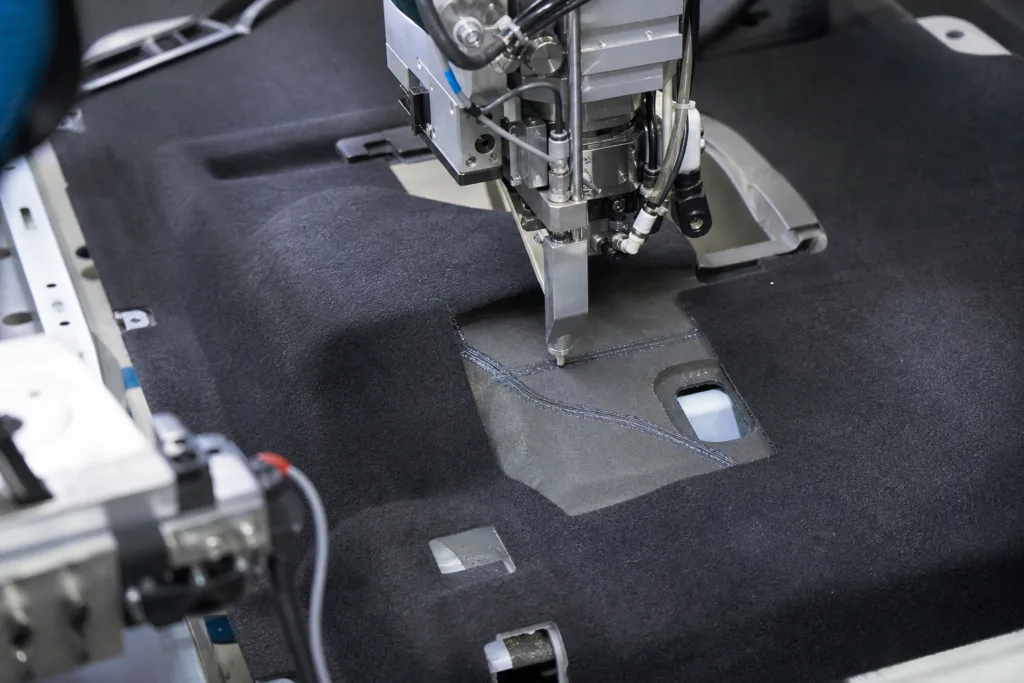
- Fastening carpets, roof liners, and acoustic panels
- Repairing or assembling door trim, consoles, and buttons
- Attaching multi-material decorative elements
These adhesives streamline production, ensure strong bonds, and keep interiors free from unpleasant chemical odors.
Performance versus Traditional Adhesives: Real-World Insights
| Criteria | Low-VOC Adhesive | Traditional Adhesive |
|---|---|---|
| VOC Emission | < 50 g/L | 100–500 g/L |
| Odor | Neutral | Pungent |
| Bond Strength | Comparable | High |
| Cure Time | Rapid | Rapid |
| Sustainability | Excellent | Poor |
Modern low-VOC adhesives now rival or surpass traditional formulas in strength, cure speed, and longevity—neutralizing most past trade-offs.
Key Considerations for Automotive Engineers Selecting Interior Adhesives
- Substrate compatibility: plastic, foam, metal, or mixed composites
- Required flexibility and durability
- Open/working time and fixture requirements
- Regulatory certifications
- Process integration: dispensing equipment, cure mechanism
Engineers must balance requirements for structural integrity, smell, sustainability, and production throughput. Reviewing technical data—like lap shear, fogging, and emission tests—ensures proper selection. For detailed substrate-specific advice, see the guide on adhesion promoters for plastics.
Interior Designers: Matching Adhesive Choices to Consumer Demands
Consumers expect unsurpassed comfort, odor-free environments, and clear sustainability features. Interior designers must choose adhesives that align with aesthetic goals (seamless joints, invisible seams) and health standards. Low-VOC adhesives allow bold new material combinations and enable designs that would be impossible with older, more pungent glues.
How ZDS Adhesive Approaches Low-VOC Vehicle Interior Solutions
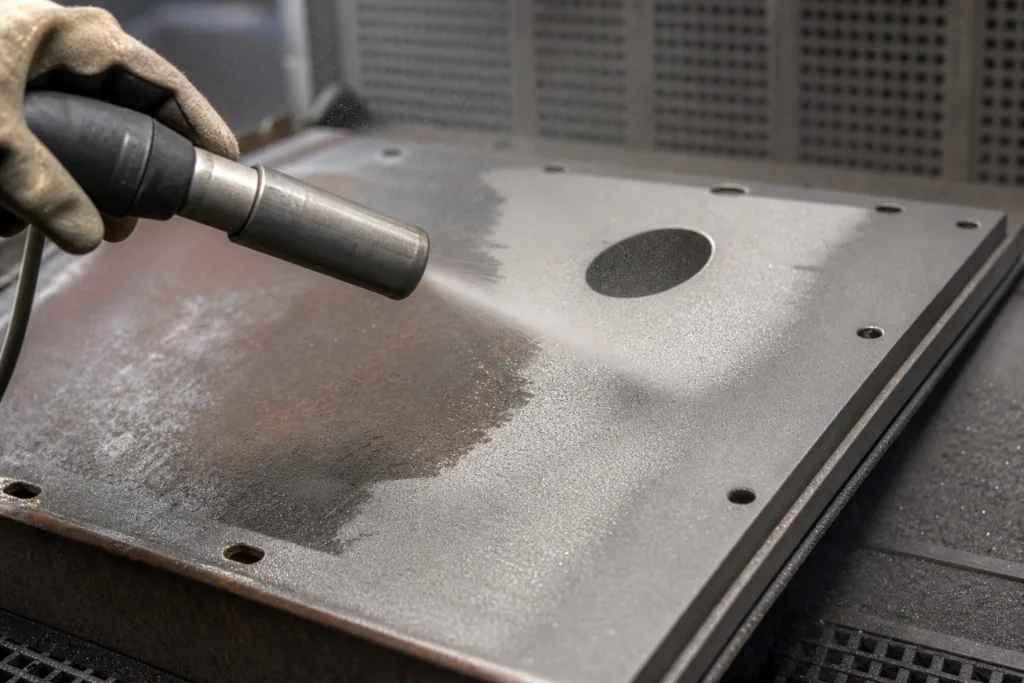
ZDS Adhesive, an industrial adhesive manufacturer, recommends choosing assembly adhesives based on material compatibility, cure profile, and emission data. For example, bonding PP or PE interior trim requires surface treatment (primer, plasma, or corona) and low-VOC PUR or hot melt formulations. Success depends on cross-referencing lap shear tests, fixture time, and emission certifications, especially when switching substrates or integrating new composite panels.
Examples of Manufacturers and Products Embracing Low-VOC Solutions
Leading automotive suppliers now use water-based, hot melt, and hybrid adhesives for dashboards, seat upholstery, and acoustic insulation. Many brands highlight their low-odor interiors in marketing, citing emission measurements and passenger comfort data. For acoustic panel bonding, read more on acoustic sealing strategies for smart speaker assembly—the principles often transfer to vehicle interiors.
Addressing Common Industry Challenges
- Ensuring adequate bond strength with low-VOC formulations
- Integrating adhesives into automated dispensing systems
- Managing pot life and working time for complex assemblies
- Meeting fogging and emission requirements for new materials
- Balancing cost-effectiveness with sustainability
New adhesives often require careful process optimization. For those using hot melt systems, refer to how to match hot melt equipment with the right adhesive and process.
How to Test and Validate Low-VOC Adhesives for Automotive Interiors
Best practices include:
- VOC emission and fogging tests (using standard chambers)
- Mechanical bond evaluations: lap shear, peel, and tensile tests
- Odor panel evaluations
- Long-term humidity and thermal cycling
Consistent validation helps engineers avoid failures, ensuring safety and comfort in real-world conditions.
Balancing Performance, Cost, and Sustainability in Modern Adhesive Selection
Going low-VOC doesn’t have to mean sacrificing performance or blowing budgets. Manufacturers now offer blends that meet emission criteria and deliver reliable bonding—sometimes at lower total cost, thanks to streamlined installation and reduced rework. Effective choices depend on accurate cost–benefit calculations over product lifecycles.
Low-VOC and Low-Odor Adhesives for Vehicle Interiors
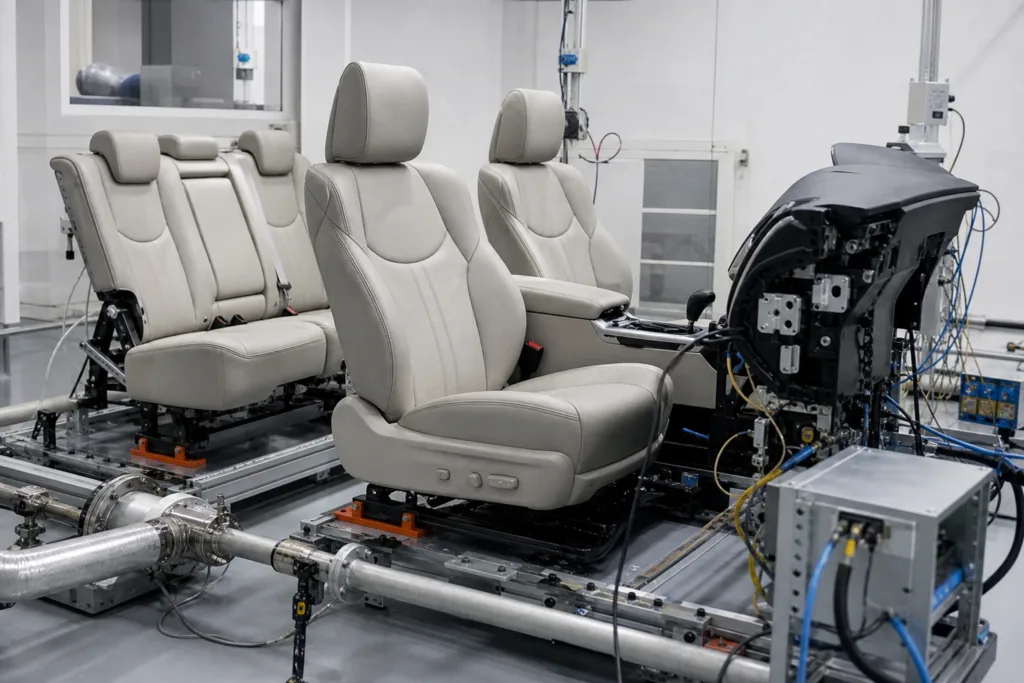
In summary, low-VOC and low-odor adhesives have become essential tools for creating sustainable, comfortable, and high-performance vehicle interiors. Manufacturers and designers alike must assess adhesive properties, regulatory requirements, and user comfort, ensuring every bond supports both safety and satisfaction. As technology and standards evolve, so too will the capabilities of adhesive solutions, pointing toward even cleaner, smarter, and greener automotive interiors.
Frequently Asked Questions
What are VOCs and why are they harmful in vehicles?
VOCs (volatile organic compounds) are chemicals released from materials like adhesives, which can cause headaches, allergies, or long-term health risks when trapped inside vehicle interiors.
Do low-VOC adhesives perform as well as traditional ones?
Today’s low-VOC adhesives offer comparable bond strength, durability, and cure times, often surpassing traditional adhesives in demanding automotive applications.
How do low-odor adhesives improve passenger comfort?
Low-odor adhesives eliminate unpleasant smells and emissions, creating a more comfortable and healthy cabin environment for drivers and passengers.
What regulations affect adhesive selection in automotive interiors?
Global standards like EU directives, CARB, and China’s GB regulate VOC content and emissions, requiring adhesives to meet strict safety and environmental benchmarks.
Which parts of a car interior use low-VOC adhesives?
Low-VOC adhesives bond dashboards, seats, carpets, roof liners, instrument panels, door trims, consoles, and acoustic panels.
How can engineers validate adhesive performance for interior applications?
Engineers use emission testing, mechanical strength tests, and panel odor evaluations, alongside long-term durability checks under temperature and humidity cycles.