Introduction: Flexible OLEDs Transforming Digital Dashboards
Bonding flexible OLED screens in digital dashboards is one of the most exciting advances in automotive interiors today. As car makers and Tier 1 suppliers reimagine cockpit design, flexible OLED panels enable sweeping curves, seamless visual surfaces, and rich touchscreen interactivity. These flexible displays aren’t just about aesthetics — they deliver real benefits in weight, user experience, and even energy efficiency. But for engineers and assemblers, new challenges arise: how do you ensure crystal-clear optics, lasting durability, and reliable bonds over the life of the vehicle? This guide explores the latest innovations, real-world challenges, and expert-backed solutions changing the automotive display landscape.
Flexible OLED Technology Basics
Flexible OLED (Organic Light-Emitting Diode) technology allows displays to bend, curve, and even wrap around surfaces without losing functionality. Unlike rigid LCDs, OLEDs use organic semiconductors that emit light and require no backlight, making them ultra-thin, light, and power efficient. You’ll find these displays appearing in luxury vehicles, concept cars, and increasingly in mainstream dashboards, instrument clusters, and infotainment systems.
Why Choose Flexible OLED for Digital Dashboards?
The leap from traditional LCD and rigid OLED to flexible OLED isn’t just style — it’s functional and strategic:
- Curved, Seamless Designs: Flexible OLEDs create immersive displays that follow the dash’s contour, eliminating bezels or split panels.
- Lightweight Construction: Reducing dashboard display weight yields fuel efficiency enhancements and design flexibility.
- High Contrast and Rich Colors: OLED pixels emit their own light, delivering unmatched contrast (true black) and vibrant colors, crucial for driver visibility.
- Energy Efficiency: With no backlight, flexible OLEDs draw less power—helpful for both electric and traditional vehicles.
Challenges in Bonding Flexible OLED Screens
While the advantages are compelling, flexible OLEDs introduce specialized bonding and assembly challenges. The most significant:
- Maintaining Screen Integrity & Clarity: Any bonding adhesive must provide high optical clarity and avoid bubbles, haze, or yellowing over time.
- Flex Stress & Durability: The bondline must withstand millions of flex cycles, vibrations, and temperature swings without delamination or cracking.
- Environmental Resistance: Automotive interiors face UV, humidity, chemicals, and temperature extremes — all must be considered in material selection.
Many OEMs now refer to adhesive “invisible strength” — the bond should never be seen or felt, but remain critical to display performance.
Key Materials for Bonding Flexible OLEDs
Not every adhesive suits these advanced applications. Here’s what sets successful bondlines apart:
- Optically Clear Adhesives (OCA/LOCA): These transparent adhesives ensure no visible distortion and minimal light scattering.
- Flexible Instant Adhesives: Formulations engineered to survive repeated flexing and absorb vibration.
- Low-Temperature-Cure Epoxies: For applications where thermal damage to OLEDs must be avoided.
Many top-performing solutions leverage OCR vs. OCA optical bonding—choosing the right method based on design complexity and assembly speed.
Step-by-Step Bonding Process for Flexible OLED Dashboards
Each automotive dashboard assembly line may adapt this process, but the essentials remain similar:
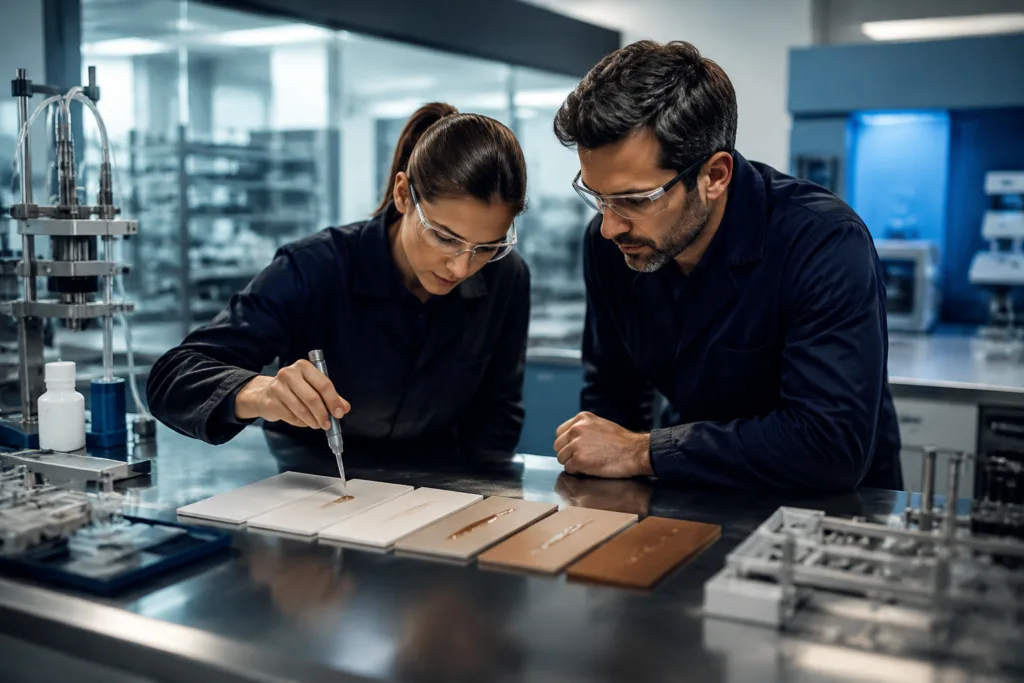
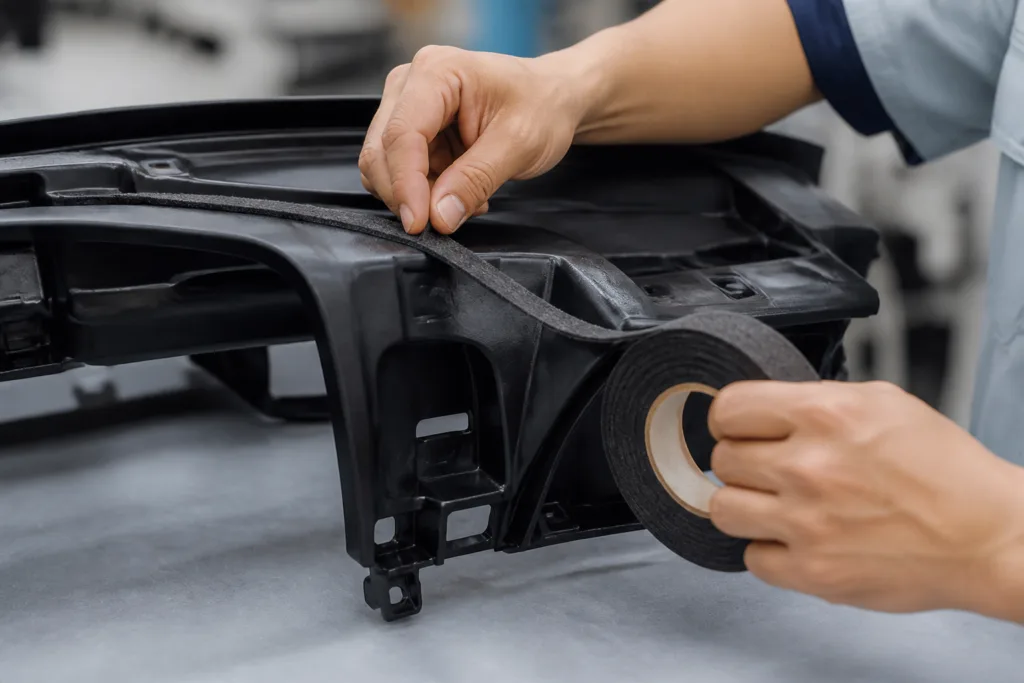
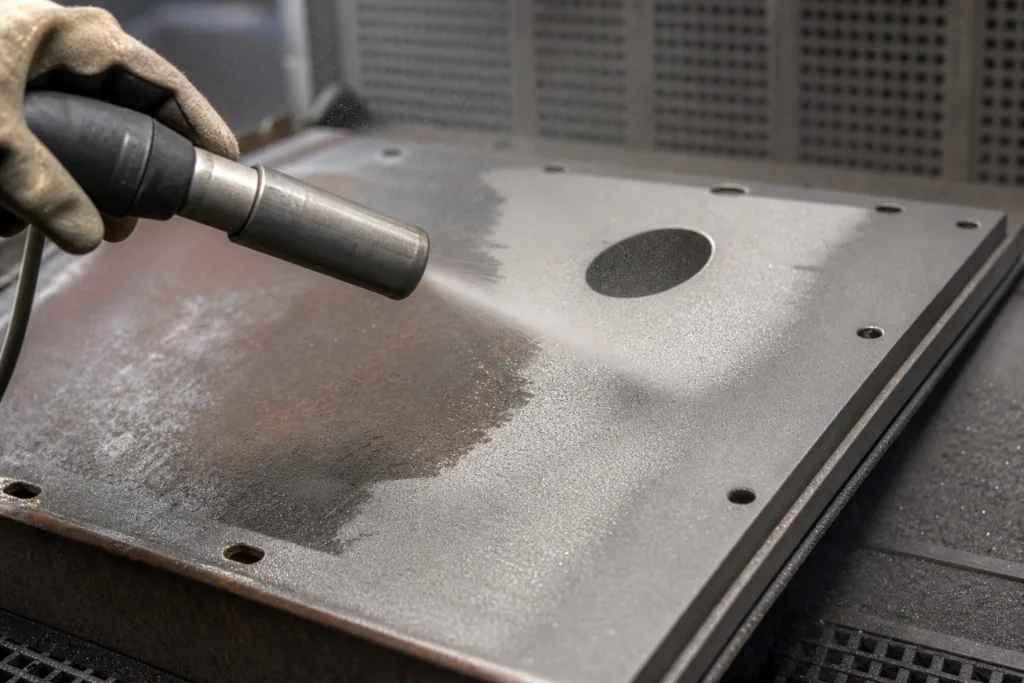
- Surface Preparation: Clean, dry, dust-free glass or substrate is required. Plasma or priming steps can enhance adhesion on low-energy plastics.
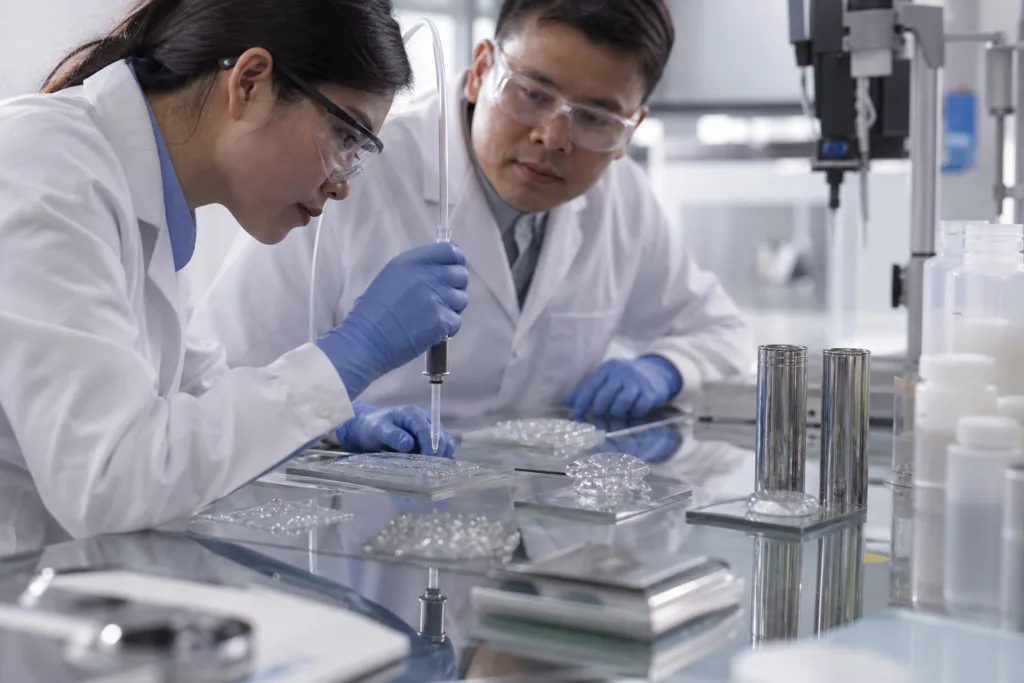
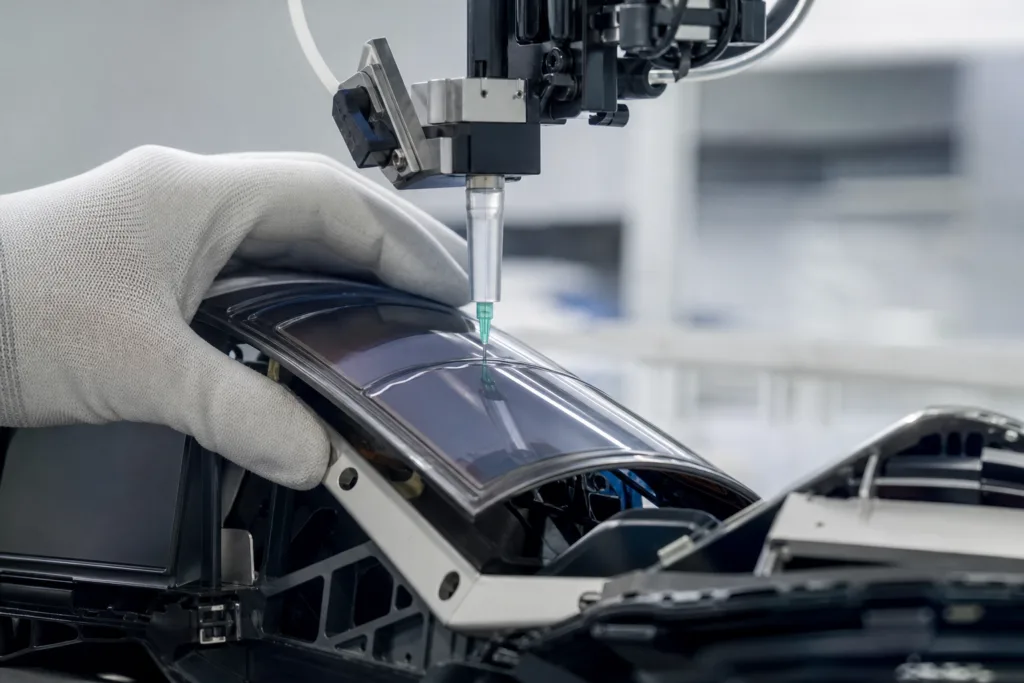
- Adhesive Application: Precisely dispense OCA/LOCA or other adhesive — thickness control is crucial to prevent optical defects.
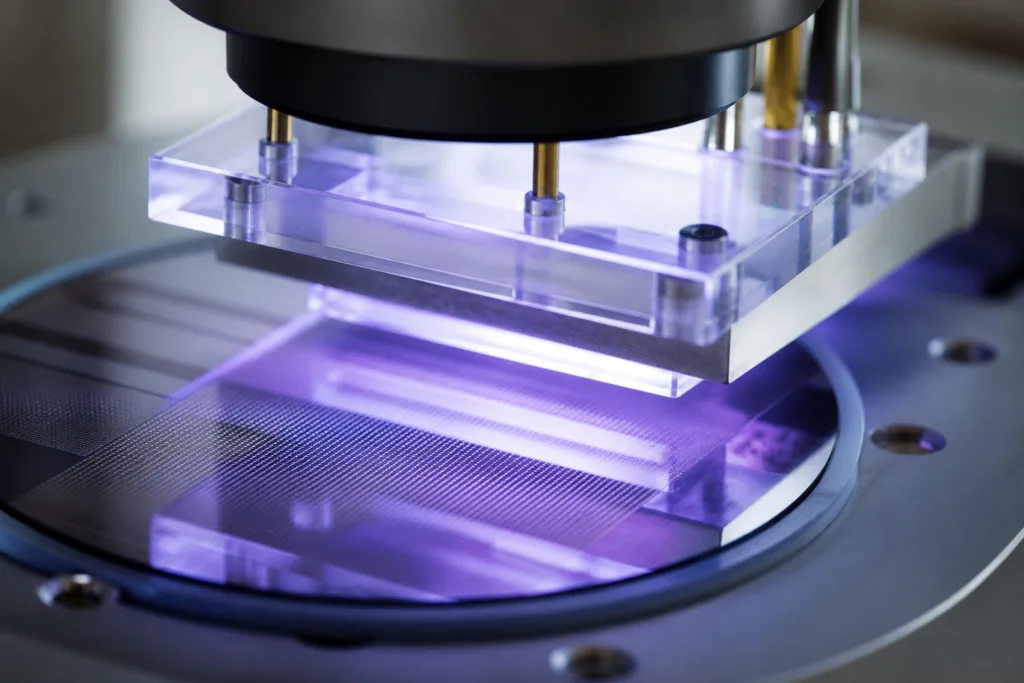
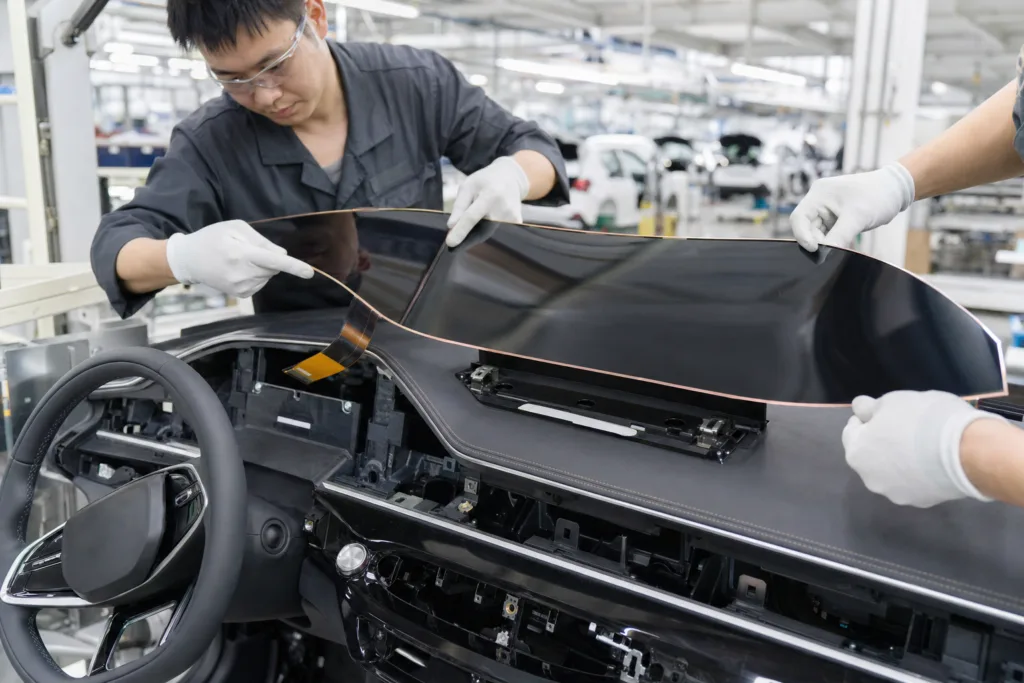
- OLED Placement: Align and gently lay down the flexible OLED onto the adhesive. Some systems use vacuum machines to eliminate air pockets.
- Curing: Expose the assembly to UV or thermal curing (depending on adhesive type) for final strength development.
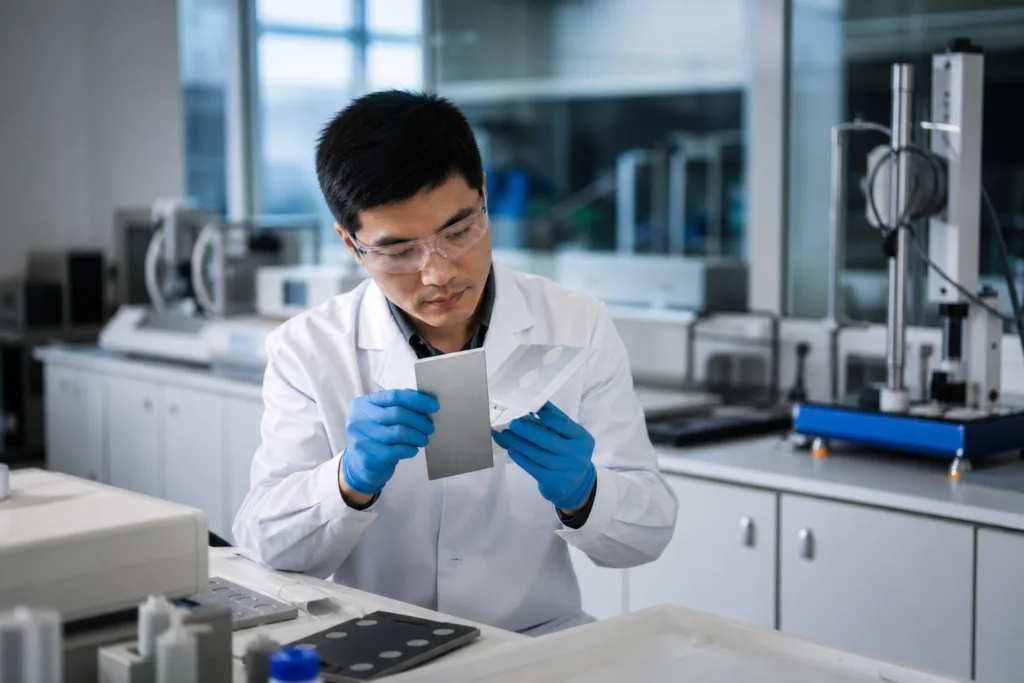
- Quality Testing: Lap shear, peel strength, and optical clarity tests verify every bondline batch.
Advanced Bonding Methods and Process Improvements
Today’s leading-edge factories employ several advanced techniques for best-in-class results:
- Dispensing Automation: Precision dispensing equipment ensures repeatable adhesive lines and minimal waste.
- Active Alignment Systems: For multi-curved displays, cameras and robotics actively align the OLED panel to sub-millimeter accuracy before bonding.
- Tunable Cure Methods: UV and dual-cure adhesives enable fast cycle times with controlled energy input, minimizing thermal stress on delicate pixels.
Optical Clarity: The Unseen Priority
Clarity and color fidelity are non-negotiable. Even slight haze or refractive mismatch can reduce dashboard display quality and driver safety. That’s why adhesives designed for transparent bonding—like optically clear adhesives—are used, as explored in the Transparent Adhesives Guide, which details clarity requirements, selection, and testing strategies.
Durability and Environmental Performance
Automotive displays face a greater range of challenges than home electronics:
- Vibration: Constant shaking and shocks from the road test the bond’s flexibility.
- Thermal Cycling: Daily swings from freezing to hot sun, often -40°C to +85°C.
- Humidity and Chemical Exposure: Interior cleaning agents, skin oils, and UV all threaten long-term clarity and adhesion.
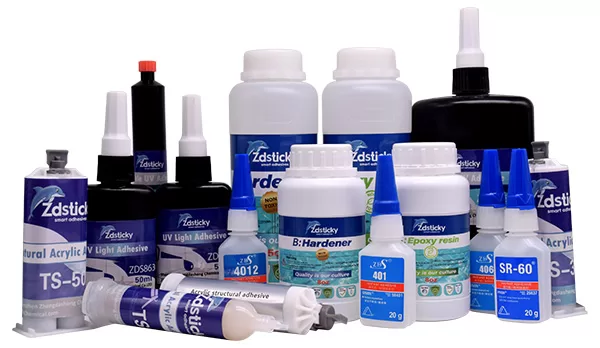
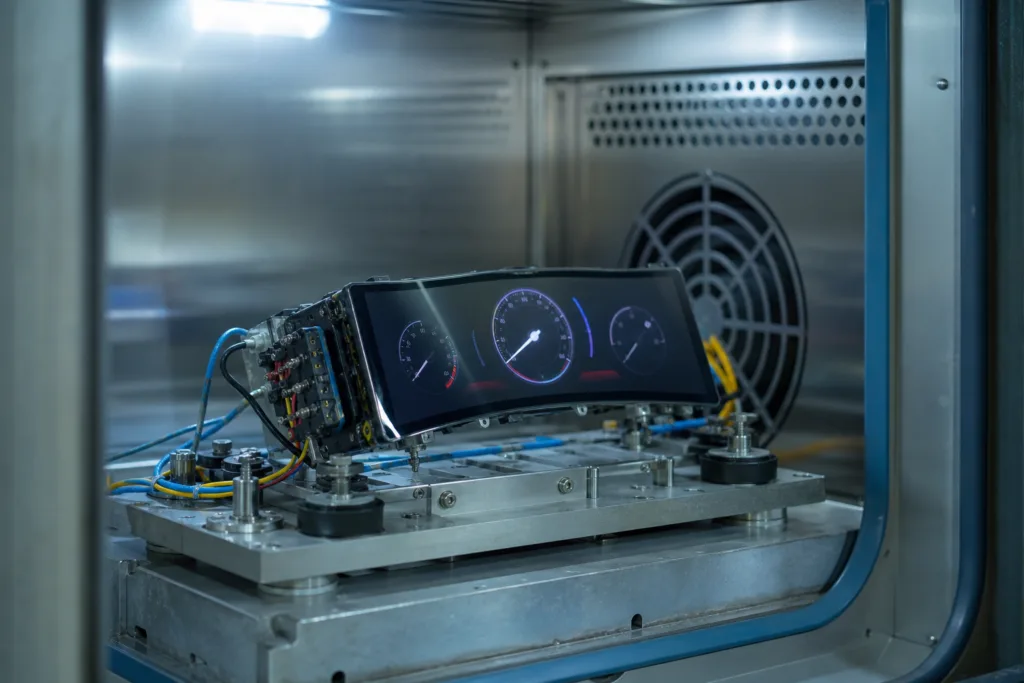
At ZDS Adhesive, an industrial adhesive manufacturer, aging tests such as lap shear under heat and humidity, cyclic flex tests, and accelerated exposure to chemicals reveal real-world reliability, and guide improvements in formulation for flexible OLED dashboard applications.
Curved and Bezel-less Dashboard Designs
One hallmark of modern vehicles in 2026 is the bezel-less, fully integrated digital dash. Flexible OLEDs make single-piece, panoramic displays possible where gauges, maps, and infotainment blend visually. Seamless bezel-less bonding methods, like those used for smart thermostats, are now adapted to vehicles for ultra-premium user experiences.
Lightweight and Modular Construction Advantages
Shifting to flexible OLEDs lets manufacturers thin down dashboard assemblies, integrating fewer brackets and mechanical features. The resulting weight savings (often several kilograms per vehicle) boost overall efficiency. In modular cockpit architectures, flexible OLED panels bonded with structural yet flexible adhesives streamline upgrades and service access.
Design Freedom and Aesthetic Impact
OEMs and automotive design houses now dream beyond rectangles—with curved, asymmetric surfaces, and displays that feel “poured” into the dash. Flexible OLEDs bonded into organic shapes make this possible without visual gaps, and adhesives need to flex and hold up aesthetically over years in every lighting condition.
Comparing Adhesive Types for OLED Bonding
| Adhesive Type | Clarity | Flexibility | Cure Speed | Common Uses |
|---|---|---|---|---|
| OCA Film | Excellent | Moderate | Fast peel-&-stick | Flat/2.5D dashboards |
| LOCA (Liquid OCA) | Excellent | Very high | UV/thermal, fast | Curved/complex dashboards |
| Flexible Cyanoacrylate | Good | Very high | Seconds | Local spot repairs |
| Silicone | Good | Excellent | Moderate | Shock/vibration isolation |
Troubleshooting Common Bonding Failures
- Bubbles or Haze: Indicates poor adhesive flow or trapped air; vacuum lamination or lower-viscosity adhesives can help.
- Delamination: Often caused by surface contaminants or CTE (thermal expansion) mismatch—surface treatment or primer can improve performance.
- Yellowing: UV-exposed adhesives must be non-yellowing to avoid long-term visibility issues; modern UV formulations resist this aging.
Case Study: Flexible OLED Integration in Mid-Range EV Cockpits
In 2025, a leading electric vehicle manufacturer implemented a single-piece, curved OLED dashboard spanning instrument cluster to center stack. Initial prototypes suffered from haze/bloom due to suboptimal LOCA selection. After switching to a low-haze, UV-cure optically clear adhesive, bondline defects fell below 0.2% per unit, enabling mass adoption. Environmental cycle testing proved the bond’s resilience even after 1,000 hours subjection to UV, heat, and humidity.
Case Study: Luxury SUV with Modular OLED Panels
A 2026 luxury SUV features modular OLED info panels that elegantly “float” in the dash. Here, flexible silicone adhesives were chosen for their reworkability and vibration damping properties, allowing for painless updates or repairs, while maintaining full touch sensitivity and optical quality.
Future Trends in Dashboard Design with Flexible OLEDs
Expect even more innovation in the coming years, including:
- Augmented reality dashboards integrating flexible OLED overlays
- 3D shaped and layered displays for both driver and passenger zones
- Haptic feedback through display surfaces (enabled by tight, flexible bonds)
- Interactive surfaces blending physical and virtual controls
Bonding Flexible OLED Screens in Digital Dashboards
In summary, the shift toward flexible OLED dashboards demands adhesives and engineering strategies as advanced as the displays themselves. Using optically clear, flexible, and robust adhesives, and precision dispensing and curing processes, ensures these displays remain clear, functional, and resilient in automotive environments. As automotive cockpit design races ahead, successful manufacturers will be those who master both visible display innovation and the invisible, high-performance bondlines beneath.
Conclusion: Enhancing User Experience and Reliability
Bonding flexible OLED screens in digital dashboards is redefining the modern vehicle interior. Manufacturers balancing design freedom with rigorous selection of adhesives and process control are delivering not just beautiful displays, but dashboards that maintain clarity, function, and durability for years. As seen in recent case studies, material upgrades and process adaptation are key to unlocking the full potential of flexible OLED technology, setting the stage for even more immersive and reliable automotive experiences in the future.
Frequently Asked Questions
What makes flexible OLED different from rigid displays in dashboards?
Flexible OLEDs can bend and contour to unique shapes, enabling seamless, curved dashboards, while traditional rigid displays are flat and limit design freedom.
Why is optical clarity important when bonding OLED screens?
Any haze, bubbles, or color distortion reduces driver visibility and display aesthetics, so optically clear adhesives are essential for dashboard safety and performance.
Which adhesive types are most common for flexible OLED dashboards?
Optically Clear Adhesives (OCA/LOCA), flexible instant adhesives, and specialized silicones are typical—each chosen for clarity, flexibility, and environmental resistance.
How do automotive manufacturers test OLED dashboard bond durability?
Typical tests include vibration cycles, thermal cycling, humidity aging, and chemical exposure to ensure bonds last throughout a vehicle’s life under real conditions.
What’s the biggest failure mode with dashboard OLED bonding?
Common issues are delamination (peeling) from vibration or contaminants, and optical defects like bubbles or yellowing from poor adhesive selection or application.
Can display bondlines be repaired or serviced after installation?
With the right adhesive (such as flexible silicones), modular OLED panels can sometimes be reworked, but most bonds are designed for permanent, robust attachment.
Related Reading
- Clear Bonding Solutions: Selecting Transparent Adhesives for High-End Electronics
- Automotive Curved Displays: How to Choose Between OCR and OCA Bonding
- The Seamless Display Revolution: Inside Modern Bezel-Less Bonding for Smart Thermostats and Dashboards
- Precision Dispensing Equipment: Essential Advances for Modern Electronics and Medical Assembly
- How Flexible Instant Adhesives Are Reshaping Lightweight, Reliable Assembly in 2026