Understanding Structural PU Adhesives for Carbon Fiber Bonding
Bonding carbon fiber materials requires adhesives that can match their mechanical performance and flexibility. Polyurethane adhesives (PU or PUR) have emerged as a reliable solution for attaching carbon fiber in high-stress applications. These adhesives provide strong, durable joints while accommodating the unique properties of carbon fiber composites. In this guide, we explore the chemical properties, bonding mechanics, and advantages of structural PU adhesives for carbon fiber bonding, so you can choose and use them with confidence.
What Are Structural Polyurethane Adhesives?
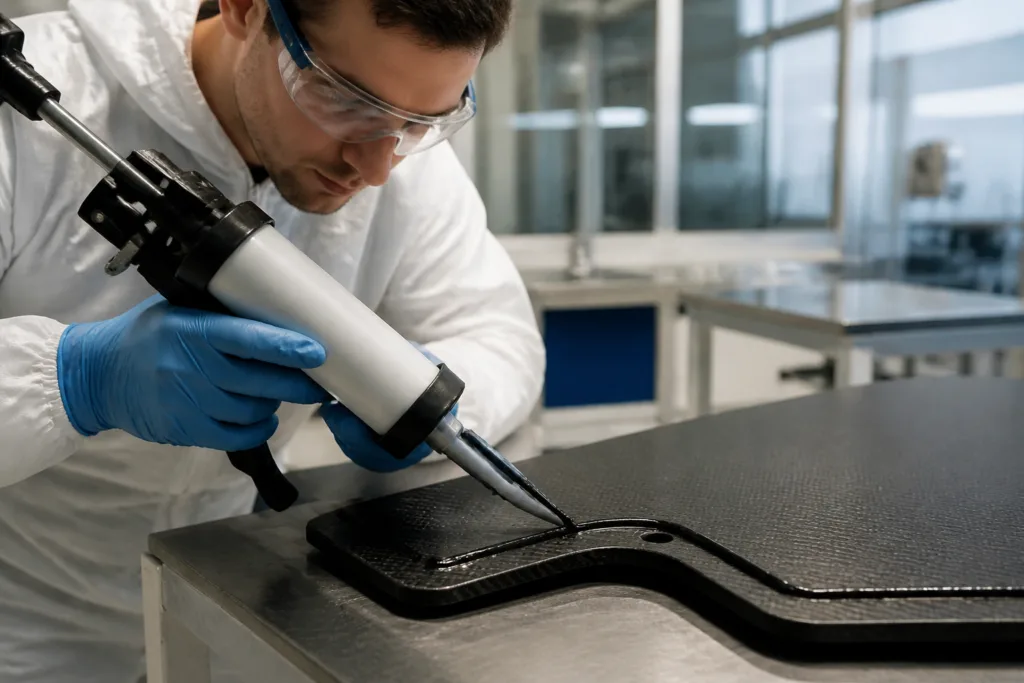
Structural polyurethane (PU) adhesives are two-part or moisture-curing bonding systems formulated for high-strength, long-lasting assemblies. They are engineered to withstand significant static and dynamic loads, temperature extremes, and chemical exposure. Unlike flexible sealants, structural PUs are designed for permanent, load-bearing joints.
- Mix of polyols and isocyanates
- Can be formulated for room-temperature or elevated-temperature cure
- Notable for their toughness, flexibility, and environmental resistance
How Polyurethane Adhesives Bond to Carbon Fiber Materials
PU adhesives bond to carbon fiber by interacting with both the carbon fibers and the polymer matrix (often an epoxy or thermoplastic). The chemical bonds formed depend on the surface energy and the functional groups present on the substrates. The result is high mechanical interlock and good adhesion to both the fibers and the matrix.
Key Chemical Mechanisms
- Hydrogen bonding with matrix resins
- Covalent bonding when surface treatments (like plasma or primer) are used
- Physical interlocking with cured composite texture
Types of Carbon Fiber Substrates and Their Compatibility
Carbon fiber composites come in several forms:
- Pre-preg sheets (epoxy-based)
- Thermoset composites (epoxy, vinyl ester)
- Thermoplastic composites (PEEK, PPS, etc.)
Structural PU adhesives show excellent compatibility with thermoset-based carbon fiber parts. For challenging thermoplastics or low-energy surfaces, surface activation (such as plasma, corona, or primer) is recommended for robust bonding.
Why Use Polyurethane Adhesives for Carbon Fiber Bonding?
| Performance Factor | PU Adhesive | Epoxy | Acrylic |
|---|---|---|---|
| Flexibility | High | Moderate | Good |
| Impact Resistance | Excellent | Fair | Good |
| Cure Speed | Variable (minutes to hours) | Slow (hours) | Fast (minutes) |
| Moisture Resistance | Very good | Good | Moderate |
| Processing Window | Wide | Narrow | Moderate |
PUs excel where dynamic loads, vibration damping, and slight substrate movement are expected. For high-rigidity applications, epoxies may still be preferred if peel resistance is not critical.
Advantages of Structural PU Adhesives
- Absorb energy and vibration (ideal for automotive and sports gear)
- Enable bonding of dissimilar materials (e.g., carbon fiber to metals or plastics)
- Tolerate some surface contamination
- Offer relatively fast curing and easy application
- Show consistent strength under heat, cold, and humidity cycles
Industries Leveraging Polyurethane Adhesives and Carbon Fiber Bonding
- Automotive: Joining body panels, chassis components, and interior reinforcement
- Aerospace & UAVs: Lightweight structural parts, fairings, and interior panels
- Sports Equipment: Bicycles, racquets, and high-performance helmets
- Industrial Machinery: Robotic arms, frames, and wear-resistant guards
In electric vehicle assembly, for example, many battery enclosure parts now rely on PU structural adhesives due to their ability to reliably join carbon-fiber-reinforced SMCs to aluminum or steel frames.
Key Considerations for Achieving Strong Bonds
Surface Preparation for Carbon Fiber Adhesive Bonding
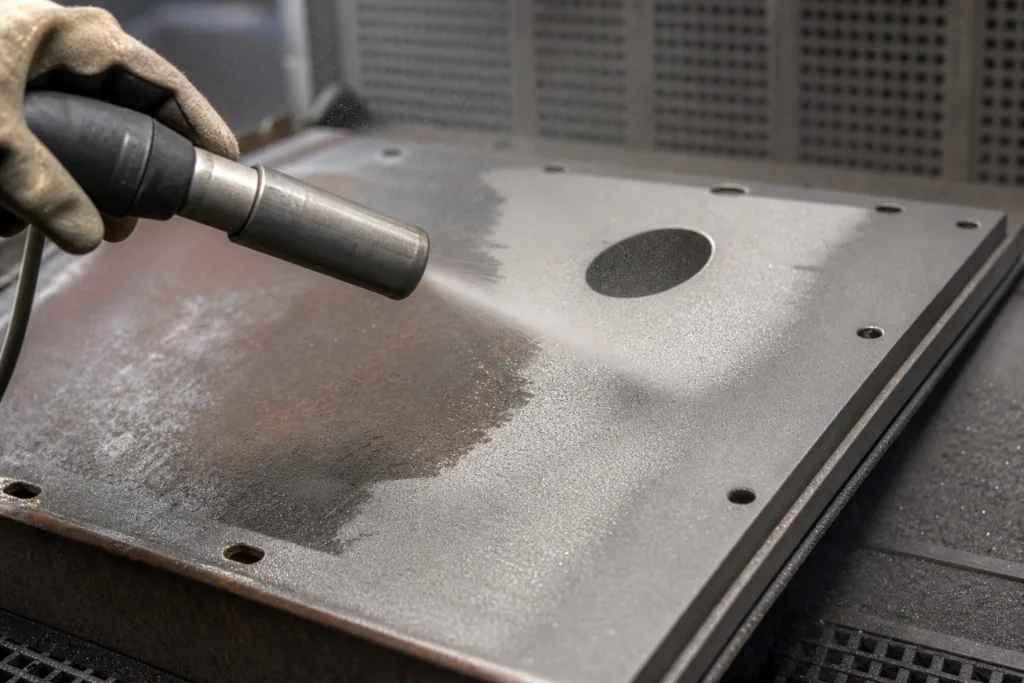
- Degrease surfaces with isopropyl alcohol or acetone (avoid water-based cleaners)
- Abrade glossy surfaces lightly to increase roughness
- Use a recommended primer for difficult, low-energy substrates
- Consider plasma or corona treatment for thermoplastic composites
For advanced tips, read our guide on industrial adhesive bonding between plastic and metal.
Correct Joint Design
- Maximize bond area (lap shear joints outperform butt joints)
- Design for uniform load transfer
- Maintain controlled bond line (thickness 0.2–0.8 mm typical for PU)
Curing Conditions and Process Parameters
- Follow datasheet recommendations for open time and clamp pressure
- Moisture-cure PUs need ambient humidity (40–70% RH ideal)
- Dual-part PUs offer faster, controlled cure (30–120 min typical fixture)
Interested in the underlying chemistry? Review the moisture curing mechanism of PU adhesives for fail-proof results.
Comparing Polyurethane Adhesives with Other Bonding Solutions
| Adhesive Type | Typical Uses | Pros | Cons |
|---|---|---|---|
| Polyurethane (PU) | Automotive panels, sports gear | Flexibility, impact resistance | Lower heat resistance than epoxy |
| Epoxy | Aerospace, high temp | High modulus, heat stability | Brittle, low flexibility |
| Acrylic | Rapid assembly, plastics | Fast cure, less prep | Odor, moderate fatigue |
Each adhesive family offers unique advantages. PU adhesives are often the best fit for carbon fiber in applications where vibration and impact loads are constant, or when flexibility matters more than peak thermal strength.
Common Pitfalls and Troubleshooting Tips
- Poor adhesion from oily or contaminated surfaces—ensure proper degreasing
- Premature joint failure under dynamic load—re-evaluate joint design and bond geometry
- Incomplete cure in low humidity—try dual-cure (2K PU) or adjust ambient conditions
- Overly thick bond lines reduce final strength—use spacers or process controls
For applications needing exceptional waterproofing and minimal VOCs, you may want to read about safe, non-toxic waterproof sealant solutions.
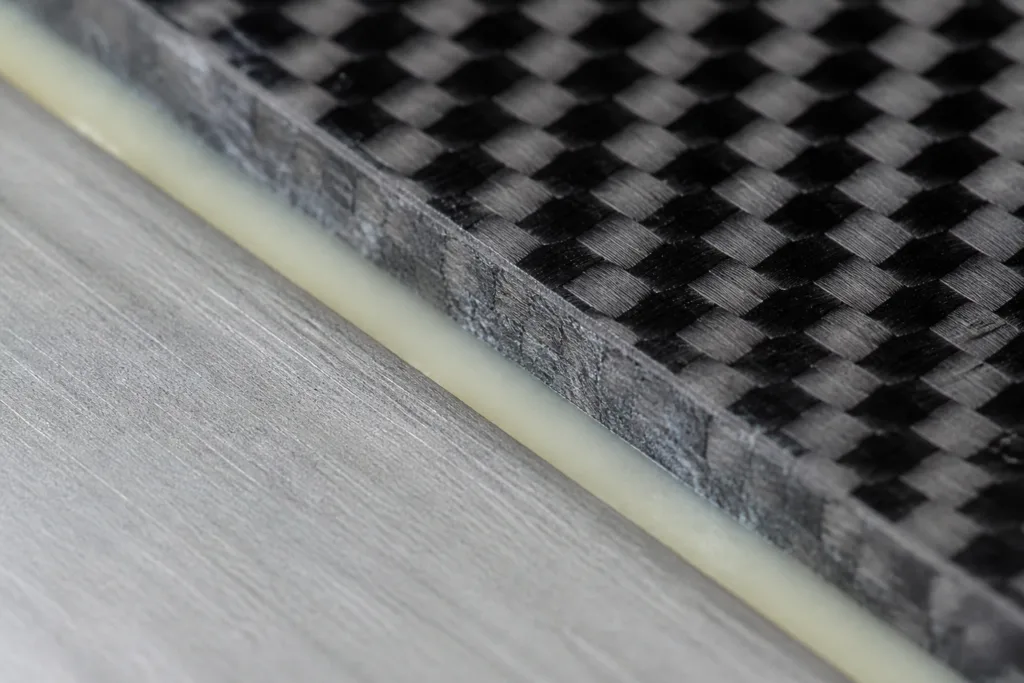
Real-World Application Examples: Automotive, Aerospace & More
Automotive Battery Enclosures
Electric vehicles rely on carbon fiber/PUR assemblies to cut weight and manage crash energy. Manufacturers use 2K PU adhesives for bonding panels, housings, and crossmembers.
Aerospace Structural Repair
Fast-curing PU systems allow on-wing patching of composite surfaces without heavy equipment, maintaining structural performance without excess weight.
Sports Equipment Manufacturing
Bicycle frame makers bond carbon tubes and lugs using toughened PU for improved ride feel and durability against impact.
Best Practices for Storage and Handling of Polyurethane Adhesives
- Store unopened containers in cool, dry areas (typically 5–25°C)
- Avoid moisture ingress—always reseal quickly
- Mix in small batches to match process open time
- Dispose of expired product following local regulations
What Does the Future Hold for Polyurethane Adhesives in Carbon Fiber Bonding?
Formulators are raising the bar for sustainable, low-VOC, and recyclable structural PU adhesives. Expect even better performance in rapid-assembly, automated processes for next-gen electric vehicles and lightweight consumer products by 2026 and beyond.
Polyurethane Adhesives, Carbon Fiber Bonding
The ideal pairing of polyurethane adhesives with carbon fiber bonding enables precision, strength, and reliability for demanding assemblies. With the right joint design, surface prep, and curing process, PU adhesives unlock the true value of composites in transportation, sporting, and defense applications. For any engineer or project leader, understanding the practical details of polyurethane adhesives, carbon fiber bonding sets the stage for outstanding assembly success.
Conclusion: Ensuring Success With Structural PU Adhesives
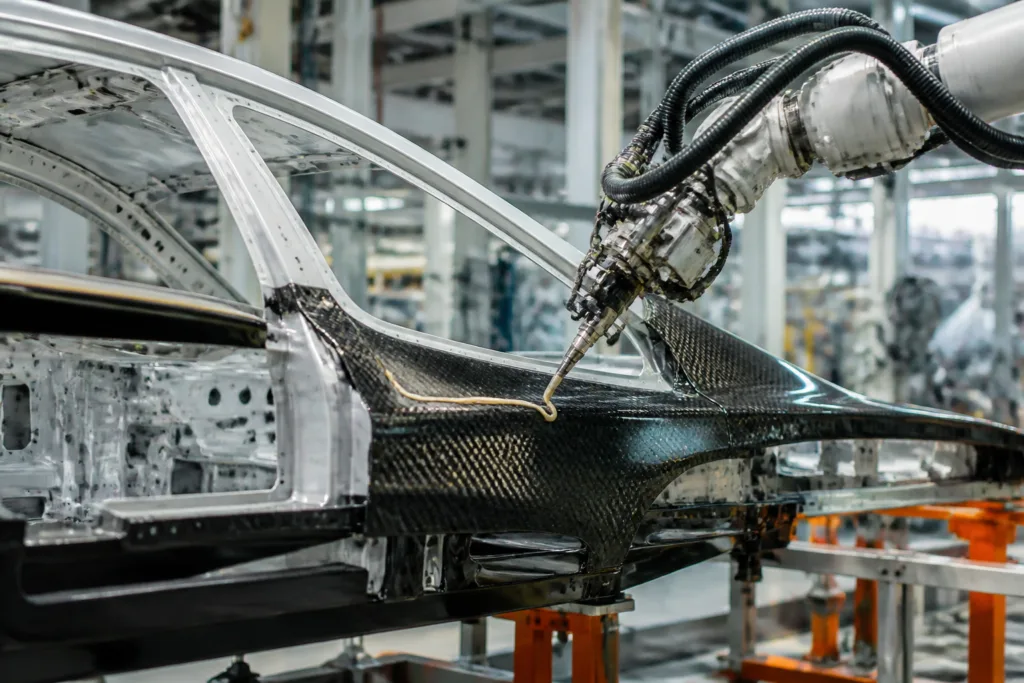
Structural polyurethane adhesives give manufacturers a dependable, flexible pathway to bond advanced carbon fiber materials. By considering substrate compatibility, joint design, and process control, these adhesives deliver outstanding performance in real-world dynamic and high-impact environments.
Frequently Asked Questions
What makes PU adhesives better than epoxies for carbon fiber?
PU adhesives offer higher flexibility and better vibration/impact resistance compared to epoxies, which can be brittle in dynamic assemblies. This makes PUs well-suited to automotive and sports equipment.
How do I prepare carbon fiber for polyurethane adhesive bonding?
Clean the surface with isopropyl alcohol, abrade lightly if glossy, and apply primer if advised. For thermoplastic matrices, consider plasma or corona activation.
Are PU adhesives compatible with all types of carbon fiber composites?
They work best with thermoset epoxy composites. For thermoplastics or low-energy materials, additional surface treatment increases bond reliability.
How long do PU adhesives take to cure?
Moisture-curing PUs may take several hours to cure, while two-part systems can fixture in 30–120 minutes. Cure speed depends on temperature, humidity, and formulation.
Can structural PU adhesives resist automotive or aerospace chemicals?
Many PU systems are formulated to resist oils, fuels, salt spray, and cleaning fluids, but always check product-specific chemical resistance data.
Do I need special tools to apply PU adhesives to carbon fiber?
Basic mixing and application tools suffice for many PUs. Automated dispensing is preferred for high-volume settings, and always follow manufacturer guidance on mixing and safety.
Related Reading
- 17 Insights on Structural Bonding: Heavy-Duty Battery Swaps Decoded
- Boost Motor Performance with the Science of Ceramic Shaft Bonding
- 7 Weather-Ready Adhesive Secrets for Charging Plugs That Last
- Unlocking Automotive Adhesives: 21 Application Tips That Actually Work
- Sealants vs Adhesives Explained: 2026’s Smart Selection Guide