Introduction: Anchoring Adhesives for Charging Pile Foundation Installation
As electric vehicle (EV) adoption soars in 2026, reliable charging infrastructure is vital. Anchoring adhesives play a crucial role when installing charging pile foundations, impacting stability, safety, and long-term performance in all climates. This article breaks down the types, properties, and practical installation methods of anchoring adhesives—especially focusing on epoxy resin, polyurethane, and hybrid solutions. You’ll also see how real-world challenges and choices shape project outcomes, discover proven application tips, and find guidance for selecting the right adhesive for every scenario.
The Role of Anchoring Adhesives in Charging Pile Foundation Installation
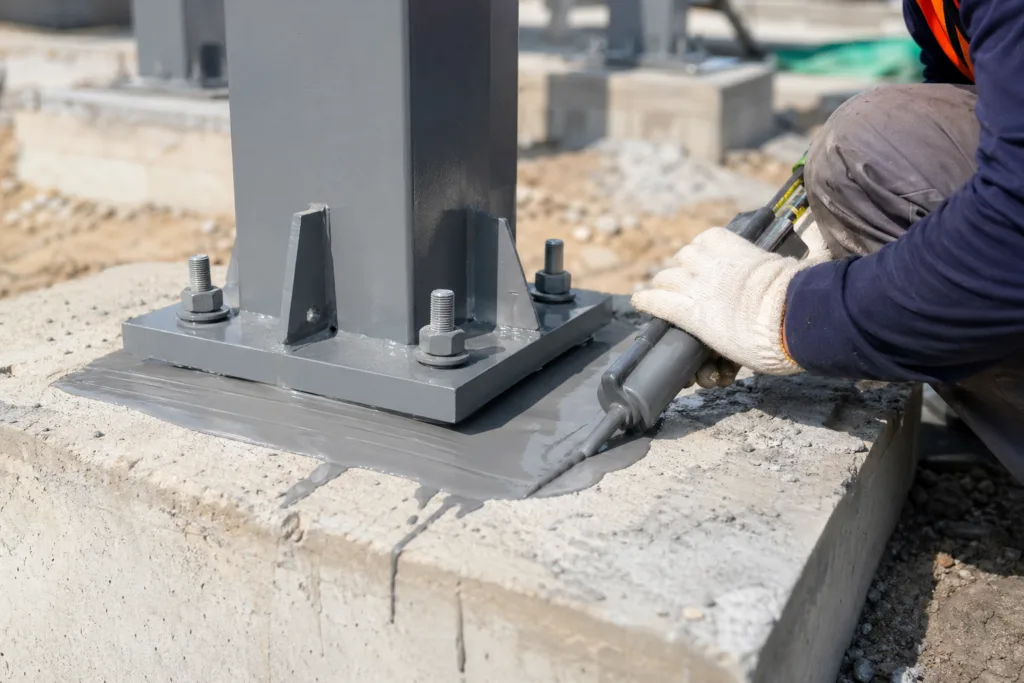
Charging piles (also known as EV charging stations) must be robustly fixed to their foundations. Anchoring adhesives serve as the invisible force that bonds steel bolts or rebar to concrete bases. Their primary jobs? Ensuring long-term load stability, resisting weather, and providing consistent fixture times even during challenging site conditions.
Types of Anchoring Adhesives: Epoxy, Polyurethane, Hybrid Systems
Industrial adhesives offer several material families for anchoring:
- Epoxy Resins: Known for excellent structural strength, chemical resistance, and adaptability across temperature swings.
- Polyurethanes: Favored for rapid set times, flexibility, and good performance in moist/cold environments.
- Hybrid/Modified Systems: Combining properties (e.g., silane-modified polymers) for targeted performance like fast cure and superior fatigue resistance.
Epoxy Resin Anchoring Adhesives: Properties and Applications
Epoxy-based anchoring adhesives remain the gold standard for structural charging pile installations requiring high strength. Their benefits include:
- Superior adhesion to concrete and steel
- Excellent chemical resistance against salts, fuels, and environmental exposure
- Low shrinkage during curing, preventing bond-line gaps
- Customizable pot life and set times for complex installations
For example, in urban fast-charging networks, epoxy resins enable contractors to meet both seismic codes and accelerated project timelines.
Polyurethane Anchoring Adhesives: Flexibility and Fast Curing
Polyurethane (PUR) adhesives bring flexibility to the table and are well-suited for installations where slight movements or thermal cycling is a concern. Moisture-curing PURs can bond even to damp surfaces—a big advantage on rainy job sites. For insights into their fail-proof assembly, check out PUR moisture curing mechanisms.
Hybrid and Specialty Adhesives: Advanced Solutions for Complex Foundations
Some applications require a blend of speed, flexibility, and long-term weatherability. Hybrid adhesives, often silane-modified or acrylic-modified, offer a balance—faster curing than pure epoxies, greater stability than standard polyurethanes, and sometimes primerless bonding to difficult substrates (e.g., galvanized steel).
How to Choose the Right Anchoring Adhesive for Charging Pile Foundations
Selection depends on these real-world parameters:
- Substrate and anchor rod material: Concrete, steel, galvanized rebar, etc.
- Environmental exposure: Outdoor, temperature swings, humidity, salt spray
- Load requirements: Static vs. dynamic, wind/collision risks
- Installation speed and workability: Pot life (working time), fixture time (minimum time to load), full cure time
For an overview comparing adhesive properties, see Acrylic vs. Epoxy strength tests.
Critical Factors That Influence Anchoring Adhesive Performance in Outdoor Installations
Proper performance in charging pile foundations isn’t guaranteed by adhesive choice alone. Contractors must manage:
- Surface preparation: Clean, dust-free holes maximize bond strength
- Hole geometry: Deep, roughened holes create mechanical interlock
- Concrete moisture: Some adhesives can tolerate surface dampness; others can’t
- Temperature: Cure times slow dramatically below 10°C; heat accelerates but may affect bond quality
Installation Techniques: Step-by-Step Guide for Reliable Anchoring
Follow these core steps for charging pile anchoring:
- Drill and clean anchor holes thoroughly (compressed air and wire brush)
- Check for moisture (especially in outdoor or below-grade installs)
- Select adhesive with appropriate open time (working pot life for conditions)
- Inject adhesive to fill two-thirds of hole volume
- Insert anchor rod while rotating for even adhesive coating
- Do not disturb until minimum fixture time has elapsed; observe full cure time before final loading
Case Studies: Real-World Examples of Charging Pile Foundation Installations
Here are practical examples where adhesive choice made a difference:
- Highway Rest Stop (Cold Weather): Polyurethane adhesives enabled rapid pile installation on damp mornings, preventing downtime and rework.
- Seismic Area Urban Fleet Depot: Epoxy systems provided superior load holding—even under thermal and vibration cycles—ensuring reliable 24/7 uptime.
- Coastal Charging Hub: Silane-modified hybrid adhesives resisted salt spray and accommodated slight movement due to wind loads and thermal cycling.
Comparing Epoxy vs. Polyurethane Anchoring Adhesives
| Property | Epoxy Resin Anchors | Polyurethane Anchors |
|---|---|---|
| Compressive Strength | High (>60 MPa typical) | Moderate (flexible under load) |
| Cure Speed | Slower (30 min–24 hrs) | Faster (10–60 min typical) |
| Moist Surface Tolerance | Low–Moderate | High (moisture-cures) |
| Elongation/Flexibility | Low (brittle when cured) | High (accommodates vibration) |
| Chemical Resistance | Excellent | Good |
Curing Times and How They Impact Scheduling
Every construction schedule feels the pressure of fast turnarounds. Epoxy cure times typically range from as short as 30 minutes (fast-cure grades) to several hours. Polyurethanes may reach handling strength in just 10–30 minutes, enabling rapid throughput, especially in cooler climates. Always check technical datasheets for ‘fixture time’ and ‘full cure’ before loading anchors.
Surface Preparation: Getting Maximum Bond Strength
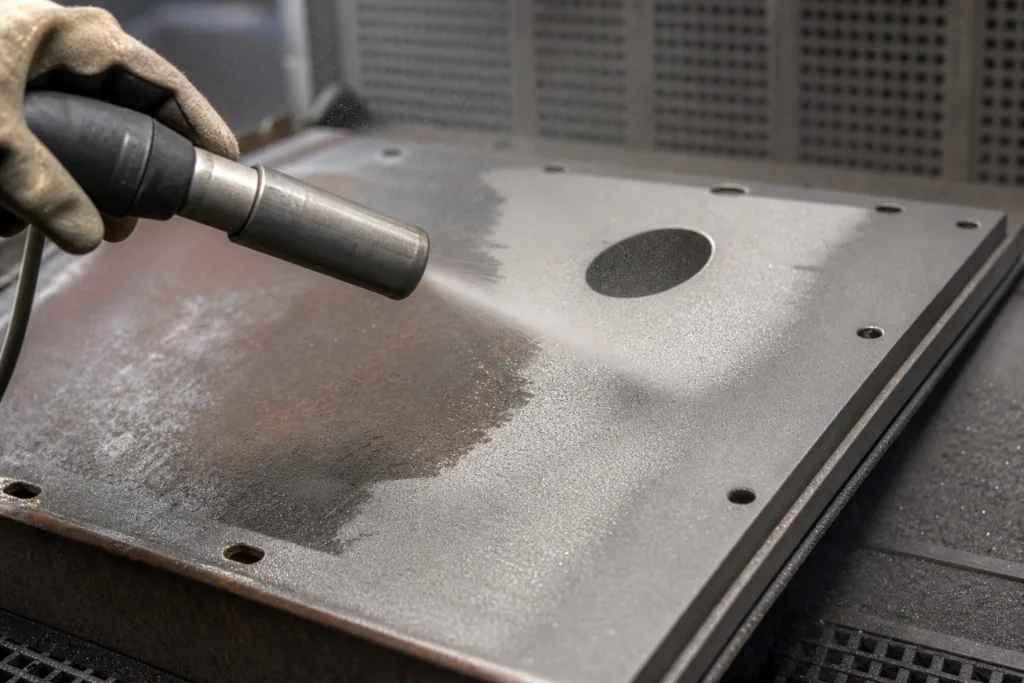
Even the best adhesive can’t make up for poor surface prep. For maximum anchoring strength:
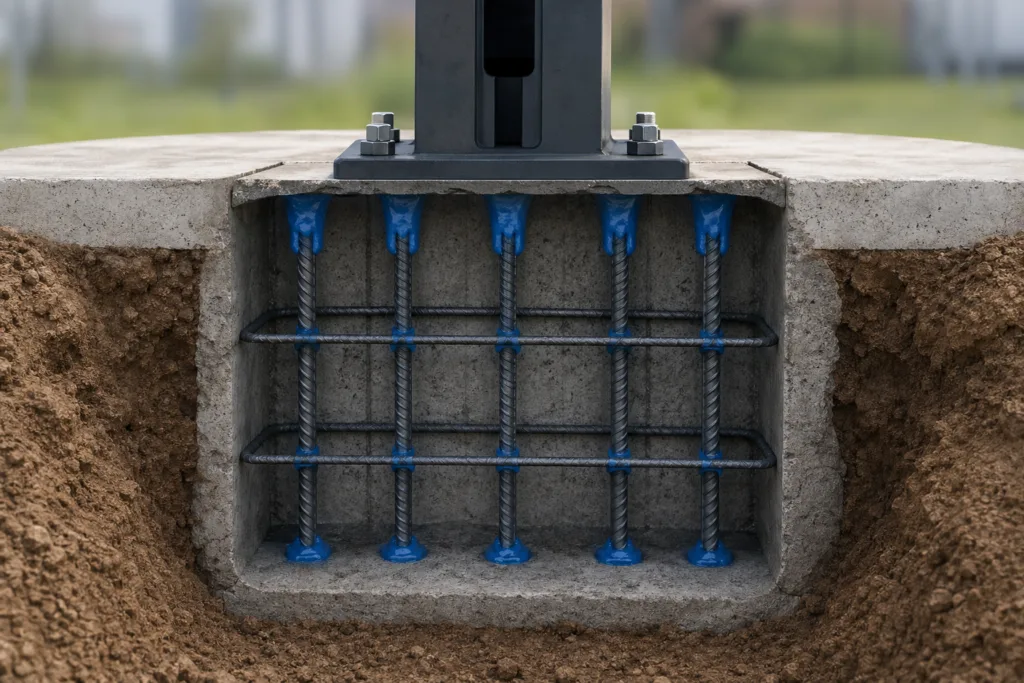
- Clean drilled holes with compressed air and a cylindrical brush
- Ensure surfaces are free of oil, dust, and standing water
- For galvanized/mild steel, consider a quick wipe with solvent before installing
For further tips on specialty surface prep, explore bonding galvanized steel.
Adhesive Installation Tools and Accessories
Safe, reliable application usually depends on using:
- Standard 2-part cartridge dispensers (with static mixing nozzle)
- Manual or pneumatic guns for high-thickness adhesives
- Cleaning brushes, air blowers, and depth gauges for inspection
Chemical and Weather Resistance Demands for Outdoor Charging Pile Foundations
Adhesives for outdoor charging piles routinely face rain, UV, de-icing salts, and dramatic temperature swings. Epoxy resins offer outstanding resistance to most aggressive chemicals and aging. Polyurethanes are more flexible but can be impacted by long-term UV unless protected. Hybrids with silane modification often close the gap with improved UV resistance for exposed foundation regions.
Understanding Fixture Time, Pot Life, and Full Cure in Construction Scheduling
Key application windows in adhesive installation include:
- Pot Life: Time after mixing during which the adhesive can be applied
- Fixture Time: Minimum time before the anchor is load-ready
- Full Cure: Time to reach final bond strength
Always use these intervals for setting project schedules and load application—particularly for high-load charging piles in public areas.
Environmental and Safety Best Practices for Adhesive Use
Modern adhesives are safer but always:
- Wear gloves and eye protection
- Ensure good ventilation for solvent or isocyanate-based systems
- Dispose of unused adhesive responsibly
When to Use Anchoring Adhesives vs. Mechanical Fasteners
While expansion anchors and bolts remain common in non-critical settings, structural adhesives provide:
- Superior fatigue, seismic, and fire resistance
- No risk of substrate cracking during installation
- Simpler waterproofing of foundation bolt connections
Tips for Preventing Common Field Failures in Charging Pile Foundation Installation
- Always verify mix ratios for 2-part systems (improper mixing = weak bonds)
- Don’t overload anchors before fixture time has fully elapsed
- Avoid using epoxies in heavy rain unless specifically certified for wet conditions
- Set up quality assurance checks for surface cleanliness on every anchor hole
Future Trends: Next-Generation Adhesives for Smart Infrastructure
Looking ahead, self-healing, recyclable, and sensor-embedded adhesives are emerging. These future solutions could further boost EV infrastructure durability, reduce maintenance cycles, and enable remote health monitoring of critical charging piles.
Conclusion: Practical Decisions for Reliable Charging Pile Infrastructure
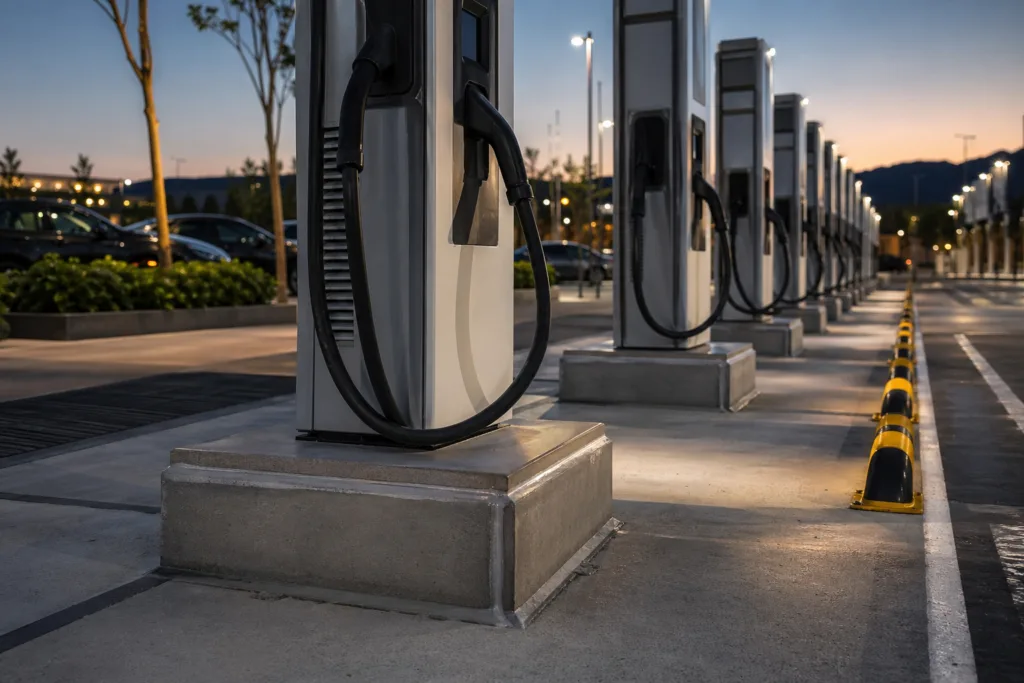
Anchoring adhesives continue to evolve, helping charging pile installations meet ever tougher demands—whether for urban density, harsh outdoor conditions, or rapid deployment. Epoxy, polyurethane, and specialty hybrid systems all have their place: the key is matching chemistry to the site, substrate, and long-term service needs. With careful preparation and installation, today’s adhesives deliver reliability and safety for the accelerating EV era.
Frequently Asked Questions
What is the most reliable adhesive for EV charging pile foundation anchors?
Epoxy resin adhesives typically offer the highest strength and reliability, especially for heavy-duty or seismic applications. Always match the adhesive to substrate, environmental conditions, and necessary load-bearing requirements.
Can I use polyurethane adhesive in wet or cold environments?
Yes, moisture-curing polyurethane (PUR) adhesives bond well to damp or cold substrates and cure quickly, making them suitable for outdoor installations with unpredictable weather.
How do fixture time and pot life differ in adhesive work?
Pot life refers to the period after mixing when the adhesive remains workable. Fixture time is the minimum period needed after application before the anchor can safely be loaded or disturbed.
What causes most field failures in adhesive-anchored charging pile foundations?
Poor surface preparation, improper mixing/application, or not allowing full fixture/cure time are common failure causes. Always follow adhesive instructions and ensure holes are clean and dry unless the adhesive is rated for moisture.
Are hybrid or silane-modified adhesives worth considering?
Hybrid adhesives provide a balance of cure speed, flexibility, and weather resistance, which can be especially valuable in demanding outdoor or fast-track projects where both rapid installation and longevity are critical.
Do anchors installed with adhesives need special inspection or testing?
Yes, post-installation pull tests or torque checks can verify adhesion and installation quality, particularly for critical charging piles or when local codes demand specific validation procedures.
Related Reading
- 7 Strategies for UV Stability in Outdoor Charging Displays
- Charging Smarter: Thermal Management of Liquid-Cooled Cables
- IP68 Waterproof Potting for Outdoor DC Charging Reliability
- How Structural Bonding Redefines Heavy-Duty Battery Swap Stations
- Sealant or Adhesive? Choosing the Right Solution for Industry