Understanding Thermal Potting Compounds for LED Driver Boards
LED driver boards operate at the heart of many lighting systems, controlling current and protecting LEDs against fluctuations. As technology advances toward higher efficiency and compactness, these boards increasingly face demanding thermal, moisture, and mechanical stresses. Thermal potting compounds for LED driver boards provide a practical solution to extend reliability and maintain optimal performance by managing heat, protecting electronics from the environment, and enhancing physical robustness. In this comprehensive guide, we’ll explore how the right potting strategy makes a measurable difference for LED driver longevity and efficiency.
What Are Thermal Potting Compounds?
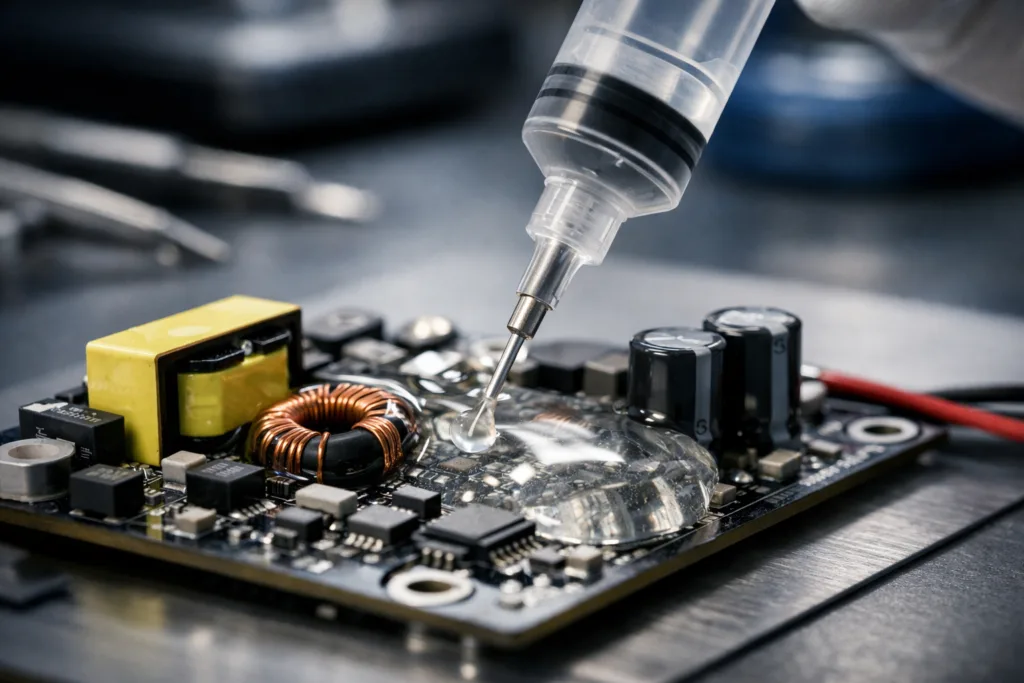
Thermal potting compounds are specialized encapsulants, typically formulated from materials such as epoxy, polyurethane, or silicone, engineered to transfer heat away from sensitive electronic components in LED driver boards. By enveloping circuitry, these compounds provide multiple benefits—channeling heat, repelling moisture, and shielding against vibrations or shocks, thus enabling consistent performance and a longer service life.
Why LED Driver Boards Require Thermal Potting
LED driver boards are vulnerable to thermal cycling, humidity, and harmful contaminants. Uncontrolled heat buildup can cause premature failure of capacitors, ICs, and solder joints—leading to flicker, output loss, or total breakdown. Potting compounds dramatically mitigate these risks, especially in high-power or compact assemblies where airflow is limited.
Thermal Management: The Cornerstone of LED Reliability
Efficient thermal management is paramount for LED driver boards. Excessive heat accelerates material degradation and component drift. Using thermally conductive potting compounds ensures rapid heat dissipation to heat sinks or enclosures, stabilizing temperatures and reducing the risk of hotspots that could otherwise shorten board life. For even more targeted solutions, consider thin TIM pads or custom-shaped gap fillers.
Moisture and Environmental Protection
Humidity, condensation, and corrosive liquids can penetrate unprotected electronics, causing leakage currents, corrosion, and electrical failure. Potting compounds, with the correct moisture barrier properties, seal the LED driver board against these environmental hazards. This is especially critical for outdoor luminaires, automotive lights, and industrial controls exposed to rain or process chemicals.
Mechanical Protection and Vibration Damping
Vibrations and mechanical shocks—from transit, installation, or service—can loosen components or damage solder joints on LED driver boards. Properly selected potting compounds absorb and distribute these forces, preventing micro-cracks and improving overall durability. Application engineers at ZDS Adhesive have found that slightly flexible polyurethane formulas excel at absorbing vibration without compromising bond strength.
Key Benefits of Thermal Potting Compounds for LED Driver Boards
- Improved Heat Dissipation: Maintains lower component temperatures for longer lifetime.
- Volumetric Encapsulation: Shields circuits from dust, moisture, and intrusion.
- Vibration Resistance: Minimizes fatigue and crack formation.
- Enhanced Safety: Reduces risk of electrical shorts and arcing.
- Chemical Resistance: Protects against cleaning agents, oils, or fuel vapors.
Types of Thermal Potting Compounds Explained
There are three primary families of potting compounds for LED driver use: epoxies, polyurethanes, and silicones. Each has unique attributes affecting suitability for your board design and operating environment.
Epoxy Potting Compounds
Epoxy systems are known for high mechanical strength and strong adhesion to a variety of substrates. They offer excellent thermal conductivity and chemical resistance—ideal for tough industrial or automotive LED drivers. However, they can be rigid, which may not suit assemblies prone to vibration or thermal cycling.
Polyurethane Potting Compounds
Polyurethane potting compounds offer a unique balance: moderate thermal conductivity paired with exceptional flexibility. This makes them well-suited for boards subjected to vibration or shifting temperature gradients. They are often easier to rework or remove, which can assist with repair and recycling. For large custom batches, you may seek polyurethane potting glue customization to fine-tune handling or curing.
Silicone Potting Compounds
Highly stable and robust at extreme temperatures, silicones provide excellent electrical insulation and remain flexible over a wide thermal range. They are less rigid than epoxies and resist yellowing in high-UV environments, making them popular for outdoor or architectural LED drivers.
Comparison Table: Key Differences Among Potting Material Types
| Property | Epoxy | Polyurethane | Silicone |
|---|---|---|---|
| Thermal Conductivity | High | Moderate | Variable (Moderate-High) |
| Flexibility | Low | Moderate-High | High |
| Chemical Resistance | Excellent | Good | Good |
| Reworkability | Low | Moderate | High |
| UV Stability | Low-Moderate | Good | Excellent |
| Cure Time (typical) | Minutes–hours | Minutes–hours | Minutes–hours |
| Cost | Moderate-High | Moderate | High |
Curing Processes and Their Impact on LED Drivers
The way a potting compound cures—how quickly it transitions from a fluid to a solid—determines both throughput and finished performance. Epoxies generally cure through a chemical reaction that builds rigid, cross-linked networks. Polyurethanes also polymerize but often remain more flexible. Silicones may cure via condensation or addition processes, allowing varied open/working times. Choosing a potting material with a cure profile that matches your production tempo is crucial. For large-volume encapsulation, managing exothermic heat is important to avoid component overheating; see thermal management practices for large epoxies.
Influence of Potting Compounds on LED Driver Performance
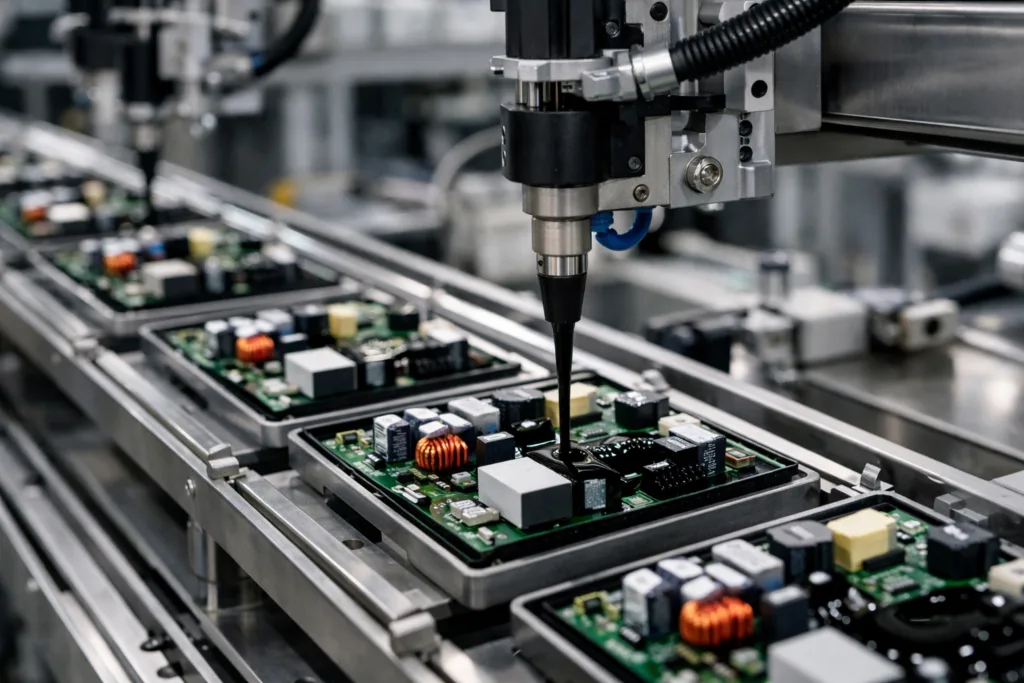
The right potting material stabilizes thermal profiles, prevents moisture ingress, and reduces mechanical stress. This synergy minimizes rate of change in key performance parameters:—such as driver efficiency, power factor, and total harmonic distortion—over long operating periods. Conversely, poor compound selection might cause thermal isolation (creating hot spots) or add undesired capacitance, affecting EMI performance.
Application Techniques for Best Results
- Mix thoroughly: Ensure homogeneity to prevent soft spots or incomplete curing.
- Vacuum degassing: Remove trapped air to avoid voids and improve contact.
- Controlled dispensing: Apply the correct amount—overfilling can stress components; underfilling risks incomplete protection.
- Cure schedules: Follow recommended times/temperatures for optimal properties.
Design Guidelines: Potting Potentials & Limitations
It is vital to factor in clearances, accessibility for inspection or repair, and the expansion coefficient of both potting and board materials. Mismatched expansion rates can lead to stress and micro-cracking, especially in temperature-cycling environments.
Safety Considerations for Thermal Potting Compounds
- Handle resins and curing agents with nitrile gloves and eye protection.
- Ensure adequate ventilation during mixing and curing.
- Observe cure exotherm limits to prevent burns or board damage.
- Dispose of unused material per local chemical regulations.
Frequently Encountered Problems and Fixes
- Incomplete cures: Result from incorrect mix ratios or suboptimal temperatures—always verify proportions and environmental controls.
- Bubbling/voids: Trapped air—use gentle mixing/vacuum degassing techniques.
- Component shifting: Flow during cure—fixture components or use higher viscosity grades for vertical assemblies.
Sustainability and Potting Compound Choices
Eco-conscious manufacturers gravitate toward low-halogen, RoHS-compliant, and reworkable potting options. These choices simplify end-of-life recycling and reduce the environmental impact of production waste. For more sustainable practices, consider compounds with lower outgassing and material-specific recycling guidelines.
Thermal Potting Compounds for LED Driver Boards
When specifying thermal potting compounds for LED driver boards, engineers weigh electrical insulation, thermal conductivity, mechanical compliance, and environmental resistance. As LED designs evolve towards higher energy densities and miniaturization, the integral role of advanced potting materials becomes more apparent. Selecting the correct formulation and applying precise process control ensures that LED driver boards not only survive but excel in demanding real-world conditions.
Conclusion: Longevity and Performance Through Advanced Potting
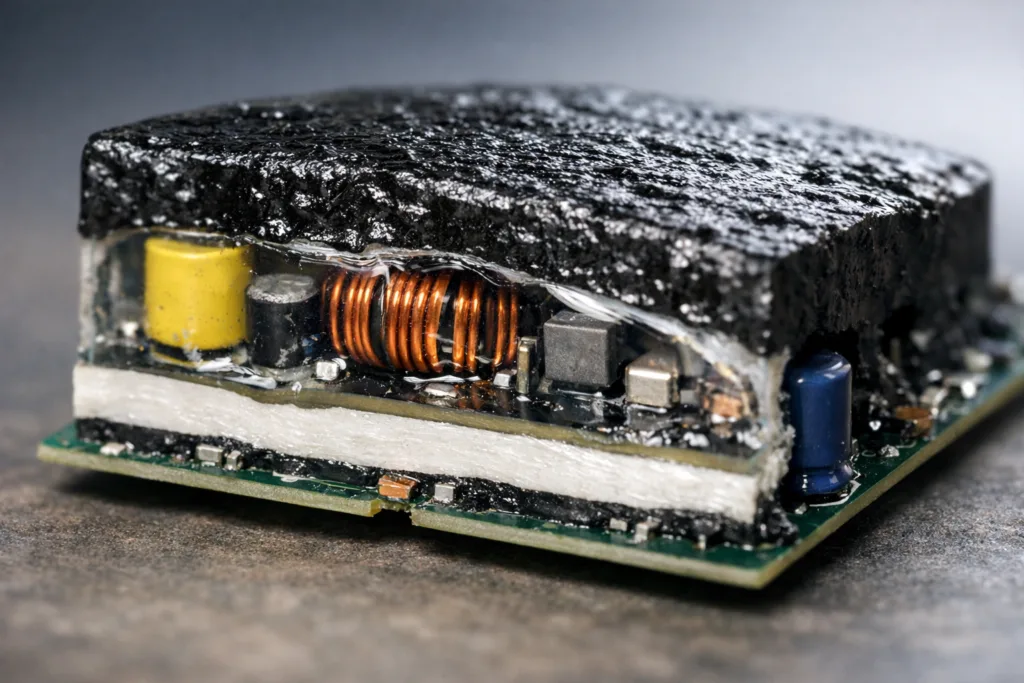
Thermal potting compounds stand as a critical defense against the environmental and operational stressors encountered by LED driver boards. Their influence spans heat management, moisture sealing, and physical fortitude—factors that collectively shape long-term system reliability. By matching the potting material to application needs and following robust process protocols, engineers can significantly enhance LED performance, reduce failure rates, and futureproof lighting systems.
Frequently Asked Questions
What makes thermal potting compounds essential for LED driver boards?
They dissipate heat, protect from moisture, and absorb mechanical shocks, all of which extend LED driver lifespan and reliability.
Can all types of thermal potting compounds handle high temperatures?
No, each type has unique thermal stability. For continuous high-heat conditions, silicone-based compounds usually offer the best performance.
How do I choose between epoxy, polyurethane, and silicone potting for my LED driver board?
Consider temperature exposure, vibration, repair needs, and budget. Epoxies suit rigid, industrial uses; polyurethanes offer flexibility; silicones excel at extreme temperatures and outdoor use.
What are common application errors with potting compounds?
Poor mixing, insufficient degassing, or rushing the cure process can lead to unprotected spots, voids, and weak encapsulation.
Are potting compounds safe for the environment?
Many are now RoHS-compliant and low-halogen, but always check the material safety datasheet and local regulations for disposal guidelines.
Does potting affect heat dissipation from LED driver boards?
Yes. The right thermally conductive potting compound will improve heat transfer, but using the wrong type could trap heat if it insulates rather than conducts.
Related Reading
- Silicone vs. Polyurethane: Which Potting Compound Wins for Battery Modules?
- Conformal Coating or Potting Compound? Make the Right PCB Protection Choice
- How Nano-Fillers Are Turbocharging Epoxy Thermal Conductivity for Metal Electronics
- Dam and Fill Encapsulation Secrets: Protect Sensitive PCB Components
- Low-Halogen Epoxies: The Green Solution for Modern Electronics Reliability