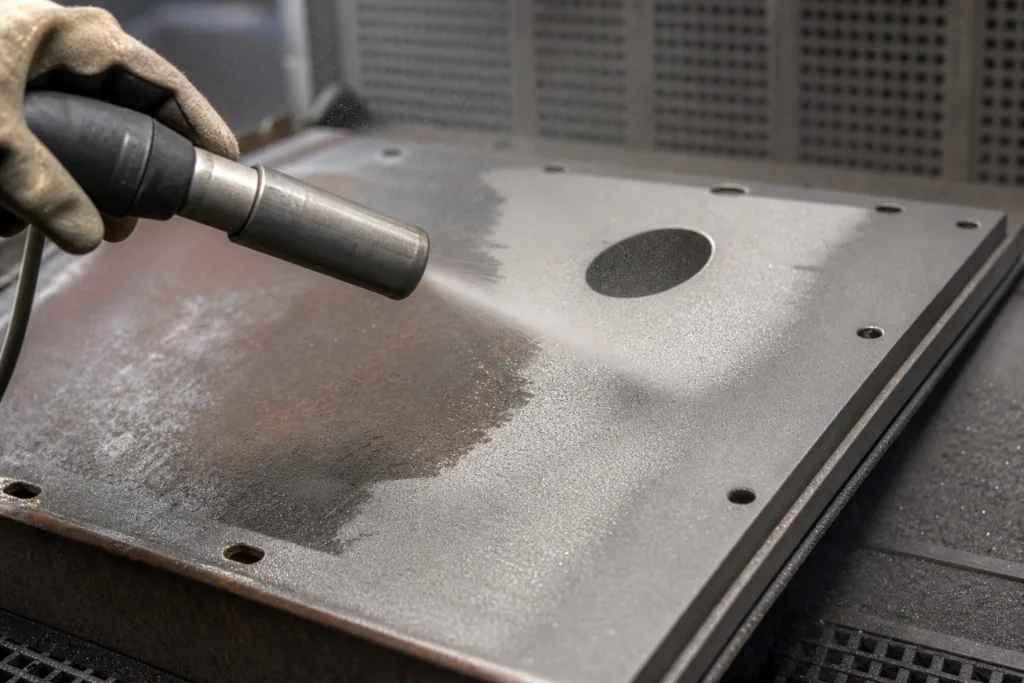
Introduction: Why EMI Shielding Adhesives Matter for Autonomous Driving Controllers
In 2026, autonomous vehicles have become a reality on roads across the globe, guided by sophisticated electronic controllers. Yet, electromagnetic interference (EMI) remains a persistent challenge, threatening the stability and reliability of the sensitive electronics powering these driverless systems. EMI shielding adhesives for autonomous driving controllers offer a practical solution, protecting critical components from electromagnetic disruption and ensuring the vehicle’s safe operation. This article dives into the importance, material properties, application methods, and real-world examples of EMI shielding adhesives in automotive electronics.
Understanding EMI in Automotive Electronics
Electromagnetic interference in automotive environments stems from both external sources (like charging stations or mobile networks) and internal systems (motors, sensors, infotainment units). Unchecked, EMI can cause:
- Sensor inaccuracies
- Controller malfunctions
- Loss of communication between vehicle systems
Autonomous driving controllers, which orchestrate navigation, braking, and acceleration, are especially vulnerable. Shielding methods are essential, as even minimal interference can have catastrophic consequences.
How EMI Shielding Adhesives Protect Vehicle Controllers
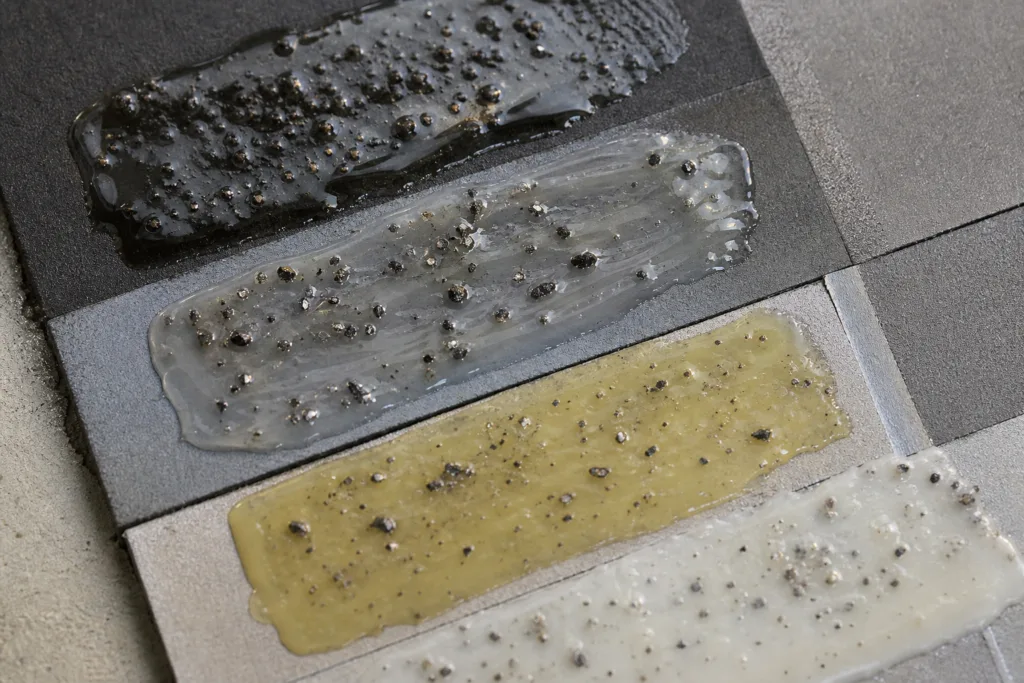
EMI shielding adhesives combine conductive fillers with robust bonding materials, creating a protective barrier against unwanted electromagnetic waves. These adhesives bond to electronic modules, providing both mechanical fixing and EMI suppression. They also enhance vibration resistance and durability. For manufacturers, integrating these adhesives offers dual benefits—stability and protection—in a single step.
Material Properties that Define EMI Shielding Adhesives
The performance of EMI shielding adhesives depends on several properties:
- Conductivity: Achieved through fillers like silver, copper, nickel, or carbon.
- Bond Strength: The adhesive must withstand thermal cycling, vibrations, and aging.
- Cure Mechanism: Epoxy, silicone, polyurethane, and acrylic systems are common.
- Flexibility: Important for maintaining shielding under mechanical stress.
- Moisture Resistance: Critical for longevity in harsh automotive environments.
| Adhesive Type | Conductive Filler | Key Feature |
|---|---|---|
| Epoxy | Silver, Copper | High strength, good conductivity |
| Silicone | Nickel-based | Flexibility, temperature resistance |
| Polyurethane | Carbon | Toughness, impact resistance |
| Acrylic | Silver-coated glass | Fast cure, moderate flexibility |
Conductivity and Shielding Effectiveness Explained
High conductivity ensures that the adhesive acts as a Faraday cage, preventing EMI from penetrating the controller housing. Shielding effectiveness is measured in decibels (dB); most automotive adhesives aim for 40–60 dB attenuation in the 10–1000 MHz range.
Application Methods: Ensuring Reliable Bonding and Shielding
The way EMI shielding adhesives are applied often determines their effectiveness:
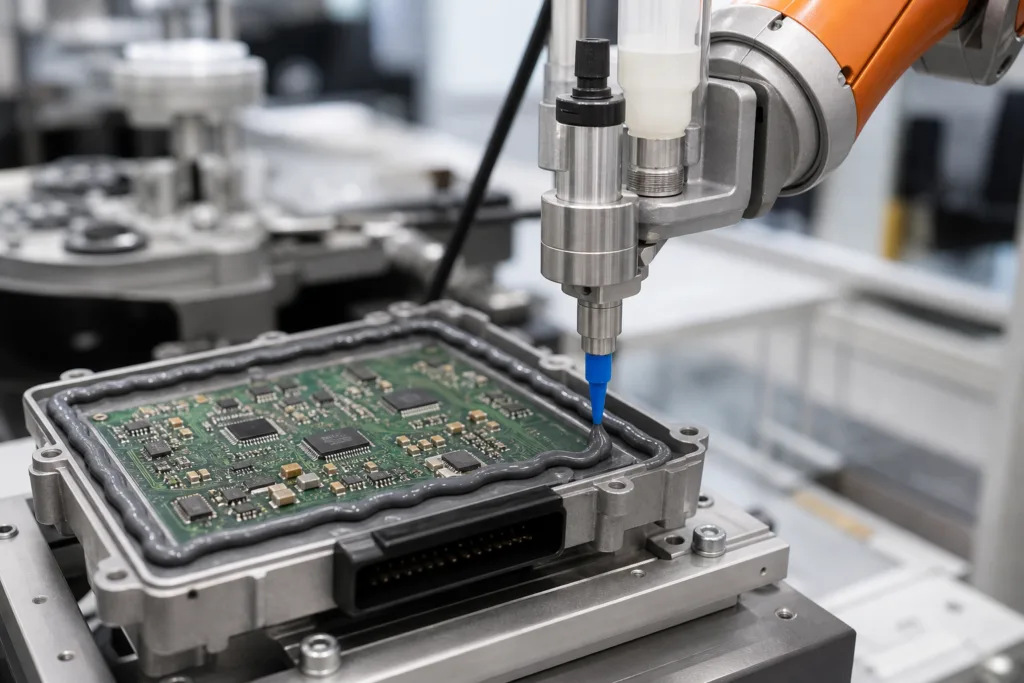
- Dispensing: Automated robots precisely apply the adhesive to controller assemblies.
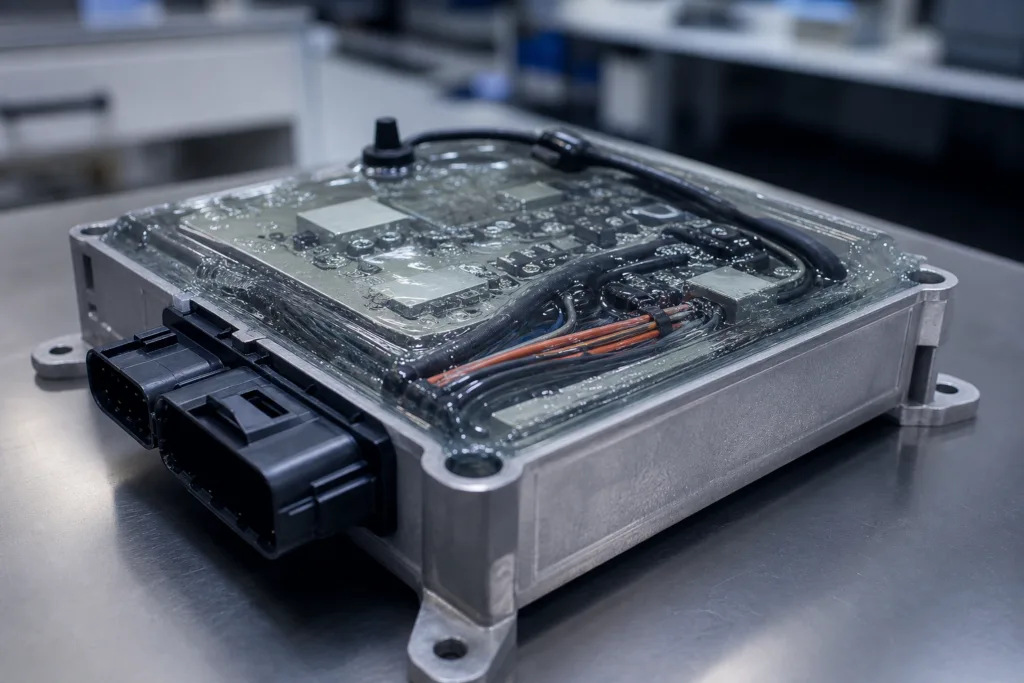
- Potting: Full encapsulation for maximum EMI and environmental protection.
- Bead or Stripe: Used for sealing gaps and joining modules.
Assembly-line engineers must also consider open time, pot life, and cure schedules to maintain material performance. ZDS Adhesive, an industrial adhesive manufacturer, recommends controlled humidity and temperature during application to guarantee bond-line integrity and consistent shielding. For polymer substrates like PP or PE, surface treatments and adhesion promoters can greatly improve bonding—learn more from our guide on improving bonding for low surface energy plastics.
Why Specialized Adhesives Outperform Traditional Shielding Methods
Conventional EMI shields like metal enclosures or tapes provide basic protection, but adhesives offer several advantages:
- Reduced component bulk and weight
- Integrated bonding and shielding in one step
- Streamlined production for complex assemblies
- Enhanced vibration and moisture resistance
As automotive electronics grow smaller and more numerous, adhesive solutions deliver flexibility and scalability.
Case Studies: Successful EMI Shielding Adhesive Integration
Several automotive brands have achieved improved controller reliability with EMI shielding adhesives:
- High-speed radar sensor modules: Conductive silicone bead for robust shielding and flexible bonding
- Electric drive control units: Epoxy adhesive with silver filler for stable EMI attenuation and thermal output
- Camera modules for ADAS: Polyurethane potting for environmental stability and EMI suppression
For example, a manufacturer faced frequent camera controller failures due to EMI spikes during fast charging. After switching to a silver-filled epoxy adhesive, incident rates dropped by 45%, and warranty claims for sensor malfunction decreased considerably.
Industry Testing and Qualification Requirements
Adhesives for EMI shielding in autonomous controllers must pass rigorous tests:
- Lap shear and peel strength (mechanical durability)
- Thermal cycling (extreme temperature survivability)
- Humidity aging (moisture and condensation resistance)
- EMI shielding effectiveness (attenuation validation)
For successful system reliability, automotive OEMs prefer adhesives certified to ISO 16750, CISPR 25, and IEC 60068 standards. The practical implications go beyond the lab: robust shielding protects passengers and road-users, even in edge-case scenarios.
Future Trends: EMI Shielding Adhesives for Tomorrow’s Autonomous Vehicles
As autonomous driving technology advances, EMI shielding adhesives are evolving:
- Low-VOC Formulations: Safer, greener options for production floors
- Nanoparticle Fillers: Better conductivity at lower loadings
- Self-healing Materials: Maintains shielding after mechanical stress
- Advanced potting/encapsulation: For new sensor formats and higher integration levels
- Hybrid adhesive systems: Multi-functional solutions combining EMI, thermal, and structural properties
EMI Shielding Adhesives for Autonomous Driving Controllers
This section summarizes the core theme. EMI shielding adhesives in autonomous driving controllers provide lasting benefits: electronics protection, reduced failure rates, and improved road safety. As OEMs push for smaller, smarter vehicles, these adhesives will anchor high-reliability system design. For specifics on conductive adhesive vs. solder, read When Conductive Adhesive Outshines Solder.
Practical Considerations: Process Stability and Production Constraints
From a production viewpoint, process stability is paramount. ZDS Adhesive, an industrial adhesive manufacturer, suggests the following checklist for EMI shielding adhesives:
- Verify cure speed and fixture time against assembly-line cycle
- Ensure substrate compatibility for controller housings
- Apply adhesion promoters or primers for challenging plastics
- Monitor bond-line thickness for consistent electrical performance
- Test regularly for lap shear and peel strength
Manufacturers investing in the right adhesive improve both yield rates and product durability. For deep-dive information about pot life, check Managing Pot Life in 2-Part Polyurethane Systems.
Comparing EMI Shielding Adhesives: Epoxy, Silicone, Polyurethane, and Acrylic
| Property | Epoxy | Silicone | Polyurethane | Acrylic |
|---|---|---|---|---|
| Conductivity | Excellent | High | Medium | Medium |
| Flexibility | Low | Excellent | Good | Moderate |
| Cure Speed | Moderate–Fast | Slow–Moderate | Fast | Very Fast |
| Moisture Resistance | Very High | High | High | Moderate |
| Structural Strength | Highest | Medium | High | Medium |
The best choice depends on module requirements, production speed, and environmental needs.
Achieving Long-Term Reliability in Autonomous Driving Controllers
Long-term reliability means EMI shielded controllers continue to perform—even when exposed to harsh vibration, moisture, and frequent thermal cycling. Adhesive solutions must maintain conductivity and bond strength throughout the vehicle’s life cycle. Industry data shows that well-selected and properly applied EMI adhesives can reduce electronic failures by up to 40%.
Innovations in Application: Robotics and Automation
Modern production lines use robotics for precise adhesive dispensing and curing. Automated bead strategies minimize waste and optimize performance. In 2026, industry leaders are adopting advanced vision systems for quality control, ensuring every controller meets EMI attenuation standards.
How EMI Shielding Adhesives Advance Road Safety and Vehicle Reliability
The final impact of EMI shielding adhesives is clear: fewer controller disruptions, safer navigation, and greater peace of mind—both for manufacturers and for drivers. With ever-more complex vehicles and interconnected sensors, these adhesives are a cornerstone technology for the future of autonomous mobility.
Frequently Asked Questions
What is EMI and why is it dangerous for autonomous driving controllers?
EMI (electromagnetic interference) causes disruptions in electronic systems, risking malfunction or inaccurate sensor readings in autonomous vehicles, possibly leading to safety hazards.
How do EMI shielding adhesives work?
These adhesives use conductive fillers to create a barrier that absorbs or reflects electromagnetic waves, protecting sensitive electronic components from interference.
Which adhesive types are most common for EMI shielding?
Epoxy, silicone, polyurethane, and acrylic adhesives are widely used due to their balance of conductivity, bond strength, flexibility, and durability in automotive environments.
Can EMI shielding adhesives replace metal enclosures?
In many cases, yes—they decrease weight and integrate bonding with shielding. However, they are often used in combination with other shielding methods for maximum protection.
How are EMI shielding adhesives applied?
They can be dispensed automatically, potted for full encapsulation, or applied as beads or stripes around sensitive modules, with careful control over cure timing and thickness.
What should manufacturers check when using EMI shielding adhesives?
Manufacturers should verify cure speed, substrate compatibility, bond-line thickness, and shielding effectiveness, and regularly test for mechanical and environmental durability.
Related Reading
- Discover the Power of Hot Melt Adhesives in Modern Manufacturing
- Epoxy Adhesive Resin Guide: Strategies for Superior Bonding
- How High-Strength Epoxy Adhesives Deliver Reliable Structural Bonds
- Thermal Epoxy vs Softer Materials: 2026 Application Pros & Cons
- Low-Shrinkage Adhesives for LiDAR Assembly: Precision Sensor Performance