Introduction: Why Non-Yellowing UV Adhesives Matter for Smart Lighting
Smart lighting systems have become a backbone of modern buildings, displays, and connected technology. A critical, yet sometimes overlooked, part of these systems is the adhesive that holds complex optical and electronic elements together. Non-yellowing UV adhesives for smart lighting play a pivotal role in ensuring both performance and appearance last for years, even under intense and variable environmental conditions. Their unique ability to cure quickly and resist discoloration keeps LED panels and optical elements looking pristine while maintaining efficiency and reliability.
Understanding Non-Yellowing UV Adhesives for Smart Lighting
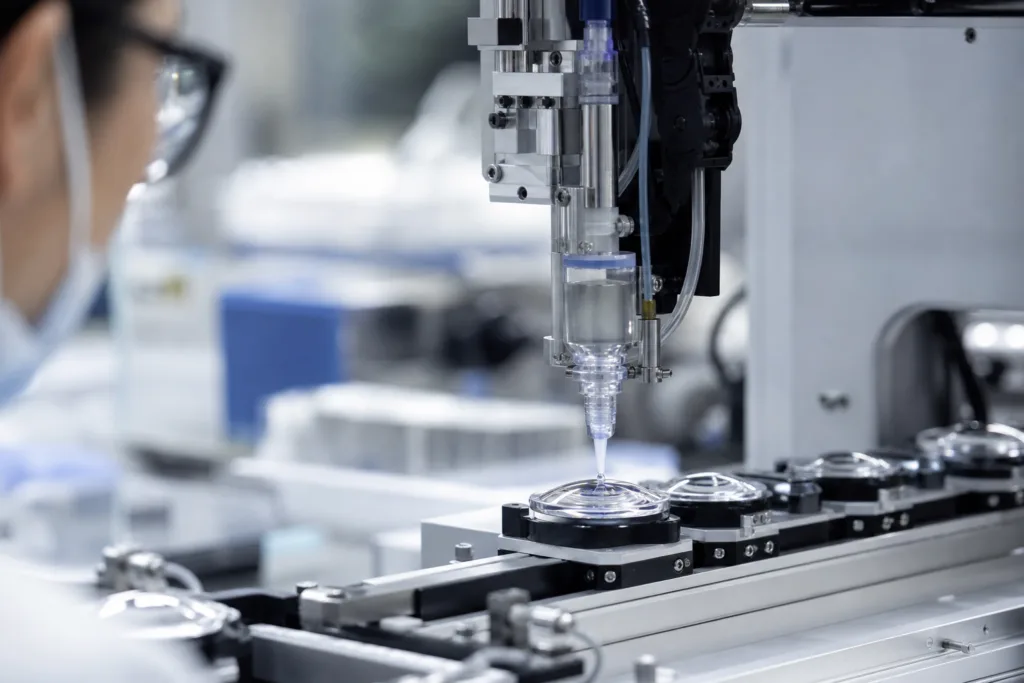
Unlike traditional adhesives, non-yellowing UV adhesives are engineered to resist the yellowing and clouding that often results from prolonged light and UV exposure. In smart lighting assemblies, where clarity and aesthetics are vital, the choice of adhesive directly impacts user satisfaction and long-term durability.
How UV Light Causes Adhesive Yellowing
UV light is energetic enough to break down many common adhesive polymers, leading to chain scission (breaking of chemical bonds) and, ultimately, yellowing. This not only affects the look of devices but also reduces light transmission and optical clarity. Smart lighting, which may run 24/7 and sit under strong illumination, especially suffers if the adhesive discolors. The industry responded by formulating adhesives specifically designed for resistance to UV-induced degradation.
Key Benefits of Non-Yellowing UV Adhesives in Smart Lighting
- Superior Optical Clarity: These adhesives offer high light transmission and minimal haze, which keep LEDs bright and displays sharp.
- Long-Term Durability: Maintain appearance and mechanical integrity for years, withstanding UV exposure, temperature shifts, and humidity.
- Fast, Controlled Curing: UV curing means rapid fixture times and on-demand bond formation, reducing process bottlenecks.
- Stable Bond Performance: Non-yellowing formulations avoid embrittlement and cracking, preserving the assembly’s strength and safety.
Core Applications: Where Non-Yellowing UV Adhesives Add Value
The smart lighting field is broad, but a few core applications demand non-yellowing, optically clear adhesives:
- LED panel and lens bonding
- Light guides and smart display backlights
- Decorative and architectural smart lighting
- Optical sensor encapsulation in connected controls
For additional insight into advanced optical applications, explore Choosing the Right Optical Bonding Method: OCR vs. OCA for Modern Automotive Curved Displays.
Adhesive Chemistry: What Makes an Adhesive Non-Yellowing?
Modern adhesives use tailored acrylic and epoxy resins with built-in resistance to photochemical degradation. Additives like UV absorbers and stabilizers further shield the adhesive layer. ZDS Adhesive, an industrial adhesive manufacturer, notes that exact formulation depends on the specific wavelengths expected during both the curing and operational phases, the nature of the bonded substrates (glass, polycarbonate, PMMA, etc.), and thickness of the bond line. Controlled tests, such as accelerated yellowing under UV/visible light, support adhesive selection for critical smart lighting use cases.
How UV Curing Works: Process Overview
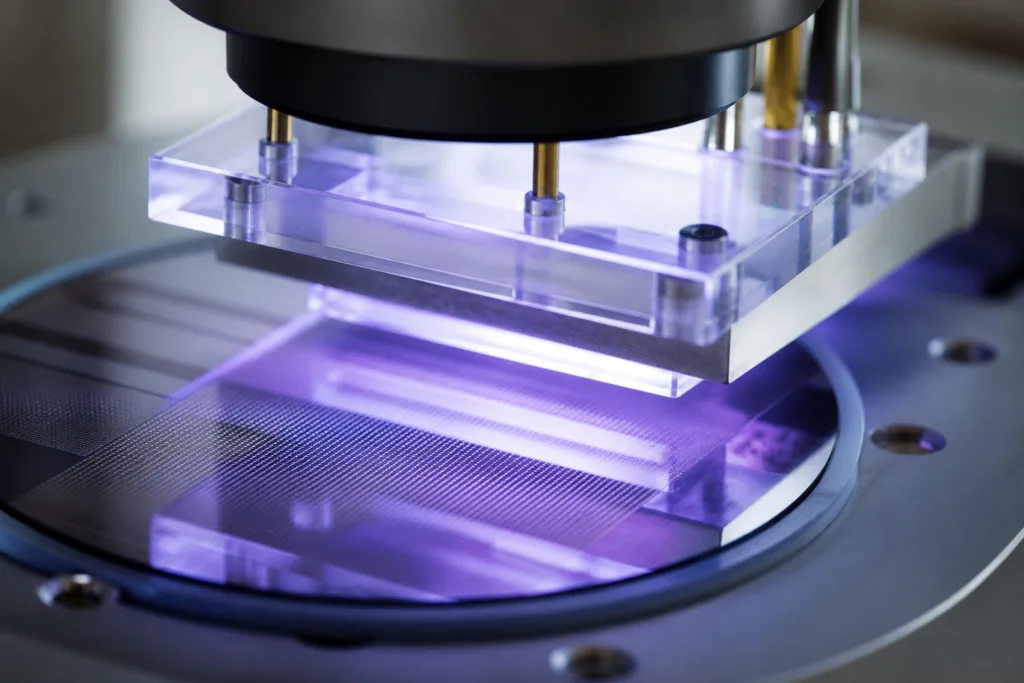
UV curing relies on photoinitiators in the adhesive that react almost instantly when exposed to specific UV wavelengths. This means components can be positioned precisely, then locked in place—often in seconds. For smart lighting, this combination of speed and control increases efficiency and reduces handling or fixture-induced stress.
Comparing Non-Yellowing UV Adhesives to Other Options
| Property | Non-Yellowing UV Adhesive | Standard Epoxy | Silicone Adhesive |
|---|---|---|---|
| Cure Speed | Seconds to minutes | Hours | Minutes (RTV) to hours (condensation) |
| Yellowing Resistance | Excellent | Poor to fair | Good (varies by grade) |
| Optical Clarity | Very high | Fair | High to very high |
| Service Temp | -40°C to 120°C+ | -55°C to 120°C+ | -60°C to 200°C+ |
| Reworkability | Low | Low | High |
For glass bonding where clarity matters, see the Clear Silicone Adhesive for Glass Selection Guide.
Typical Substrate Compatibility in Smart Lighting
- Glass (covers, light guides, optical plates)
- Polycarbonate (PC) and acrylic (PMMA) lenses
- Metals (frames, reflectors, heatsinks)
- Ceramics (LED packages, high-end optics)
Process Integration: How to Use Non-Yellowing UV Adhesives Effectively
Implementing non-yellowing UV adhesives in manufacturing processes involves a few best practices:
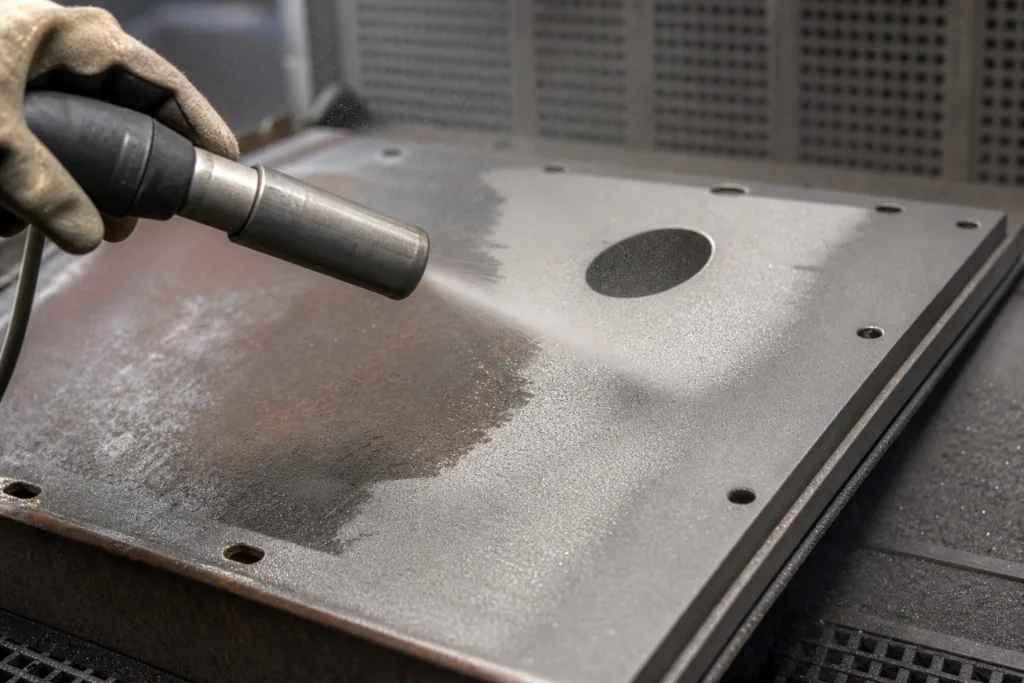
- Surface Preparation: Ensure parts are clean, dry, and free from release agents or fingerprints. Use primer or plasma/corona treatment for challenging plastics.
- Precise Dispensing: Automated dispensers increase repeatability and reduce waste—see How Liquid Dispensing Machines Must Be Configured for Epoxy, Silicone, and UV Adhesive Applications.
- Controlled UV Exposure: Calibrate lamp intensity and exposure time to ensure full cure without overheating sensitive components.
Common Failure Modes and How to Prevent Them
Even robust adhesives can fail or yellow if misapplied. Key failure modes include:
- Insufficient UV exposure (uncured areas turn yellow or crack)
- Outgassing or bubbles from unoptimized process conditions
- Poor substrate compatibility, leading to delamination or haze
Regular process audits and adhesion testing (lap shear, peel tests) help maintain high yield.
How to Choose the Right Non-Yellowing UV Adhesive
Selection depends on project priorities. Consider these:
- Required optical clarity (transmission, haze, refractive index match)
- Mechanical needs (rigid or flexible, gap filling, load type)
- Cure speed versus open time (process throughput)
- Environmental exposure (heat, moisture, chemicals)
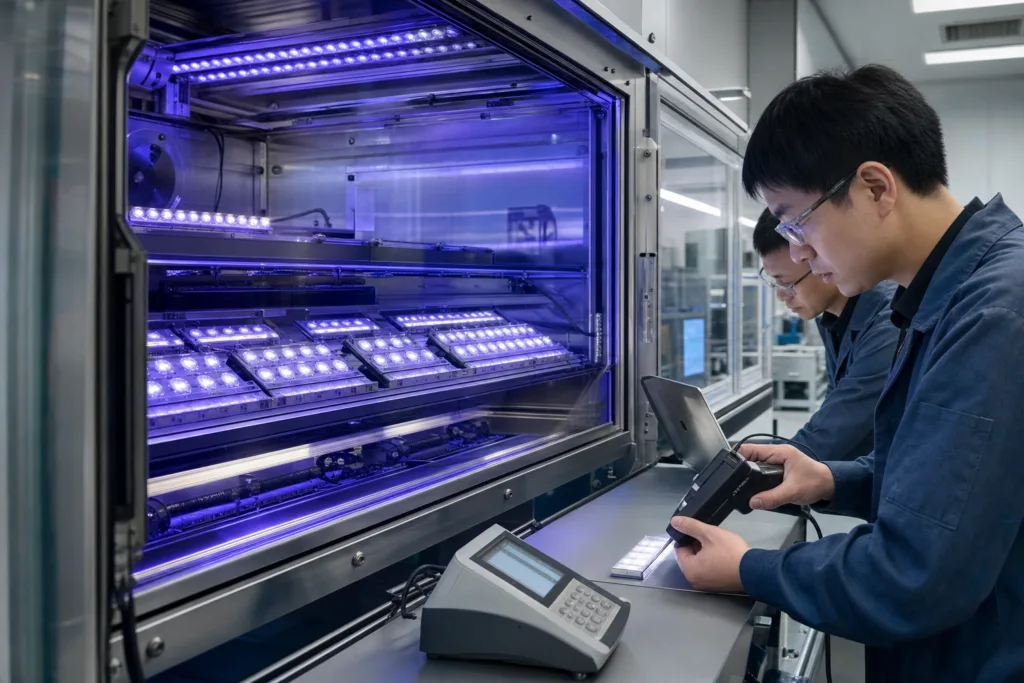
Test Methods for Yellowing Resistance and Clarity
- Accelerated UV exposure: Simulates years of operation in days.
- Optical transmission and haze meters: Quantify clarity changes.
- Thermal and humidity cycling: Reveals embrittlement or loss of adhesion over time.
Typical Curing Parameters for Smart Lighting Applications
Most non-yellowing UV adhesives cure in:
- UV-A range: 320–400 nm, which penetrates clear plastics and glass well
- Exposure time: 5–20 seconds per joint (can be varied for thick or shaded assemblies)
Always check the manufacturer’s technical data for substrate and thickness recommendations.
Case Study: Architectural LED Panel Assembly
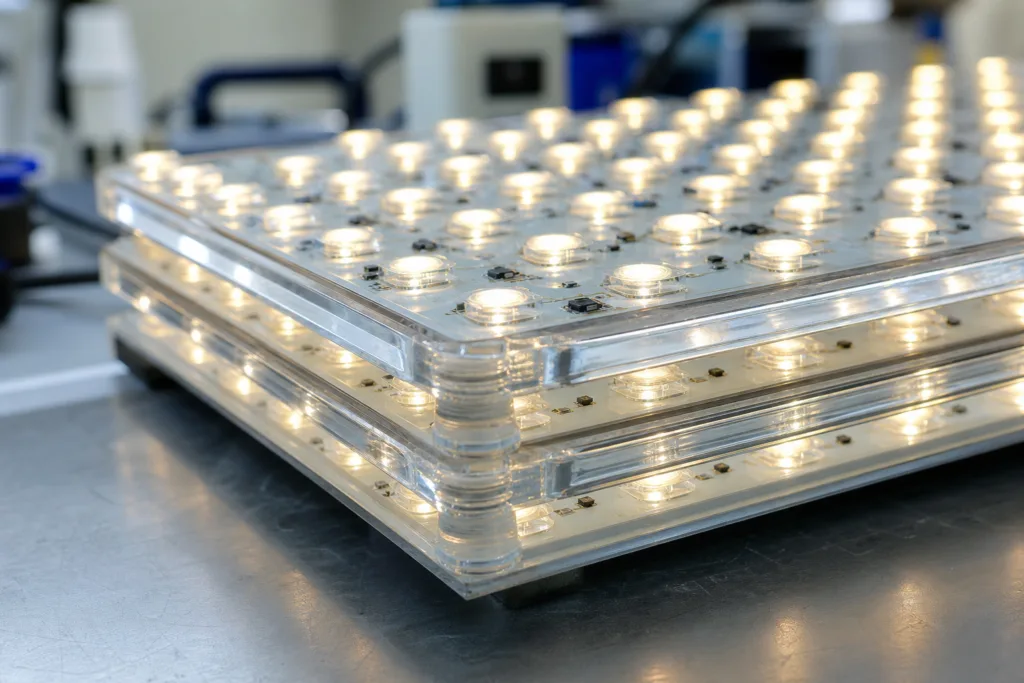
Factory-assembled architectural LED panels must maintain clarity and brightness over long life cycles. Here, a non-yellowing UV adhesive enables seamless bonds between glass, acrylic, and metal frames—even with daily exposure to sunlight and high-intensity LEDs. The result: lasting aesthetics, strong bonds, and reduced maintenance.
Non-Yellowing UV Adhesives for Smart Lighting
Non-yellowing UV adhesives are specifically tailored for smart lighting to ensure that efficiency and brightness stay high, even after years of use and exposure to intensive illumination. These adhesives are formulated for optical clarity, rapid curing, and environmental resistance, directly supporting the reliability and innovation expected in modern lighting technology. Whether for LED panels, smart controls, or decorative fixtures, the combination of clarity, speed, and robust aging resistance positions non-yellowing UV adhesives as the preferred bonding solution.
When Should You Use Silicones or Epoxies Instead?
While non-yellowing UV adhesives dominate for clarity-critical, fast-assembly smart lighting, tough silicone adhesives are often best for applications needing deep temperature and flexibility tolerance, such as outdoor or high-power LED arrays. Epoxies, with multi-part chemistries, are chosen for chemical resistance and thick bonding lines, though their yellowing and slower cure can be drawbacks for optical or display-focused projects.
How Surface Treatments Enhance Adhesion
Low surface energy plastics like polypropylene can be challenging. Solutions include plasma or corona discharge treatments, or the use of primers to boost wettability before adhesive application. This step increases long-term durability and reduces risk of bond failure.
Real-World Tips from Assembly-Line Experience
From an assembly-line viewpoint at ZDS Adhesive, process stability depends on matching adhesive open time to production speed and lamp type, carefully reviewing bond-line thickness specifications, and documenting every process variable. Periodic yellowing and clarity tests are recommended for quality assurance.
How to Reduce Outgassing and Bubble Issues
Adhesives with low outgassing formulation, along with vacuum or low-pressure dispensing, help prevent bubbles, which can scatter light and reduce performance. Bake-out or pre-conditioning of bonding partners can further aid high-yield smart lighting production lines.
Future Trends: Where Non-Yellowing UV Adhesives Are Headed
Increasing miniaturization and design freedom in the smart lighting industry is pushing adhesives to new performance boundaries. Next-generation UV adhesives offer even higher transmission, compatibility with difficult and recycled plastics, and lower environmental VOCs. New multi-wavelength curing enables more forgiving process windows and robust performance across evolving lighting ecosystems.
Conclusion: The Smart Choice for Clarity and Durability
Non-yellowing UV adhesives have become an enabling technology for advanced smart lighting solutions. Their resistance to yellowing, fast curing, and superb optical clarity offer clear advantages for long-lasting, efficient, and attractive LED assemblies. When properly selected and applied, these adhesives pave the way for years of reliable and aesthetic performance—meeting the demands of a connected, visible world.
Frequently Asked Questions
What makes a UV adhesive truly non-yellowing?
Non-yellowing UV adhesives are engineered with photostable polymers and specialty additives that block UV-induced polymer breakdown. This prevents discoloration and loss of clarity under real-world lighting conditions.
Can non-yellowing UV adhesives be used for both indoor and outdoor smart lighting?
Yes, advanced non-yellowing UV adhesives are formulated to withstand humidity, temperature fluctuations, and outdoor UV exposure, making them suitable for most indoor and many outdoor smart lighting applications.
How does optical clarity impact smart lighting quality?
High optical clarity ensures maximum light transmission and precise color rendering, which maintains both brightness and the aesthetic look of LED panels or light guides over time.
What is the typical cure time for these adhesives?
Cure times typically range from 5–20 seconds under proper UV exposure, allowing for rapid assembly with reliable performance in mass-production smart lighting lines.
Are non-yellowing UV adhesives safe for plastics like polycarbonate or acrylic?
Yes, many are tested specifically for use with optical plastics such as PC and PMMA, although surface preparation or treatment may enhance adhesion and durability for challenging plastics.
How can aging or yellowing failures be prevented in production?
Prevent failures by ensuring full UV cure, using correct adhesive grades for the substrates and environment, and implementing regular process audits and clarity/yellowing tests.