Understanding COB (Chip on Board) Glob Top Encapsulation
COB (Chip on Board) glob top encapsulation is a crucial process for protecting delicate semiconductor dies mounted directly on printed circuit boards (PCBs). This guide demystifies COB, glob top encapsulation chemistry, and practical deployment, focusing on durability, performance, and the impact of material selection. As COB technologies set the standard for miniaturization and cost-effective integration, manufacturers find that the choice and application of glob top encapsulant directly determine assembly outcomes and long-term device reliability.
What is COB (Chip on Board) Encapsulation?
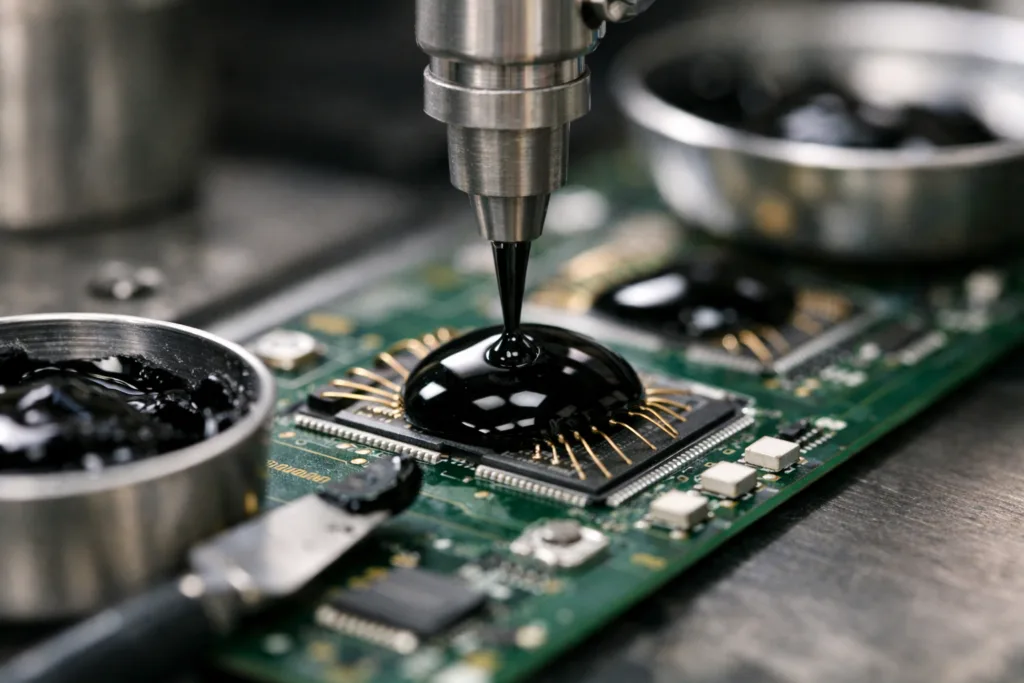
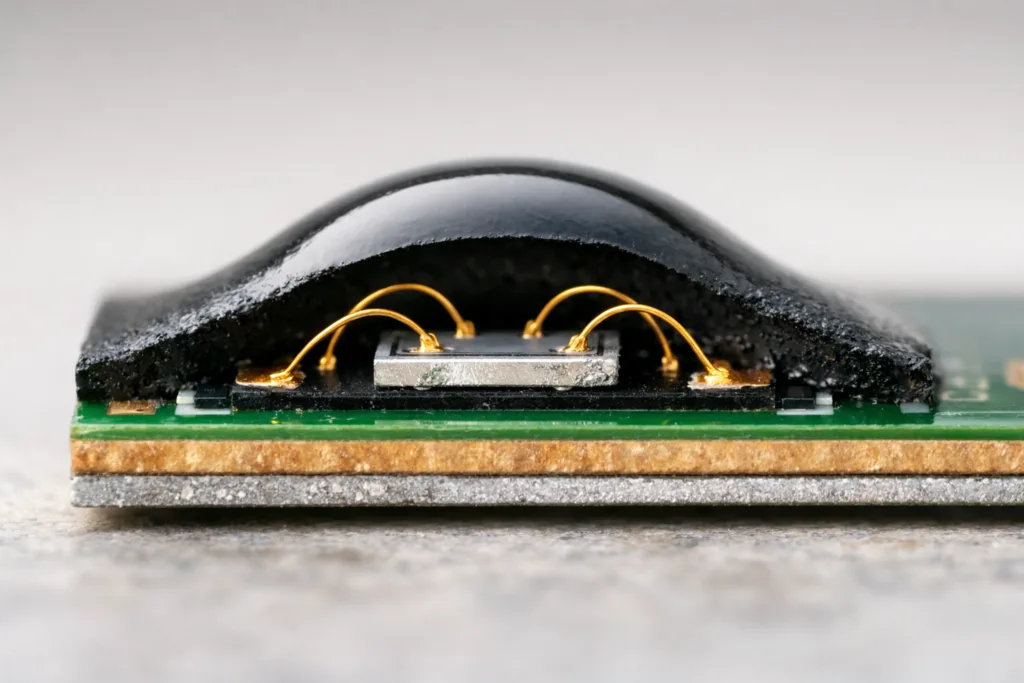
COB refers to mounting bare semiconductor chips directly on a substrate and connecting them using fine wires or bumps. Glob top encapsulation is the step where a protective resin, typically epoxy or silicone, is dispensed over the die and bond wires, forming a “glob” that shields against physical and environmental threats. This encapsulation technology addresses the industry’s push for ever-smaller, lighter, and more robust electronics, especially in LED modules, sensors, automotive electronics, and consumer devices.
Why Use Glob Top Encapsulation in COB Packaging?
Glob top encapsulation offers key advantages for industrial and commercial electronic assemblies. It provides mechanical support, electrical insulation, and environmental protection. A well-selected encapsulant will shield delicate bond wires from vibration and moisture, resist chemicals, and contribute to longevity, especially in harsh-service conditions. Without proper encapsulation, devices face failure risks from short circuits, bond wire fatigue, and corrosion. Expert potting and encapsulation solutions help engineers ensure product reliability in demanding sectors.
COB (Chip on Board) Glob Top Encapsulation Guide
This COB (Chip on Board) glob top encapsulation guide covers all major steps, from substrate prep to post-cure quality checks. We’ll review common encapsulation materials, practical dispensing techniques, real-world process controls, and failure-mitigation strategies. Whether you engineer micro-LED arrays or automotive modules, mastering each detail ensures consistent, defect-free encapsulation.
Key Benefits of COB Glob Top Encapsulation
- Space saving: Eliminates bulky casings, supports ultra-compact designs.
- Cost efficiency: Enables high-volume, automated assembly without the need for individual chip packages.
- Improved thermal management: Direct substrate contact helps dissipate heat more effectively than traditional packaging.
- Customizable protection: Encapsulant types and thicknesses can be tuned for unique environments.
Material Selection: Common Glob Top Encapsulants for COB
Choosing the right glob top resin is foundational. Typical materials include:
- Epoxy resins: Widely used for excellent hardness, adhesion, and electrical insulation. Suitable for standard environments, not always optimal for thermal cycling.
- Silicone resins: Flexible, with strong temperature and moisture resistance; preferred in automotive and outdoor exposure applications. If you want a deep dive into silicone adhesive advantages, we have you covered.
- Polyurethane resins: Offer a balanced combination of flexibility, adhesion, and chemical resistance, though less common in COB than epoxy or silicone.
Material selection is often driven by specific application stresses—temperature swings, vibration, and chemical contact. For LEDs, low-stress, optically clear silicones or hybrid systems may be essential to prevent yellowing and minimize light loss.
Encapsulant Property Comparison Table
| Resin Type | Typical Uses | Strength | Thermal Range (°C) | Moisture Resistance |
|---|---|---|---|---|
| Epoxy | General electronics, sensors | High | -40 to 150 | Good |
| Silicone | High-temp/Outdoor/LEDs | Medium | -55 to 200 | Excellent |
| Polyurethane | Automotive, flexible circuits | Medium | -40 to 125 | Excellent |
Process Steps: How to Apply Glob Top on COB
Effective glob top coating involves these production steps:
- Substrate cleaning and pre-heat (for optimal adhesion)
- Automated or manual dispensing of the encapsulant resin
- Shaping the “glob” for uniform coverage (using needle size, XY tables, or masking)
- Cure: thermal, UV, or moisture, depending on resin system
- Post-cure inspection (visual, X-ray, cross-section as needed)
The key is achieving complete die and bond wire coverage without air entrapment or overflow that interferes with adjacent components.
Equipment Used in COB Glob Top Encapsulation
Critical equipment includes precision dispensers, XYZ motion systems, programmable ovens, and UV chambers. Automated vision systems enable real-time blob profiling and feedback for high-volume lines. In some cases, selective laser systems cure encapsulant on-the-fly for higher throughput.
Common Application Challenges and Solutions
The most frequent process failures are:
- Air bubbles (causing weak spots)
- Poor resin wetting on low surface energy substrates
- Uneven coverage due to inconsistent dispense speed or tip angle
- Outgassing, especially under rapid cure profiles
ZDS Adhesive, an industrial adhesive manufacturer, notes that surface preparation is critical: plasma or corona pretreatment is often required on polyimide or fluoropolymer substrates for robust encapsulant bonding. Always validate with peel and pull tests, thermal cycling, and humidity aging to ensure optimal results. For in-depth bonding strategies, the plastic bonding mastery guide is valuable for engineers dealing with challenging surfaces.
Tips to Prevent Common Failure Modes in Glob Top Encapsulation
- Handle boards in ESD-safe environments only
- Ensure the substrate is moisture-free before dispense
- Control resin viscosity (temperature, pot life, mix quality)
- Do not move assemblies during gel/cure time to avoid flow or wire shift
- Check encapsulant shelf life and storage requirements
Testing and Quality Control in COB Encapsulation
Standard tests include visual inspection, die shear, wire pull, thermal shock, and humidity storage tests. For mission-critical products, cross-sectional analysis detects hidden voids or delamination. Constant process parameter monitoring is essential for zero-defect goals in automotive or medical device manufacturing. Consult aerospace adhesive validation protocols if your assembly is safety-critical.
Reliability Factors: Environmental & Operational Stresses
COB packages must withstand temperature cycling, humidity, vibration, and chemical exposure. Careful matching of CTE (coefficient of thermal expansion) between die, substrate, bond wires, and encapsulant prevents stress-driven failures. Silicone glob tops, for instance, combine flexibility with strong moisture resistance, making them popular for outdoor LEDs and automotive sensors.
Moisture Protection and Barrier Concepts
Effective encapsulation should create a physical barrier against water ingress and ionic contamination. For harsh environments (outdoor, marine, or telecom), consider multi-layer encapsulation, use of low-ionic-content resins, or pairing glob top with a conformal coating. Advanced materials offer hydrophobic surfaces that minimize condensation and corrosion risk.
Thermal Management in COB Glob Top Assemblies
One concern with glob top encapsulation is heat buildup within the encapsulated die, especially in LED and power applications. Choose an encapsulant with adequate thermal conductivity if heat is significant. Where higher dissipation is essential, consider hybrid solutions—thermal pad underfill plus glob top or thermally conductive fillers in the encapsulant resin.
ESD (Electrostatic Discharge) Considerations
Work practices during COB assembly should minimize static build-up which could damage bare dies. Use dissipative work surfaces, ESD-safe gloves, and ground personnel to avoid introducing latent failures.
Surface Preparation and Adhesion Optimization
Bond line cleanliness and roughness are pivotal for strong encapsulant adhesion. Where applicable, substrates may be micro-roughened, plasma treated, or primed. Some manufacturers specify a primer layer under epoxy or silicone resins for critical adhesion, especially on challenging substrates like FPC (flexible printed circuits) or certain plastics.
COB Glob Top Process Troubleshooting Checklist
- Are air bubbles found? Adjust dispense pressure and pre-degas resin.
- Poor spread/wetting? Check surface treatment and resin temperature.
- Voids or poor coverage? Verify dispense volume and dispenser alignment.
- Delamination after thermal cycling? Revisit CTE matching and resin selection.
Innovations in COB Glob Top Encapsulation Materials
Recent years have seen materials developments including optically clear silicones for UV LEDs, color-stable resins for white-light applications, and specialty grades for ultra-thin, low-profile packages. Some encapsulants now incorporate functional fillers for EMI shielding or improved conductivity.
Process Automation and Industry 4.0 Integration
Modern factories integrate machine vision and sensor-driven process feedback for ultra-consistent glob shaping and dispensing. Data analytics support predictive maintenance, with recorded process variables linked to yield and failure analytics. The result—fewer rejects, more stable process windows, and traceable quality assurance.
Case Study: High-Reliability LED Module COB Encapsulation
Engineers working on outdoor LED modules selected optically clear silicone glob top for weather and UV resistance. Process controls included inline bubble detection and thermal cycling validation. This combination drastically reduced early-life failures and color shift over multiyear tests, supporting sustained product quality in harsh city lighting applications.
Best Practices for COB Glob Top Encapsulation Process Control
- Use consistent temperature and humidity control in the process area
- Standardize dispense needle size and path for each module type
- Calibrate vision systems for blob dimension feedback
- Document all resin lot and substrate traceability data
- Train personnel in rapid process deviation detection
Regulatory and Environmental Compliance in COB Encapsulation
Compliance with RoHS, REACH, and other global standards is a must. Choose encapsulants free from banned substances, low-VOC, and with stable life-cycle properties. Increasingly, materials are chosen for recyclability and minimal environmental footprint, especially as electronics recycling grows in importance.
Emerging Trends in COB Encapsulation Technology
Key trends include the use of lower-stress resins for ultra-thin packages, multifunctional encapsulants (e.g., thermal + EMI shielding properties), and encapsulation processes compatible with flexible electronics. As device form factors shrink and junction temperatures climb, expect rapid innovation in material chemistry, process automation, and integrated process monitoring.
COB Glob Top Encapsulation: Summary and Outlook

Mastering COB glob top encapsulation is vital for robust, miniaturized electronics. From material selection—balancing epoxy, silicone, and hybrid resins—to tuning process steps such as substrate prep, dispense control, and cure, every variable impacts final device quality. Today’s process innovations and material advances extend reliability and enable new designs previously unattainable. Engineers and manufacturers who adopt best practices set their products apart in a future of ever-shrinking, high-reliability electronics assemblies.
Frequently Asked Questions
What is the primary purpose of glob top encapsulation in COB assemblies?
Glob top encapsulation shields fragile chips and bond wires from mechanical, moisture, and chemical exposure, significantly improving reliability and longevity of COB-based electronics.
How do I choose between epoxy and silicone encapsulant for COB applications?
Select epoxy for excellent adhesion/insulation where thermal cycling is moderate; opt for silicone where flexibility, temperature range, or moisture resistance are critical, like in outdoor or automotive modules.
What are common causes of failure in glob top encapsulation?
Air bubbles, voids, delamination due to CTE mismatch, poor adhesion from inadequate surface prep, and chemical outgassing are principal failure modes engineers should control for.
Can glob top encapsulation enhance thermal management for high-power designs?
If thermal control is key, select encapsulants with added thermal conductivity or combine glob top with underfill and effective substrate heat sinks to manage heat dissipation efficiently.
What tests are used to qualify glob top encapsulation in critical applications?
Visual inspection, die shear, wire pull, thermal cycling, humidity aging, and cross-sectional analysis validate encapsulation integrity and process effectiveness for mission-critical use.
Is glob top encapsulation RoHS compliant and environmentally responsible?
Modern encapsulants are designed for RoHS and REACH compliance, are low-VOC, and increasingly focus on sustainability to support recycling and environmental safety requirements.