E-mail

Sale01@epoxyresinfactory.com
sale04@epoxyresinfactory.com

Contact

Tel: 86-755-84875752
Fax: 86-755-84875750

Address

4F,Longyuntong Building, No. 164-5 Pengda Road, Longgang District, Shenzhen

Silicone & Polyurethane

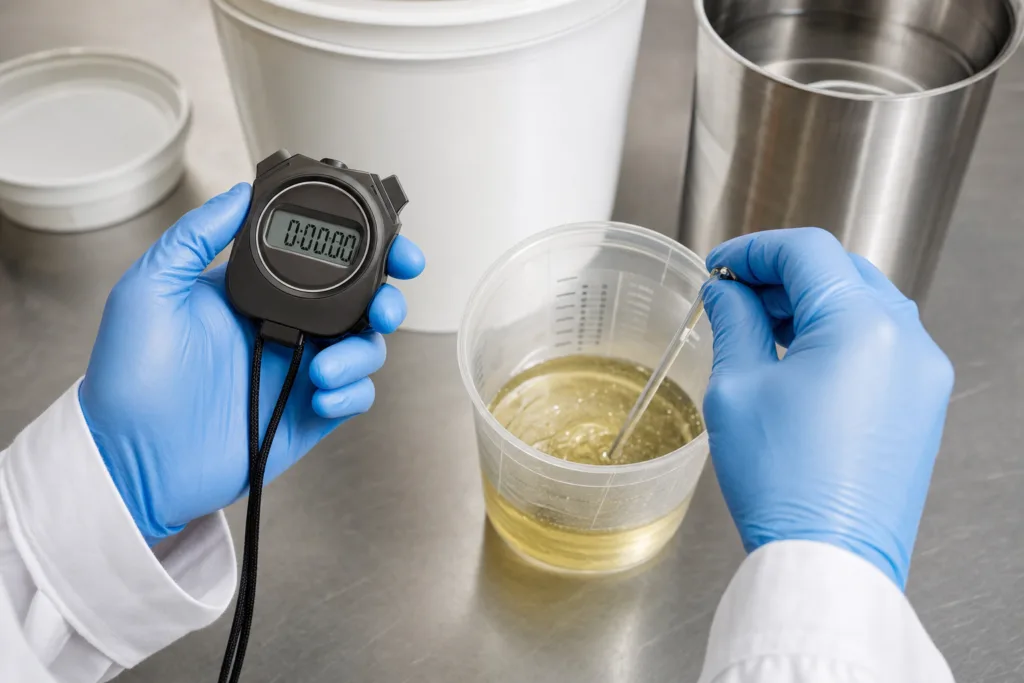
A technician records the critical pot life window for a freshly mixed 2-part polyurethane resin, emphasizing accurate timing and process control in modern manufacturing.

7 Must-Know Rules for Managing Pot Life in 2-Part Polyurethane Systems

Understanding Pot Life in 2-Part Polyurethane Systems For anyone working with 2-part polyurethane systems, managing pot life is not just a technical detail—it’s a crucial part of process reliability. Pot life defines the usable window after mixing when a polyurethane system remains workable. It determines how much time you have to mix, pour, brush, or […]

7 Must-Know Rules for Managing Pot Life in 2-Part Polyurethane Systems Read More »
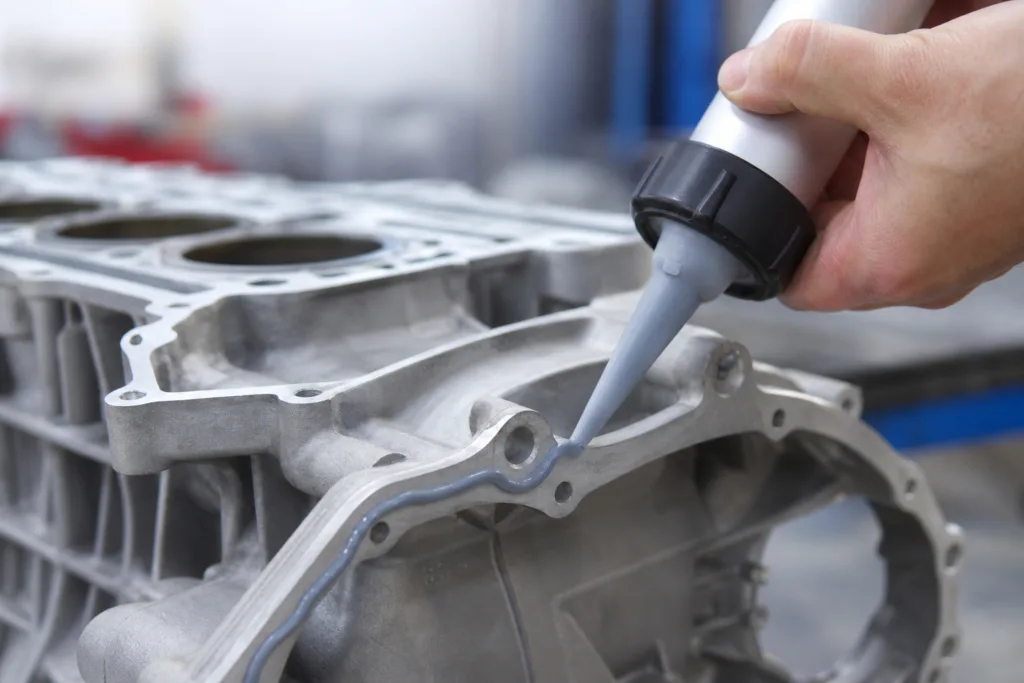
A detailed image of high-temp RTV silicone being precisely dispensed onto a metal engine flange, illustrating its role in industrial metal applications.

7 Surprising Ways High-Temp RTV Silicones Are Transforming Metal Applications

High-Temp RTV, Metal Applications—The 2026 Frontier From scorching engine bays to the precision demands of microelectronics, High-Temp RTV, Metal Applications are reshaping what industries expect from silicone adhesives and sealants. Now, in 2026, engineers require solutions that not only survive, but thrive, under stress—they need compounds that remain stable, flexible, and reliable at temperatures pushing

7 Surprising Ways High-Temp RTV Silicones Are Transforming Metal Applications Read More »

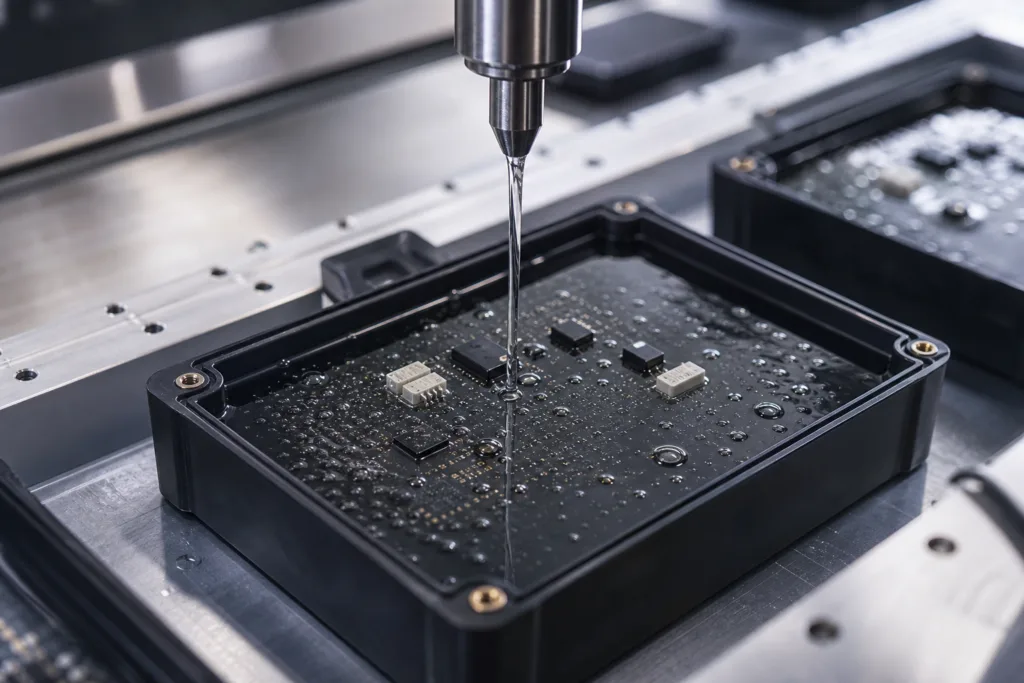
A technical close-up of a polyurethane potting procedure showing defoamer integration. Lighting and composition emphasize bubble control in an industrial setting.

Stop Bubbles in PU Potting: Your Ultimate Guide to Defoamer Selection

Introduction: Why Defoamers Matter in PU Potting Bubbles in polyurethane (PU) potting can lead to weak encapsulation, moisture ingress, and reliability failures in electronic assemblies. Choosing the right defoamer is not just about bubble-free surfaces—it’s about long-term performance and production yield. In this article, we’ll explore Preventing Bubbles in PU Potting: Defoamer Selection using practical

Stop Bubbles in PU Potting: Your Ultimate Guide to Defoamer Selection Read More »

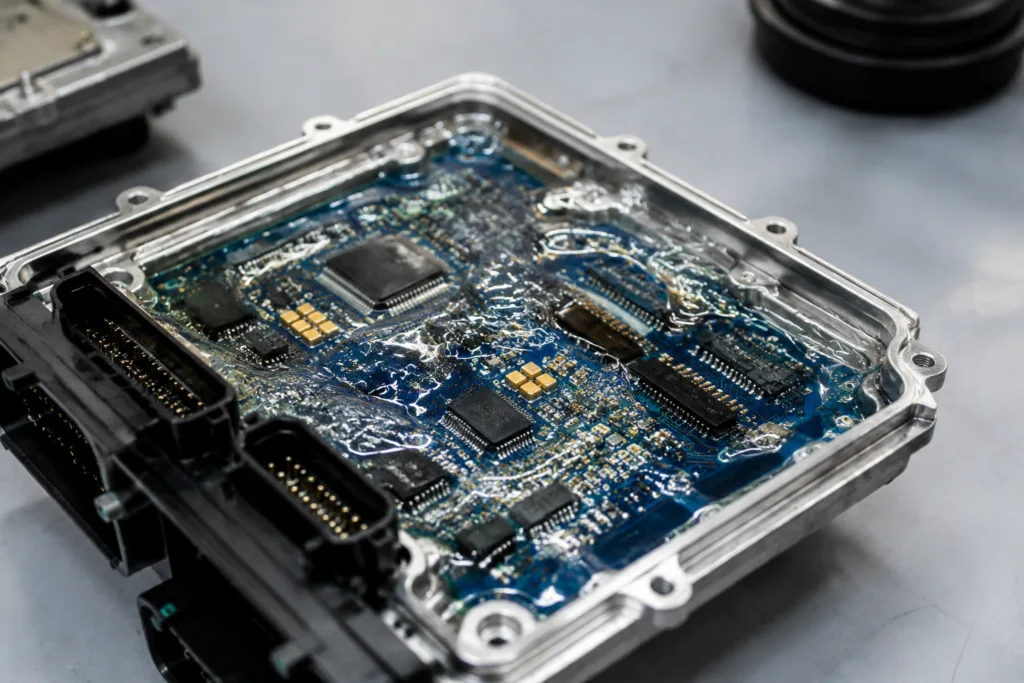
A high-resolution image showing silicone gel applied to a metal module for stress-sensitive protection. Laboratory lighting highlights the gel's transparency and flexible properties.

Innovative Silicone Gel Solutions: How to Protect Metal Components from Stress Damage

Understanding Silicone Gels in Stress-Sensitive Component Protection Silicone gels for stress-sensitive component protection offer remarkable solutions in modern manufacturing, especially when it comes to metal products and delicate electronics. These innovative gels safeguard assemblies from harm caused by mechanical stress, moisture, and temperature swings. By forming a flexible, cushioned barrier, silicone gels not only enhance

Innovative Silicone Gel Solutions: How to Protect Metal Components from Stress Damage Read More »

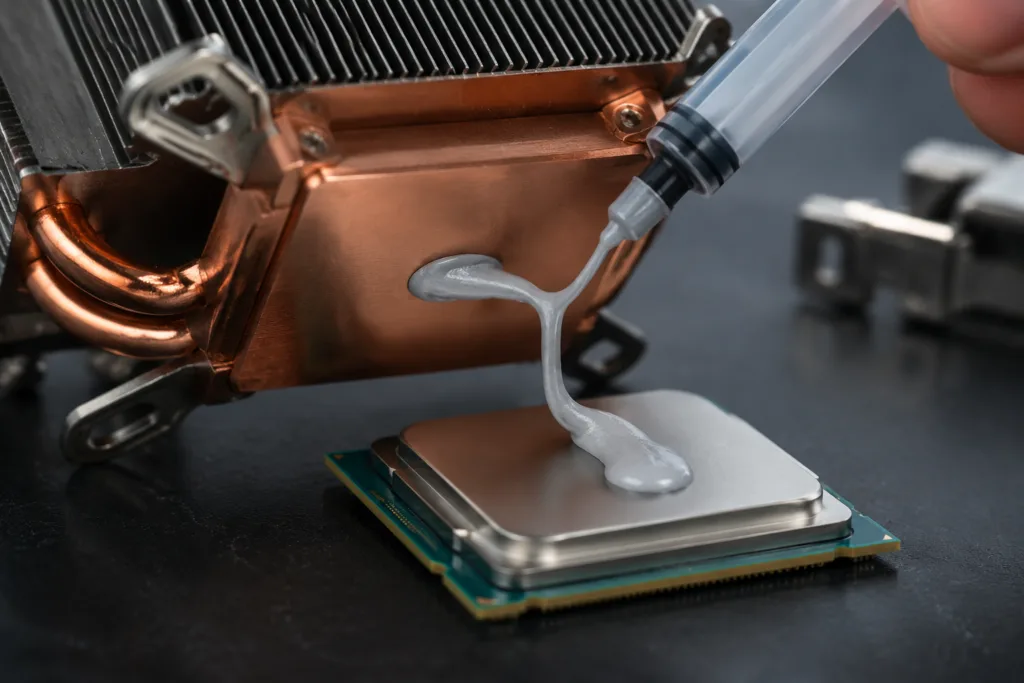
Thermal grease application between a processor and heatsink demonstrates effective heat dissipation in electronics manufacturing, emphasizing the hands-on nature and importance of interface quality.

Breakthrough Insights: Thermal Grease vs. Thermal Pads—2026 Performance Comparison for Heat Dissipation

Introduction: Why Thermal Interface Materials Matter Thermal interface materials are essential for effective heat dissipation in modern electronics. As devices run faster and hotter, engineers weigh options like thermal grease and thermal pads for optimal cooling. This detailed comparison of thermal grease vs. thermal pads: performance comparison explores their properties, real-world application ease, longevity, costs,

Breakthrough Insights: Thermal Grease vs. Thermal Pads—2026 Performance Comparison for Heat Dissipation Read More »

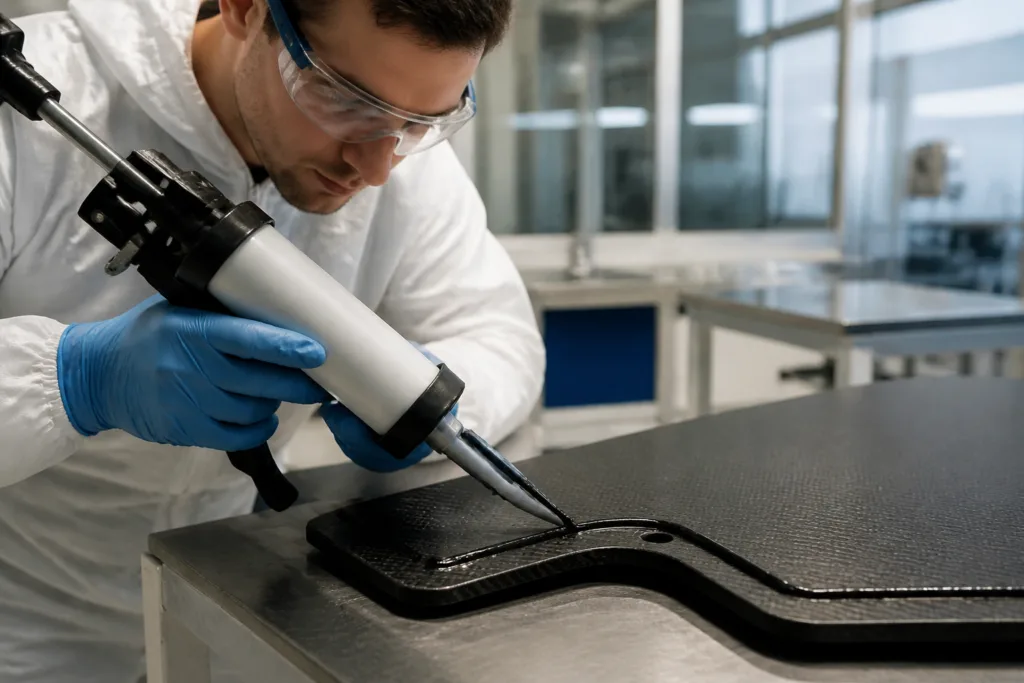
A technician precisely applies polyurethane adhesive to a carbon fiber panel, demonstrating the adhesive's practical use in composite assembly processes.

9 Expert Advantages: Why Structural PU Adhesives Dominate Carbon Fiber Bonding in 2026

Understanding Structural PU Adhesives for Carbon Fiber Bonding Bonding carbon fiber materials requires adhesives that can match their mechanical performance and flexibility. Polyurethane adhesives (PU or PUR) have emerged as a reliable solution for attaching carbon fiber in high-stress applications. These adhesives provide strong, durable joints while accommodating the unique properties of carbon fiber composites.

9 Expert Advantages: Why Structural PU Adhesives Dominate Carbon Fiber Bonding in 2026 Read More »

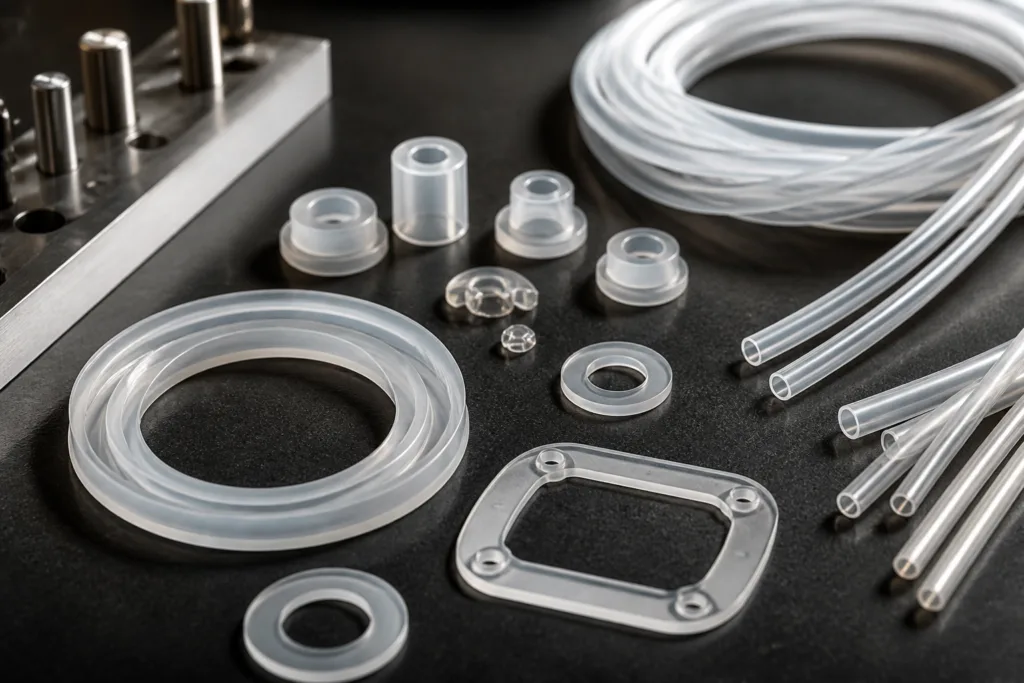
A crisp, professional photo showing silicone gaskets and tubing used in gas permeability evaluations, highlighting texture and clarity needed in performance-grade silicone material.

Unlocking Gas Permeability: How Silicone Materials Shine and Where They Fall Short

Understanding Gas Permeability in Silicone Material Gas permeability is a defining property of silicone materials that plays a crucial role in applications ranging from medical devices to electronics. By studying gas permeability in silicones, industries can select the right grade and formulation for performance-critical uses. This article explores the pros and cons of gas permeability

Unlocking Gas Permeability: How Silicone Materials Shine and Where They Fall Short Read More »

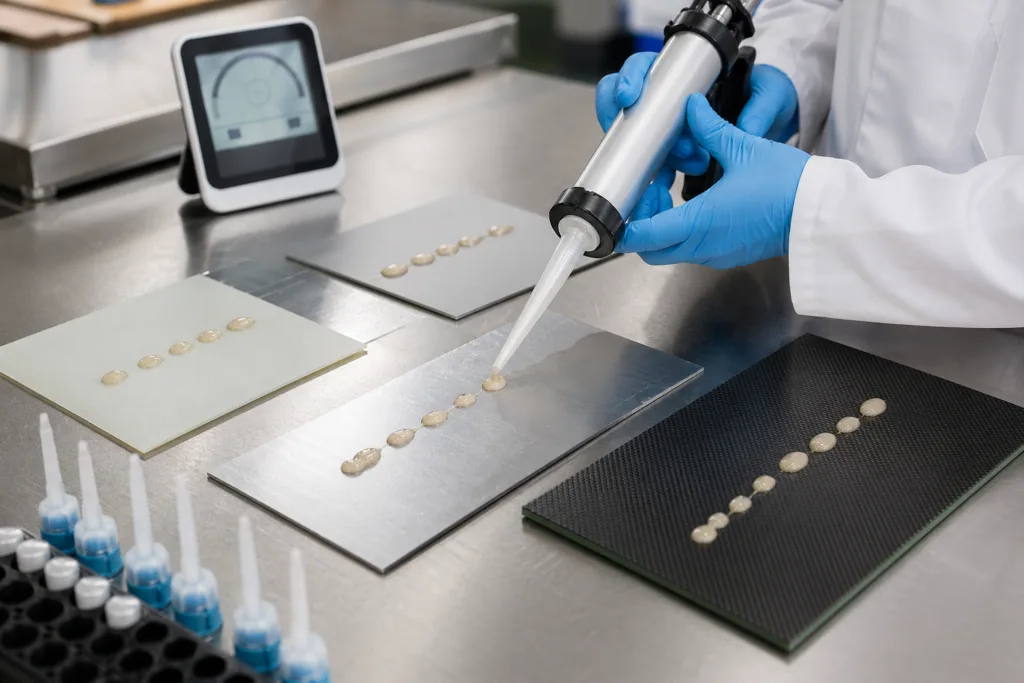
An engineering lab environment where polyurethane adhesive is applied to various panels, demonstrating the initial stage of the moisture curing mechanism and the importance of controlled humidity.

Polyurethane (PUR) Moisture Curing Mechanism: 7 Key Insights for Fail-Proof Assembly

Introduction: The Science of Polyurethane (PUR) Moisture Curing Mechanism Polyurethane (PUR) adhesives and sealants are critical to modern manufacturing, especially where efficiency, reliable bonding, and durability are required. Understanding the Polyurethane (PUR) moisture curing mechanism means grasping how these materials transform from liquid to solid in the presence of atmospheric moisture. This transformation is at

Polyurethane (PUR) Moisture Curing Mechanism: 7 Key Insights for Fail-Proof Assembly Read More »

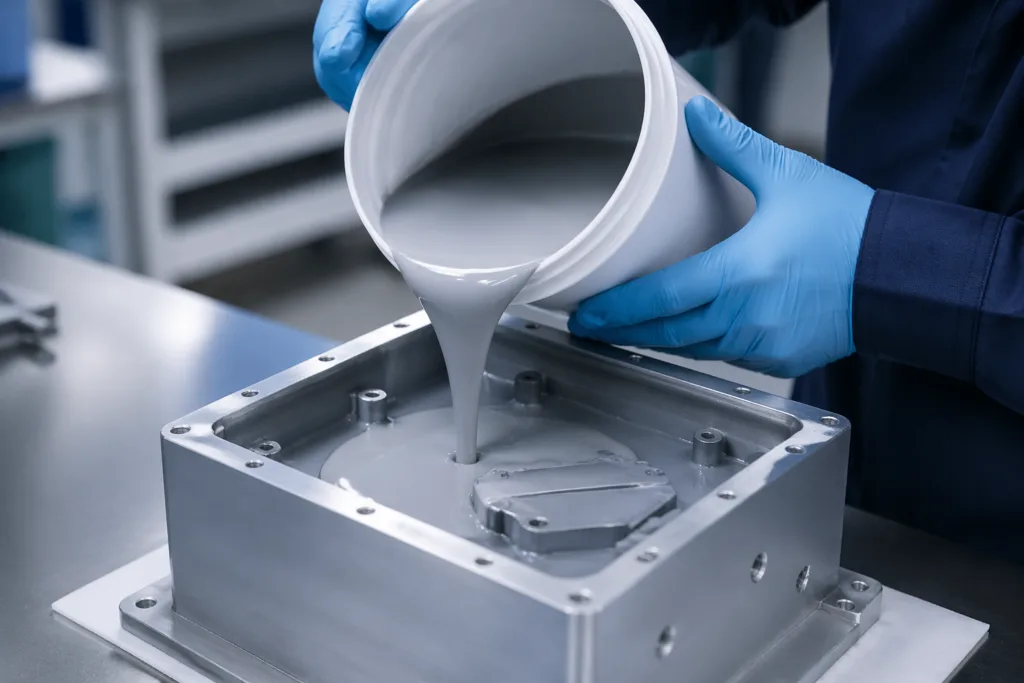
This image shows a technician performing deep section potting by pouring addition cure silicone into a metal product cavity, highlighting the industrial context and process precision.

How Addition Cure Silicones Outshine for Deep Section Potting in Metal Applications

Introduction to Addition Cure Silicones for Deep Section Potting Addition cure silicones have revolutionized how engineers implement deep section potting in metal products, especially in 2026’s demanding industrial environment. These silicone materials offer outstanding properties—high thermal conductivity, minimal shrinkage, and remarkable environmental resistance—making them a top choice for encapsulation applications. Potting processes increasingly require not

How Addition Cure Silicones Outshine for Deep Section Potting in Metal Applications Read More »

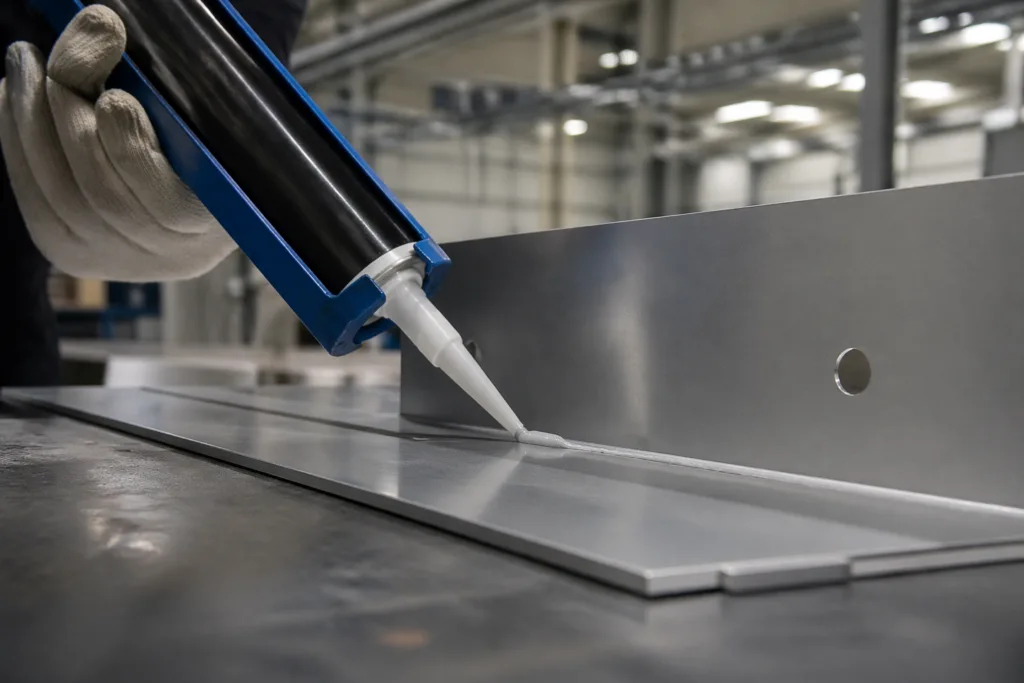
This image shows a side view of an application engineer using a caulking gun to place 1-part silicone on metal panels, illustrating the start of both alkoxy and oxime curing processes in a controlled industrial environment.

Alkoxy vs. Oxime Cure: 7 Critical 1-Part Silicone Differences for Reliable Metal Bonding

Introduction: Understanding the Real-World Impact of Alkoxy vs. Oxime Cure in 1-Part Silicone for Metal Bonding When you’re selecting a 1-part silicone for metal bonding, one of the first choices you’ll face is between alkoxy and oxime curing chemistries. These two systems may both fall under the “neutral cure silicone” category, but their differences can

Alkoxy vs. Oxime Cure: 7 Critical 1-Part Silicone Differences for Reliable Metal Bonding Read More »

Scroll to Top

💬 Let’s Build Something Strong Together

Have a project in mind or need a reliable adhesive solution?
Our experts are ready to help — just drop us a message!

✅ Tailor-made adhesive formulations
✅ Fast lead times & global shipping
✅ Trusted by manufacturers worldwide

📩 Leave your details and let’s make it happen.
We’ll get back to you within 24 hours.

Look out for emails from @zdschemical.com.

ZDS™ Adhesive manufacturer

Free Access to Test Samples or Quote

Response time as fast as 30 minutes.

📧 Prefer a fast reply? Email us directly at: Sale01@epoxyresinfactory.com
ZDS Adhesive Manufacturer

Not Sure Which Adhesive Fits?

Our engineers are ready to help. Drop us a message.

📧 Prefer a fast reply? Email us directly at: Sale01@epoxyresinfactory.com