Introduction: Why UV Stability Matters for Outdoor Charging Display Panels (OCR Bonding)
As charging infrastructure expands outdoors, the demand for highly durable display panels has skyrocketed. UV stability in outdoor charging display panels (OCR bonding) is now a make-or-break factor, ensuring touch screens and information displays remain clean, legible, and structurally sound—even after years in the sun. This article explores how UV exposure challenges, OCR (Optical Clear Resin) bonding chemistry, and real-world environment strain come together. We’ll break down the science, the standards, and the best ways to design for unmatched reliability outdoors.
Understanding UV Stability in Outdoor Charging Display Panels (OCR Bonding)
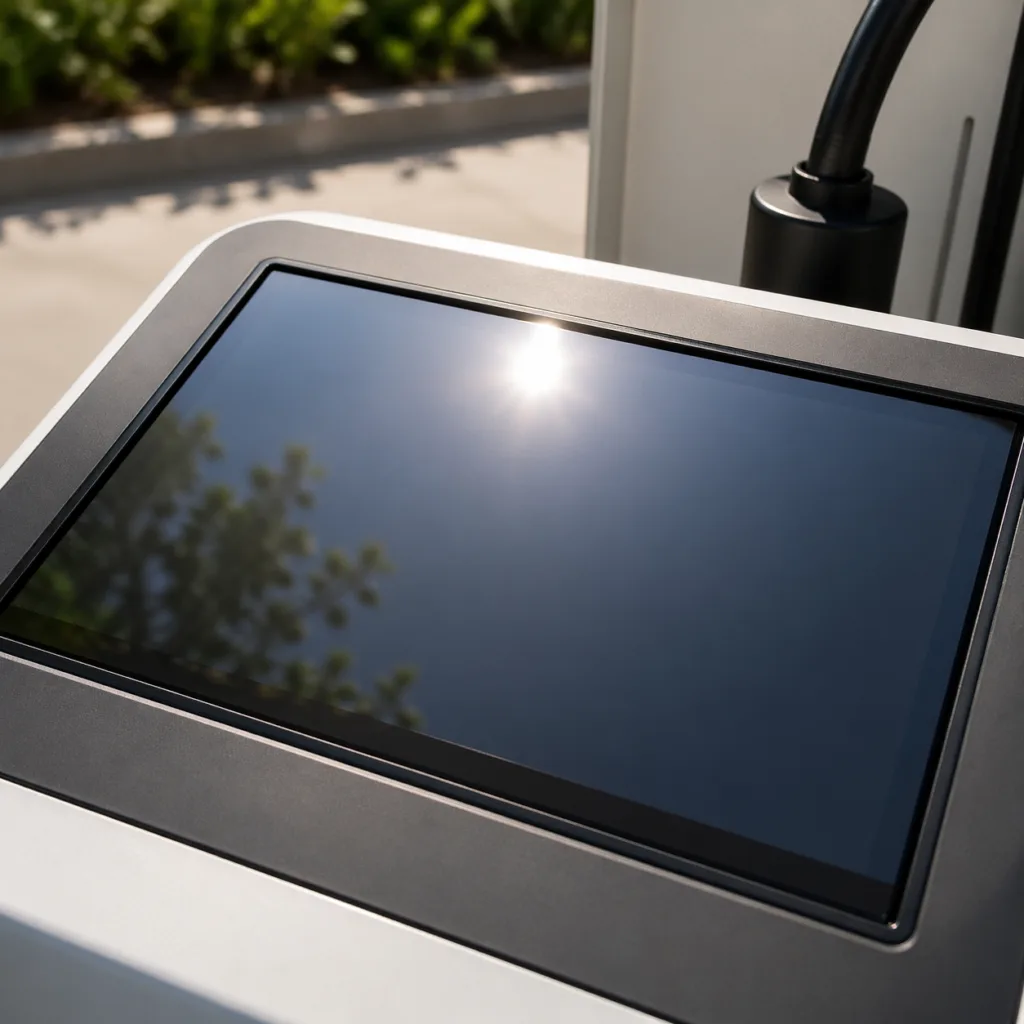
UV stability describes a material’s ability to resist degradation or discoloration when exposed to ultraviolet light—typically from direct sunlight. For outdoor charging stations, display panels are exposed to unpredictable weather and intense UV rays for thousands of hours each year. If the OCR bond or display filters fail, you could face fogging, yellowing, brittleness, or catastrophic delamination—all severely impacting user trust and station performance.
What is OCR Bonding and Why is it Used in Charging Displays?
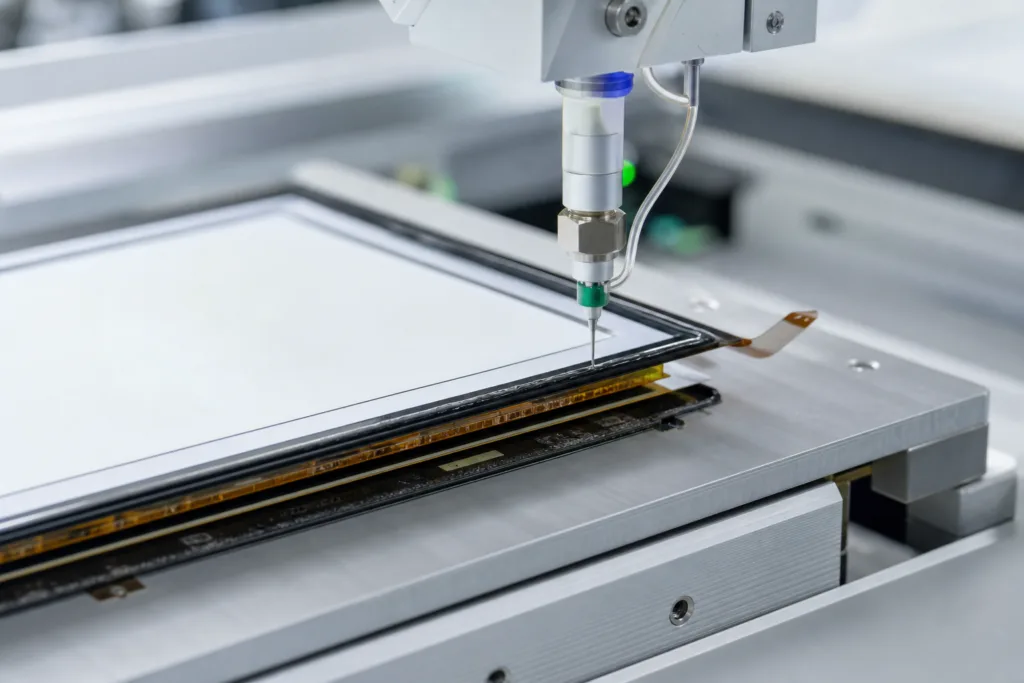
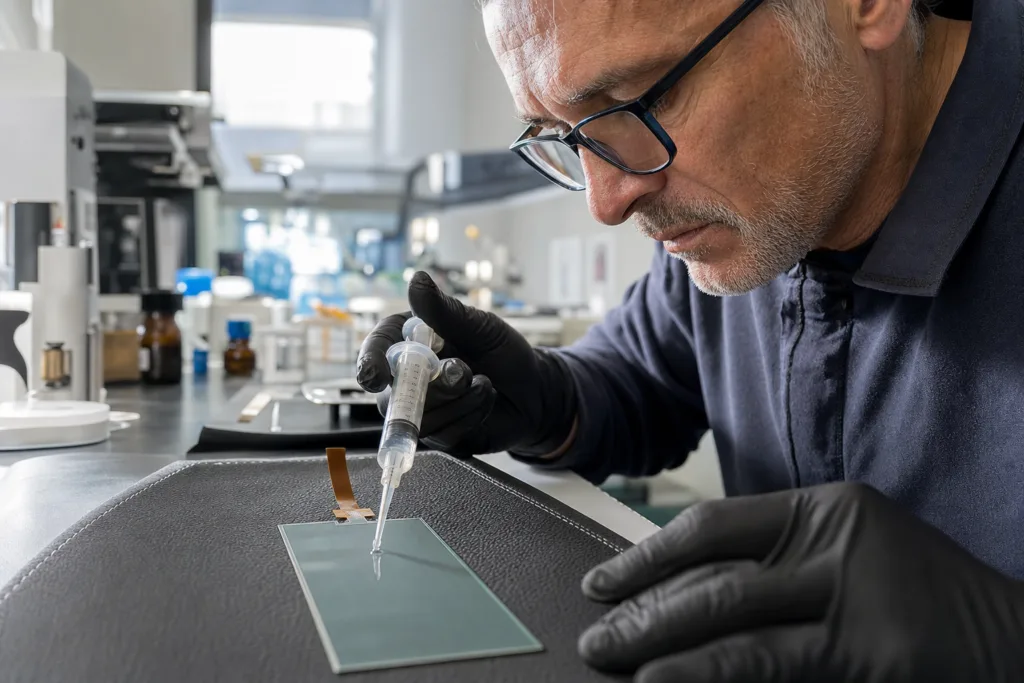
OCR bonding uses a crystal-clear adhesive to laminate cover glass, touch panels, and display modules with zero haze. This method locks out moisture and particles, increases impact strength, and maintains optical brilliance. It’s the bonding technique of choice for outdoor displays where maximum visual clarity, reliability, and user experience are non-negotiable.
UV Exposure: The Biggest Outdoor Threat to Charging Displays
Outdoor charging panels face relentless sun exposure. Ultraviolet light causes chemical breakdown in both adhesives and substrates. Symptoms can include:
- Yellowing or loss of transparency in OCR adhesives
- Cracking and embrittlement of the bond line
- Loss of adhesion leading to delamination
- Degraded touch sensitivity
Even premium plastics and cover glass can degrade without UV-resistant treatments. For more background on adhesive selection fundamentals, see Adhesive vs Sealant: 7 Smart Selection Rules for Rock-Solid, Leak-Proof Joints.
Material Selection: What Makes an OCR Adhesive UV-Stable?
Not all OCR adhesives offer the same stability. The difference lies in chemistry and formulation:
- Use of UV-absorbing additives or light stabilizers
- Choice of polymers (acrylic vs silicone vs polyurethane)
- Cross-linking methods (e.g., dual-cure for outdoor exposure)
From an engineering perspective, a UV-resistant OCR must pass aging, yellowing, and adhesion tests after thousands of hours under lab-controlled UV lamps.
Key Symptoms of UV Degradation in Charging Station Displays
How will you know your material choices failed the UV stability test?
- Visible yellowing or cloudiness at bond line
- Bubbles or delamination between protective glass and display
- Hardening or cracking in the adhesive seam
- Loss of touch accuracy or panel functionality
Early symptom detection can save costly service calls and preserve end-user trust in outdoor charging infrastructure.
UV Stability Testing: Common Methods and Benchmarks
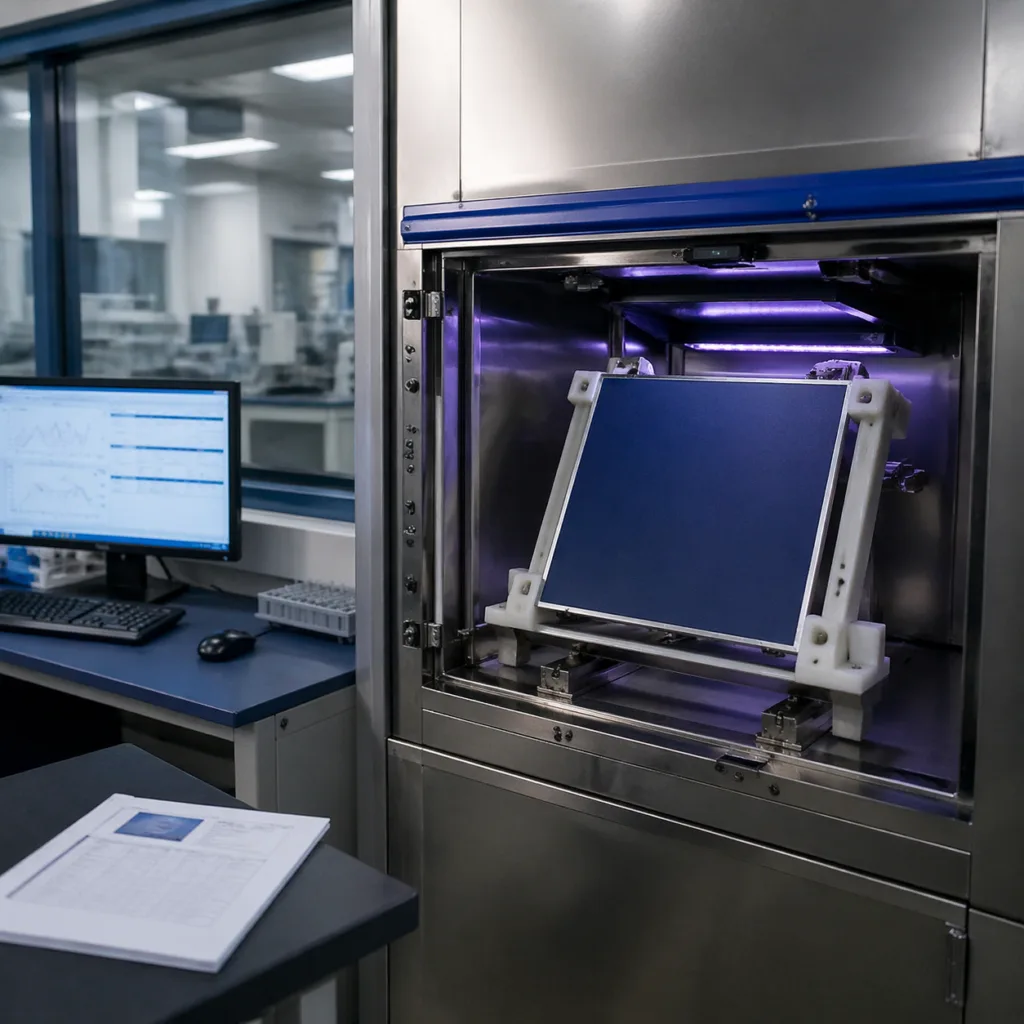
To ensure UV stability, manufacturers use several accelerated weathering and lab tests. Key test methods include:
- QUV Chamber Exposure (ASTM G154): Simulates sunlight and rain cycles
- Xenon Arc Weathering Test (ASTM G155): Mimics broad-spectrum outdoor light
- UV-Transmission Loss Measurement
- Adhesion Retention After Solar Aging
Results are compared to industry specifications and real-world performance metrics. Interested in other demanding tests? See 7 Essential Insights: Fatigue Resistance Testing of Acrylic Structural Bonds for Lasting Industrial Performance.
Industry Standards for UV-Stable Outdoor Charging Panels
Regulatory and industry frameworks provide guidance for UV-stable display design. The most referenced include:
- IEC 62262 (IK Rating): Protection from external mechanical impact
- IEC 60068-2-5: UV light exposure resistance for outdoor electronics
- UL 746C: Polymeric materials for use in electrical equipment
These standards help engineers evaluate and certify the outdoor readiness of their assemblies.
OCR Bonding Choices: Acrylic, Silicone, or Polyurethane?
OCR adhesives split into three main categories, each with distinct UV behavior:
| Adhesive Type | Typical UV Stability | Best For |
|---|---|---|
| Acrylic | Moderate to high (with additives) | Rigid screen bonds, cost-sensitive builds |
| Silicone | Excellent, natural UV resistance | Flexible bonds, high-temp cycles |
| Polyurethane | Generally lower without stabilizers | Low-impact, budget cases |
As a rule, silicone OCRs offer top UV stability but may require adjustment for cure speed and modulus.
Design Factors that Impact UV Stability
Durability is a function of the complete display stack, not adhesive alone. Watch for:
- Cover glass thickness and UV-blocking coatings
- Backlight / TFT choices with proper spectrum filtering
- Black mask printing or bezel coverage (minimizes UV path)
- Elimination of air gaps
The Role of Optical Clear Adhesives (OCR) in Blocking UV Light
Some OCR formulas act as a partial UV shield, absorbing and blocking wavelengths that attack downstream layers. This is essential where sensitive films, polarizers, or electronics sit directly below the display surface.
Ensuring Long-Term Clarity: Preventing Haze, Yellowing, and Delamination
Maintaining optical clarity requires regular process audits and quality control checkpoints:
- Monitor transparency over simulated weather cycles
- Check adhesion strength periodically
- Confirm no migration of plasticizers or contaminants
Assembly-line validation should include both initial and post-aging visual inspections.
ZDS Adhesive Perspective: Real-World Stability Insights
Application engineers at ZDS Adhesive, an industrial adhesive manufacturer, note that field failures are rarely caused by a single weak link. Instead, it’s often the combined effect of aggressive sunlight, poorly matched thermal expansion among stack layers, and lack of edge sealing. Their field experience shows UV-resistant, dual-cure acrylate OCRs perform best when matched to glass and treated plastics, combined with weatherproofing at all exposed seams.
Best Practices: How to Maximize UV Stability for Outdoor Charging Display Panels (OCR Bonding)
- Choose proven UV-resistant OCR formulations (check third-party reports)
- Test complete assemblies, not just individual materials
- Seal panel edges with compatible weatherproof adhesives or gaskets
- Specify backlight/display parts with UV-blocking enhancements
- Avoid cost-driven shortcuts; prioritize lifecycle reliability over initial BOM savings
Want to boost performance for every weather scenario? See Why Engineers Trust Weather-Resistant Adhesives for Charging Gun/Plug Assembly: 7 Reliability Secrets.
Common Pitfalls: What Causes UV Failure in Outdoor Charging Displays?
Even highly engineered assemblies can fail outdoors if you neglect basic rules:
- Using indoor-only adhesives without proven UV cycling data
- Skipping real-world aging tests (just relying on datasheet claims)
- Improper surface preparation (especially with low-energy plastics)
- Not protecting the display edge—exposed to water ingress and sun
Future of UV-Stable OCR Bonding: What’s Next?
UV-stable materials are evolving fast. Tomorrow’s outdoor charging displays may feature:
- Smart UV-sensing coatings that adjust transparency
- Self-healing adhesives for microcrack repair
- Hybrid optically-clear sealants for flexible+rigid module integration
UV Stability in Outdoor Charging Display Panels (OCR Bonding)
In summary, UV stability in outdoor charging display panels (OCR bonding) is the foundation for clarity, strength, and outdoor reliability. By combining rigorous material selection, real-world testing, proven assembly strategies, and strict adherence to industry standards, engineers can design displays that thrive under the harshest sunlight—sustaining consumer confidence and extending the asset’s lifecycle for years.
Conclusion: Key Takeaways for UV Stable Outdoor Charging Displays
- Never overlook UV stability when specifying outdoor OCR bonding
- Test complete assemblies, under real sunlight and lab cycling
- Follow industry standards (IEC, UL), not just adhesive datasheets
- Balance cost, performance, and long-term reliability in every material choice
- Remember: Prevention is far less expensive than field repairs
Frequently Asked Questions
What is the most UV-resistant OCR adhesive type for outdoor displays?
Silicone-based OCRs generally provide the best inherent UV resistance, but high-grade acrylics with UV stabilizers can also perform reliably when properly formulated for outdoor environments.
How do I test if my display adhesive will resist outdoor UV exposure?
Use accelerated UV-aging tests like QUV or Xenon Arc exposure, then measure optical clarity and adhesion strength retention after the test cycles to confirm durability.
Can yellowing in an outdoor charging display be reversed?
No, yellowing caused by UV breakdown in adhesives or cover materials is irreversible. Prevention through UV-stable material selection and blocking coatings is critical.
Why does delamination sometimes occur even with UV-resistant OCR adhesives?
Delamination can result from poor edge sealing, incompatible substrate expansion rates, or assembly flaws—even if the adhesive itself has strong UV stability. A holistic assembly design is key.
Is regular maintenance needed for UV-stable outdoor display panels?
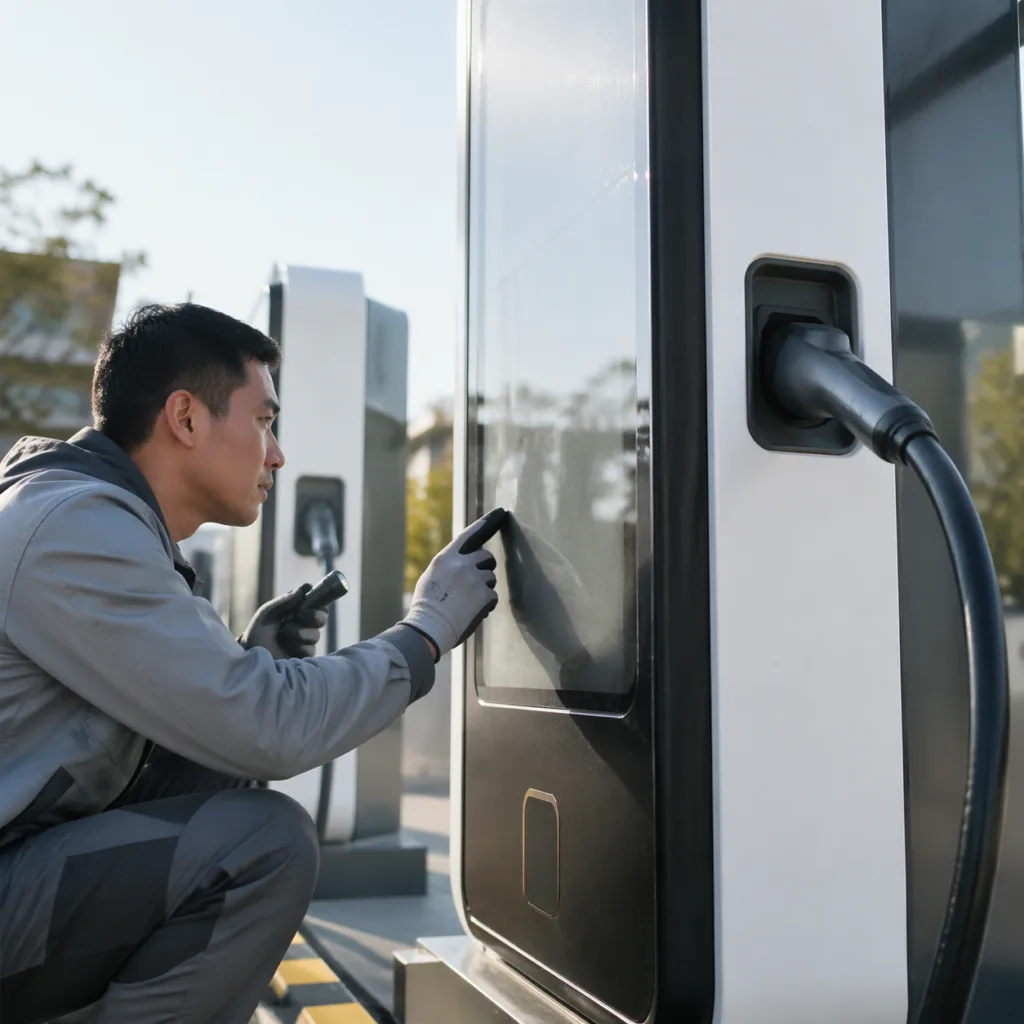
Regular visual inspection for haze, cracks, and edge sealing is recommended, especially after extreme weather events. Routine checks help catch early degradation signs before major failures occur.
How important is following industry standards for UV testing on charging displays?
Industry standards ensure your assembly survives real-world sunlight, weather, and mechanical stress, preventing expensive warranty claims and improving public trust in charging infrastructure reliability.
Related Reading
- IP68 Waterproofing: Essential Steps for Lasting Outdoor Charging Success
- Take Control of Moisture: 9 Ways to Shield your Charging Station PCBs
- Your Roadmap to Custom Industrial Adhesive Solutions in 2026
- Winning Against Water: High-Pressure Sealing for Subsea Cable Reliability
- 9 Essential Lessons in Die Attach Adhesive for Cutting-Edge Electronics