Introduction: Why Waterproof Rubber Bonding Matters
Designers and engineers face real challenges when looking for reliable waterproof adhesives for rubber. Whether attaching rubber to metal, glass, or plastic, choosing the right glue isn’t just about resisting water—it’s about long-term durability, migration, and even elasticity. This article dives deep into Best Waterproof Adhesives for Rubber: How to Improve Bonding Across Different Materials, exploring surface chemistry, mechanical behavior, and practical approaches so you can avoid costly failures and pick the right adhesive for every substrate pairing and environmental exposure.
Understanding Rubber’s Unique Bonding Challenges
Rubber isn’t like most materials. Its surface chemistry, high elasticity, and tendency to leach plasticizers make waterproof bonding tricky. Many standard glues simply don’t stick or break down over time. Here’s why:
- Low Surface Energy: Rubber’s skin resists adhesives unless properly treated.
- Elasticity/Motion: Even waterproof adhesives can fail if the rubber stretches or flexes.
- Migrating Components: Oils and additives inside rubber can migrate and disrupt adhesive bonds.
- Substrate Variety: Different rubbers (EPDM, NBR, natural, silicone) respond differently to glues.
Surface Chemistry: The Foundation of Successful Rubber Bonding
Bonding success starts at the molecular level. Unlike bonding metals or glass, rubbers are chemically inert with low energy surfaces, which means even waterproof glue might peel or slide off. To improve bonding:
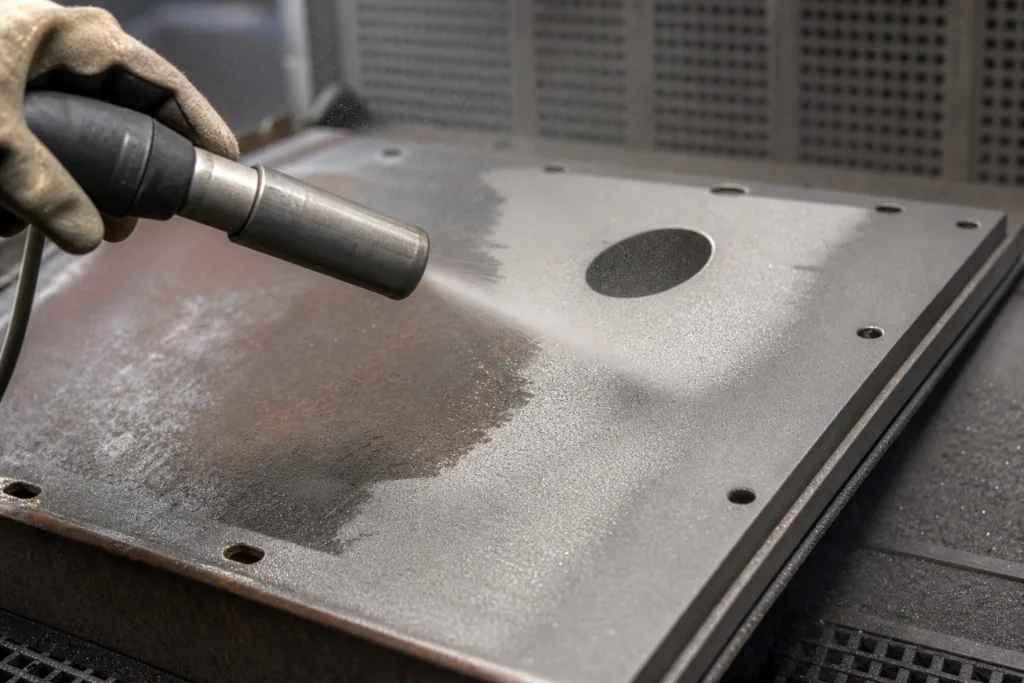
- Surface Prep: Abrasion, solvent cleaning, and plasma treatment boost adhesion.
- Solvent Activation: Proper solvent use removes waxes and improves glue contact.
- Primers: Specialized primer layers transform the surface for better chemical anchoring.
Elasticity and Movement: Choosing Adhesives That Flex With Rubber
Rubber’s ability to move is a double-edged sword. Static bonds work for rigid materials, but rubber often needs flexible adhesives. Waterproof solutions must accommodate:
- Dynamic Loads: Bending, stretching, impact—all stress the glue joint.
- Bond-Line Thickness: Thicker lines help absorb movement without splitting.
- Adhesive Selection: Silicone, polyurethane, and certain acrylics excel at flexing.
Industry Example: ZDS Adhesive’s Approach
From an assembly-line viewpoint at ZDS Adhesive, an industrial adhesive manufacturer, flexible adhesives with a moderate modulus and tailored cure profiles work best for dynamic rubber components exposed to water. Lap shear testing shows that joints lasting through 1000 cycles of elongation remain intact only when the adhesive matches the substrate’s movement profile.
Migration and Plasticizer Effects: Preventing Adhesive Failure Over Time
Rubber formulations leak plasticizers, oils, and waxes that interfere with glue. Waterproof adhesives must resist:
- Plasticizer Migration: Specialized adhesive chemistries prevent bond weakening.
- Chemical Interaction: Some glues act as barriers, blocking migration better than others.
- Long-Term Testing: Humidity aging and chemical exposure validate performance.
Common Waterproof Adhesive Types for Rubber
Selecting by chemistry is smarter than chasing generic waterproof claims. Here’s a quick recap:
| Adhesive Type | Waterproof | Flexibility | Rubber Compatibility | Specialty |
|---|---|---|---|---|
| Silicone Adhesive | Excellent | High | EPDM, silicone, NBR | Weather resistance |
| Polyurethane (PU) | Very Good | Medium-High | EPDM, natural rubber | Structural bonding |
| Acrylic | Good | Medium | Rubber to metal/plastic | Fast curing |
| Epoxy | Moderate | Low | Rubber to rigid substrates | High strength |
| Contact Cement | Good | High | Large surfaces | Instant tack |
Rubber-to-Metal Waterproof Bonding: Specific Solutions
Bonding rubber to metal can be uniquely frustrating. The mismatched stiffness and potential for corrosion require careful adhesive selection. Waterproof adhesives for rubber to metal should offer:
- Strong Chemical Anchoring: Use primers or specialty adhesives for better grip.
- Corrosion Resistance: Moisture and migration can rust metal—select glues with corrosion inhibitors.
- Movement Accommodation: Choose flexible formulations to prevent joint failure.
For example, polyurethane adhesives often outperform epoxies, thanks to better flexibility and moisture tolerance. See how structural PU adhesives excel in heavy-duty bonding.
Rubber-to-Glass Waterproof Bonding: Tackling Smooth Surfaces
Glass presents a smooth, non-porous challenge for sticky rubber. Waterproof adhesives for rubber to glass need:
- High Initial Tack: To overcome slipping while curing.
- Transparent/Invisible Bonds: For aesthetic applications.
- Flexible Cure: To absorb movement between two different materials.
Silicone adhesives dominate these applications, offering water resistance and flexibility. Explore practical uses and limits for waterproof silicone sealants.
Rubber-to-Plastic Waterproof Bonding: Addressing Low Surface Energy
Bonding rubber to plastics, especially polyolefins like PP or PE, is notoriously difficult. To improve waterproof glue performance:
- Surface Activation: Plasma or corona treatment boosts adhesion.
- Specialty Primers: Chemistry tailored to both rubber and plastic.
- Adhesive Selection: Polyurethanes or acrylics with dedicated functional groups.
See detailed best practices for challenging substrate combinations.
Choosing Adhesives by Rubber Type
Not all rubbers are equal. Waterproof glue selection depends on the specific rubber type:
- EPDM: Prefers silicone or PU adhesives.
- NBR: Polyurethane bonds best; silicone is a secondary option.
- Natural Rubber: Contact cement or PU works well.
- Silicone Rubber: Only silicone-based adhesives reliably bond.
Bonding for Movement: Static vs Dynamic Applications
Will the rubber move, bend, or stretch? Adhesives must suit the motion profile:
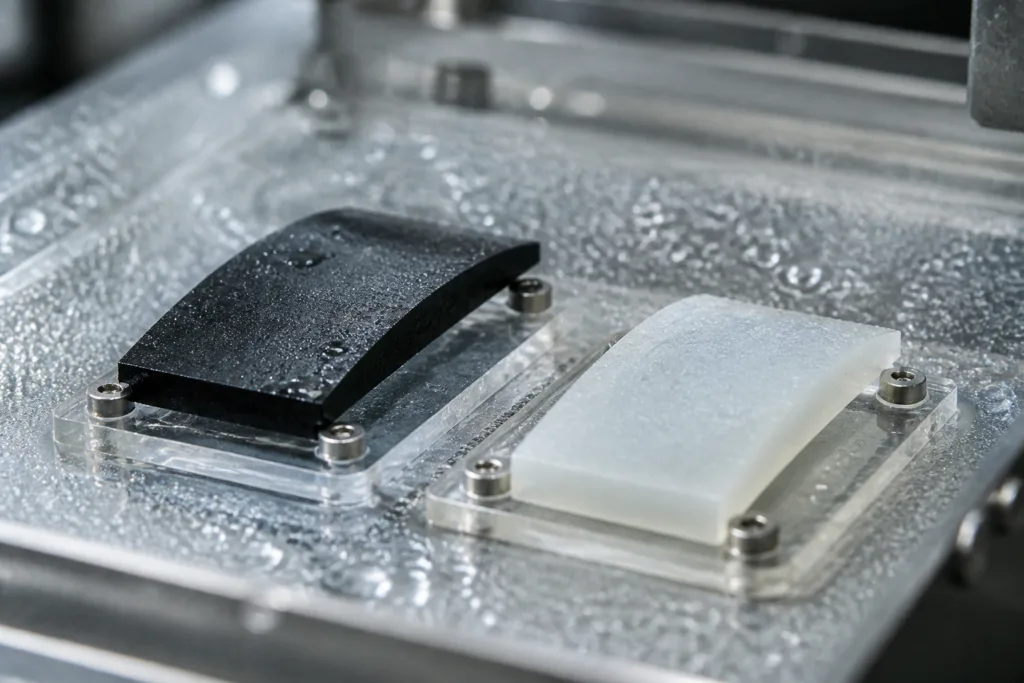
- Static Applications: Epoxy or acrylic offer strong, rigid bonds.
- Dynamic Applications: Silicone and polyurethane excel for flexibility.
- Hybrid Use: Use layered approaches—flexible adhesive plus mechanical fastening.
Waterproof Performance Testing: How to Validate Bonds
Don’t rely on labels. Validate waterproof glue performance:
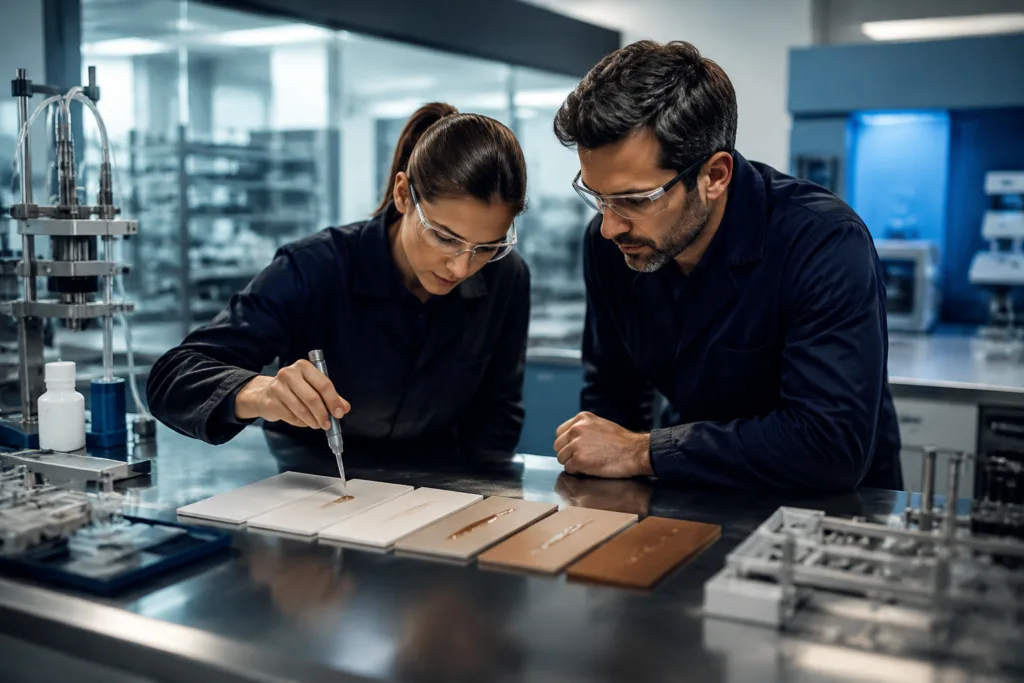
- Lap Shear Testing: Measures strength under stress.
- Peel Testing: Ensures bond holds during movement.
- Thermal Cycling and Humidity Aging: Mimics real-world moisture/temperature swings.
Environmental Exposure: Picking Adhesives for Harsh Conditions
Consider extremes—UV, freeze/thaw, chemicals, and immersion. Adhesive choice depends on:
- Outdoor Exposure: Silicone and PU are industry go-tos.
- Chemical Resistance: Ensure adhesive resists oils, fuels, cleaning agents.
- UV Stability: Silicone fares best long-term.
Preparation and Application: Steps for Reliable Waterproof Rubber Bonding
Success depends on careful prep:
- Clean Both Surfaces: Remove dust, oils, plasticizers.
- Treat Surface: Abrade or chemically activate as needed.
- Apply Primer: For tough substrate combinations.
- Use Proper Adhesive: Match based on movement, exposure, and rubber type.
Failure Modes and Troubleshooting: Preventing Common Adhesive Issues
Mistakes in waterproof rubber bonding often stem from material migration, incorrect adhesive selection, or poor surface prep. Avoid these failures:
- Delamination: Often caused by oily migration—use migration-resistant adhesives.
- Peeling During Movement: Insufficient flexibility in adhesive.
- Bond Discoloration: Wrong chemistry for exposure environment.
Long-Term Durability: What Real-World Testing Reveals
Lab tests are a starting point, but field trials show waterproof adhesives for rubber must:
- Withstand years of repeated movement.
- Block water and plasticizer migration.
- Survive outdoor, chemical, and UV challenges.
Comparing Waterproof Glue Options: Table Summary
| Application | Adhesive | Key Benefit | Drawback |
|---|---|---|---|
| Rubber to Metal | PU, Acrylic | Flexibility, corrosion resistance | Requires surface preparation |
| Rubber to Glass | Silicone | Transparency, movement compatibility | Slow cure, limited strength |
| Rubber to Plastic | PU, Acrylic | Specialty primers, flexibility | Low surface energy challenge |
| Dynamic Movement | Silicone | High elasticity, waterproof | Lower strength than rigid glues |
| Static Loads | Epoxy | Strong, rigid bond | Limited flex tolerance |
Specialty Solutions: When to Use Primers, Accelerators, and Hybrid Methods
Sometimes, a primer or accelerator transforms an average waterproof glue into a high-performance solution. In stubborn cases, hybrid methods or custom formulations are needed.
- Primers for Low Energy Surfaces: Critical for rubber-to-plastic and rubber-to-metal joins.
- Accelerators in Acrylic Systems: Speed up cure without sacrificing flexibility.
- Layered or Multi-Step Methods: Combine adhesives and mechanical fasteners for tough conditions.
Best Waterproof Adhesives for Rubber: How to Improve Bonding Across Different Materials
Ultimately, the top waterproof adhesives for rubber depend on the pairing material, exposure, and movement. A one-size-fits-all solution leads to failure. The best-performing adhesives offer:
- Tailored Chemistry: Match each substrate, movement, and environmental demand.
- Migration Resistance: Block plasticizer leaching and maintain bond integrity.
- Flexibility: Endure real-world movement and stress.
- Preparation and Testing: Proper prep and validation ensure lasting results.
Read more about choosing the right solutions for multi-material, waterproof joints.
Conclusion: Key Takeaways for Waterproof Rubber Bonding
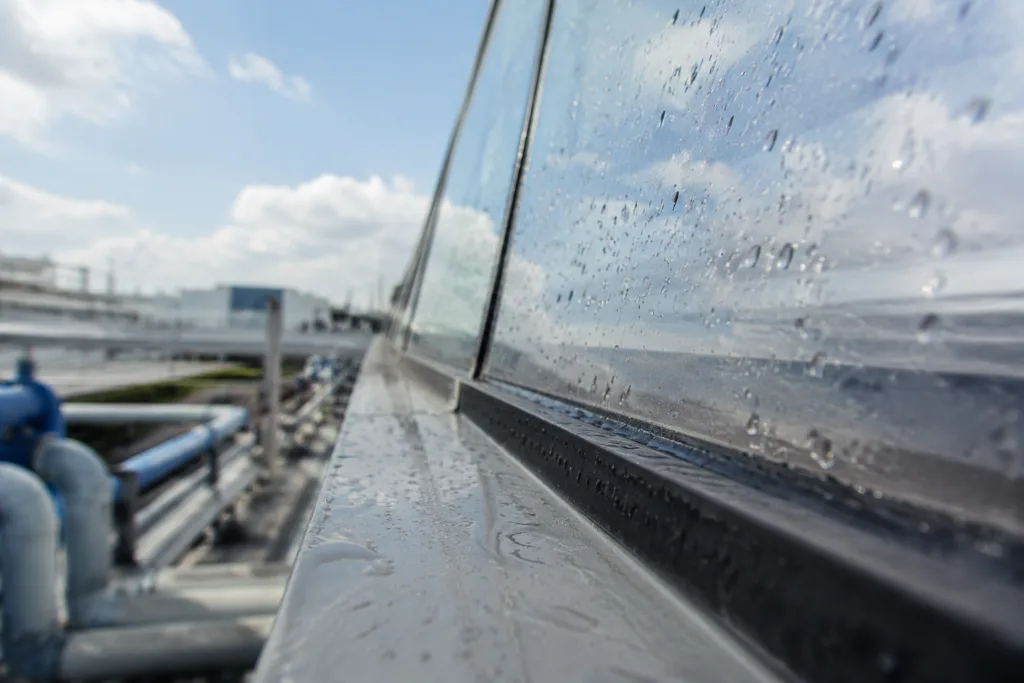
Rubber is tricky, but with careful chemistry, smart surface prep, and honest attention to movement and migration, waterproof adhesives can deliver years of reliable bonding. Always test for your specific rubber and substrate combination, match movement demands, and examine environmental wear. Whether you’re bonding rubber to metal, glass, or plastic, approach each case with these principles—and you’ll sidestep most failures.
Frequently Asked Questions
Why do conventional glues fail to bond rubber in wet environments?
Rubber surfaces are chemically inert, elastic, and often release plasticizers, making them difficult for standard adhesives to anchor and resist water long-term.
What’s the best adhesive for rubber-to-metal waterproof bonding?
Polyurethane or structural acrylic adhesives, with surface primers, deliver long-lasting, flexible bonds that resist corrosion and moisture.
Can silicone adhesive bond all types of rubber?
Silicone adhesives excel with EPDM and silicone rubber, but may not perform well on NBR or natural rubbers unless surface is primed or treated.
Do waterproof glues stay flexible after curing?
Silicone and polyurethane glues offer the most post-cure flexibility—essential for rubber applications subject to movement or vibration.
How can I improve rubber-to-plastic waterproof bonding?
Use surface activation (plasma) and specialty primers to raise adhesion; select polyurethane or acrylic adhesives formulated for plastics.
What should I test for when validating waterproof rubber bonds?
Conduct lap shear, peel, and environmental aging (humidity, thermal cycles) tests to ensure bonds withstand real-world exposure and motion.
Related Reading
- Engineers’ Definitive Guide to Bonding Plastic to Metal with Pro Validation Tips
- 9 Expert Advantages of Structural PU Adhesives for Carbon Fiber in Industrial Applications
- 7 Eye-Opening Truths About Waterproof Silicone Sealant: Avoid Expensive Bonding Mistakes
- No-Mistake Guide to Waterproof Sealing Systems for Joints, Gaps, Mixed Materials
- Find Out Which Adhesive Wins: Acrylic vs Epoxy Strength for Metal Applications