Understanding Moisture Sensitivity, Adhesive Selection: The Foundation of Reliable Semiconductor Packaging
Moisture Sensitivity Level (MSL) is a critical factor in semiconductor packaging—one that directly guides adhesive selection and determines long-term device reliability. This article explores how closely moisture sensitivity, adhesive chemistry, and process controls are connected. Failing to align adhesives to a component’s MSL can spell disaster during reflow or field use, from delamination to catastrophic failure. Knowing the interplay of MSL with adhesive properties means stronger bonds, predictable assembly, and fewer field returns.
What Is Moisture Sensitivity Level (MSL) and Why Does It Matter?
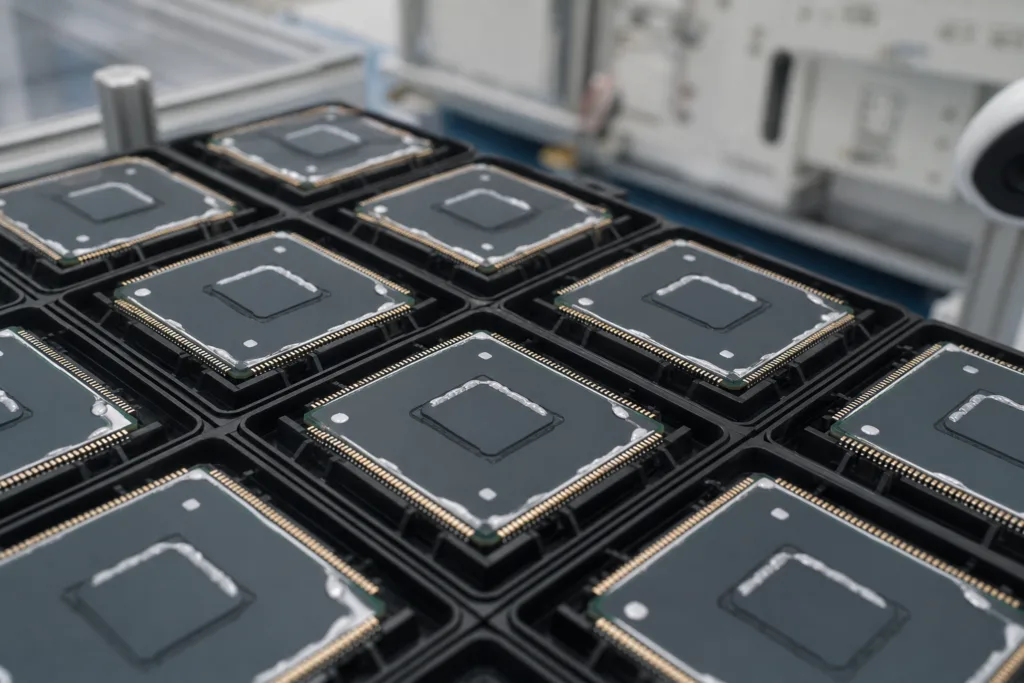
MSL is a standardized rating that describes how sensitive a packaged semiconductor device is to ambient moisture. Introduced by JEDEC, MSL is numbered 1 to 6, with 1 being the least sensitive and 6 the most. The MSL rating dictates the storage and handling requirements of components before soldering or reflow processes.
- MSL-1: Unlimited floor life (lowest sensitivity)
- MSL-2 to MSL-6: Require dry packing and controlled exposure time on the shop floor
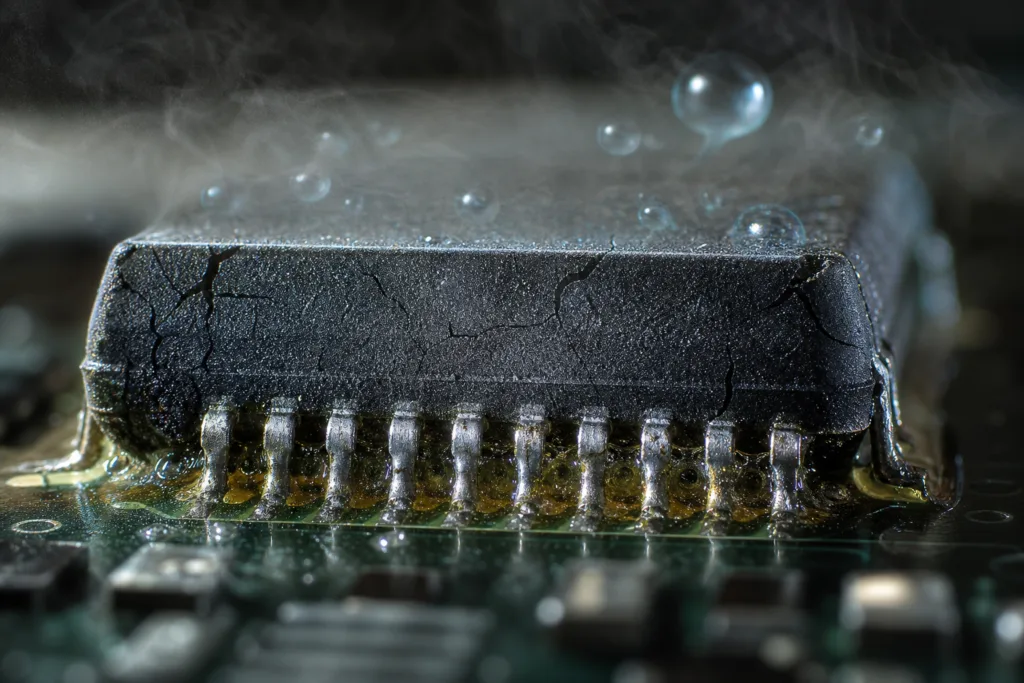
During reflow, trapped moisture can vaporize and expand, risking package cracking (popcorning) or internal delamination if the adhesive or encapsulant isn’t suitable. This makes moisture sensitivity, adhesive selection a must-have consideration in engineering workflows.
The Science Behind Moisture Sensitivity: Physics and Failure Modes
Moisture ingresses into devices via diffusion, capillary action, or material permeability. During heating, water boils rapidly, increasing internal vapor pressure. If the encapsulant (or die-attach adhesive) can’t relieve—or withstand—this pressure, damage like microcracks or package warpage occurs. Therefore, understanding MSL is about predicting and preventing real assembly failures.
MSL Ratings Explained: Charting Levels and Risk Profiles
| MSL Level | Floor Life | Maximum Exposure | Failure Risk |
|---|---|---|---|
| 1 | Unlimited | — | Minimal |
| 2 | 1 year | 30°C, 60% RH | Very low |
| 3 | 1 week | 30°C, 60% RH | Moderate |
| 4 | 72 hours | 30°C, 60% RH | Noticeable |
| 5 | 48 hours | 30°C, 60% RH | High |
| 6 | Assemblied within dry box | — | Maximum |
These ratings drive everything from materials selection to process control and packaging workflows.
Common Moisture-Driven Failures in Semiconductor Packaging
- Popcorning: Package swelling and cracking during reflow
- Interfacial Delamination: Adhesive or encapsulant debonds from substrate or leadframe
- Internal Voiding: Microvoids form, weakening bonds or causing open circuits
- Corrosion: Moisture ingress accelerates anodic or cathodic corrosion
All these issues are ultimately linked to how well the selected adhesive matches the MSL requirements of that device.
The Role of Adhesives in Managing Moisture Sensitivity
Adhesives in semiconductor packaging act as both mechanical bonds and moisture barriers. But not all chemistries perform equally. Choosing between epoxies, silicones, polyurethanes, or acrylics requires balancing thermal stability, moisture absorption, modulus, and cure mechanism. For example, an underfill adhesive for flip-chip devices with MSL-3 needs different performance criteria than a glob-top encapsulant for MSL-1 plastic ICs.
To learn about the nuanced trade-offs between different adhesive systems, see Thermal Epoxy vs Softer Thermal Materials: Real-World Pros, Cons & Application Guide.
Key Properties of Adhesives Impacting MSL Performance
- Moisture Absorption Rate: Epoxy systems generally have lower rates, while silicones and certain polyurethanes can be higher.
- Permeability: A lower vapor transmission rate improves barrier performance over months or years.
- Glass Transition Temperature (Tg): Higher Tg can resist thermal expansion forces at reflow, but too high may increase brittleness and delamination risk.
- Adhesion to Multiple Substrates: Reliability across organic-organic and organic-metal interfaces is critical.
- Thermal Expansion Mismatch: The right CTE match between adhesive and package reduces interfacial stresses.
Adhesive Types Matched to MSL Demands
| MSL Level | Common Adhesive Choices | Selection Reason |
|---|---|---|
| 1-2 | Epoxy adhesives, acrylic adhesives | Low absorption, high modulus, robust bonds |
| 3-4 | Specialty silicone encapsulants, low-perm polyurethane | Moisture flexibility, CTE matching for sensitive chips |
| 5-6 | High-performance underfills, hydrophobic barrier coatings | Max barrier, flexibility, rapid process cycle |
Adhesive selection is about more than chemistry; it also includes application methods, cure schedules, and field-life requirements. ZDS Adhesive, an industrial adhesive manufacturer, notes that in real production conditions:
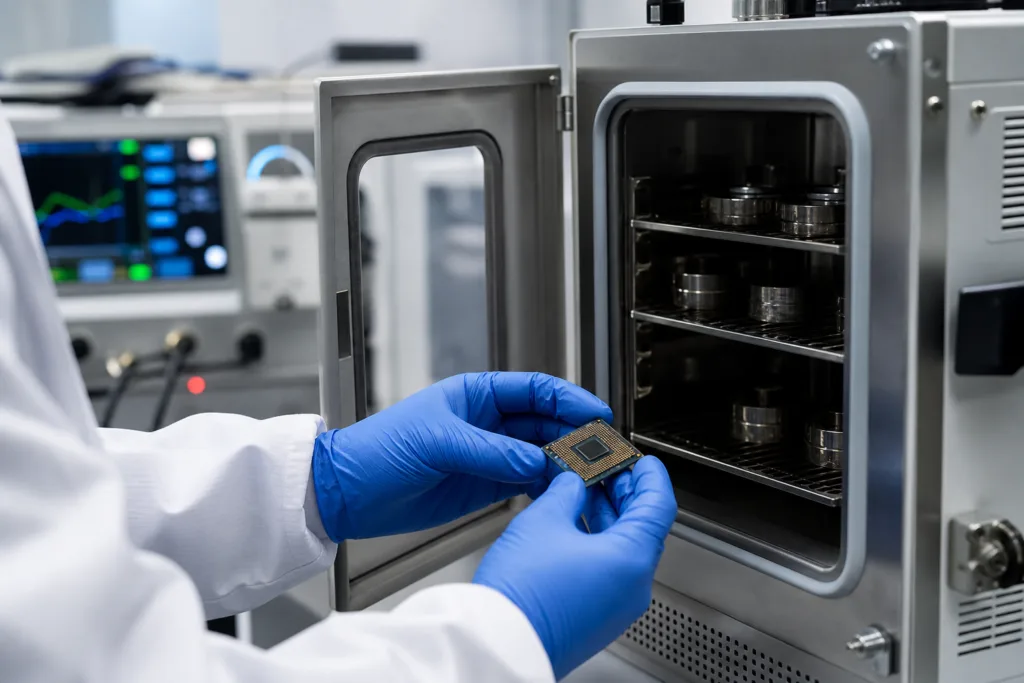
- Adhesives for high-MSL devices should undergo accelerated moisture resistance (85°C/85%RH testing, pressure cooker tests, and thermal cycling)
- For MSL-3 or worse, prioritize adhesive formulations with ultra-low water uptake and proven reflow reliability
What Happens If Adhesive Selection Doesn’t Match MSL?
Short-cutting on adhesive properties in moisture-sensitive packaging creates visible and hidden failures: from open circuits caused by delaminated die, to field failures from package swelling. These failures increase warranty claims and jeopardize field reliability—especially in automotive, power modules, and telecom circuits.
Best Practices: How to Select Adhesives for Moisture-Sensitive Applications
- Use MSL level to filter possible adhesives—never shortcut or “overtrust” datasheets
- Prioritize adhesives validated for JEDEC MSL-specific testing (85/85, solder float, thermal cycling)
- Assess both initial and aged adhesion strength, including peel and lap shear after humidity exposure
- Request real-world application data from suppliers—this adds more value than generic “moisture resistant” claims
- When possible, benchmark adhesive options side-by-side with your real device, including vapor phase reflow and humidity storage
Gain further confidence in selection by exploring Capillary Underfill for Flip-Chip Packaging: 12 Proven Steps to Reliable Joints in 2026 for best-practice underfill adhesive strategies.
Case Study: Adhesive Selection for MSL-3 Components
For a standard QFN device rated for MSL-3, an epoxy underfill is chosen—validated at 85°C/85%RH for 1000 hours with no delamination, and a Tg above max reflow temp. Standard silicones were screened out for excessive moisture transmission, while urethanes failed push-off tests after 500-hour soak exposure.
Such data-driven decisions showcase how targeted adhesive selection controls failure rates, even as packaging complexity grows.
Emerging Technologies and Trends: Moisture Sensitivity and Advanced Adhesives
- Next-gen Encapsulants: Nano-filler and hybrid chemistries targeting both high adhesion and low permeability—now in pilot lines for SiC/GaN modules
- Smart Moisture Sensing: Embedded sensors in packaging for real-time moisture mapping pre- and post-reflow
- Automated Adhesive Application: Precision robotics ensure uniformity, track lot-level variation, and reduce defect escapes in high-volume lines
Download the expert guide The Complete 2026 Guide: How High-Temp Encapsulants Protect Power Module Reliability for IGBT/MOSFET for a deep dive into encapsulant evolution for advanced power electronics.
Pitfalls and Solutions: How to Avoid MSL-Related Package Failures
- Do not store adhesives in uncontrolled humidity; expired materials increase MSL-related risk
- Involve suppliers early: request data for the actual package configuration and process
- Monitor floor-life closely; re-dry adhesives and components as needed
- After any process change, revalidate the moisture barrier performance via autoclave or IR imaging
From Lab to Line: Qualifying the Right Adhesive for Your MSL Targets
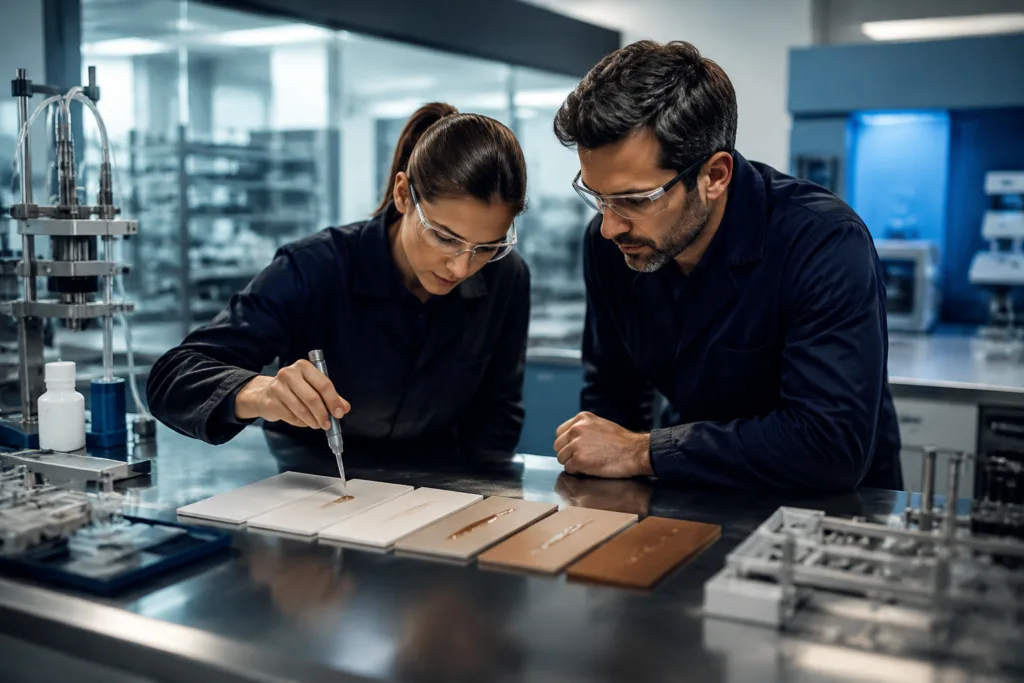
Take process discipline seriously. After candidate adhesives are tested in the lab, qualify them in pilot production using your worst-case MSL-rated package. Use electrical and visual tests post-reflow, aging, and temperature/humidity storage. Continue to monitor real production lots for evolving trend data.
Moisture Sensitivity, Adhesive Selection
In every modern electronics assembly, Moisture Sensitivity, Adhesive Selection is not just a phrase—it’s a continuous rulebook. Always begin at the spec sheet, confirm in the stress-chamber, and prove again at scale. With next-gen semiconductors trending toward even tighter pitches, smaller packages, and new form factors, the materials play an outsized role in uptime and customer satisfaction. Above all, practical, experience-backed processes will continue to drive reliability as the industry moves forward.
Conclusion: Key Takeaways for Selecting Moisture-Appropriate Adhesives
Matching adhesives to a device’s MSL rating is a step no leading engineer ignores. By understanding moisture absorption, test protocols, and process validation, assembly teams can dramatically reduce failures, boost field reliability, and support higher yields. Industry leaders, including ZDS Adhesive, emphasize: when in doubt, test adhesives in real-world scenarios and never skip accelerated aging, especially for higher MSL devices. Make every step of the moisture sensitivity, adhesive selection process count for your device’s reliability journey.
Frequently Asked Questions
What does MSL stand for in semiconductor packaging?
MSL means Moisture Sensitivity Level. It defines how much ambient moisture a semiconductor package can tolerate before being at risk of damage during manufacturing processes like solder reflow.
Why is adhesive selection important for MSL?
Choosing the right adhesive ensures that the package will withstand thermal and moisture stress without delamination, popcorning, or other failures. It is essential for both assembly performance and long-term reliability.
What properties should adhesives have for high MSL levels?
Adhesives for high MSL devices should have low moisture absorption, strong adhesion after humidity aging, high thermal stability, and a flexible modulus to absorb stresses.
How can I test if an adhesive is suitable for my device’s MSL?
Use lab tests such as 85°C/85% RH soak, pressure cooker, reflow simulation, peel and lap shear strength after environmental aging, and inspect visually for delamination or cracks.
What happens if the wrong adhesive is used for a moisture-sensitive part?
Severe issues may occur: cracks during reflow, lost electrical connections, corrosion, or reduced field lifetime—sometimes causing total bricking of the device.
Are there universal adhesives for all MSL levels?
No. Each adhesive is formulated with specific chemistries and performance characteristics tailored to certain MSL levels and application methods. Always align choices with the MSL rating of your device.
Related Reading
- How Low-Shrinkage Adhesives Boost Automotive LiDAR Reliability
- Innovative Silicone Gels: Safeguarding Sensitive Metal Components
- 7 Ways to Ensure Moisture Protection for Server Motherboards
- Plastic Bonding Mastery: Selecting Adhesives for Every Plastic Type
- Smart Selection: Adhesive vs Sealant for Leak-Proof Joints