Introduction to Low-Shrinkage Adhesives for LiDAR Window Assembly
As vehicle technology advances, the precision and reliability of LiDAR systems play a crucial role in automotive safety and automation. One invisible factor driving this innovation: low-shrinkage adhesives for LiDAR window assembly. Unlike traditional bonding solutions, these adhesives significantly reduce dimensional changes during curing, keeping optical paths stable and maintaining exact alignments.
For engineers, the choice of adhesive impacts everything from sensor calibration to resistance against environmental stress. Let’s explore why low-shrinkage adhesives are quickly becoming the gold standard for LiDAR window assembly—and how their unique properties solve real-world problems.
What Makes Low-Shrinkage Adhesives Different?
Low-shrinkage adhesives are engineered to minimize volume change during their curing process. For LiDAR window assembly, even micrometer-scale distortions can cause optical misalignment or reduce sensor accuracy. These adhesives directly address such risks, especially in environments subject to thermal cycling, vibration, or humidity.
Why Shrinkage Matters in LiDAR Applications
In a LiDAR window, the light beam travels through a transparent cover before reaching and reflecting off objects. If the adhesive shrinks unpredictably, the cover can warp or shift, resulting in inaccurate readings or signal loss. Reduced shrinkage ensures the optical path remains pristine, optimizing sensor reliability and longevity. For more insight into how low-stress materials protect sensitive sensors, check out Low Stress Encapsulants for MEMS Sensors.
Types of Low-Shrinkage Adhesives for LiDAR Window Assembly
Several chemistry options are favored for their minimal shrinkage and strong adhesion:
- Silicone Adhesives (Addition Cure): Offer exceptional elasticity with shrinkage rates below 1%. Ideal for glass-to-plastic or glass-to-metal bonding.
- Epoxy Adhesives: With advanced formulations, these can have shrinkage as low as 0.2%. They provide good mechanical strength but can be rigid.
- UV-Curing Acrylics: Fast-curing and low outgassing, with shrinkage typically under 0.5%, excellent for automated assembly lines.
- Polyurethane (PUR) Adhesives: Moisture-cured options deliver flexible bonds with low shrinkage and strong resistance to environmental stress.
Chemical Composition and Performance Insights
Low-shrinkage adhesives often rely on filled or network-structured polymers. The fillers (like silica or alumina) reduce the potential for shrinkage and improve thermal stability. Formulation tweaks—such as the ratio of crosslinkers or chain extenders—also modify the adhesive’s behavior during curing. For deep-dive details on addition-cure silicone potting, see How Addition Cure Silicones Outshine for Deep Section Potting in Metal Applications.
Key Benefits for Automotive LiDAR Systems
The main value of low-shrinkage adhesives in LiDAR window assembly includes:
- Consistent Optical Alignment: Prevents warping or shifting of transparent covers.
- Enhanced Reliability: Reduces the risk of stress cracks, fogging, or delamination.
- Longevity in Harsh Conditions: Maintains physical and optical stability during repeated thermal and humidity cycles.
- Processing Efficiency: Some adhesives cure rapidly for higher throughput and fewer post-cure failures.
Challenges with Traditional Adhesives
Conventional epoxies, cyanoacrylates, or hot melts may shrink by 2–6%, leading to visible deformation or internal stress. This not only compromises optical clarity but can also let moisture seep into sensitive electronics. For cases where waterproofing is critical, explore Waterproof Rubber Bonding Mastery.
Case Study: Automotive LiDAR Window Assembly Successes
Manufacturers deploying low-shrinkage adhesives report improved sensor calibration and dramatically fewer warranty claims. For example, a major EV supplier switched from standard epoxy to addition-cure silicone adhesive, resulting in stable optical transmission after 2,000 thermal cycles and zero fogging incidents over 24 months. This illustrates the measurable performance gains—and why industry standards are moving toward these solutions.
Step-by-Step LiDAR Window Assembly with Low-Shrinkage Adhesives
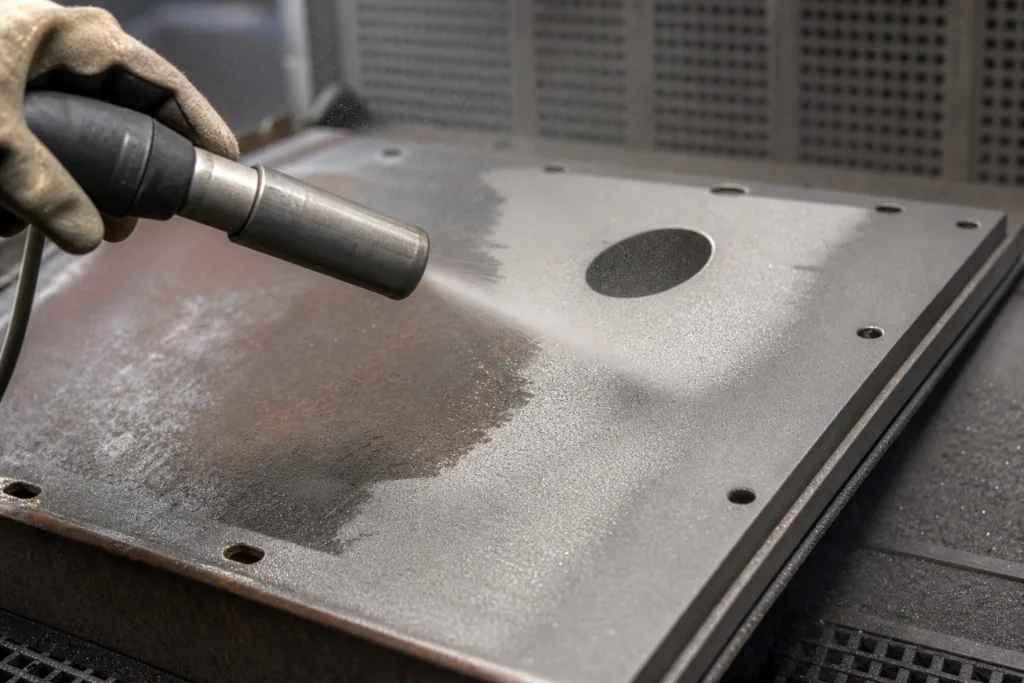
- Surface Preparation: Clean all substrates and activate low-energy surfaces (plastic, metal) with plasma or primer.
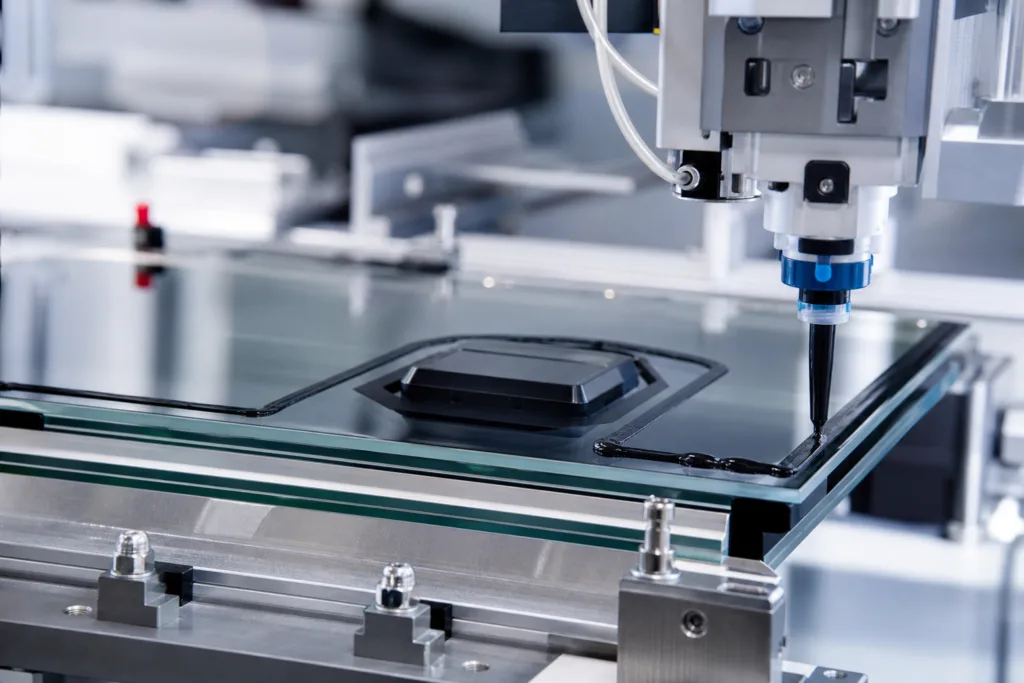
- Adhesive Application: Dispense adhesive in controlled bead or dot patterns—uniformity is key to optical clarity.
- Curing Process: Follow recommended time and temperature profiles; rapid UV cure may be preferable for acrylics.
- Quality Inspection: Confirm bond-line thickness and inspect for voids or defects using optical metrology.
- Environmental Testing: Run thermal/humidity cycling and vibration tests to validate long-term integrity.
ZDS Adhesive Experience: Real-World Assembly Constraints
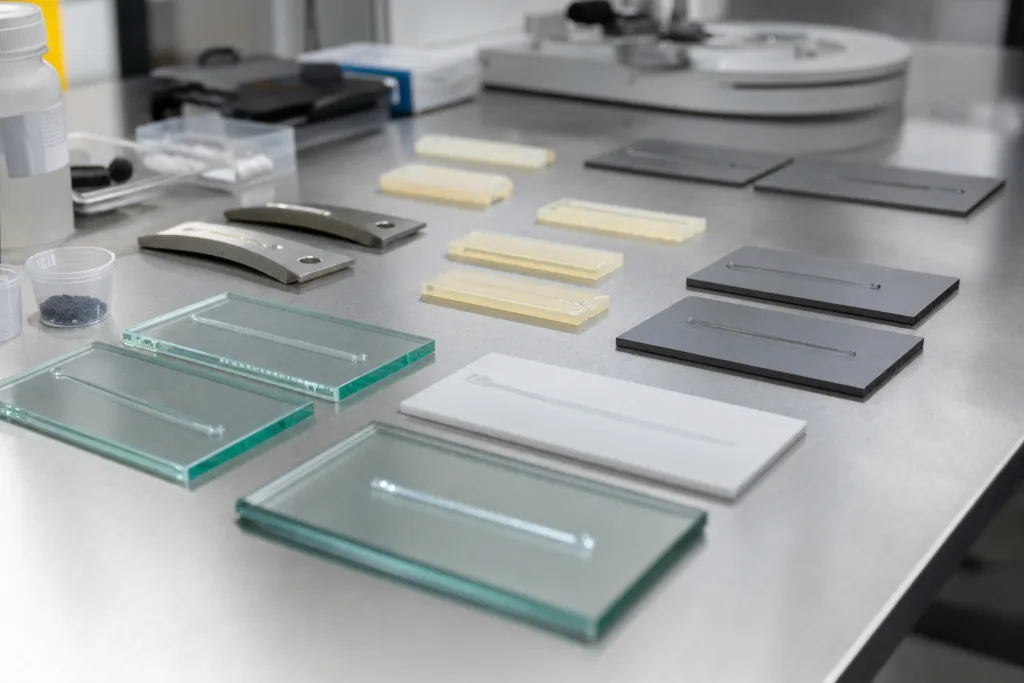
From an application engineer’s viewpoint at ZDS Adhesive, an industrial adhesive manufacturer, the most critical parameter for LiDAR window bonding is stable modulus combined with minimal shrinkage. When substrates include glass and polycarbonate, testing shows addition-cure silicones outperform most epoxies under humidity aging and thermal cycling. Typical process windows: open time 3–20 minutes, fixture time 45–180 minutes, optimal bond-line thickness 0.4–0.8 mm. Moisture exposure and surface energy must be managed via priming or plasma treatment for reliable results.
For those working with high-impact areas or public installations, High Impact Adhesives Prevent Vandalism at Public Charging Stations provides practical adhesive solutions to withstand tampering and stress.
Testing and Validation: Shrinkage, Optical Clarity, and Bond Durability
Industry-standard tests help ensure performance:
- Shrinkage Measurement: Volumetric change tracked during and after cure using precision metrology.
- Optical Transmission: UV-Vis spectroscopy ensures glass or plastic windows retain clarity after bonding.
- Mechanical Stress: Lap shear, peel, and environmental cycling validate joint stability.
Environmental Resistance: Moisture, Heat, and Chemical Exposure
Low-shrinkage adhesives resist moisture ingress, fogging, and chemical exposure, critical for LiDAR sensors exposed to road salt, oil, or temperature extremes. Formulators select polymers that maintain integrity even after months in high humidity or direct sunlight. For stringent outdoor or waterproof requirements, see The No-Mistake System Guide for Waterproof Seals.
Adhesive Selection Tips: Substrate, Assembly Process, Longevity
- Confirm substrate compatibility—bonding glass to plastic often benefits from addition-cure silicone or UV acrylic solutions.
- Review assembly line constraints—fast-curing options can increase throughput but may demand UV stations or specialized dispensing.
- Prioritize minimal shrinkage (≤1%) and stable modulus for vibration and shock resistance.
- Run sample tests under realistic environmental conditions before finalizing adhesive selection.
Innovative Solutions Shaping ADAS Reliability
As advanced driver-assistance systems (ADAS) evolve, the demand for stable, clear LiDAR sensors pushes adhesive innovation further. Tomorrow’s vehicles will rely even more on these components—making careful selection and validation of low-shrinkage adhesives a key engineering priority.
Low-Shrinkage Adhesives for LiDAR Window Assembly
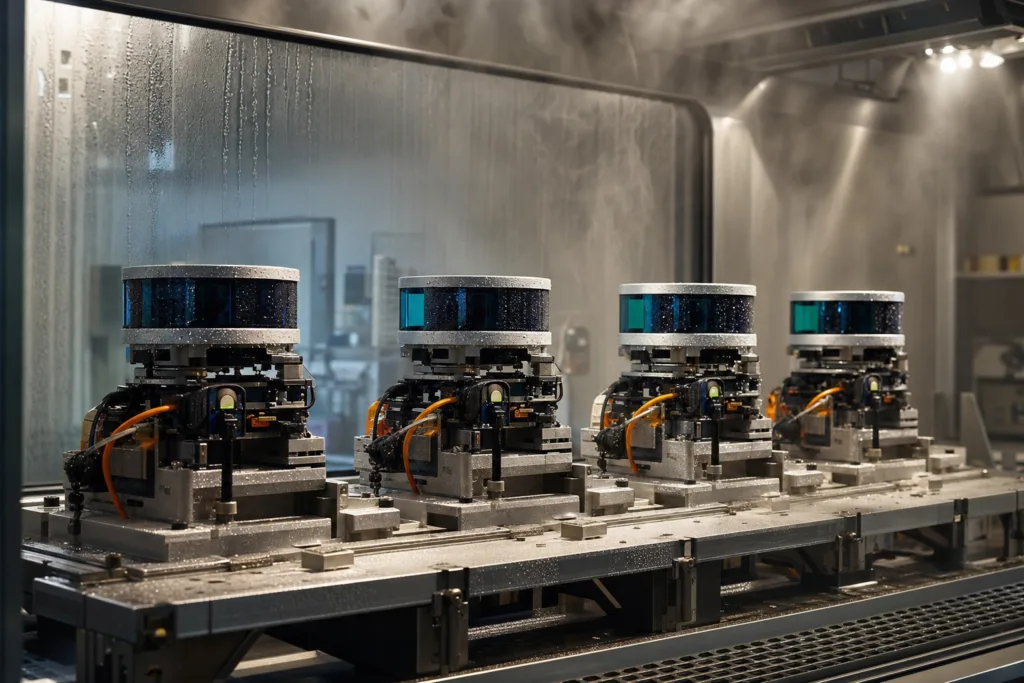
Low-shrinkage adhesives are a breakthrough for precision optical assemblies in automotive applications. Their adoption is accelerating as sensors become more sophisticated, assembly tolerances tighter, and reliability requirements more demanding. The right adhesive keeps LiDAR windows clear, stable, and aligned—ensuring every vehicle on the road delivers the safety and performance drivers expect in 2026 and beyond.
Frequently Asked Questions
How does shrinkage impact LiDAR window accuracy?
Shrinkage can deform transparent covers, altering the optical path and reducing sensor precision. Low-shrinkage adhesives prevent these issues, maintaining accuracy.
Which adhesive chemistry offers the lowest shrinkage for LiDAR windows?
Addition-cure silicone and advanced epoxy formulations typically provide the lowest shrinkage, often below 1%, preserving optical integrity.
Can low-shrinkage adhesives bond both glass and plastic substrates?
Yes, with proper surface preparation and suitable primers, low-shrinkage adhesives bond glass, plastics, and metals securely for LiDAR applications.
What tests validate adhesive performance for LiDAR window assembly?
Key tests include shrinkage measurement, lap shear, peel, optical clarity, environmental cycling, and humidity aging to ensure reliability and durability.
Are low-shrinkage adhesives compatible with automated assembly?
Many offer rapid curing, consistent dispensing, and low outgassing—ideal for high-volume, automated LiDAR window production lines.
What factors influence adhesive selection for LiDAR windows?
Consider substrate type, assembly process constraints, environmental exposure, desired shrinkage rate, and long-term reliability requirements.
Related Reading
- Thermal Epoxy vs Softer Materials – What Works Best in Heat-Challenged Assemblies?
- 2026 Guide: Silicone Adhesive Types, Performance, and Where They Win
- 9 Structural PU Adhesive Advantages for Carbon Fiber Bonding
- Clear Optical Adhesives: Decoding OCA vs LOCA in Electronics
- Engineer’s Guide: Bonding Plastic to Metal with Confidence